
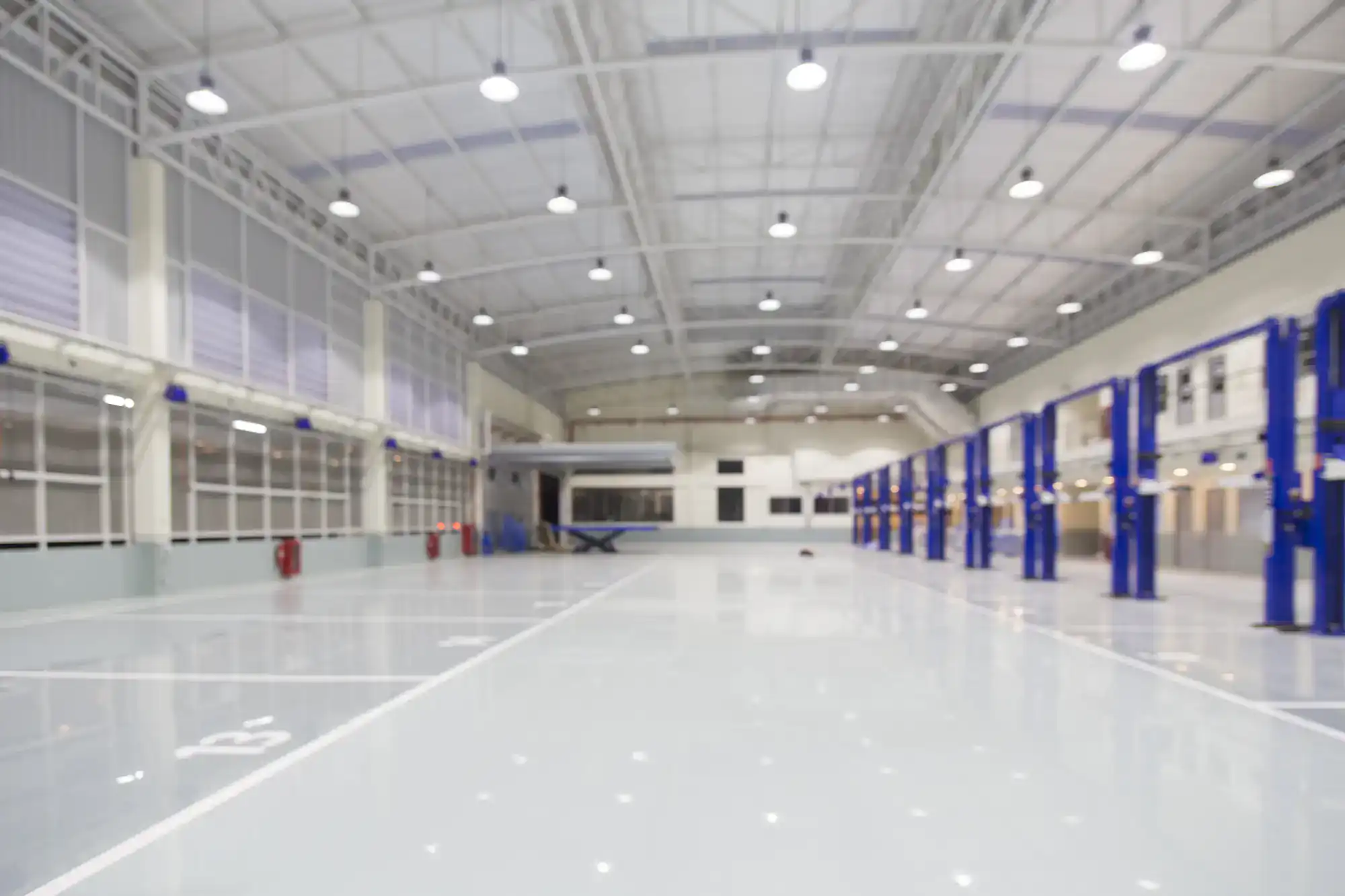
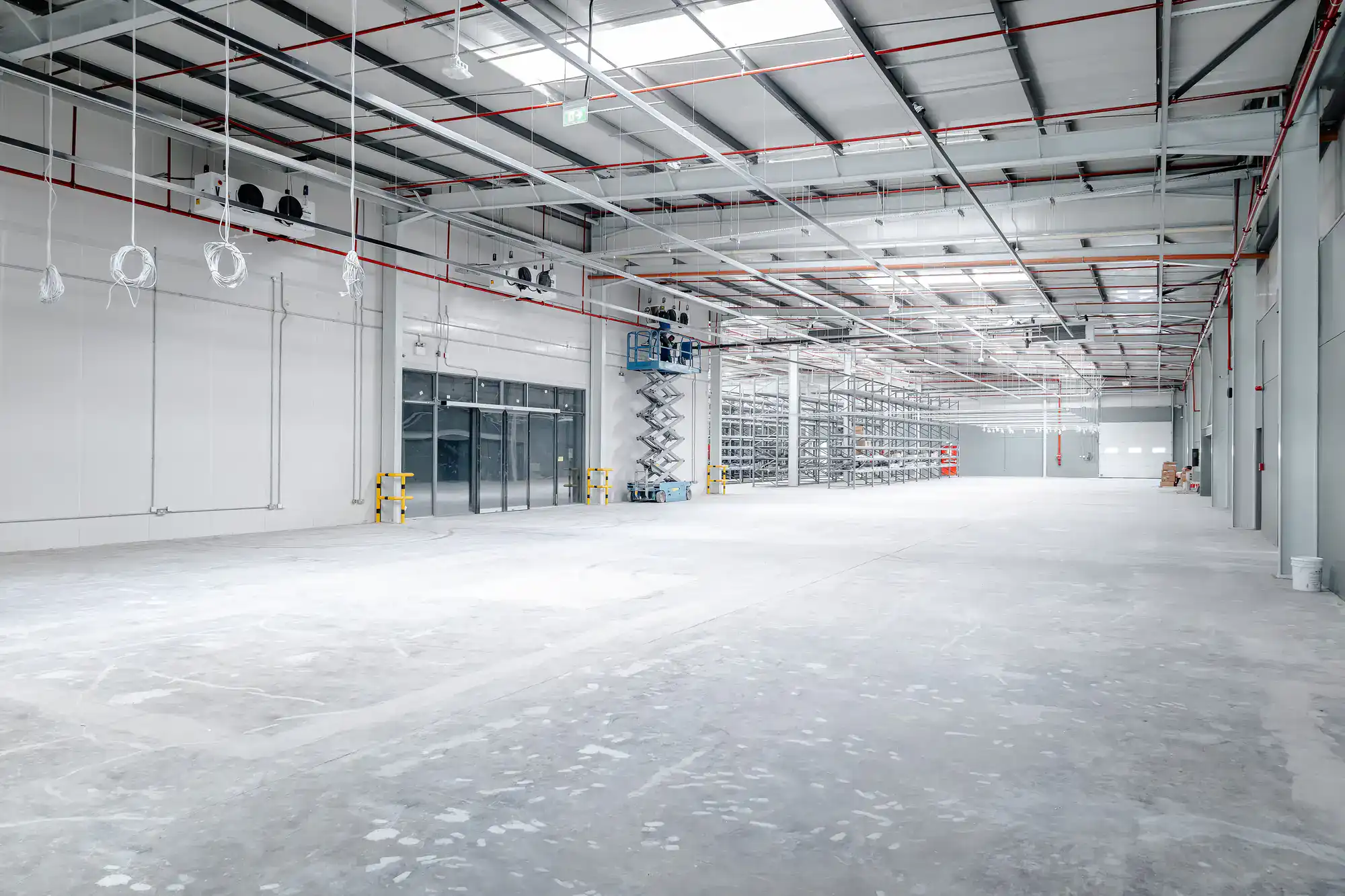
A hangar floor that wasn’t designed for aviation doesn’t just look bad after a year it creates real problems. Skydrol hydraulic fluid eats through standard coatings. Jet fuel stains concrete that isn’t properly sealed. A dark, non-reflective surface makes dropped hardware nearly invisible, and in an aviation environment, that’s not just inconvenient it’s a safety issue.
Oyster Bay sits directly on the harbor, and the climate here does things to concrete that most contractors aren’t accounting for. The coastal humidity drives moisture vapor up through large slabs especially in hangars, where the footprint is massive and the slab has nowhere to breathe. Without moisture testing and the right primer system underneath, delamination is almost inevitable. We’ve seen it happen too many times to skip this step. The prep work is where the floor’s lifespan actually gets determined.
The freeze-thaw cycle adds another layer. With roughly 15 days of snowfall annually and temperatures that swing hard through winter, an unprotected or poorly coated slab absorbs water, freezes, expands, and starts to break down from the inside. A properly installed aviation-grade system seals the concrete against all of it moisture, chemicals, temperature swings, and the daily mechanical load of aircraft moving in and out. That’s what a floor built for this environment actually looks like.
We’re based in Bohemia, NY Long Island, not some out-of-state franchise that flies in a crew and disappears. Advanced Epoxy Flooring has been installing industrial and aviation-grade flooring systems for over 30 years, and our president, Danny Harmer, has personally done this work for more than four decades. That’s not a marketing line. It means when something comes up on your project and something always does the person making the call has seen it before.
Our credentials are specific and verifiable. We hold both Sherwin-Williams High Performance Flooring certification and Res Tech certification two of the most rigorous factory-trained credentials in the resinous flooring industry. Every installer on our crew carries OSHA 40 certification, which matters in a working hangar environment where safety standards aren’t optional. Our non-slip topcoat meets NFSI requirements, tested and verified by a third party.
From private T-hangars at Republic Airport in Farmingdale to corporate flight department facilities across Nassau County, we’ve built floors in environments that demand real durability. We’ve installed systems in the White House and across international projects and we still pick up the phone when you call with questions about your Oyster Bay hangar.
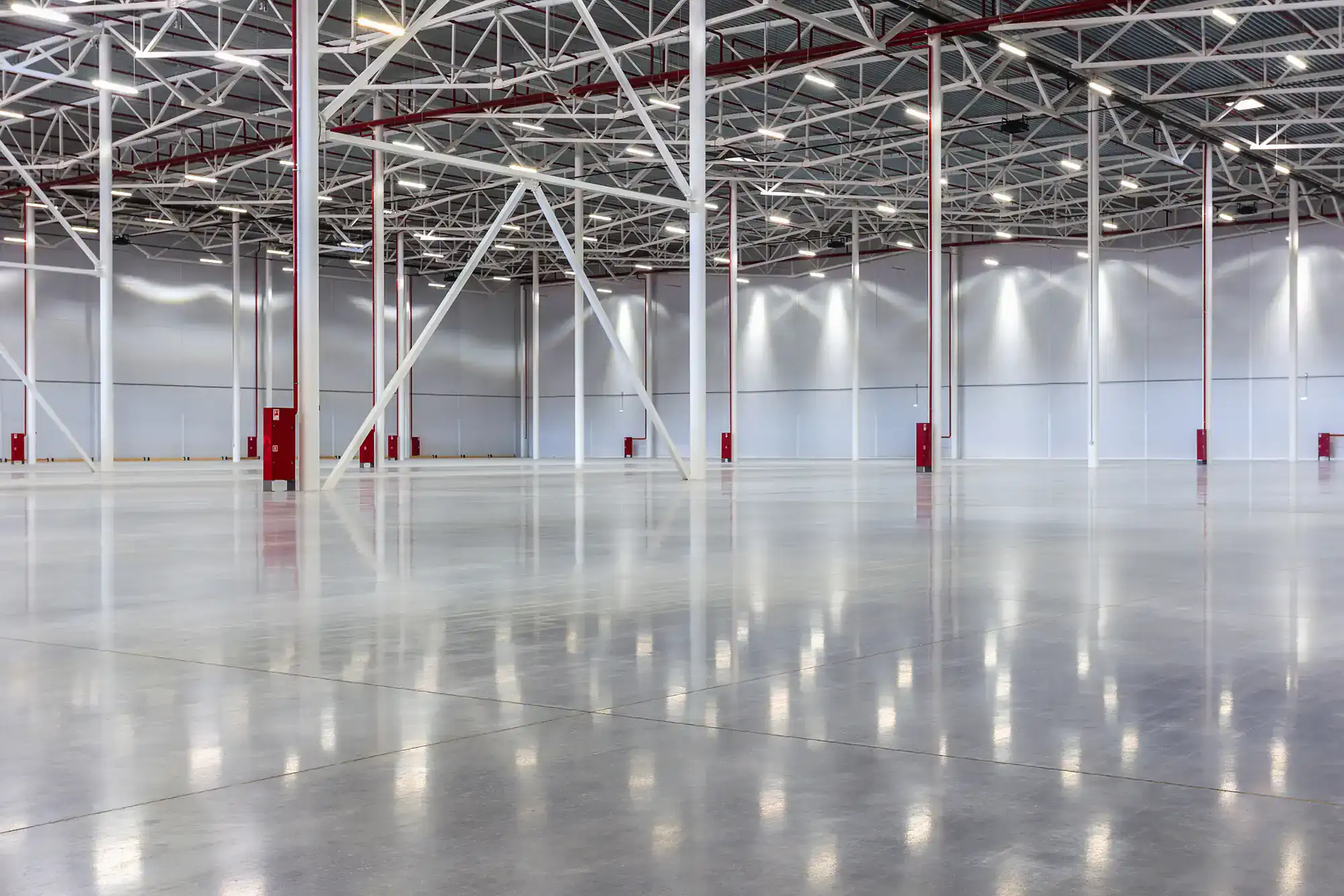
The first thing that happens on any hangar floor project in Oyster Bay is moisture testing. This isn’t a formality it’s the step that determines whether the coating will actually stay bonded. Given the harbor proximity and the coastal humidity throughout Nassau County, moisture vapor transmission is one of the most common causes of coating failure on large concrete slabs. If the slab needs a moisture mitigation layer before anything else goes down, we install that first. No shortcuts.
After moisture assessment, we diamond grind the concrete. That mechanical surface preparation is what creates the profile the coating needs to bond to. Skipping it or using acid etching instead is one of the most reliable ways to end up with a floor that peels in three years. Once the surface is properly prepared, we install the system in the correct sequence: primer, base coat, and topcoat, with cure time respected between layers.
For most hangar applications, a polyaspartic topcoat is the right call. It cures fast typically returning the space to service within 24 hours and it delivers a 20-year lifespan under real aviation conditions. If your hangar at KFRG or anywhere else in the Town of Oyster Bay is operational, that turnaround matters. We match the system to what you’re actually doing in the space: a private T-hangar has different needs than an active MRO bay, and our recommendation reflects that reality.
Ready to get started?
What we install in a hangar floor in Oyster Bay is fundamentally different from what goes into a commercial warehouse or a residential garage. NFPA 409 the standard that governs aircraft hangar floor surfaces in New York State requires noncombustible floor surfaces in aircraft storage and servicing areas. That eliminates most standard epoxy products from the conversation before it even starts. Our systems are built to meet that requirement, which matters when you’re dealing with a building department permit for a hangar renovation in Farmingdale or anywhere else in Nassau County.
Chemical resistance is the other non-negotiable. Skydrol hydraulic fluid the standard in most corporate and commercial aircraft systems is aggressive enough to destroy coatings that weren’t formulated to handle it. Our systems are ASTM-tested for Skydrol resistance, along with jet fuel, lubricants, and the industrial cleaning solvents that are part of daily life in a working maintenance bay. That’s not a feature list it’s the baseline for an aviation environment.
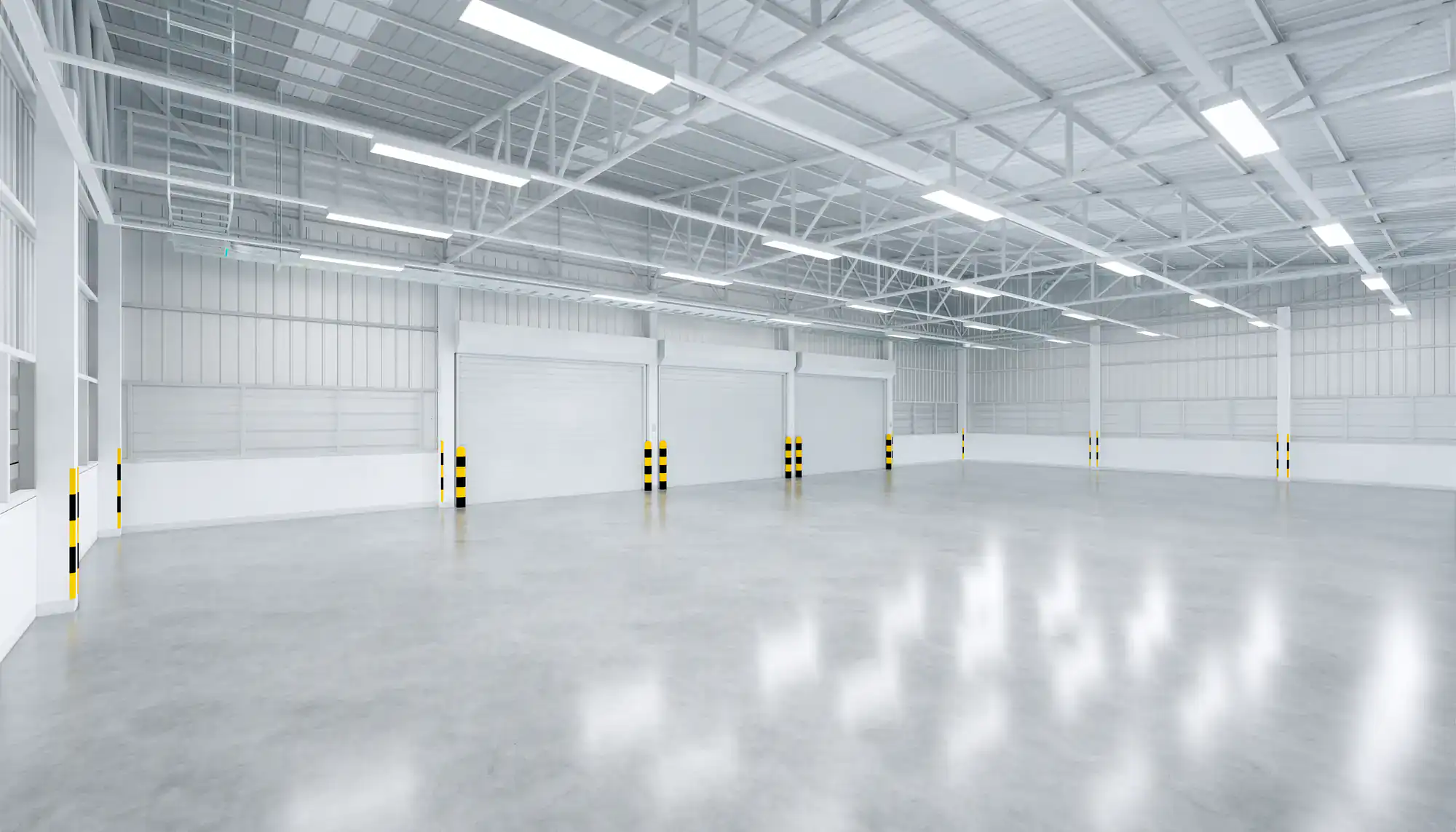
For private hangar owners on the North Shore, the finish also matters. A high-gloss, light-colored polyaspartic floor reflects overhead lighting across the entire space, making the hangar look exactly as professional as the aircraft it houses and making FOD visible the moment it hits the floor. Whether you’re running a working FBO operation near Republic Airport or maintaining a private hangar in one of Oyster Bay’s waterfront communities, we match the system to what you actually need.
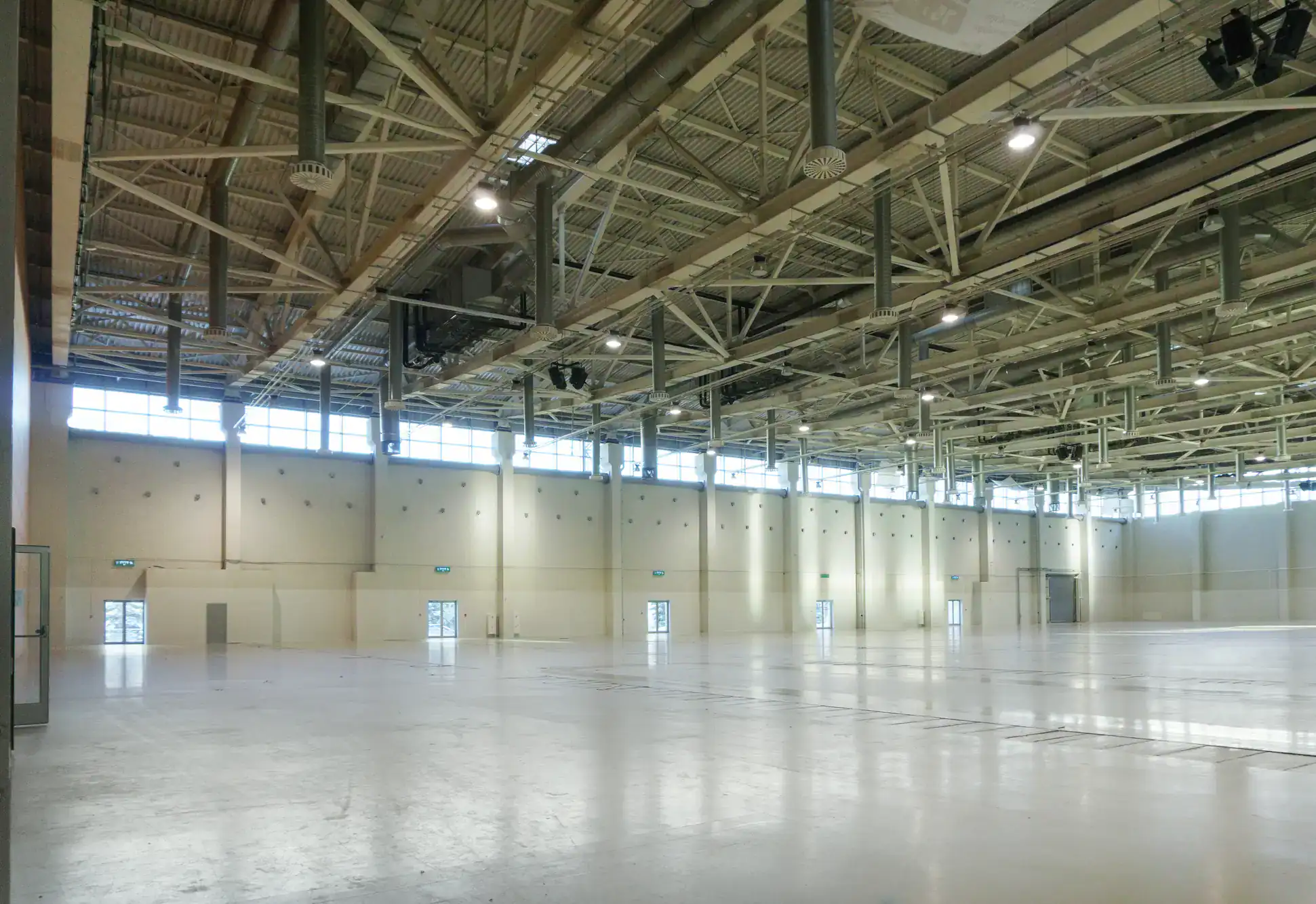
Yes and this applies regardless of whether your hangar is a private T-hangar, a leased FBO space, or a corporate flight department facility. NFPA 409 is the national standard governing aircraft hangar construction and operation, and New York State building codes incorporate it by reference. The requirement that’s most directly relevant to flooring is that surfaces in aircraft storage and servicing areas must be noncombustible. That standard rules out most residential and light commercial epoxy products that general contractors might otherwise propose.
For hangar projects within the Town of Oyster Bay including facilities at Republic Airport (KFRG) in Farmingdale the applicable permitting authority is typically the Town of Oyster Bay Building Department for unincorporated areas, or the village-specific building department for projects within incorporated villages. If you’re unsure which applies to your facility, that’s worth confirming before you start. What’s not worth guessing on is the coating system itself if it doesn’t meet NFPA 409, it’s a code problem you’ll have to fix after the fact.
Bare concrete in a working hangar absorbs everything fuel, hydraulic fluid, oil, and water. Once those contaminants get into the slab, you’re dealing with staining, deterioration, and a surface that becomes increasingly difficult to clean and increasingly slippery over time. A properly installed aviation-grade coating seals the concrete completely, giving you a surface that resists chemical penetration, cleans easily, and holds up under the mechanical load of aircraft, jacks, and maintenance equipment.
The difference between epoxy and polyaspartic comes down to durability timeline and cure speed. Standard epoxy systems in high-traffic aviation environments typically last five to seven years before they need attention. Polyaspartic systems, installed correctly, can go 20 years under real operational conditions. They also cure fast enough to return the hangar to service within 24 hours which, for an active facility at or near Republic Airport, is the difference between a manageable project and a week of disrupted operations. For most working hangars in Oyster Bay, polyaspartic is the better long-term investment.
It affects the process more than most people expect. Oyster Bay sits directly on the harbor, and the town’s climate delivers persistent coastal humidity year-round even in months that feel dry, the relative humidity stays elevated. That moisture works its way up through large concrete slabs through a process called moisture vapor transmission, and on a hangar-scale slab, the effect is significant. If a coating gets applied over a slab that hasn’t been properly tested and treated for moisture, it will eventually delaminate not because the coating is bad, but because the bond was compromised from the start.
The freeze-thaw cycle compounds the problem. With temperatures dropping below freezing regularly through winter and roughly 15 days of annual snowfall, any moisture that’s gotten into an improperly sealed slab will freeze, expand, and start fracturing the concrete from within. The salt air along the North Shore adds a third stressor it can degrade adhesion in coatings that weren’t formulated for coastal exposure. Accounting for all three of these factors humidity, freeze-thaw, and salt air is part of what we do differently for Oyster Bay installations compared to inland projects.
Skydrol is the hydraulic fluid used in most commercial and corporate aircraft systems. It’s highly effective for its intended purpose and highly destructive to surfaces it wasn’t designed to contact. Standard epoxy coatings the kind used in commercial warehouses or residential garages break down when exposed to Skydrol. The fluid penetrates the coating, softens it, and eventually causes it to lift. On bare concrete, Skydrol stains deeply and creates a slip hazard that’s difficult to remediate.
In a working hangar at Republic Airport or anywhere else in the Town of Oyster Bay, Skydrol exposure isn’t a hypothetical it happens during routine maintenance, hydraulic system checks, and line servicing. Our coatings are ASTM-tested for Skydrol resistance, meaning the chemistry was specifically evaluated against this fluid under standardized conditions. If a contractor can’t tell you what Skydrol is or can’t confirm that their system has been tested against it, that’s a meaningful gap and one that will show up on your floor within a few years of regular use.
The honest answer is that it depends heavily on two things: the system installed and how well the concrete was prepared before installation. A properly installed polyaspartic system in an aviation environment can realistically last 20 years. A standard epoxy system under high-traffic conditions typically runs five to seven years before it needs significant attention. The gap between those two timelines is real, and it has a direct effect on total cost over the life of the floor.
Surface preparation is the biggest variable. Diamond grinding the concrete to create the right bonding profile, testing for moisture, and applying a moisture mitigation layer where needed those steps are what determine whether the coating stays bonded for 20 years or starts peeling in three. In Oyster Bay’s coastal climate, skipping moisture mitigation is particularly risky given the harbor proximity and the humidity levels the town sees year-round. The other factor is chemical exposure a floor that regularly contacts Skydrol, jet fuel, and industrial solvents without the right coating chemistry will degrade faster regardless of how well it was installed.
Start with aviation-specific experience not just general commercial flooring. A contractor who has done warehouse floors and garage floors has not necessarily done hangar floors, and the difference in requirements is significant. Ask specifically whether they’re familiar with NFPA 409 and whether their systems meet its noncombustible surface requirement. Ask whether their coating has been tested for Skydrol resistance. If they can’t answer those questions clearly, that tells you what you need to know.
Beyond aviation knowledge, look at their concrete preparation process. Any contractor worth hiring should be leading with moisture testing and diamond grinding not acid etching, not a quick scuff, and not skipping the assessment entirely. In Nassau County’s coastal environment, that prep work is what separates a floor that holds for 20 years from one that fails in four. Credentials matter too certifications like Sherwin-Williams High Performance Flooring and OSHA 40 crew certification are verifiable and specific, not just general claims about quality. Finally, look for a contractor with a physical Long Island presence and a track record you can actually verify, not a national brand managing the job remotely.