
When you’re installing new flooring over a slab that’s been settling since the 1950s or 60s which is exactly what a lot of Oyster Bay homes are working with the finish product is only as good as what’s underneath it. Luxury vinyl plank telegraphs every ridge. Large-format tile cracks at the grout lines. Hardwood shifts and squeaks. None of that is a flooring problem. It’s a subfloor problem, and it’s fixable before the new floor ever goes down.
Oyster Bay’s North Shore clay soils are dense and water-retaining. That matters because moisture vapor rising through a concrete slab is one of the most common reasons self leveling underlayment fails it loses its bond, it bubbles, it cracks. When moisture is part of the equation, skipping the diagnostic step isn’t just cutting corners, it’s guaranteeing a callback. Every job we start with ASTM F2170 relative humidity testing here, because in this environment, that step isn’t optional.
What you’re left with after the process is done right is a flat, stable, properly bonded surface that your finish floor can actually perform on. Not a temporary patch. Not a skim coat that cracks after one winter. A real foundation for whatever comes next whether that’s tile in a Locust Valley kitchen, LVP in a Syosset office renovation, or a commercial epoxy system in a Jericho retail buildout.
Advanced Epoxy Flooring has been working on Oyster Bay and Long Island floors for over 30 years. Our president and CEO, Danny Harmer, brings more than 40 years of hands-on installation experience to every project not managing from a distance, but actually understanding what goes wrong and why. Most of our crew has been with us for over a decade. That kind of tenure shows up in the quality of the work.
We’re based in Bohemia, NY, which means Nassau and Suffolk County aren’t a service expansion they’re home territory. The coastal humidity, the clay-heavy soils, the aging building stock that runs through Oyster Bay, Locust Valley, and Old Westbury we’ve seen all of it. We hold OSHA 40 certification, carry full licensing and insurance, and are factory-trained in the resinous and cementitious systems we install. Our A+ BBB accreditation is just the paper version of what the work already reflects.
The first thing that happens on any self leveling job in Oyster Bay isn’t mixing or pouring it’s assessment. We walk the slab, measure it for flatness deviation, and test it for moisture. In Oyster Bay’s North Shore environment, where clay soils push moisture vapor upward through older concrete, the relative humidity reading inside the slab determines everything. If it’s above 80%, we address the moisture issue before anything else moves forward. That’s not a delay that’s the difference between a floor that lasts and one that fails in six months.
Once the slab is confirmed ready, surface preparation begins. That means grinding down high spots, cleaning the surface thoroughly, and applying the correct primer for the substrate. Primer isn’t optional it’s what creates the mechanical and chemical bond that keeps the self leveling underlayment locked in place. Skipping it, or using the wrong one for the application depth, is one of the most common reasons DIY and inexperienced contractor pours fail.
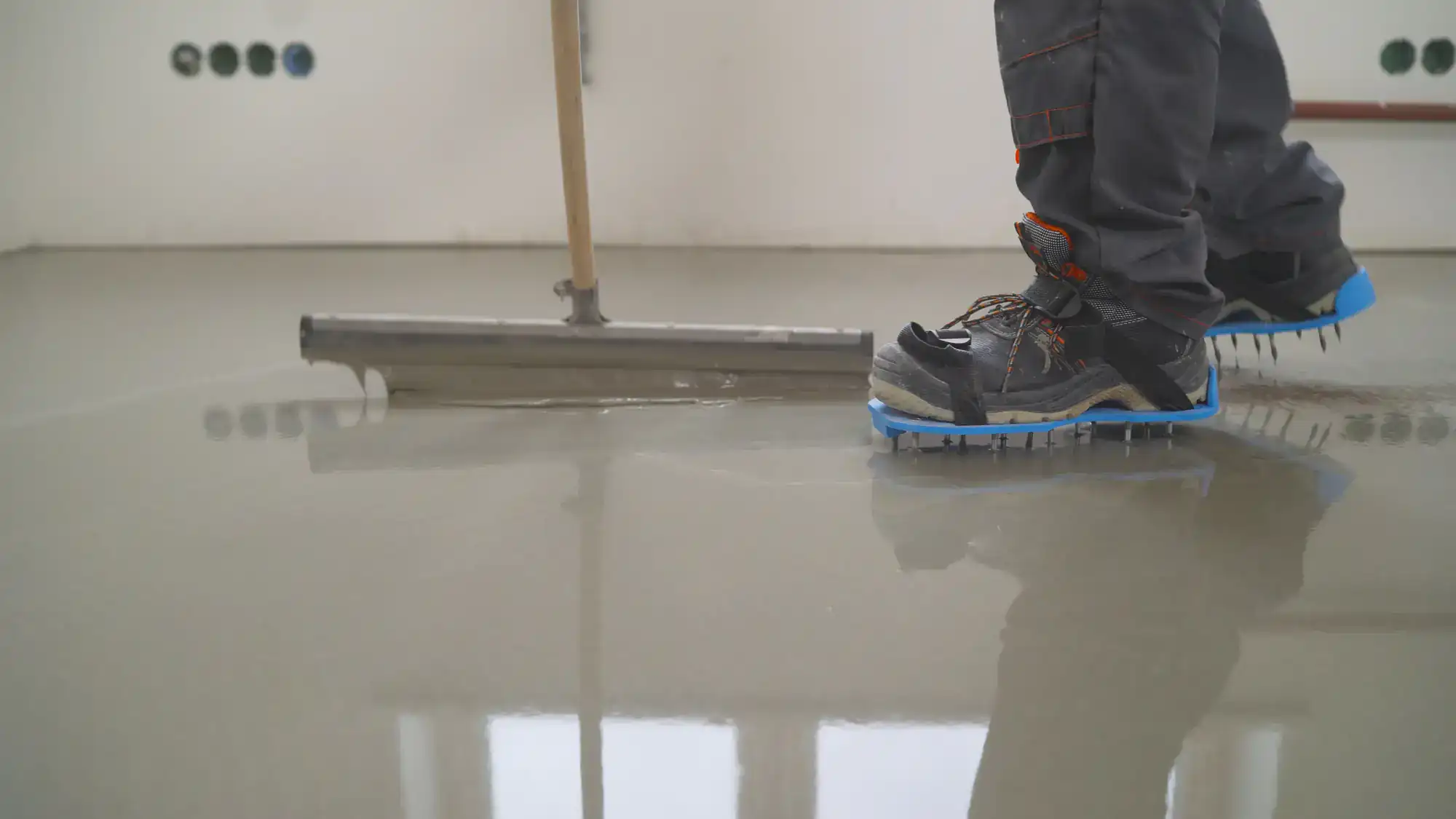
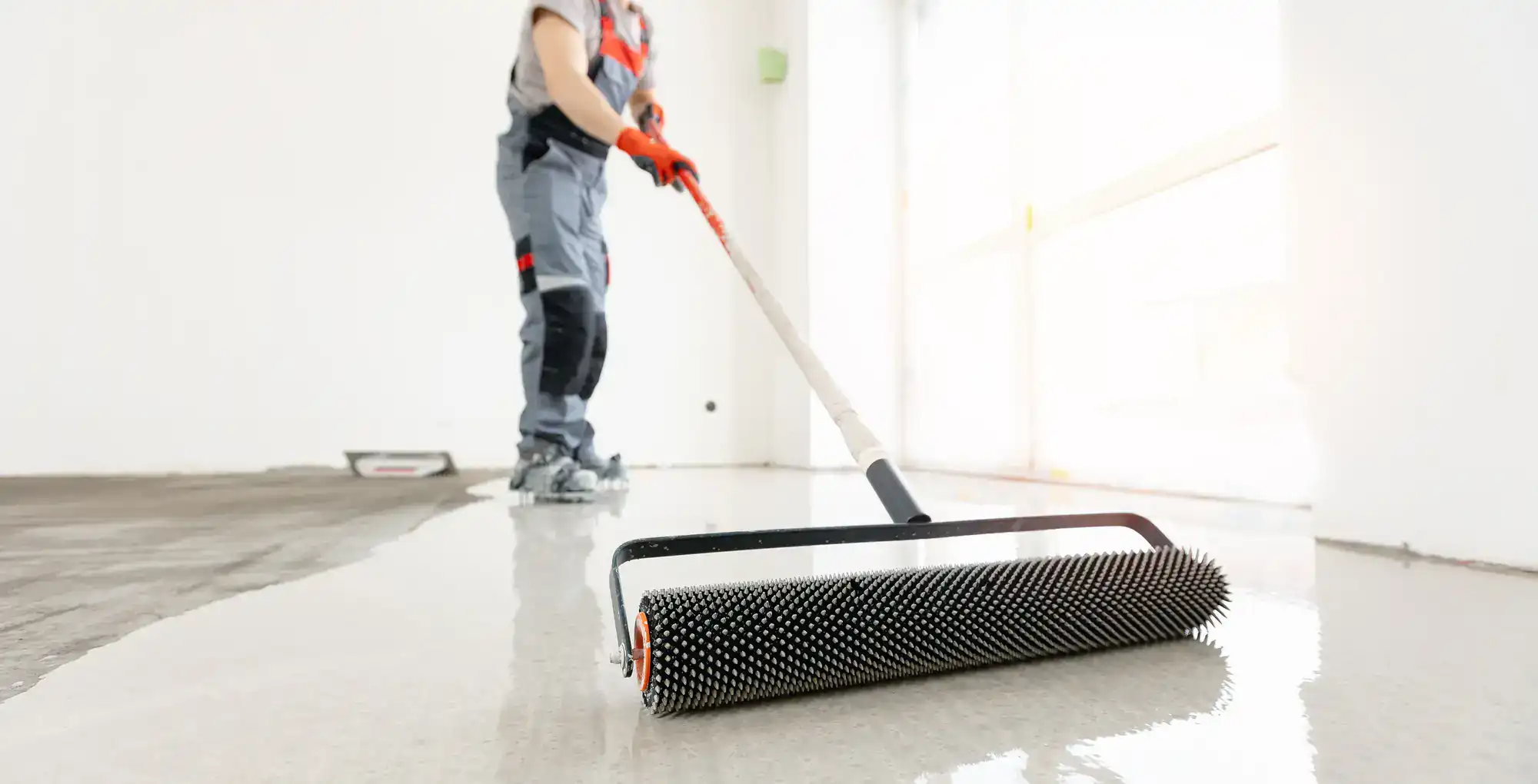
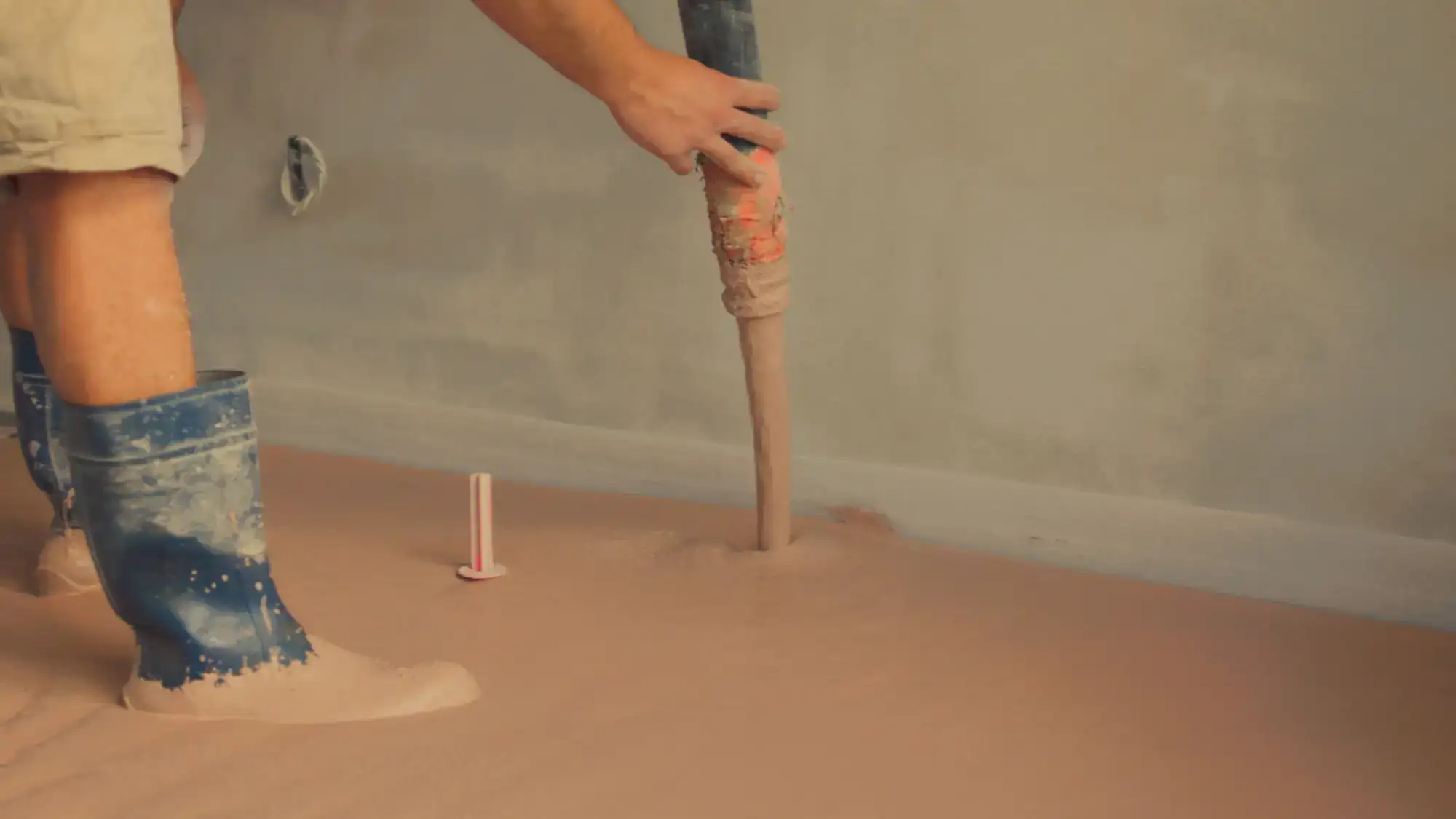
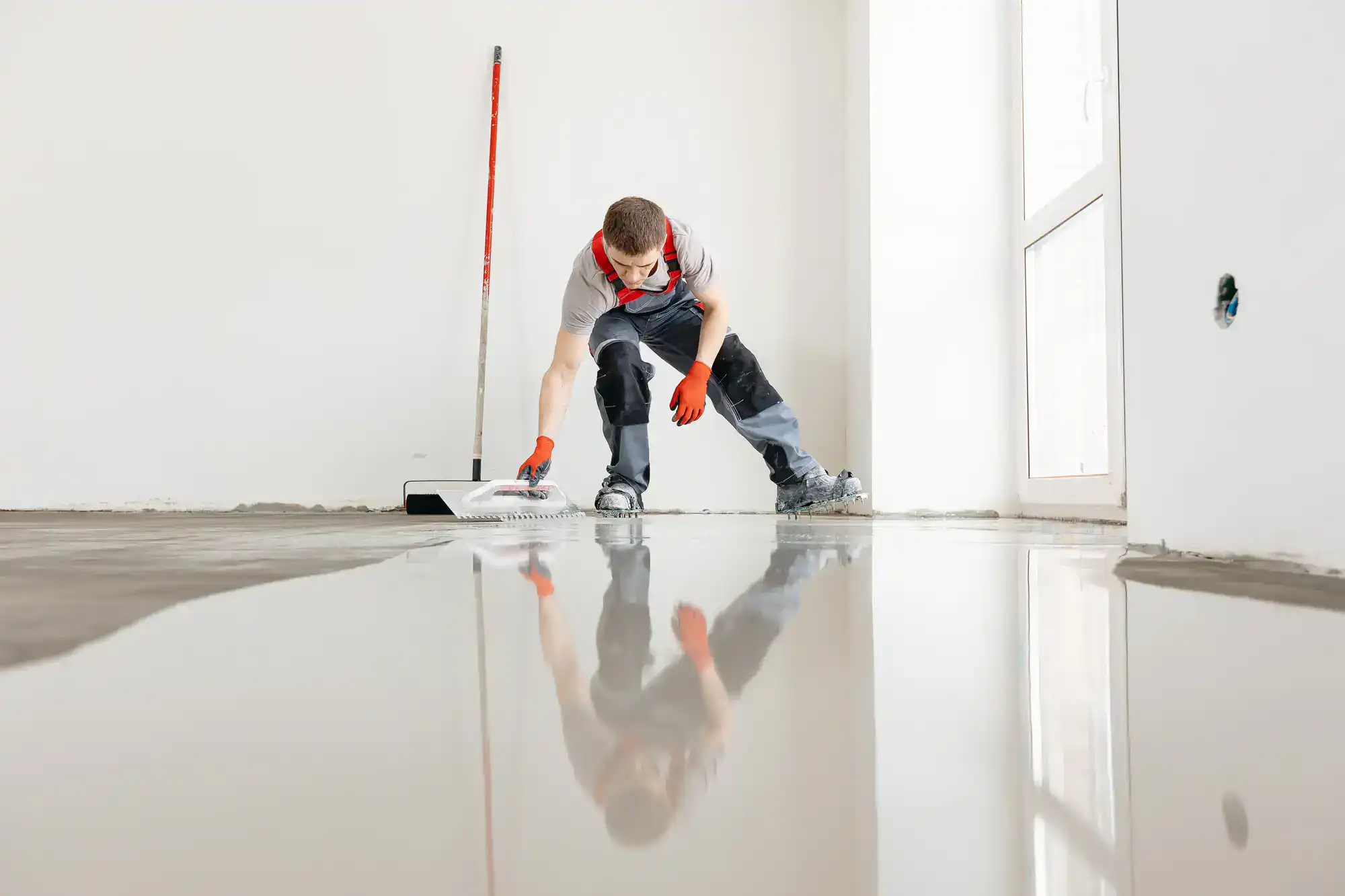
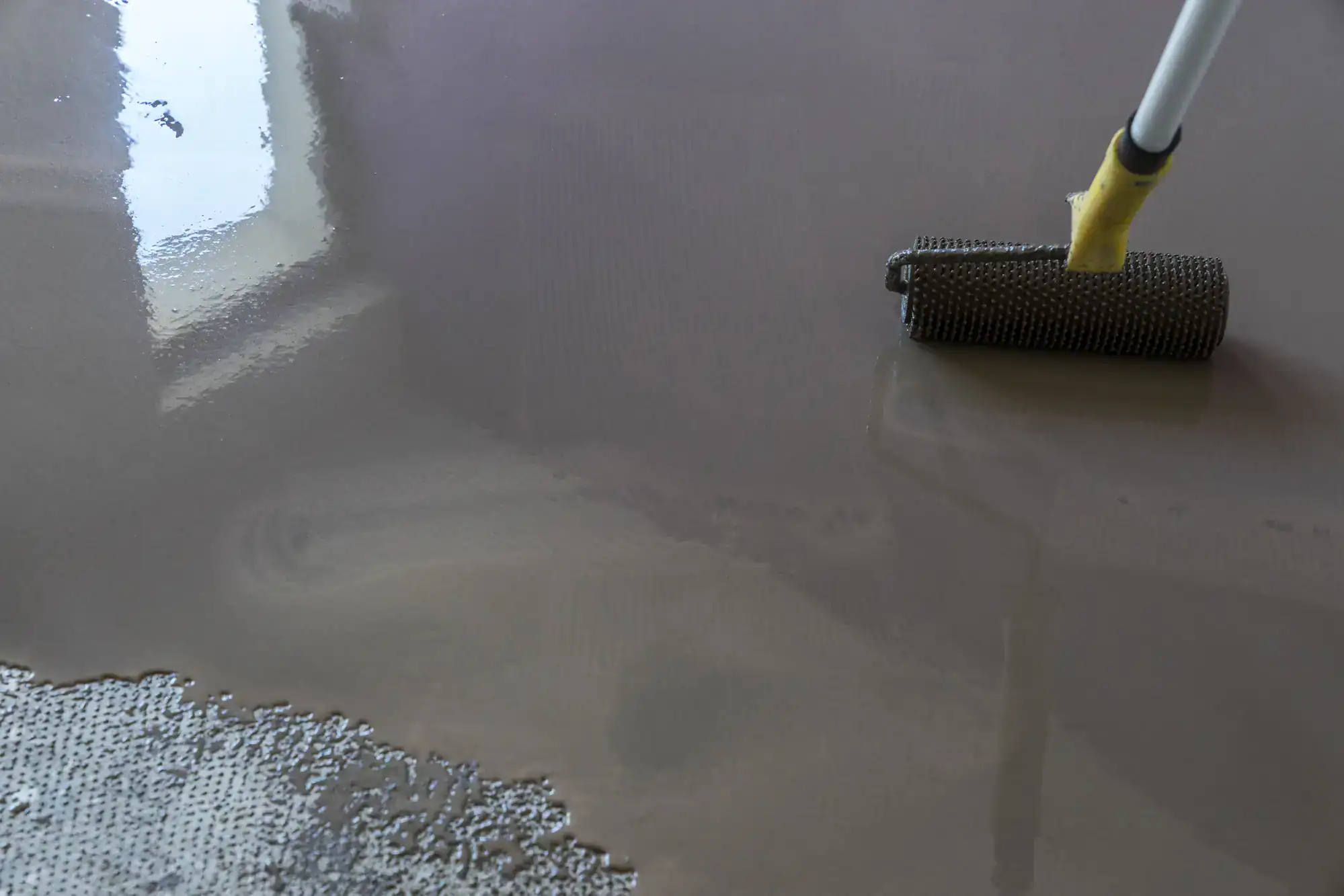
Then comes the pour itself. The material we use is a high-strength, polymer-modified cementitious underlayment with high flow characteristics it self-levels from ¼” up to 2″ neat, and up to 5″ with aggregate added for deeper corrections. Working time is limited, so our crew moves with precision. Foot traffic is typically possible within four to six hours. For commercial clients in Jericho or Woodbury, that turnaround matters. The Town of Oyster Bay Building Division may require permits for associated structural or waterproofing work, and we handle that upfront not discovered mid-project.
Ready to get started?
What makes us different from hiring a general contractor who subs out the leveling work is accountability. We handle moisture testing, concrete surface preparation, grinding, self leveling underlayment installation, and the final floor coating all under one roof. There’s no handoff between a leveling sub and a flooring installer, no gap in responsibility if something needs to be addressed, and no finger-pointing between trades. For commercial clients managing tenant improvements along the Jericho Turnpike corridor or the Woodbury office park district, that single point of contact isn’t just convenient it protects the project timeline.
For residential clients in Oyster Bay, Locust Valley, or Glen Head, we calibrate the scope to your home. Pre-war and mid-century slabs in this area often have surface irregularities that have been accumulating for decades settlement cracks, frost heave damage from repeated Nassau County winters, and moisture-related degradation that shows up as soft or flaking concrete. Our self leveling system corrects all of it, and the polymer-modified formulation is specifically engineered for low shrinkage and superior bond strength, which matters in a climate where freeze-thaw cycles stress the material every single year.
Commercial floor leveling solutions for Oyster Bay-area businesses restaurants, retail buildouts, office renovations, light industrial facilities are spec’d for the traffic load and finish floor system being installed on top. The depth of correction, product selection, and priming protocol are matched to the application. We offer fast curing concrete leveler options when the project schedule demands it, and our crew is sized and equipped to handle large commercial pours without sacrificing the precision the material requires.
It depends on what’s going on with the slab, but in Oyster Bay specifically, the answer is “probably” more often than people expect. The median construction year for homes in the hamlet is around 1960, and nearly 28% of the housing stock predates 1940. Those slabs have had 60 to 80-plus years to settle, crack, and develop surface irregularities and most modern flooring products have almost no tolerance for that kind of unevenness.
Luxury vinyl plank, large-format tile, and engineered hardwood all require a subfloor that meets specific flatness standards. If yours doesn’t, the flooring will reflect every imperfection underneath it through cracked grout lines, hollow spots, or planks that shift and squeak underfoot. A professional assessment will tell you whether you’re dealing with a surface issue that self leveling can correct, or something structural that needs a different approach. Either way, you’re better off knowing before the new floor goes down.
Most self leveling underlayments allow light foot traffic within four to six hours of the pour. That said, “dry enough to walk on” and “ready for flooring installation” are two different things. Depending on the product, the depth of the pour, and the ambient conditions in your space, you’re typically looking at 24 hours before light flooring work can begin and up to 72 hours before heavier installation is appropriate.
In Oyster Bay and the broader Nassau County area, ambient humidity is a real variable especially in basements and ground-floor spaces in older North Shore homes where ventilation is limited. Higher humidity slows the curing process. If the space isn’t climate-controlled, the timeline gets adjusted accordingly. For commercial clients in Jericho or Syosset who are working against a hard opening date, we always discuss the drying timeline upfront so it’s built into the project schedule, not discovered after the pour.
There are a few things working against older slabs in Oyster Bay and across Long Island’s North Shore, and they tend to compound over time. The first is simple age concrete poured in the 1940s, 50s, and 60s wasn’t held to the same flatness tolerances that modern flooring requires, and decades of use add wear on top of that. The second is soil movement. Oyster Bay’s clay-rich soils expand when wet and contract when dry, which creates gradual, uneven pressure against the slab from below.
The third factor is Long Island’s freeze-thaw cycle. Every winter, moisture in the soil and within the concrete itself freezes and expands, then thaws and contracts. Over enough winters, that repeated stress causes slabs to crack, shift, and develop the kind of surface irregularity that makes new flooring installation difficult. Frost heave where ice lenses form beneath the slab and push it upward is a documented issue in Nassau County and one of the most common reasons older slabs in Oyster Bay need professional leveling before a renovation can move forward.
Self leveling underlayment can address surface cracks and unevenness, but there’s an important distinction between surface-level damage and structural damage. If the cracks in your basement floor are the result of normal slab settlement, freeze-thaw stress, or surface deterioration over time, self leveling is an appropriate solution the damaged surface gets ground down and prepped, and the new material fills and levels over it. If the cracking is the result of a structural issue like significant foundation movement or active hydrostatic pressure, that underlying problem needs to be addressed first.
In Oyster Bay basements specifically, moisture is almost always part of the conversation. The clay soils and coastal proximity that define this area mean that below-grade spaces are routinely dealing with moisture vapor transmission through the slab. Before any self leveling material goes down in a basement, we conduct relative humidity testing to confirm the slab is within acceptable range. If it’s not, we resolve the moisture issue first because pouring over a wet slab without addressing it is a guaranteed failure regardless of the product quality.
Concrete repair and self leveling underlayment serve different purposes, though they’re often used together on the same job. Concrete repair patching compounds, crack fillers, and similar products is used to address specific localized damage: a crack, a spalled area, a divot. It’s targeted work. Self leveling underlayment, by contrast, is a poured system designed to correct the overall flatness of a floor across a larger area. It flows out under its own weight and creates a uniform, flat surface that the finish floor can be installed on top of.
In practice, most professional self leveling jobs involve both. We repair significant cracks and damaged areas first, then pour the self leveling material over the prepped surface to bring the entire floor to a consistent flatness. Trying to skip the repair step and rely on self leveling to bridge large cracks or significant voids doesn’t work the material isn’t designed for that, and it will reflect or crack through those weak points over time. The right sequence matters, and it’s one of the things that separates a proper installation from one that fails within a year.
The cost of self leveling concrete in Oyster Bay, NY typically ranges from $750 to $6,000 or more depending on the square footage, the depth of correction needed, the condition of the existing slab, and whether additional prep work like moisture remediation or concrete repair is required before the pour. Smaller residential jobs in Oyster Bay or surrounding communities like Glen Head or East Norwich tend to fall toward the lower end of that range. Larger commercial pours in Jericho, Syosset, or Woodbury where square footage is higher and commercial-grade specifications apply scale accordingly.
In Oyster Bay’s real estate market, where median home values sit above $649,000 in the hamlet and significantly higher in Gold Coast-adjacent communities, the cost of professional self leveling is a small fraction of what a failed flooring installation costs to tear out and redo. The more relevant question isn’t what the leveling costs it’s what it costs to skip it and find out the hard way that the slab wasn’t ready. A proper assessment and quote will give you a clear number for your specific situation before any commitment is made.