
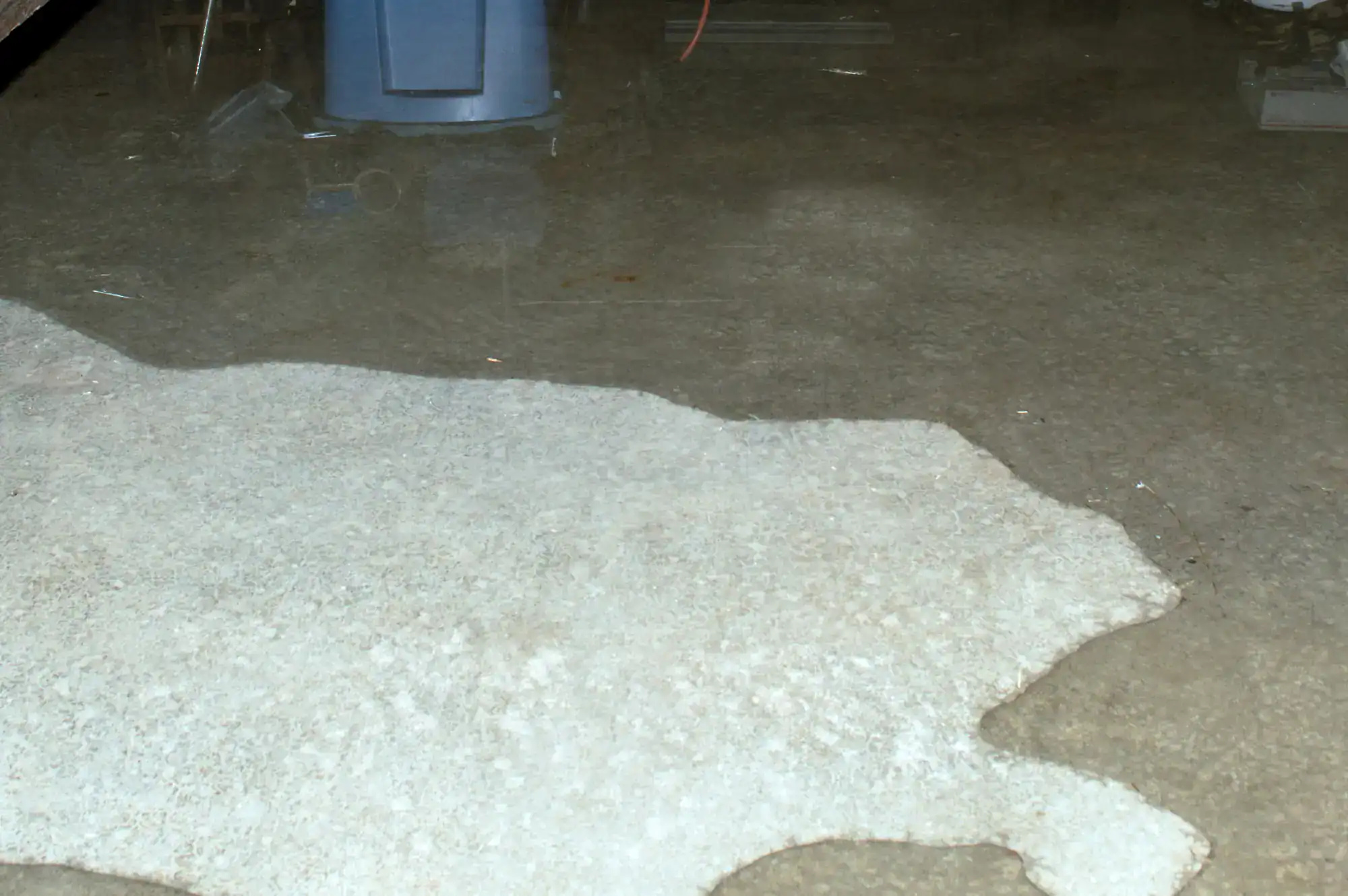
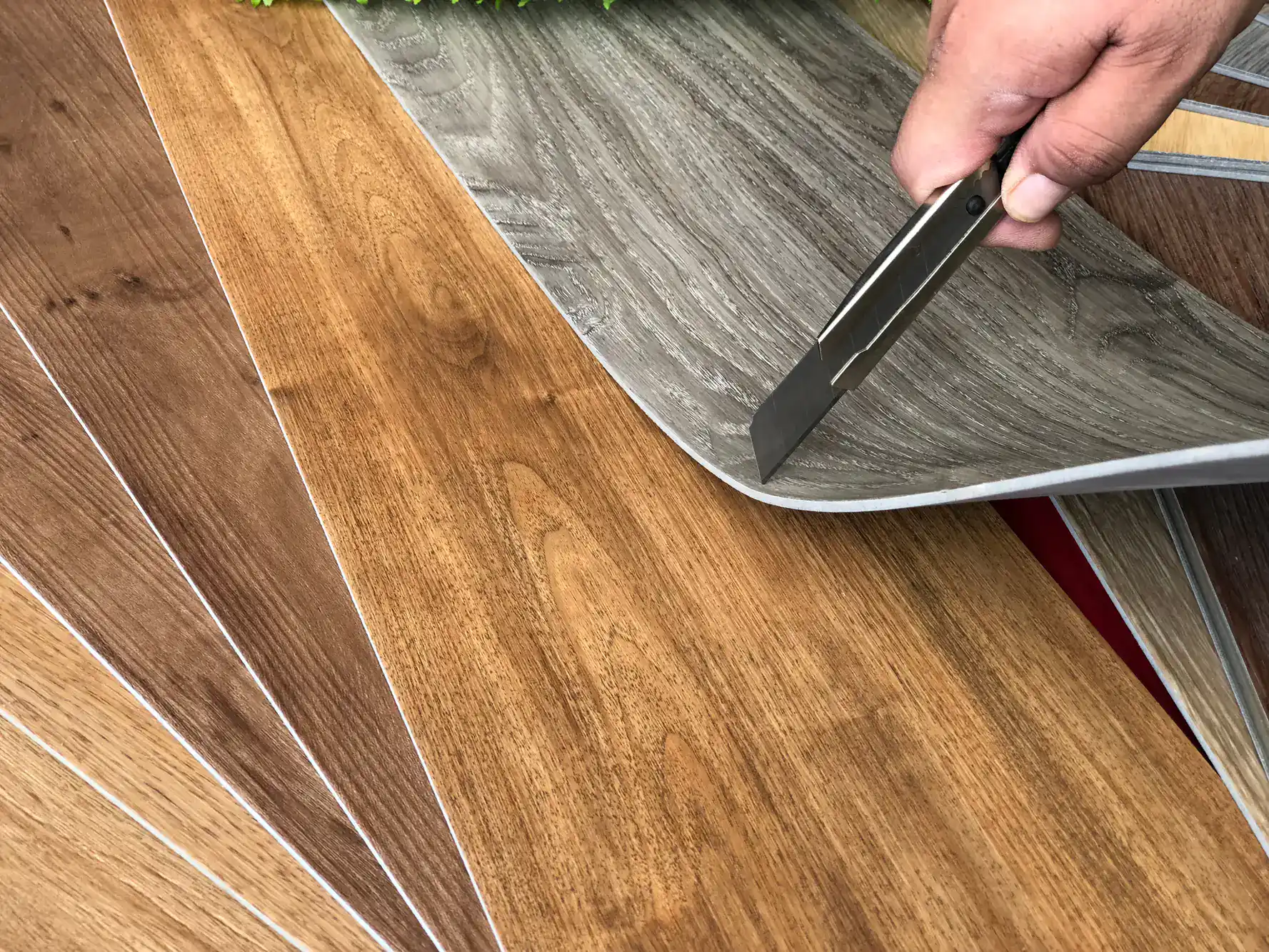
When your apparatus bay floor is done right, you stop managing the problem. No more peeling edges near the bay doors where salt brine collects after a winter response. No more bubbling under the coating where coastal moisture worked its way through a substrate that was never properly tested before installation. You get a surface that’s seamless, non-porous, and genuinely built for what happens inside a working fire station.
Oyster Bay sits directly on Long Island Sound and Oyster Bay Harbor. That coastal humidity is not a seasonal issue it’s year-round, and it raises the moisture content of concrete slabs in ways that most contractors either don’t test for or don’t know how to address. We’ve seen floors installed without accounting for that moisture delaminate within months. It’s not a question of if it’s when.
The winters here add another layer. Nassau County road salt gets tracked into the bay on every winter response. It infiltrates porous surfaces, accelerates concrete degradation, and widens cracks with every freeze-thaw cycle. Our polyaspartic systems handle all of it the salt, the humidity, the thermal cycling, and the weight of your apparatus and do it for 20 years or more without needing to be torn out and redone.
We’ve been installing commercial and industrial flooring systems on Long Island for over 30 years. Our company is based in Bohemia, NY well within the same regional market as Nassau County’s fire departments and we’ve worked through the same coastal conditions, road salt winters, and freeze-thaw cycles that Oyster Bay stations deal with every year. This isn’t a national brand sending a crew from out of state. We’re a Long Island contractor with direct, repeated experience in the environment your floor has to survive.
CEO Danny Harmer brings more than 40 years of hands-on installation experience to every project. Field supervisors Javier, Eduardo, and Fredith add another 40-plus years between them, and most of our installation team has been with us for over a decade. That kind of tenure matters in a trade where crew turnover is common and quality suffers for it.
The credentials back it up too. We hold a Sherwin-Williams High Performance Flooring certification one of the most rigorous manufacturer-approved applicator credentials in the industry alongside a Res Tech certification. Every installer is OSHA 40 certified, which matters when you’re working in an active municipal facility serving a community that’s been protecting its neighbors since 1888.
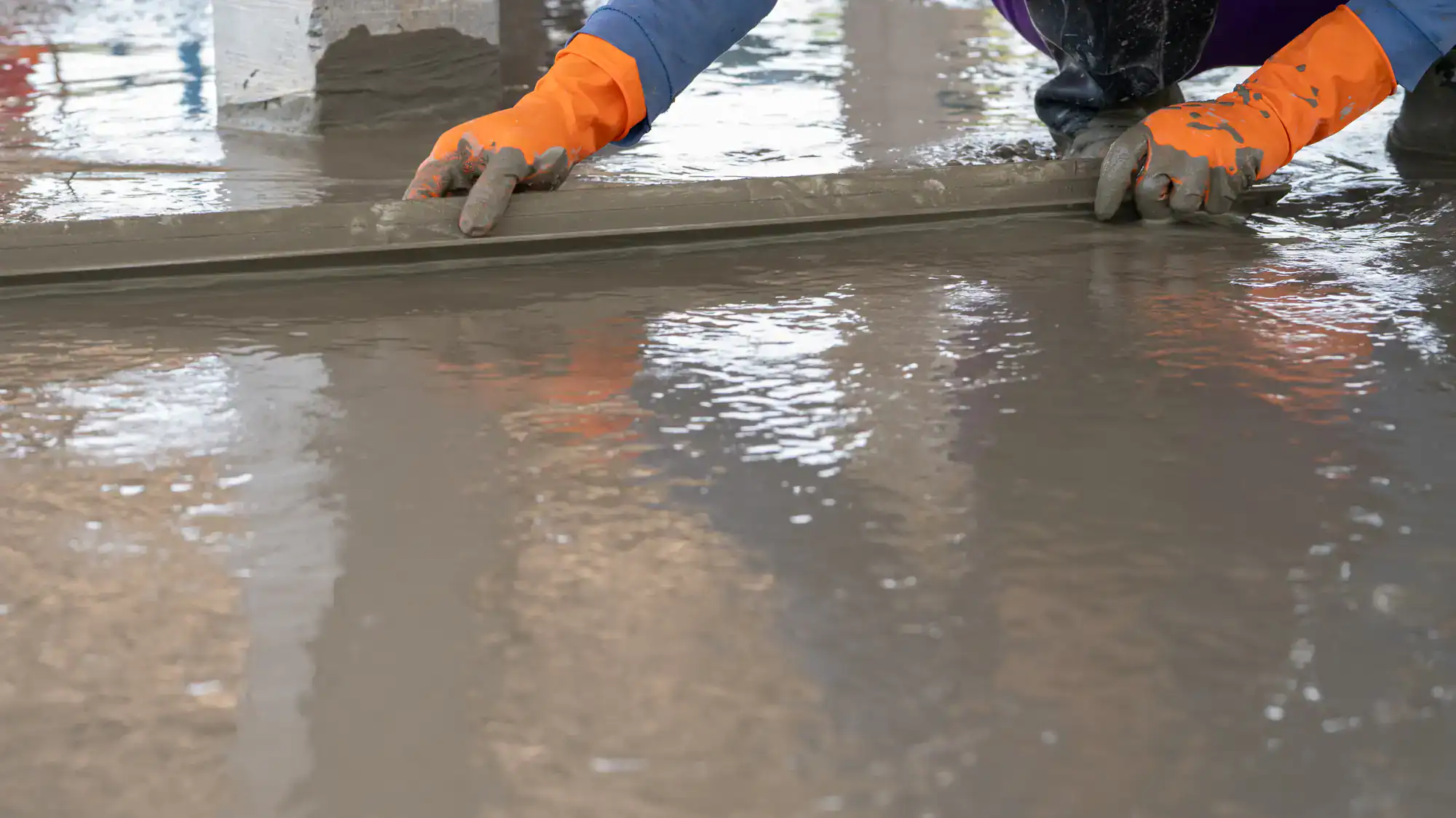
It starts with the concrete. Before any coating goes down, the slab gets diamond ground not acid etched. Diamond grinding opens the concrete’s pores mechanically, creating a surface profile that gives the coating something real to bond to. Acid etching leaves behind chemical residue and doesn’t address the surface consistently enough for a system that needs to hold up under 40,000-pound apparatus. After grinding, we perform moisture testing on the slab. In Oyster Bay’s coastal environment, this step isn’t optional it’s the difference between a floor that lasts and one that bubbles up within a year.
Any cracks or spalls in the concrete are repaired before coating begins. For stations with older infrastructure and several of Oyster Bay’s fire companies operate out of buildings with well over a century of history this prep work can be more extensive. Decades of oil, diesel, and hydraulic fluid absorption require thorough cleaning and profiling before the substrate is ready. Once the slab is prepped and confirmed dry, we apply a penetrating primer, followed by a high-build epoxy base coat with aggregate broadcast for texture and slip resistance. The polyaspartic topcoat is applied last.
That topcoat cures in 24 hours. Your apparatus whether that’s a Ferrara engine or a tower ladder is back inside the bay the next day. No week-long downtime. No apparatus parked outside on the street. The floor is ready for real use within one operational day, which means your department stays in position for whatever comes next.
Ready to get started?
The apparatus bay is the most demanding surface in the building, but it’s not the only one that matters. We handle every zone of a fire station decontamination areas, locker rooms, mechanical rooms, commercial kitchens, and living quarters using the same multi-layer approach and the same quality standard throughout. One contractor, one installation team, one consistent result across the whole facility. No handoffs, no mismatched systems, no gaps in accountability.
For Oyster Bay departments like the Atlantic Steamer Fire Co. No. 1, which provides water rescue and marine firefighting in the surrounding waters, the floor system also needs to handle what comes back with the apparatus after a marine response salt water, marine fuels, and biological material that standard coatings aren’t designed to resist. Our chemically resistant polyaspartic topcoat handles that contamination profile as readily as it handles diesel and road salt.
Every installation is backed by our Sherwin-Williams High Performance Flooring certification, meaning the system is applied according to the manufacturer’s exact specifications not approximated, not shortcut. For a publicly funded fire district accountable to Nassau County taxpayers and governed under the Town of Oyster Bay’s fire service code, that level of documented quality control matters. You’re not just getting a floor you’re getting a system with a paper trail that holds up to scrutiny.
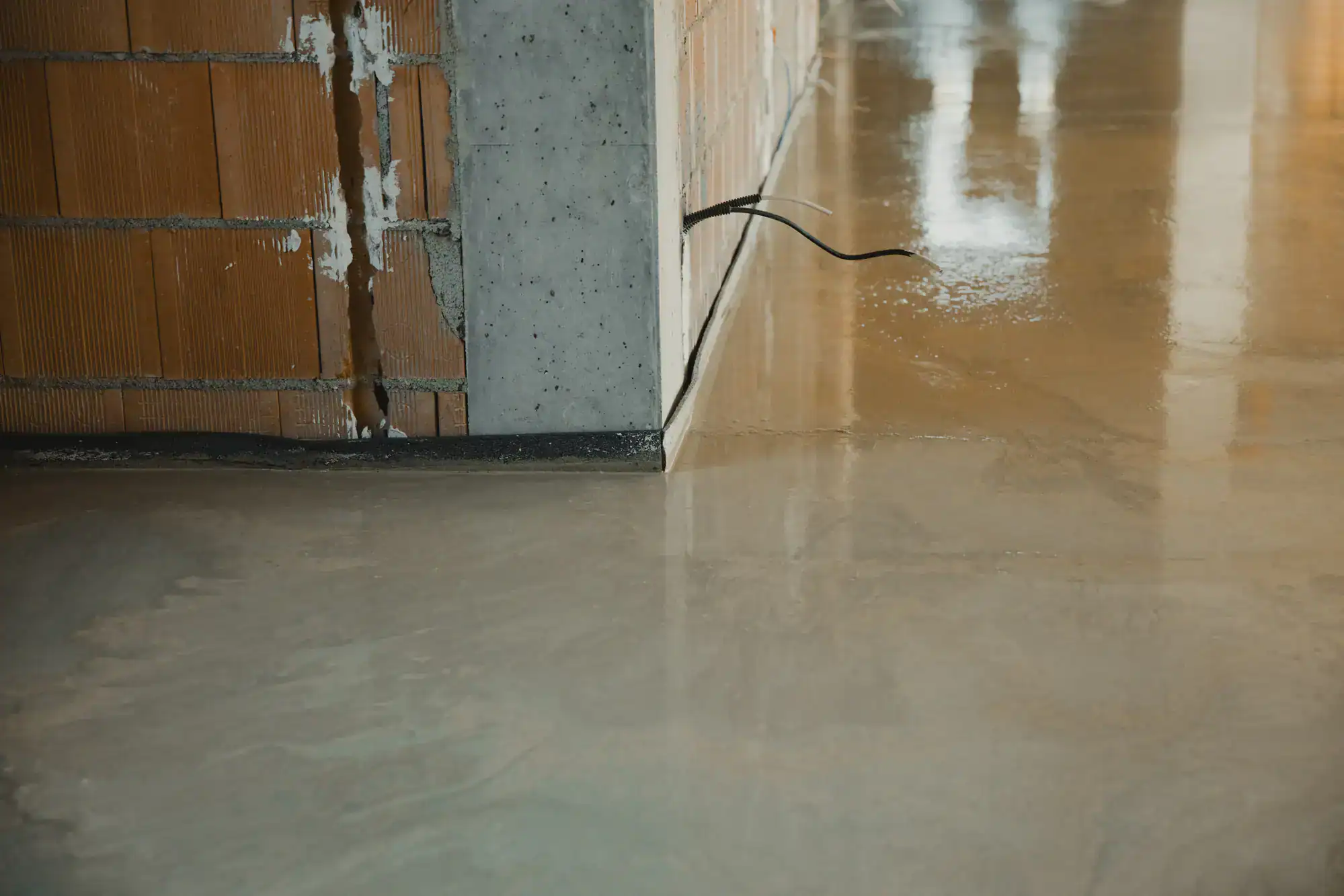
A properly installed polyaspartic system in an Oyster Bay apparatus bay can last 20 years or more. The key word there is properly installed meaning diamond-ground concrete, moisture-tested slab, crack repair, penetrating primer, high-build base coat, and a polyaspartic topcoat applied to manufacturer spec. When those steps are followed, the system is built to handle Oyster Bay’s full climate range: winters that drop to 25°F with heavy road salt exposure, coastal humidity from Long Island Sound that stays elevated year-round, and summer temperatures pushing into the low 80s that create thermal cycling stress on any coating.
Where floors fail early typically within three to five years it almost always comes back to skipped prep steps. A contractor who acid etches instead of diamond grinds, or skips moisture testing on a North Shore slab, is setting up a delamination problem that no topcoat can prevent. The 20-year lifespan is achievable, but only when the foundation work is done correctly from the start.
The most common cause is moisture trapped beneath the coating at the time of installation. Concrete slabs especially in older fire stations along Oyster Bay’s North Shore absorb ground moisture over time, and coastal proximity keeps that moisture content elevated year-round. When a contractor applies epoxy over a slab that hasn’t been properly tested and confirmed dry, the moisture vapor pushes up through the coating as it tries to escape, creating bubbles and eventually causing delamination. It can happen within months of installation.
The second most common cause is inadequate surface preparation. Acid etching leaves behind chemical residue and creates an inconsistent surface profile that doesn’t give the coating a strong mechanical bond. Diamond grinding removes that variability and opens the concrete properly. In Nassau County stations that have absorbed decades of oil, diesel, and hydraulic fluid, the prep process is even more critical those contaminants have to be fully addressed before any coating system will bond correctly and hold long-term.
The apparatus does need to be out of the bay during installation and initial cure but with a polyaspartic system, that window is 24 hours, not the three to seven days that traditional epoxy requires. For Oyster Bay’s volunteer fire companies, that’s the difference between a manageable one-day repositioning and a logistical problem that puts the department out of position for a week. The 24-hour return timeline is one of the main reasons fire departments specifically request polyaspartic systems over standard epoxy.
Scheduling is usually coordinated around the department’s call volume and operational calendar. Spring installations when temperatures are in the 45°F to 65°F range optimal for coating application tend to work well for departments that want to get the work done after winter damage becomes visible and before the summer busy season. Our installation team works efficiently to minimize the total time your apparatus is out of the bay, and the process is planned around your department’s schedule, not the other way around.
NFPA 1500 and NFPA 1581 both have implications for apparatus bay floor specifications, particularly around contamination control. NFPA 1581 establishes requirements for fire station facilities related to the separation of contaminated gear and equipment from living areas, and a seamless, non-porous floor surface is a direct support tool for meeting those requirements. Porous or cracked floors harbor carcinogenic particulates from smoke, diesel exhaust, and fire byproducts contaminants that are increasingly linked to the elevated cancer rates documented in the firefighter population. A sealed, washable surface makes decontamination protocols far more effective.
In New York, fire station facilities are also subject to state building codes and Nassau County Fire Marshal oversight. Floor coating installation for maintenance and improvement purposes typically doesn’t require a separate building permit, but that should be confirmed with the specific fire district or the Town of Oyster Bay’s relevant department for each project. What matters from a compliance standpoint is that the system installed is documented, professionally applied, and meets the durability and chemical resistance standards that contamination control protocols depend on.
If you’ve had a floor installed and it’s already showing signs of failure peeling, bubbling, cracking, or coating that comes up with tire marks the issue almost certainly starts with how the concrete was prepared before the coating went down. On Long Island’s North Shore, the combination of coastal humidity and older concrete substrates creates conditions that punish any shortcuts in the prep process. A slab that wasn’t diamond ground, wasn’t moisture tested, or had existing cracks and contamination left unaddressed will reject the coating over time regardless of what product was used on top.
The other common factor is using the wrong system for the application. Consumer-grade epoxy kits and thin-mil coatings are not rated for the compressive load of fire apparatus, and they don’t have the thermal flexibility to handle the temperature swings Oyster Bay experiences between January and July. When a hot tire from a post-response vehicle cools against a standard epoxy surface, it can bond to the coating and pull it off when the truck moves a failure mode called hot tire pickup that a properly formulated polyaspartic topcoat is specifically designed to prevent.
Professional apparatus bay floor installations in Nassau County generally range from $4 to $15 per square foot, depending on the size of the bay, the condition of the existing concrete, and the scope of prep work required. For Oyster Bay’s older fire stations some operating out of buildings with over a century of history the prep phase can be more involved than a newer facility, which affects the overall project cost. Extensive crack repair, oil and diesel contamination removal, and additional grinding passes on heavily worn concrete are all factors that influence the final number.
The more useful way to look at the cost is over time. A properly installed polyaspartic system at the higher end of that range, lasting 20-plus years, costs significantly less than a cheaper system that fails in three to five years and requires grinding off the failed coating, disposing of the debris, and starting over. For a fire district accountable to Nassau County taxpayers and the Town of Oyster Bay’s budget process, the total cost of ownership argument is straightforward the right floor, done once, is the fiscally responsible choice.