
You’re managing a healthcare facility where every surface matters. Floors take constant traffic from gurneys, wheelchairs, and foot traffic while being exposed to harsh disinfectants multiple times per day. Standard flooring cracks, harbors bacteria in seams, and fails inspections.
Seamless medical-grade epoxy in Oyster Bay, NY eliminates those problems. You get a non-porous surface with zero seams where contaminants hide. The antimicrobial protection is built into the coating itself, not just applied on top, so it doesn’t wear away with cleaning.
When you’re dealing with regulatory audits, patient safety protocols, and operational uptime, your flooring can’t be a weak point. Sterile room floor coatings give you a surface that withstands chemical disinfection without degrading, maintains slip resistance even when wet, and requires nothing more than standard cleaning protocols. You’re not adding complexity to your maintenance routine—you’re removing it.
We’ve been installing USDA/FDA compliant flooring in Oyster Bay, NY and across Long Island for over 30 years. We work with hospitals, surgical centers, medical offices, and laboratories that need installations done right the first time.
Oyster Bay sits near major healthcare facilities like Syosset Hospital, Glen Cove Hospital, and North Shore University Hospital. These facilities operate around the clock, and so do we when needed. We’ve completed overnight installations in occupied buildings without disrupting patient care or generating complaints about odor or noise.
You’re not hiring a general contractor who occasionally does medical floors. You’re working with a team that understands EPA registration requirements, VOC limits for occupied healthcare spaces, and what it takes to pass a health department inspection. That experience matters when your facility’s operations and reputation are on the line.
We start with a site assessment of your current flooring and operational schedule. You tell us which areas need work and when they can be accessed. We map out an installation timeline that minimizes disruption—often working nights or weekends if that’s what your facility requires.
Surface preparation comes next. We remove existing flooring if needed, repair the substrate, and ensure proper adhesion. This step determines how long your floor lasts, so we don’t rush it.
The low-VOC healthcare coatings go down in layers. First, a primer that bonds to the substrate. Then the base coat with antimicrobial properties mixed in. Finally, a topcoat that provides chemical resistance and the slip-resistant texture you need in wet areas. We use rapid-cure formulations when speed matters, allowing areas to return to service within 24 hours.
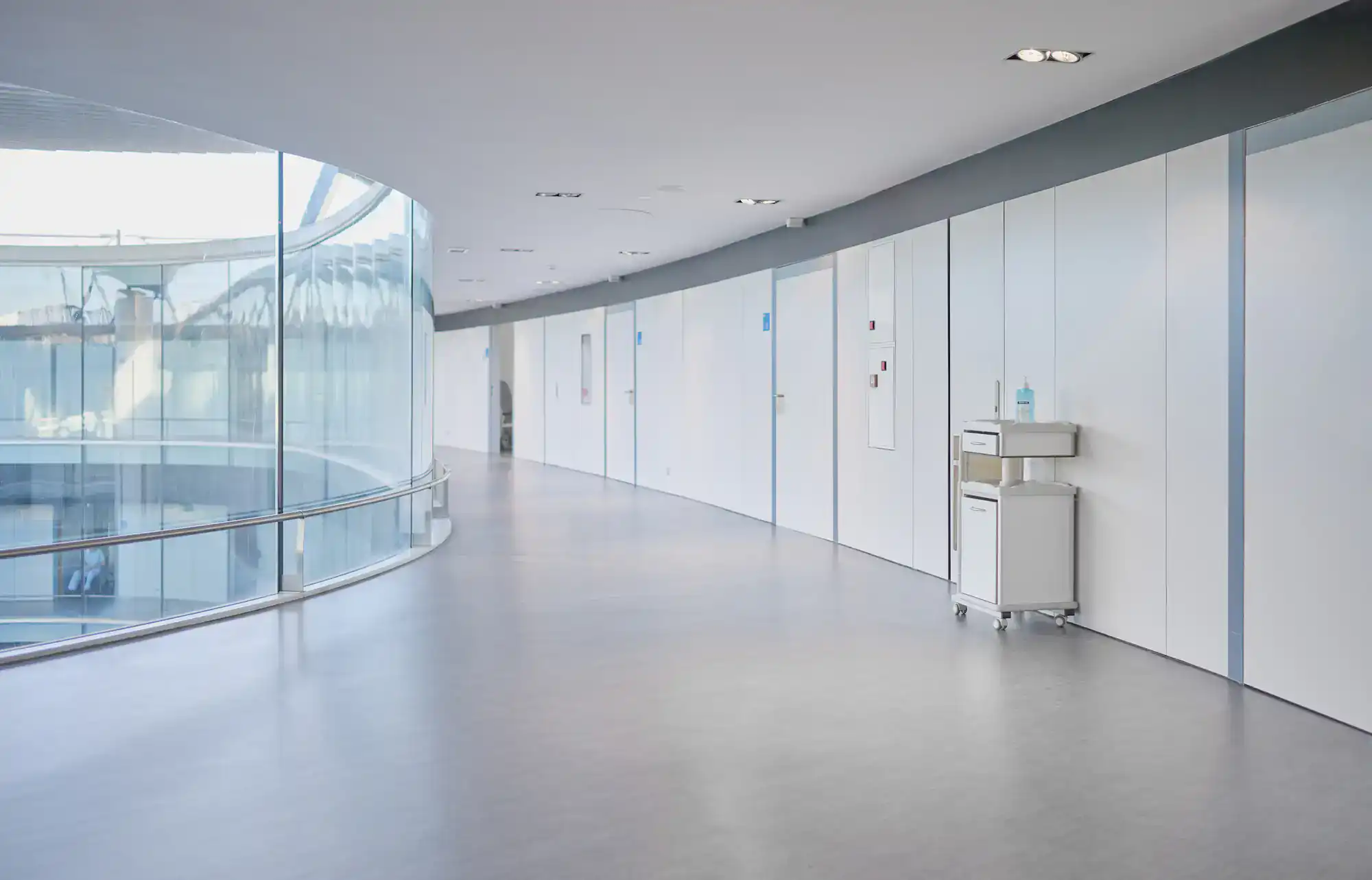
You get a seamless surface with no grout lines, no seams, and no places for bacteria to colonize. The floor is ready for your standard disinfection protocols immediately, and it’ll handle them without cracking or peeling for years.

Ready to get started?
You get EPA-registered antimicrobial protection embedded into the coating, not just sprayed on top. The active ingredient is an organic thione compound with no heavy metals, so it meets the strictest safety standards for occupied medical spaces.
The system is 160 mils thick—substantially more durable than standard epoxy. It won’t crack under the weight of imaging equipment or show wear patterns in high-traffic corridors. Chemical resistance is built in, so your floor handles quaternary ammonium compounds, bleach solutions, and other hospital-grade disinfectants without degrading.
In Oyster Bay, NY, where healthcare facilities range from small private practices to large hospital networks, we adjust our approach based on your specific requirements. Surgical suites get ultra-smooth finishes for easy cleaning. Physical therapy areas get more aggressive slip resistance. Laboratories get chemical resistance tailored to the specific substances used in that space.
You also get USDA/FDA compliance documentation. If you’re audited, you’ll have the paperwork showing your flooring meets Federal regulations for medical facilities. That documentation has saved our clients from costly violations and operational shutdowns.
The antimicrobial component is mixed directly into the epoxy coating during manufacturing, not applied as a surface treatment. It’s an EPA-registered organic compound that disrupts bacterial cell function on contact. When bacteria land on the surface, the antimicrobial agent prevents them from colonizing and multiplying.
This matters because about 80% of infectious diseases spread through contaminated surfaces. In healthcare settings, floors are constantly exposed to pathogens from foot traffic, dropped materials, and cleaning equipment. Standard flooring just sits there. Antimicrobial hospital flooring in Oyster Bay, NY actively works against bacterial growth between cleanings.
The protection doesn’t wear off with mopping or disinfection. It’s embedded throughout the coating thickness, so even as the surface experiences normal wear, the antimicrobial properties remain active. You’re getting a passive infection control measure that works 24/7 without additional effort from your staff.
USDA/FDA compliant flooring in Oyster Bay, NY must be seamless, non-porous, and resistant to the chemicals used in medical-grade cleaning. The regulations exist to prevent contamination in spaces where sterility matters—operating rooms, pharmaceutical areas, food preparation in healthcare facilities, and laboratories.
Epoxy meets these requirements because it cures into a single continuous surface with no seams or grout lines. There’s nowhere for bacteria, fluids, or contaminants to penetrate. The surface is completely impervious to moisture, which is critical because bacteria need moisture to survive and multiply.
The chemical resistance is equally important. FDA regulations require surfaces that can withstand repeated disinfection without breaking down. Our healthcare flooring systems resist strong detergents, quaternary ammonium compounds, bleach solutions, and other harsh chemicals without cracking, peeling, or delaminating. You can follow your infection control protocols as aggressively as needed without damaging the floor. We provide documentation proving compliance, which you’ll need during inspections and audits.
Yes, and we do it regularly. We’ve completed installations in occupied hospitals, surgical centers, and medical offices across Long Island without disrupting patient care. The key is planning and using the right materials for your situation.
Low-VOC healthcare coatings in Oyster Bay, NY are specifically formulated for occupied spaces. They emit minimal odor during application and curing, so patients and staff in adjacent areas aren’t affected. We’ve installed floors with patients in nearby rooms and received zero complaints about smell or fumes.
Timing matters too. We work around your schedule—nights, weekends, or during planned closures. Rapid-cure formulations allow us to complete installations in sections, so you’re never without access to critical areas for extended periods. A typical patient room can be prepped, coated, and returned to service within 24 hours. Larger spaces like corridors or waiting areas get done in phases, keeping portions of your facility operational throughout the project. You tell us what you can’t afford to shut down, and we build the installation plan around those constraints.
Maintenance is simpler than what you’re probably doing now. The seamless, non-porous surface means you’re not scrubbing grout lines or worrying about moisture seeping into seams. Standard hospital cleaning protocols work perfectly—detergent and water, followed by your facility’s approved disinfectant.
The floor is designed to handle harsh chemicals, so you don’t need to modify your infection control procedures. Use quaternary ammonium compounds, bleach solutions, or whatever your protocols require. The chemical resistance built into sterile room floor coatings means the surface won’t degrade, discolor, or lose its antimicrobial properties with repeated disinfection.
You’ll notice dirt and grime don’t cling to the surface like they do with tile or vinyl. The non-porous coating doesn’t give contaminants anywhere to hide, so they wipe away easily. Most facilities find they’re spending less time on floor maintenance after switching to medical-grade epoxy. No special equipment needed, no expensive cleaning products required—just your existing protocols applied to a surface that’s actually designed for healthcare environments. The floor maintains its appearance and performance for years without needing resealing or refinishing.
Healthcare flooring in Oyster Bay, NY is engineered for infection control and regulatory compliance. Standard commercial epoxy might look similar, but it doesn’t meet the same performance standards. The antimicrobial protection in healthcare systems is EPA-registered and tested specifically for medical environments. Commercial flooring doesn’t have that.
The thickness matters too. Healthcare epoxy is typically 160 mils thick compared to 10-20 mils for standard coatings. That extra thickness provides the durability needed for heavy medical equipment, constant foot traffic, and aggressive cleaning without showing wear. It also ensures the antimicrobial properties remain effective throughout the floor’s lifespan.
Chemical resistance is another critical difference. Medical facilities use disinfectants that would destroy standard flooring. Healthcare-grade systems are formulated to withstand repeated exposure to harsh chemicals without breaking down. The VOC content is also controlled to meet healthcare facility requirements—you can’t use high-VOC coatings in occupied medical spaces. Finally, healthcare flooring comes with compliance documentation proving it meets USDA/FDA standards. Standard commercial flooring doesn’t include that paperwork, which you’ll need during inspections.
Properly installed seamless medical-grade epoxy in Oyster Bay, NY lasts 15-20 years in high-traffic healthcare environments. That lifespan assumes you’re following standard cleaning protocols and the floor was installed correctly from the start. The 160-mil thickness provides substantial protection against wear, even in corridors and waiting areas that see constant foot traffic.
You won’t see the wear patterns that develop with vinyl or tile. The surface is monolithic, so there are no seams to separate or edges to curl. Heavy equipment like imaging machines, hospital beds, and cleaning equipment won’t crack or damage the coating. The chemical resistance means your disinfection routine won’t degrade the floor over time.
The antimicrobial properties don’t diminish with age because they’re embedded throughout the coating, not just on the surface. As the floor experiences normal wear, fresh antimicrobial protection is continuously exposed. Most facilities find the floor looks and performs nearly the same in year ten as it did in year one. The investment pays for itself through reduced maintenance costs, fewer replacements, and avoiding the operational disruption of frequent flooring repairs. When you calculate the total cost over the floor’s lifespan, healthcare-grade epoxy is substantially more economical than replacing vinyl or tile every few years.