
Most floors don’t fail because of heavy traffic. They fail because the contractor skipped moisture testing, rushed the prep, or used a product that wasn’t rated for the actual environment. In Oyster Bay, that environment includes harbor-adjacent humidity that pushes through concrete slabs year-round and older commercial buildings along South Street and East Main Street with decades of moisture infiltration already baked in. When the prep isn’t right, the floor bubbles, peels, and delaminate. Sometimes within months.
When it’s done right, you get a floor that doesn’t need to be thought about again for fifteen to twenty years. No peeling corners. No soft spots where moisture worked its way in. No staining from oil, chemicals, or whatever your operation throws at it daily. For a Bethpage Business Park facility running forklifts and distribution equipment, that means real downtime savings. For a restaurant in the hamlet prepping for October’s Oyster Festival, it means passing your health inspection without a second thought.
The difference between a floor that lasts and one that doesn’t isn’t the brand on the bucket. It’s the process behind the installation and that’s exactly what we’re built around.
We’ve been serving Nassau and Suffolk County commercial and industrial clients for over 35 years. Our founder and CEO, Danny Harmer, has been installing resinous flooring systems for more than 40 years across the United States, internationally, and including the White House kitchen in 1996. In a town where presidential history is part of the local identity, that’s not a throwaway line. It’s a documented installation in the most scrutinized facility in the country.
We hold Sherwin-Williams High Performance Flooring certification and Res Tech certification both factory-trained, manufacturer-backed credentials. Our installers are OSHA 40 certified. Our BBB file is A+ with zero complaints on record across our entire operating history. When a facility manager at the Bethpage Business Park or a healthcare administrator in Syosset asks for documentation, it exists. No scrambling, no vague assurances.
That’s what 35 years of doing this the right way actually looks like in Oyster Bay and the surrounding communities.
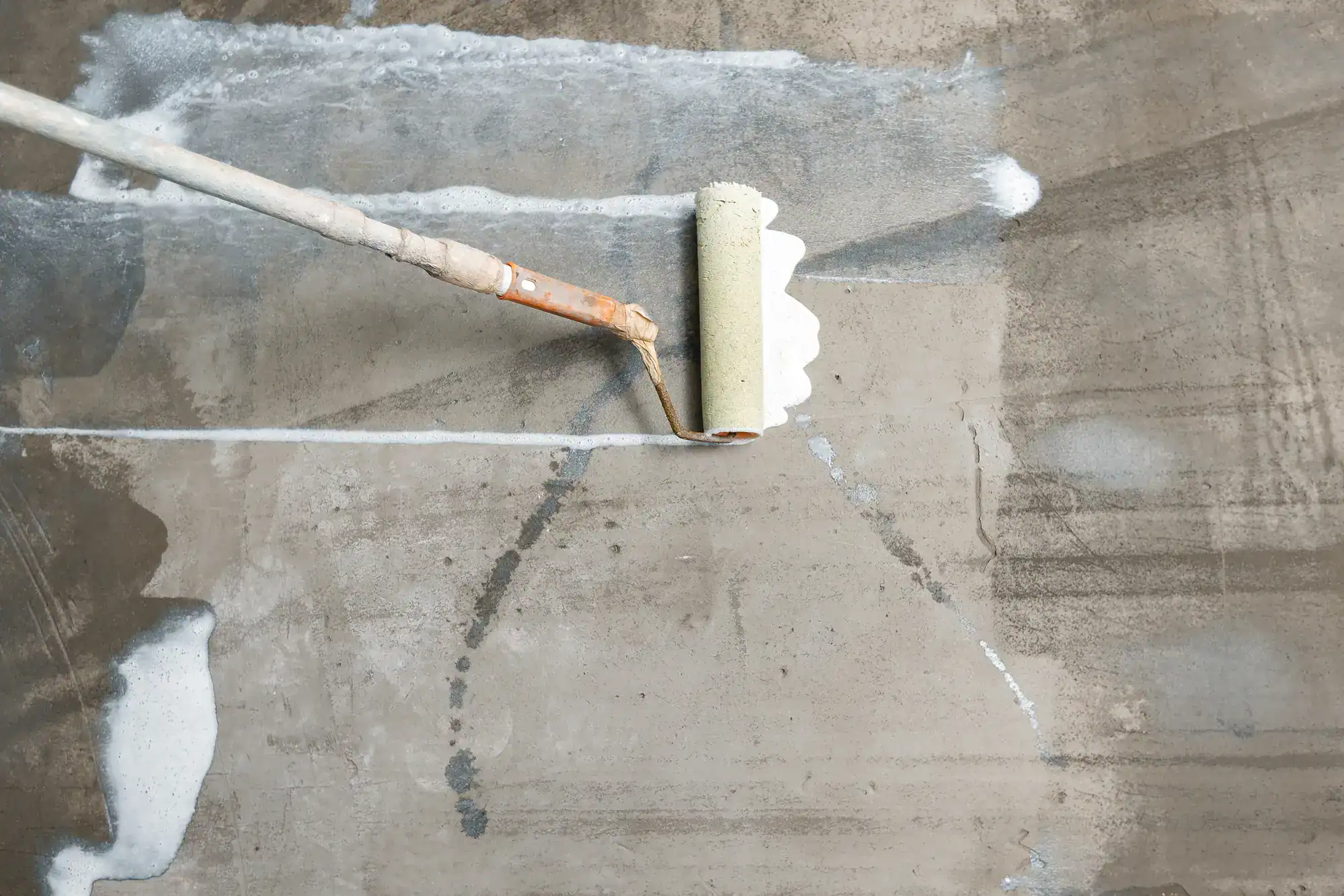
Every project starts with a site assessment, and in Oyster Bay, that assessment always includes moisture testing. This isn’t a formality it’s the step that determines whether the system we specify will bond correctly to your slab. Given the harbor-adjacent location and the age of many commercial buildings in the hamlet, moisture vapor transmission is a real variable that we measure, not assume. Skipping it is how floors fail.
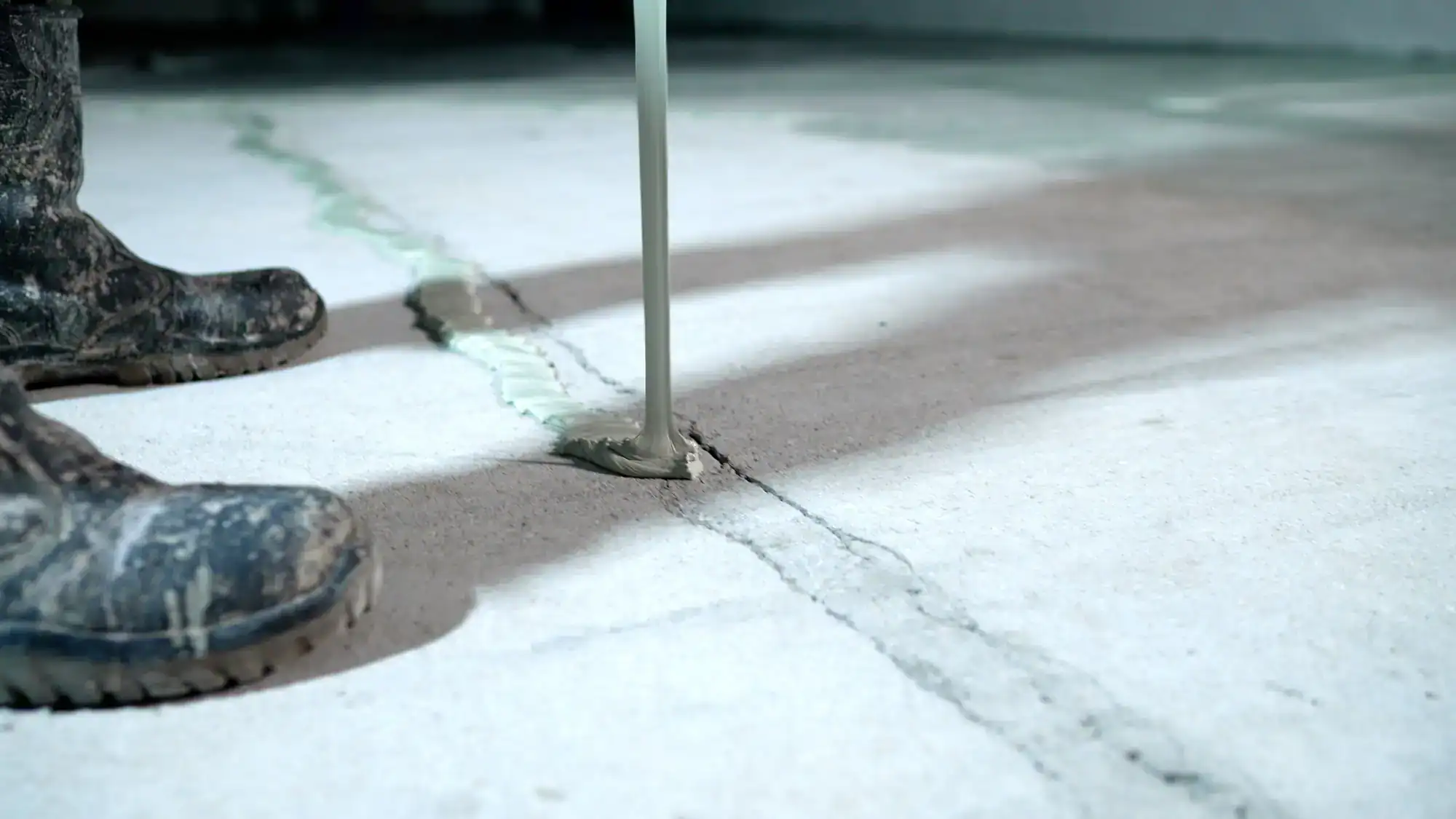
Once we understand the slab condition, we diamond grind the surface to open the concrete profile and remove any contaminants oil, old coatings, curing compounds, whatever’s there. Any cracks or surface defects get repaired before a single drop of coating goes down. This is the work that most contractors rush or skip entirely, and it’s the work that determines how long your floor performs.
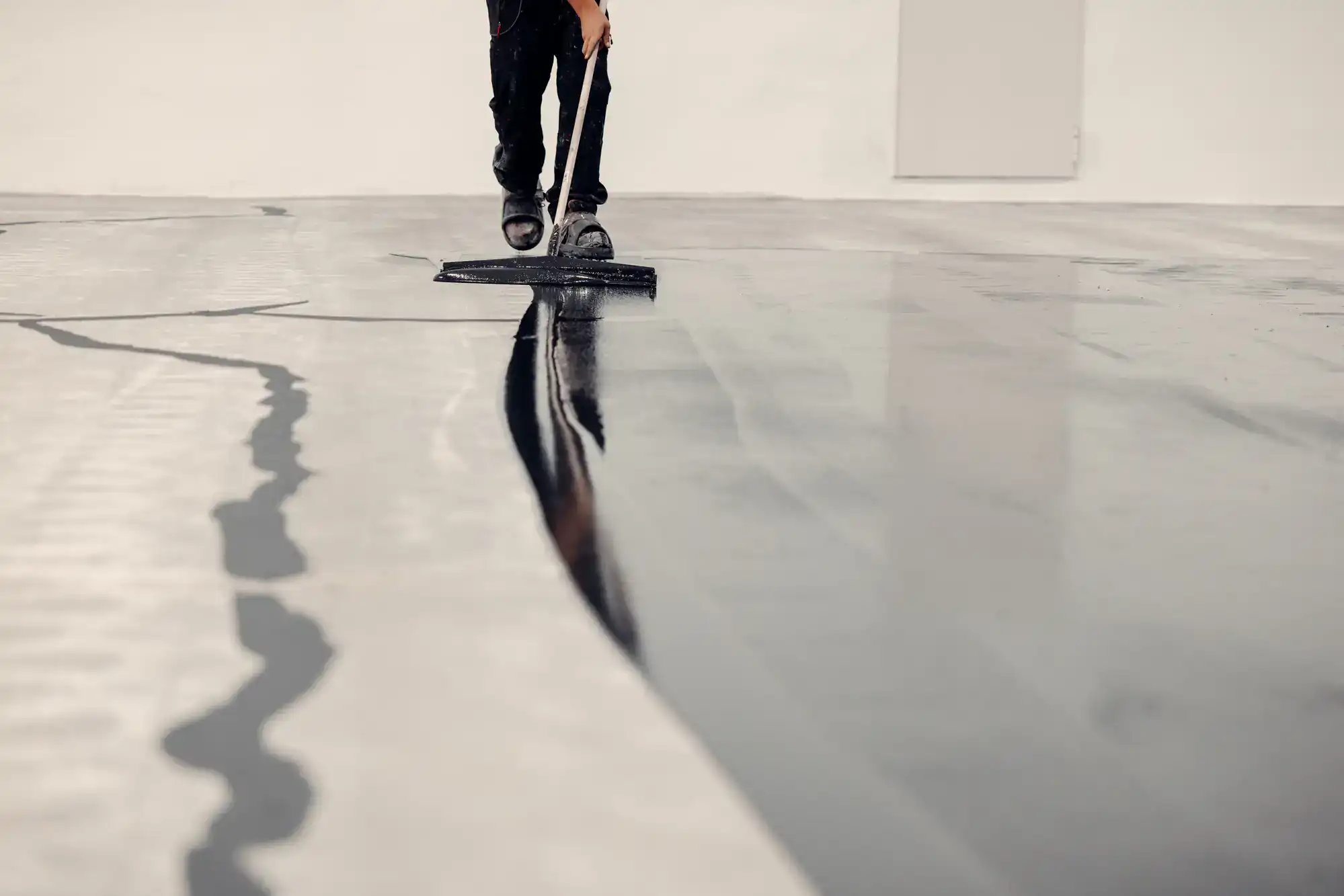
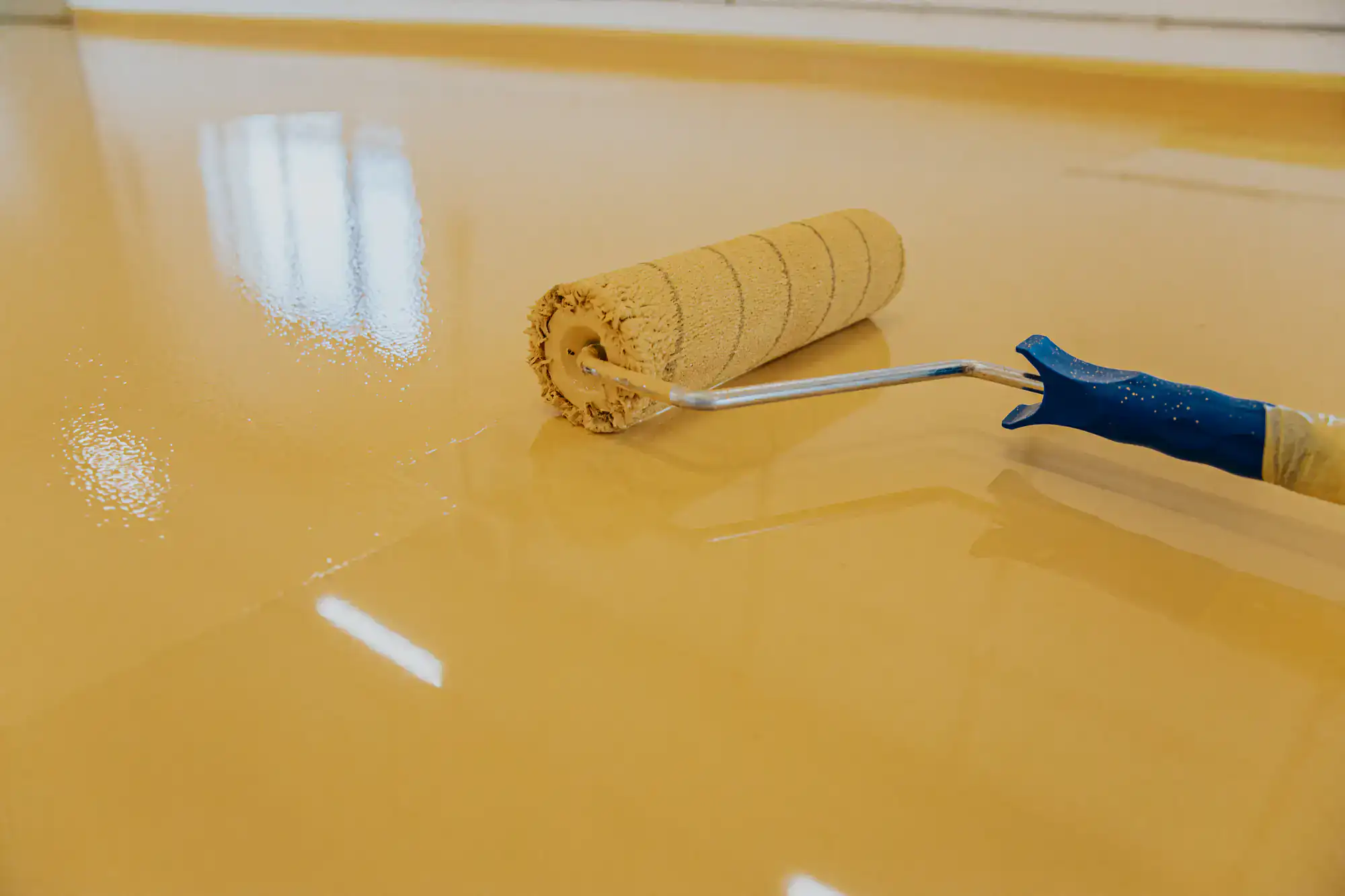
From there, the system goes down in layers: primer, base coat, topcoat with proper cure time between each. The products we use are 100% solids industrial-grade formulations, not consumer-grade kits scaled up for a commercial job. Depending on your environment and timeline, we can schedule installations overnight to minimize disruption. For restaurant operators in the hamlet or warehouse tenants in Bethpage, that matters. You get your floor done without shutting down your operation.
Ready to get started?
The Town of Oyster Bay covers a lot of ground from the industrial tenants of the Bethpage Business Park to the food service operators in the hamlet’s historic commercial district to the automotive and marine service businesses scattered across the North Shore. Each of those environments has a different flooring requirement, and we specify systems based on what your floor actually faces, not a one-size-fits-all product.
For warehouse and industrial applications forklift traffic, heavy axle loads, chemical exposure we install heavy duty industrial epoxy floor systems built to 14 to 30 mils of dry film thickness, with urethane mortar options available for the most demanding conditions. For commercial kitchens and food service environments, our system is USDA-compliant, thermally resistant, and fully coved at the wall base which is what Nassau County Health Department inspections require for food preparation areas. For healthcare facilities in Syosset, Jericho, or Plainview, we offer antimicrobial additives and our finish is seamless, non-porous, and compliant with ADA and FGI guidelines.
Chemical resistant epoxy finishes are standard for automotive and marine service environments, where oil, hydraulic fluid, brake fluid, and salt air exposure are part of the daily reality. High traffic commercial epoxy systems for retail and mixed-use commercial spaces are specified with slip-resistance profiles appropriate for foot traffic volume. Whatever the environment, we match the system to it not the other way around.
It does, and it’s one of the most important things to understand before hiring any flooring contractor in this area. Oyster Bay sits directly on Oyster Bay Harbor, and the ambient humidity along the North Shore is measurably higher than inland Nassau County towns. Relative humidity in the area peaks around 76% in late spring and stays elevated through summer. That moisture doesn’t just sit in the air it moves through concrete slabs via a process called moisture vapor transmission, and if a coating is applied over a slab with active moisture movement, it will eventually lose adhesion and fail.
The fix isn’t complicated, but it requires a contractor who actually does it. Before we specify any system for an Oyster Bay project, we test the slab for moisture vapor emission rate. If the reading is elevated, we use a moisture-mitigating primer designed to address that condition before the coating system goes down. It’s a step that adds time to the prep process, but it’s the only reason a floor installed in a harbor-adjacent building will still be performing a decade later.
For standard commercial applications retail, office, light commercial you’re typically looking at $7 to $10 per square foot installed. For heavy-duty industrial systems with higher build thickness, broadcast aggregates, or specialty topcoats, that range moves to $10 to $14 per square foot or higher depending on the complexity of the system and the condition of the existing slab. Older slabs in Oyster Bay’s historic commercial district often require more intensive prep work, which affects the final number.
What’s worth understanding is the cost comparison over time. A lower-cost installation from a contractor who skips diamond grinding or moisture testing might run $4 to $5 per square foot upfront. But if that floor fails in two or three years which is common in Oyster Bay’s coastal environment when prep isn’t done correctly you’re paying for removal, prep, and reinstallation on top of whatever downtime that causes your business. A properly installed industrial-grade system at $10 per square foot that lasts 20 years is a straightforwardly better investment. We’re happy to walk through the numbers on your specific project before you commit to anything.
For most commercial projects, the installation itself takes one to two days depending on square footage, system complexity, and slab condition. The floor is typically ready for light foot traffic within 24 hours of the final topcoat and ready for full operational use including forklift traffic within 48 to 72 hours, depending on the system specified and ambient temperature at the time of installation.
For restaurant and food service operators in Oyster Bay’s hamlet commercial district, we schedule installations overnight. You close at the end of your dinner service, we work through the night, and you open the next morning with the floor done. For larger industrial projects at the Bethpage Business Park, we can phase the work to keep portions of the facility operational while sections are being installed. The goal is always to minimize the impact on your operation, and we build the schedule around your business hours not the other way around.
For most commercial epoxy flooring projects, a building permit from the Town of Oyster Bay’s Division of Building is required when the work is part of a broader commercial renovation or tenant improvement. If you’re simply recoating an existing slab in an occupied commercial space without structural changes, the permit requirement depends on the scope of work and how the town classifies it and that’s worth confirming with the Building Division before the project starts.
If your business is located within Oyster Bay hamlet’s historic district, there’s an additional layer to be aware of: the Landmarks Preservation Commission reviews plans for construction and alteration within the historic district boundaries. Interior flooring work is generally outside the Commission’s jurisdiction, which focuses on exterior changes, but it’s a good idea to confirm your project scope with both the Building Division and the Commission if you’re operating in a historically designated building. We’re familiar with the local permitting environment and can help you understand what’s likely required before we start.
For commercial kitchens, the right system is a cementitious urethane or high-build epoxy with a coved base meaning the floor coating runs up the wall a few inches and forms a seamless, rounded transition at the floor-wall junction. Nassau County Health Department inspections require food preparation areas to have seamless, non-porous, easily cleanable floor surfaces, and a properly installed coved epoxy system is what meets that standard. Standard tile with grout lines does not grout is porous, it harbors bacteria, and it’s nearly impossible to sanitize completely.
The system also needs to be thermally resistant. Commercial kitchens cycle between hot water, steam cleaning, and cold storage temperatures, and a coating that isn’t formulated for thermal shock will crack or delaminate over time. We use systems specifically rated for commercial kitchen environments not a standard floor coating applied in a kitchen setting. For Oyster Bay restaurant operators preparing for the annual Oyster Festival and the health inspections that come with high-volume service periods, having the right system installed correctly is the difference between passing without a comment and getting a violation notice.
The honest answer is that almost any concrete floor can be coated but what varies is how much preparation it needs before a coating will bond correctly and last. The condition of your slab determines the prep process, and the prep process determines whether the floor performs or fails. A slab that looks solid on the surface can still have active moisture movement, surface contamination from years of oil or chemical exposure, or micro-cracking that needs to be addressed before any coating goes down.
In Oyster Bay specifically, older commercial buildings in the hamlet and throughout the town often have slabs with decades of history previous coatings, moisture infiltration, surface degradation from salt air exposure. These slabs aren’t disqualified from being coated, but they need a contractor who will assess them honestly and do the prep work that the condition actually requires. When we walk a project, we tell you exactly what we find and what it means for the system we’d recommend. If the slab needs crack repair, moisture mitigation, or additional grinding, that gets communicated upfront not discovered mid-project and added to the invoice after the fact.