
Most epoxy floors in southwestern Nassau County don’t fail because of bad luck. They fail because the contractor skipped moisture testing on a slab that’s been absorbing South Shore humidity for 60 or 70 years. The concrete under your Rockaway Avenue restaurant, your Sunrise Highway auto shop, or your warehouse near the Southern State Parkway has seen decades of moisture cycling, and no coating survives that without the right prep underneath it.
When the surface preparation is done correctly diamond grinding, crack repair, moisture mitigation the floor you end up with is a completely different product than what most people have experienced. It doesn’t peel. It doesn’t bubble. It handles foot traffic, forklifts, cleaning chemicals, and the kind of daily punishment that a working commercial space puts on a floor.
For Valley Stream business owners specifically, the operational piece matters just as much as the durability. A commercial kitchen floor that gets done overnight means you open on schedule. A service bay floor that’s back in use in 24 hours means you’re not turning away work. That’s the real outcome not just a floor that looks good, but one that fits your business and your timeline.
We’ve been doing commercial and industrial epoxy work across Nassau and Suffolk Counties for over 35 years. That’s not a marketing number it means we’ve been solving South Shore moisture problems, working inside Nassau County’s permit requirements, and installing floors in Valley Stream buildings and throughout the region long before most of the contractors you’ll find online were even in business.
Danny Harmer, our founder and CEO, has over 40 years of hands-on installation experience. He installed the epoxy floor in the White House kitchen in 1996 a floor that’s been in continuous service ever since. That kind of track record doesn’t come from a franchise kit or a weekend training course.
The crew that shows up to your Valley Stream facility has been together for over a decade. You’re getting experienced installers who’ve worked through every condition Long Island throws at concrete not a rotating group of subcontractors. We hold Sherwin-Williams High Performance Flooring certification, Res Tech certification, and OSHA 40 credentials, and have maintained a clean BBB record throughout our time serving Valley Stream and Nassau County.
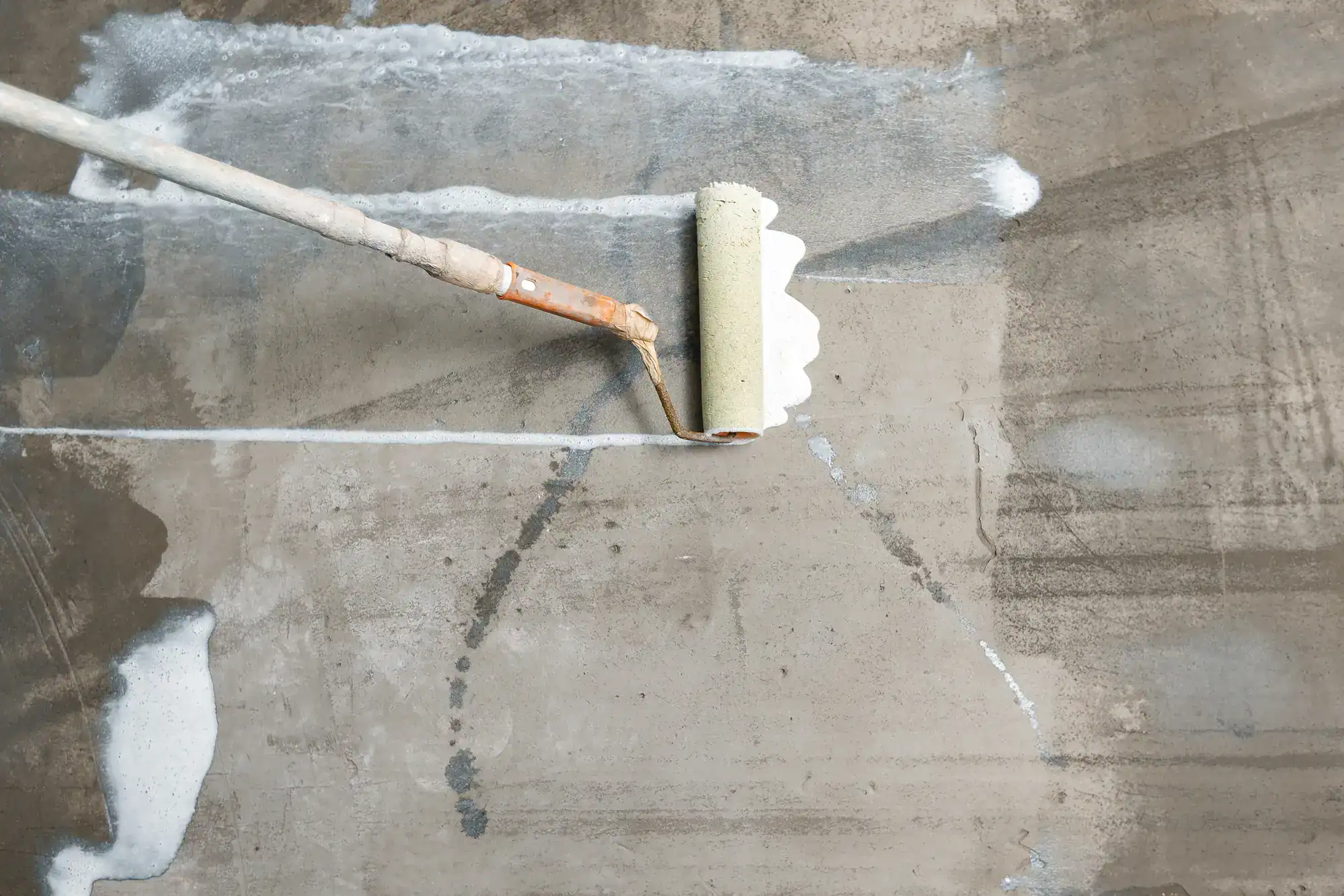
The first thing that happens on any Valley Stream job is a real assessment not a quick walk-through and a price quote. The slab gets tested for moisture vapor transmission, because in a South Shore community this close to Jamaica Bay, moisture is almost always a factor. If it’s not addressed before installation, it doesn’t matter how good the coating is. It will fail.
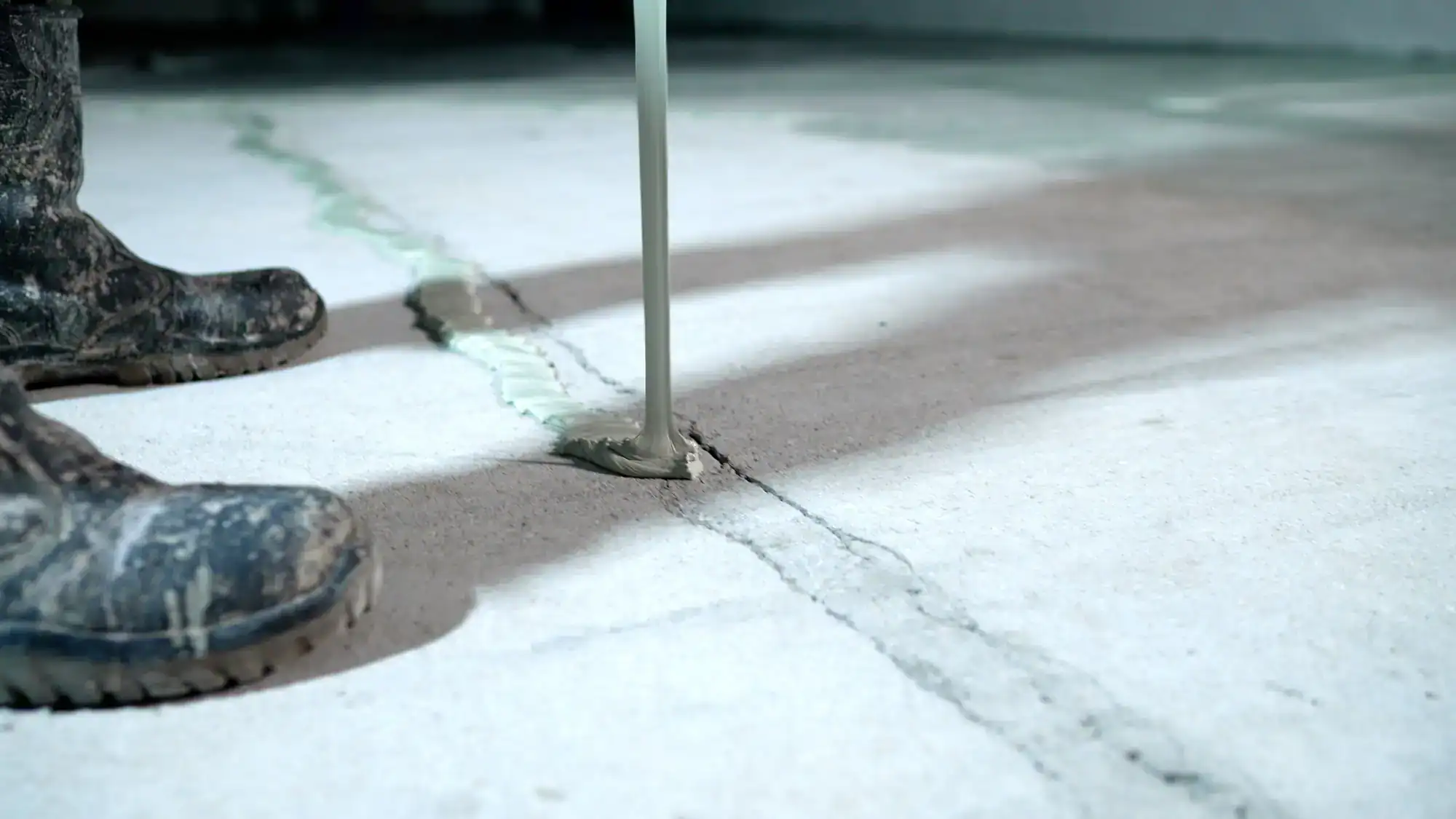
Once the slab is assessed, surface preparation starts with diamond grinding. Not acid etching, not a light scuff actual mechanical grinding that removes the compromised surface layer, opens the concrete pores, and creates the profile that industrial coatings need to bond properly. On the 1940s and 1950s-era slabs common throughout Valley Stream’s commercial corridors, this step is non-negotiable. Any cracks or damage get repaired before a single drop of coating goes down.
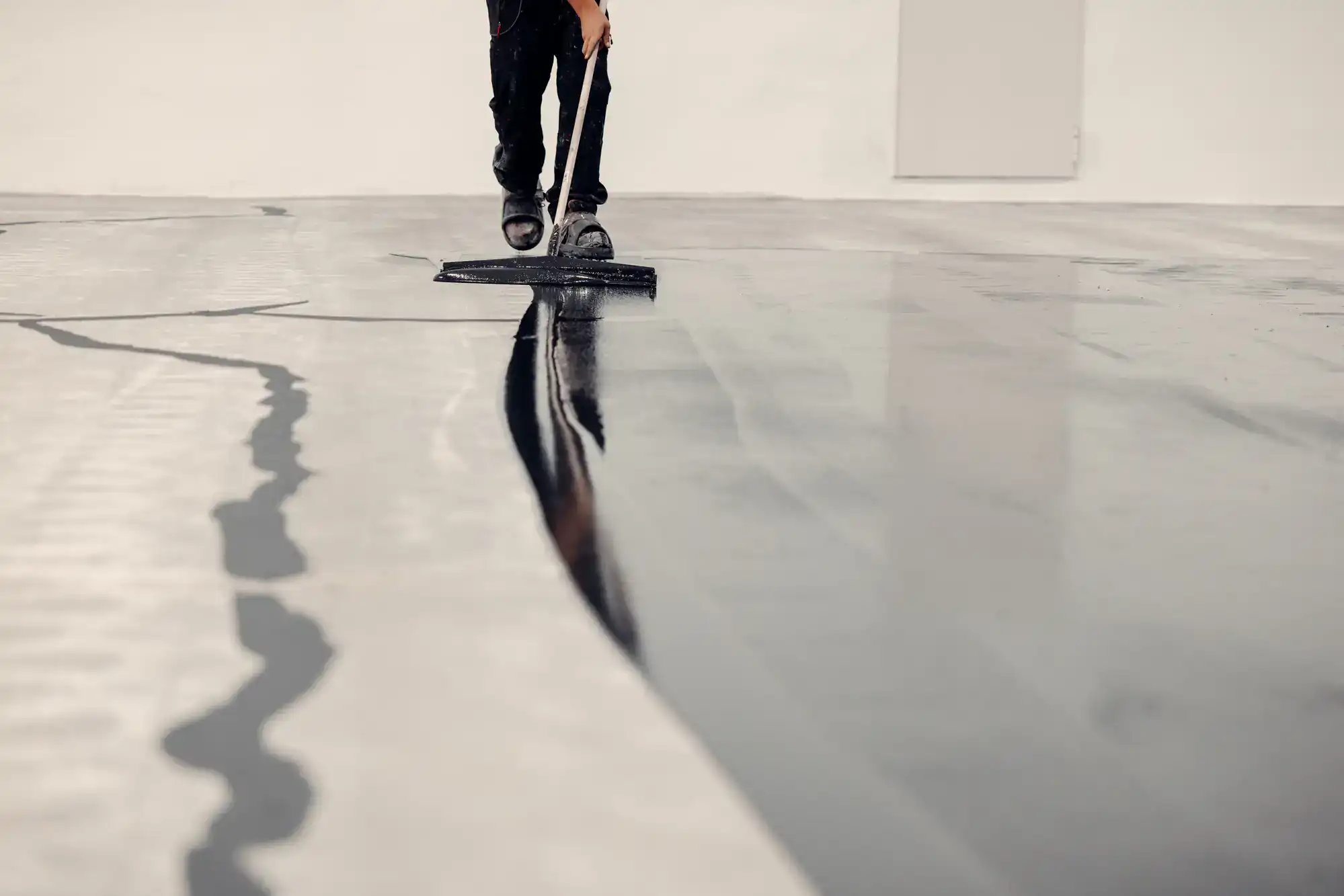
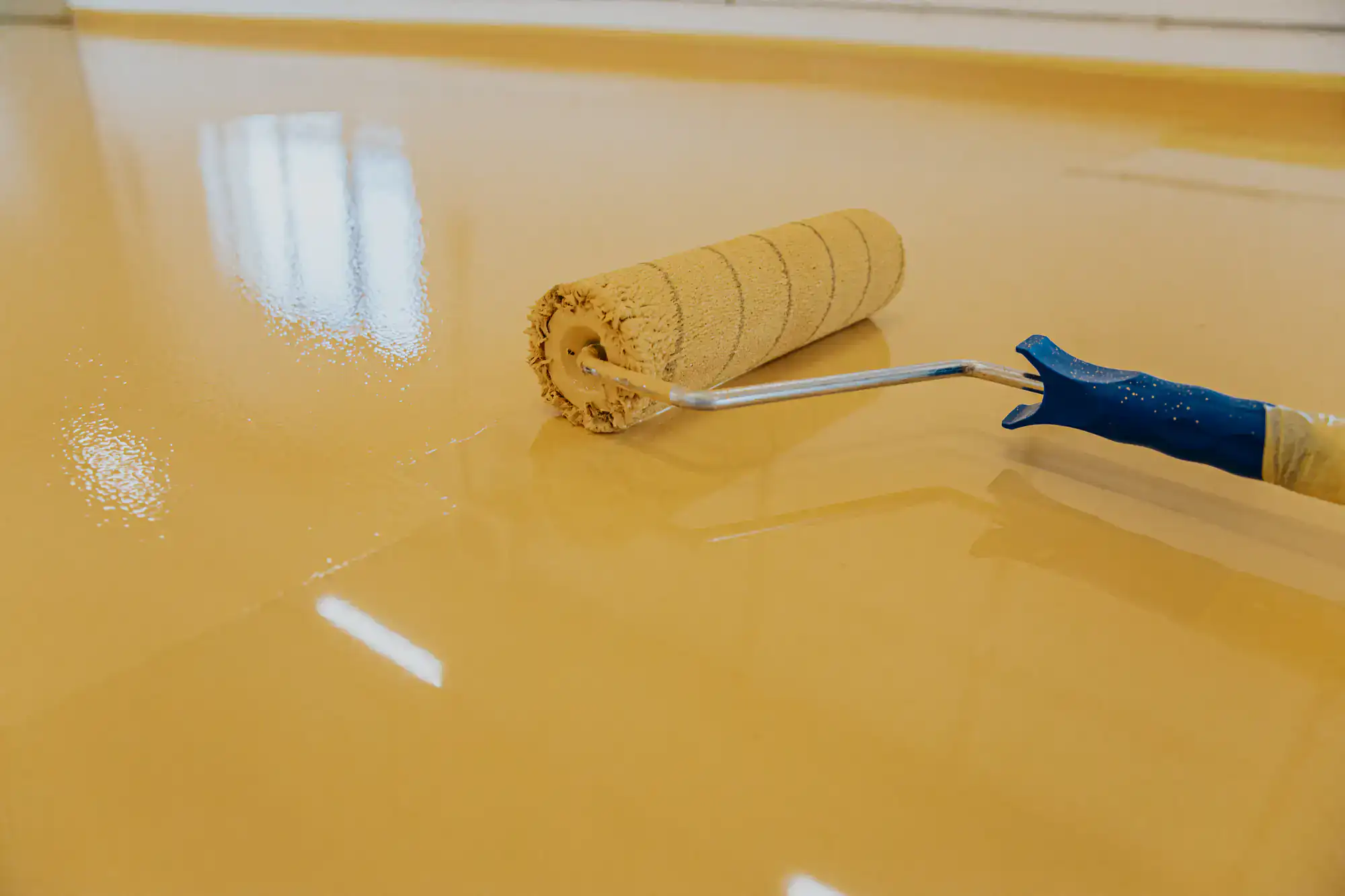
From there, the system gets applied in multiple layers primer, body coat, and topcoat using Sherwin-Williams commercial and industrial products specified for your exact environment. A restaurant kitchen gets a food-grade seamless system. A warehouse or auto shop gets a chemical-resistant, load-rated system. If you’re working with the Village of Valley Stream’s Building Department on permits for a larger commercial project, we’re familiar with that process and can help you navigate it. Most commercial floors are back in service within 24 to 72 hours.
Ready to get started?
The commercial and industrial epoxy systems we install for Valley Stream businesses are specified based on what the floor actually has to handle not a one-size-fits-all product pulled off a shelf. Restaurants and food service operations along the Sunrise Highway corridor get seamless, impermeable systems that meet Nassau County Department of Health requirements for commercial kitchens. Auto shops and service bays get chemical-resistant epoxy formulated to hold up against oil, hydraulic fluid, and the impact of heavy equipment. Warehouses and light industrial facilities near the Southern State Parkway get load-rated systems engineered for forklift traffic and hard daily use.
Every installation includes the full prep process moisture testing, diamond grinding, crack and joint repair because skipping any part of that is what turns a good-looking floor into a warranty problem inside of 18 months. The systems are applied at the mil thickness your environment requires, with a polyaspartic or urethane topcoat where traffic and chemical exposure demand it.
High-traffic commercial environments like the retail and food service operations around Green Acres Mall need flooring that doesn’t just look clean on day one it needs to stay functional and safe for years. The floors we install here are built to that standard. If you’re a property manager handling multiple tenant spaces in Valley Stream, or a business owner who can’t afford downtime, the process is designed around your schedule from the start.
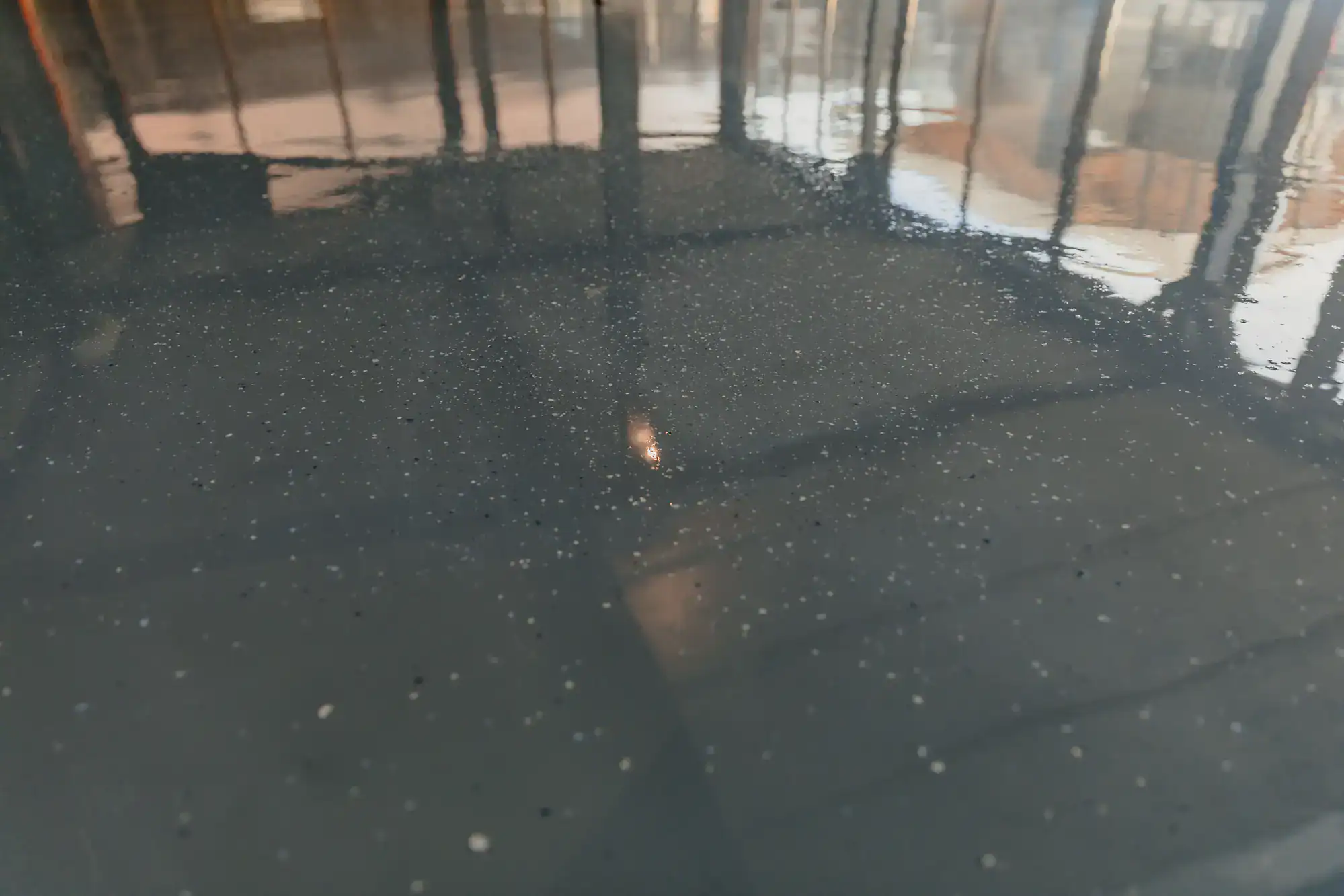
The short answer is moisture and the longer answer is that most contractors don’t test for it before they coat. Valley Stream sits on the South Shore of Nassau County, close to Jamaica Bay and the Atlantic, which means the ambient humidity here is consistently higher than in inland or North Shore communities. Concrete slabs absorb that moisture over time, and when a coating gets applied over a slab with active moisture vapor transmission, it doesn’t bond. It might look fine for a few months, but eventually it lifts, bubbles, and peels.
The fix isn’t a better coating it’s proper moisture assessment before any coating goes down. Every installation we do starts with slab testing, and if moisture is present at levels that will compromise adhesion, a moisture mitigation system goes in first. That step alone is what separates a floor that lasts 15 years from one that fails before the first winter is over. If you’ve had a floor fail in Valley Stream before, this is almost certainly why.
For most commercial spaces in Valley Stream restaurants, retail, medical offices, auto shops the installation window runs between one and three days depending on square footage, slab condition, and the system being applied. The surface preparation phase takes the most time, particularly on older slabs common in Valley Stream’s post-war commercial buildings, where diamond grinding and crack repair need to be thorough.
For food service operations that can’t afford to be closed during business hours, overnight installation is a real option. We come in after your last service, complete the installation, and the floor is ready for morning prep. Most commercial epoxy systems are walkable within 12 to 24 hours and fully cured for heavy use within 48 to 72 hours. If your project involves permits through the Village of Valley Stream’s Building Department, that timeline gets factored into the scheduling conversation upfront so there are no surprises.
For commercial kitchens in Nassau County including Valley Stream restaurants and food service operations the system needs to meet Nassau County Department of Health requirements for seamless, impermeable, cleanable surfaces. That means no grout lines, no seams, and no porous material where bacteria can accumulate. A properly installed epoxy or cementitious urethane system checks all of those boxes and holds up to the hot water, cleaning chemicals, and dropped equipment that a working kitchen produces every day.
The most durable option for high-heat kitchen environments is a cementitious urethane system, which handles thermal shock the rapid temperature changes from hot water and steam better than standard epoxy. For kitchens that don’t experience extreme heat cycling, a commercial-grade epoxy with a urethane topcoat is a strong, cost-effective choice. Either way, the floor gets installed with a slight slope to drains where required, and the system is specified to pass health inspections without additional treatment or sealing after installation.
For commercial and industrial epoxy flooring in Valley Stream, pricing generally falls between $7 and $12 per square foot for a professionally installed multi-layer system, depending on the size of the space, the condition of the existing slab, and the type of system required. Facilities with significant moisture issues, heavy cracking, or surfaces that need extensive prep work will be toward the higher end of that range because the preparation phase is more involved.
The more useful number to look at is cost per year of service. A professionally installed system at $10 per square foot that lasts 15 to 20 years costs roughly $0.50 to $0.65 per square foot per year. A cheap installation at $3 to $4 per square foot that fails in 18 months and requires full removal and reinstallation ends up costing two to three times more plus the operational disruption of going through the whole process again. For Valley Stream business owners who’ve already been through one failed floor, that math lands differently the second time around.
Yes but only if the right system is specified and installed correctly. Standard residential or light commercial epoxy is not engineered for the chemical exposure in an auto shop environment. Petroleum products, hydraulic fluid, transmission fluid, battery acid, and brake cleaner will break down a consumer-grade coating within months. A properly specified chemical-resistant epoxy system applied at the correct mil thickness with a chemical-resistant topcoat handles all of those substances without staining, softening, or delaminating.
For auto shops along Rockaway Avenue or anywhere in Valley Stream’s commercial corridors, the floor also needs to handle point loads from vehicle lifts and rolling tool carts without cracking or chipping. That means the slab prep matters as much as the coating a floor installed over a poorly prepared or cracked surface will show impact damage regardless of how good the product is. The combination of proper mechanical preparation and a correctly specified industrial system is what makes a service bay floor that actually holds up to a working shop for a decade or more.
It’s actually one of the best options provided the contractor knows how to work with aged concrete. Valley Stream’s commercial building stock is predominantly post-World War II construction, meaning most slabs are between 60 and 80 years old. These slabs have settled, absorbed moisture, developed surface cracks, and in many cases have old coatings or adhesive residue that needs to be removed before anything new goes down.
None of that makes epoxy a bad choice it makes proper surface preparation the deciding factor. Diamond grinding removes the compromised surface layer and creates the mechanical profile that industrial coatings need to bond to aged concrete. Cracks get filled and stabilized. Moisture gets tested and mitigated if necessary. When that prep work is done right, an older Valley Stream slab can hold a commercial epoxy system just as well as new construction sometimes better, because older concrete is often denser and harder than modern poured slabs. The floor’s longevity depends almost entirely on what happens before the coating goes down, not on the age of the concrete itself.
Other Services we provide in Valley Stream