
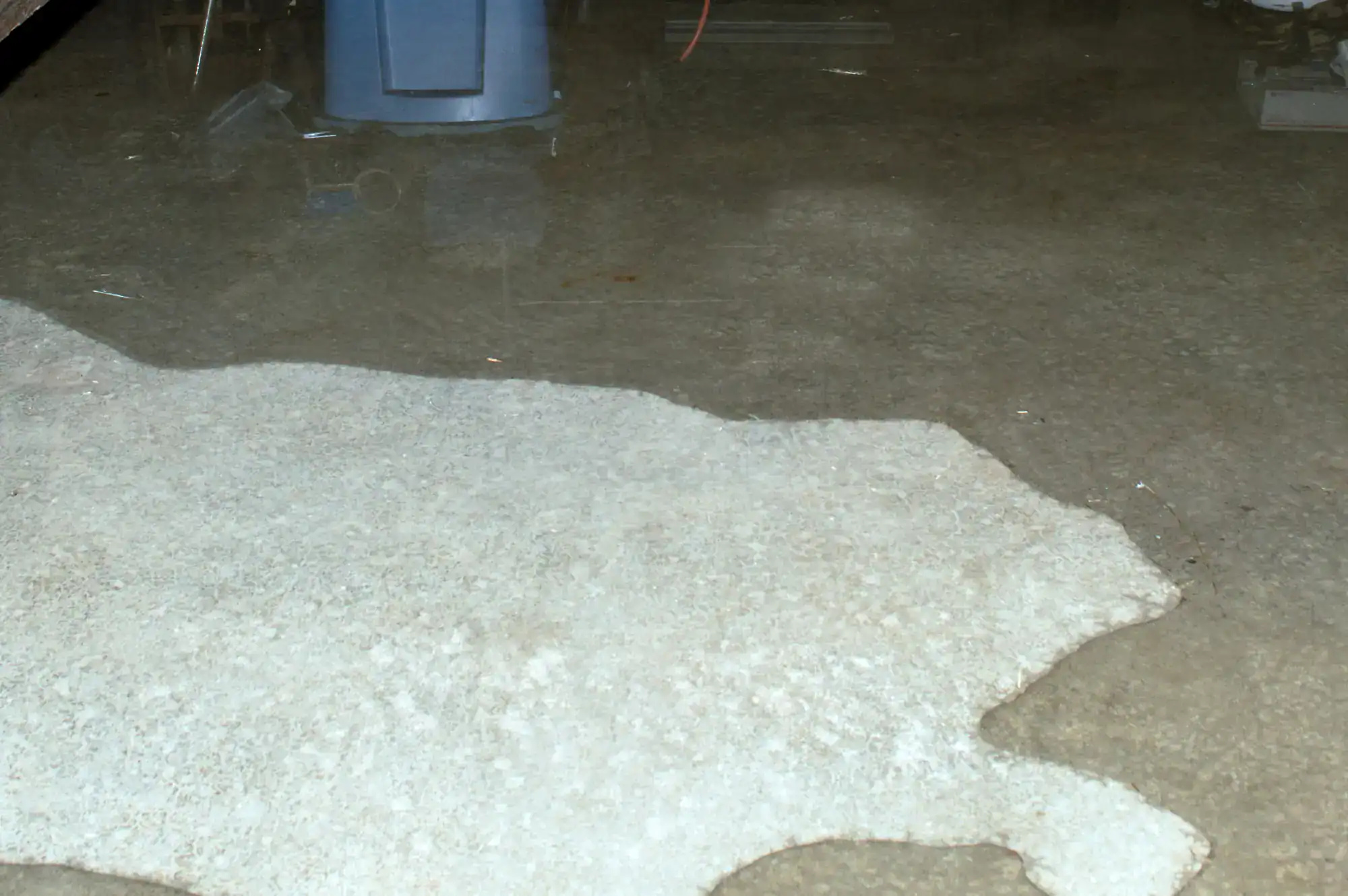
Valley Stream sits at roughly 10 feet above sea level on the southwestern edge of Nassau County, a few miles from the South Shore. That matters for your floor. Ground moisture migrates through concrete slabs in low-elevation communities like Valley Stream, and if a contractor skips moisture testing before installation, delamination is not a risk it’s a schedule. Every installation we do starts with a full moisture assessment, because the ground conditions here are not the same as an inland slab in central Suffolk.
Then there’s winter. When your apparatus returns from a call in January and those bay doors open, the thermal swing across that floor is severe. Add road salt and chemical deicers tracked in off Sunrise Highway and the Southern State Parkway, and a standard floor coating doesn’t last it peels. The polyaspartic systems we install are thermally resistant, chemically resistant, and engineered for exactly the kind of punishment a high-utilization department in a dense suburban village puts on a floor every single week.
The result is a seamless, non-porous surface that wipes clean after every response, supports NFPA contamination control requirements, and doesn’t need to be replaced every few years. For a volunteer department in Valley Stream accountable to the taxpayers funding it, that’s not just a performance upgrade it’s the fiscally responsible call.
We’ve been installing commercial and industrial floor systems across Long Island for over 30 years. Our company is based in Bohemia and has been working in Nassau County long enough to know what coastal ground moisture looks like under a floor grinder because we’ve seen it firsthand on slabs just like the ones under your apparatus bays in Valley Stream and throughout the region.
CEO Danny Harmer has over 40 years of hands-on installation experience, and our field supervisors Javier, Eduardo, and Fredith have a combined 40-plus years between them. Most of our crew has been with us for over a decade. That’s not a revolving door of subcontractors. That’s institutional knowledge showing up on your job site.
The credentials back it up: Sherwin-Williams High Performance Flooring certification, Res Tech certification, and OSHA 40 certification across all field installers. For a municipal fire station in Valley Stream where the building department enforces New York State Building and Fire codes, those aren’t extras they’re the baseline for doing the job right.
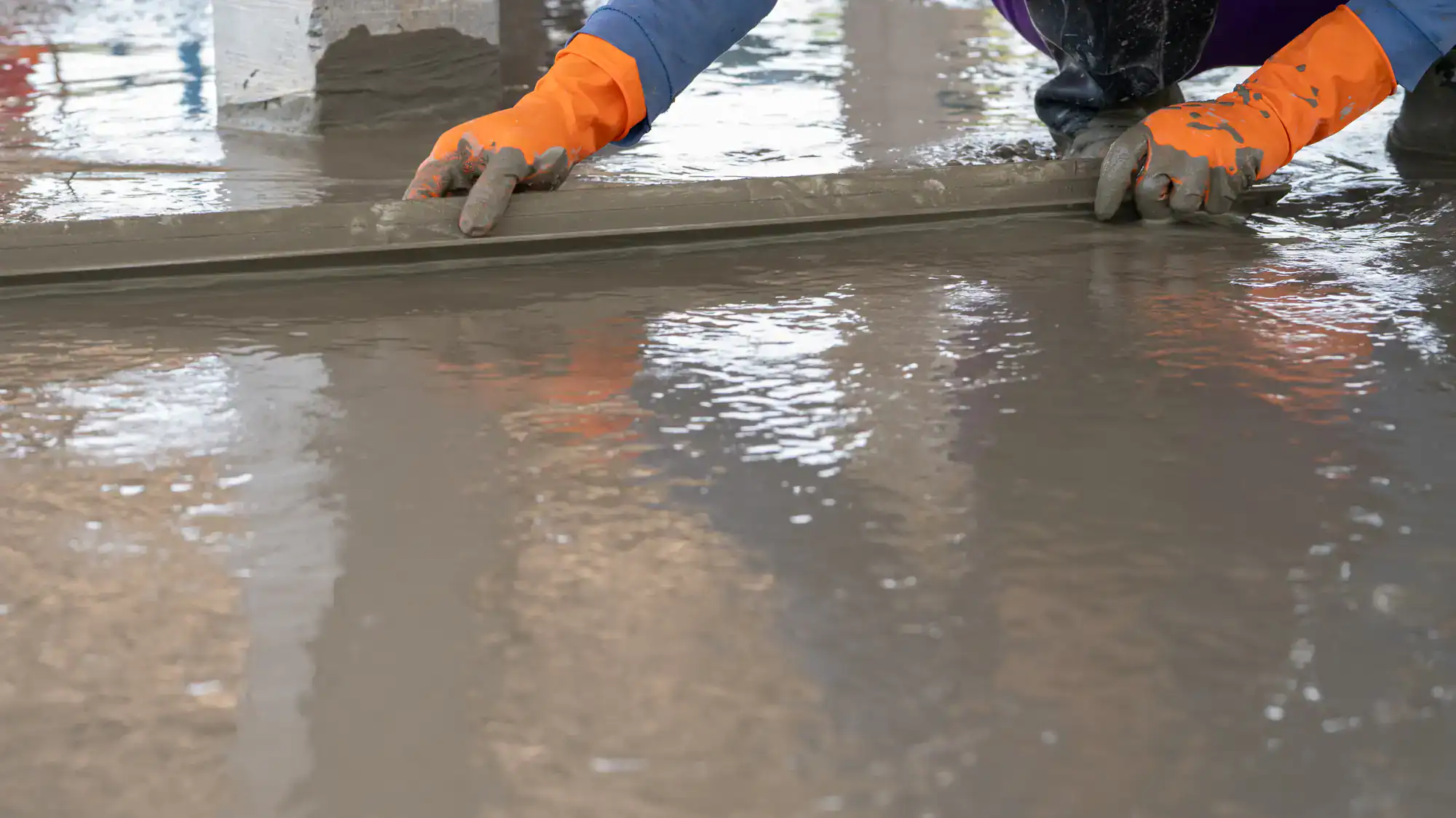
It starts with the slab. Before any coating goes down, we diamond-grind the floor and test it for moisture. In Valley Stream, that moisture step isn’t optional low-elevation slabs near the South Shore have a real history of moisture migration, and any contractor who skips it is setting the floor up to fail from day one. If there are cracks, spalling, or prior coating residue, we address those before the system is applied. The primer penetrates at the capillary level, not just the surface.
From there, the base coat goes down, followed by an aggregate broadcast that provides the compressive strength your Seagrave engines and KME rescue demand. A loaded Seagrave Attacker HD exceeds 40,000 pounds. The floor needs to be engineered for that load class not just painted over. The polyaspartic topcoat finishes the system: thermally resistant, UV-stable, and four times more flexible than standard epoxy, which means hot tires don’t lift it when the truck backs out.
The whole process is designed to work around your operation, not shut it down. One bay at a time, one station at a time. Because of the rapid-cure polyaspartic system, each bay is ready for apparatus within 24 hours. For a five-station department covering one of the most densely populated villages in Nassau County, that turnaround isn’t a convenience it’s the only approach that makes operational sense.
Ready to get started?
The apparatus bay flooring system we install at Valley Stream fire stations is a multi-layer polyaspartic build not a single-coat paint job, not a franchise kit, and not something a general contractor can replicate by watching a training video. The system includes diamond-ground surface preparation, moisture testing and remediation where needed, crack and spall repair, a penetrating primer, a broadcast aggregate layer for structural load capacity, and a polyaspartic topcoat that handles thermal cycling, road salt, hydraulic fluid, and the full range of chemical exposure that comes with active apparatus use.
The seamless, non-porous finish directly supports NFPA 1500 and 1585 contamination control protocols which matter in a volunteer department where firefighters are community members heading home to families in Valley Stream after every response. A floor that can be power-washed clean after a fire call isn’t a luxury; it’s a contamination control tool. The slip-resistant aggregate surface also meets ADA coefficient-of-friction standards, which is relevant for any municipal facility subject to New York State building code compliance.
Every project is scoped to the specific stations involved. The five Valley Stream FD locations from headquarters on Rockaway Parkway to the station on Cochran Place have concrete slabs of varying age and condition. Each one gets assessed individually. We specify the system to what that slab actually needs, not what’s easiest to install.
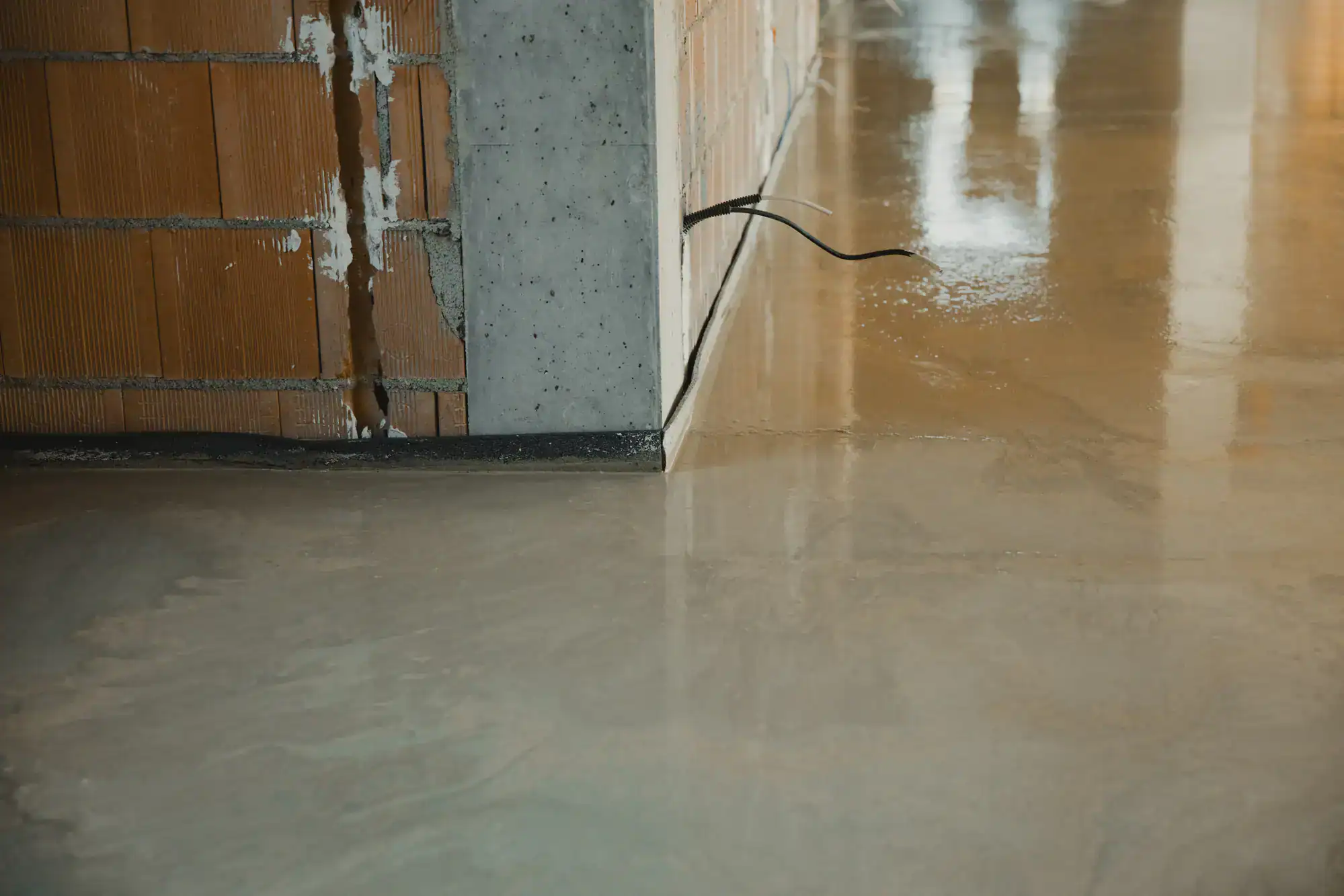
Yes and for a department operating in a 100% urban village with no available staging area, that’s not a small detail. The polyaspartic systems we install cure fast enough that each bay is ready for apparatus within 24 hours of topcoat application. That means we can work through your stations one bay at a time without forcing your Seagrave engines or your KME rescue to sit on a residential Valley Stream street overnight.
The scheduling is built around your operation from the start. We coordinate with your department to identify which bays can come offline in sequence, and we work through the project in phases that keep the fleet in service throughout. A five-station department covering over 40,000 residents doesn’t get a week off. The floor system we use was chosen specifically because it doesn’t ask for one.
The two most common reasons are moisture and surface preparation and they’re connected. Nassau County’s coastal geography means ground moisture migrates upward through concrete slabs, especially in low-elevation communities like Valley Stream. If a contractor doesn’t test for moisture before applying a coating, that moisture creates hydrostatic pressure beneath the film and the floor bubbles, blisters, or delaminates within a year or two. It’s not a product failure it’s an installation failure caused by skipping a critical step.
The second issue is surface preparation. A floor that gets acid-etched instead of diamond-ground doesn’t have the mechanical profile needed for a coating to bond properly under heavy apparatus load. When a 40,000-pound Seagrave engine rolls over a poorly bonded coating repeatedly, that coating is going to fail. Proper diamond grinding opens the concrete pores, removes contaminants, and creates the surface profile the primer needs to penetrate and hold.
A properly installed polyaspartic system in an apparatus bay environment with correct surface preparation, moisture testing, and the right product specification should realistically last 15 to 20 years under normal use. Valley Stream’s climate introduces specific stressors: freeze-thaw cycling, coastal humidity, road salt tracked in from Sunrise Highway and the Southern State Parkway, and high apparatus utilization from a department serving over 40,000 residents in a compact geography. Those factors accelerate wear on an underspecified system but don’t meaningfully shorten the lifespan of a properly installed one.
The key variable is installation quality. A floor that was diamond-ground, moisture-tested, primed at the capillary level, and finished with a polyaspartic topcoat will outlast a standard epoxy system by a wide margin in this environment. A floor that was rolled on over a lightly prepped slab will show failure signs within three to five years regardless of what the product label says.
It depends on the scope of work. The Valley Stream Building Department oversees all construction and improvement projects within the incorporated village and enforces compliance with New York State Building and Fire codes as well as the Village Code. Surface preparation and recoating of existing concrete slabs typically falls below the threshold for a full building permit, but any structural floor work or significant alteration to a municipal facility should be confirmed with the building department before work begins.
For fire district capital projects, there’s a separate layer of oversight. The Valley Stream Volunteer Fire Department operates under New York State fire district law, which gives the fire district board authority over capital expenditures. Depending on the total project cost, competitive bidding requirements may apply. We’re familiar with how these projects are structured in Nassau County and can work within the documentation and compliance framework your board requires.
The biggest practical difference is cure time and thermal performance. Standard epoxy systems can take 3 to 7 days to reach full cure which means apparatus stays out of the bay for the better part of a week. Polyaspartic systems cure fast enough for foot traffic in hours and apparatus re-entry within 24 hours. For an active fire station, that difference is the difference between a viable project and one that just isn’t operationally feasible.
On the performance side, polyaspartic topcoats are significantly more flexible than standard epoxy roughly four times more flexible which matters when heated apparatus tires cool on the floor surface. Standard epoxy is rigid and brittle under thermal stress, which is why hot-tire pickup is so common in apparatus bays. Polyaspartic topcoats handle that thermal movement without delaminating. They’re also UV-stable, so they don’t yellow or chalk under the fluorescent and natural light exposure typical in a fire station bay environment.
For a commercial-grade, multi-layer polyaspartic apparatus bay floor system, you’re generally looking at a range of $5 to $15 per square foot depending on the condition of the existing slab, the extent of crack and spall repair needed, the number of bays, and the specific system specified. A typical single apparatus bay in a fire station runs somewhere between 800 and 1,200 square feet, so a single-bay project might fall in the $4,000 to $18,000 range before any significant remediation work.
For a five-station department like Valley Stream’s, the total investment across all stations is a capital expenditure that fire district boards evaluate against the cost of repeated failures and reinstallations. A standard epoxy system that lasts five years and requires grinding, disposal, and full reinstallation twice over a 20-year period costs more in total than a polyaspartic system installed correctly once. In a community where the average household pays over $10,000 a year in property taxes, the board owes it to residents to make the call that holds up long-term not the one that looks cheaper on this year’s line item.
Other Services we provide in Valley Stream