
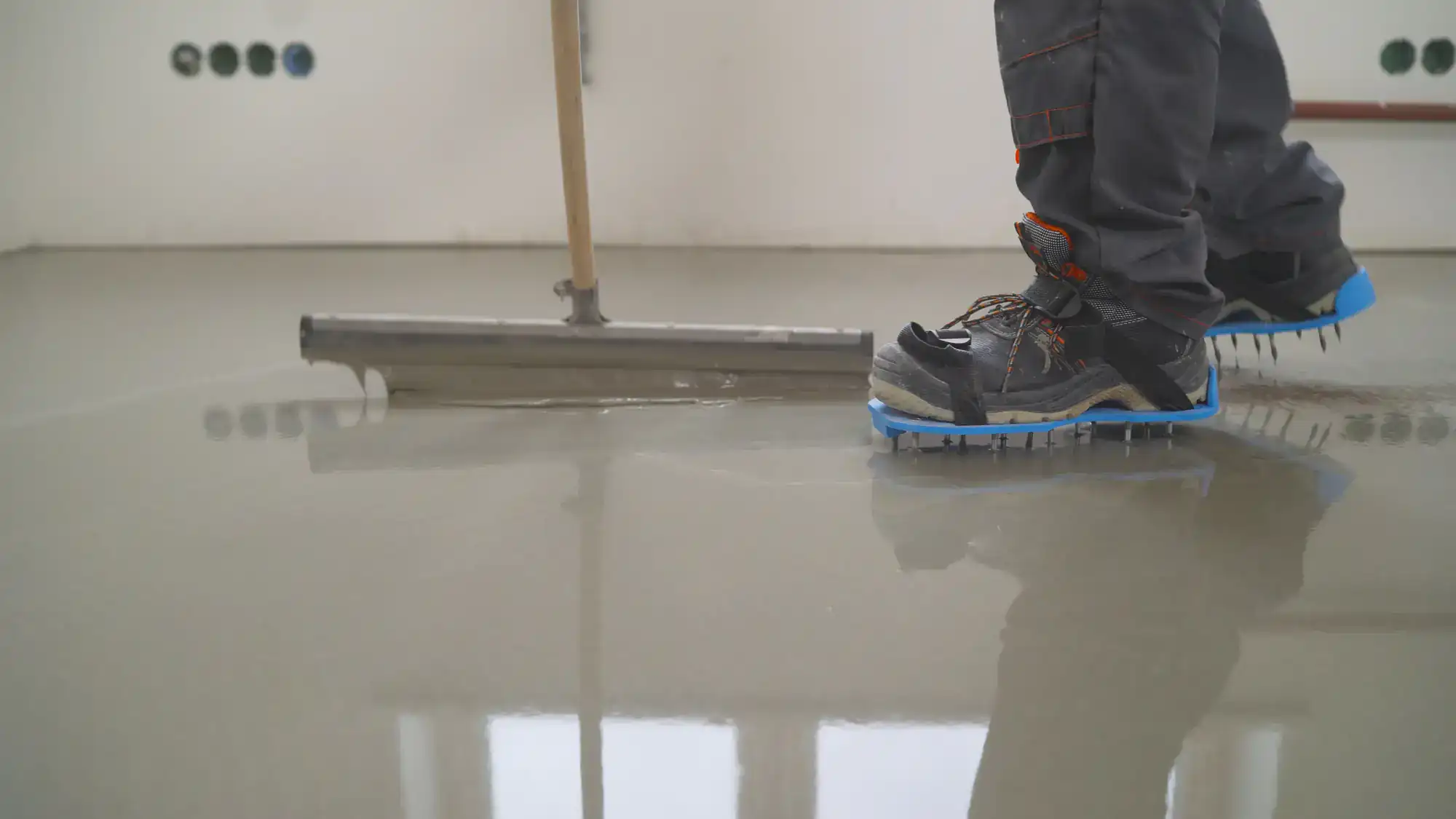
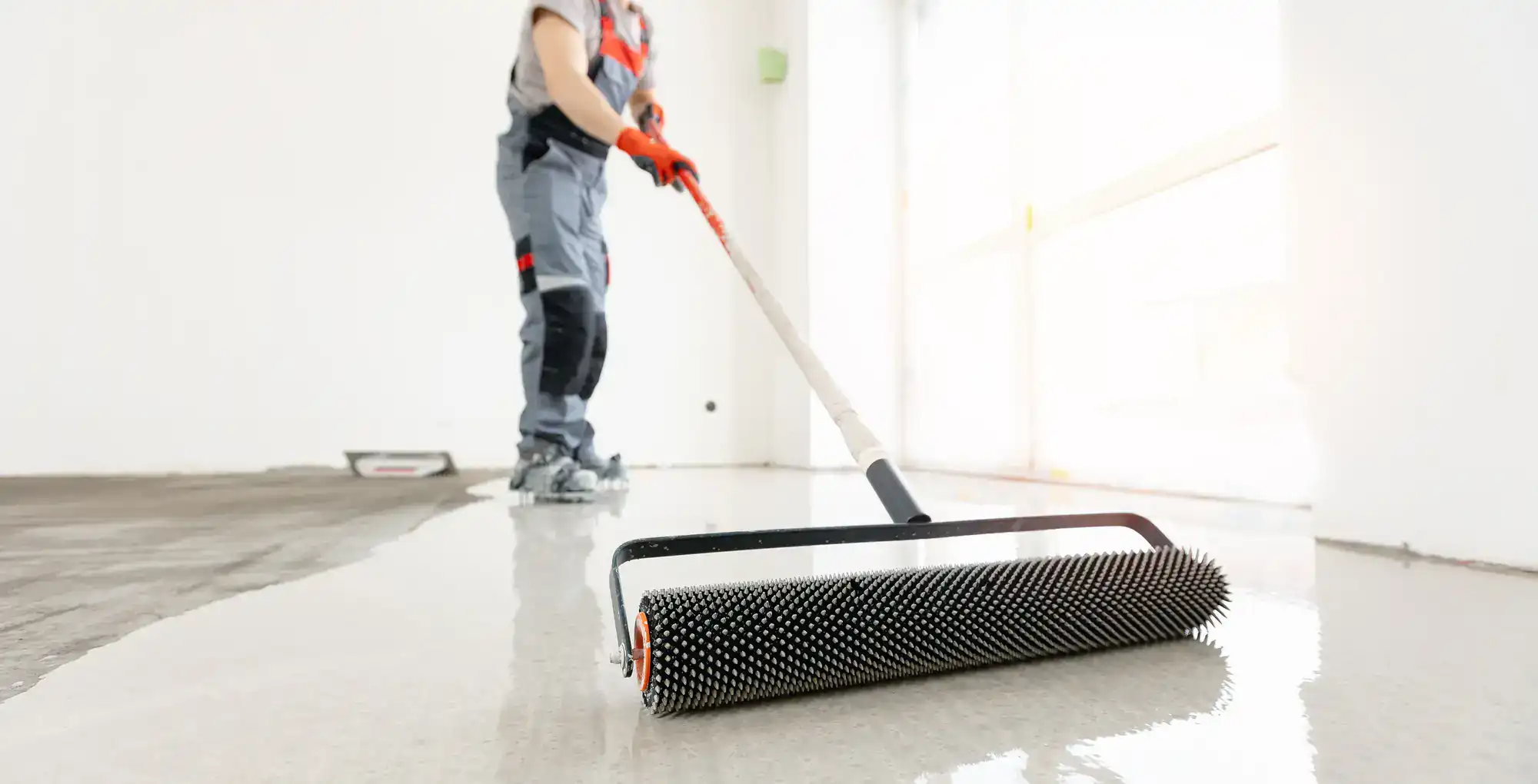
When you’re renovating a home in Valley Stream, the floor under your feet is working against you before you even start. The slabs in most homes here were poured in the 1940s and 1950s the same post-war construction era that built out Nassau County’s South Shore. Decades of seasonal freeze-thaw cycles, clay-heavy soil movement, and a notoriously high water table have left a lot of those slabs with low spots, surface cracks, and moisture conditions that most contractors never bother to check before they pour.
That matters because moisture is the number one reason self leveling underlayment fails. If the slab is pushing vapor upward which is common in Valley Stream’s low-lying geography, especially in basements and ground-floor spaces and nobody tests for it before the pour, the compound loses its bond. You end up with delamination, cracking, and a floor that looks worse than what you started with. Getting this right means testing first, preparing the surface properly, and using the right product depth for what the slab actually needs.
Once it’s done correctly, the results are straightforward. Your finish flooring whether that’s large-format tile, luxury vinyl plank, or engineered hardwood goes down on a surface that meets flatness specs. No hollow spots, no lippage, no callbacks. For commercial spaces along Rockaway Avenue or in the Green Acres corridor, it means your tenant build-out moves forward on schedule without a subfloor problem stopping everything.
We’ve been installing flooring systems across Long Island for over 30 years, and we’ve spent a significant portion of that time working in Valley Stream and the surrounding South Shore communities. Our company is led by Danny Harmer, whose hands-on installation experience goes back more than 40 years. Most of our crew has been with us for over a decade. We’re not a franchise or a referral network we’re a dedicated flooring systems company that does the diagnostic work, the surface prep, and the installation ourselves, start to finish.
That tenure matters in a market like Valley Stream. Nassau County’s South Shore has specific conditions high water tables, clay soil, aging concrete that you only really understand after working in them for years. We hold OSHA 40 certification and factory training in advanced resinous systems, which means we meet the access and credential requirements for commercial projects, including the active build-outs happening near Green Acres Mall. Our A+ BBB rating backs up what the track record already shows.
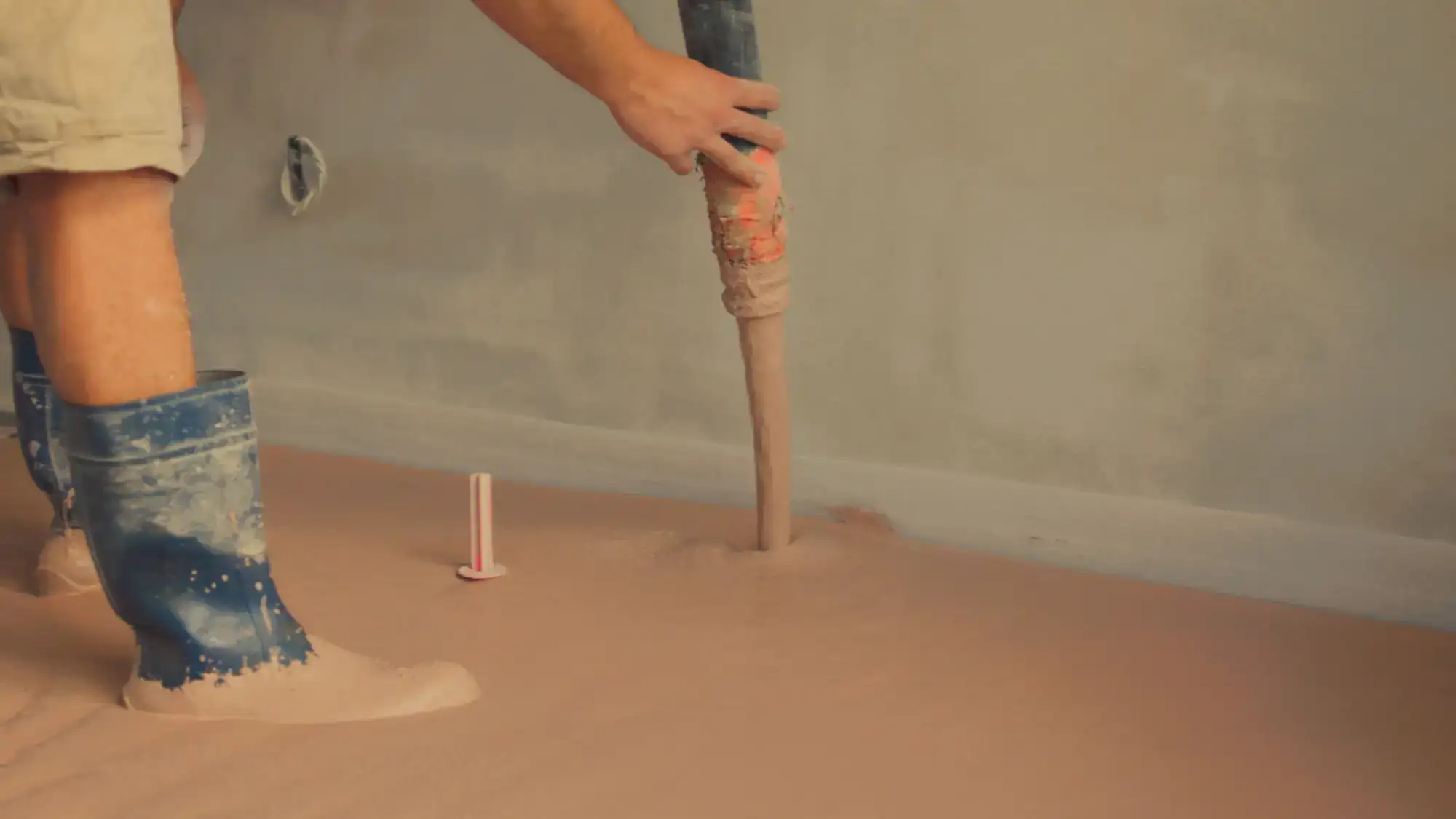
The first thing that happens on a Valley Stream job isn’t mixing compound it’s testing the slab. We perform ASTM F2170 relative humidity testing and moisture vapor emission rate testing before anything else. In a community where basement flooding is a documented seasonal issue and the water table sits close to the surface, this step isn’t optional. It tells you whether the slab can accept the underlayment as-is, or whether moisture mitigation needs to happen first. Skipping it is how floors fail.
Once the slab clears testing, the surface gets ground and cleaned. Old adhesive residue, deteriorating patch work, and surface contamination all get removed because self leveling compound needs a clean, open surface to bond. Valley Stream’s older homes often have layers of legacy materials underneath, including residue from previous tile work, that have to come off before anything new goes down. This is prep work most contractors rush. It’s also the work that determines whether the finished floor lasts five years or twenty.
After prep, we mix and pour the polymer-modified cementitious compound. The system installs from a quarter inch to over two inches neat, and up to five inches with aggregate which means one mobilization handles everything from a minor skim coat to a significant correction. Foot traffic is typically safe within four to six hours. Heavy commercial use returns within twenty-four to forty-eight hours.
Ready to get started?
The self leveling system we install is a high strength, polymer-modified cementitious underlayment with high flow characteristics. It’s designed for exactly the kind of slab conditions common in Valley Stream surfaces that are uneven from decades of settlement, contaminated from old adhesives, or compromised by moisture infiltration from below. The compound installs from a quarter inch up to two inches neat, and to five inches with aggregate addition, so the depth of correction doesn’t limit what’s possible in a single visit.
For residential projects in North Valley Stream, South Valley Stream, or anywhere in the 11580 zip code, this typically means preparing a kitchen, bathroom, or basement slab for large-format tile or luxury vinyl plank finish materials that require flatness within three-sixteenths of an inch over ten feet. For commercial clients, particularly those working in the active build-out zone around Green Acres Mall, the system meets the flatness and compressive strength specs that corporate flooring standards require. The process is the same either way: test, prep, pour, and return to service fast.
Interior self leveling work of this type generally doesn’t require a building permit in Valley Stream for standard residential applications. Commercial projects, especially those involving the Town of Hempstead’s jurisdiction, may require coordination with a general contractor and local building department depending on scope. We address this during the assessment so there are no surprises on either end.
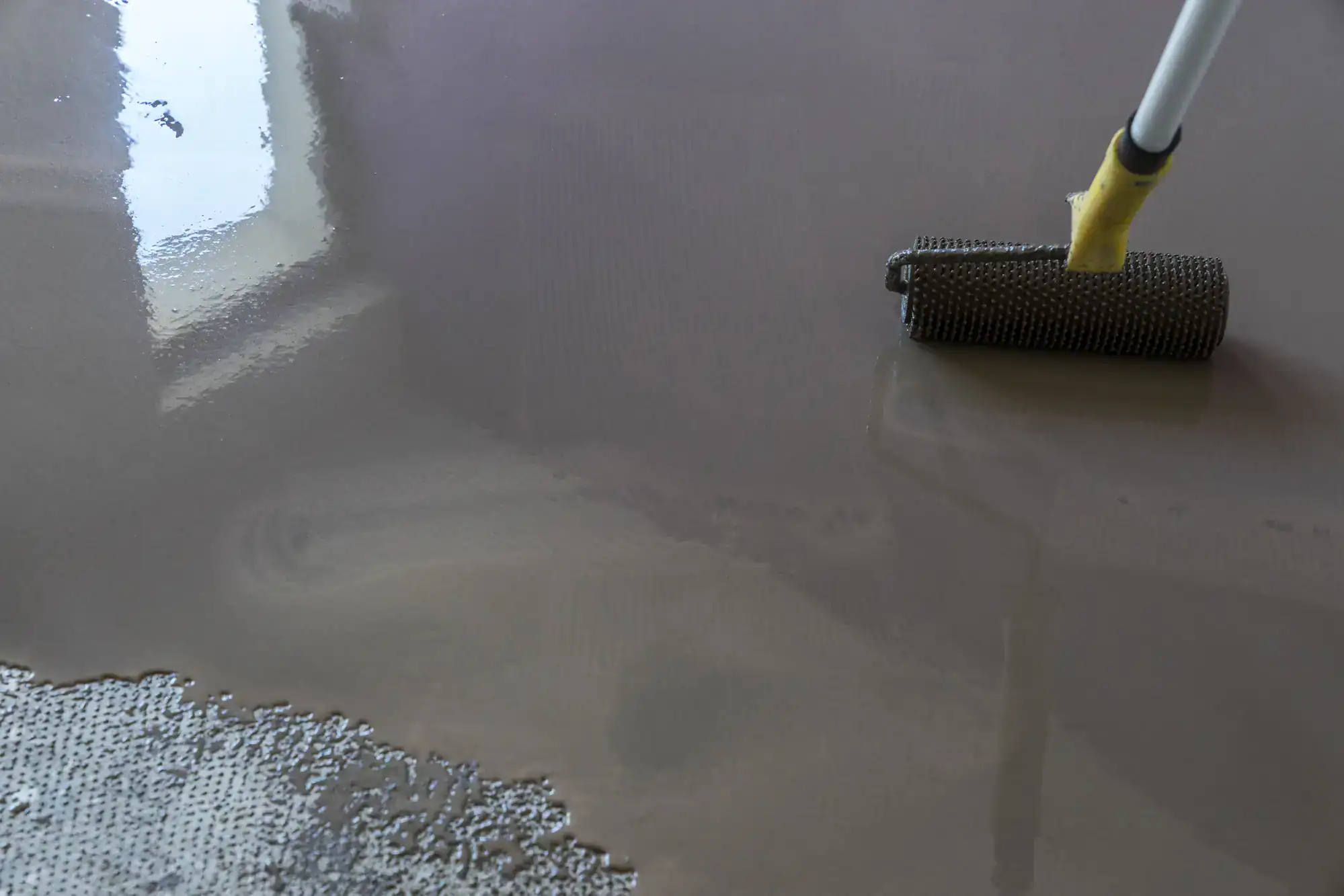
The most common reason is moisture specifically, vapor rising through the slab from below. Valley Stream sits on Nassau County’s South Shore, where the water table is high and basement flooding is a recurring seasonal problem. When a contractor pours self leveling compound over a slab that’s actively pushing moisture vapor upward, the bond between the compound and the concrete breaks down over time. You end up with delamination, cracking, or sections that feel hollow underfoot.
The fix isn’t complicated, but it requires actually testing the slab before the pour. ASTM F2170 relative humidity testing and moisture vapor emission rate testing tell you exactly what you’re dealing with. If the numbers are too high, moisture mitigation goes in first. If they’re acceptable, you proceed with the right primer and compound for the conditions. Either way, you’re making a decision based on data not guesswork. That’s what separates a floor that lasts from one that needs to be redone in two years.
The system we install goes from a quarter inch at the feather edge up to two inches neat, and up to five inches when aggregate is added. That range covers virtually everything a residential or commercial slab in Valley Stream is likely to need from a minor surface skim to a significant depth correction caused by years of settlement.
This matters because Nassau County’s post-war housing stock, including most of what was built in Valley Stream during the 1940s and 1950s, has had decades to develop uneven surfaces. Some slabs just need a thin correction to meet modern flatness specs for luxury vinyl plank or large-format tile. Others have low spots that have accumulated over multiple decades of soil movement and freeze-thaw cycling. The ability to handle both ends of that range in a single mobilization without calling in a second contractor or a different product keeps the project moving and the scope clean.
For most residential applications, foot traffic is safe within four to six hours of the pour. Heavy commercial use furniture, equipment, rolling loads typically returns within twenty-four to forty-eight hours. The exact timeline depends on the depth of the pour, the ambient temperature, and the humidity level in the space at the time of installation.
In Valley Stream, summer humidity is a real factor. High ambient moisture in the air can extend working time and affect surface cure, which is why experienced installers monitor conditions and adjust accordingly. Cold weather is the other variable if you’re doing basement work in winter and the space isn’t conditioned, substrate temperature needs to stay above fifty degrees Fahrenheit for the compound to cure correctly. These aren’t edge cases in Nassau County’s climate they’re normal seasonal considerations that need to be planned for, not ignored.
Concrete patching fills a specific crack or hole. Self leveling underlayment corrects the overall flatness of the entire surface. They’re solving different problems, and using the wrong one for the wrong situation is one of the more common mistakes in residential renovation work.
If your floor has a localized crack, patching makes sense. But if the slab has low spots, gradual slope, or surface irregularities spread across a larger area which is typical of Valley Stream homes built in the post-war era patching those areas individually won’t give you the consistent flatness that modern flooring materials require. Luxury vinyl plank, large-format porcelain tile, and engineered hardwood all have flatness tolerances that patching can’t reliably meet. Self leveling compound flows across the entire surface, finds its own level, and cures to a flat, high-strength substrate that your finish flooring can actually bond to properly.
Not always but more often than most homeowners expect. The standard flatness tolerance for large-format tile and luxury vinyl plank is three-sixteenths of an inch over a ten-foot span. If your existing slab is within that tolerance, you may not need underlayment. If it’s not, installing directly over an uneven surface will cause problems: tile lippage, grout cracking, LVP joints that peak or gap, and in some cases, finish flooring that separates from the substrate entirely.
In Valley Stream specifically, the combination of aged concrete and a high water table means a lot of slabs fall outside that tolerance even when they look acceptable to the eye. A quick assessment with a long straightedge or a level will tell you where you stand before you commit to a flooring installation. If the numbers aren’t there, self leveling underlayment is the most efficient correction faster and more reliable than grinding down high spots or shimming individual sections.
Yes, and it’s one of the more common applications in Valley Stream right now. The Green Acres Mall redevelopment has brought significant commercial build-out activity to the area, with new restaurant and retail tenants all requiring prepared, level concrete substrates before their finish flooring goes in. Corporate flooring specifications for national tenants typically include compressive strength requirements, documented moisture testing, and contractor credentials all of which our process and certifications meet.
The practical advantage for commercial clients is speed. The fast-curing self leveling system returns floors to foot traffic in four to six hours and to full commercial use within twenty-four to forty-eight hours. For a tenant on a build-out timeline with a fixed opening date, that turnaround matters. Our OSHA 40-certified crew also meets the site access requirements that most commercial general contractors in Nassau County enforce, so there’s no credential gap that delays the job or creates a compliance issue on an active construction site.
Other Services we provide in Valley Stream