

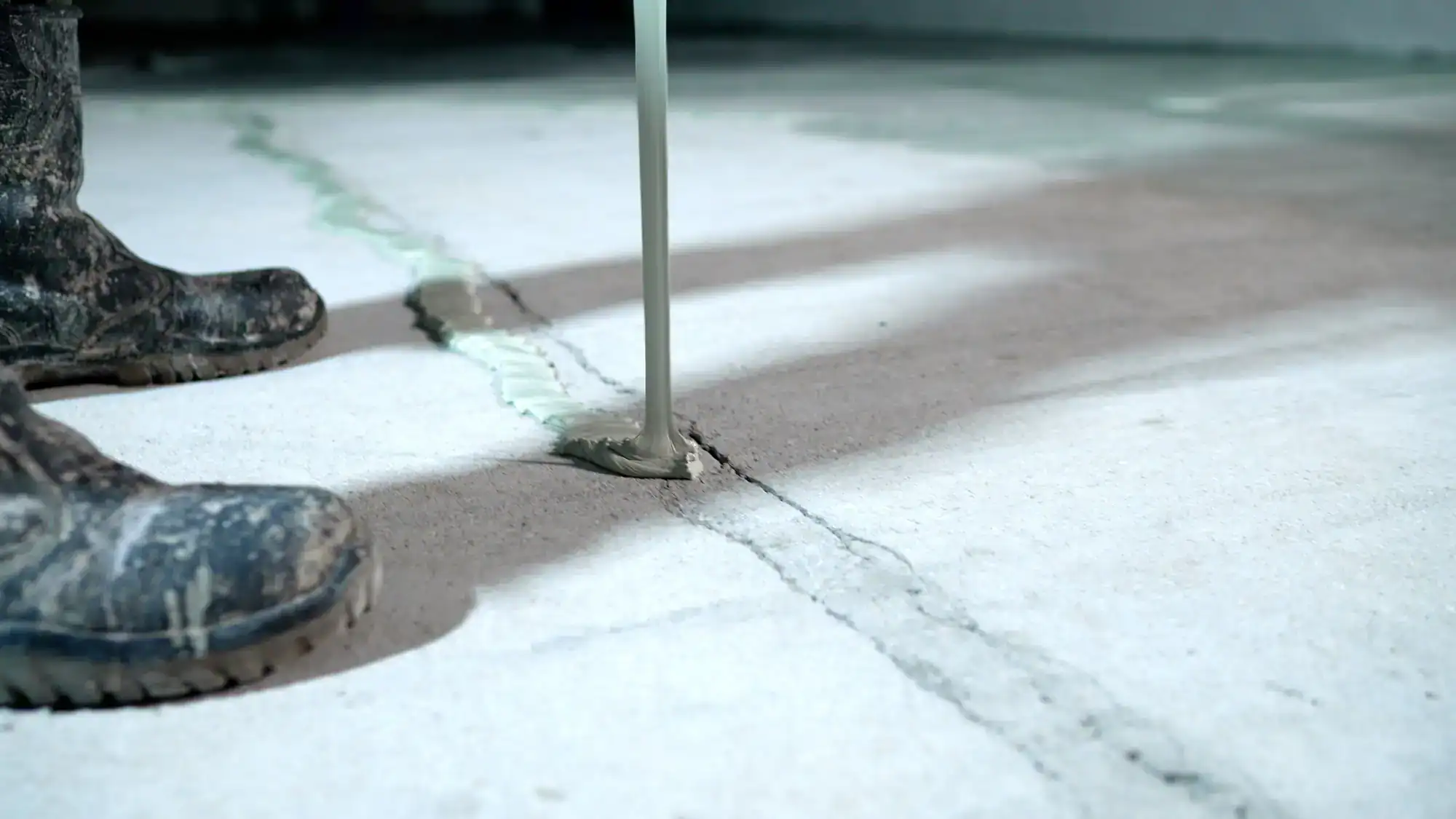
If you’ve already dealt with a floor that bubbled, peeled, or cracked within a year or two of installation, you already know what the wrong contractor costs. It’s not just the replacement it’s the downtime, the disruption, and the frustration of going through the whole process again. The right floor, installed correctly the first time, removes all of that from the equation.
For Freeport businesses especially those near the Nautical Mile or anywhere in the southern canal-front sections of the village moisture vapor transmission through the concrete slab is one of the most common reasons epoxy floors fail prematurely. It’s not visible, and most contractors don’t test for it. Hydrostatic pressure builds beneath the coating and eventually forces it off the surface. Every installation we do starts with mandatory moisture testing, because skipping that step in a community with Freeport’s documented flood exposure isn’t a shortcut it’s a guarantee of failure.
The commercial kitchens along Woodcleft Avenue, the healthcare offices throughout Freeport, the light industrial spaces near Sunrise Highway each environment has its own demands, and each one gets a system specified for those demands. Not a one-size-fits-all product, not a consumer-grade coating applied at a commercial price. Industrial-grade systems, properly installed, that are still performing a decade from now.
We’ve been working across Nassau and Suffolk Counties for over 35 years. That’s not a number we throw out for effect it means we’ve worked through Long Island’s coastal humidity cycles, post-storm renovation waves, and every variation of South Shore slab condition you can encounter. Freeport’s environment isn’t new to us.
Danny Harmer, our president and CEO, brings more than 40 years of hands-on installation experience to every project. His resume includes the White House kitchen installation in 1996 a project where the margin for error was zero. That same standard applies whether we’re working on a Nautical Mile restaurant, a medical office near Merrick Road, or a warehouse along the Sunrise Highway corridor.
We hold factory-trained certifications from Sherwin-Williams High Performance Flooring and Res Tech, our installers are OSHA 40 certified, and we carry an A+ BBB Accredited rating with zero complaints on record. Most of our crew has been with us for over a decade. When you call us, you’re not getting whoever was available this week.
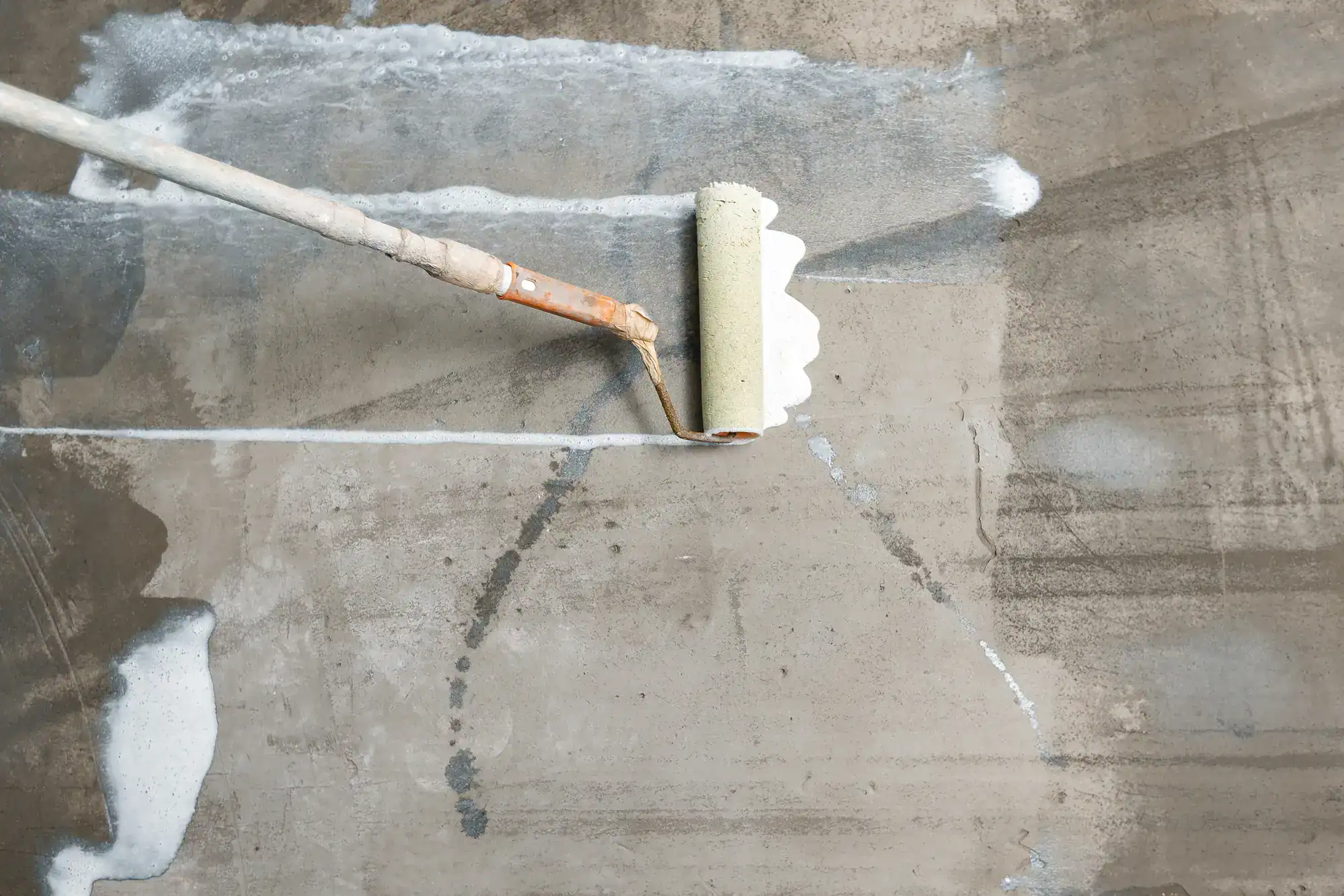
It starts before we ever open a container of material. We assess the slab its condition, its moisture content, and whether there are any existing coatings or contaminants that need to be addressed first. In Freeport, where tidal proximity and documented flood history mean moisture vapor pressure is a real variable, this step isn’t optional. It determines the entire system specification.
Surface preparation comes next, and this is where most cheap installations fall apart. We use diamond grinding not acid etching to create a consistent concrete surface profile that gives the epoxy a mechanical bond to the slab. Acid etching leaves behind residue and inconsistent texture. Diamond grinding gives you a surface that the coating can actually hold onto for the long term. Once the surface is ready, we apply the system in layers: primer coat, base coat, topcoat each one given proper cure time before the next goes down. No rushed recoat windows. No cutting corners on cure discipline because a crew wants to wrap early.
For commercial kitchen operators on the Nautical Mile and other food service businesses throughout Freeport, most installations are completed overnight so you open on schedule the next morning. For healthcare and industrial facilities, we work around your operational hours. The Village of Freeport has its own Building Department and permitting process independent of Nassau County, so if your project requires permits, we’re familiar with what that process looks like at the village level.
Ready to get started?
The type of system your facility needs depends on what it actually deals with every day. For the seafood restaurants and waterfront dining establishments along the Nautical Mile, that means USDA-compliant, food-grade seamless resinous floor coatings with hygienic cove base installation and thermal shock resistance floors that can handle commercial dishwasher runoff, industrial degreasers, and the salt-air humidity that Freeport’s South Shore location delivers year-round. These are high traffic commercial epoxy systems in Freeport that are specified for the environment, not selected from a catalog.
For healthcare and medical office facilities the largest employment sector in Freeport we install seamless antimicrobial systems that meet ADA, CDC, and FGI guidelines, with documentation of compliance available. For light industrial and warehouse operators along the Sunrise Highway corridor, we install heavy duty industrial epoxy floors in Freeport rated for forklift axle loads, with 1/4-inch mortar trowel systems and polyaspartic topcoats that handle the compressive demands of real equipment. And for any facility where chemical exposure is part of daily operations auto service bays, marine businesses near the waterfront, lab environments we specify chemical resistant epoxy finishes in Freeport, NY based on the actual chemicals present in your space, not a generic label.
Every system is installed at 14–30 mils of dry film thickness. That’s the industrial standard. It’s not what you get from a general contractor who added epoxy to their service list last year.
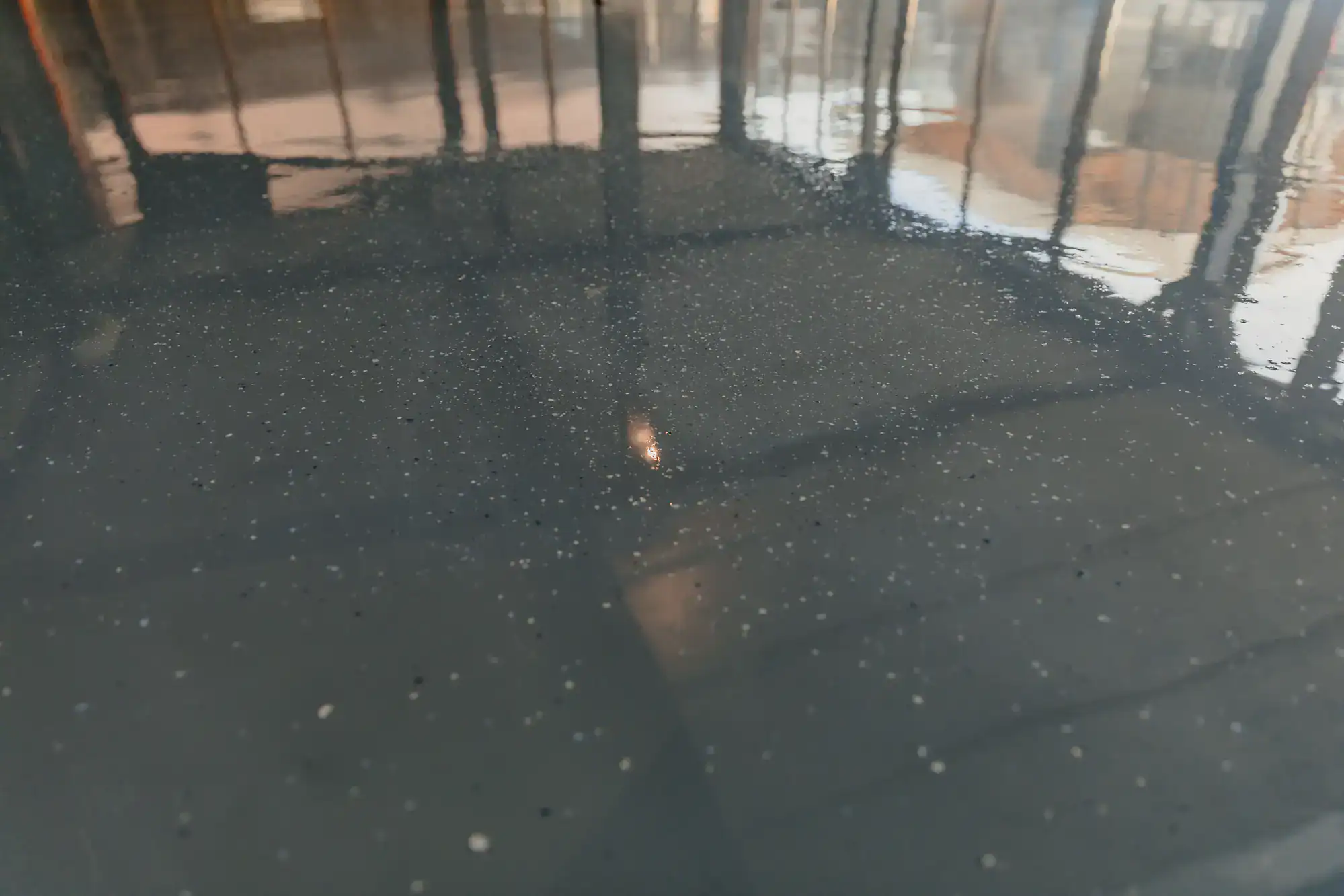
It’s one of the most important questions a Freeport property owner can ask, and most contractors won’t bring it up on their own. When a building sits in or near a flood zone and in Freeport, that’s a significant portion of the village, particularly in the southern sections near the Nautical Mile and the canal-front areas the concrete slab can carry elevated moisture content even when it looks and feels dry on the surface. That moisture creates vapor pressure that pushes upward through the slab, and if the epoxy system isn’t specified to handle it, the coating eventually lifts, blisters, or delaminates from below.
The fix isn’t complicated, but it has to happen before installation begins. We test every slab for moisture vapor emission rate before we specify a system. If moisture levels require it, we use a moisture-mitigating primer system as the first layer. This is standard practice for us it’s not an upsell. In a community with Freeport’s documented flood history and the USGS data on record from Hurricane Sandy, treating this as optional would be negligent.
A properly installed industrial-grade epoxy system with correct surface preparation, appropriate mil thickness, and a quality topcoat should last 10 to 20 years in a commercial or industrial environment. The range depends on traffic load, chemical exposure, and how well the floor is maintained. A seafood restaurant kitchen on the Nautical Mile that runs high-volume service seven days a week is going to see more wear than a medical office corridor, and the system should be specified accordingly.
The floors that fail in three years aren’t failing because epoxy is a bad product. They’re failing because the surface wasn’t properly prepared, the coating was applied too thin, the recoat windows were rushed, or a consumer-grade product was used in a commercial environment. When you see a contractor offering epoxy at a price that seems low for a commercial job, the math usually works out in the form of a floor you’re replacing sooner than you expected. The lifecycle cost of doing it right the first time is almost always lower.
For most commercial kitchen installations in Freeport, yes the job can be completed overnight so the kitchen is operational the next morning. This matters a lot for the restaurant operators along Freeport’s Nautical Mile, where a closed kitchen on a summer weekend represents real, immediate revenue loss. We schedule kitchen installations around your service hours, work through the night, and have the floor ready before your morning prep starts.
That said, the timeline depends on the size of the space, the condition of the existing floor, and whether any remediation work is needed before coating goes down. A large kitchen with an existing coating that needs to be removed and a slab that requires moisture mitigation is a longer job than a clean, prepped surface. We’ll give you an honest assessment of what your specific space requires before you commit to anything. What we won’t do is promise a one-night turnaround on a job that genuinely needs more time because a floor that wasn’t given proper cure time will show you why that shortcut was a mistake.
Surface preparation is the single most important factor in whether an epoxy floor holds up or fails, and the method used makes a significant difference especially in a coastal environment like Freeport’s South Shore. Diamond grinding uses industrial grinding equipment to mechanically profile the concrete surface, creating a consistent texture that gives the epoxy a physical grip on the slab. The result is a clean, open surface with no residue and a predictable profile depth.
Acid etching uses a chemical solution to etch the surface, but it leaves behind residue, creates inconsistent texture, and doesn’t remove existing contaminants the way grinding does. In a building where the slab has been exposed to moisture, salt air, or prior coatings which describes a lot of commercial properties in Freeport acid etching often isn’t sufficient to create the bond the coating needs. Most contractors use acid etching because it’s faster and cheaper. We use diamond grinding because it’s the preparation method that actually supports a long-term installation. It’s not a premium add-on. It’s how we do every job.
It’s one of the best options available for healthcare environments, and it’s used in operating rooms, patient corridors, pharmaceutical facilities, and outpatient clinics across the country for good reason. A seamless epoxy floor eliminates the grout lines and seams where bacteria accumulate in tile installations. It’s non-porous, easy to sanitize with the disinfectants healthcare facilities use daily, and can be installed with antimicrobial additives that provide an additional layer of protection.
For healthcare and medical office facilities in Freeport where the healthcare sector is the village’s largest employer the relevant compliance standards are ADA, OSHA, CDC, and FGI guidelines. We install systems that meet all of these, and we can provide documentation confirming compliance. That documentation matters when you’re managing a facility that’s subject to inspection and accreditation requirements. A general flooring contractor who offers “medical-grade epoxy” as a marketing claim without the certifications to back it up can’t give you that. We can.
Humidity is a real scheduling consideration for epoxy installation, and Freeport’s South Shore coastal position makes it more relevant here than it would be for an inland community. When relative humidity exceeds roughly 85%, epoxy application carries a risk of moisture trapping the coating absorbs ambient moisture during application, which can cause surface defects, adhesion issues, or a compromised finish. Freeport’s summer months, particularly July and August, regularly push coastal humidity into that range.
For climate-controlled commercial and healthcare facilities, this isn’t a limiting factor the interior environment can be managed regardless of outdoor conditions. For spaces without climate control, spring and fall tend to be the most reliable installation windows: temperatures in the 55–80°F range, manageable humidity, and stable curing conditions. If your project has a fixed timeline that falls in peak summer, we’ll assess the specific conditions and determine whether the environment can be controlled adequately for installation. We won’t apply a system in conditions that compromise the result because a floor that fails because of a humidity issue during application looks the same as any other failed floor, and it still has to be replaced.