
If you’re running a restaurant on the Nautical Mile in Freeport, your kitchen floor takes a beating that most inland operations never see. Boiling pots, frying grease, steam cleaning between services, rolling carts, and hundreds of covers a day during peak season that’s not a standard commercial environment. That’s one of the most demanding food service conditions on Long Island, and your floor needs to be specified for exactly that.
The bigger issue for Freeport operators isn’t just volume it’s moisture. Buildings along Woodcleft Avenue and throughout the waterfront district sit near tidal waterways, and that means concrete slabs with higher ambient moisture levels than you’d find in an inland Nassau County building. Moisture vapor pushing up through the slab is the number one reason epoxy floors delaminate. We never skip this step. When moisture isn’t addressed before installation, the floor fails sometimes within a year and you’re back to square one.
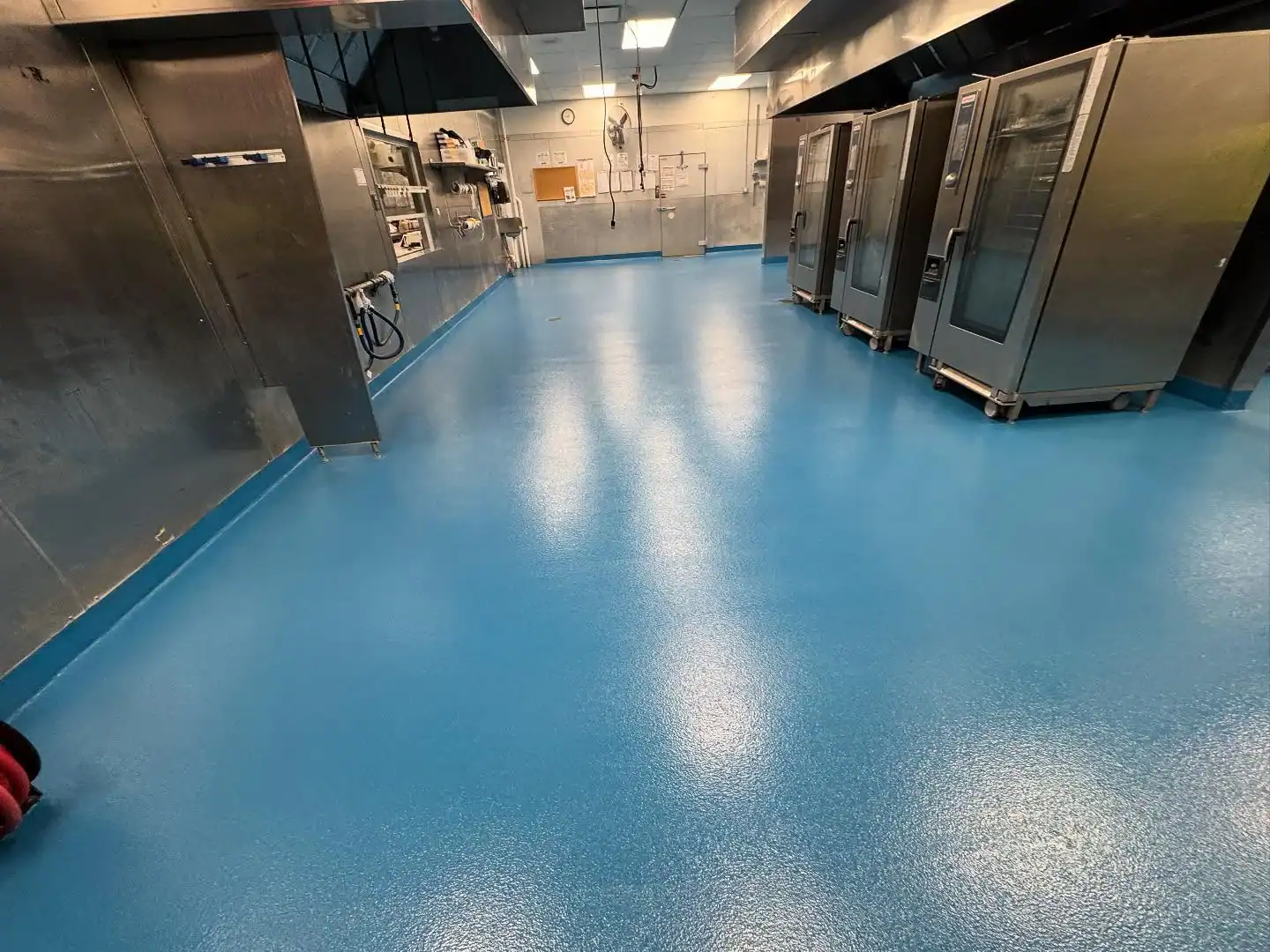
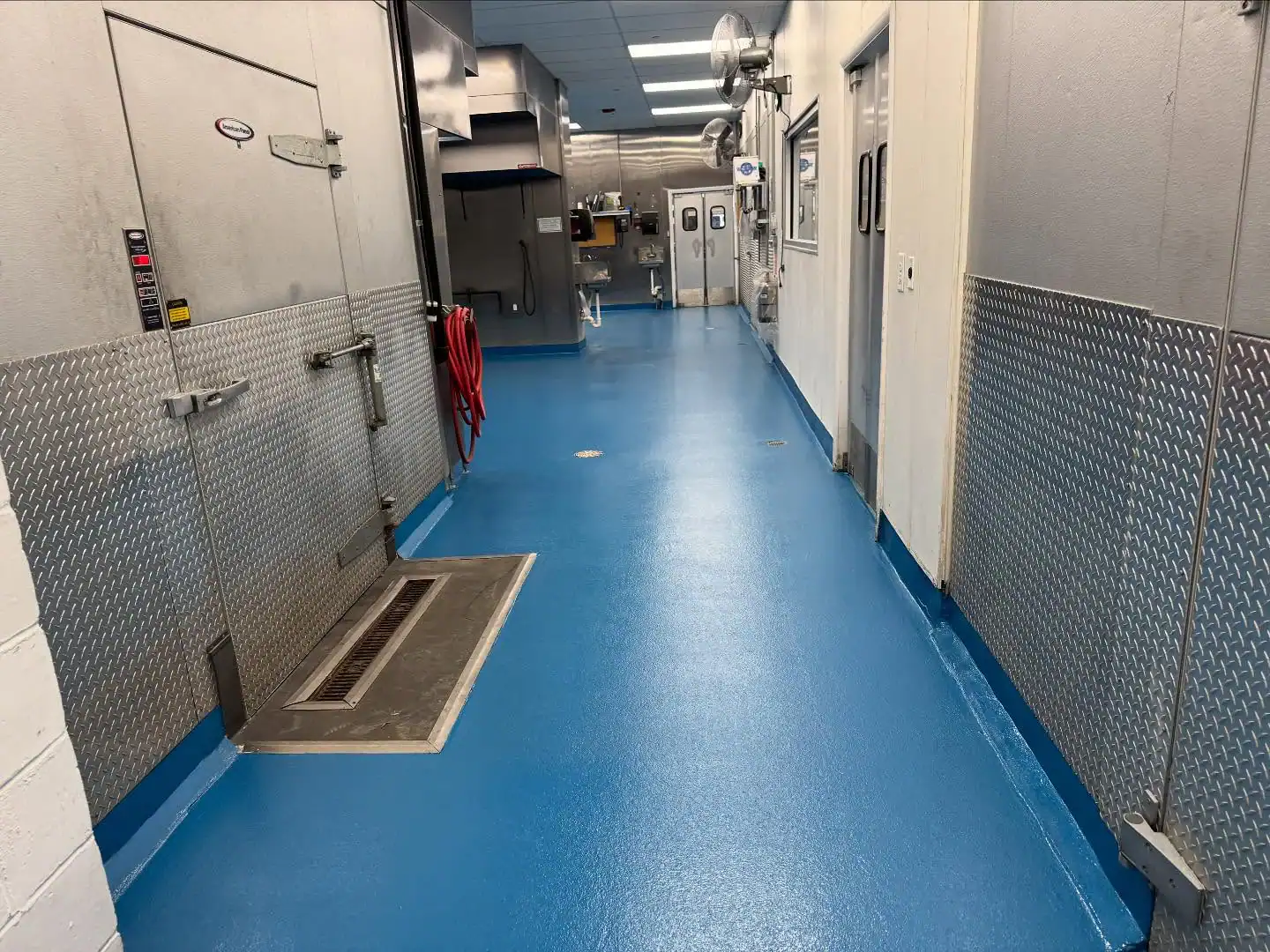
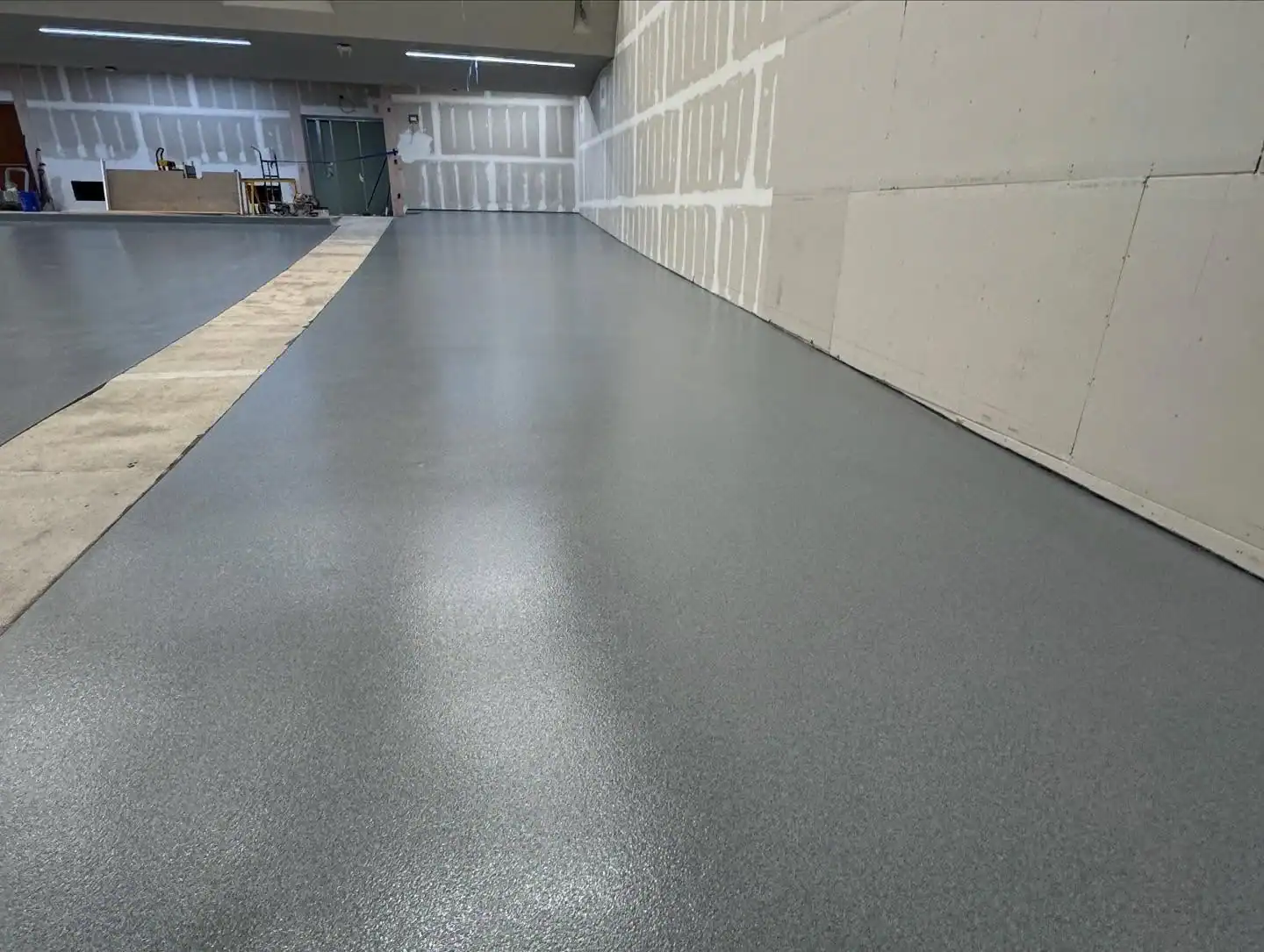
A properly installed food-grade floor solves both problems. It handles the thermal shock of a commercial kitchen, resists the grease and chemical cleaners you’re using daily, and bonds correctly to the slab from the start. It also gives Nassau County health inspectors exactly what they’re looking for: a seamless, non-porous surface with no cracked grout lines, no gaps, and no place for bacteria to hide. That’s what changes after this work is done right.
We’ve been installing commercial kitchen floors for 35 years, serving food service operators across Long Island, the broader United States, and the Bahamas. We hold Sherwin-Williams High Performance Flooring ATP certification and Res Tech certification dual manufacturer credentials that require demonstrated competency in concrete assessment, surface preparation, and full coating system application. That’s not a weekend course. It’s factory-backed validation that most contractors operating in Nassau County simply don’t have.
Freeport isn’t a market we’re figuring out as we go. We understand the moisture conditions in South Shore waterfront buildings, the inspection standards enforced by the Nassau County Department of Health, and the specific wear patterns that come with a high-volume seafood kitchen running through a full summer season. Based in Bohemia, NY, we’re a straight shot down Sunrise Highway a Long Island contractor with Long Island-specific knowledge, not a distant company guessing at your conditions.
Before anything gets applied to your floor, we test the concrete for moisture. In Freeport’s waterfront environment buildings near Woodcleft Canal, Freeport Creek, Reynolds Channel this step isn’t optional. If moisture vapor transmission is elevated and we don’t address it, the coating will fail regardless of what product goes on top. That’s the step most failed floors have in common: it was skipped.
Once the slab passes or is properly treated, we grind the concrete to the correct surface profile for adhesion. Older commercial buildings along the Nautical Mile and Merrick Road corridor in Freeport many built in the 1950s and 1960s often have existing failed coatings, surface deterioration, or cracks that need to be filled and leveled before any new system goes down. We handle all of that. Skipping prep to save time is how you end up with a floor that looks fine for six months and then starts peeling at the edges.
From there, the system is applied in the right sequence with correct cure time between coats. For high-heat zones like fryer lines, we use urethane cement mortar it handles the thermal shock that standard epoxy can’t. For the full kitchen, we build in the chemical resistance your cleaning routine requires. The end result is a floor that’s seamless, coved at the walls, sloped to your drains, and ready for a Nassau County health inspection. For Freeport restaurant operators, the best window for this work is January through March your natural off-season before the spring and summer rush hits the Nautical Mile.
Ready to get started?
Not every commercial kitchen has the same demands, and the food service environment along Freeport’s Nautical Mile is specific. Fish oils, shellfish liquor, frying grease, and the steam from a boiling seafood operation are among the most punishing conditions a kitchen floor can face. The system we install accounts for that chemical-resistant build coats, thermal shock-resistant materials in high-heat zones, and a topcoat formulated to hold up against the heavy-duty cleaners required in a seafood prep environment.
Every installation includes proper cove base at the floor-to-wall junction typically four to six inches which eliminates the bacterial harborage points that Nassau County health inspectors cite regularly. The surface is sloped correctly to your floor drains so water and grease don’t pool. Slip resistance is built into the finish, meeting the wet DCOF standards required for commercial kitchen walking surfaces. These aren’t add-ons. They’re part of what makes the floor compliant and functional from day one.
Beyond the Nautical Mile, we work with the full range of food service operators in Freeport Latin American restaurants, Caribbean eateries, bakeries, catering operations, and institutional kitchens in the Freeport Union Free School District. The system gets specified to match your kitchen’s actual conditions, not a one-size-fits-all product applied the same way everywhere. If your building is older, if your slab has been through previous failed coatings, or if you’ve already received a citation from the Nassau County Department of Health, we’ve handled situations like yours before.
Nassau County food service establishments are inspected under the New York State Sanitary Code, which requires kitchen floors to be smooth, non-porous, non-absorbent, and easily cleanable. The floor also needs to be free of cracks, chips, and open joints meaning a material that was once compliant but has since deteriorated is still a code violation. Floor-to-wall junctions must be coved to eliminate areas where bacteria can accumulate, and the floor needs to slope toward drains to prevent standing water.
A seamless epoxy or urethane cement system satisfies all of these requirements when it’s properly installed. The key word there is properly the surface preparation, the system selection, and the cove detail all have to be done correctly. A floor that looks clean on installation day but wasn’t prepared right will crack, pit, or delaminate, and at that point it’s no longer compliant regardless of what it’s made of. If you’ve had a citation from the Nassau County Department of Health related to your kitchen floor, the fix isn’t just a patch it’s getting the underlying installation done right.
In a properly installed system with the right surface prep and the right product selection, a food-grade epoxy or urethane cement floor can last 15 to 20 years in a commercial kitchen. For Freeport’s Nautical Mile restaurants high-volume seafood operations running through a full summer season with steam cleaning twice a day, heavy foot traffic, and rolling equipment the wear is more intense than a lower-traffic establishment would experience.
What shortens that lifespan more than anything is what happened before the coating went down. If the concrete wasn’t ground to the right profile, if moisture testing was skipped, or if the wrong system was used in a high-heat zone, you’re not getting 15 years. You might get two or three before it starts failing. The cost difference between a properly installed system and a shortcut installation looks small upfront and significant over time especially when you factor in the downtime and revenue loss that comes with an emergency floor repair during your busiest season.
Standard epoxy cannot and that’s an important distinction. The thermal shock of a commercial seafood kitchen, where temperatures swing dramatically between a fryer running at 375°F and a walk-in cooler, or where steam from a lobster pot hits a floor that’s been near cooking equipment, will crack standard epoxy over time. It’s not a matter of if. It’s when.
For high-heat kitchen zones, the right system is urethane cement mortar. It’s thermally stable, bonds well to damp concrete, and handles the chemical exposure from fish oils, grease, and the heavy-duty cleaners required in a seafood prep environment. It’s the same category of product used in food processing plants and institutional kitchens where the conditions are comparable. For Freeport’s Nautical Mile restaurants specifically, where the kitchen conditions are among the most demanding on the South Shore, getting the system selection right is the difference between a floor that holds up for a decade and one you’re replacing in two years.
For most commercial kitchen floor installations, you’re looking at one to three days depending on the size of the space, the condition of the existing slab, and the system being installed. Fast-cure polyaspartic topcoat systems can allow return to light foot traffic within hours and full commercial use within 24 to 36 hours. For a larger kitchen or one that requires significant surface prep crack repair, leveling, removal of failed existing coatings the timeline extends accordingly.
The best way to minimize revenue impact is timing. For Freeport restaurant operators, particularly those running on the Nautical Mile, January through March is the natural window for this kind of work. The seasonal slowdown before the spring and summer rush gives you the flexibility to schedule installation without the pressure of a full dining room waiting. We work around your schedule overnight, weekends, or phased by kitchen zone if the layout allows it. The goal is to get your floor done right without shutting your operation down any longer than necessary.
The most common reason is moisture that was never tested for. Concrete slabs release moisture vapor continuously, and in Freeport’s waterfront environment buildings near tidal waterways like Woodcleft Canal and Freeport Creek that moisture level is often higher than in inland Nassau County buildings. When epoxy is applied over a slab with elevated moisture vapor transmission and that moisture isn’t properly addressed first, the coating loses its bond from underneath and starts to delaminate. It usually starts at the edges or around floor drains and works its way across the floor.
The second most common reason is surface preparation that was rushed or skipped. Epoxy needs the concrete to be ground to a specific profile for the coating to bond correctly. If the contractor just cleaned the floor and rolled the product on, you got a surface coating, not a bonded system. That’s a fundamentally different thing, and it fails under the conditions of a commercial kitchen. If your last floor started peeling within a year or two, one of these two steps was almost certainly the issue not the product itself.
For a working commercial kitchen, yes and the math is straightforward. Quarry tile with grout lines is the standard in a lot of Freeport’s older restaurant buildings, particularly those along the Nautical Mile that were built decades ago. The grout lines are where bacteria live, where grease accumulates, and where health inspectors focus during a food service inspection. No matter how well your cleaning crew works, grout in a seafood kitchen is a sanitation problem that doesn’t fully go away.
Beyond the sanitation issue, tile in a high-volume kitchen cracks, chips, and develops open joints over time and every one of those is a code violation waiting to happen. A seamless food-grade floor eliminates all of that. There are no joints, no grout lines, no edges to catch a rolling cart. The surface is continuous, cleanable, and compliant. When you factor in the cost of ongoing tile repairs, the risk of a health inspection citation forcing a closure, and the cumulative cleaning labor that grout lines require, a properly installed seamless system costs less over time than maintaining aging tile. The upfront investment is real, but so is what it replaces.