
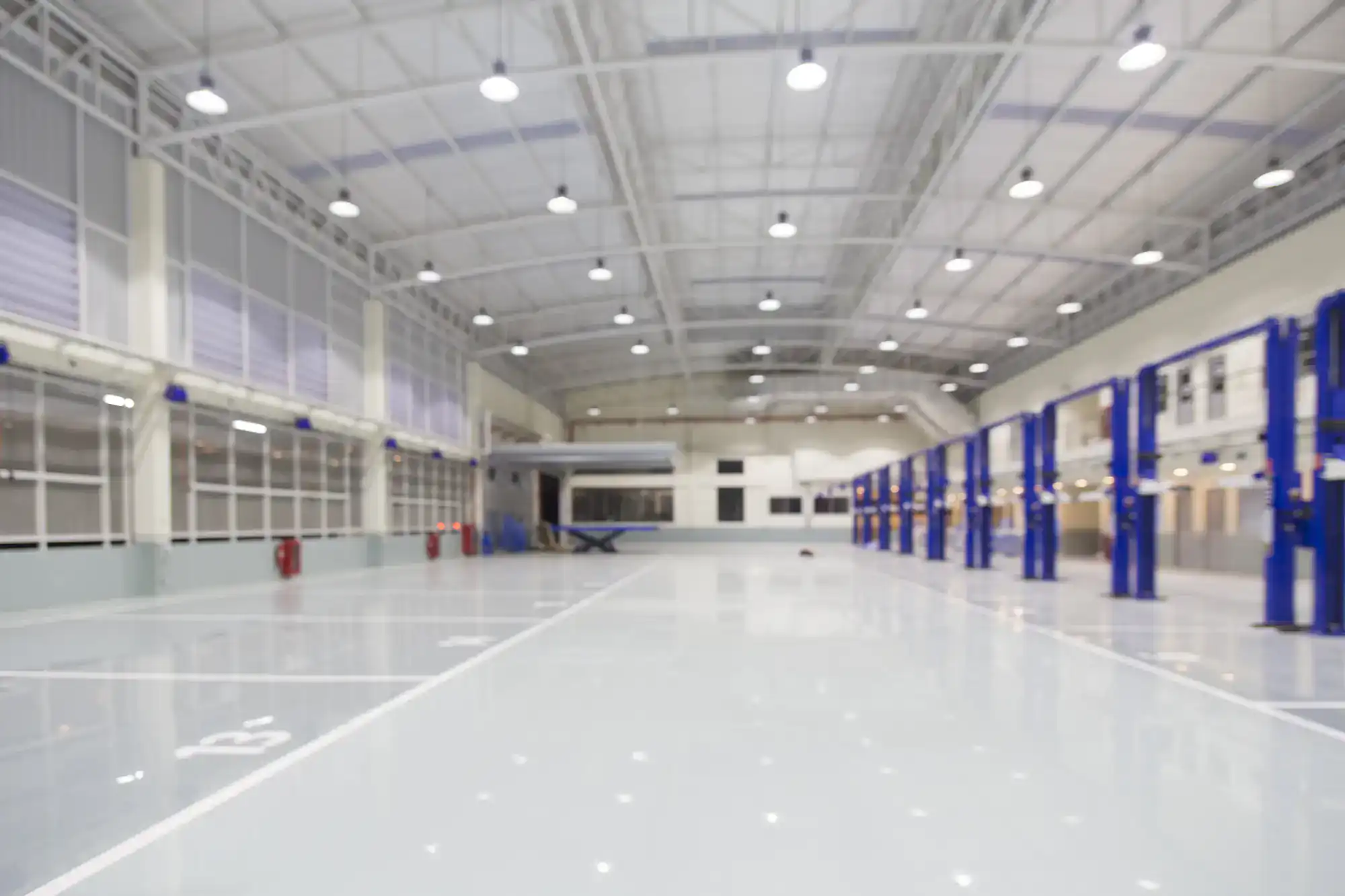
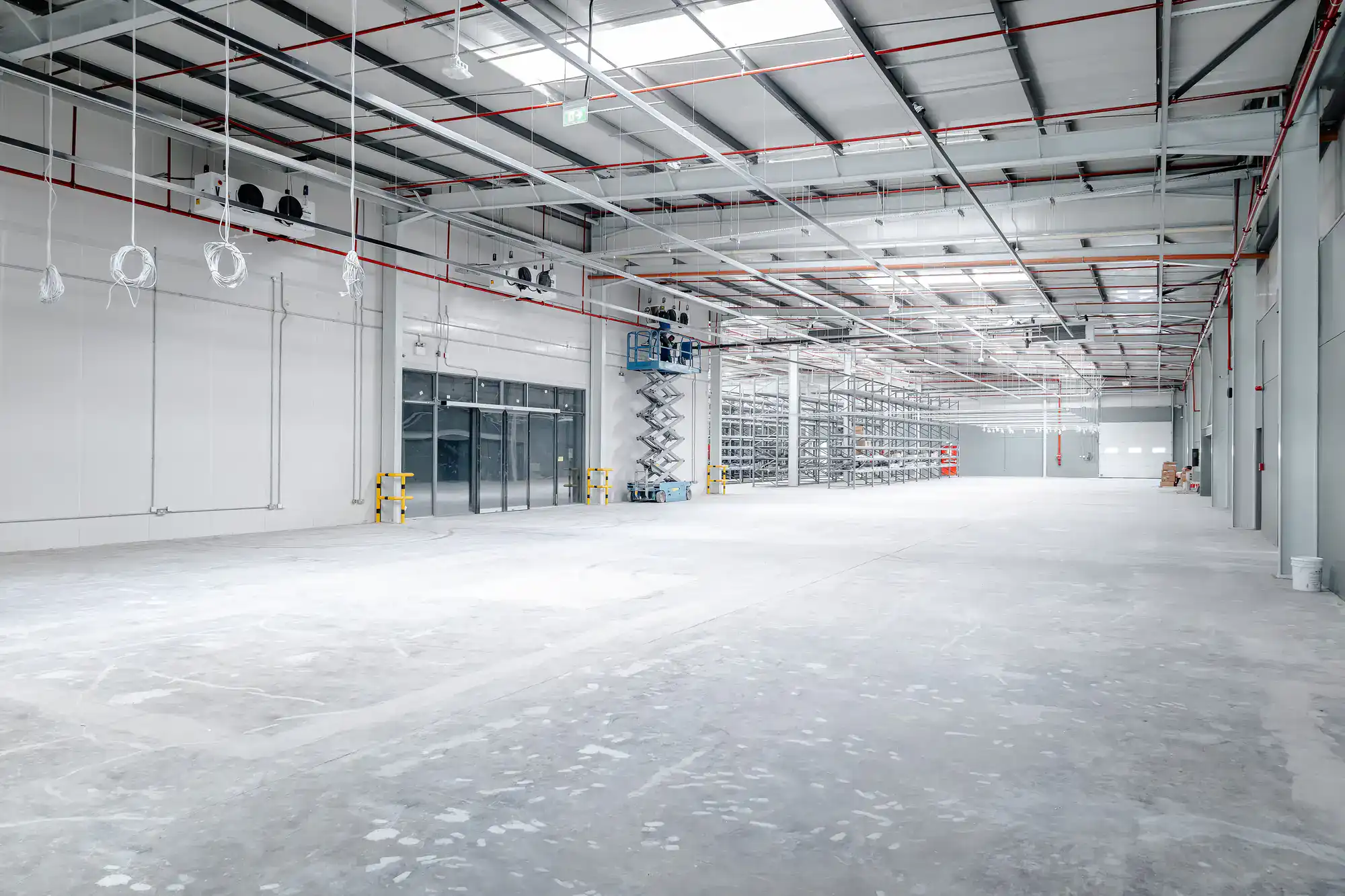
Living and working on the South Shore in Freeport means your concrete is up against something most inland facilities never deal with. The humidity off Great South Bay doesn’t let up. It works its way into unprotected slabs year-round, and if there’s no proper moisture barrier underneath your coating, you’re looking at bubbling and delamination within a couple of years sometimes less. This isn’t a product failure. It’s a prep failure. And it’s one of the most common reasons hangar floor coatings fail in coastal Freeport and Nassau County.
Once the floor is done right, the difference is immediate. Spills from fuel, hydraulic fluid, or Skydrol wipe up without soaking in. The surface stays bright and reflective, which makes dropped tools and fluid leaks visible the moment they hit the floor that’s a real safety advantage in a working hangar. And because the topcoat is tested to NFSI slip-resistance standards, you’re not trading a clean look for a safe one.
Freeport winters add another layer to this. Freeze-thaw cycling widens cracks in concrete that’s already been softened by coastal moisture. Every season you wait, the repair scope gets bigger. A properly installed aviation-grade floor stops that cycle and protects the slab underneath for the long run not just until the next inspection.
We’ve been in business for over 30 years, and the person running it Danny Harmer has been doing this work personally for more than 40. That’s not a company history blurb. It means when you ask a technical question about your Freeport hangar slab, the answer comes from someone who has actually installed these systems, not someone who manages installers from a distance.
We hold dual elite certifications through Sherwin-Williams High Performance Flooring and Res Tech two of the most rigorous credentials in industrial resinous flooring. Every installer on our crew carries OSHA 40 certification, which matters in aviation and marine environments where workplace safety standards are non-negotiable. Most of our field crew has been with us for over a decade.
We’re based in Bohemia, about 30 miles east of Freeport on Sunrise Highway the same road that runs straight through the village. We’ve worked across Nassau and Suffolk County and understand what coastal South Shore conditions do to concrete over time. This isn’t a national brand with a local phone number. We’re a Long Island company that’s been accountable to Long Island customers for three decades, and we know Freeport’s specific challenges because we’ve solved them repeatedly.
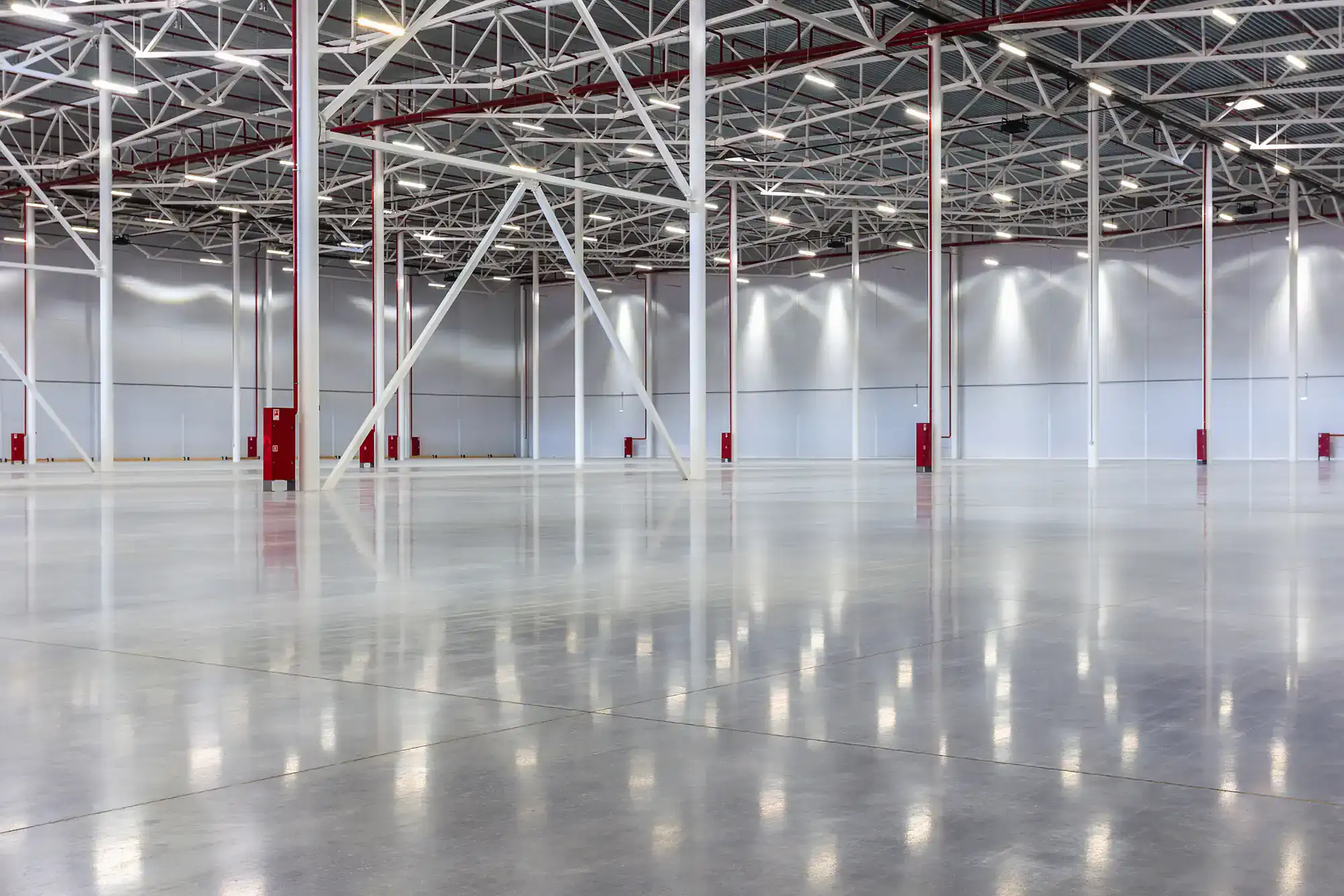
Before anything gets applied to your floor, we assess the concrete. That means checking for moisture vapor transmission a step that’s especially critical in Freeport, where the water table is relatively shallow and the proximity to Great South Bay keeps ground moisture elevated year-round. Skipping this step is how floors fail. We get it done every time, no exceptions.
From there, the surface gets diamond ground to open the concrete and give the coating something real to bond to. Any existing cracks or spalled areas get repaired before the first coat goes down because coating over damaged concrete just seals the problem in. Once the slab is properly prepped, we apply the system in multiple coats: a moisture-mitigating primer, the build coats, and a topcoat that meets NFSI slip-resistance standards.
If you’re working with a polyaspartic system, your floor is back in service in roughly 24 hours. That matters if you’re running an active hangar or a maintenance bay where downtime has a real cost. The full system is built to aviation-grade thickness a minimum of 45 mils which means it handles aircraft landing gear loads, floor jacks, and heavy equipment without breaking down. Because Freeport is an incorporated village with its own building department, any permit requirements for your specific project run through village offices rather than the Town of Hempstead, and we’re familiar with navigating those requirements.
Ready to get started?
There’s a meaningful difference between a floor coating that’s been adapted for aviation use and one that was engineered for it from the start. The systems we install are Sherwin-Williams High Performance Flooring certified which means the chemistry is specifically designed to resist Skydrol, jet fuel, hydraulic fluid, and the cleaning solvents used in active maintenance environments. NFPA 409, the national fire safety standard that governs aircraft hangar floors, requires noncombustible surface materials. Our systems meet that standard. Most general flooring contractors don’t know that requirement exists.
For facilities in Freeport whether you’re operating a hangar near the South Shore aviation corridor or running a marine service bay along Woodcleft Canal the floor requirements are comparable. Fuel exposure, heavy equipment loads, chemical spills, and the need for a surface that stays safe and cleanable under real working conditions. Our coating systems address all of it. The high-build thickness handles impact. The topcoat handles slip resistance. The primer handles what’s coming up from below.
We offer both epoxy and polyaspartic options depending on your timeline and the specific demands of your facility. Polyaspartic systems return to service in about 24 hours. Standard epoxy systems take longer but may suit lower-traffic environments where extended cure time isn’t a problem. Either way, the prep process is the same and that’s what determines whether the floor holds up five years from now.
It absolutely does, and it’s one of the first things worth understanding before you invest in a floor coating near the water. Freeport sits on Great South Bay, and the moisture levels here both in the air and pushing up through the ground are persistently elevated compared to inland Nassau County towns. Concrete is porous. When moisture vapor builds up beneath a slab and has nowhere to go, it pushes upward through the coating and causes it to bubble, blister, and eventually peel away from the surface. This process happens faster in coastal environments, and it’s one of the most common reasons floor coatings fail prematurely on the South Shore.
The fix isn’t a better product it’s a better process. Moisture vapor transmission testing before installation, combined with a moisture-mitigating primer as the first coat, is what prevents this from happening. Any contractor who skips that step on a Freeport slab is setting the project up to fail, regardless of what coating goes on top. This is just what the environment demands.
NFPA 409 is the National Fire Protection Association’s standard for aircraft hangars, and it includes a requirement that hangar floor surfaces be noncombustible. This is a federal safety standard not a local code specific to Freeport or Nassau County but it applies to commercial aircraft hangar facilities regardless of where they’re located. The reason it matters when you’re hiring a contractor is that a significant number of general flooring companies don’t know this requirement exists, and some standard epoxy products don’t meet it.
When you’re getting quotes for aircraft hangar floor coatings in Freeport, it’s worth asking directly whether the system being proposed is NFPA 409 compliant. If the contractor looks at you blankly, that’s a useful data point. Aviation-grade systems from certified contractors are specifically formulated to meet this standard. It’s also worth noting that NFPA 409 compliance can affect your facility’s certificate of occupancy and liability exposure so it’s not a technicality you want to discover after the floor is already installed.
A properly installed polyaspartic system in an active aviation or maintenance environment should hold up for 15 to 20 years with normal upkeep. Standard epoxy systems in similar conditions typically run 5 to 7 years before they need attention. The difference in longevity comes down to the chemistry of the coating and, more importantly, the quality of the surface preparation underneath it. A high-end coating applied over poorly prepped concrete will fail faster than a mid-grade coating applied over a properly ground, repaired, and primed slab.
In a coastal environment like Freeport, the prep work is even more critical because moisture is a constant variable. Concrete that’s been properly assessed, ground, and primed before coating is going to hold the system far longer than concrete that was just cleaned and coated. The total cost difference between a floor that lasts 20 years and one that needs to be ground out and reinstalled after 4 years is significant and that’s before you factor in the operational downtime of a second installation.
The core difference is cure time and durability over the long term. Polyaspartic systems cure fast typically fast enough to return aircraft or equipment to the space within about 24 hours. Traditional epoxy systems require a multi-day cure window, which means your hangar is out of service longer. For an active facility where aircraft are moving in and out on a regular schedule, that downtime difference is real and worth accounting for when you’re planning the project.
On the durability side, polyaspartic systems also tend to hold up better under UV exposure and extreme temperature swings, which matters in a facility that sees Long Island winters and the temperature fluctuations that come with them. Both systems can be built to aviation-grade thickness and both can be formulated for Skydrol and chemical resistance. The right choice depends on your timeline, your traffic load, and how the facility is used day-to-day. If you’re running a low-traffic private hangar and can afford a longer cure window, epoxy is a solid option. If the facility is active and downtime is a real cost, polyaspartic is the more practical choice.
Yes and the requirements are more similar than most people expect. The boatyards and marine service facilities along Woodcleft Canal deal with many of the same floor challenges as aircraft hangars: fuel and lubricant exposure, heavy equipment loads, the need for a slip-resistant surface, and the relentless humidity that comes with working on the water in Freeport. Aviation-grade floor coatings are engineered for exactly these conditions. The chemical resistance that handles Skydrol in a hangar handles marine fuel and hydraulic fluid in a boatyard just as effectively.
The one distinction worth noting is that NFPA 409 is specific to aircraft hangars it doesn’t govern marine service facilities by name. But the practical floor requirements for a serious marine maintenance bay are comparable, and the same high-build, chemical-resistant, NFSI-compliant systems we use in hangars are appropriate for those environments. If you’re operating a service facility on Freeport’s waterfront and your current floor is pitting, staining, or becoming a slip hazard, the solution is the same regardless of whether aircraft or boats are parked on it.
The honest answer is that most slabs in working facilities need at least some repair work before a coating is applied especially in Freeport, where freeze-thaw cycling over multiple winters tends to widen existing cracks and cause surface spalling over time. The coastal moisture environment accelerates this. A slab that looks manageable in October can show noticeably more deterioration by April after a hard winter. The longer a damaged slab goes uncoated, the more concrete repair work is involved when you finally move forward.
During the initial assessment, we evaluate the concrete for crack depth, spalling, surface contamination, and moisture vapor levels. Minor cracks and surface spalls get repaired as part of the installation process before any coating is applied. More significant structural issues deep cracks, major slab movement may need to be addressed separately before coating work begins. Either way, we don’t coat over unrepaired damage. It’s the single fastest way to shorten the life of an otherwise good floor system, and it’s a shortcut that ends up costing more to fix than the original repair would have.