
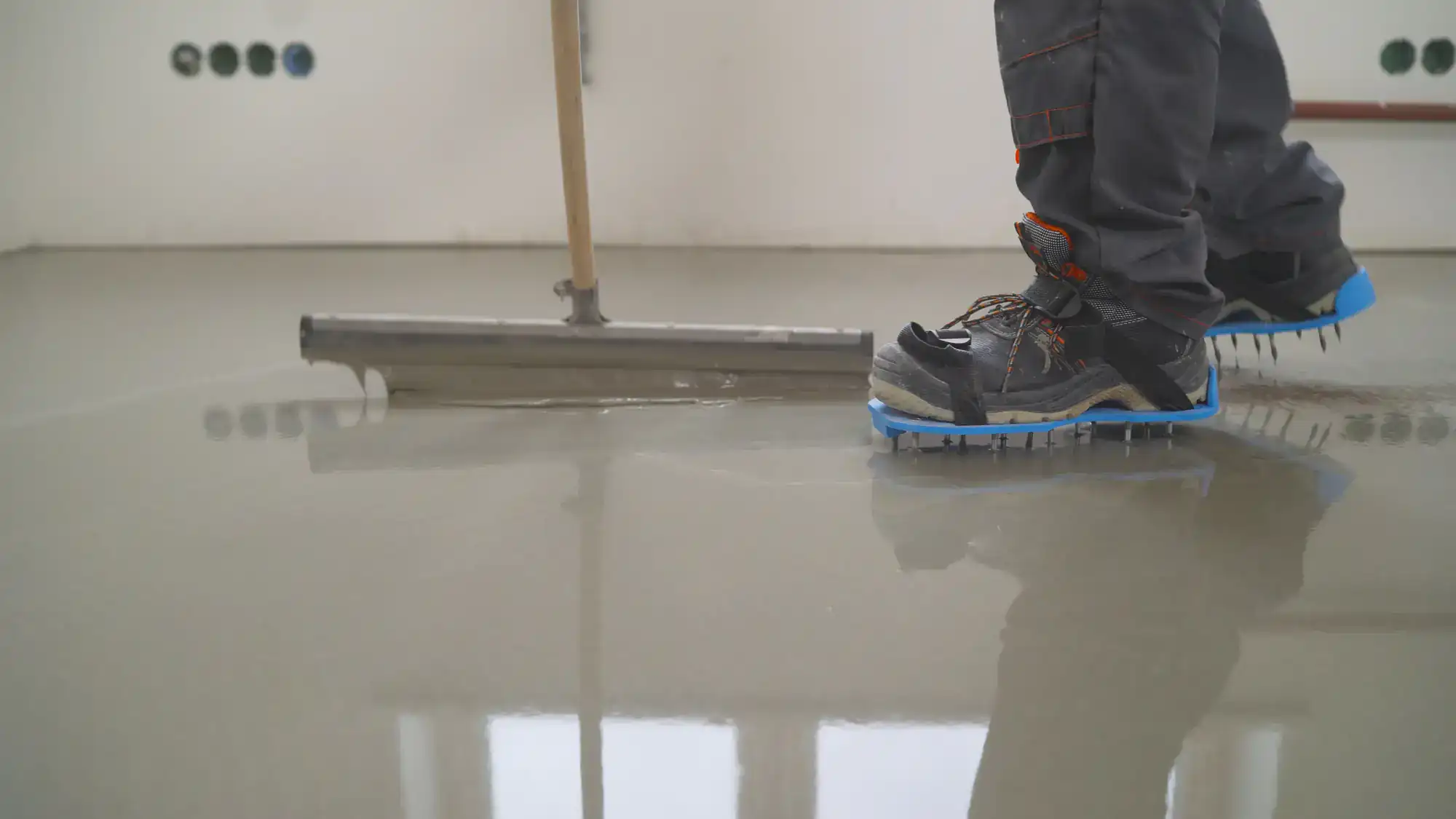
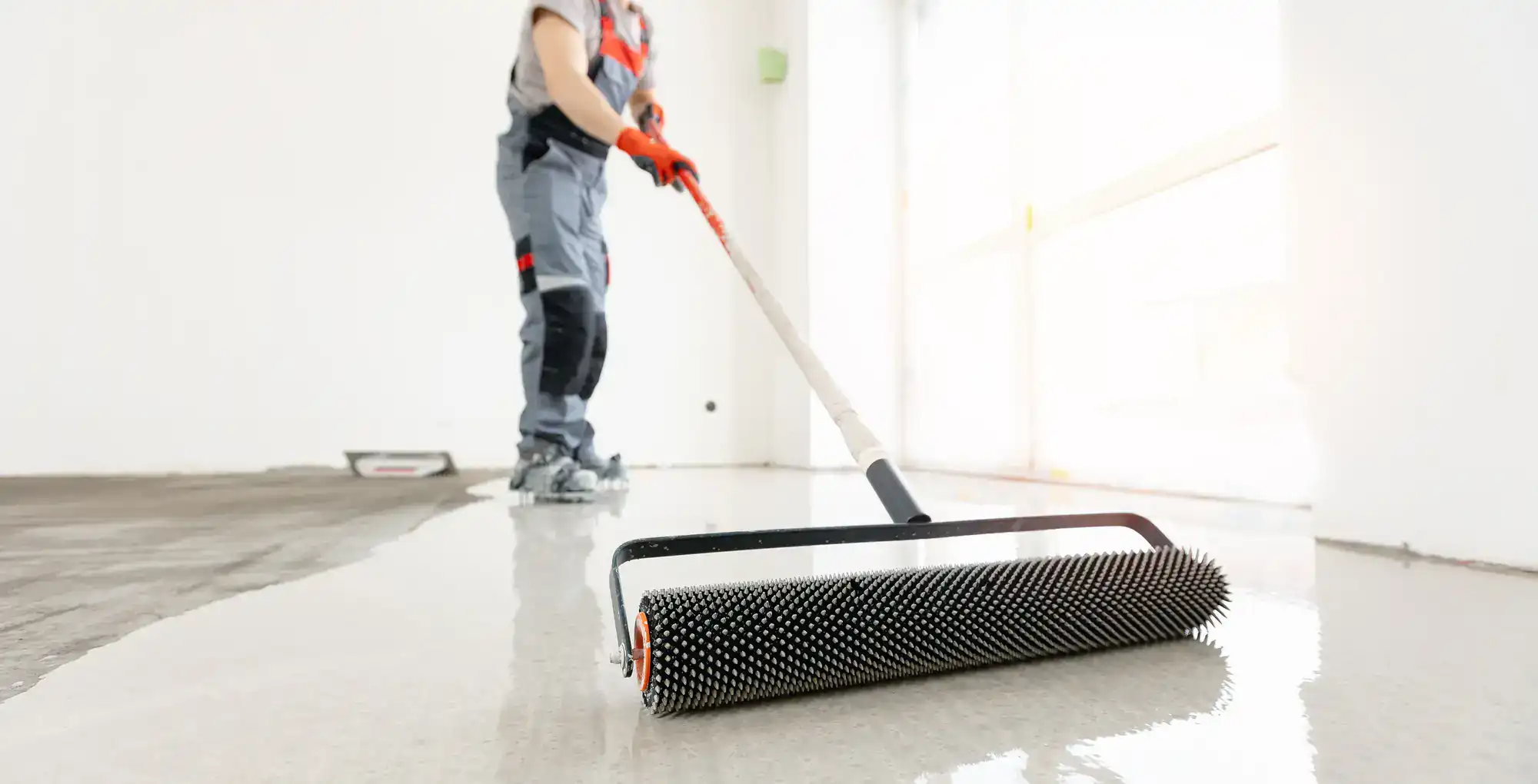
If you’ve got tile that keeps cracking, LVP that’s lifting at the seams, or a floor that visibly dips near a doorway, the slab underneath is telling you something. A proper self leveling job doesn’t just fix the surface it addresses what’s actually causing the problem so the new floor system you’re putting down actually lasts.
Freeport’s approximately eight miles of canals mean a lot of homes and businesses sit on low-elevation lots with a water table that’s closer to the surface than most people realize. That moisture doesn’t stay outside. It migrates up through the slab, and when a contractor skips moisture testing and pours anyway, you end up with delamination, bubbling, and a failed floor within months. The fix costs more the second time around.
For commercial operators on the Nautical Mile restaurants, retail shops, marine businesses along Woodcleft Avenue a level floor isn’t just aesthetic. It’s a health code issue, a safety issue, and a business continuity issue. Getting it done right the first time, with a curing window that gets you back open fast, is what actually matters.
We’ve been installing floors across Long Island for over 30 years, based out of Bohemia, NY. That’s not a regional claim it means our crew working on your slab has seen the same post-war ranch homes, the same Nassau County building stock, and the same South Shore moisture conditions that define Freeport’s neighborhoods. Our president Danny Harmer brings more than 40 years of personal installation experience to every project, and most of our crew has been with us for over a decade.
We hold an A+ rating with the Better Business Bureau, and every installer is OSHA 40 certified which matters when work is being done in commercial kitchens, food service spaces, or any public-facing building in Freeport. We’ve installed floors at the White House, across the United States, the Bahamas, and internationally. That track record doesn’t happen without doing the work right, consistently, over a long period of time.
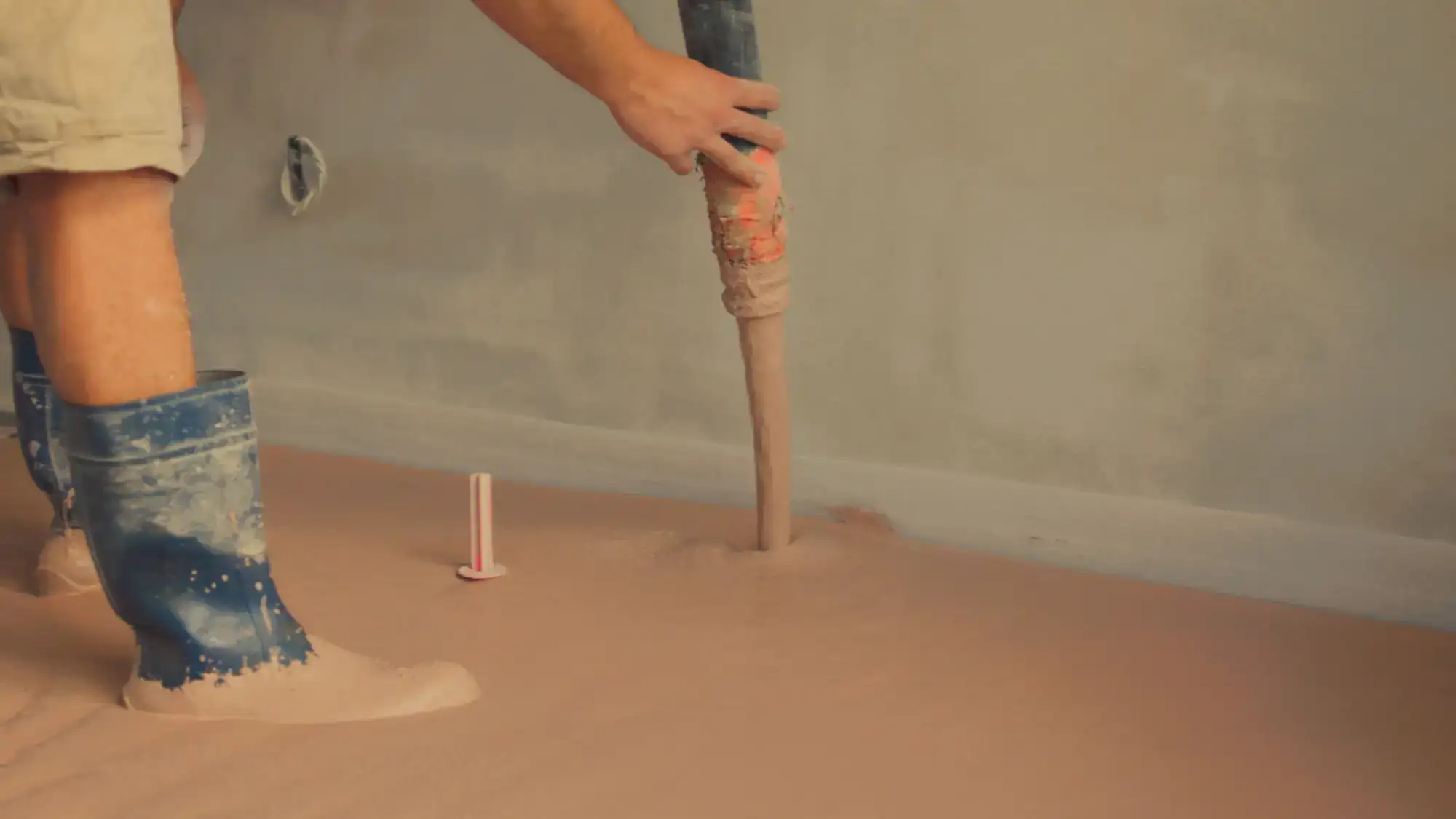
The process starts with the slab not the product. Before anything is poured, we conduct moisture testing using ASTM F2170 relative humidity testing and MVER testing. In Freeport, where canal-adjacent lots and decades of South Shore humidity create elevated baseline moisture in slabs, this step isn’t optional. It determines which system we use and whether any moisture mitigation needs to happen first. Skipping it is how floors fail.
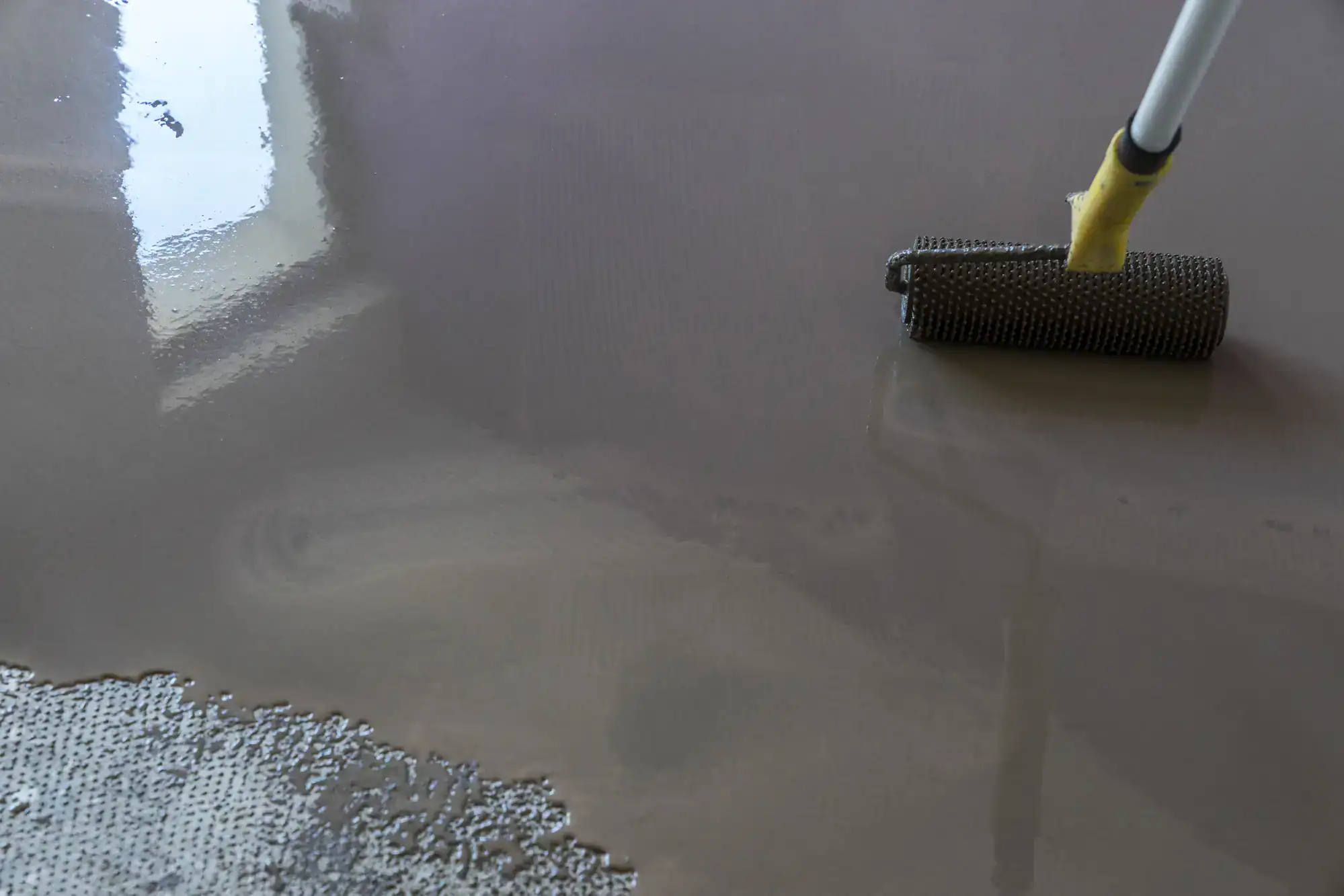
Once we’ve assessed the slab, surface preparation comes next grinding, concrete repair, and addressing any existing cracks or voids. For older homes in Freeport’s residential neighborhoods, many built in the 1950s through 1970s, this often means dealing with layers of old adhesive, previous patch work, or settlement patterns that have developed over 50 or 60 years. We then install the self leveling underlayment a polymer-modified cementitious system at the correct depth, anywhere from a quarter inch for minor surface correction up to two inches or more for significant voids and settlement.
Foot traffic is typically possible within four to six hours. Heavy commercial use within 24 to 48 hours. For Nautical Mile businesses that can’t afford a prolonged closure, that turnaround is built into our plan from the start. If your project requires a Village of Freeport building permit which applies to most commercial renovations and larger residential work that’s part of the conversation upfront, not an afterthought.
Ready to get started?
The self leveling system we use is a high-flow, polymer-modified cementitious underlayment that installs from a quarter inch up to two inches neat and up to five inches with aggregate additions. That range matters in Freeport, where the gap between a minor surface correction in a downtown retail buildout and a deep void repair in a flood-affected canal-front home is significant. One system, one contractor, one accountable outcome.
For Freeport homeowners, the most common application is pre-flooring surface correction leveling a slab that’s no longer flat enough for large-format tile or thin LVP before the final floor system goes down. For commercial clients, particularly in the restaurant and hospitality spaces along Woodcleft Avenue and the downtown Main Street corridor, it’s often part of a full floor renovation that includes the self leveling underlayment as the foundation for an epoxy or polyaspartic coating system on top. Because we handle both the underlayment and the final coating there’s no gap in accountability between two separate contractors pointing fingers at each other if something goes wrong.
Nassau County’s coastal environment means higher ambient humidity year-round, and the Village of Freeport’s own permitting requirements apply to commercial and larger residential work. Every job is approached with those local conditions and regulatory requirements factored in from the initial assessment.
It can but only after the slab has been properly assessed and prepared. Saltwater intrusion, which affected nearly 4,000 homes in Freeport during Hurricane Sandy, is more damaging to concrete than fresh water. Salt penetrates the slab, corrodes embedded reinforcement, and causes cracking and heaving from the inside out over time. A self leveling pour over a compromised slab that hasn’t been repaired first is just a temporary cosmetic fix it won’t hold.
The right approach starts with a thorough assessment of the existing concrete. Any structural cracks, spalling, or corrosion-related damage needs to be addressed before the underlayment goes down. Once the substrate is sound and moisture levels are within acceptable thresholds, a bonded self leveling system can provide a stable, flat base for whatever floor system goes on top. If your Freeport home was in the flood zone and you’ve been living with a patched or uneven floor since 2012, a proper assessment is the starting point not a sales call.
For light foot traffic, most polymer-modified self leveling systems are ready within four to six hours of application. For heavy commercial traffic or before a final flooring system like tile or epoxy is installed you’re typically looking at 24 to 48 hours depending on the product, the pour depth, and ambient conditions at the time of installation.
Temperature matters here. Self leveling concrete requires ambient temperatures above 50°F for proper hydration and curing. In Freeport during winter months, unheated commercial spaces or garages can drop below that threshold, which affects how the product sets. This is something to plan around, not ignore. Spring and summer are the most common seasons for this work on the South Shore, partly because the conditions are more forgiving and partly because homeowners tend to notice slab issues heaving, new cracks after the winter freeze-thaw cycle runs its course. If you’re planning a renovation, timing the floor prep work for late spring through early fall gives you the best conditions.
It depends on the scope of the project. For standalone surface preparation work in a residential setting, a separate structural permit may not be required. But Freeport is an incorporated village with its own Building Department separate from the Town of Hempstead and all construction work, including commercial renovations and larger residential projects, is subject to village permitting requirements. If the self leveling work is part of a broader renovation that includes structural changes, plumbing, or electrical work, permits are required and must be pulled from the Village of Freeport Building Department at 46 North Ocean Avenue.
For commercial operators pursuing the Village’s Business Development Exemption the ten-year property tax exemption available for new construction and qualifying additions having a licensed, documented contractor is part of the compliance picture. It’s worth confirming the permit requirements for your specific project before work begins, not after. The village has its own code enforcement process, and construction without required permits can result in fines or required demolition of completed work.
A floor patch is a localized repair you fill a crack, a hole, or a small low spot and move on. It works for isolated damage, but it doesn’t address broader surface irregularities across a slab. Self leveling concrete is a full underlayment system that flows across the entire surface and seeks its own level, creating a consistently flat plane across the whole floor rather than just fixing individual problem spots.
For older homes in Freeport the ranch homes and split-levels built in the 1950s and 1960s that make up a large portion of the village’s housing stock the issue usually isn’t one crack in one spot. It’s a slab that has settled unevenly over 50 or 60 years, with multiple low areas, old adhesive layers, and surface irregularities distributed across the whole floor. A patch won’t fix that. A properly installed self leveling underlayment will, and it gives you a substrate that modern flooring products especially large-format tile and thin LVP can actually be installed over without lippage, cracking, or premature failure.
Pricing for concrete floor leveling services in Freeport typically ranges from around $750 on the low end for minor surface correction in a smaller space, up to $6,000 or more for larger areas with significant depth requirements, extensive surface preparation, or moisture mitigation work. The variables that drive cost are square footage, pour depth, the condition of the existing slab, and whether any concrete repair or moisture remediation is needed before the underlayment goes down.
In Freeport specifically, the moisture environment driven by the canal geography and the South Shore water table means moisture testing and, in some cases, vapor barrier systems are part of the job in a way they wouldn’t be in a drier inland location. That adds real value to the process, even if it adds some cost. A self leveling job that skips moisture testing in a canal-adjacent neighborhood is a job that’s likely to fail, and the callback cost to fix a delaminated or bubbled floor almost always exceeds the cost of doing it right the first time. Get an assessment, understand what the slab actually needs, and price accordingly.
Yes, and it’s actually one of the better applications for self leveling underlayment. The material encapsulates radiant heat tubing cleanly, provides excellent thermal conductivity, and creates the flat, consistent surface that radiant systems need to perform efficiently. For Freeport homeowners who are upgrading older homes with radiant heat a renovation that’s become more common in the village’s aging residential stock as owners invest in long-term improvements self leveling underlayment is often the recommended substrate.
The key consideration is pour depth relative to the tubing diameter. The underlayment needs to fully cover the tubing with enough material above it to protect the system and distribute heat evenly. This is something that gets calculated during the planning phase, not guessed at on installation day. It’s also worth noting that for any renovation of this scope in Freeport, the Village’s permitting requirements apply radiant heat installations typically involve both plumbing and electrical components that require permits from the Village of Freeport Building Department. Coordinating the floor prep and the radiant system installation in the right sequence is part of getting the job done correctly.