
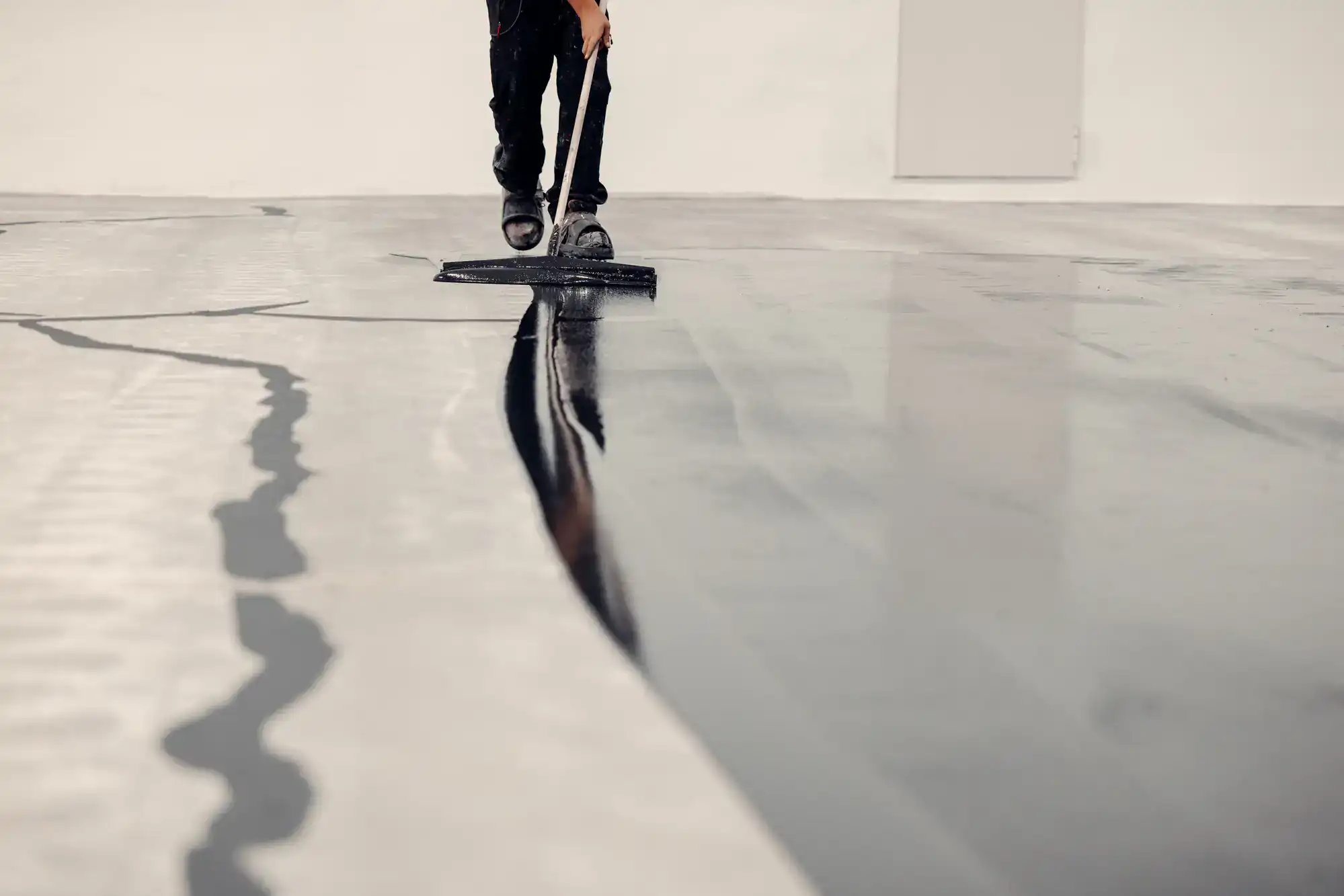
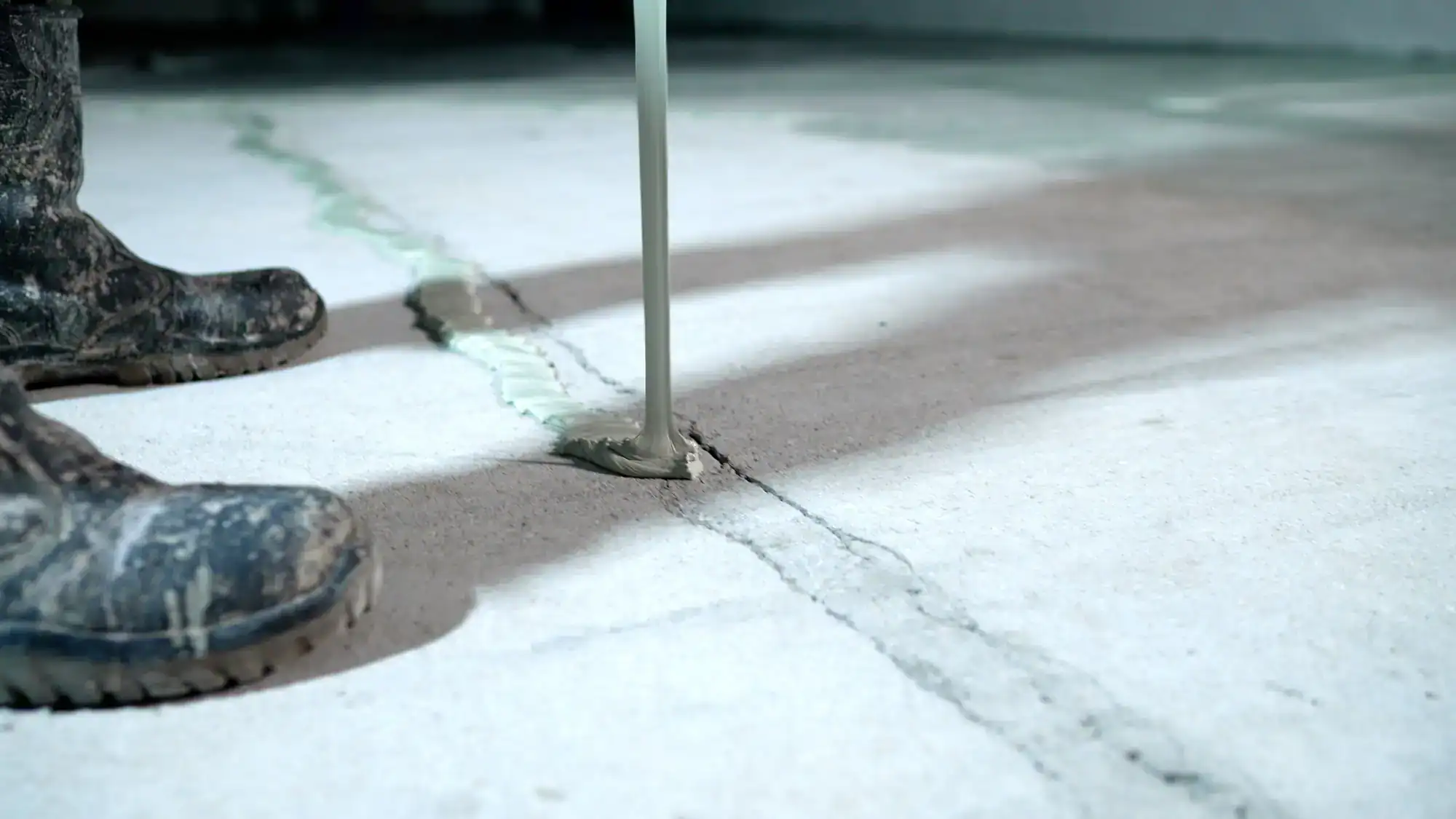
Most epoxy floors fail for one reason: the contractor skipped the work that happens before installation. No moisture testing. No diamond grinding. No real assessment of what’s going on beneath the surface. In Copiague, where three waterfront peninsula communities sit directly adjacent to tidal canals and the Great South Bay, skipping that step isn’t a shortcut it’s a guarantee your floor blisters and peels within a year.
When moisture vapor pushes up through a concrete slab that hasn’t been properly tested and prepped, it doesn’t matter how good the coating is. The bond breaks down from underneath, and you’re back to square one paying twice for a job that should have been done right the first time. That’s the specific failure pattern we see most often on South Shore properties, and it’s entirely preventable.
A properly installed commercial epoxy flooring system in Copiague means you get a floor that handles real daily punishment forklift traffic, chemical spills, heavy equipment without delaminating, bubbling, or wearing through in high-traffic zones. For the light industrial and commercial properties along the Montauk Highway corridor, that kind of durability is what keeps your operation running without interruption.
Danny Harmer has been installing commercial and industrial epoxy floors for over 40 years. He’s not a general contractor who added epoxy to a service menu this is the work he’s done his entire career, across warehouses, firehouses, commercial kitchens, healthcare facilities, and aircraft hangars. In 1996, our team installed the epoxy floor in the White House kitchen. That’s the standard we apply to every job, whether it’s a food service facility in Bay Shore or a workshop off Montauk Highway in Copiague.
We hold Sherwin-Williams High Performance Flooring certification, Res Tech certification, and OSHA 40 credentials that are manufacturer-backed and independently verified, not self-reported. We’ve maintained a BBB A+ rating with zero complaints across more than three decades of operation in Nassau and Suffolk Counties. Most of our installation crew has been with us for over ten years, which means the people showing up to your Copiague facility know what they’re doing and have been doing it here, in this coastal Long Island environment, for a long time.
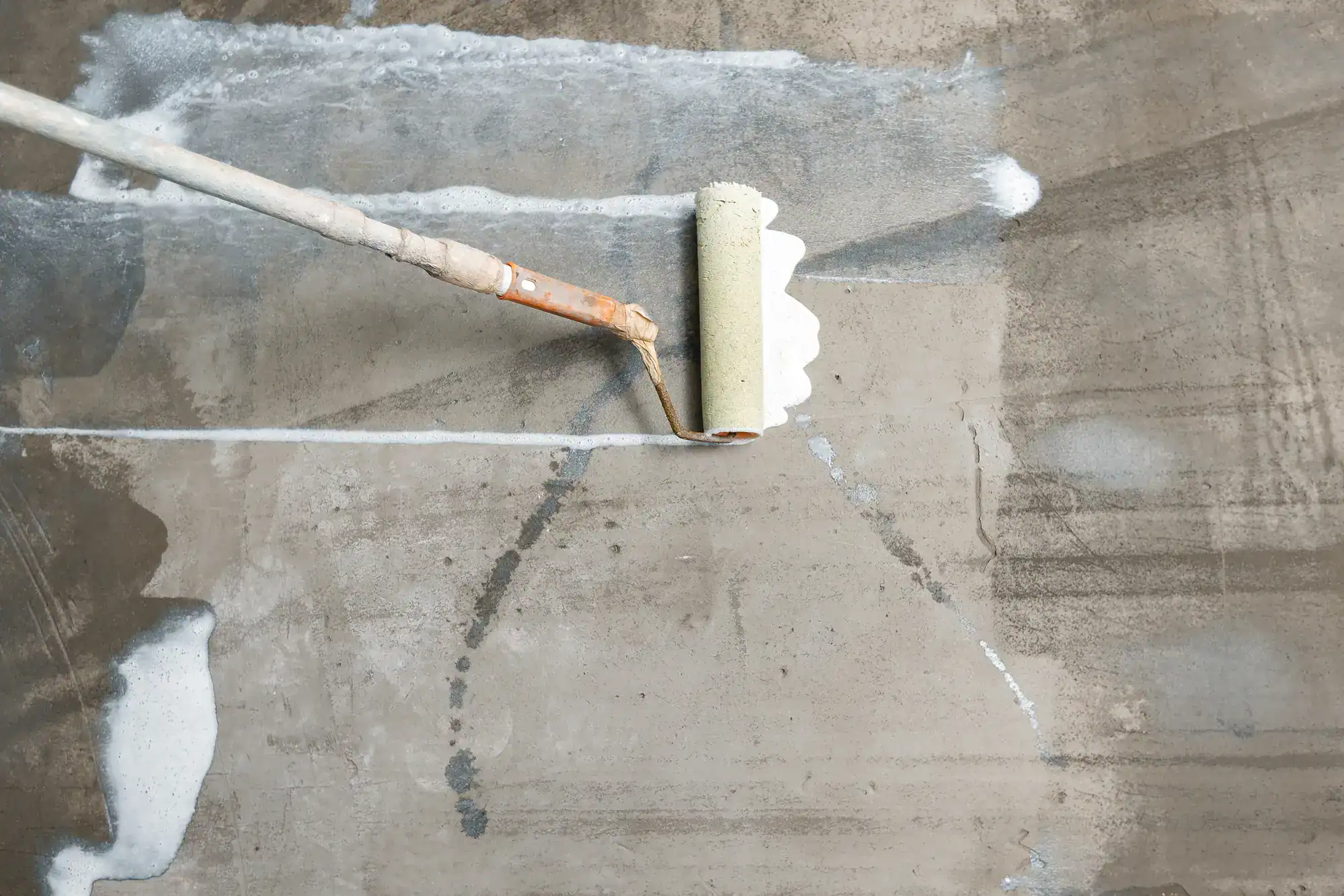
The first thing we do on any Copiague job is assess the slab. That means testing for moisture vapor transmission not assuming the concrete is ready because it looks dry. In a community where properties in American Venice, Copiague Harbor, and Amity Harbor sit directly over high water table conditions, this step is non-negotiable. If moisture is present above threshold, we address it before anything else. That might mean a moisture-mitigating primer or a specific system designed to manage vapor pressure from below. Whatever the slab needs, we handle it before the coating process begins.
From there, surface preparation is done with diamond grinding not acid etching, which is a shortcut that leaves an inconsistent profile and is a documented yellow flag for commercial work. Diamond grinding opens the concrete to the correct surface profile for maximum adhesion, removes contaminants, and reveals any cracks or structural issues that need repair before coating. Once prep is complete, the system goes down in layers, with each coat allowed to cure fully before the next one is applied. Rushing the recoat window especially in Copiague’s summer humidity near the Great South Bay causes intercoat adhesion failures that show up as blistering months later.
The result is a multi-layer industrial system installed at the correct mil thickness for your facility’s actual load and chemical exposure profile. When we’re done, your floor is ready for real use not a showroom display.
Ready to get started?
The commercial and industrial properties along Copiague’s Montauk Highway corridor workshops, service bays, small warehouses, light manufacturing spaces need floors specified for actual conditions, not coated with a consumer-grade system that fails under the first real load. The epoxy flooring systems we install are 100% solids or high-solids industrial formulations, applied at 14 to 30 mils of dry film thickness depending on the demands of the space. For facilities dealing with oil, solvents, or chemical exposure, we specify chemical resistant epoxy finishes to match the exact substances your floor will encounter.
For commercial kitchens and food service operations in Copiague whether you’re running a restaurant along Montauk Highway or managing a food processing facility in the broader Town of Babylon our systems meet USDA, ADA, and New York State Department of Health compliance requirements. Seamless resinous floor coatings eliminate the grout lines and seams where bacteria and moisture accumulate, which matters both for inspection compliance and day-to-day sanitation.
For firehouse apparatus bays and municipal facilities in the Copiague area, we install 1/4-inch mortar trowel systems with polyaspartic topcoats engineered specifically for thermal shock from bay doors, diesel exhaust exposure, and the weight of fire apparatus. Every system we specify starts with what your facility actually needs, not what’s fastest or cheapest to install.
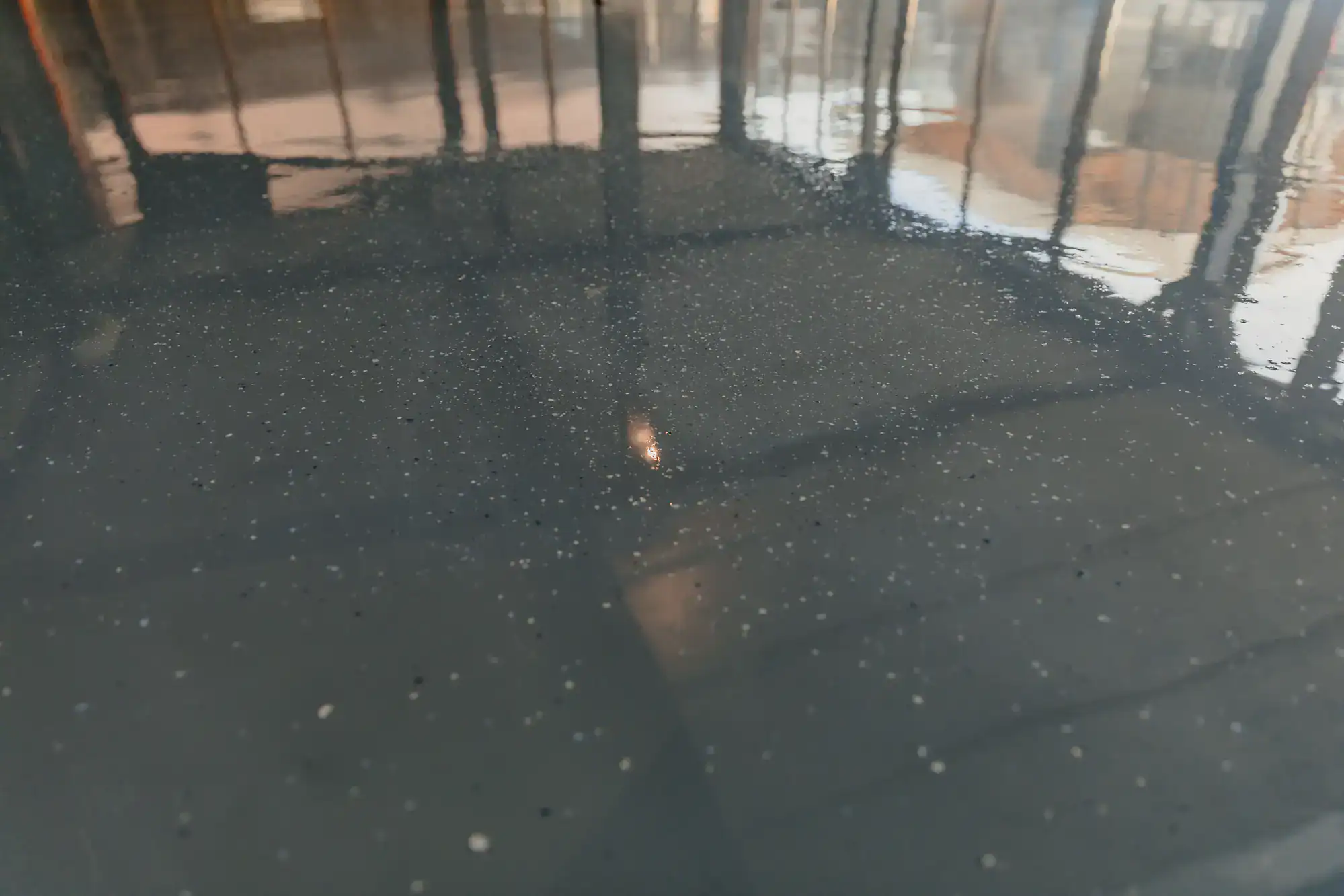
The most common reason epoxy floors fail near Copiague’s waterfront communities American Venice, Copiague Harbor, Amity Harbor is uncontrolled moisture vapor transmission through the concrete slab. When the water table is high and the ground is consistently wet, moisture moves upward through the slab and pushes against the underside of the coating. If the contractor didn’t test for this before installation, the bond breaks down from below, and the floor blisters, bubbles, and delaminates sometimes within months.
The fix isn’t complicated, but it requires the contractor to actually do it. Before any coating goes down, the slab needs to be tested for moisture vapor emission rate. If it’s above the threshold for the specified system, a moisture-mitigating primer or vapor barrier system needs to be applied first. Skipping this step is the single most common reason Copiague property owners end up paying for the same floor twice. Any contractor who doesn’t bring up moisture testing before giving you a quote is telling you something important about how they work.
A properly specified and installed commercial epoxy floor in a Long Island coastal environment like Copiague should last 15 to 20 years under normal commercial or industrial use. The key word is “properly.” That means the right system for the actual load and chemical exposure of the space, applied over a correctly prepared slab, with each layer cured fully before the next one goes down.
The coastal humidity on the South Shore Copiague regularly sees summer relative humidity above 70 to 80 percent affects cure conditions if the contractor isn’t paying attention. Epoxy applied in high humidity without proper environmental controls can trap moisture in the film and cause surface defects that compromise the entire system’s longevity. When those conditions are managed correctly, and when the slab was properly prepped from the start, you’re looking at a floor that holds up for decades, not years.
The difference comes down to what the product is made of and how thick it goes on. Consumer-grade epoxy kits available at hardware stores are typically water-based or low-solids formulations that cure to 3 to 8 mils of dry film thickness. They’re designed for light residential use a garage floor that sees a couple of cars and some foot traffic. They are not engineered for the kind of daily abuse that a commercial workshop, a service bay, or a light manufacturing facility along Montauk Highway in Copiague puts a floor through.
Professional industrial epoxy systems are 100% solids or high-solids formulations applied at 14 to 30 mils of dry film thickness, with compressive strength ratings mapped to the actual load profile of the facility. They require professional surface preparation diamond grinding, not a quick acid wash and proper cure management between coats. The cost difference between a professional system and a kit is real, but so is the performance gap. A kit that fails in 18 months on a commercial floor costs you more in the long run than a professional system installed correctly the first time.
For most standalone epoxy flooring installations coating an existing concrete slab without structural modification a Town of Babylon building permit is typically not required. The work is classified as a surface treatment rather than a structural alteration. That said, if the scope of work includes slab repair, cove base installation as part of a broader renovation, or any structural modification to the floor assembly, the permit requirements can change depending on the project.
For commercial kitchens, healthcare facilities, and food-handling operations in Copiague, the more relevant compliance requirements are regulatory rather than permit-based. New York State Department of Health requirements, USDA compliance for food processing environments, and ADA accessibility standards all apply regardless of whether a building permit is pulled. We’re familiar with these requirements across the Town of Babylon and build them into the specification process from the start, so you’re not dealing with compliance issues after the floor is already installed.
Commercial epoxy flooring for facilities in Copiague and the surrounding Town of Babylon area typically runs between $7 and $12 per square foot for a professionally specified industrial system, depending on the condition of the existing slab, the type of system required, and the specific demands of the space. A food service or healthcare floor requiring a seamless resinous system with a coved base will be specified differently and priced accordingly compared to a straightforward warehouse floor designed for forklift traffic and general industrial use.
The more useful question is what it costs to do it wrong. A consumer-grade coating or a system installed without proper moisture testing and surface preparation might run $3 to $4 per square foot upfront. When it fails in 18 months which is common on South Shore properties with high water table conditions you’re paying for removal, surface re-preparation, and reinstallation on top of the original cost. The lifecycle math on a professional system installed correctly the first time is almost always the better investment for a Copiague business owner thinking in terms of years, not months.
Yes and for many commercial operations in Copiague, that’s exactly how we schedule it. Commercial kitchens, retail spaces, and service facilities that can’t afford to lose operational days during the week are often done in overnight or weekend installation windows. The logistics depend on the size of the space, the system being installed, and the cure time requirements for each layer, but we plan phased scheduling around your operating hours from the start, not something we figure out on the fly.
The one constraint worth understanding is that epoxy cannot be applied below 50°F or in humidity above 85 percent, and it needs adequate ventilation during installation and cure. For Copiague facilities along the Montauk Highway corridor particularly older commercial buildings that may have limited HVAC in warehouse or workshop areas we assess environmental conditions before scheduling and build any necessary temperature or humidity management into the plan. The goal is to work around your schedule without compromising the installation conditions that determine how long the floor actually lasts.