
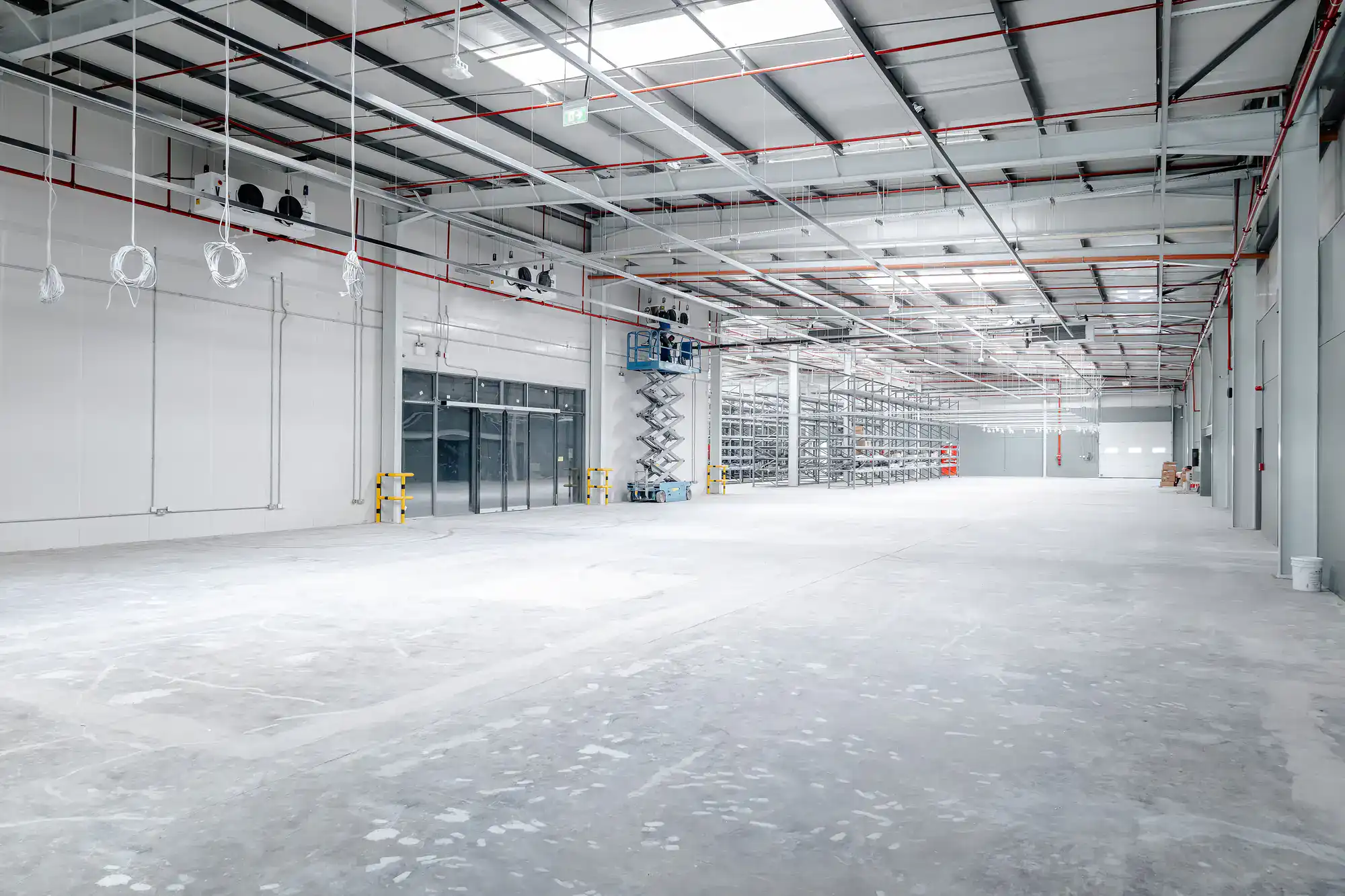
When the floor is right, everything else in a working hangar gets easier. Spills clean up fast. Dropped hardware shows up immediately on a high-gloss surface instead of disappearing into a dark, pitted slab. Your crew moves through the space more confidently. The whole facility looks like it’s being run by someone who takes it seriously because it is.
Copiague’s position on the South Shore creates real challenges that inland hangars don’t face to the same degree. The ambient humidity coming off the Great South Bay, the salt air, the water table in the southern neighborhoods near Deauville Gardens all of it puts pressure on concrete slabs from below and outside simultaneously. Moisture vapor pushing up through an unsealed slab is one of the most common reasons epoxy floors fail, and it’s exactly the kind of failure that happens quietly until the coating starts bubbling and peeling. A properly specified, multi-layer aviation epoxy system seals that slab and stops the cycle before it starts.
Beyond moisture, you’re dealing with chemical exposure that standard floor coatings simply aren’t rated for. Skydrol hydraulic fluid, jet fuel, and industrial solvents will destroy an ordinary epoxy in a matter of months. We formulate our aircraft hangar floor coatings in Copiague, NY specifically for this environment not repurposed from a garage product line, but built from the ground up for hangars where these chemicals are part of daily operations.
We’re based in Bohemia, NY Suffolk County, about 20 miles east of Copiague along the South Shore corridor. This isn’t a national brand dispatching a crew from out of state. We’re a locally operated company that works in the same coastal environment you’re dealing with, understands Town of Babylon permitting, and has been doing this for over 30 years.
Danny Harmer, our President and CEO, has personally installed epoxy floors for more than 40 years. He’s worked in environments where a floor failure isn’t just an inconvenience it’s a liability. That includes a 1996 installation in the White House kitchen, which is the kind of reference that doesn’t come from cutting corners. Every installer on our crew carries OSHA 40 certification, which matters in aviation maintenance environments where safety compliance isn’t optional.
We hold dual certifications from Sherwin-Williams High Performance Flooring and Res Tech two of the most rigorous credentials in the resinous flooring industry. Most epoxy contractors in the Long Island market hold neither. For hangar operators near Republic Airport in Farmingdale or anywhere in the Babylon area, that difference is worth knowing before you sign anything.
It starts with a site assessment, and in Copiague, that assessment always includes moisture testing. This isn’t a formality it’s a necessity. The South Shore water table and the coastal humidity that comes with living near the Great South Bay mean concrete slabs here hold moisture differently than slabs in drier, inland areas. Skipping that test is how floors fail six months after installation. We don’t skip it.
Once the slab is assessed, we mechanically prepare the surface typically through diamond grinding or shot blasting to open the concrete and create a profile that allows the coating to bond properly. This step matters more than most people realize. A coating applied to an unprepared surface is just sitting on top of the concrete, not bonded to it. Preparation is what separates a 15-year floor from a 3-year floor.
From there, the system goes down in stages: primer, base coat, and topcoat, with each layer allowed to fully cure before the next is applied. For airplane hangar polyaspartic floors in Copiague, NY, the fast-cure chemistry means you’re typically looking at a 24-hour return-to-service window not five days of downtime while your aircraft sits outside. The final topcoat meets NFSI non-slip certification, which is a tested standard, not just a label on a can.
Ready to get started?
Every hangar floor installation we complete is built around what that specific facility is going to encounter not a one-size product pulled off a shelf. For aviation facility epoxy flooring in Copiague, NY, that means Skydrol resistance is standard, not an upgrade. It means the system is specified to meet NFPA 409’s noncombustibility requirement for aircraft storage and servicing areas a code requirement under Town of Babylon jurisdiction that many general flooring contractors aren’t even aware of. If your hangar is a commercial operation or you’re leasing space to other aircraft owners, that compliance matters for your insurance and your liability exposure.
The coating systems we offer include high-build epoxy for maximum chemical resistance and durability under heavy equipment loads, and polyaspartic topcoats for clients who need fast return-to-service times. Both are multi-layer systems primer, base coat, topcoat applied with full cure time between stages. The non-slip topcoat carries NFSI certification, which is a documented traction standard that holds up in environments where fuel and fluid spills happen regularly.
For aircraft maintenance bay flooring in Copiague, NY, the light-reflective finish options aren’t just aesthetic. A high-gloss white or light gray floor makes foreign object debris (FOD) visible immediately something that matters operationally in any working hangar. Whether you’re storing a single aircraft or running a full maintenance operation near Republic Airport in Farmingdale, the floor system is specified to match what you’re actually doing in that space.
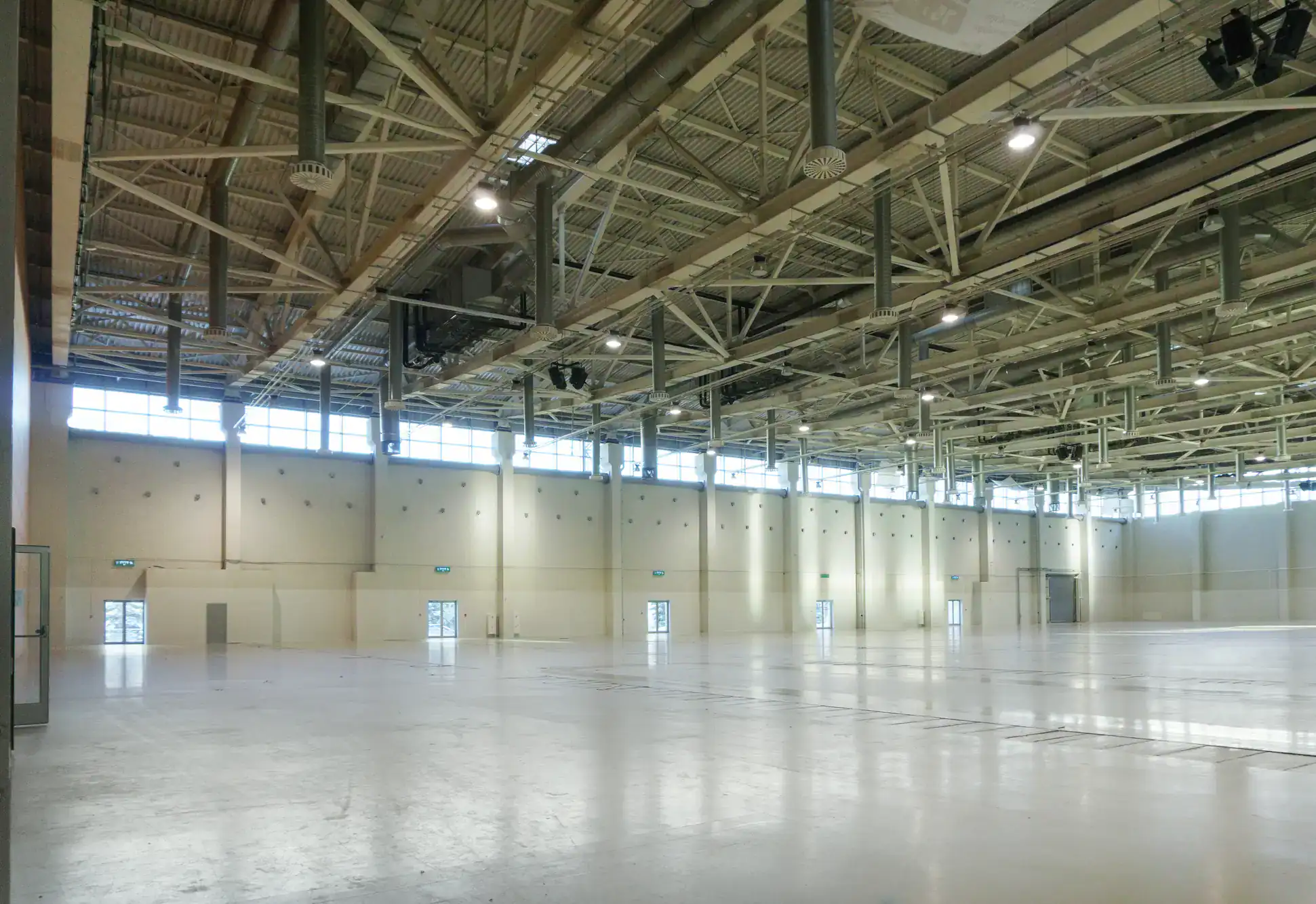
If your hangar is used for aircraft storage or servicing even a private T-hangar NFPA 409 applies. The standard requires that the grade floor surface of aircraft storage and servicing areas be noncombustible. This eliminates a wide range of standard epoxy and coating products that work fine in a garage or warehouse but don’t meet the noncombustibility threshold required in an aviation environment. Under Town of Babylon jurisdiction, which covers Copiague, this isn’t something you want to find out after the fact during an inspection or an insurance review.
The good news is that aviation-grade epoxy systems are specifically formulated to meet this standard. When you work with us, the system specified for your hangar is compliant from the start. If you’re operating a commercial hangar or leasing space near Republic Airport in Farmingdale, having documented compliance is also protection against liability exposure that bare concrete or a non-compliant coating won’t give you.
The most common reasons hangar floor coatings fail are inadequate surface preparation, skipped moisture testing, and using a system that isn’t rated for the chemical exposure the floor will actually face. In that order. A coating that’s applied to a slab that hasn’t been properly ground or profiled is essentially just sitting on top of the concrete it looks fine for a while, then starts peeling, usually right when you’re moving aircraft in or out.
Moisture is a particular issue in Copiague. The South Shore water table and the coastal humidity coming off the Great South Bay mean concrete slabs here are more susceptible to moisture vapor transmission than slabs in drier parts of Long Island. That vapor pushes upward through the slab, and if the coating isn’t bonded to a properly prepared surface with the right primer chemistry, it will eventually lift. We test for moisture before every installation it’s not optional, and it’s not something we treat as a box to check. It’s the reason the floors we install are still performing years after a competitor’s work has failed.
Both are legitimate options for hangar floors, and the right choice depends on what your facility needs most. High-build epoxy systems offer maximum chemical resistance and are the better choice for heavy MRO environments where Skydrol, jet fuel, and industrial solvents are part of daily operations. They’re extremely durable under point loads from aircraft landing gear and maintenance jacks, and they build up significant film thickness that protects the concrete beneath.
Polyaspartic systems cure significantly faster which is the main reason hangar operators choose them. If you need your aircraft back inside within 24 hours, polyaspartic is the right answer. They’re also UV-stable, which matters if your hangar gets direct sun through large door openings. For airplane hangar polyaspartic floors in Copiague, NY, the fast-cure chemistry is especially practical for active hangars near Republic Airport where downtime has a real cost. In many installations, the best approach is a combination: an epoxy base coat for chemical resistance and build, topped with a polyaspartic finish coat for speed, durability, and UV stability.
A properly installed aviation-grade epoxy or polyaspartic system can last 15 to 20 years with basic maintenance. A rushed, thin-coat installation in the same environment might last three to five years before it needs to be removed and redone and the removal process, which involves grinding off the failed coating before anything new can go down, adds significant cost to what was already a failed investment.
What affects lifespan most is preparation quality, system specification, and the environmental conditions the floor faces. For hangars in the Copiague area, the South Shore coastal conditions humidity, salt air, freeze-thaw cycling in winter put more stress on a floor than a climate-controlled inland facility would face. A system that’s correctly specified for that environment and applied over a properly prepared, moisture-tested slab will hold up. One that isn’t won’t, regardless of what the product sheet says. The investment in getting it right the first time is almost always less than the cost of replacing it once or twice over the same period.
Yes and it does it faster than most people expect. Skydrol is a phosphate ester-based hydraulic fluid used in most commercial and corporate aircraft, and it’s specifically corrosive to standard epoxy coatings. It also presents a safety risk to personnel if it contacts skin, which means a floor that absorbs and holds Skydrol spills is a hazard beyond just the coating damage. Standard garage-grade epoxies and light commercial coatings are not formulated to resist Skydrol, and the degradation can start within weeks of regular exposure.
Aviation facility epoxy flooring in Copiague, NY needs to be specified with Skydrol resistance as a baseline requirement, not an add-on. The systems we install for aircraft maintenance environments are formulated to resist Skydrol, jet fuel, hydraulic fluids, and the industrial cleaning solvents used to remove them. That’s not a marketing distinction it’s a chemistry distinction. If you’re operating a maintenance bay or storing aircraft that undergo regular servicing, this is the single most important specification question to ask any contractor before you let them touch your floor.
For aviation-grade epoxy or polyaspartic systems, most hangar floor installations in the Suffolk County area run between $4 and $8 per square foot, depending on the size of the slab, the condition of the existing concrete, the system specified, and whether any remediation work is needed before coating can begin. A hangar with significant existing damage, previous coating failure, or high moisture readings will require more prep work, which affects the overall cost. That’s not padding it’s the work that determines whether the floor lasts 5 years or 20.
It’s worth framing this as a per-year cost rather than a lump sum. A $6-per-square-foot aviation-grade system that performs for 18 years costs considerably less over time than a $3-per-square-foot system that needs to be stripped and replaced every four years especially when you factor in the grinding cost for removal, which isn’t trivial on a large hangar slab. For property owners in Copiague where annual property taxes average around $10,000 and median home values are approaching $525,000, the total-cost-of-ownership argument tends to land clearly: invest in the right floor once, and stop paying to fix it.