
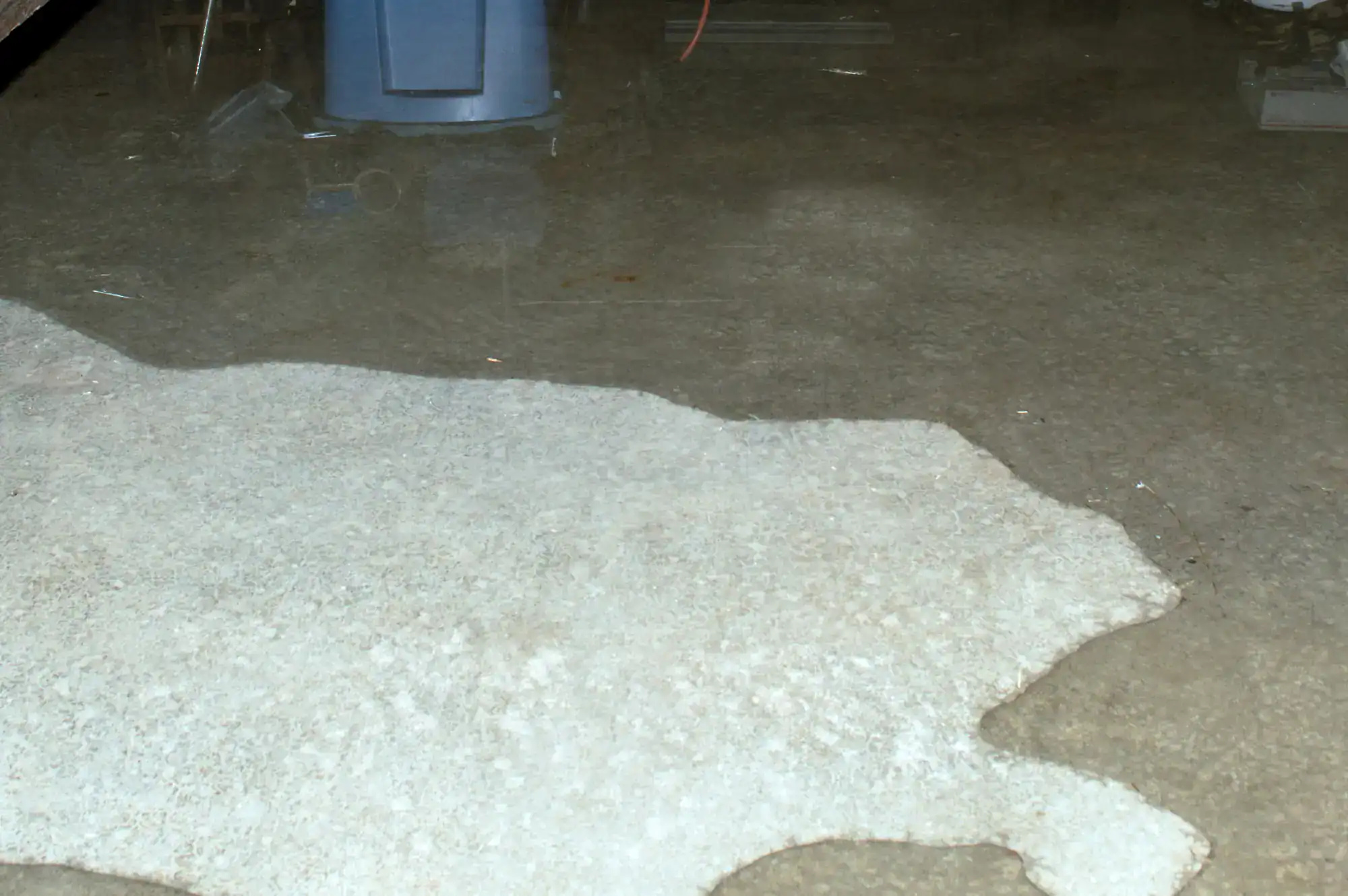
Every time a truck rolls back into the bay after a winter call, it’s dragging in road salt, slush, and moisture from the south shore. That’s not a minor inconvenience it’s a slow attack on your concrete. Bare or under-sealed floors absorb that salt, and over time, the slab cracks from the inside out. The stations on Great Neck Road and Dixon Avenue have been taking that hit for decades.
The right floor coating stops that cycle. A properly installed, seamless resinous system seals the concrete at the capillary level, so salt, diesel, hydraulic fluid, and bay moisture have nowhere to go. You end up with a surface that’s actually easier to clean after a call and one that holds up under the weight of a tower ladder or a walk-around rescue without flexing, cracking, or peeling.
Copiague’s position on the Great South Bay also means your stations deal with marine humidity that inland departments don’t. That moisture vapor in the slab is the number one reason epoxy fails bubbles up, peels back, and looks worse than bare concrete within a couple of years. A system that accounts for that from the start isn’t a luxury. It’s the difference between a floor that lasts and one that has to be redone.
We’re based in Bohemia, NY about 25 miles east of Copiague on the same south shore. This isn’t a national brand routing calls through a call center. We’re an owner-led operation that’s been doing commercial and industrial resinous flooring for over 30 years, with a CEO who has more than 40 years of hands-on installation experience.
Our field team Javier, Eduardo, and Fredith brings a combined 40-plus years of experience between them. Most of our crew has been with us for over a decade. When you’re making a capital investment that Copiague’s taxpayers will be looking at for the next 20 years, that kind of institutional depth matters.
We hold the Sherwin-Williams High Performance Flooring certification and Res Tech certification. Every installer is OSHA 40 certified which matters when your station is active and your volunteers are still coming and going during the project. Our work has ranged from the White House kitchen to commercial facilities across Long Island. Fire station floors aren’t a side job here. They’re a named specialty with a specific system behind them.
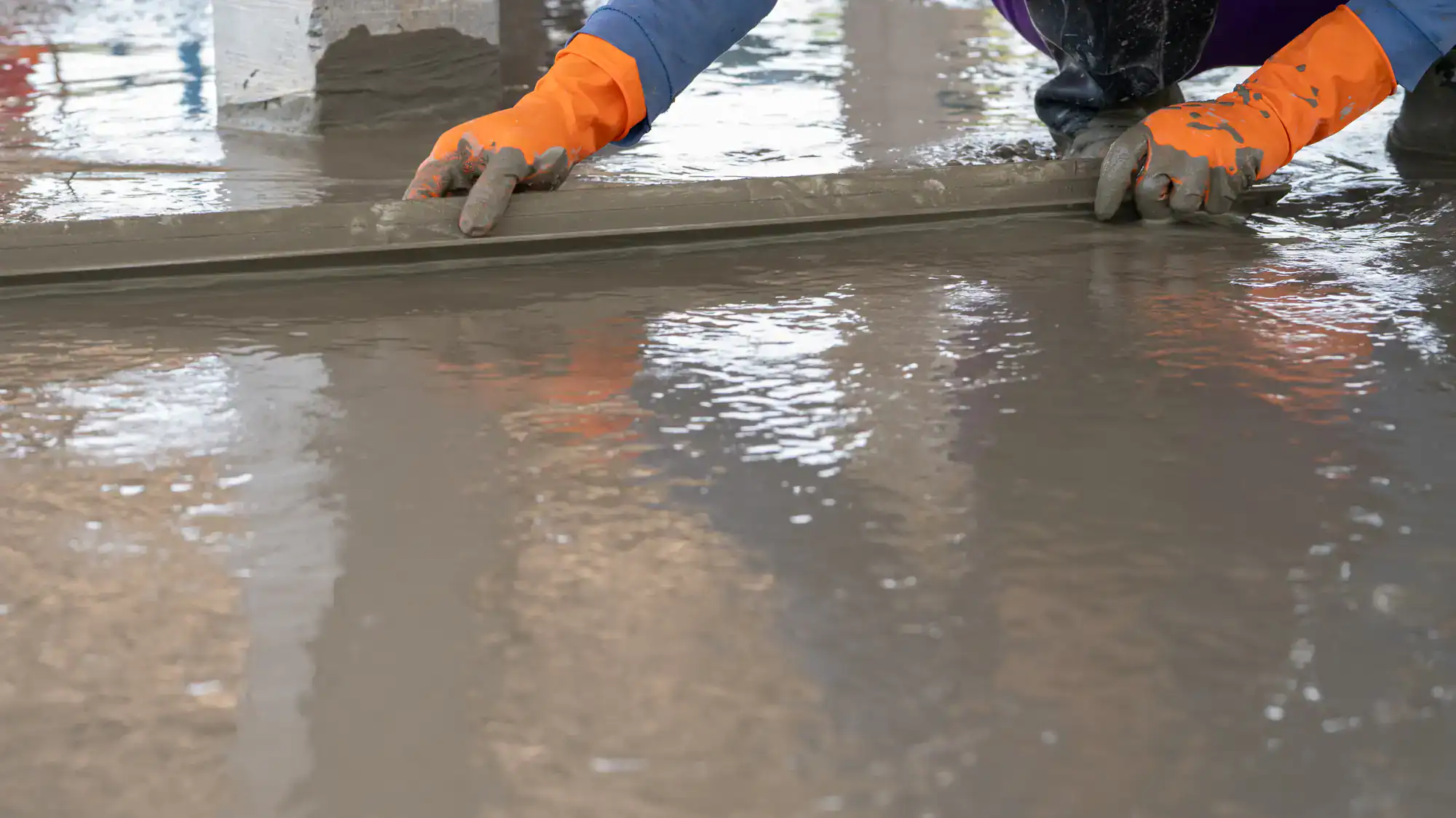
The first thing that happens on any firehouse floor project in Copiague is concrete assessment. The stations on Great Neck Road and Dixon Avenue are aging structures the concrete in those bays has absorbed decades of traffic, chemicals, and coastal moisture. Before anything else, the slab gets evaluated for cracks, surface condition, and moisture vapor emission. In a community this close to the Great South Bay, moisture testing isn’t optional. It’s the step that determines whether a coating will bond and hold, or fail within two years.
Once the slab is assessed, the surface is diamond ground not acid etched. Grinding mechanically opens the concrete so the primer bonds at the capillary level. Acid etching leaves a weak surface profile that looks fine until the floor starts to delaminate under load. After grinding, any cracks or damaged areas are repaired before the system goes down.
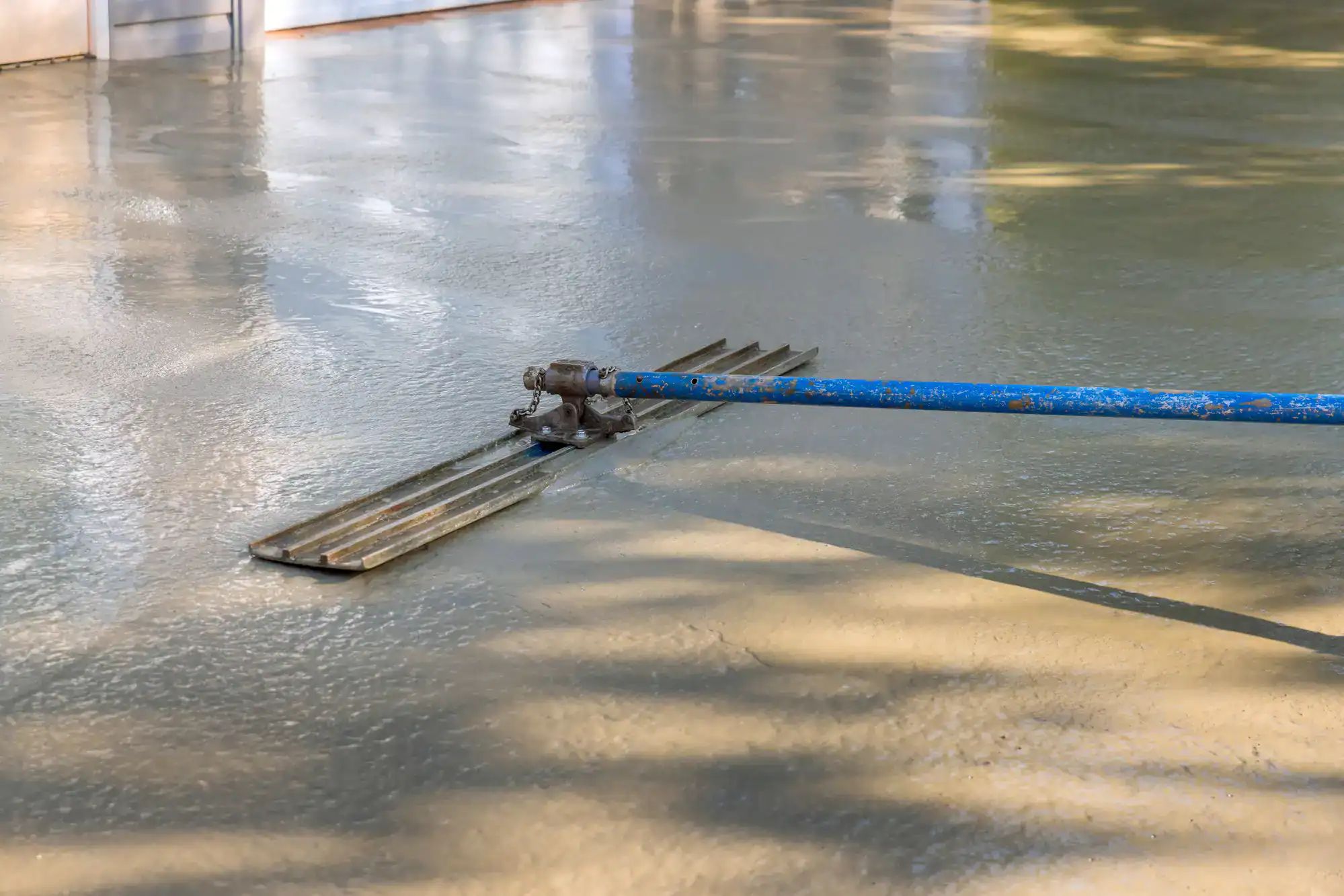
From there, it’s a penetrating primer, a high-build epoxy base coat with aggregate broadcast for slip resistance, and a polyaspartic topcoat. The polyaspartic is what makes the 24-hour return-to-service possible it cures fast without sacrificing durability. The finished system comes in at 15 mils thick, rated for the compressive load of your heaviest apparatus, and resistant to the road salt and bay moisture that Copiague’s environment delivers year-round. Spring and early fall are the best installation windows on the south shore, when temperatures are stable and humidity is manageable but we design the process to work within your department’s operational schedule, not the other way around.
Ready to get started?
The apparatus bay is the obvious starting point, but Copiague’s stations have more floor to think about. The decontamination zone, the living quarters, the kitchen each space has different demands, and using one contractor for the whole facility means the systems are compatible, the quality is consistent, and there’s one point of contact if anything needs attention years from now.
In the apparatus bay, the system is engineered for compressive strength and chemical resistance. The Copiague Fire Department runs a mix of heavy apparatus and EMS vehicles from a tower ladder and a walk-around rescue to a fleet of ambulances and the floor is rated for all of it. The aggregate broadcast in the base coat gives you the slip resistance you need in a bay that gets wet, oily, and busy.
The decontamination zone gets a seamless, fully washable surface one that supports the contamination control protocols that NFPA 1500 and 1581 call for. Combustion byproducts settle on bay floors after every response, and a non-porous resinous surface is the only type that can be fully decontaminated. That’s not a minor detail for a volunteer department whose members are in and out of that bay multiple times a week. The kitchen gets a thermally stable, FDA/USDA-grade cleanable surface. Every zone, every system, dialed in for what that space actually does.
With a polyaspartic topcoat system, apparatus can return to the bay within 24 hours of the final coat going down. The full installation including diamond grinding, crack repair, primer, base coat, and topcoat typically takes one to two days depending on the square footage and condition of the slab. So realistically, you’re looking at a two-to-three day project window, with vehicles back inside on the last night or the morning after completion.
For a two-station volunteer department covering a densely populated coastal community like Copiague, that timeline is workable in a way that a traditional epoxy system simply isn’t. Standard epoxy requires three to seven days before vehicles can return and that’s assuming ideal cure conditions, which Copiague’s coastal humidity doesn’t always provide. We chose the polyaspartic system specifically for firehouse applications because it closes that gap without sacrificing the durability your floor needs to handle decades of real apparatus traffic.
Moisture vapor in concrete is the primary reason epoxy floors fail and it’s a bigger issue in coastal communities than most contractors acknowledge. When concrete absorbs ground moisture and that vapor has nowhere to go, it pushes up against the coating from below. If the coating wasn’t applied over a properly primed, moisture-tested slab, that pressure creates bubbles, and eventually the coating lifts and peels.
Copiague’s proximity to the Great South Bay means ambient humidity is consistently higher than what you’d find in an inland Suffolk County town. The ground moisture levels near the water are real, and they affect slab conditions year-round. The solution isn’t a different brand of coating it’s proper moisture testing before anything goes down, a penetrating primer that bonds at the capillary level, and a topcoat system flexible enough to handle the slab’s natural movement. Skipping the moisture test in a station a few blocks from the bay isn’t a shortcut. It’s a guarantee of failure.
Diamond grinding mechanically opens the concrete surface by removing the top layer and creating a textured profile that the primer and coating can bond into. It’s the preparation method used in commercial and industrial flooring for exactly the reason the name implies it works at a level that chemical methods don’t reach. Acid etching, on the other hand, uses a chemical reaction to roughen the surface, but it leaves behind a weaker profile and doesn’t address the deeper concrete condition. It’s faster and cheaper, which is why some contractors use it.
For an apparatus bay floor in an aging station and both of Copiague’s stations are aging structures, with construction dates in the 1950s and 1960s the concrete has decades of contamination, oil absorption, and wear that acid etching won’t address. The bond you get from diamond grinding is the foundation of a floor that holds under 40,000-pound apparatus. The bond you get from acid etching is the foundation of a floor that looks good for two or three years and then starts to fail. There’s no shortcut worth taking on a floor that Copiague’s taxpayers are funding.
Every time a truck rolls back into the bay after a winter response, it brings road salt with it. On bare or inadequately sealed concrete, that sodium chloride penetrates the slab and starts a corrosive process that cracks and spalls the surface from the inside out. It’s the same mechanism that destroys bridge decks and parking structures just happening more slowly, in a space you’re walking and working in every day.
On a thin-mil or improperly bonded epoxy coating, salt and moisture find their way under the coating at any weak point a hairline crack, a poorly prepped edge, a low spot where water pools and the delamination starts there. South shore communities like Copiague deal with this more aggressively than inland departments because the trucks are also bringing in bay moisture from the coastal air, compounding the problem. A properly installed, seamlessly sealed resinous system rated for chemical resistance stops that cycle at the surface. Salt, diesel, hydraulic fluid they sit on top and get mopped up, instead of working their way into the slab.
The Copiague Fire Department operates as an independent fire district governed by elected commissioners who are accountable to district residents. Capital expenditures including facility improvements like floor coatings go through a budget approval process that involves the board of fire commissioners and, ultimately, the community’s annual budget vote. That means the decision-making process in Copiague is different from a career department with a professional facilities manager. Multiple stakeholders need to be on board, and the investment needs to be justifiable in plain terms.
The most useful framing for a firehouse floor project in a volunteer district is total cost of ownership. A properly installed polyaspartic system is rated for 20-plus years of service. Consumer-grade epoxy lasts three to five years. Standard commercial epoxy, maybe five to ten. Over a 20-year period, one quality installation costs less than two or three replacement cycles including the labor to grind off the failed coating and reinstall. That’s the argument that holds up in a public budget presentation. Spring and summer are the most productive planning windows, since New York fire districts typically work on a calendar-year fiscal cycle with budget votes in the fall.
NFPA 1500 and 1581 create occupational health and contamination control requirements that directly affect how apparatus bay floors should be specified. NFPA 1581 in particular addresses facility requirements for contamination reduction and the core requirement is a floor surface that can be fully decontaminated after exposure to combustion byproducts. Firefighter cancer awareness has grown significantly across Long Island’s volunteer departments in recent years, and contamination control in the apparatus bay is a real part of that conversation.
A seamless, non-porous resinous surface is the only flooring type that meets that standard. Bare concrete is porous and harbors contaminants in ways that routine mopping can’t address. Tile has grout lines. Thin-mil coatings crack and create the same problem. A properly installed, seamlessly finished polyaspartic system gives you a surface that can be fully power-washed no grout lines, no cracks, no porous zones where carcinogenic byproducts can accumulate. For Copiague’s volunteer members who are in and out of that bay multiple times a week, that’s not a compliance checkbox. It’s a health decision your department can make right now, with the floor.