
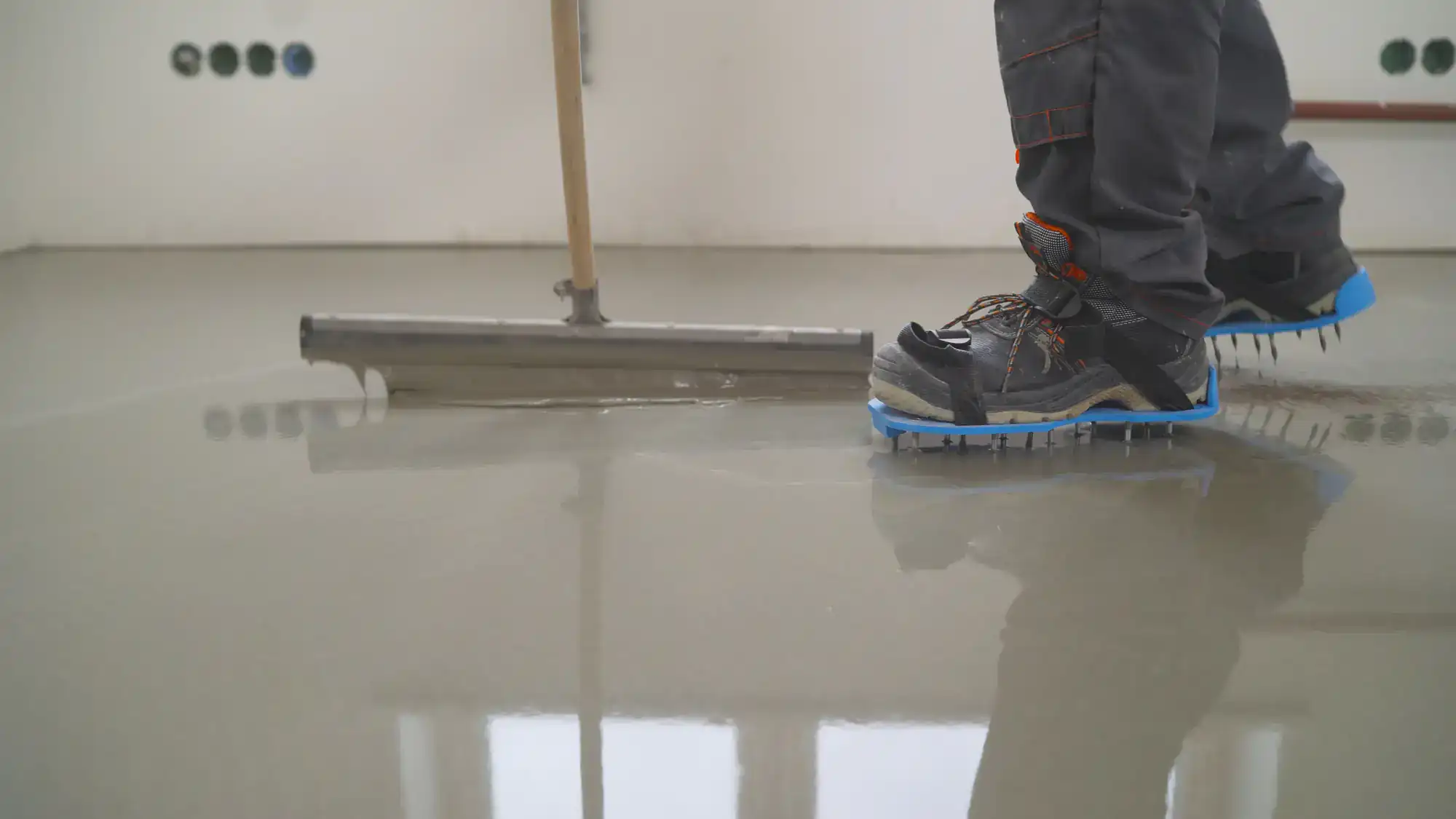
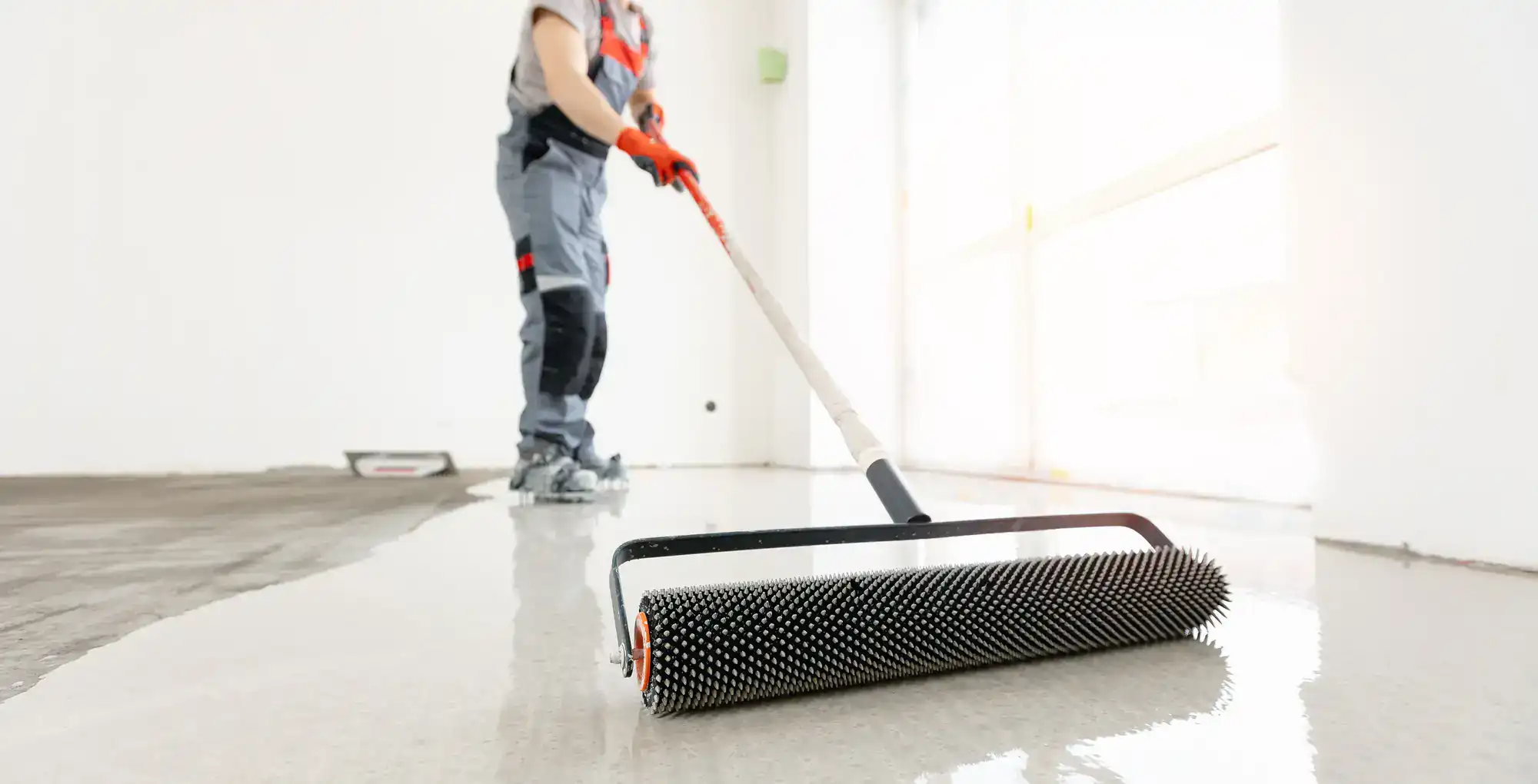
When your floor is uneven, everything installed on top of it is already starting from behind. Tile cracks. LVP develops soft spots. Grout lines open up within a year. The fix isn’t the flooring it’s what’s underneath it. Once the substrate is properly leveled and cured, you get a surface that actually supports what goes on top of it.
In Copiague, that means accounting for something most contractors skip entirely: moisture. The hamlet sits at or near sea level, with the Great South Bay to the south and a water table that responds to tides year-round. Homes on Amity Harbor, Copiague Harbor, and the American Veterans Memorial Peninsula deal with moisture vapor pushing up through the slab constantly. If that isn’t tested and addressed before a pour, the underlayment fails and so does everything above it.
Most of Copiague’s housing stock was built during the post-war suburban boom, when the Town of Babylon’s population grew by nearly 500% between 1940 and 1960. Those slabs are 60 to 70 years old now. They’ve settled. They’ve been patched. They’ve absorbed decades of groundwater. A properly executed self leveling job done by someone who understands what those slabs are actually dealing with gives you a floor that lasts as long as the house.
We’ve been in business since the mid-1990s long enough to have installed a floor in the White House kitchen in 1996, and long enough to know that the conditions in a Copiague basement near Montauk Highway are nothing like the conditions in a dry inland slab. That difference matters, and it’s exactly the kind of thing that separates a contractor who’s seen it all from one who just shows up with a bag of compound.
We’re based in Bohemia, right here in Suffolk County. We’re not dispatching crews from a regional hub or running a franchise model. Our supervisors carry over 40 years of combined installation experience, most of our crew has been with us for more than a decade, and every installer is OSHA 40 certified. That’s not a checkbox it matters when you’re working in occupied commercial spaces along Sunrise Highway or in a homeowner’s kitchen while the family is still in the house.
We hold an A+ BBB rating and are factory-trained in cementitious underlayment systems, moisture mitigation, and advanced resinous coatings. When something goes wrong on a job and in this business, conditions don’t always cooperate you want one contractor who owns the whole process.
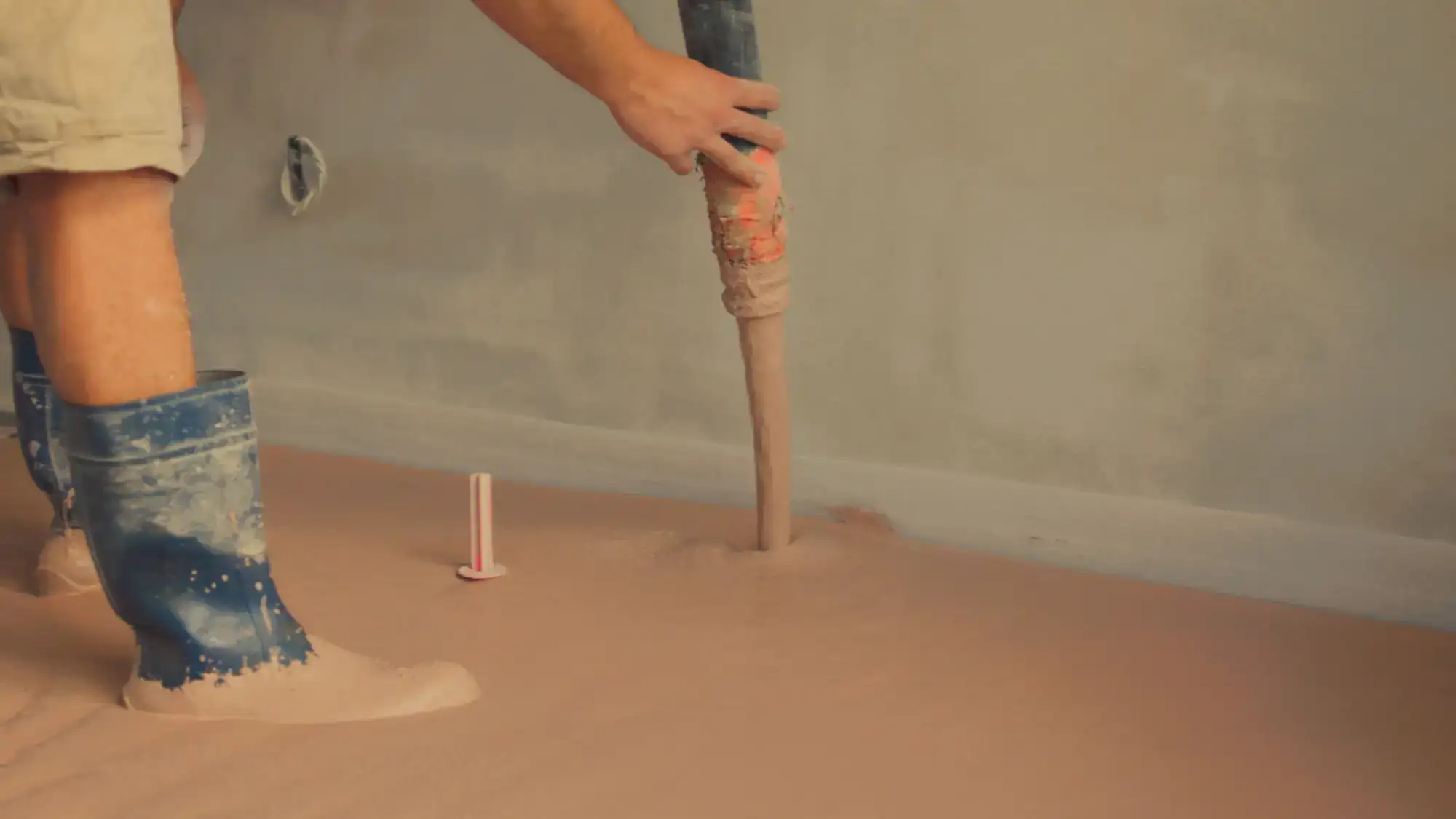
The first thing that happens on every job in Copiague is moisture testing. Not because it’s a formality because the South Shore’s shallow water table makes it the most critical variable on the entire project. We use ASTM-standard relative humidity testing and moisture vapor emission rate measurement before any product is selected or mixed. If the slab is emitting moisture above safe thresholds, that gets addressed first. Skipping this step is how floors fail in six months.
Once the slab passes or moisture mitigation is complete, the surface gets prepped. That means grinding, shot blasting, or mechanical scarification whatever the condition of the existing concrete requires. Old patches, contamination, and surface laitance all get removed. Primer is applied to the correct mil thickness and allowed to cure. This prep phase is where most of the real work happens, and it’s where inexperienced contractors cut corners.
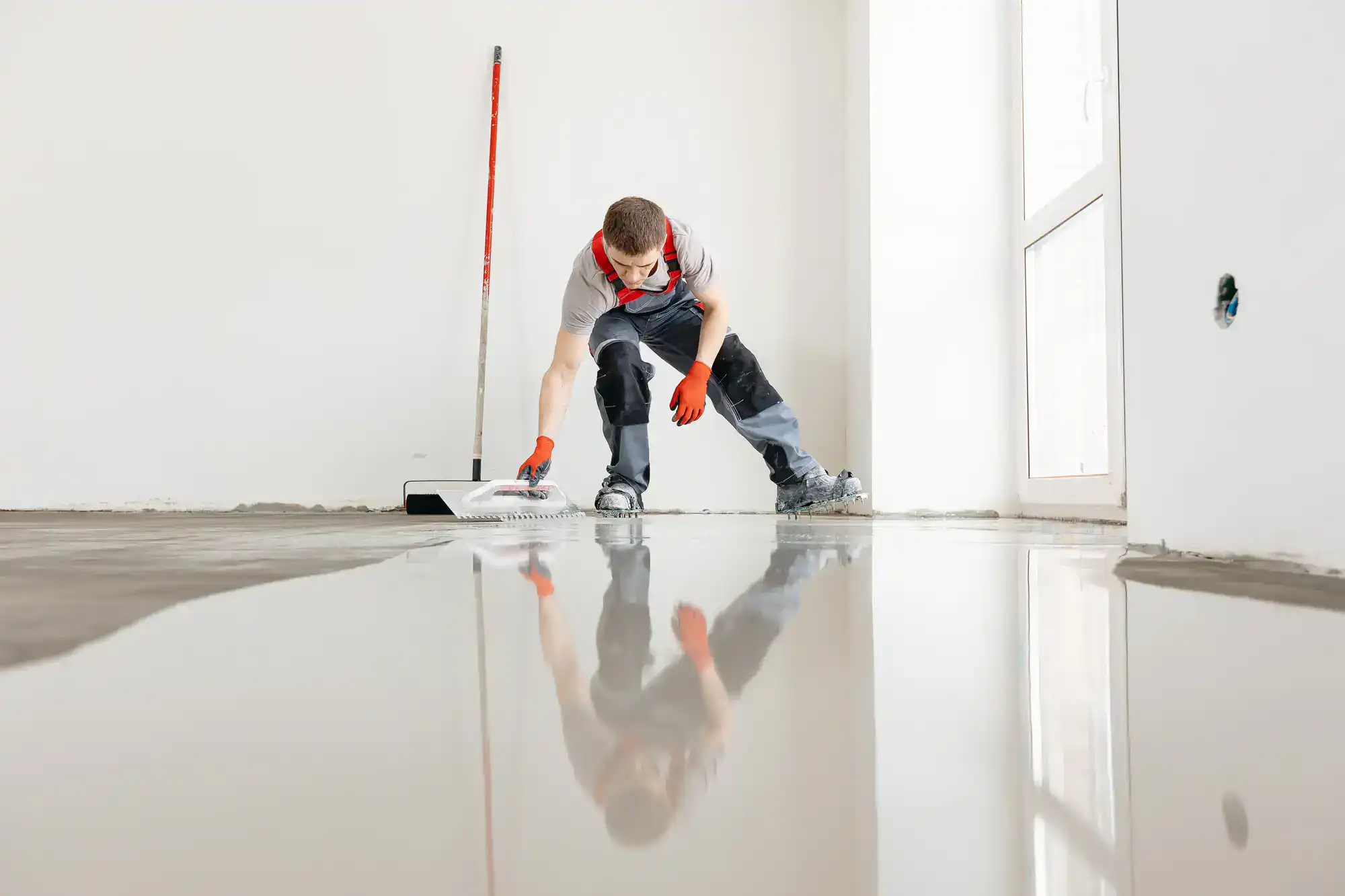
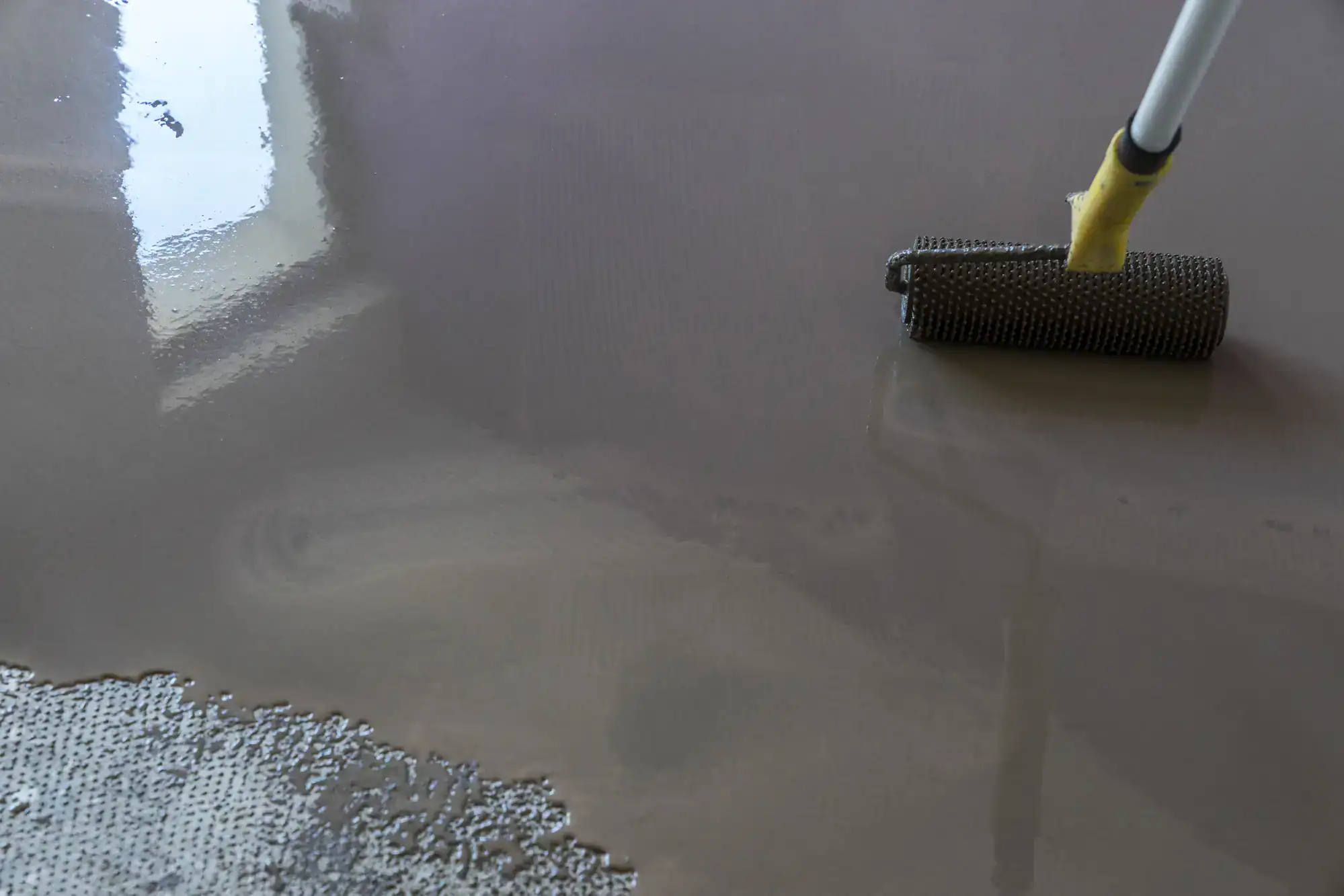
The pour itself uses a high-strength, polymer-modified cementitious compound that flows to a flat plane and locks in place as it cures. The system can be installed from a quarter inch up to two inches neat, and up to five inches with aggregate so whether you’re correcting a minor dip in a kitchen or leveling out a heavily settled commercial floor on Montauk Highway, the right product exists for the job. Foot traffic is typically possible within a few hours. For commercial spaces, the floor is usually ready for the next trade within 24 to 48 hours.
Ready to get started?
What we offer isn’t just a pour. It’s a complete substrate system moisture testing, concrete repair, surface preparation, self leveling underlayment, and final coating if needed all handled by the same crew. That matters more than most people realize. When two separate contractors split the work, there’s always a gap in accountability. If the floor fails, everyone points at someone else. When one contractor owns the process from slab to surface, there’s no ambiguity about who’s responsible.
For Copiague homeowners renovating kitchens, bathrooms, or basements in post-war homes, the service starts with an honest assessment of what the slab actually needs. Not every floor requires the same approach. A 1950s concrete slab in a waterfront home near Copiague Harbor has different challenges than a commercial kitchen floor in a strip retail building off Oak Street. The product selection, the pour thickness, and the moisture strategy all get dialed in for the specific conditions of your space not pulled from a one-size-fits-all menu.
For commercial clients along Montauk Highway and Sunrise Highway, the focus is on minimizing downtime. Our high-strength cementitious systems are engineered for fast return to service, and our crew works with the building’s schedule not the other way around. All work is performed in compliance with Town of Babylon requirements, and we’re experienced with the permit and inspection process for commercial floor installations in Suffolk County.
Yes and older slabs are actually one of the most common reasons homeowners in Copiague call us. Most of the housing stock here was built during the 1950s and 1960s, when the Town of Babylon was growing at an extraordinary pace. Those original slabs have had six or seven decades to settle, shift, and absorb moisture from the South Shore’s shallow water table. By the time a homeowner decides to replace the flooring, the slab underneath is often uneven, patched in multiple spots, or showing signs of moisture damage.
The key is proper preparation before the pour. Old concrete needs to be mechanically prepped ground, scarified, or shot blasted to remove any loose material, old adhesive, or contamination that would prevent the underlayment from bonding. Once the surface is clean and primed correctly, a polymer-modified cementitious compound bonds tightly and levels the surface regardless of age. The slab doesn’t need to be new it needs to be properly prepared. That’s where the real expertise comes in.
The range is wider than most people expect. Using a high-strength, polymer-modified cementitious system, you can pour from a quarter inch up to two inches neat in a single application. Add aggregate to the mix, and that range extends up to five inches. That kind of depth capacity matters a lot in Copiague’s older commercial buildings, where floors have been patched and re-covered so many times that the surface irregularities aren’t minor they’re significant.
For residential jobs, most corrections fall somewhere between a quarter inch and an inch. For commercial spaces that have gone through multiple tenants and multiple floor coverings common in the retail and light industrial buildings along Montauk Highway deeper pours are often necessary. The right thickness gets determined during the initial assessment, based on the actual measurements of the floor, not a guess. Getting this right on the front end is what prevents the floor from cracking or shifting after the installation is complete.
Moisture is the most common cause of self leveling underlayment failure, and in Copiague specifically, it’s a concern on nearly every project. The hamlet sits at or near sea level on the South Shore, bordered by the Great South Bay. The water table is shallow and responds to tidal fluctuations year-round. Homes on Amity Harbor, Copiague Harbor, and the American Veterans Memorial Peninsula sit on land that is barely above sea level, and moisture vapor pushes up through concrete slabs constantly in these areas.
If that moisture isn’t measured and addressed before the pour, the underlayment can delaminate, bubble, or crack sometimes within months of installation. The fix is straightforward but non-negotiable: ASTM-standard relative humidity testing and moisture vapor emission rate measurement before any product goes down. If readings are above safe thresholds, a moisture mitigation system gets installed first. This adds time and cost to the project, but it’s the only way to ensure the floor holds up long-term. Any contractor who skips this step in a South Shore community is setting you up for a failure.
For foot traffic, most high-strength cementitious systems are ready within four to six hours of the pour. For light commercial use and the installation of floor coverings, 24 hours is typically sufficient. For heavy commercial traffic forklifts, equipment, or high-volume foot traffic in a retail or industrial setting 48 hours gives the surface the full cure time it needs to reach its design strength.
One thing worth noting for Copiague specifically: temperature and humidity affect cure times. Long Island’s summers are humid, and that can extend working time and affect how quickly the surface sets. In the winter, unheated commercial spaces or poorly insulated post-war homes can drop below the 50°F threshold that cementitious compounds require for proper flow and cure. We account for both of these variables during product selection and scheduling. If conditions aren’t right for the pour, we say so rather than pushing forward and delivering a floor that won’t perform.
Concrete patching fills specific holes, cracks, or low spots it’s a localized repair. Self leveling underlayment is a full-surface correction. When you mix and pour it, it flows across the entire area and finds its own flat plane, filling low spots and feathering out across the surface to create a uniformly level substrate. The result is a floor that’s flat to within industry tolerances across the entire square footage, not just in the spots that got patched.
This distinction matters a lot when you’re installing modern flooring products. Large-format tile increasingly popular in Copiague kitchen and bathroom renovations is extremely unforgiving of surface variation. Even a small hump or dip can crack a tile or cause lippage at the grout joint. Luxury vinyl plank has the same issue: any irregularity in the substrate telegraphs through the finished floor over time. Patching gets you close. Self leveling underlayment gets you there. If you’re investing in new flooring, the substrate needs to be flat not approximately flat.
Yes, and it’s one of the most common commercial applications we handle. Restaurant and food service floors take a serious beating heavy equipment, constant cleaning, thermal shock from commercial dishwashers, and the kind of daily traffic that exposes any weakness in the substrate quickly. A properly installed cementitious self leveling underlayment creates the flat, dense base that commercial kitchen flooring systems require to perform correctly and meet health department standards.
For food service operators along Montauk Highway and Oak Street in Copiague, the practical concern is usually downtime. A restaurant that can’t open costs money every hour. Our commercial-grade systems are engineered for fast return to service foot traffic within hours, and the space ready for the next trade within 24 to 48 hours. Our crew is OSHA 40 certified, which matters for commercial kitchen environments where safety compliance is part of the operating license. And because we handle the full process prep, leveling, and final coating there’s no coordination gap between the floor prep contractor and the flooring installer. One crew, one accountable point of contact, and a floor that’s ready when you need it.