
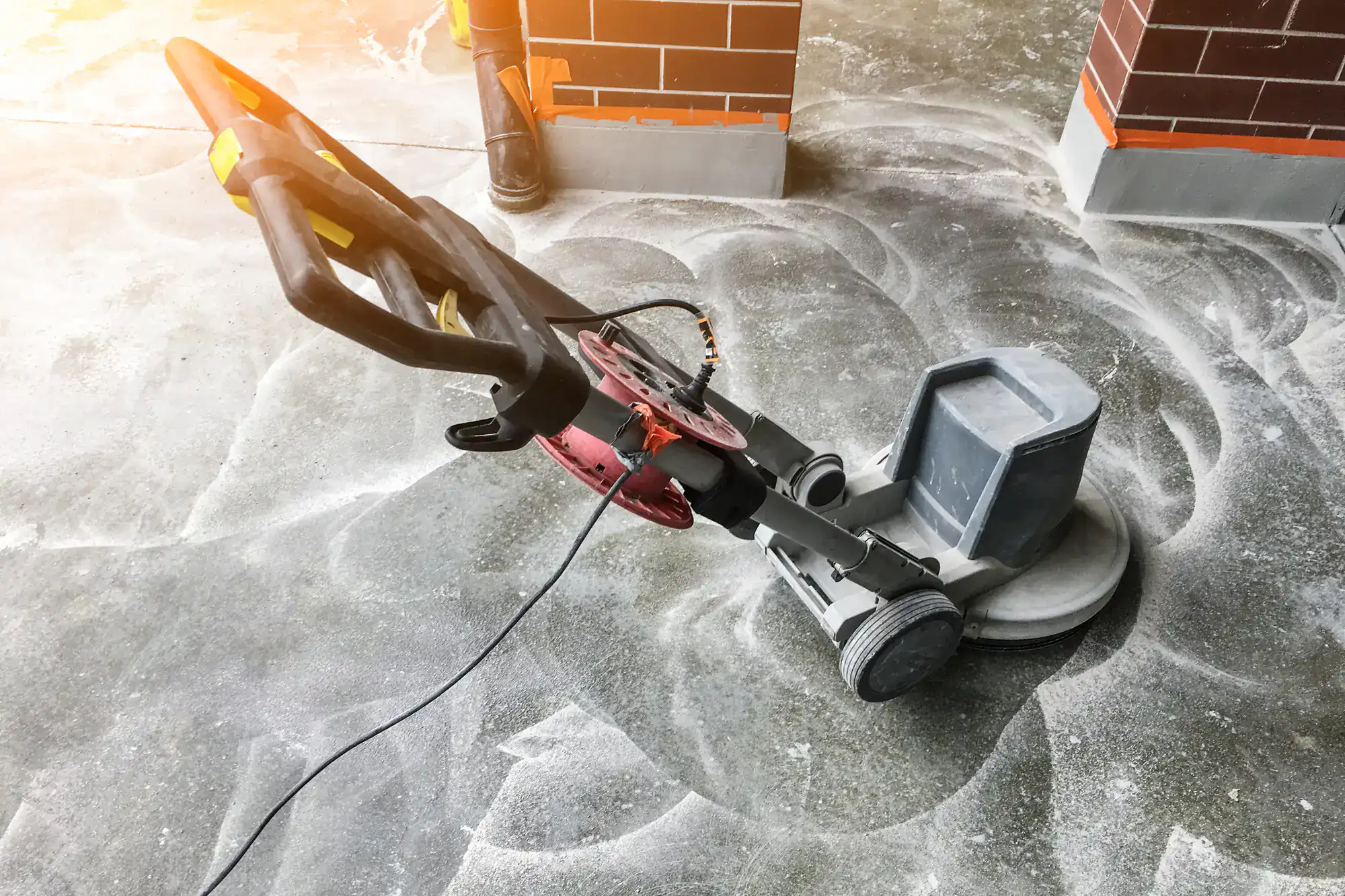
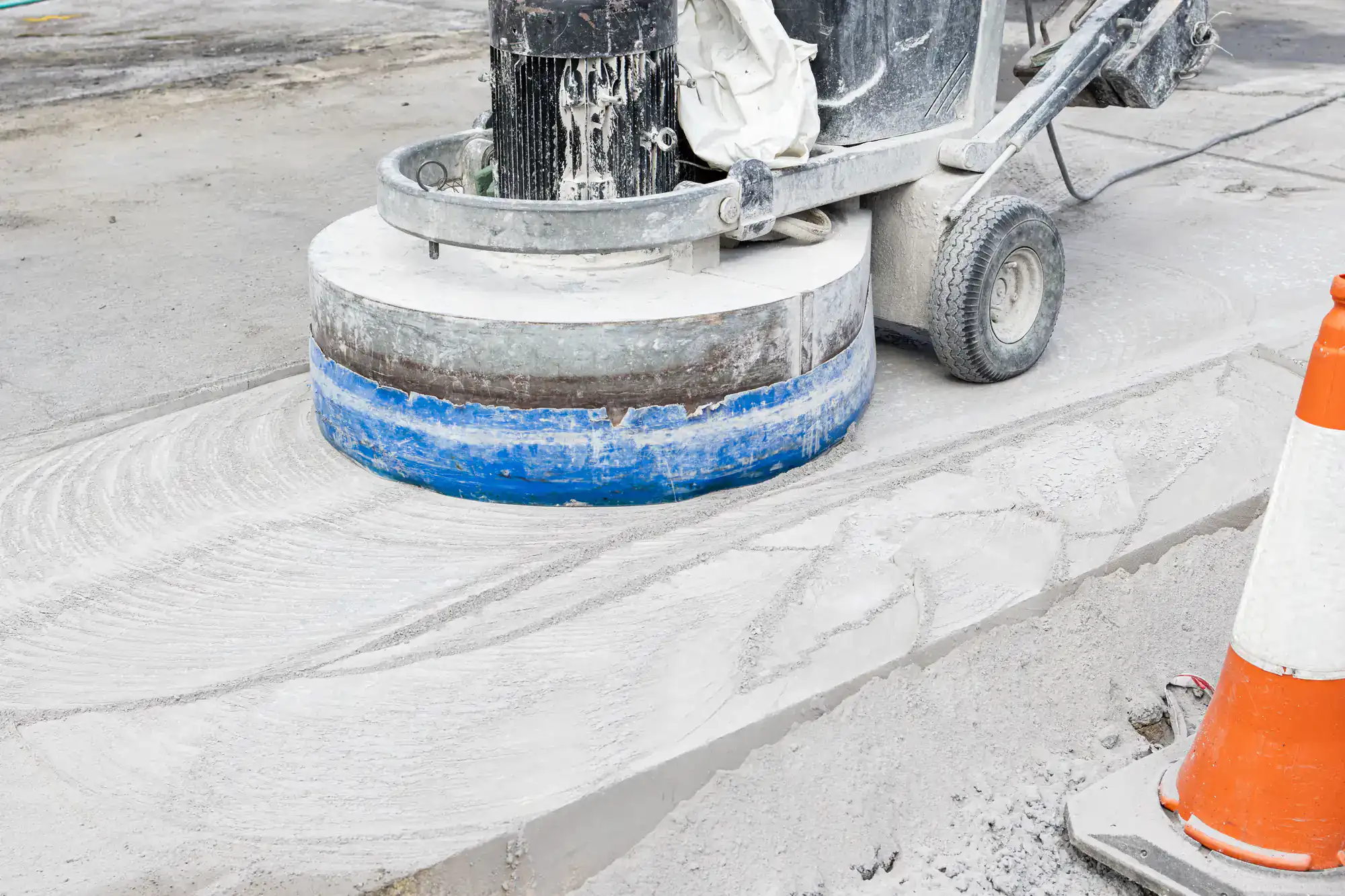
Here’s what most business owners figure out too late: the cheaper floor option almost always costs more over time. Waxing, stripping, recoating, patching it adds up fast. A properly polished and densified concrete floor eliminates most of that. No topical coating to peel. No annual maintenance cycle to schedule. Just a hard, sealed surface that holds up year after year.
For commercial and industrial spaces along Copiague’s Sunrise Highway corridor, that durability matters in a specific way. These are working floors forklifts, pallet jacks, constant foot traffic. A floor that wasn’t properly densified will start dusting under that kind of load within months. One that was done right handles it without issue, often for 20 years or more.
Copiague’s position on the Great South Bay also creates conditions that accelerate surface wear on untreated concrete. The humidity, the salt air, the freeze-thaw cycling every winter all of it works against a floor that hasn’t been sealed from within. Densification closes the pores of the concrete matrix, which means moisture infiltration, surface scaling, and spalling become far less of a concern. For a business owner making a long-term investment in a space along Great Neck Road or anywhere in Copiague, that protection is part of what you’re paying for.
Danny Harmer has been doing this for over 40 years not managing it, actually doing it. When you hire Advanced Epoxy Flooring, he’s the one assessing your slab, running the equipment, and making the calls that determine how your floor turns out. That’s not common in this industry, and it matters more than most buyers realize until they’ve had the other experience.
We built this company around a specific frustration: too many contractors apply flooring systems without understanding the chemistry behind them. That gap shows up in your building, not theirs. Advanced Epoxy Flooring was founded on a different standard one where every product decision, every diamond sequence, and every densifier application is backed by a real understanding of why it works.
We’ve worked on commercial and industrial buildings throughout western Suffolk County, including the types of older slabs common to Copiague and the Town of Babylon area. The Sherwin-Williams High Performance Flooring certification and Res Tech certification aren’t just credentials on a wall they’re third-party confirmation that the technical standard here is real. And if you want a single data point that says everything: in 1996, this work was good enough for the White House kitchen. It’s more than good enough for your Copiague facility.
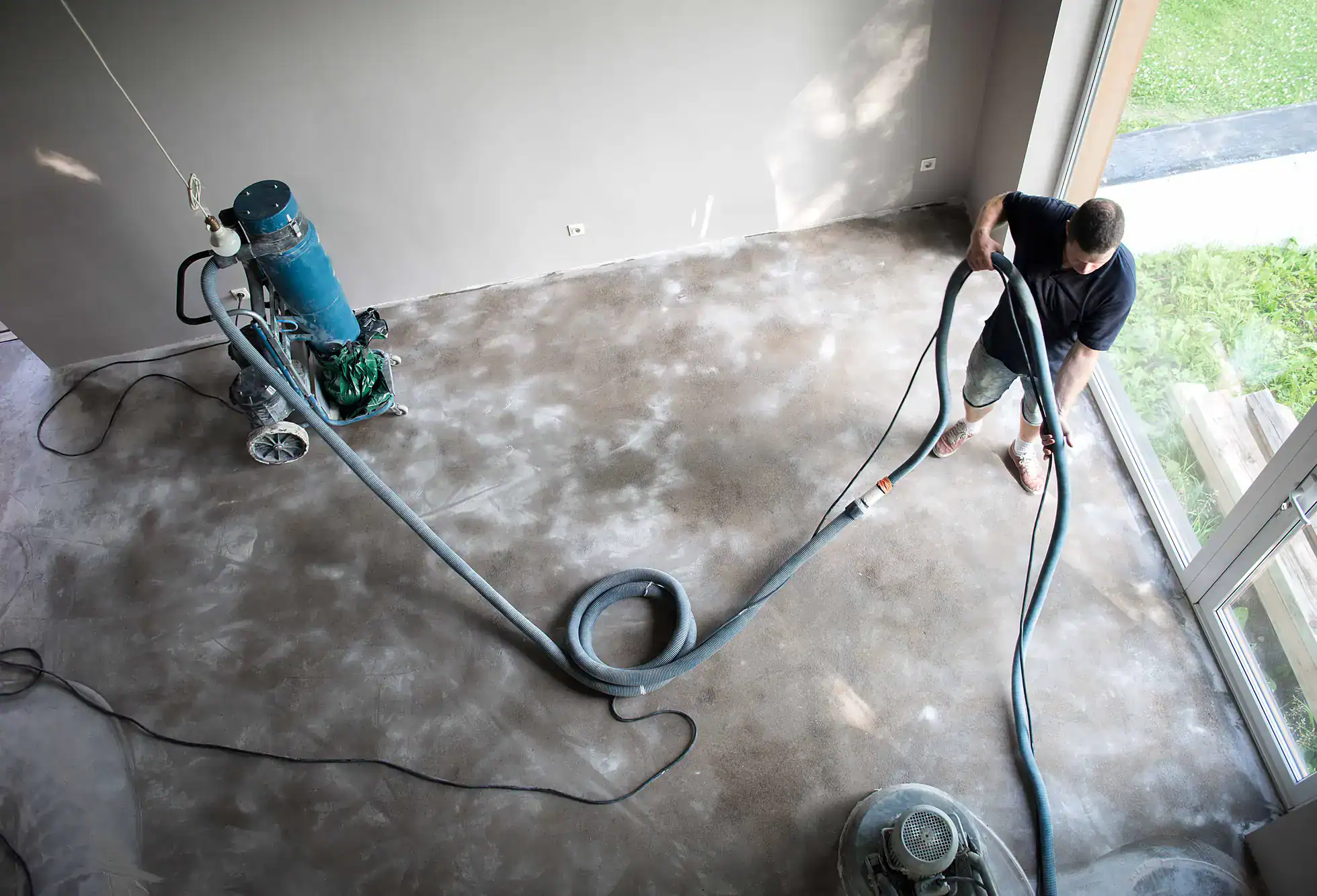
It starts with a real assessment of your slab. Not a quick glance an actual read of the concrete’s condition, hardness, existing coatings, surface repairs, and any cracks or unevenness that need to be addressed before polishing begins. In Copiague’s older commercial buildings, that step matters more than people expect. A slab from the 1970s or 1980s may have layers of previous coatings, patched sections, or contamination that have to be dealt with before any diamond touches the surface. Skipping that step is how floors fail.
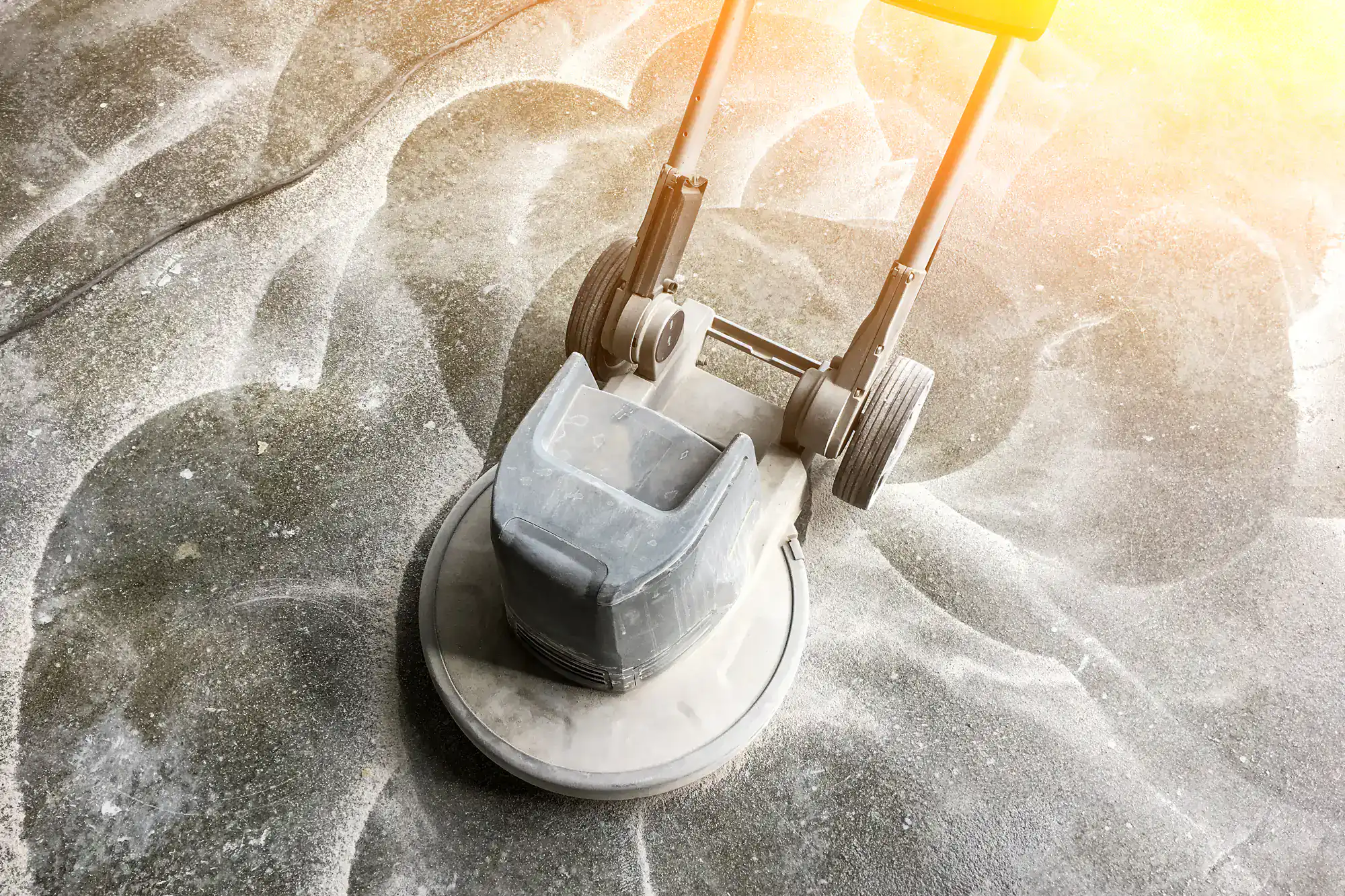
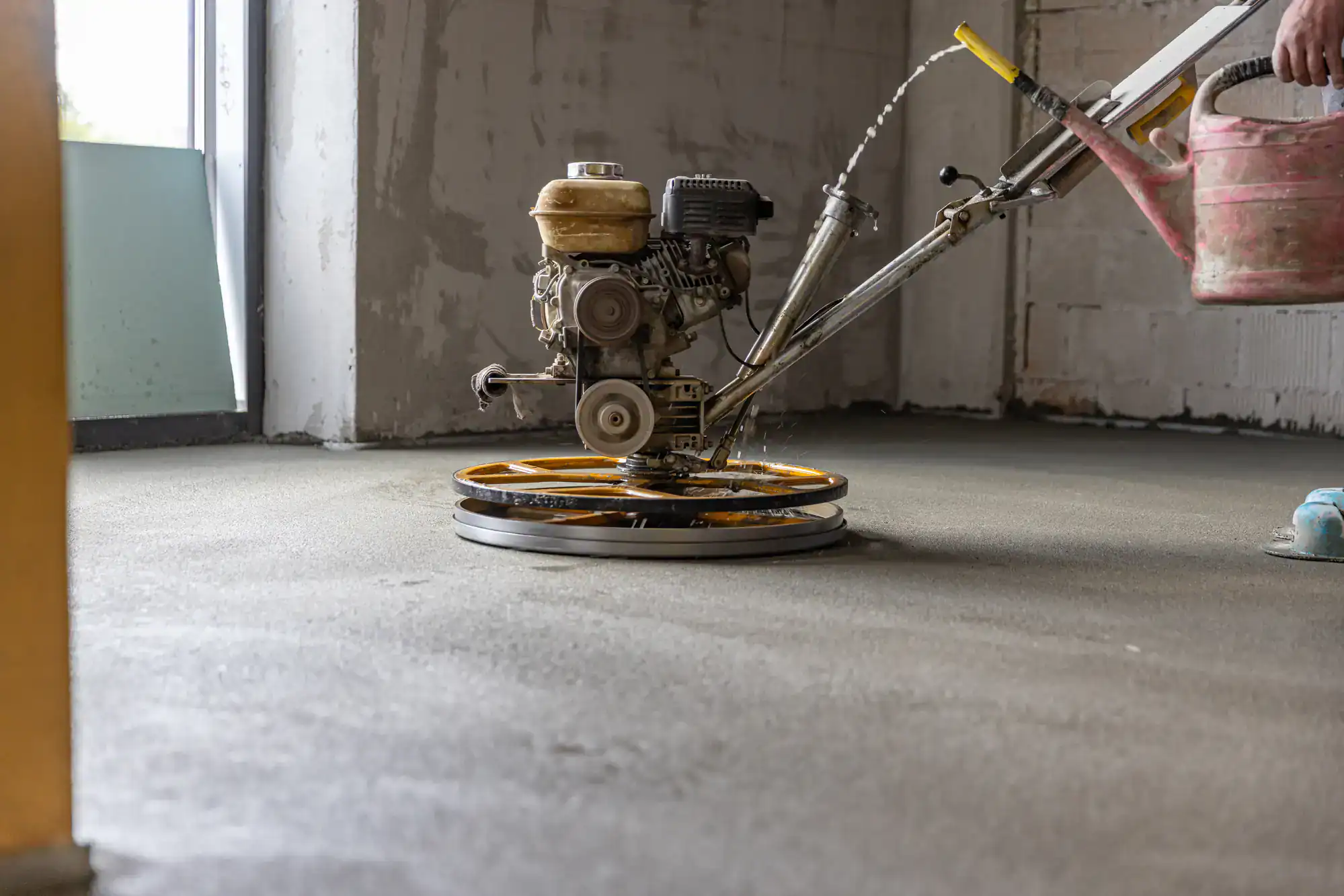
Once the slab is properly prepared, the grinding and polishing process moves through a sequence of progressively finer diamond tooling. Each pass refines the surface and removes the scratches left by the previous grit. The densifier goes on during this process not after so it has time to react with the concrete matrix and harden the surface from within. The finish class you’re aiming for, whether that’s a low-sheen industrial surface or a high-gloss showroom floor, determines how far through the grit sequence we go.
After polishing, we apply a penetrating stain guard to protect the surface from oil, moisture, and contaminants without sitting on top of the floor as a coating that can peel. For spaces in Copiague that see coastal humidity or heavy operational traffic, that final layer of protection makes a measurable difference in long-term performance. The whole process is planned around minimizing your downtime because a floor project that shuts your operation down for a week is a problem, not a solution.
Ready to get started?
Not every floor needs the same treatment. A warehouse in Copiague’s Sunrise Highway industrial zone has different requirements than a retail showroom on Great Neck Road or a restaurant along Montauk Highway. The finish, the densification level, the stain guard selection all of it gets calibrated to what your space actually demands.
For industrial concrete polishing services in Copiague, NY, we focus on surface hardness, dust elimination, and forklift compatibility. That means a lower-sheen finish with heavy densification and a stain guard rated for chemical and oil exposure. For retail showroom concrete finishes in Copiague, NY, the priority shifts toward appearance high gloss polished concrete that reflects light, makes a space feel larger, and holds up under daily customer traffic without showing wear. Both outcomes are achievable from the same slab. The difference is in how we execute the process.
Slip resistance is also part of the conversation, especially for customer-facing spaces. Polished concrete meets OSHA’s minimum coefficient of friction standard for level commercial surfaces, and for environments where wet traffic is a factor think a Copiague restaurant or retail space near the waterfront anti-slip additives can be incorporated into the stain guard without changing the look of the finished floor. All permitting for commercial work in Copiague runs through the Town of Babylon Building Department, and Advanced Epoxy Flooring operates in full compliance with New York State contractor registration and insurance requirements.
In most cases, yes and older slabs are often better candidates for polishing than newer ones. Concrete hardens and densifies over time through continued curing, which means a slab poured in the 1970s or 1980s is typically harder and more consolidated than something poured in the last five years. That’s a real advantage when it comes to polishing.
The more common concern with older buildings in Copiague is surface condition: existing coatings, cracks, patches, or contamination from decades of use. These are preparation challenges, not disqualifying conditions. Surface coatings get ground off. Cracks get filled with color-matched cementitious filler. Patches get ground flush. The assessment process is what determines what preparation is needed and what finish is achievable and after 40 years of working on slabs like these throughout western Suffolk County, we can work with what you have in nearly every situation.
Commercial polished concrete in the Northeast typically ranges from $3 to $12 per square foot, depending on the finish class you’re targeting, the current condition of your slab, and the total square footage of the project. Larger projects generally bring the per-square-foot cost down. A straightforward industrial finish on a clean slab sits at the lower end of that range. A high-gloss showroom finish on a slab that needs significant preparation sits higher.
The more useful number for most Copiague business owners is the 10-year cost, not the day-one price. A properly installed polished concrete floor eliminates the annual waxing, stripping, and recoating cycles that other flooring systems require. Over a decade, that maintenance savings often exceeds the upfront cost difference between polished concrete and a cheaper alternative. That’s the calculation that matters and it’s why commercial property owners and developers involved in the Town of Babylon’s active Copiague revitalization projects are increasingly choosing polished concrete for new and renovated spaces.
Gloss and friction are two different properties. A highly polished floor can be visually reflective without being slippery and properly finished concrete meets OSHA’s minimum coefficient of friction standard of 0.5 for level commercial surfaces.
For spaces in Copiague where wet traffic is a real concern a restaurant, a retail space near the waterfront, or any customer-facing environment that sees foot traffic in rainy conditions anti-slip additives can be incorporated into the penetrating stain guard during the finishing stage. This doesn’t change the appearance of the floor. It adds measurable traction without affecting the finish. If you’re operating a business along Montauk Highway or Great Neck Road where customers are walking in from outside, this is a straightforward option that addresses the concern completely.
It’s a legitimate concern, and it’s one of the reasons proper densification matters more in Copiague than it does in an inland location. Copiague sits on the Great South Bay, and the combination of elevated humidity, salt air, and winter freeze-thaw cycling creates conditions that accelerate surface degradation in untreated or poorly sealed concrete. Moisture infiltrates the pores of the slab, and when that moisture freezes and expands, it causes surface scaling and spalling over time.
Densification changes that equation. When lithium silicate is applied during the polishing process, it reacts chemically with the concrete matrix to form calcium silicate hydrate a compound that fills the pores of the slab from within and dramatically reduces moisture infiltration. The result is a surface that is significantly more resistant to the environmental conditions specific to a Great South Bay community like Copiague. This isn’t a topical coating that sits on the surface and can peel it’s a permanent change to the concrete itself.
The timeline depends on the square footage, the condition of the slab, and the finish class you’re targeting. A straightforward industrial polish on a clean, well-prepared slab can move quickly. A more complex job involving significant surface preparation grinding off old coatings, filling cracks, leveling patches takes longer. Most commercial projects in the 2,000 to 5,000 square foot range are completed within two to four days.
Minimizing your operational downtime is part of how we plan the project from the start. For retail businesses along Copiague’s Great Neck Road or Montauk Highway commercial corridors, after-hours or phased scheduling is a real option. For warehouse and industrial operators in the Sunrise Highway zone, project timing can be coordinated around planned operational shutdowns or slower periods. The goal is a floor that doesn’t cost you a week of business to install and with the right scheduling conversation upfront, it usually doesn’t have to.
It’s actually one of the best fits for exactly that context. The Town of Babylon’s Downtown Copiague Revitalization program is generating new commercial and mixed-use floor space along Great Neck Road and Railroad Avenue and developers and business owners finishing these spaces have a one-time opportunity to install a flooring system that performs for the life of the building without recurring maintenance costs.
Polished concrete checks every box for a new commercial buildout: it’s durable, it’s low-maintenance, it contributes to LEED certification points if that’s relevant to the project, and it holds up under the daily traffic of a retail or mixed-use environment without waxing, stripping, or recoating. The aesthetic range is also wide from a low-sheen matte finish to a high-gloss surface that makes a space feel finished and intentional. For anyone investing in one of Copiague’s new commercial spaces and thinking about what the floor looks like in 15 years, polished concrete installed correctly is the answer that holds up.