
If your kitchen floor is cracking, peeling, or collecting grease in grout lines that no amount of scrubbing fully clears, you already know the problem. What you might not know is why it keeps happening. Most commercial kitchen floors in Copiague fail because the contractor who installed them skipped moisture testing. That’s it. One skipped step, and the coating delaminates sometimes within months because the concrete slab beneath it was never properly assessed before anything went on top.
Copiague’s location directly on the Great South Bay makes this more than a general concern. The canal systems running through the hamlet, the shallow water table, and the consistently elevated coastal humidity mean that moisture vapor transmission through concrete is a real and active risk here more so than in inland Suffolk County towns like Medford or Holbrook. A properly installed food-grade epoxy system, applied over a tested and prepared slab, handles that environment without issue. A rushed one doesn’t.
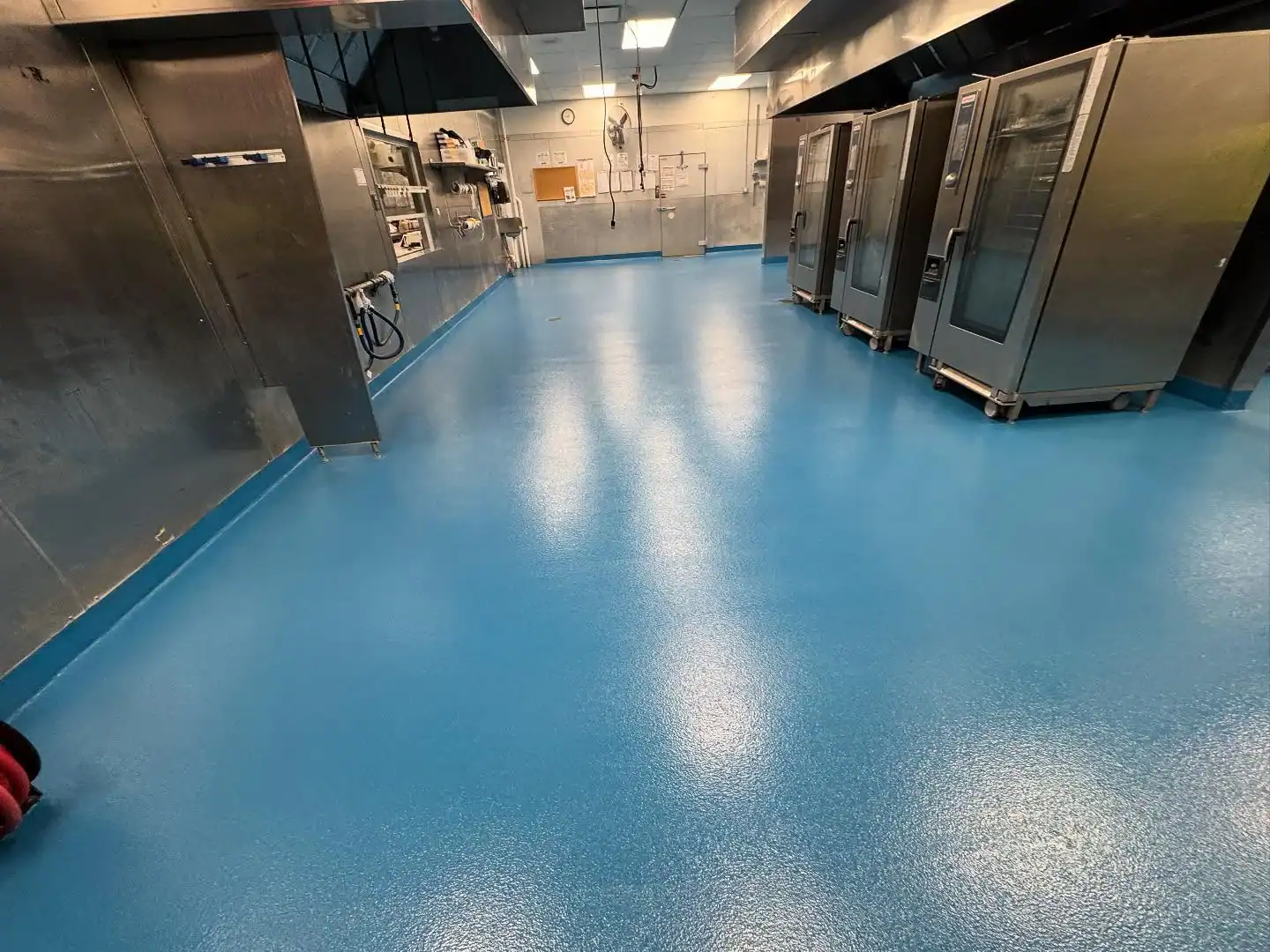
When the floor is done right, you get a seamless, non-porous surface that satisfies Suffolk County Department of Health Services inspectors, holds up to steam cleaning and hot washdowns, and doesn’t require you to think about it again for years. That’s the outcome not just a better-looking floor, but one less thing that can shut your kitchen down.
We’ve been installing commercial and industrial kitchen floors for 35 years, with work spanning Long Island, the broader United States, and the Bahamas. We were built on a straightforward observation: too many commercial floors were failing not because of bad luck, but because the contractors installing them didn’t understand the science behind what they were applying.
We’re based in Bohemia, NY in Suffolk County, on Sunrise Highway, the same Route 27 that runs along Copiague’s northern edge. That’s not a coincidence worth ignoring. It means we know this county, we know how Suffolk County DOHES inspections work, and we understand the environmental conditions that South Shore kitchens in Copiague deal with year-round. We also hold dual manufacturer certification Sherwin-Williams High Performance Flooring ATP and Res Tech credentials that most local flooring contractors simply don’t carry.
The first thing that happens before any product touches your slab is moisture testing. Given Copiague’s coastal position on the Great South Bay and the ambient humidity that comes with it, this step isn’t optional it’s where the whole job either gets set up to succeed or gets set up to fail six months later. If the slab reads too high, we address that before anything else moves forward.
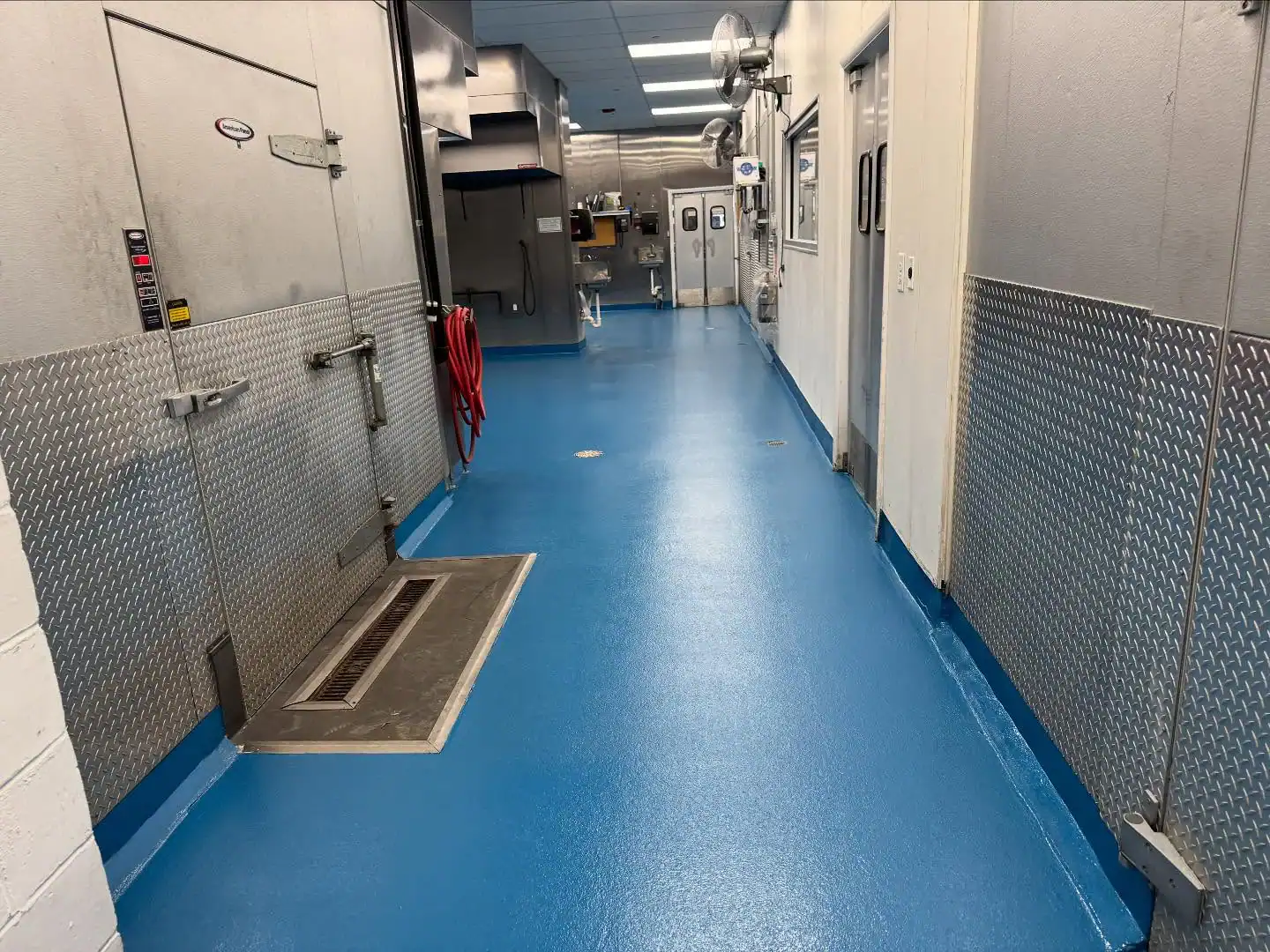
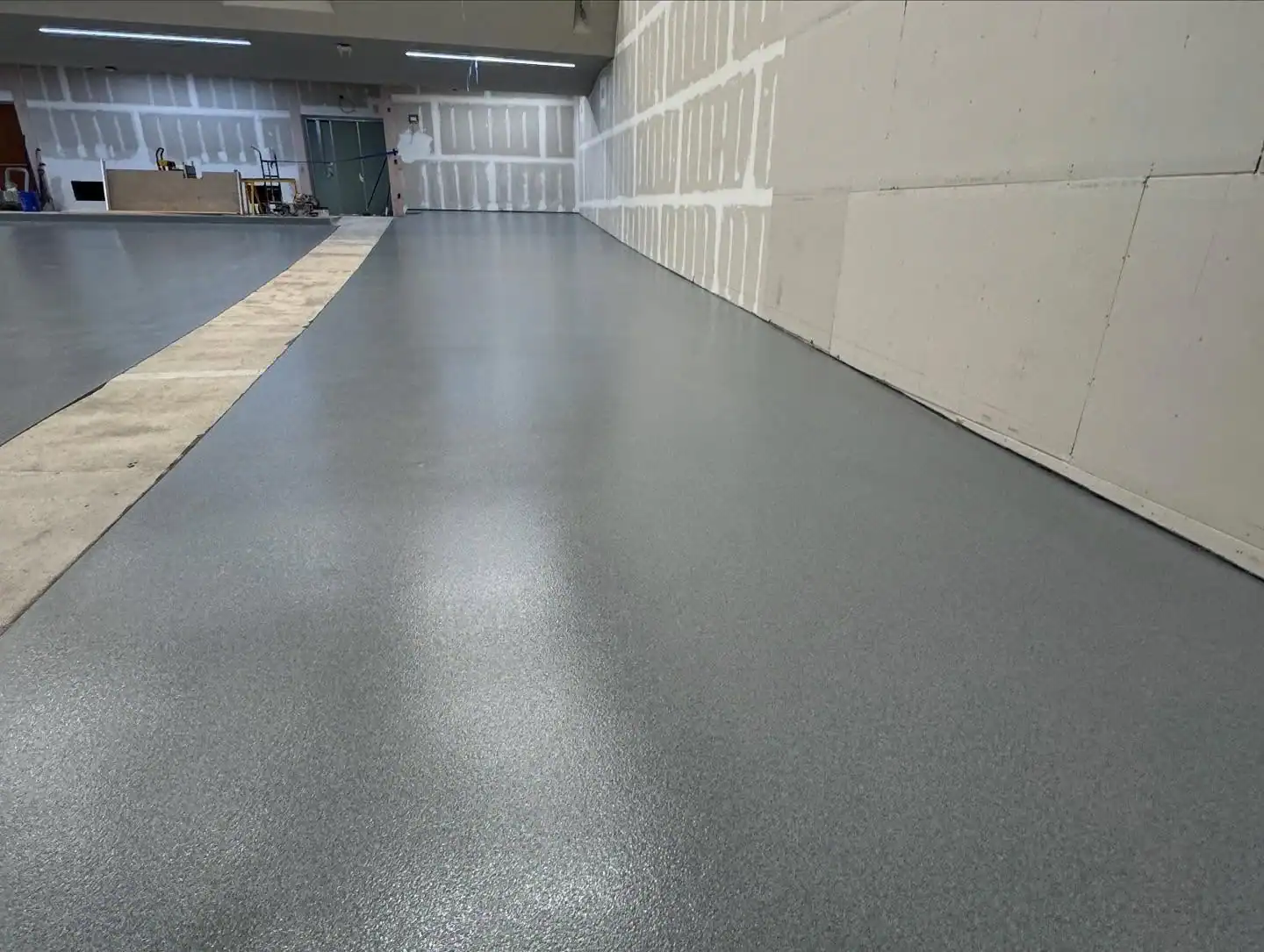
From there, the concrete gets properly prepared grinding, crack filling, leveling where needed. This isn’t cosmetic. Surface preparation is what determines whether the coating bonds or eventually lifts. Once the slab is ready, the system goes down in layers: a base coat, build coats sized for impact resistance and thickness, and a slip-resistant topcoat that meets the smooth, non-absorbent, easily cleanable surface requirements that Suffolk County inspectors look for under the NYS Sanitary Code. Coving gets installed at every wall-floor junction no gaps, no crevices, no citation points.
Cure time between coats isn’t rushed. That’s another place where shortcuts show up as failures. Fast-cure topcoat systems are available when your schedule demands it overnight and weekend installations are an option for operators along Montauk Highway and Sunrise Highway who can’t afford to lose service days. The goal is a floor you can return to quickly and not have to revisit.
Ready to get started?
Not every part of a commercial kitchen takes the same punishment, and a single coating product applied wall to wall is one of the more common ways a floor ends up failing in specific zones while the rest looks fine. The area next to your fryers and cooking equipment experiences thermal shock rapid temperature swings from hot cooking surfaces, steam, and cold water washdowns. That zone requires a urethane cement mortar system engineered specifically for that stress. Your walk-in cooler has different needs. Your dish pit has different needs. The system gets matched to the zone, not the other way around.
For Copiague food service operators going through the Suffolk County Department of Health Services plan review process whether you’re opening a new location in the revitalizing downtown corridor near Great Neck Road and Railroad Avenue, or renovating an existing kitchen along Montauk Highway the floor surface documentation matters. Seamless, non-porous, properly coved. That’s what the plan review guide specifies, and that’s what we install.
The Town of Babylon’s active downtown revitalization has brought new food service businesses into Copiague, and each one needs to pass that review before receiving an operating permit. Getting the floor right the first time means you’re not delaying your opening or scheduling a remediation visit after your first inspection. That’s a real cost in time, in lost revenue, and in the kind of stress no new operator needs.
Suffolk County’s Department of Health Services follows the New York State Sanitary Code, Subpart 14-1, which requires that floors in food preparation areas be smooth, non-porous, non-absorbent, and easily cleanable. Grout lines, cracks, and gaps are all citation points they trap food particles and bacteria in ways that routine cleaning can’t fully address. Quarry tile, which is common in older Copiague restaurant kitchens along Montauk Highway, almost always has grout lines, and those grout lines are exactly what inspectors flag.
A seamless food-grade epoxy system with integral cove base at every wall-floor junction is the most defensible compliance solution. The cove base eliminates the gap where the floor meets the wall another common inspection citation point. If you’re going through the Suffolk County plan review process for a new location or a renovation in Copiague, the floor surface is one of the specific items reviewed before your operating permit is issued. Getting it right before that review saves you from having to redo it after.
The honest answer depends on the size of your kitchen, the condition of the existing slab, and which coating system we’re installing. For most commercial kitchens, the installation itself surface prep, base coat, build coats, topcoat takes one to two days of active work. The variable is cure time between coats, which shouldn’t be rushed regardless of what your schedule looks like.
Fast-cure polyaspartic topcoat systems can allow light foot traffic within a few hours of the final coat and full commercial service within 24 to 36 hours. For operators in Copiague who can’t afford to close their kitchen for multiple days, we offer overnight and weekend scheduling. The goal is to work around your service hours, not ask you to reorganize your week around the installation. If your kitchen is on Montauk Highway or in the downtown corridor, that flexibility matters and it’s built into how we schedule the job from the start.
Moisture vapor transmission is what happens when water vapor moves upward through a concrete slab. It’s invisible, it’s ongoing, and it’s the primary reason epoxy floors delaminate the coating lifts from the slab because the bond was compromised by moisture that was already in the concrete when the coating was applied. In most cases, the contractor either didn’t test for it or tested and applied the coating anyway.
Copiague’s position on the Great South Bay, with canal systems throughout the residential neighborhoods and a water table that reflects its sea-level location, creates conditions where moisture vapor transmission is a more active risk than in inland Suffolk County towns. The ambient humidity along the South Shore is consistently higher, and that affects how concrete slabs behave. Moisture testing before any coating is applied isn’t just a best practice in a bayside community like Copiague, it’s the difference between a floor that holds and one that starts lifting before the year is out. Every installation we do starts with that test.
In some cases, yes but it depends on the condition of the tile, the adhesion of the existing installation, and what the substrate looks like underneath. Applying a coating over loose, cracked, or poorly bonded tile is one of the faster ways to end up with a floor that fails, because the new system is only as stable as what it’s bonded to. We assess the tile and the substrate before making any decision about whether to coat over or remove.
If the tile is sound and the substrate is in good shape, grinding the tile surface to create mechanical adhesion and then applying a full build-coat system on top is a viable approach. If the tile is failing, removal is the right call even if it adds time and cost to the project. For Copiague kitchens in older buildings along Montauk Highway or Sunrise Highway, where quarry tile installations may be decades old, that assessment matters. A floor that looks stable on the surface can have adhesion issues underneath that only show up after the new coating is applied.
Copiague is a hamlet within the Town of Babylon, so commercial renovation work including significant flooring projects may require a building permit through the Town of Babylon Building Department, depending on the scope. This is different from the permit process in incorporated villages like Amityville or Lindenhurst, which border Copiague but have their own code enforcement structures. As a hamlet, Copiague doesn’t have a local village government everything runs through Town of Babylon.
Separately, the Suffolk County Department of Health Services requires a plan review for new food service establishments and for existing ones undergoing significant renovation. That review covers floor surfaces specifically. If you’re opening in the downtown Copiague revitalization corridor near Railroad Avenue or Great Neck Road, the DOHES plan review is a required step before your operating permit is issued. We understand both the Town of Babylon building permit side and the Suffolk County health permit side and how they interact so you don’t have to navigate it alone.
Three things determine whether a commercial kitchen floor holds up long-term: proper moisture testing before installation, thorough surface preparation, and using the right coating system for each zone of the kitchen. Skip any one of those, and the floor will tell you eventually usually through delamination, cracking at high-traffic zones, or coating failure near the cooking equipment where thermal shock is highest.
For South Shore kitchens in Copiague specifically, the moisture piece is the one that gets underestimated most often. The coastal environment, the bay proximity, the seasonal humidity these are real factors that affect how concrete slabs behave, and they don’t go away after the floor is installed. A system that was properly matched to those conditions from the start tested slab, correct coating chemistry for each kitchen zone, full cure between layers is what actually lasts. The kitchens that call us for a replacement job two years after their last installation almost always have one of those three steps missing from the previous contractor’s process.