
Freeport isn’t a quiet suburb. Between the Nautical Mile’s seafood restaurants, the retail corridors along Sunrise Highway, and the light industrial spaces scattered through the village, the floors here take a beating. If you’re still dealing with VCT that needs waxing every year, painted concrete that’s peeling, or a surface that traps grease and grime no matter how often you clean it that’s not a maintenance problem. That’s a flooring problem.
Polished and densified concrete changes that math entirely. Once we mechanically refine and chemically harden the surface, you’re not reapplying coatings or scheduling annual strip-and-wax cycles. You’re dust mopping, damp mopping when needed, and moving on. For a restaurant on Woodcleft Canal or a retail store pulling foot traffic off Merrick Road, that kind of floor is an operational advantage not just an aesthetic one.
There’s also the moisture reality that anyone operating near Great South Bay understands firsthand. Freeport’s South Shore location means salt air, coastal humidity, and a flood history that reshaped how a lot of business owners think about their buildings. Polished concrete is seamless and non-porous there’s no adhesive layer to fail, no grout line to trap saltwater, and no organic material to break down over time. It’s the floor that makes sense for where you actually are.
Danny Harmer has been working commercial and industrial floors for over 40 years not managing crews from an office, but actually on the job. That matters more than most buyers realize, because polished concrete isn’t a product you order and install. It’s a result you earn through understanding how a specific slab behaves, what its surface history is, and how to work with it rather than against it.
We hold a Sherwin-Williams High Performance Flooring (HPF) certification and a Res Tech certification both manufacturer-issued credentials that require demonstrated technical knowledge, not just paperwork. In 1996, we completed flooring work at the White House kitchen. That’s the standard our work gets held to.
Nassau County’s South Shore commercial building stock has its own set of conditions older slabs, post-flood remediation, coastal moisture, and a mix of construction ages that spans decades. Whether your space is on the Nautical Mile, off Sunrise Highway, or tucked into Freeport’s downtown commercial district, that background is what you’re getting when you call us.
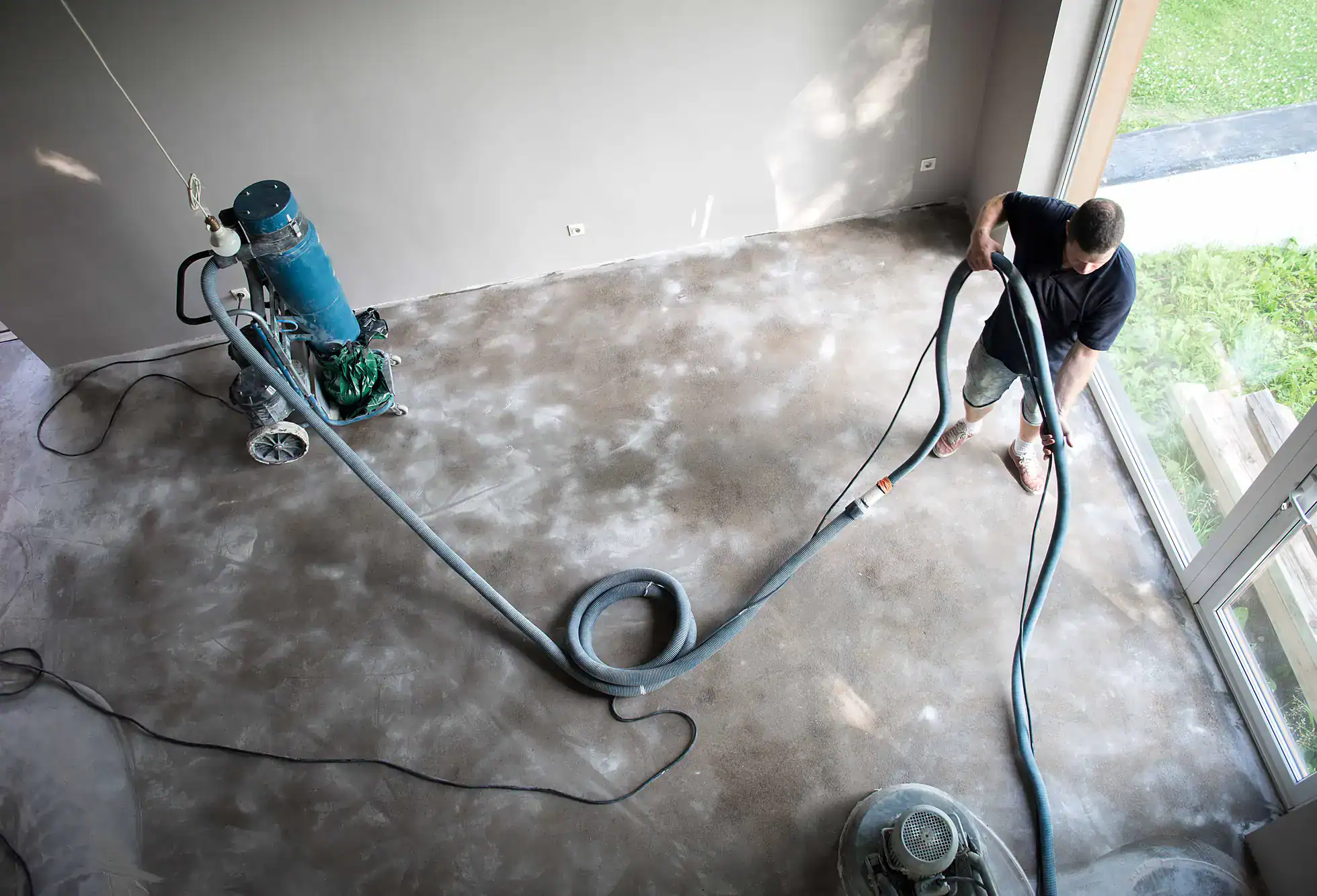
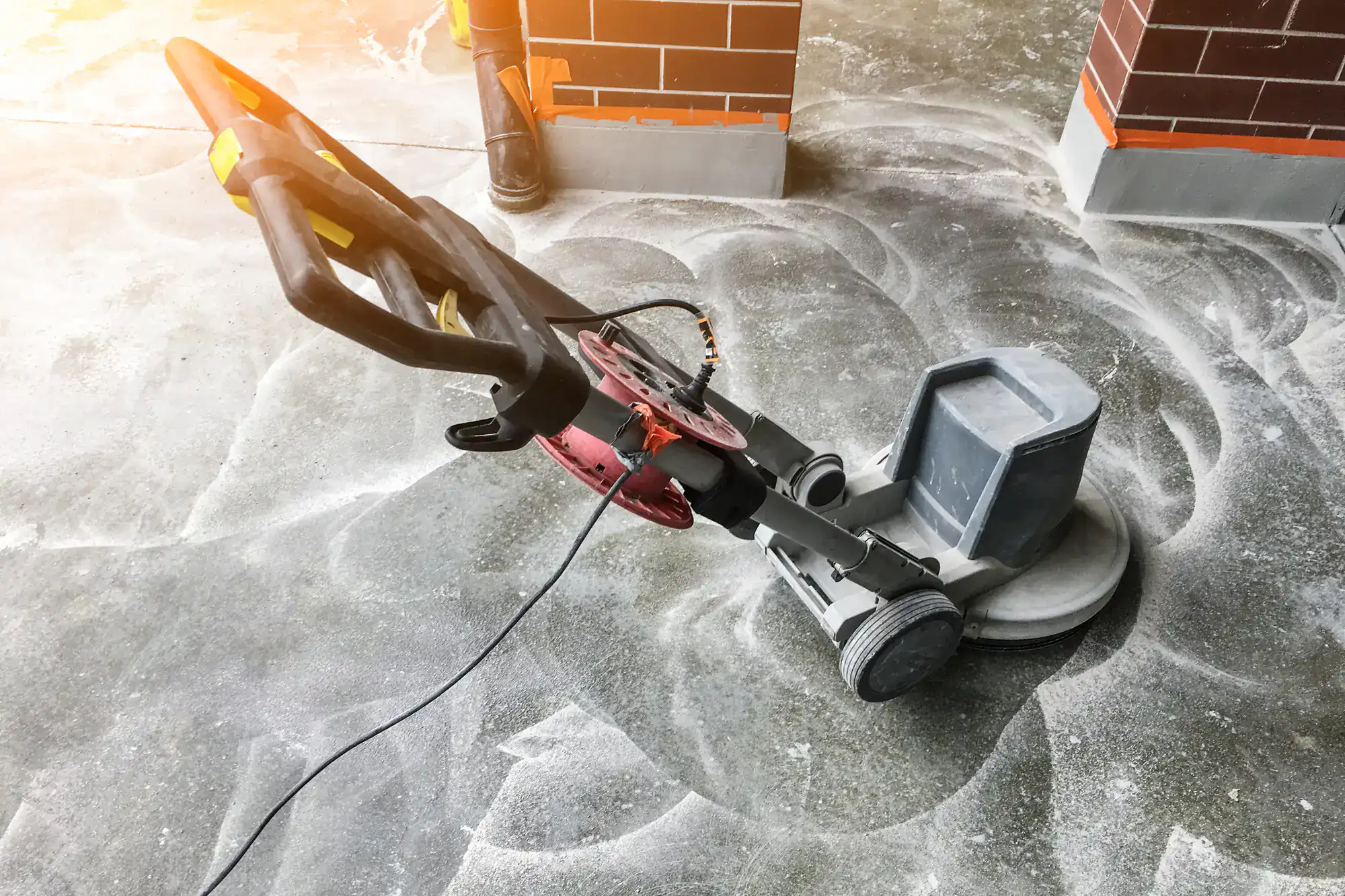
It starts with a real assessment of your slab not a quote over the phone based on square footage. The condition of your concrete determines everything: what grit sequence to start with, whether densification needs to happen before or during the polish progression, and what finish class is actually achievable. Freeport’s older commercial buildings, particularly those in the downtown district and along the waterfront, often have existing coatings, adhesive residue, or surface contamination from years of use. That’s standard pre-work, not a dealbreaker.
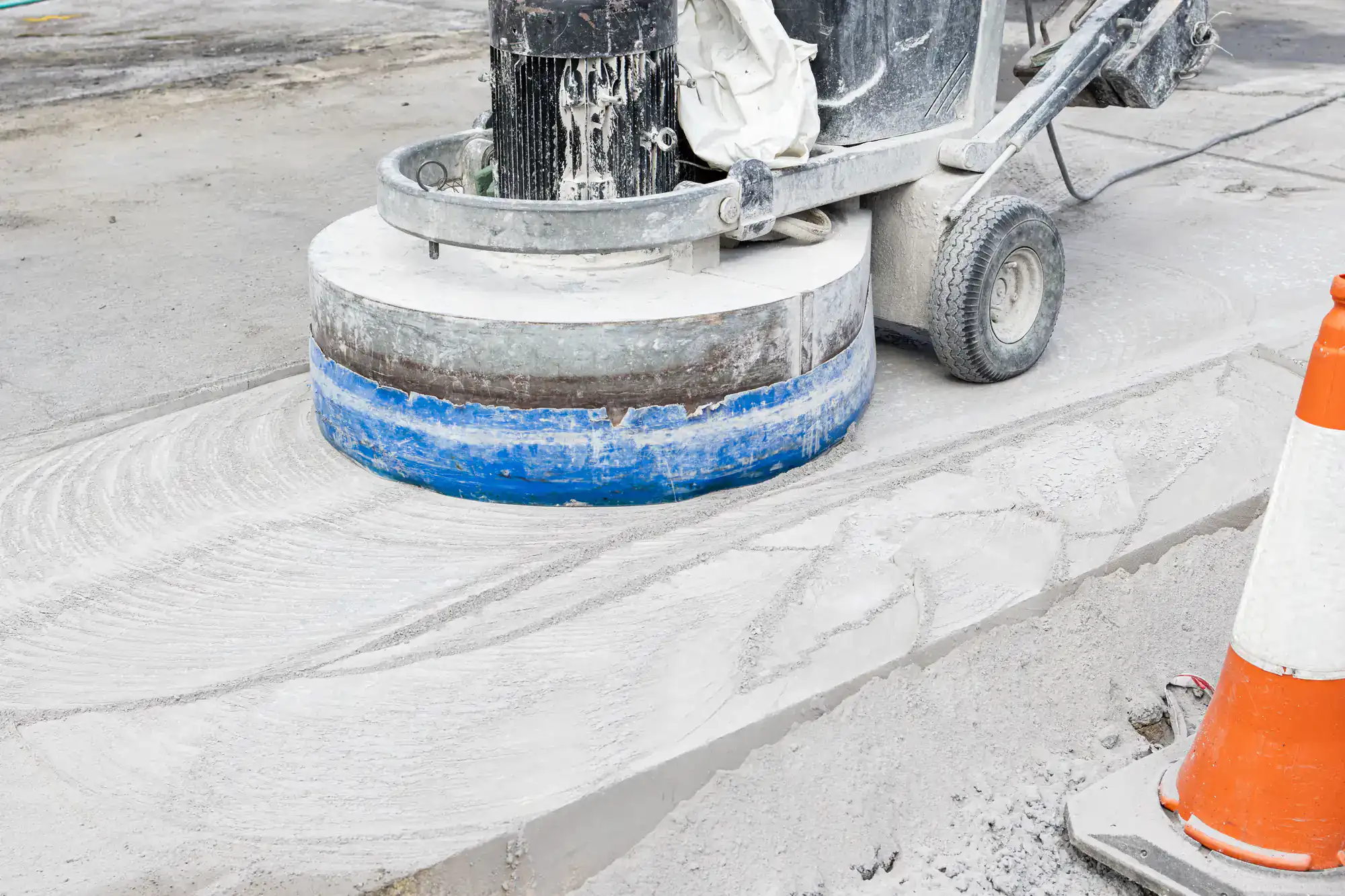
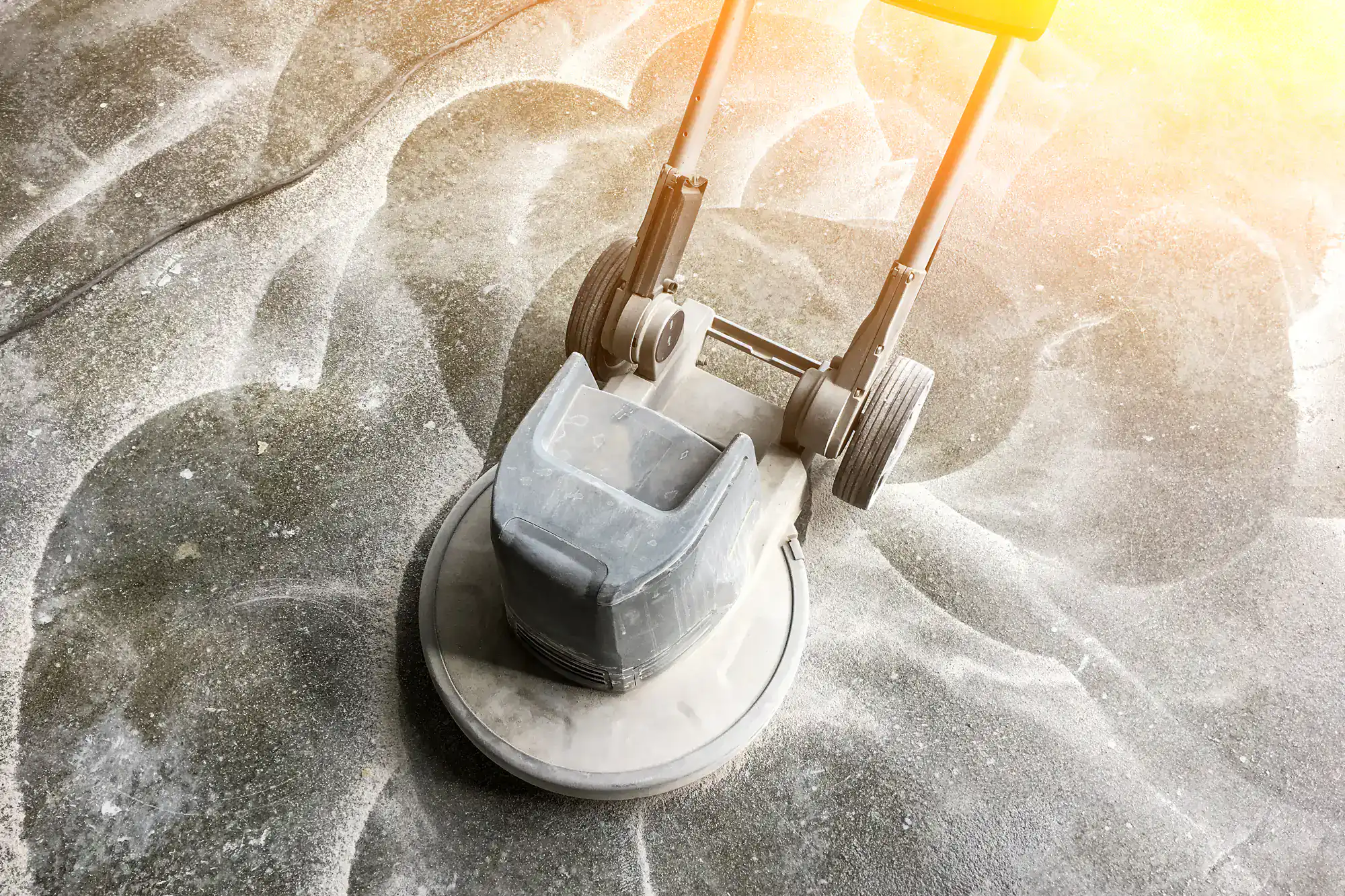
From there, the process moves through a diamond tooling sequence coarse grits to remove surface damage and level the floor, progressively finer grits to refine the surface, and lithium silicate densifier applied at the right stage to chemically harden the concrete from within. The densifier reacts with compounds in the slab to create a harder, more abrasion-resistant surface. Skipping it or applying it at the wrong time is one of the most common reasons polished floors fail early. We don’t skip it.
Timing matters in Freeport’s commercial environment. Nautical Mile restaurants typically schedule floor work with us in late fall or winter, before the summer season ramps up. Retail spaces along Sunrise Highway often work in phases to stay open during the project. We adapt the process to your schedule because shutting down your business for a week isn’t always an option, and it doesn’t have to be.
Ready to get started?
Our full scope of commercial concrete polishing covers surface preparation, the full diamond grit progression, densification, and a food-safe stain guard on the finished surface. For food service operations and there are plenty of them between the Nautical Mile and the commercial corridors running through the village that stain guard matters from a Nassau County Department of Health compliance standpoint. Seamless, non-porous, and cleanable with standard commercial sanitizing agents. It checks the boxes.
For retail and showroom spaces, we dial the finish class to what the space actually needs. A high-gloss polished concrete floor in a Sunrise Highway showroom reads as intentional and high-end the kind of finish that works for auto dealerships, furniture stores, and any consumer-facing space where the floor is part of the first impression. For warehouse or light industrial spaces in Freeport’s service sector, a lower-sheen, heavily densified finish prioritizes abrasion resistance and dust elimination over reflectivity.
Every project includes a slab assessment before any work begins, honest communication about what your specific floor can achieve, and a finished surface that’s built to last through the kind of commercial use Freeport businesses put their floors through daily. No upsells, no surprise add-ons just a clear scope and a floor that holds up.
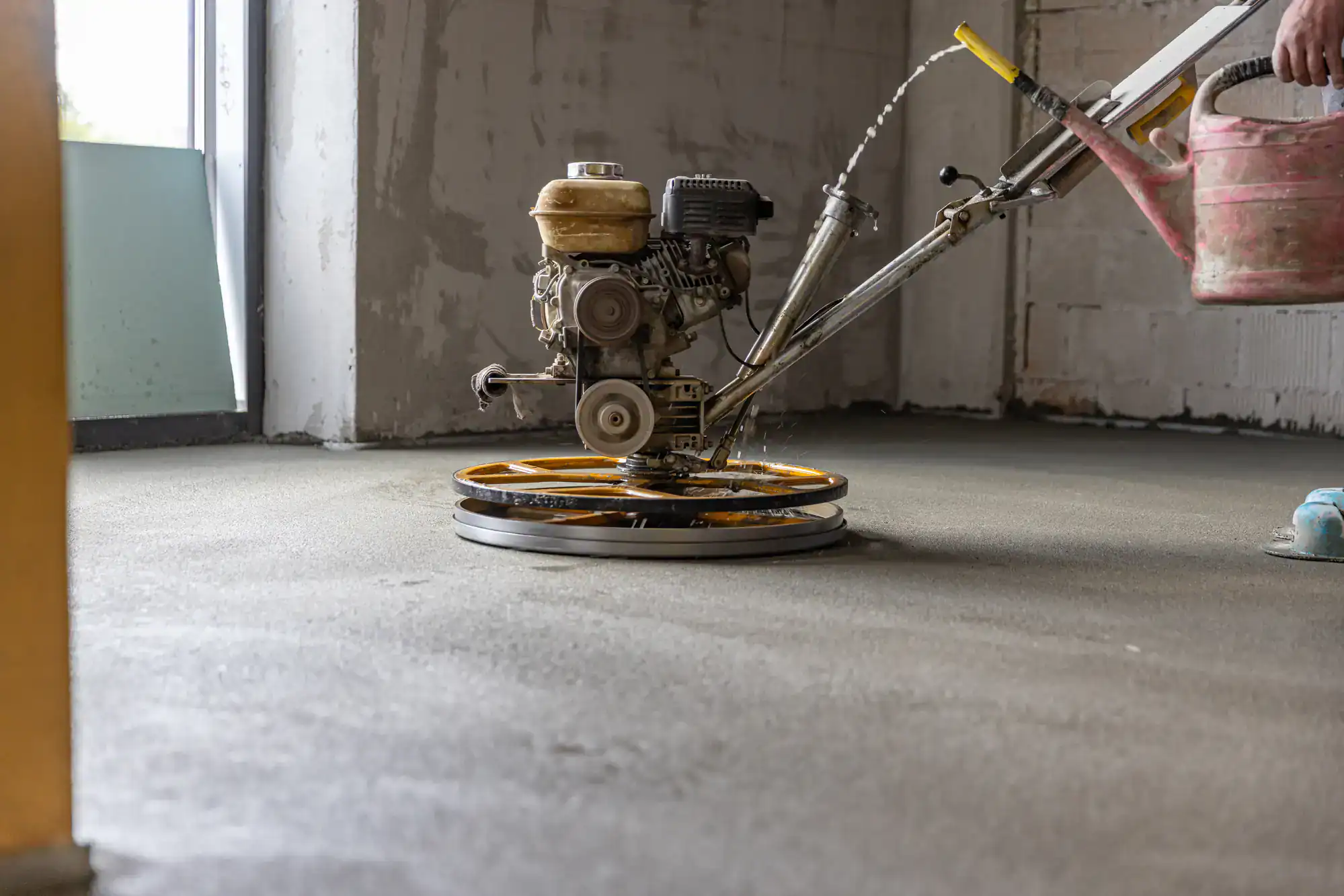
Yes and this is one of the most common questions we hear from business owners in Freeport’s downtown district, where a lot of the commercial building stock dates back several decades. The age of the slab isn’t the limiting factor. What matters is the surface condition: whether there are existing coatings, adhesive residue, old paint, or contamination that needs to be addressed before polishing can begin.
Surface preparation grinding, coating removal, crack filling, repair grinding can bring most existing slabs to a point where polishing is viable. The assessment before any work starts is what determines the realistic finish class and what prep is required. Some slabs can achieve a high-gloss finish. Others, depending on their history and aggregate exposure, are better suited to a satin or matte result. Either way, you’ll know what to expect before any equipment touches your floor.
This concern comes up constantly, and it’s worth addressing directly. Gloss and slip resistance are not the same thing. A floor can be highly reflective and still meet OSHA’s minimum coefficient of friction standard of 0.5 for level commercial surfaces. Properly polished and densified concrete achieves that standard.
For food service environments where wet traffic is a real factor like the seafood restaurants and fish markets along Woodcleft Canal in Freeport we can incorporate anti-slip additives into the stain guard without affecting the finished appearance of the floor. Nassau County Department of Health compliance for food service floor surfaces is also a consideration, and a seamless, non-porous polished concrete surface checks that box. The liability concern around slip-and-fall is real, and we address it with the right application of polished concrete.
This is a question that carries real weight for anyone who operated a business on the Nautical Mile during Superstorm Sandy or who’s dealt with the street flooding that still affects parts of South Freeport during significant storm events. Polished and densified concrete is one of the most moisture-resilient commercial flooring options available. It’s seamless, so there’s no grout line or seam for saltwater to penetrate. It has no adhesive layer that can fail under moisture pressure. And the densification process chemically hardens the surface in a way that reduces porosity significantly.
That said, no flooring system is completely impervious to prolonged submersion in saltwater. The advantage of polished concrete in a flood event is what happens after: it can be cleaned, sanitized, and returned to service far more quickly than tile, VCT, carpet, or wood. There’s no adhesive bond to fail, no organic material to mold, and no laminate layer to bubble and separate. For South Shore commercial properties that have been through a flood and are making a long-term flooring decision, that recovery profile matters.
The timeline depends on the square footage, the condition of the slab, and how much surface preparation is needed before polishing can begin. For a straightforward commercial space with a clean slab say, a retail storefront along Merrick Road we can typically complete a full polish from preparation through finished stain guard in two to three days. Larger spaces or slabs requiring more extensive prep work will take longer.
For businesses that can’t afford to shut down completely, we offer phased scheduling. The Nautical Mile’s restaurant operators, for example, often schedule floor work with us in late fall or early winter when traffic slows before the summer season. Retail businesses along Sunrise Highway sometimes phase the work by section to stay partially open. We build the schedule around your operation, not the other way around. The assessment conversation is where that timing gets figured out.
For commercial polished concrete in the Northeast, the typical range runs from roughly $3 to $12 per square foot, depending on the finish class, the size of the space, and the condition of the slab going in. A basic satin finish on a clean, well-prepared slab sits toward the lower end of that range. A high-gloss finish with significant surface preparation common in older commercial buildings in Freeport’s downtown district sits toward the higher end.
The more useful number, though, is the lifecycle cost comparison. VCT floors in high-traffic commercial environments require annual waxing and stripping that runs several thousand dollars per cycle, year after year. Polished concrete eliminates that entirely. Over a 10 to 15 year horizon, the floor that costs more upfront typically costs significantly less in total. For Freeport business owners operating on tight margins in a competitive commercial market, that’s the math worth running before making a decision based on installation cost alone.
It’s one of the strongest applications for polished concrete. Retail and showroom environments need a floor that handles constant foot traffic without showing wear, holds up to the cleaning protocols that commercial spaces require, and looks intentional not like an afterthought. High-gloss polished concrete delivers all three, and it does it without the recurring maintenance burden that most other commercial flooring options carry.
Sunrise Highway in Freeport sees over 47,000 vehicles per day, and the retail businesses along that corridor are operating in one of the higher-traffic commercial environments on the South Shore. The Freeport Commons area, which includes a BMW dealership and several national retailers, is a good example of the kind of commercial environment where a polished concrete showroom floor makes both a functional and visual statement. The finish class gets selected based on your specific space and how it’s used but for consumer-facing retail, a high-gloss or semi-gloss result is usually the right call.