
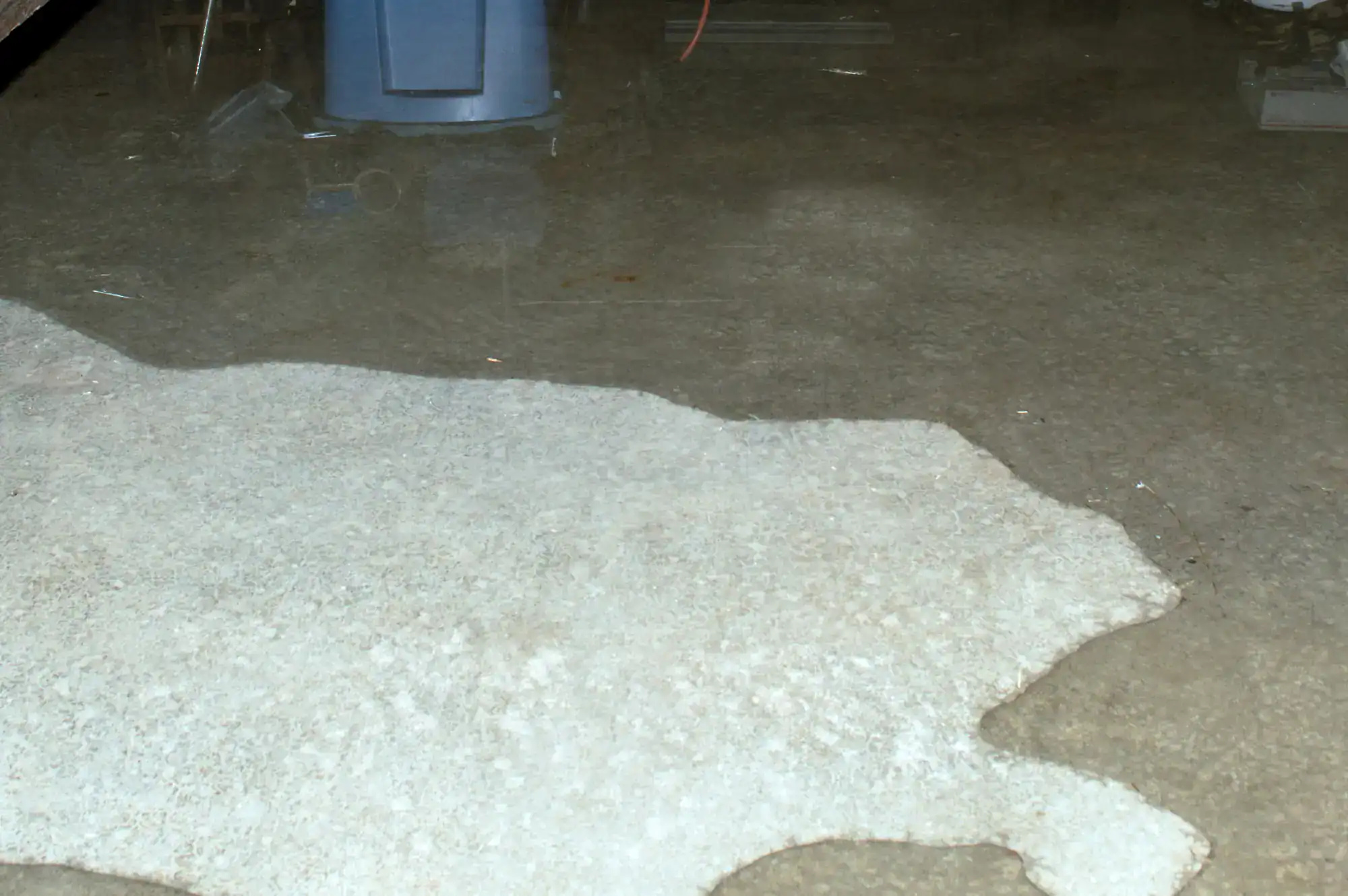
Every winter, apparatus rolling back from calls on Route 58 and Route 25 tracks road salt, brine, and de-icing chemicals straight into the bay. On bare or poorly coated concrete, those chlorides don’t just sit there they work their way in, break down the surface, and widen every small crack a little more each time the temperature swings. By spring, you’re looking at spalling, staining, and a floor that’s harder to clean than it should be.
The right floor coating changes that entirely. A seamless, non-porous surface means contaminants stay on top where you can wipe them off not inside the slab where they keep doing damage. That matters even more in Riverhead, where the coastal climate on Long Island’s North Shore generates real freeze-thaw cycling through the winter months. A system that flexes with the concrete instead of cracking under thermal stress is the difference between a floor that lasts two decades and one you’re redoing in five years.
Beyond durability, there’s the contamination control side of it. NFPA 1500 and 1581 create real requirements around decontamination in apparatus bays and a seamless, power-washable floor is a practical necessity for meeting those standards. For the 180 volunteers serving the Riverhead Fire District, a floor that supports proper decon protocols isn’t an upgrade. It’s part of doing the job right.
We’ve been installing commercial and industrial resinous floors for over 30 years, operating out of Bohemia, NY about 35 miles west of Riverhead on the Long Island Expressway. Our CEO Danny Harmer brings more than 40 years of hands-on installation experience to every project, and most of our field team has been with us for over a decade. That kind of continuity is rare in the trades, and it shows in the work.
The credentials matter here. We hold the Sherwin-Williams High Performance Flooring certification one of the most rigorous manufacturer-approved applicator credentials in the industry along with Res Tech certification. Every installer on our team is OSHA 40 certified and current with OSHA Training Standards, which is a real consideration when the job is happening inside an active fire station with crew, volunteers, and apparatus present.
We’ve installed firehouse floors across Long Island, the five boroughs, and upstate New York. We’ve also done the White House kitchen. If the standard of work clears that bar, it clears the bar for the Riverhead Fire District too.
The first thing most fire departments ask is how long the bay will be out of service. With a polyaspartic system, the answer is one day. Apparatus is back in the bay within 24 hours of installation not the 3 to 7 days that traditional epoxy requires. For a fire district covering 48-plus square miles of Riverhead, Calverton, and parts of Southampton and Brookhaven, that turnaround isn’t a nice-to-have. It’s the only timeline that works.
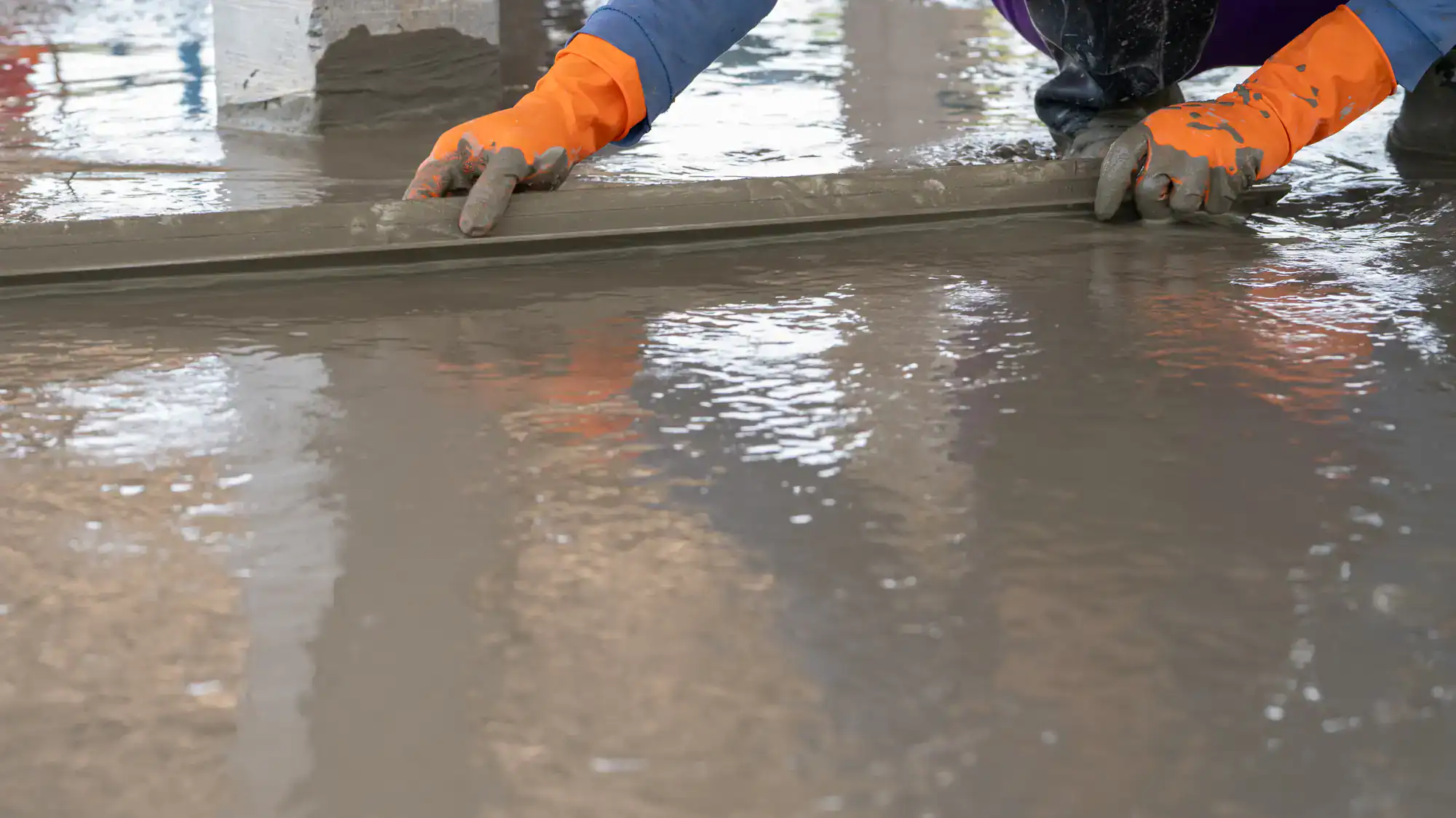
The installation itself starts with diamond grinding the existing concrete not acid etching, not shot blasting alone, but mechanical grinding that opens the surface profile and gives the coating a real mechanical bond. Before any product goes down, we conduct moisture testing. Concrete slabs in Riverhead’s coastal environment can carry higher moisture vapor emission than slabs in drier inland areas, and skipping that step is one of the main reasons coatings fail prematurely. A penetrating primer goes in first, then a high-build epoxy base coat with aggregate broadcast for slip resistance, and finally a polyaspartic topcoat at 15 mils thick.
That topcoat is UV-stable which matters in an apparatus bay with doors that are open for hours at a time during Riverhead’s busy summer season. It’s also thermally resistant, meaning it won’t bond to hot tires when apparatus returns from a call. Hot-tire pickup is the most common reason firehouse floors fail early, and this system is specifically engineered to prevent it. The result is a floor rated for 40,000-plus pound apparatus loads, designed to last 20 or more years with normal maintenance.
Ready to get started?
The apparatus bay gets the most attention, but it’s not the only floor in a fire station that needs to perform. Decontamination zones need a seamless, chemical-resistant surface that can be fully power-washed without harboring residue in grout lines or surface texture. Living quarters and kitchens need a system that handles thermal shock and daily foot traffic without wearing through. Gear storage and hallway areas need slip resistance and cleanability. We install the right resinous system for each of these zones one contractor, one certified installation, one point of accountability across the entire station.
For the apparatus bay specifically, our multi-layer system includes diamond-ground surface prep, moisture testing, a penetrating primer, a high-build epoxy base coat with aggregate broadcast, and a polyaspartic topcoat. The aggregate broadcast creates a textured, slip-resistant surface that holds up during washdowns relevant for any station in the Riverhead Fire District where decontamination after a structure fire is part of standard protocol.
For publicly funded fire districts presenting capital budgets to elected commissioners and Riverhead taxpayers, the investment math is straightforward. A properly installed polyaspartic system lasts 20-plus years. A DIY kit or under-specified coating lasts three to five, then requires grinding, disposal, and reinstallation each cycle adding cost and downtime. One installation done right is the fiscally responsible choice, and it’s the one that holds up when the board asks why you spent the money.
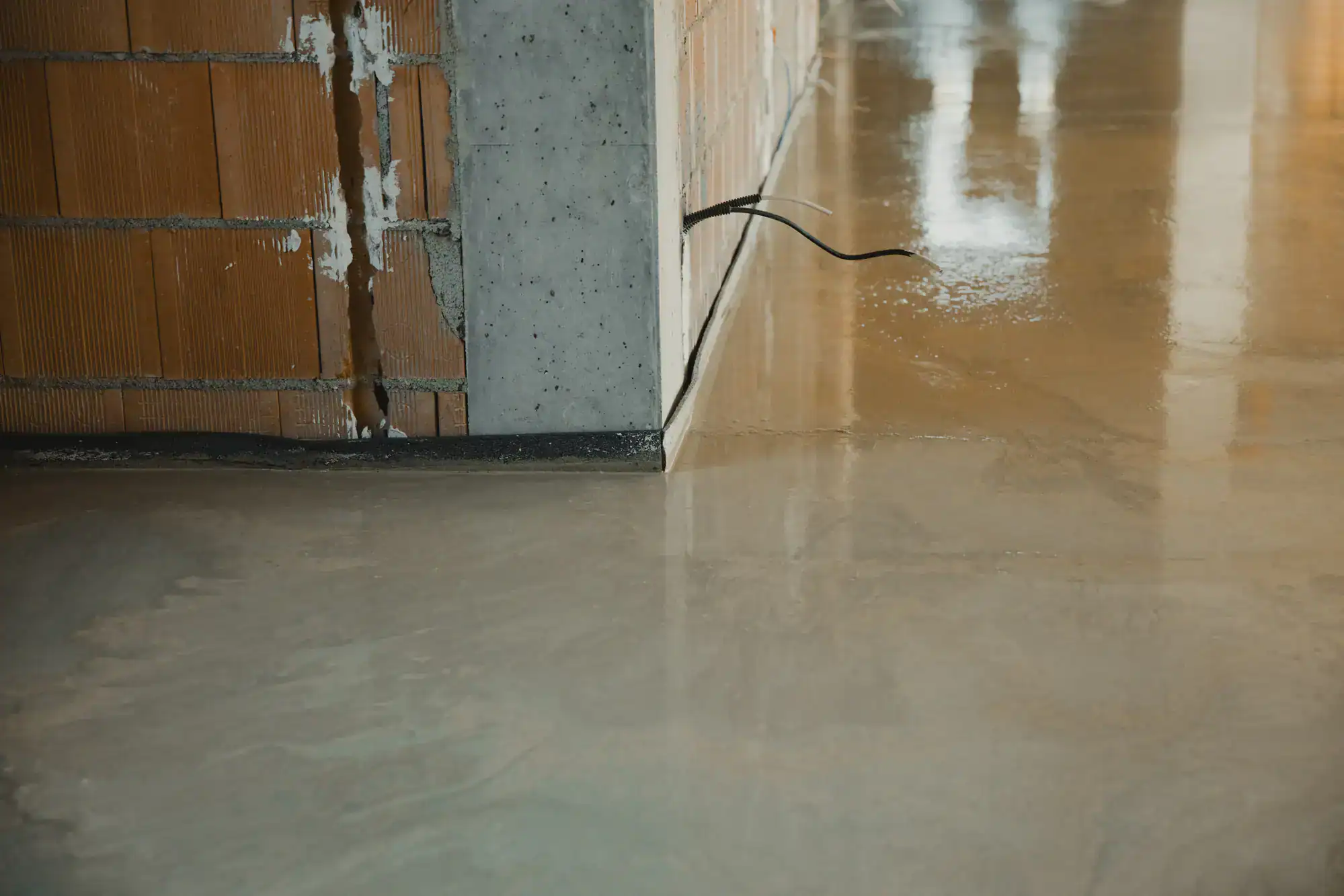
With a polyaspartic system, you’re looking at one day of downtime apparatus is back in the bay within 24 hours of the topcoat going down. That’s the reason polyaspartic has become the standard for fire station installations rather than traditional epoxy, which requires three to seven days before heavy vehicles can return. For a fire district covering more than 48 square miles across Riverhead, parts of Southampton, and parts of Brookhaven, a week of apparatus displacement simply isn’t operationally viable.
The 24-hour return timeline applies under normal temperature conditions coating application requires ambient temperatures above 50°F, which is worth factoring into your scheduling. Spring and early fall are the most reliable installation windows on Long Island’s East End. If you’re planning a bay floor project after observing winter damage, a spring installation is usually the most practical approach for both weather and operational continuity in Riverhead.
The most common cause of premature coating failure in apparatus bays is hot-tire pickup when standard epoxy bonds to the heated tires of apparatus returning from a call and peels off the floor surface when the truck backs out. You’ll recognize it by the pattern: coating fails in patches exactly where the apparatus parks, while the rest of the floor looks fine. The second most common cause is inadequate surface preparation, specifically skipping moisture testing before installation.
Riverhead’s coastal environment on Long Island’s North Shore means concrete slabs can carry elevated moisture vapor emission levels more so than inland areas of Suffolk County. If a contractor applies coating over concrete with high moisture content without a proper penetrating primer, the coating delaminates from below. The fix for both problems is the same: the right system applied correctly. A polyaspartic topcoat handles thermal resistance and prevents hot-tire bonding. Diamond grinding followed by moisture testing and a penetrating primer handles the adhesion side. Both steps matter, and skipping either one is why floors fail.
Yes, directly. NFPA 1500 and NFPA 1581 both create requirements around contamination control in fire station facilities and the floor surface is a central part of meeting those standards. A porous concrete floor or a cracked, deteriorating coating creates harborage points for carcinogens and combustion byproducts tracked in from fire scenes. Those contaminants can’t be fully removed from a surface with texture, cracks, or grout lines. A seamless, non-porous resinous floor eliminates the harborage problem entirely.
For Riverhead’s volunteer firefighters, this isn’t abstract. The connection between apparatus bay contamination and firefighter cancer risk is well-documented in the fire service, and New York departments are increasingly implementing decontamination protocols that require cleanable, seamless surfaces. A properly installed epoxy and polyaspartic system supports full power-wash decontamination without the contaminants having anywhere to hide. It’s one of the more straightforward facility upgrades a fire district can make to support long-term firefighter health.
Epoxy is a strong, durable base coat material it bonds well to prepared concrete and provides excellent compressive strength for heavy apparatus loads. The limitation is cure time. Standard epoxy requires three to seven days before vehicles can return to the bay, and it’s not UV-stable, meaning it yellows and degrades when exposed to sunlight. In an apparatus bay with doors that open frequently which in Riverhead’s case means year-round, including during the busy summer tourism season that UV instability shows up over time.
Polyaspartic is used as the topcoat in a properly specified system, and it solves both of those problems. It cures in 24 hours, it’s UV-stable, and it’s approximately four times more flexible than standard epoxy meaning it flexes with the concrete during freeze-thaw cycles rather than cracking. It also applies at 15 mils thick compared to the 4 to 8 mils of a standard polyurethane or epoxy topcoat, which is part of why it resists hot-tire pickup. The right installation uses both: epoxy as a high-build base coat with aggregate broadcast, polyaspartic as the topcoat. Each material does what the other can’t.
Professional multi-layer firehouse floor systems on Long Island generally run in the range of $5 to $15 per square foot installed, depending on the size of the bay, the condition of the existing concrete, the system specified, and the number of zones being coated. A larger apparatus bay in better concrete condition will land toward the lower end of that range. A station with deteriorated concrete, moisture issues, or multiple floor zones will be toward the higher end.
For the Riverhead Fire District, the more useful number to bring to a budget discussion is the total cost of ownership over time. A properly installed polyaspartic system lasts 20-plus years. A budget system or DIY coating lasts three to five years before it needs to be ground off and redone and each cycle includes grinding costs, disposal, reinstallation, and the operational disruption of another round of downtime. Over a 20-year period, the math consistently favors doing it right the first time. It’s also worth noting that FEMA’s Assistance to Firefighters Grant program can be a funding pathway for fire district facility improvements worth exploring before the budget conversation with your board of commissioners.
It can, but there are real limitations worth knowing. Epoxy and polyaspartic coatings require ambient temperatures above 50°F for proper application and cure. In Riverhead, that rules out most of January and February reliably, and December and March can be borderline depending on the year. The bigger issue in winter isn’t just air temperature it’s the concrete slab temperature, which lags behind air temperature and can stay below the threshold even on warmer winter days.
The practical recommendation for most Riverhead fire stations is to plan the installation for spring or early fall. Spring is the most common window: the freeze-thaw cycle has ended, temperatures are consistently above 50°F, and many departments are acting on damage they observed through the winter. If a floor is in bad enough shape that waiting until spring creates a safety or operational problem, a heated enclosure can extend the installation window but that adds cost and complexity. The better move is to assess the floor in fall, plan the project budget through the winter, and schedule the installation as soon as conditions allow in the spring.