
Most hangar floors in Riverhead fail early for the same reason they were installed by contractors who treated them like a large garage floor. The chemistry was wrong, the prep was skipped, and nobody tested for moisture before laying down a coating on a slab that sits in one of the most humidity-exposed areas on Long Island. When that coating starts peeling six months later, you’re not just dealing with an ugly floor. You’re dealing with a slip hazard, a code concern, and a repair bill that costs more than doing it right the first time would have.
Riverhead’s geography works against unprotected concrete. Situated between the Long Island Sound and Peconic Bay, with the Peconic River running right through town, ambient humidity here regularly pushes past 70% and that moisture doesn’t stay in the air. It moves through concrete slabs, especially large ones, and destroys adhesion bonds from the inside out. A properly installed aviation-grade system accounts for that. It starts with moisture assessment, addresses what’s actually in the slab, and uses a chemistry that was engineered for this kind of environment not adapted from a residential product line.
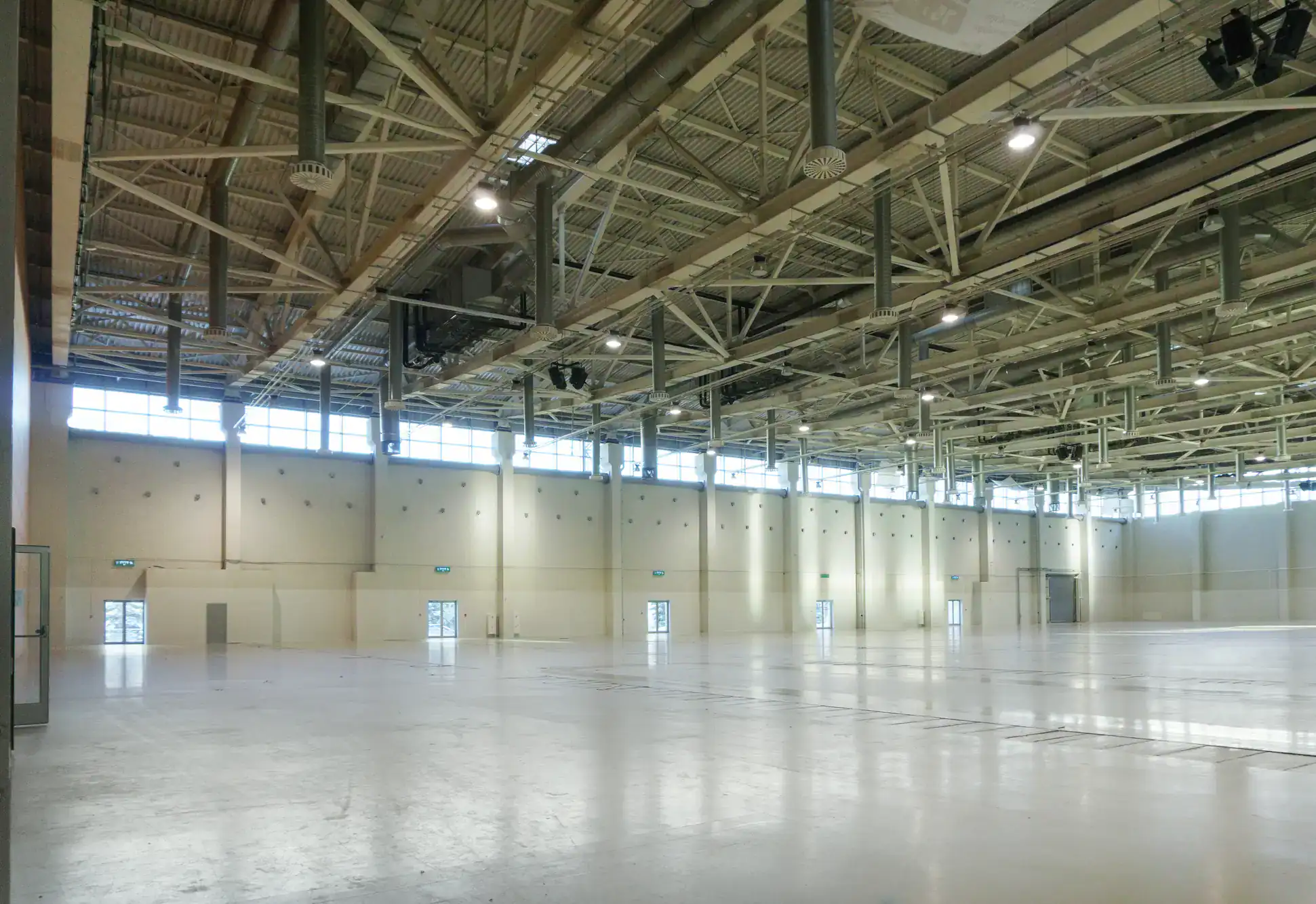
The result is a floor that handles what your hangar actually throws at it: avgas, jet fuel, hydraulic fluid, heavy ground support equipment, and freeze-thaw cycles every winter. It reflects light across the full surface so spills and FOD are visible immediately. It stays bonded, stays clean, and stays compliant without you thinking about it again for years.
We’re based in Bohemia, NY about 30 miles west of Riverhead on I-495 and have been installing resinous flooring systems for over 30 years. Our founder and president, Danny Harmer, has been doing this work with his own hands for more than four decades. That’s not a marketing line. It means the person running this company has personally installed more floors than most competitors have quoted.
Every installer on our crew carries OSHA 40 certification, which matters when you’re working in commercial aviation facilities and industrial spaces like those at the Enterprise Park at Calverton. We’re factory-certified in Sherwin-Williams High Performance Flooring and Res Tech systems two of the more rigorous certifications available in this trade and hold BBB Accreditation. Most of our crew has been with us for over a decade, which means the person installing your floor in Riverhead has done this hundreds of times before, not dozens.
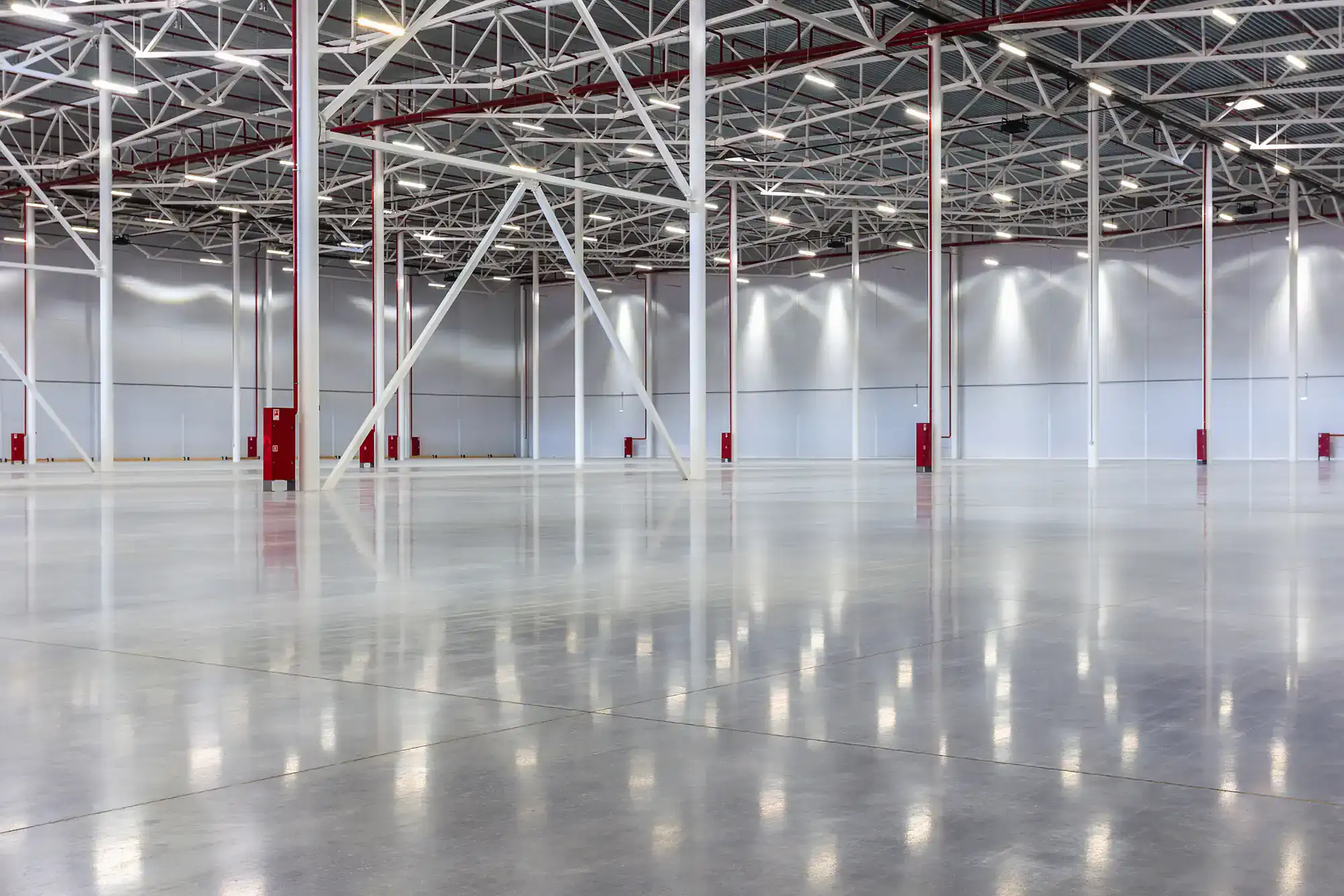
Every job starts with a concrete assessment. Before anything goes on the floor, the slab gets evaluated for moisture vapor transmission, existing cracks, spalling, and surface profile. In Riverhead’s coastal environment, skipping this step is one of the most reliable ways to end up with a delaminated floor inside of two years. If moisture is present and in this area, it often is we address it with a moisture mitigation primer before any coating goes down.
Once the slab is ready, the surface gets ground to the correct profile using diamond grinding equipment. This isn’t optional prep it’s what creates the mechanical bond that keeps the coating from lifting under load. After grinding, we repair any cracks or damaged areas before the system goes on. From there, it’s a multi-layer installation: primer, build coat, and topcoat, each given the time it needs to cure properly before the next layer goes down.
For Riverhead hangars where downtime is a real operational cost, polyaspartic systems are often the right call they cure fast enough to return aircraft to the floor within 24 hours. For facilities at EPCAL or larger MRO operations with heavier chemical exposure, a high-build epoxy system with a chemical-resistant Novolac layer may be the better fit. We match the system to what your specific facility actually needs, not default to whatever’s easiest to install.
Ready to get started?
Not every hangar in Riverhead has the same requirements, and the coating system should reflect that. A private hangar in Aquebogue storing a single-engine aircraft has different needs than a commercial maintenance bay at EPCAL handling larger aircraft and ground support equipment. The chemistry, the build thickness, and the topcoat all change based on what the floor is actually going to face.
For aviation facilities subject to NFPA 409 the fire code standard that governs floor surfaces in aircraft storage and servicing areas the coating system has to be noncombustible. This isn’t a preference; it’s a legal requirement that eliminates a wide range of standard commercial epoxy products. If your facility in Riverhead is subject to commercial building inspections or aviation certifications, this matters. We install NFPA 409-compliant systems and can speak to the requirement directly, which is more than most local contractors can say.
The non-slip topcoat we use on every aviation installation meets the National Flooring Safety Institute’s tested standards not just described as textured, but certified. In a working hangar where fuel spills are routine, that distinction is real. Whether you’re outfitting a new facility near the North Fork or restoring an existing slab that’s seen better days, the system we install here is engineered for what Long Island’s aviation environment actually delivers.
If your hangar is used for aircraft storage or servicing and falls under commercial building or fire code jurisdiction, then yes NFPA 409 applies. The standard requires that floor surfaces in aircraft storage and servicing areas be noncombustible, which rules out many standard epoxy and coating products that work fine in a garage or warehouse but don’t meet the threshold for aviation facilities.
For commercial hangar operators, FBO facilities, and industrial tenants at locations like the Enterprise Park at Calverton, this is a real compliance consideration not a technicality. If your facility in Riverhead is inspected by the fire marshal or is subject to aviation certification requirements, a non-compliant floor coating is a liability. We install systems specifically engineered to meet NFPA 409, and can walk you through what that means for your specific facility before any work begins.
Both are legitimate options for hangar floors, but they perform differently and suit different situations. Epoxy systems are thicker, build up more easily in multiple layers, and are often the better choice for heavy industrial environments with significant chemical exposure like an MRO bay that sees Skydrol, jet fuel, and solvents on a daily basis. They take longer to cure, typically several days before you can put aircraft back on the floor.
Polyaspartic systems cure much faster often within 24 hours which makes them a strong choice for private hangars or operational facilities where extended downtime isn’t practical. They’re also more UV-stable than standard epoxy, which matters in hangars with significant natural light exposure. For most Riverhead hangar owners, the right answer depends on how the facility is used, what chemicals it sees, and how much downtime you can realistically absorb. That’s the conversation to have before choosing a system.
It’s one of the most significant factors in whether a coating lasts or fails early, and it’s specific to this area in a way that contractors from outside Long Island often underestimate. Riverhead sits between the Long Island Sound and Peconic Bay, with ambient humidity regularly exceeding 70% and spiking higher on summer evenings. Large concrete hangar slabs especially older ones absorb and hold moisture, and that moisture creates vapor pressure that pushes upward through the slab.
When a coating is applied over a slab with undetected moisture vapor transmission, it loses its bond over time. You’ll see bubbling, delamination, and peeling sometimes within the first year. The fix isn’t to recoat; it’s to grind everything off and start over, which is expensive and avoidable. Proper moisture assessment before installation, followed by a moisture mitigation primer when needed, is what prevents this. In Riverhead’s environment, it’s not an optional step it’s the foundation everything else depends on.
The timeline depends on the system and the size of the space, but a realistic breakdown looks like this: concrete grinding and prep typically takes one day for a standard private hangar, longer for larger commercial spaces. After prep, each coating layer needs time to cure before the next one goes down. For a full epoxy system, you’re generally looking at three to five days from start to finish before the floor is ready for aircraft. Polyaspartic systems compress that window significantly in many cases, the floor is ready within 24 hours of the final coat.
Weather and season can affect the timeline in Riverhead specifically. High summer humidity may require additional drying time between coats or the use of a moisture mitigation primer, which adds a step. Cold winter temperatures affect epoxy cure chemistry more than polyaspartic, which is one reason polyaspartic is sometimes the smarter choice for fall and early spring installations on Long Island. The schedule gets laid out clearly before work starts so you know exactly when your hangar is back in service.
Aviation environments expose floors to a specific set of chemicals that standard commercial coatings aren’t built to handle. The main ones are Skydrol hydraulic fluid, aviation gasoline (avgas), jet fuel (Jet-A), engine oil, lubricants, and industrial cleaning solvents. Of these, Skydrol is the most aggressive it’s a phosphate ester-based fluid that will degrade many standard epoxy systems over time, causing discoloration, softening, and eventual failure of the coating surface.
The systems we install are specifically formulated for aviation chemical resistance. For facilities with heavy Skydrol exposure maintenance bays, MRO operations, or commercial hangars with regular hydraulic system work a Novolac epoxy system offers the highest level of chemical resistance available in a floor coating. For private hangars with lighter chemical exposure, a standard aviation-grade epoxy or polyaspartic system handles avgas, oil, and fuel without issue. We match the system to your actual chemical environment, not apply it as a one-size-fits-all solution.
The condition of the existing surface determines the answer, and there’s no way to know without actually looking at it. If the current coating is peeling, bubbling, or delaminating in sections, those areas have to come off completely recoating over a failing surface just buries the problem and guarantees the new coating fails in the same spots. If the existing coating is intact and well-bonded, the surface may be able to be prepared with grinding and etching rather than full removal, which saves time and cost.
For older hangar slabs in Riverhead particularly facilities at or near EPCAL that have seen decades of industrial use concrete assessment often reveals cracking, spalling, or moisture-related damage beneath whatever coating is currently on the floor. These issues have to be addressed before any new system goes down, or the new coating inherits the same problems. A proper on-site evaluation gives you a clear picture of what the slab actually needs, what the right system is, and what the realistic timeline and cost look like before any commitment is made.