
Your cleaning staff stops fighting grout lines. Inspectors stop finding issues. Your maintenance budget stops bleeding from constant repairs and recoating.
Seamless medical-grade epoxy Riverhead, NY facilities are installing now eliminates the cracks, seams, and porous surfaces where bacteria multiply. That means you’re not just cleaning the surface—you’re actually keeping it clean. The antimicrobial additives built into the system restrict microorganism growth continuously, not just when you mop.
When you’re dealing with blood, bodily fluids, harsh disinfectants, and the daily wear of gurneys and equipment, you need flooring that doesn’t break down. These systems resist the chemicals you’re required to use without degrading. They meet ADA slip resistance requirements without needing abrasive additives that trap dirt. And because they’re applied as a single, monolithic surface, there’s nowhere for contamination to hide.
You get floors that support infection control protocols instead of working against them. That’s what changes.
We’ve been installing commercial and industrial flooring systems across Long Island for over 30 years. Every installer on our team is OSHA 40 certified, and most have been with us for over a decade—because we don’t treat floors like a commodity.
We’ve installed healthcare flooring in Riverhead, NY facilities and across the region, from small medical offices to large hospital renovations. We’ve worked in the White House kitchen. We’ve installed floors in Moscow and the Bahamas. The point isn’t to impress you—it’s to show you we understand what’s at stake when a floor has to meet federal standards and survive daily punishment.
Riverhead’s healthcare facilities—from physical therapy offices to dental practices to urgent care centers—need flooring that meets USDA, FDA, and OSHA requirements without constant maintenance. That’s what we install.
We start with moisture testing your concrete substrate. If moisture levels are too high, the best flooring system in the world will fail. We don’t skip this.
Next comes surface preparation—grinding, shot blasting, or diamond grinding depending on your existing floor condition. This creates the profile the epoxy needs to bond properly. We handle concrete repairs at this stage too, filling cracks and leveling uneven areas so you get a truly flat surface.
Then we apply the system in layers. First, a primer coat that penetrates and seals the concrete. Then the base coat with EPA-registered antimicrobial additives mixed throughout—not just sprayed on top. We add the texture you need for slip resistance: smooth for patient rooms, more aggressive for wet areas. Finally, a topcoat that provides chemical resistance and makes cleaning simple.
The entire process is designed around minimizing downtime. We coordinate with your facility schedule, work in phases if needed, and use low-VOC formulations so you’re not dealing with overwhelming fumes. Most installations cure enough for light foot traffic within 24 hours and full use within 72 hours.
You’re not guessing whether it’ll hold up. We’re installing systems we’ve proven in hospitals, surgical centers, and medical facilities that have been in service for years.
Ready to get started?
Sterile room floor coatings Riverhead medical facilities require aren’t just about looking clean—they’re about meeting specific federal standards. USDA and FDA regulations require smooth, durable, easily cleanable, and nonabsorbent surfaces. Our Hybriflex systems meet those requirements and contribute to LEED certification if that matters for your project.
The antimicrobial protection is EPA-registered and built into the entire floor thickness—160 mils thick, not a thin paint. When you’re using bleach, quaternary ammonium compounds, hydrogen peroxide, or other hospital-grade disinfectants multiple times daily, the floor has to withstand that chemical assault. These systems do.
Low-VOC healthcare coatings Riverhead, NY facilities are prioritizing now aren’t just about meeting environmental standards—they’re about protecting staff and patients from unnecessary chemical exposure during and after installation. Our 100% solid formulations cure without releasing the volatile organic compounds that traditional coatings emit.
The slip resistance comes from texture options that meet OSHA and ADA requirements without using grit additives that create cleaning problems. You can specify smooth finishes for corridors, pebbled textures for labs, or ribbed surfaces for areas with water exposure. All seamless. All cleanable with just detergent and water because the non-porous surface doesn’t absorb spills or harbor bacteria in microscopic pores.
Long Island’s healthcare renovation activity has increased significantly, with facilities updating infrastructure to meet current infection control standards. You’re not alone in recognizing that outdated tile floors with grout lines don’t cut it anymore.
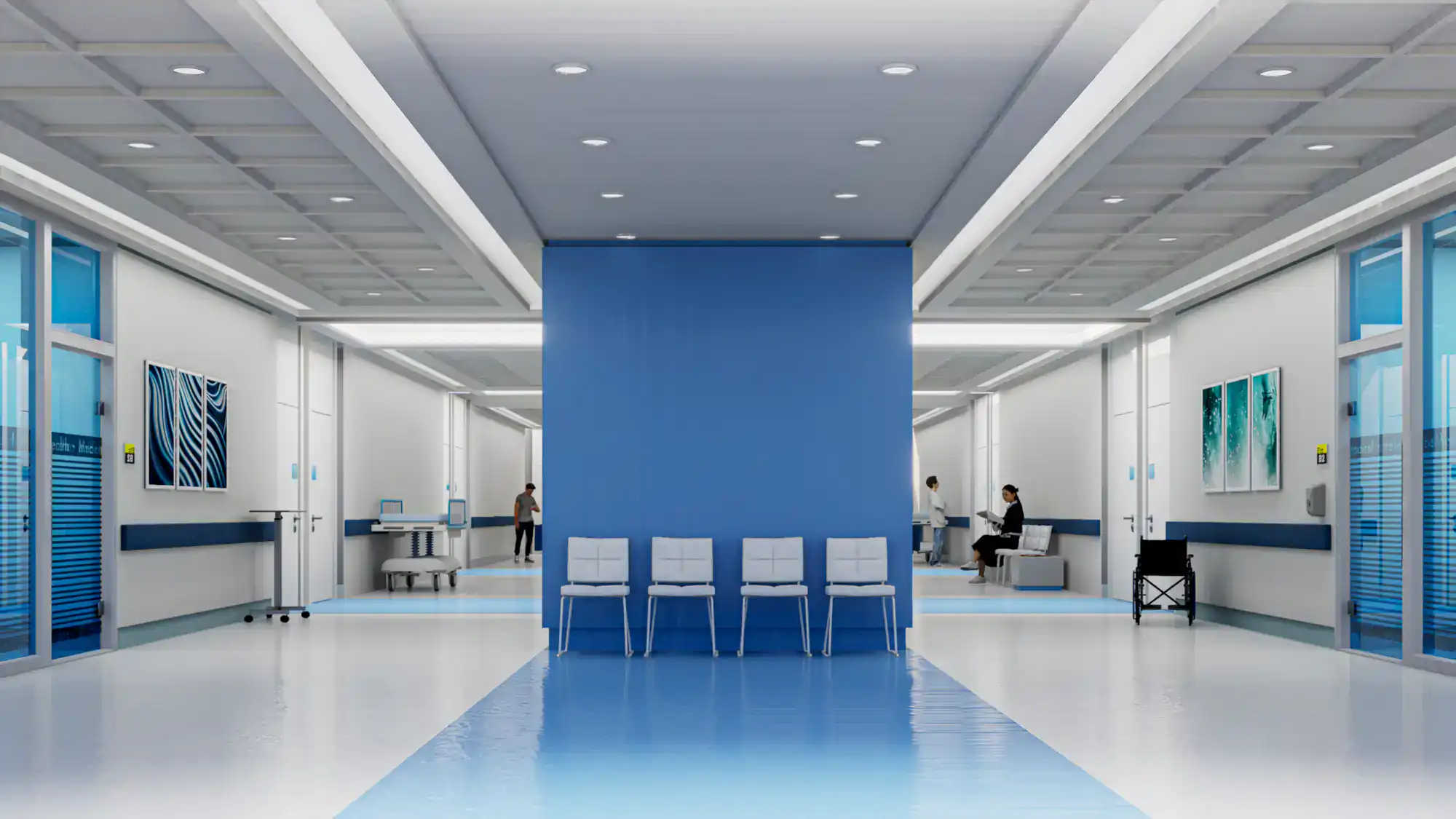
The antimicrobial additives are EPA-registered compounds mixed throughout the entire flooring system—not just applied to the surface. These additives restrict the growth of bacteria, fungi, mold, and other microorganisms on contact. When microbes land on the floor surface, the antimicrobial agents disrupt their cell walls and prevent reproduction.
This is different from just cleaning regularly. Cleaning removes contaminants temporarily, but between cleanings, microorganisms can multiply on traditional floors. Antimicrobial flooring provides continuous protection 24/7, even between cleaning cycles.
The seamless installation matters just as much. Tile floors with grout lines create thousands of tiny crevices where bacteria can colonize and survive even aggressive cleaning. Our systems eliminate those hiding spots entirely. You get a monolithic surface where contamination has nowhere to establish itself, and your cleaning protocols actually reach every square inch of floor.
USDA and FDA regulations for healthcare and food-related facilities require floors that are smooth, durable, easily cleanable, and nonabsorbent. Our epoxy systems meet all four criteria by design.
Smooth means no rough textures that trap soil or make cleaning difficult—even our slip-resistant textures are non-abrasive and cleanable. Durable means the floor withstands the physical abuse of equipment, carts, and foot traffic without cracking or degrading. At 160 mils thick, these systems handle impacts that would destroy tile or thin coatings.
Easily cleanable comes from the non-porous, seamless surface. You’re not scrubbing grout lines or dealing with absorbed stains. Detergent and water remove virtually everything because nothing penetrates the surface. Nonabsorbent means the floor doesn’t soak up spills, chemicals, or contaminants that could harbor bacteria or create odors.
The systems also meet CFIA standards, all OSHA requirements, and ADA guidelines. When inspectors review your facility, the flooring passes without issues.
Hospital disinfectants are deliberately harsh—they’re designed to kill everything. Bleach, quaternary ammonium compounds, phenolics, and hydrogen peroxide-based cleaners all attack surfaces chemically. Most flooring materials degrade under this constant chemical exposure.
Our systems are formulated specifically for this environment. The chemical resistance is built into the polymer structure, not added as an afterthought. We’ve tested these floors against the full range of EPA-registered disinfectants used in healthcare settings. They don’t discolor, soften, or break down.
This matters because once a floor’s protective layer is compromised, you’re looking at contamination risks, costly repairs, and potential regulatory violations. Traditional epoxy paints might be 3-5 mils thick and can be breached by harsh chemicals within months. Our systems are 160 mils thick with chemical resistance throughout the entire depth.
Blood and bodily fluids also don’t stain or penetrate these surfaces. You can clean up any spill completely without leaving contamination behind. That’s critical for operating rooms, emergency departments, and any area where exposure incidents occur.
Daily maintenance is simple—dust mop or vacuum to remove loose debris, then damp mop with a neutral pH cleaner or the disinfectant your protocols require. That’s it. No waxing, no sealing, no special treatments.
The seamless, non-porous surface means dirt and grime sit on top rather than working into cracks or being absorbed into the material. Your cleaning staff will spend less time on floors because they’re not fighting grout lines or trying to remove stains from porous surfaces.
Long-term, you might need to deep clean high-traffic areas occasionally with a floor scrubber, but you’re not looking at refinishing or recoating for years. The durability comes from the thickness and flexibility of the system—it doesn’t crack, peel, or wear through like thin coatings.
Most facilities find their maintenance costs drop significantly after installation because they’re spending less time cleaning, using fewer harsh chemicals, and not paying for frequent repairs. The floor just works, day after day, without demanding constant attention.
We coordinate the installation in phases to minimize disruption to your operations. Most facilities can’t shut down completely, so we work section by section, often during off-hours or weekends when patient traffic is lower.
The process requires the area to be empty during installation—we need access to the bare concrete. We can typically complete a standard room in 1-2 days depending on size and the system being installed. Larger areas like corridors might be done in segments with temporary barriers.
The low-VOC formulations we use mean you’re not dealing with overwhelming chemical odors that force you to close adjacent areas. There’s some smell during application, but it’s not the solvent-heavy fumes older epoxy systems produced. Most areas can handle light foot traffic within 24 hours and return to full use within 72 hours.
We handle all the prep work—moving equipment if needed, protecting walls and fixtures, and cleaning up completely when we’re done. You’re not left with a mess or a half-finished project. The goal is to get your floor installed correctly while keeping your facility functional.
Tile floors create thousands of grout lines—each one is a seam where bacteria, viruses, mold, and other contaminants can colonize. Grout is porous, absorbs liquids, and develops microscopic cracks over time. Even with aggressive cleaning, you can’t reach the microorganisms embedded in those spaces.
Healthcare-associated infections are a serious concern, and flooring plays a role in contamination control. Seamless floors eliminate the problem entirely by removing the seams. There’s nowhere for pathogens to hide and multiply between cleanings.
The monolithic surface also prevents moisture from seeping under the flooring material. Tile installations can develop problems underneath if moisture gets through grout lines, creating hidden mold growth that affects air quality and poses health risks. Seamless epoxy systems bond directly to the concrete substrate and don’t allow moisture penetration.
From a practical standpoint, seamless floors are also faster to clean. Your staff isn’t spending time scrubbing grout lines or dealing with discolored, stained grout that makes the facility look dirty even when it’s been cleaned. The floor looks as clean as it actually is, which matters for patient perception and regulatory inspections.