
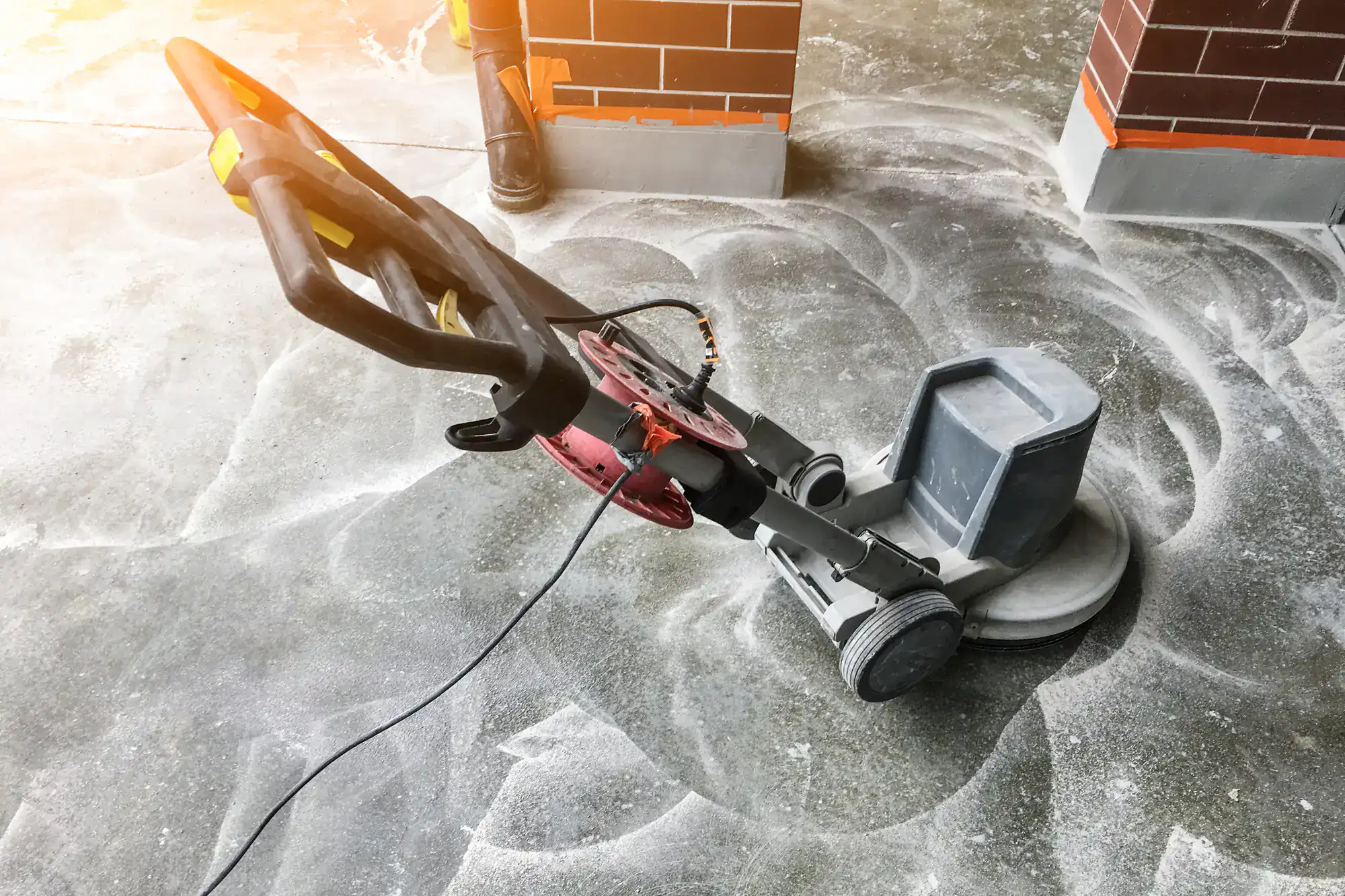
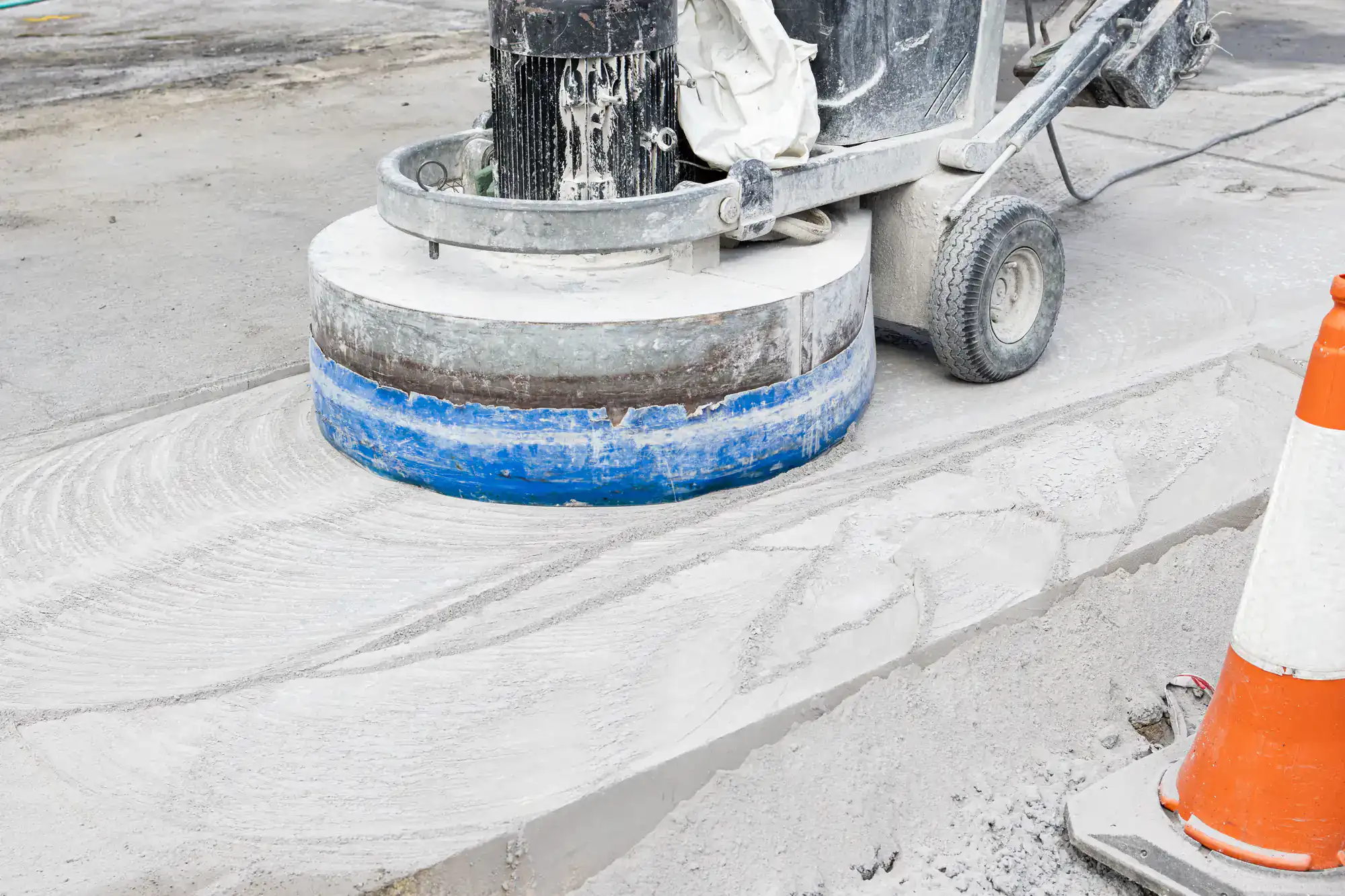
Riverhead isn’t your average Long Island town. You’ve got heavy industrial operations out at EPCAL, salt air rolling in off the Peconic Bay, and freeze-thaw cycles every winter that are genuinely hard on untreated concrete. A floor that isn’t properly densified doesn’t just look rough after a few seasons it dusts, it spalls, and it becomes a maintenance problem that costs more to fix than it would have to do right the first time.
Polished and densified concrete holds up to all of it. The densification process hardens the slab from the inside out by chemically reacting with the concrete itself, which means the surface resists moisture infiltration, freeze-thaw stress, and the kind of heavy traffic that forklifts and industrial cleaning equipment put on a floor every single day. For the warehouse and manufacturing tenants at Calverton, that’s not a nice-to-have it’s what separates a floor that lasts 20 years from one that starts failing after five.
For the retail showrooms expanding along Route 58, or the winery tasting rooms that draw visitors from across Long Island and beyond, the benefit is different but just as real. A properly polished floor is easy to clean, resistant to staining, and looks sharp without requiring wax, coatings, or constant maintenance. You get a surface that reflects well literally and visually without the ongoing cost of floor coverings that wear out, peel, or need replacing every few years.
Advanced Epoxy Flooring is owned and operated by Danny Harmer, who has been doing this work hands-on for more than 40 years. That’s not a company history that’s a person who has polished floors in new construction and in decades-old industrial slabs, in commercial kitchens and warehouse environments, in spaces that were easy and in spaces that required real problem-solving. Danny holds a Sherwin-Williams High Performance Flooring certification and a Res Tech certification, and in 1996 he completed flooring work at the White House kitchen a project that required meeting standards most commercial contractors never have to think about.
We’ve been serving Riverhead and the surrounding North Fork area for decades, and we’ve worked on everything from the older industrial facilities at EPCAL to the newer hospitality and retail spaces opening up along Route 25 and Route 58. When you hire us for a project in Riverhead whether that’s a facility out near the former Grumman site in Calverton, a restaurant in the downtown hamlet, or a showroom on Old Country Road Danny is the one on the floor. Not a subcontracted crew. Not someone who was hired because the owner didn’t want to make the drive out to eastern Suffolk County. The person who shows up for your walkthrough is the same person doing the work.
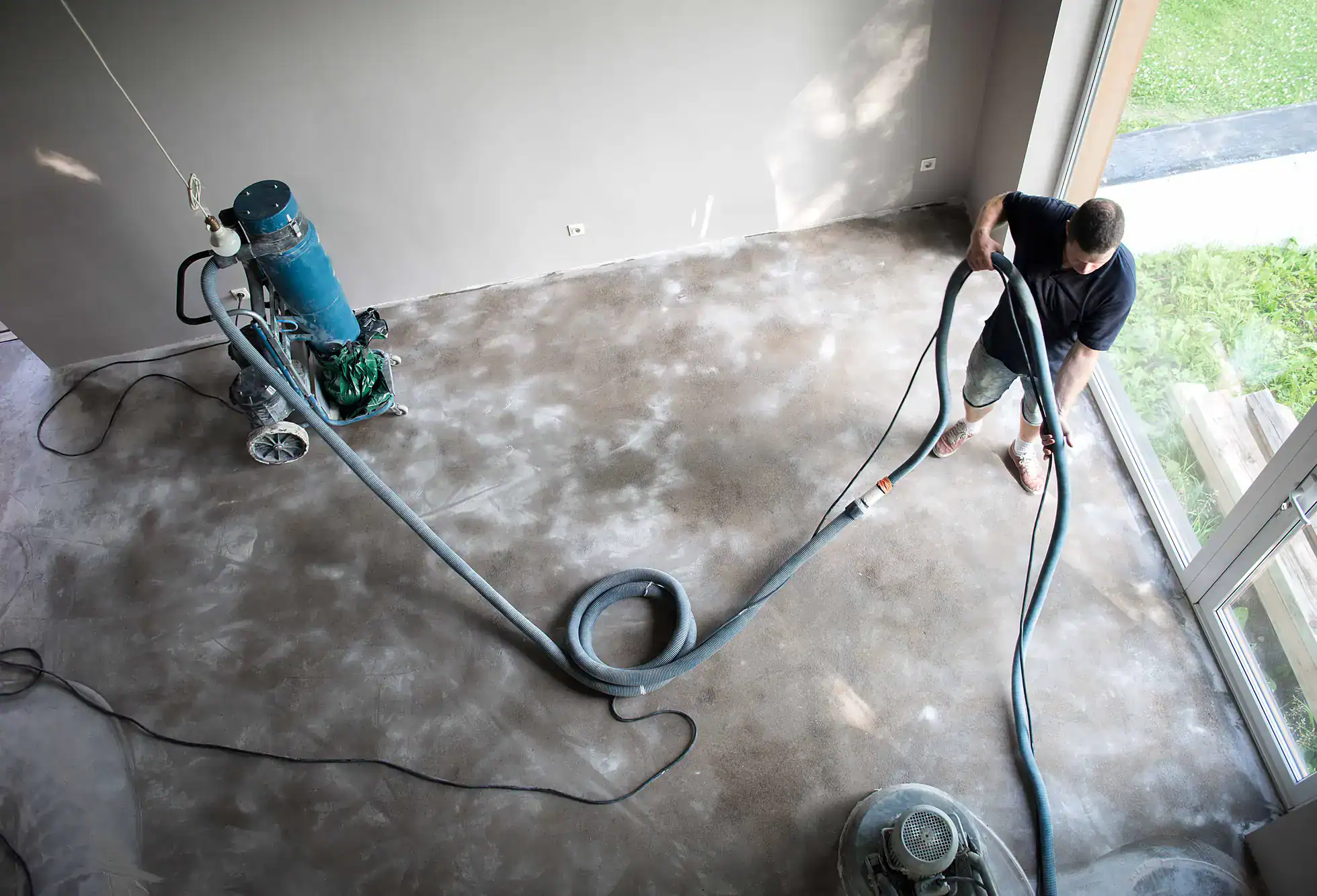
Every job starts with a slab assessment. Before any equipment gets on the floor, we evaluate the condition of your concrete its hardness, any existing coatings or sealers, surface irregularities, and whether there are areas that need grinding or leveling before polishing can begin. In Riverhead, this matters more than people expect. A lot of the industrial buildings out at EPCAL have older slabs that have been through decades of heavy use, and the agricultural and hospitality conversions along Route 25 often have concrete that was poured without any finishing intent. Knowing what we’re working with upfront determines the right diamond grit sequence, the right densifier, and the right finish class for your specific environment.
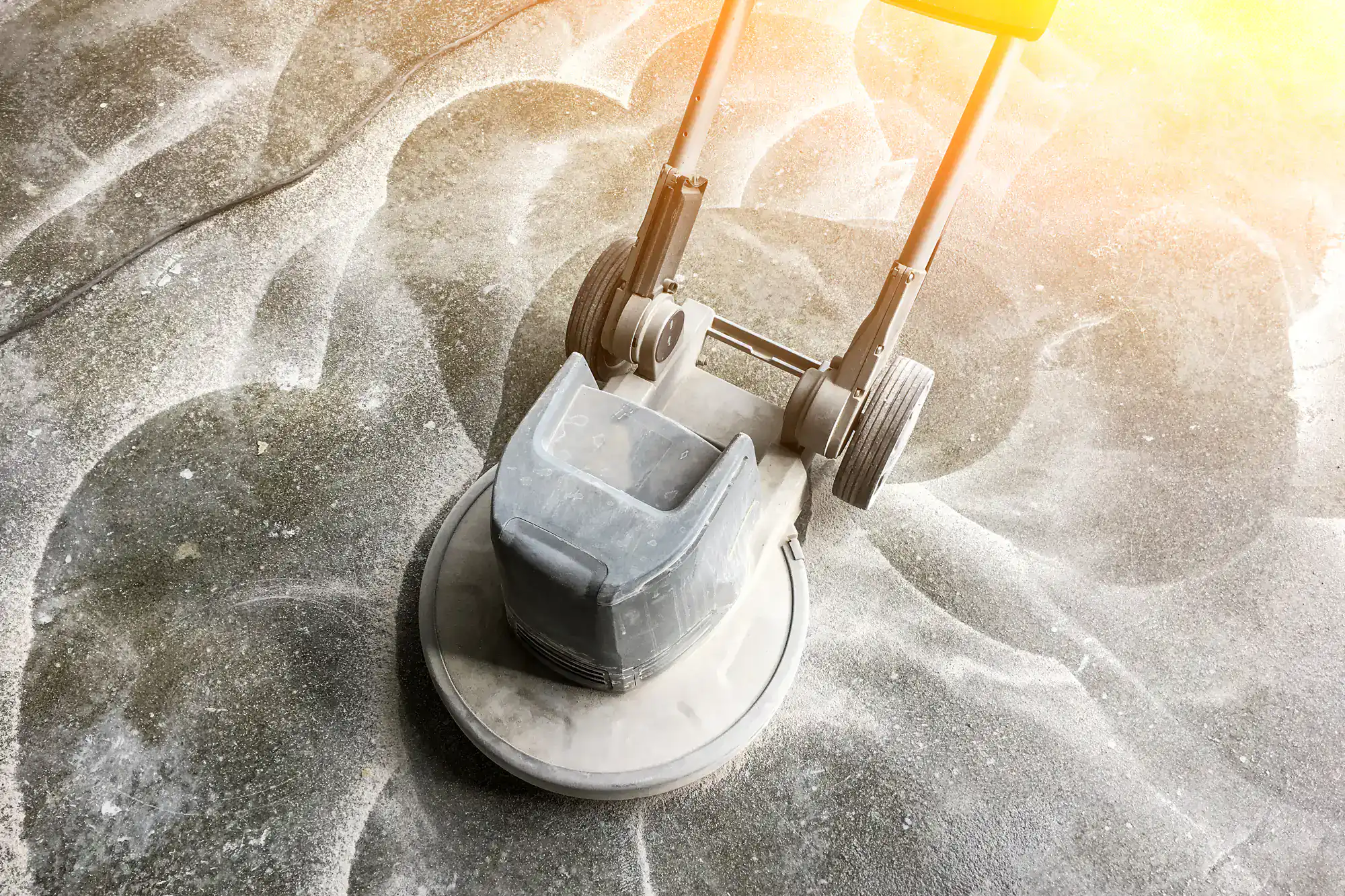
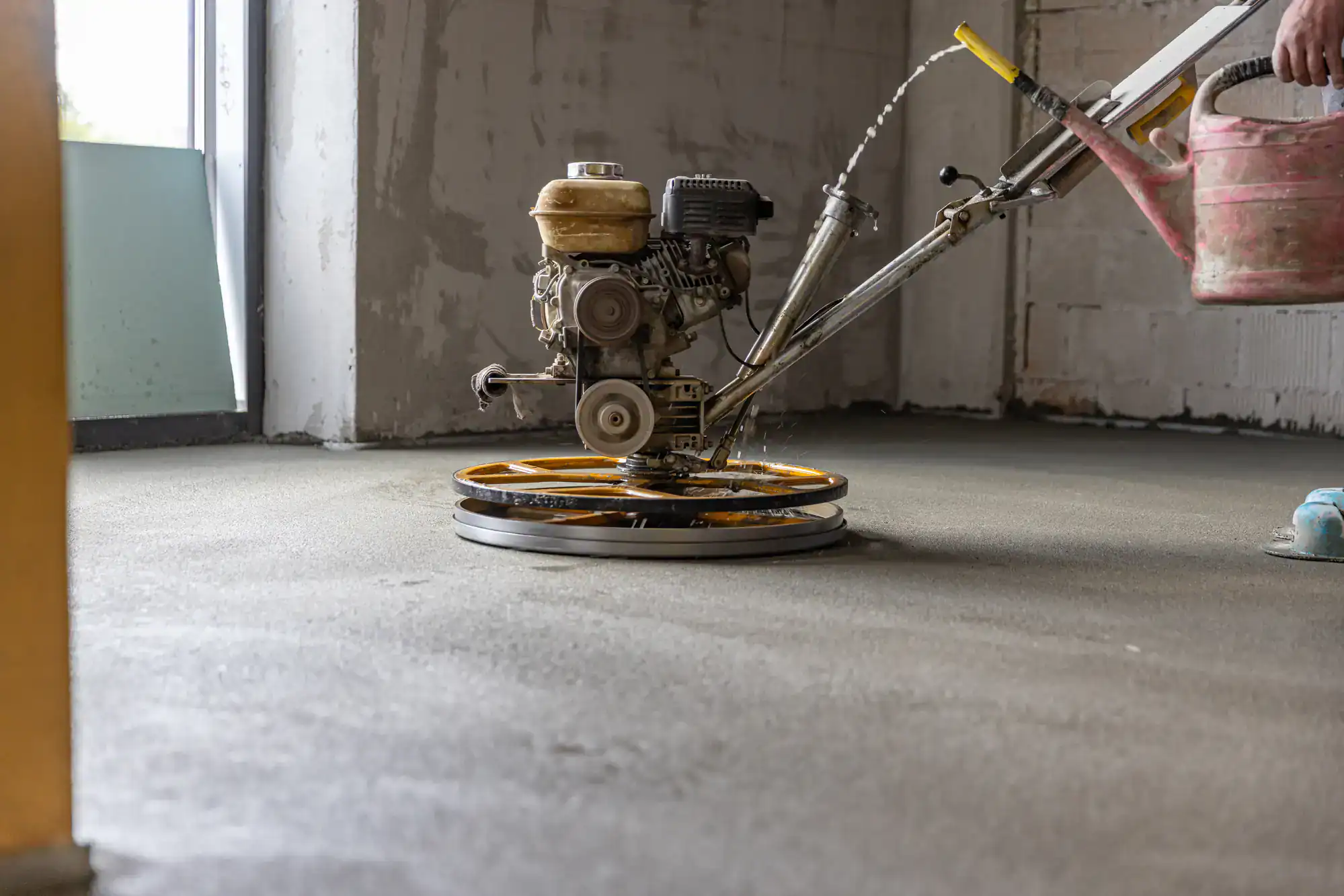
Once the slab is assessed, the process moves through a sequence of diamond grinding passes starting coarser to remove surface irregularities and open the concrete, then progressing through finer grits as the finish develops. We apply lithium silicate densifier at the right stage to harden the surface from within. After that, the final polishing passes bring the floor to the specified finish level, whether that’s a low-sheen satin for an industrial environment or a high-gloss finish for a retail or showroom space.
If your project is part of a larger permitted renovation in Riverhead commercial permits typically take two to four weeks through the Town of Riverhead Building Department the flooring work is usually scheduled toward the end of the construction sequence, after other trades are done and before final occupancy. That timing matters, and it’s something worth planning for early so the floor doesn’t become the bottleneck on your opening date.
Ready to get started?
The range of commercial environments in Riverhead is wider than most towns on Long Island. You’ve got large-format industrial and manufacturing floors at the Enterprise Park at Calverton, healthcare and medical office spaces near Peconic Bay Medical Center, retail and showroom spaces on the Route 58 corridor, and hospitality venues tasting rooms, farm-to-table restaurants, event spaces spread across the North Fork wine country. Each of these environments has different requirements, and the flooring system needs to match them.
For industrial and warehouse environments, the priority is a densified, dust-free surface that can handle forklift traffic, heavy loads, and industrial cleaning without degrading. For retail showrooms and hospitality spaces, the focus shifts to finish class the level of gloss and aggregate exposure that fits the aesthetic of the space while still delivering the durability and cleanability the environment demands. For healthcare and food service environments, the seamless, non-porous surface of properly polished concrete is often specifically required to meet Suffolk County Health Department standards for cleanability.
Every project we complete includes a full slab assessment, the appropriate diamond grit progression for the specific concrete condition, lithium silicate densification, and finishing to the specified class. We offer stain guard application for hospitality and food-service environments where wine, food, and cleaning chemicals are a daily reality. The finish is verified not estimated so you know exactly what you’re getting before the equipment leaves your facility.
Yes and it’s actually one of the more common scenarios we work with in the Riverhead area. The industrial buildings at the Enterprise Park at Calverton include some slabs that were poured during the Grumman era and have been through decades of heavy manufacturing and aviation-related use. These floors have often been subjected to oil contamination, heavy machinery loads, and surface damage that makes them look like poor candidates for polishing at first glance.
The reality is that most of these slabs can be polished successfully, but the process requires a thorough assessment upfront. Contaminated areas may need grinding to remove the affected surface layer before densification can work properly. Surface irregularities may require leveling passes before the finish sequence begins. The key is knowing what we’re working with before we start not finding out mid-project. That’s why the slab assessment is the first step on every job, and it’s especially important for older industrial concrete like what’s common out at Calverton.
Properly densified concrete holds up significantly better than untreated or improperly finished concrete under freeze-thaw conditions. Here’s why: when water infiltrates a concrete surface and then freezes, it expands and creates internal pressure that causes spalling and surface deterioration over time. Densification closes the surface pores by filling them with calcium silicate hydrate a byproduct of the chemical reaction between the densifier and the concrete which dramatically reduces water infiltration and the damage that follows.
For Riverhead facilities with loading docks, warehouse entrances, or any unheated sections that experience real temperature swings through a Long Island winter, this matters a lot. A floor that hasn’t been properly densified will show visible surface deterioration within a few seasons. A floor that has been densified correctly can handle those cycles for decades without significant surface degradation. The salt air environment near the Peconic Bay adds another layer of stress on untreated concrete, and densification addresses that too.
It’s actually one of the better fits for that type of space. The North Fork wine country draws visitors who expect a certain aesthetic something that feels authentic to the agricultural setting, not generic or corporate. Polished concrete with a lower aggregate exposure and a satin finish delivers exactly that: a natural, textured surface that photographs well and feels right for a tasting room or farm-to-table environment without looking like a big-box retail floor.
From a practical standpoint, polished concrete in a food and beverage environment needs stain guard protection applied after the polishing process. Wine, food oils, and the cleaning chemicals used in commercial kitchens and dining areas can penetrate an unsealed polished surface and cause permanent staining. With the right stain guard, the floor is easy to clean, resistant to those contaminants, and doesn’t require waxing or recoating on any regular schedule. For a hospitality business that’s open to the public most of the year, that reduction in ongoing maintenance cost adds up quickly.
The timeline depends on the square footage, the condition of the slab, and the finish class you’re targeting. A straightforward commercial floor in good condition say, a retail space on Old Country Road or a restaurant in the downtown Riverhead hamlet can typically be completed in one to three days. A large industrial floor at EPCAL with older concrete that needs grinding and leveling before polishing can take longer, sometimes a week or more depending on the scope.
The more relevant question for most business owners is whether the work can be scheduled around operations. In most cases, yes. Concrete polishing can be done in sections, allowing you to keep part of the space functional while work progresses. For businesses that simply can’t afford daytime downtime a medical office near Peconic Bay Medical Center, a retail store during peak season evening and weekend scheduling is something worth discussing upfront. The goal is to get the floor done without the floor becoming a bigger disruption than it needs to be.
They’re fundamentally different systems, and the right choice depends on what your floor actually needs to do. Polished concrete is a mechanical process you’re grinding and refining the concrete itself to create a hardened, densified surface. There’s no coating on top that can peel, delaminate, or wear through. The finish is the floor. That makes it a strong choice for high-traffic environments like warehouses, showrooms, and hospitality spaces where longevity and low maintenance are the priority.
Epoxy coatings sit on top of the concrete surface and provide a protective layer that can be formulated for specific chemical resistance, slip resistance, or color. They’re a better fit for environments where the concrete itself is in poor condition, where a specific color or texture is required, or where chemical exposure industrial solvents, heavy oils, certain cleaning agents is severe enough that a topical barrier is needed. For many Riverhead commercial and industrial environments, the right answer is actually a combination: polished and densified concrete as the base, with a targeted coating or sealer applied where the specific use demands it.
For commercial and industrial projects in the Riverhead area, concrete polishing typically ranges from around $3 to $8 per square foot for standard work, with more complex projects older slabs requiring significant grinding, larger industrial floors at Calverton, or high-gloss showroom finishes requiring additional polishing passes running toward the higher end of that range or beyond depending on scope and conditions.
The variables that move the number most are slab condition, square footage, and finish class. A large, flat, well-poured warehouse floor is faster and more straightforward to polish than a smaller space with an older, contaminated, or uneven slab. For Riverhead specifically, the older industrial slabs common to the EPCAL area and the converted agricultural buildings along Route 25 tend to require more preparation work upfront, which affects the overall cost. The most accurate way to get a real number is a site visit and slab assessment that’s where the actual condition of your concrete gets evaluated, and where a specific scope and price can be put together based on what the floor actually needs.