
If you’ve been running a kitchen in Riverhead long enough, you already know what a failing floor looks like. Cracked quarry tile with grout lines that no cleaning crew can fully sanitize. Epoxy that started peeling six months after installation. A Suffolk County health inspector circling the floor with a clipboard. None of that is bad luck it’s what happens when the wrong contractor installs the wrong system without ever testing the slab underneath.
Riverhead sits between Long Island Sound to the north and Peconic Bay to the south. That dual coastal exposure means concrete slabs throughout this town in the downtown restaurants near the Long Island Aquarium, in the food service operations along Route 25, in the converted agricultural buildings out toward Jamesport and Aquebogue carry elevated moisture vapor that most contractors never bother to measure. When moisture isn’t properly managed before a coating goes down, the floor fails. It’s that straightforward.
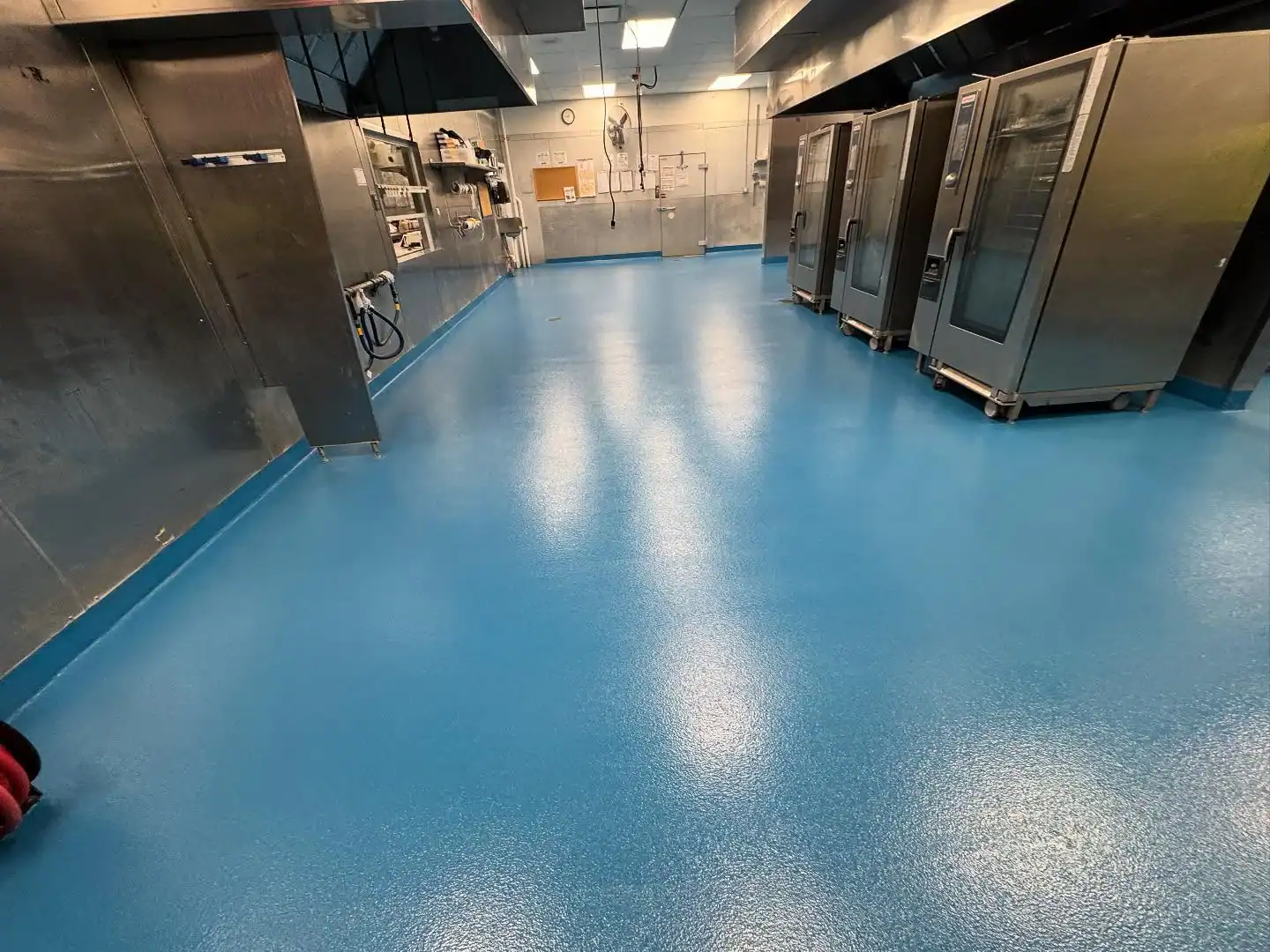
What you get with a properly installed commercial kitchen floor in Riverhead is a surface that passes inspection, holds up under daily punishment, and doesn’t require you to shut the kitchen down again in two years. For the operators on the North Fork gateway corridor who need the kitchen ready before the spring tourism surge hits, that kind of reliability isn’t a luxury it’s the whole point.
We’ve been installing commercial and industrial floors for 35 years and we started specifically because too many floors were failing for reasons that had nothing to do with luck. Bad surface prep. Skipped moisture tests. Rushed cure times. Those aren’t mysteries. They’re shortcuts, and they’re what separates a floor that lasts a decade from one that starts peeling before the season ends.
We hold Sherwin-Williams High Performance Flooring Applicator Training Program certification and Res Tech certification two independent manufacturer credentials that most contractors in this market simply don’t have. That’s not a marketing angle. It means the people installing your floor have been trained on the full system: concrete assessment, surface preparation, primers, build coats, topcoats, and application methods.
For Riverhead operators whether you’re running a restaurant near Tanger Outlets, managing a food processing operation in Calverton, or preparing a kitchen for Suffolk County’s plan review process you’re working with a Suffolk County-based contractor who understands this area’s conditions from direct experience. We’ve installed floors in the downtown Riverhead restaurants, the North Fork agricultural facilities, and the seasonal hospitality kitchens that define the East End’s economy. We know what Riverhead’s coastal environment does to concrete, and we know how to build a floor that stands up to it.
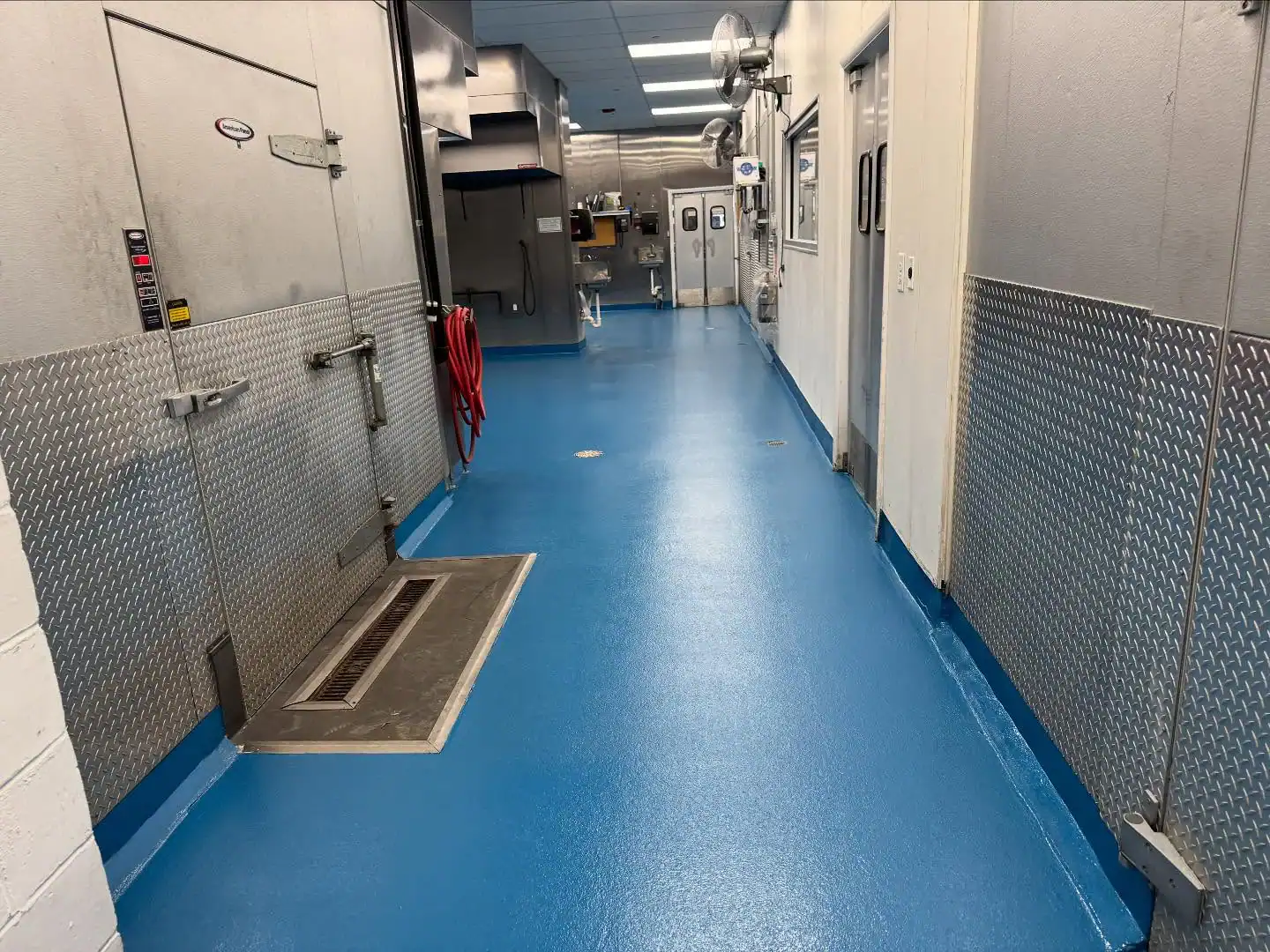
Before any coating touches your floor, we test the slab for moisture. This is the step most contractors skip, and it’s the reason most early failures happen. In Riverhead’s coastal environment with Sound and Bay exposure on both sides of town moisture vapor transmission is a real variable that has to be measured, not assumed away. If the numbers are too high and the coating goes down anyway, the floor will delaminate. Testing first isn’t optional here.
Once the slab is assessed, we grind the concrete to the correct surface profile for adhesion. Cracks and voids are filled, uneven areas are leveled, and the substrate is fully prepared before the first coat is applied. For Riverhead’s older commercial buildings including the historic structures in the downtown hamlet and the converted farm buildings along the North Fork corridor this preparation work is often more involved than it looks on the surface, and it’s what determines whether the coating bonds for years or fails in months.
From there, we build the system up in layers: base coat, build coats matched to your kitchen’s specific demands, and a slip-resistant topcoat. The cure time between each layer is respected not rushed. If you’re working within the renovation window between fall harvest season and the spring East End tourism surge, we plan the timeline around your operation, not the other way around. Fast-cure systems are available where turnaround is critical, with return to light service in hours and full commercial use within 24 to 36 hours.
Ready to get started?
Not every area of a commercial kitchen needs the same floor. The zone around your fryers and steam equipment takes thermal shock that a standard epoxy coating isn’t designed to handle that’s where cementitious urethane mortar systems belong. Walk-in coolers need moisture-tolerant formulations that bond correctly to cold, damp concrete. Prep areas and dish rooms need chemical-resistant build coats that hold up to the commercial sanitizers used in Suffolk County food service operations. Getting this wrong means the floor fails in the hardest-working zones first.
For the food processing operations in Calverton and the agricultural prep kitchens out toward Jamesport and Aquebogue, the requirements go further FDA food contact standards, resistance to acidic cleaning agents, and surfaces that can handle rolling equipment and high-volume foot traffic without breaking down. The East End’s farm-to-table and winery kitchen operations face their own specific demands: grape must, high-pressure washing, and the seasonal cycle of peak-use summers followed by off-season closures. We match each environment with a system designed for what it actually faces, not a single product applied everywhere regardless of conditions.
Every installation we complete is designed to meet Suffolk County Sanitary Code Article 13’s “easily cleanable” standard the specific requirement that Suffolk County’s Food Protection Division enforces during inspections. If your operation requires a plan review through the county’s food establishment permitting process, the floor system we install will be one that holds up to that review, not one that creates a problem during it.
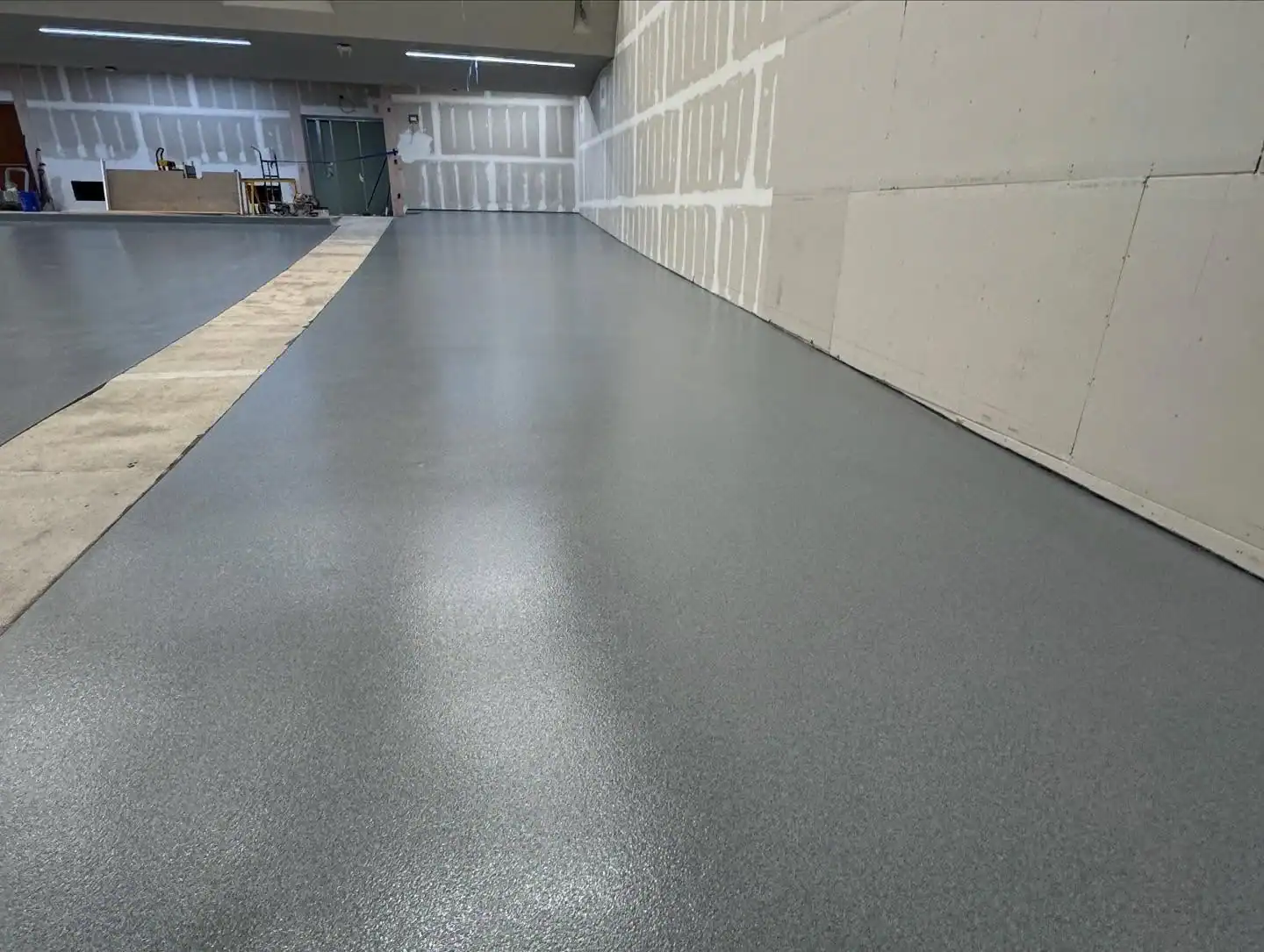
Suffolk County’s Sanitary Code Article 13 requires that floors in commercial food service areas be smooth, non-porous, non-absorbent, and “easily cleanable” meaning residue can be completely removed by normal cleaning methods. That standard is enforced by the Suffolk County Department of Health Services Food Protection Division, which reviews floor materials and finishes as part of the plan review process required for new or renovated food establishments.
In practical terms, cracked tile, deteriorating grout, pitted concrete, and failed epoxy coatings don’t meet this definition. They can’t be fully sanitized, and they’re the kind of surfaces that generate citations during routine inspections. A seamless, food-grade epoxy system installed over a properly prepared slab is specifically designed to satisfy Article 13 and to hold up to the cleaning protocols that commercial kitchens in Riverhead use daily. If you’re going through the county’s plan review process, having the right floor system documented before you submit saves significant back-and-forth.
The most common cause of early epoxy failure in Riverhead is moisture vapor transmission from the concrete slab. Riverhead sits between Long Island Sound to the north and Peconic Bay to the south, and that dual coastal exposure means concrete throughout the town carries moisture loads that many inland markets don’t see at the same level. When a contractor skips moisture testing and applies a coating over a slab with high vapor transmission, the moisture pushes up through the concrete and breaks the bond between the coating and the substrate. The floor delaminates, bubbles, or peels sometimes within months.
The fix isn’t a better topcoat. It’s testing the slab before anything goes down, selecting a system appropriate for the moisture conditions present, and giving each layer the cure time it needs. That’s the process. Contractors who skip the testing step because it adds time to the job are the reason so many Riverhead operators have already paid for a floor that failed early and are now looking for someone to do it correctly the second time.
A properly installed commercial kitchen floor correct surface preparation, moisture testing, appropriate system selection, and full cure time between coats should last 10 to 20 years under normal commercial kitchen conditions. The range depends on the intensity of use, the cleaning chemicals applied, and whether the floor gets the basic maintenance it needs over time. High-volume kitchens running heavy equipment and aggressive sanitizers will put more wear on a floor than a lower-volume prep kitchen.
What shortens that lifespan dramatically is installation shortcuts. Skipped moisture testing, inadequate surface grinding, rushed cure times, or the wrong system for the environment can cut a floor’s useful life down to two or three years sometimes less. For Riverhead operators who are planning around the East End’s seasonal tourism cycle, that distinction matters. A floor that fails in year two means another installation, another closure, and another round of lost revenue during a season you can’t afford to miss. Done right the first time, the floor is simply not something you think about again for a long time.
Yes and for most Riverhead operators, minimizing downtime is the whole conversation. We use fast-cure polyaspartic topcoat systems that allow return to light service in hours and full commercial use within 24 to 36 hours in most cases. For kitchens that can’t go dark during the week, we schedule installations overnight or on weekends. Larger kitchens can often be done in phases, keeping part of the operation running while sections are completed in sequence.
The key is planning the work around your actual schedule, not a generic timeline. If you’re working within the renovation window between the end of the North Fork harvest season and the beginning of the spring East End tourism surge, that window is real and workable it just needs to be planned in advance. The worst-case scenario is trying to schedule a kitchen floor installation in July when every food service operation in Riverhead is running at full capacity. Getting ahead of that is the smarter move, and it’s a conversation worth having before the busy season closes in.
Epoxy is the right choice for most commercial kitchen areas prep zones, dish rooms, dry storage, and general traffic areas where the floor needs to be seamless, chemical-resistant, and easy to sanitize. It bonds well to properly prepared concrete, holds up to commercial cleaning chemicals, and can be built up in layers to achieve the right thickness and surface profile for a food service environment.
Cementitious urethane mortar is the better choice for areas that take thermal shock directly around fryers, ovens, steamers, and dishwasher discharge zones where hot water and steam hit the floor repeatedly. Standard epoxy can crack or delaminate under those temperature swings over time. Urethane mortar is designed for exactly that condition. For Riverhead kitchens in the North Fork wine country corridor that deal with acidic cleaning agents and high-pressure washing, urethane systems also offer superior chemical resistance. In most full commercial kitchens, the right answer is both epoxy in the general areas and urethane in the high-heat zones with the system selection made based on what each area of your specific kitchen actually faces.
In most cases, yes. The Town of Riverhead’s Building Department requires permits for commercial interior renovations, and floor replacement in a food service establishment typically falls within that scope. Beyond the building permit, if your kitchen is a licensed food establishment, Suffolk County’s Food Protection Division requires a plan review for new or renovated food establishments and floor materials and finishes are evaluated as part of that review. Submitting plans with a non-compliant floor system can result in permit denial or conditional approval that delays your opening or renovation timeline.
The practical advice is to get the permitting question answered early before the installation is scheduled, not after. Knowing what the county’s plan review will require for your specific type of operation means the floor system can be selected and documented to satisfy that review from the start. For operators near the Food Protection Division’s offices at 360 Yaphank Avenue, this process is local and navigable. It’s not a reason to delay the project it’s just a step that needs to be in the right order so it doesn’t create a problem on the back end.