
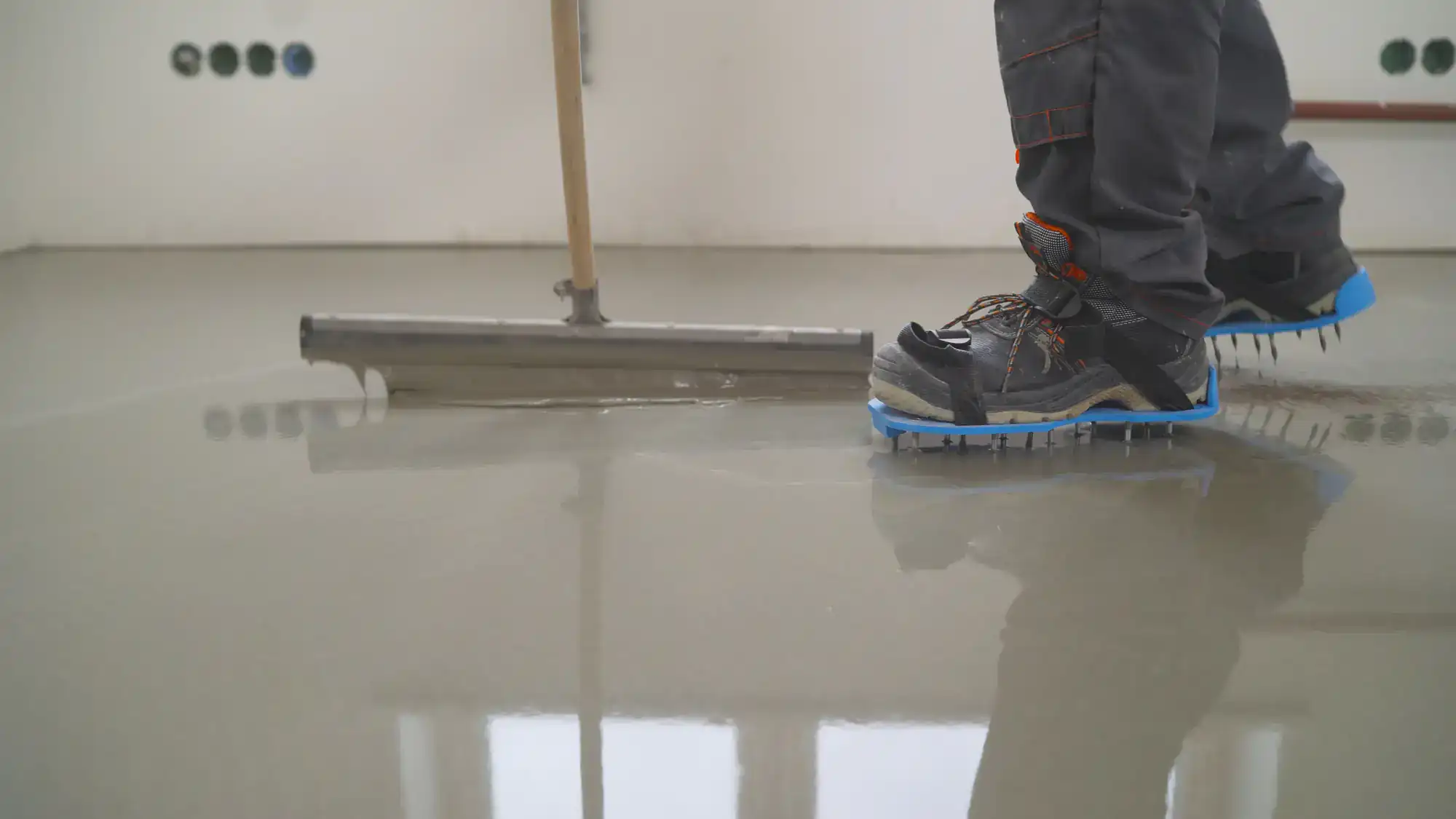
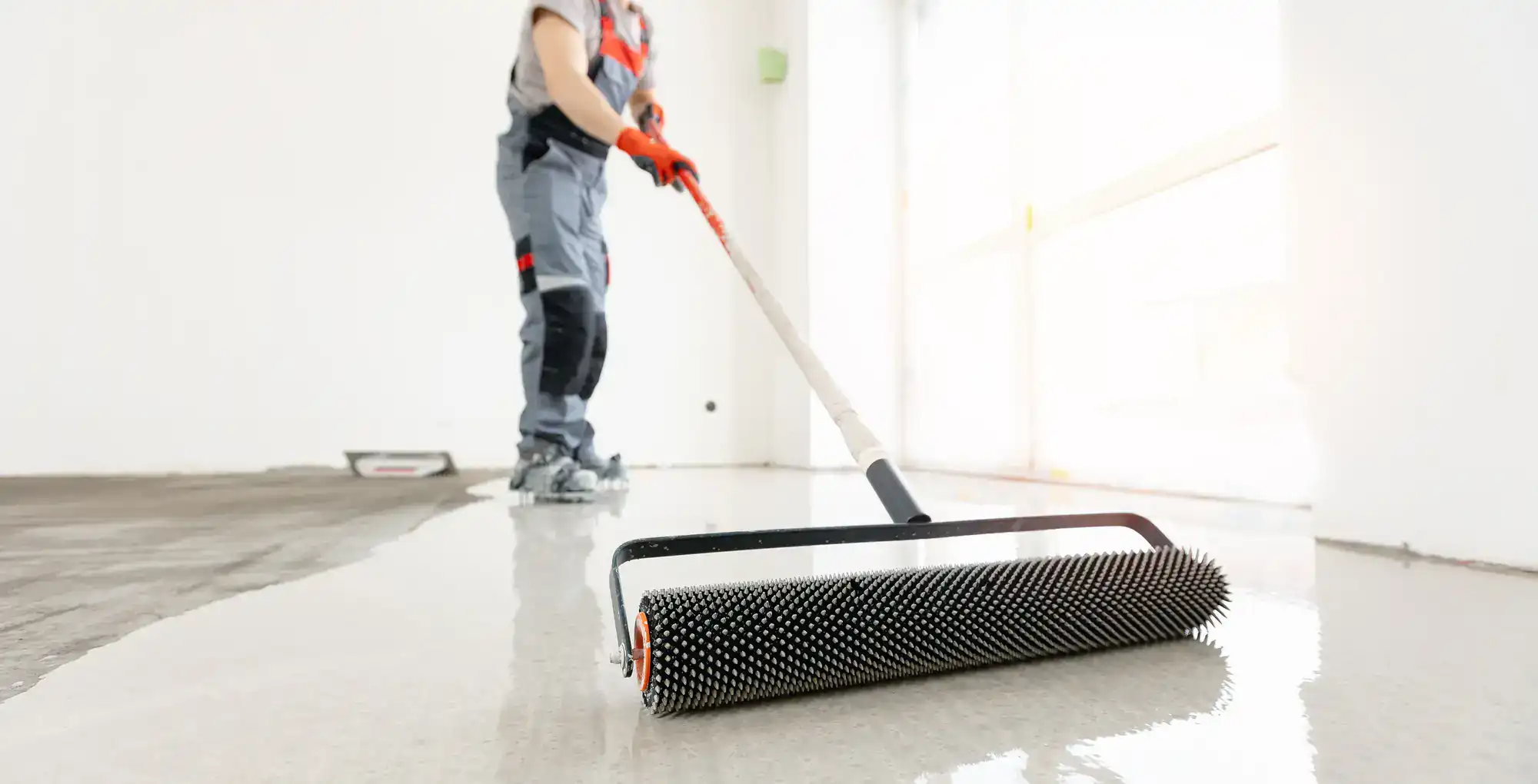
If your tile is cracking, your vinyl plank is lifting, or your doors are dragging, the floor underneath is telling you something. Self leveling underlayment is how you fix the root cause not just the symptom. Done right, it gives you a flat, stable surface that your final flooring can actually bond to and perform on long-term.
Riverhead’s coastal environment creates conditions that most contractors don’t account for. The town sits at the mouth of the Peconic River, and between the Long Island Sound to the north and Peconic Bay to the south, moisture vapor moving through concrete slabs here is a real and constant issue. A self leveling pour that skips moisture testing in this climate isn’t a floor it’s a delamination waiting to happen.
The freeze-thaw cycles Long Island sees every winter make things worse. Water gets into hairline cracks during a thaw, freezes, expands, and widens those cracks season after season. By the time you’re noticing the unevenness in your Riverhead building, the slab has usually been working against you for years. Getting it corrected properly with the right product, the right prep, and a crew that tests before they pour means you’re not dealing with the same problem again in two years.
We’ve been installing floors since 1996 nearly three decades of working on slabs across Long Island and well beyond. Our president and CEO, Danny Harmer, has over 40 years of personal installation experience. That’s not a marketing number it’s the reason our crew knows the difference between a surface irregularity and a structural problem before a single bag of material gets mixed.
Our team is OSHA 40-certified, factory-trained in advanced cementitious systems, and holds an A+ rating with the Better Business Bureau. Most of our crew has been with us for over a decade which matters when you’re hiring someone to work in a county government building off East Main Street in Riverhead or a commercial space along Route 58.
We’re based in Bohemia, a direct I-495 drive from Riverhead. Suffolk County is home territory for our crew. We’ve worked in the buildings here, we understand what Riverhead’s coastal climate does to concrete, and we’re not treating your job like a road trip.
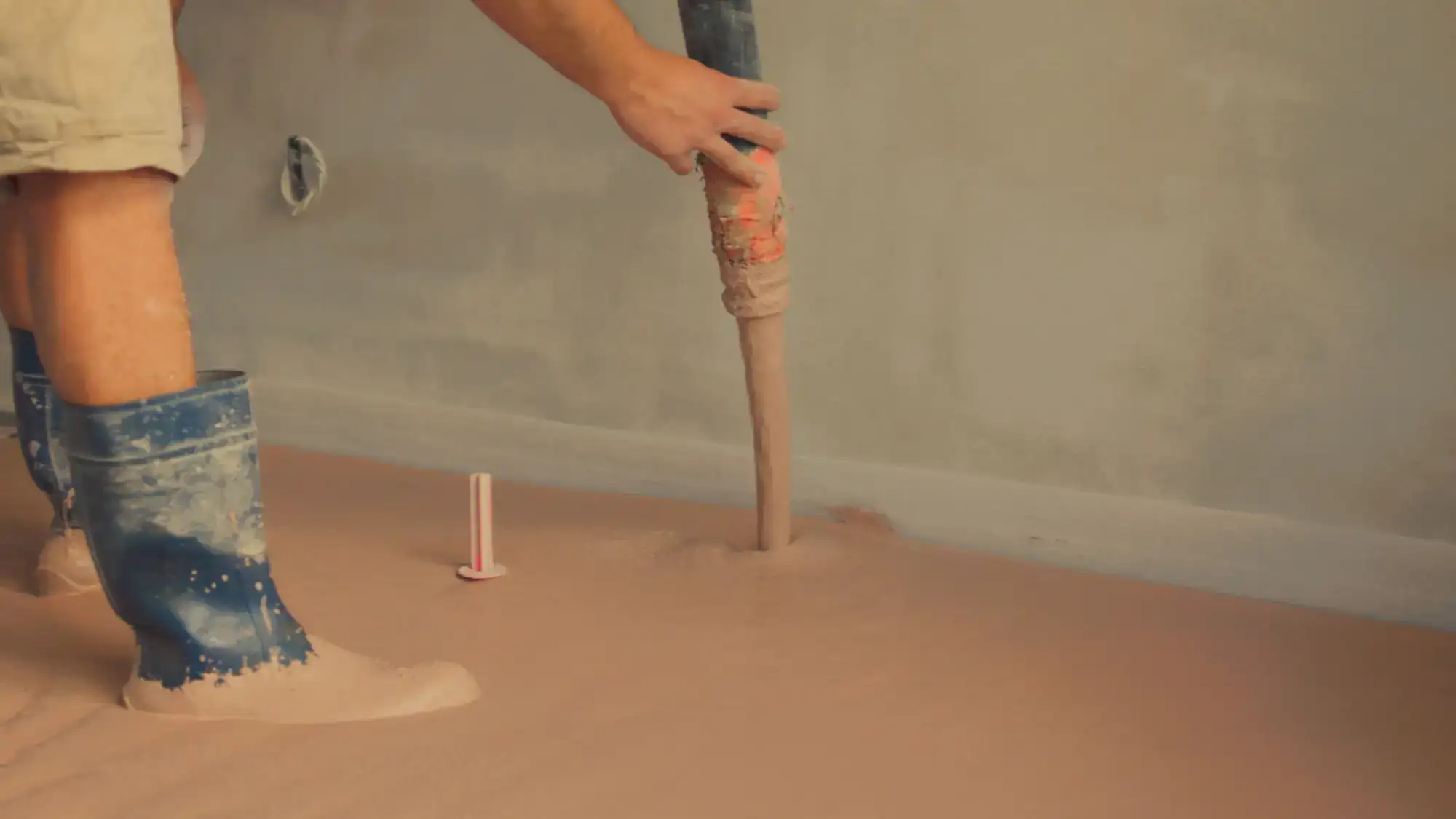
The first thing that happens on any self leveling job is moisture testing not a visual check, not a guess. We test to ASTM F2170 standards, which means measuring relative humidity inside the slab itself. In Riverhead’s coastal environment, where sandy Long Island soil and a high water table can push moisture vapor through concrete year-round, this step isn’t optional. The slab has to read below 80% RH and below 5 lbs. per 1,000 square feet per 24 hours before anything goes down. If it doesn’t pass, the pour doesn’t happen until it does.
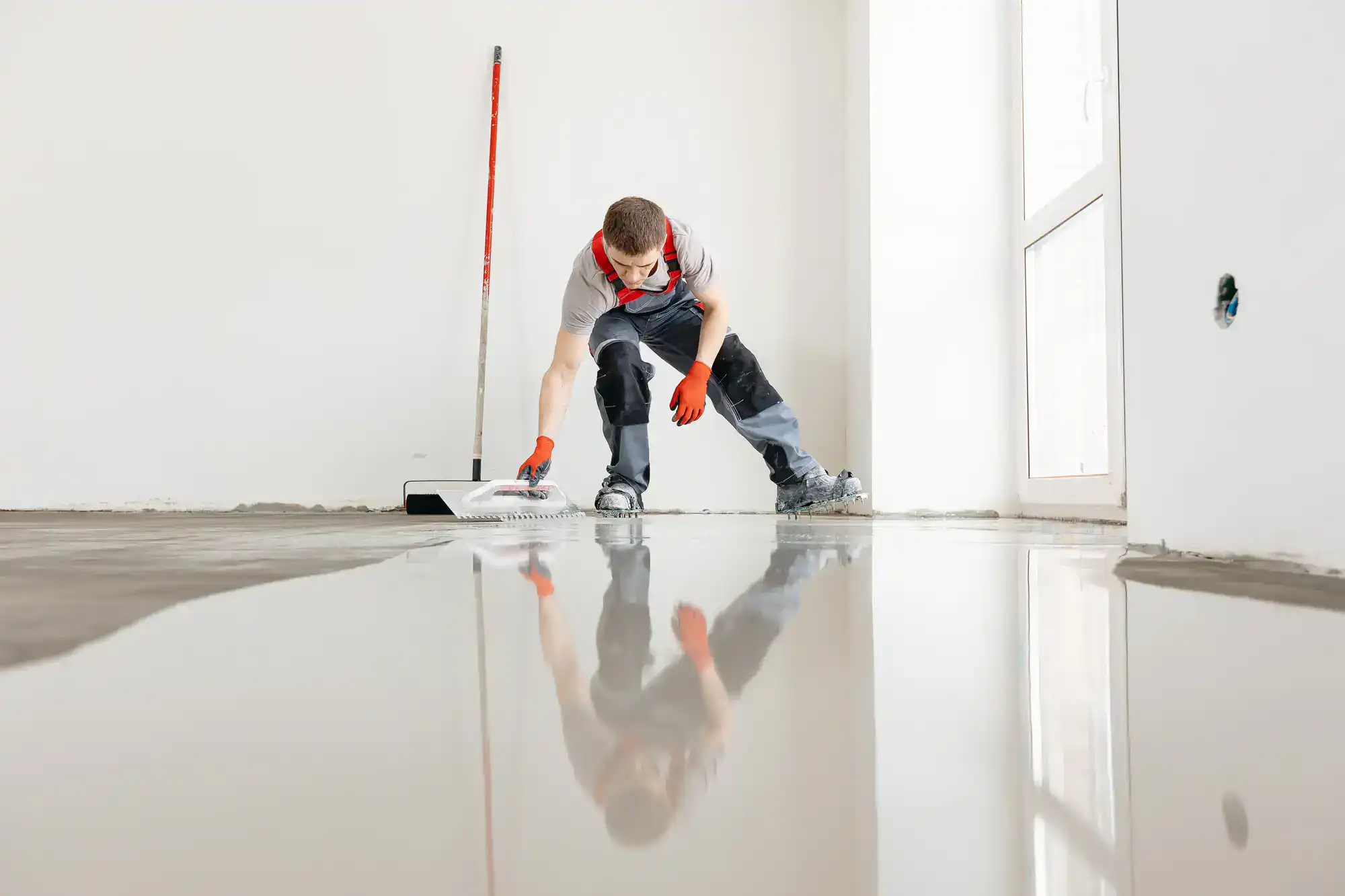
Once the slab clears moisture testing, the surface gets prepared cleaned, profiled, and primed so the underlayment has something to actually bond to. Then comes the pour. The self leveling material we use is a high-strength, cement-based, polymer-modified compound with high flow characteristics. It can be installed from a quarter inch up to over two inches neat, and up to five inches with aggregate added. That range matters because Riverhead’s older commercial buildings, historic downtown structures, and agricultural facilities often have slabs that need more than a skim coat and this system handles the full depth of correction in a single pour.
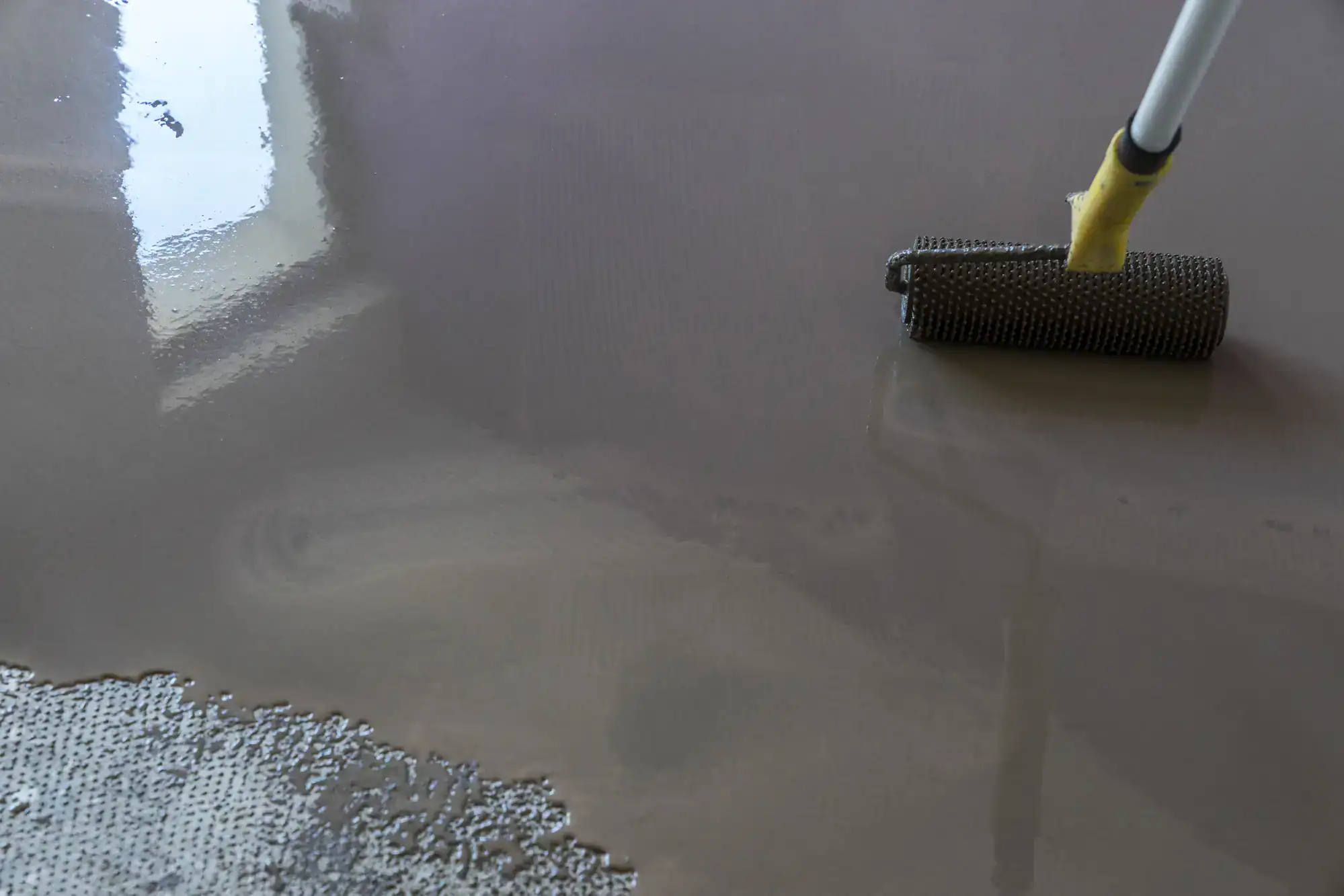
After the material is down, it self-levels across the surface and begins to cure. Foot traffic is typically possible within four to six hours. For commercial clients along the Route 58 corridor or in the downtown Riverhead core, that return-to-service timeline keeps renovation schedules on track without extended shutdowns.
Ready to get started?
The self leveling underlayment we install is a polymer-modified, cementitious compound engineered for low shrinkage, long working time, and superior flow. Those properties matter in Riverhead’s commercial and mixed-use buildings where you might be working in a 19th-century Main Street structure, a Calverton warehouse, or a new tenant buildout at Tanger Outlets because the substrate conditions vary widely and the system needs to perform across all of them.
This isn’t a product you pick up at a supply house and roll out. The application requires proper surface preparation, correct mixing ratios, and an understanding of how ambient temperature affects cure time which in Riverhead’s coastal climate means accounting for cold winters and humid summers in equal measure. The crew that shows up to your job has been doing this for years under the same supervision, with the same standards, every time.
For commercial clients in Suffolk County whether you’re renovating a tasting room on the North Fork wine trail, preparing a retail space for a new tenant, or refinishing a floor in a county facility near the courthouse our service includes ASTM-compliant moisture testing, full surface preparation, and the self leveling pour itself. We also handle the final floor coating if needed, which means one contractor, one point of accountability, and no gap between the prep work and the finish.
Yes but the condition of the existing slab determines how much prep work is needed before the pour. Older slabs in Riverhead’s downtown commercial buildings and agricultural structures often have surface contamination, existing coatings, or damage from decades of freeze-thaw cycling that has to be addressed first. If you just pour over a compromised surface without proper preparation, the underlayment won’t bond correctly and you’ll end up with delamination.
The process starts with a thorough assessment of the slab looking at surface condition, existing cracks, and any areas where the concrete has heaved or deteriorated. Once the surface is properly cleaned, profiled, and primed, the self leveling material bonds reliably to most existing concrete substrates, including older slabs. The key is doing the prep work correctly, not skipping it to save time. Slabs that have been sitting in Riverhead’s coastal environment for decades can have moisture and contamination issues that only show up when you actually test and inspect which is exactly why that step comes first.
The self leveling system we use can be installed from a quarter inch up to over two inches in a single neat pour and up to five inches when aggregate is added. That range covers the full spectrum of correction depth you’re likely to encounter in Riverhead’s commercial and residential building stock, from minor surface irregularities in a renovated retail space on Route 58 to more significant unevenness in an older agricultural or warehouse structure in Calverton.
This matters because some contractors are limited to thinner applications and will either require multiple pours or refer you to a separate contractor for deeper corrections. Having the full depth range covered in a single pour means fewer visits, less disruption, and a cleaner handoff to the final flooring installation. For commercial clients on a renovation timeline especially those working in spaces that need to be operational quickly that efficiency is a real advantage.
Moisture vapor transmission is the most common cause of self leveling underlayment failure, and it’s a bigger issue in Riverhead than in many inland Long Island communities. The town’s position at the mouth of the Peconic River, combined with Long Island’s sandy glacial soil and a relatively high water table, means that concrete slabs here are regularly dealing with moisture moving up from below even when the surface looks completely dry.
If you pour self leveling underlayment over a slab that hasn’t been tested and is transmitting too much moisture vapor, the material will bond initially but eventually lose adhesion. You’ll see bubbling, cracking, or full delamination and by the time that happens, the flooring on top is usually damaged too. The ASTM F2170 standard sets a threshold of below 80% relative humidity inside the slab and below 5 lbs. per 1,000 square feet per 24 hours for moisture vapor emission. We test to those standards on every job before anything gets poured. If the slab doesn’t pass, the work doesn’t start because a floor that fails in six months costs more to fix the second time than doing it right the first time would have.
Most self leveling underlayment systems allow light foot traffic within four to six hours of the pour. Heavy commercial traffic forklifts, equipment, high-volume foot traffic typically requires 24 to 48 hours depending on the product, the pour thickness, and the ambient conditions at the time of installation.
In Riverhead’s climate, ambient temperature plays a real role in cure time. Cold temperatures slow the curing process, which is why winter installations require attention to the space’s temperature before and during the pour. The self leveling material has minimum temperature requirements for proper curing, and if those conditions aren’t met, you can end up with a surface that looks set but hasn’t fully developed its strength. For commercial clients along the Route 58 corridor or in the downtown Riverhead core who need to minimize downtime, the four-to-six-hour return-to-foot-traffic window is one of the practical advantages of a professional-grade system over a slower-setting alternative.
Yes and for luxury vinyl plank specifically, a properly leveled subfloor isn’t optional. LVP is a rigid or semi-rigid material, and it telegraphs every imperfection in the surface beneath it. High spots cause the planks to rock and eventually crack at the locking joints. Low spots create hollow sounds underfoot and can cause the floor to flex in ways it wasn’t designed to handle. The general industry standard is that the subfloor should be flat to within three-sixteenths of an inch over a ten-foot span before LVP goes down.
In Riverhead’s residential market, where homeowners are increasingly renovating with large-format tile and luxury vinyl plank, this is a common issue especially in older homes where the original concrete slab or wood subfloor was never poured or built to modern flatness standards. Self leveling underlayment is the most reliable way to hit that flatness tolerance across a large area without grinding down high spots or patching individual low spots by hand. It’s faster, more consistent, and gives the final flooring a surface it can actually perform on over the long term.
Concrete patching the kind where you mix up a small batch of material and trowel it into a low spot works fine for isolated damage. But it’s a manual process, and getting a large area genuinely flat by hand is difficult even for experienced finishers. You end up with trowel marks, high edges around patches, and transitions between patched and unpatched areas that show through the final flooring.
Self leveling underlayment flows across the entire surface and finds its own level, which is how it gets its name. It fills low spots, bridges minor surface irregularities, and produces a consistently flat plane across the whole area in a single pour something you can’t replicate with hand-applied patching over a large square footage. For Riverhead commercial spaces where you’re covering hundreds or thousands of square feet before installing tile, polished concrete, or a resinous coating, self leveling is the right tool for the job. Patching has its place, but when the goal is a floor that’s flat enough for a demanding final surface, there’s no comparison between the two approaches.