
The most expensive floor you’ll ever install is the one you have to redo in 18 months. That happens more than it should not because epoxy is a bad product, but because the wrong contractor skipped the steps that actually matter. Moisture testing. Proper concrete prep. The right system for the right zone. When those steps get cut, the floor fails. And in a commercial kitchen, a failing floor isn’t just an inconvenience it’s a citation waiting to happen.
Valley Stream’s older commercial buildings along Sunrise Highway and Rockaway Avenue sit on some of the most moisture-saturated ground in Nassau County. That high water table pushes moisture vapor up through concrete slabs, and if a coating goes down over a slab that hasn’t been tested and properly prepared, delamination is almost inevitable. We’ve seen this happen repeatedly in Valley Stream’s commercial corridor it’s not theoretical, it’s what we encounter regularly on properties in this area.
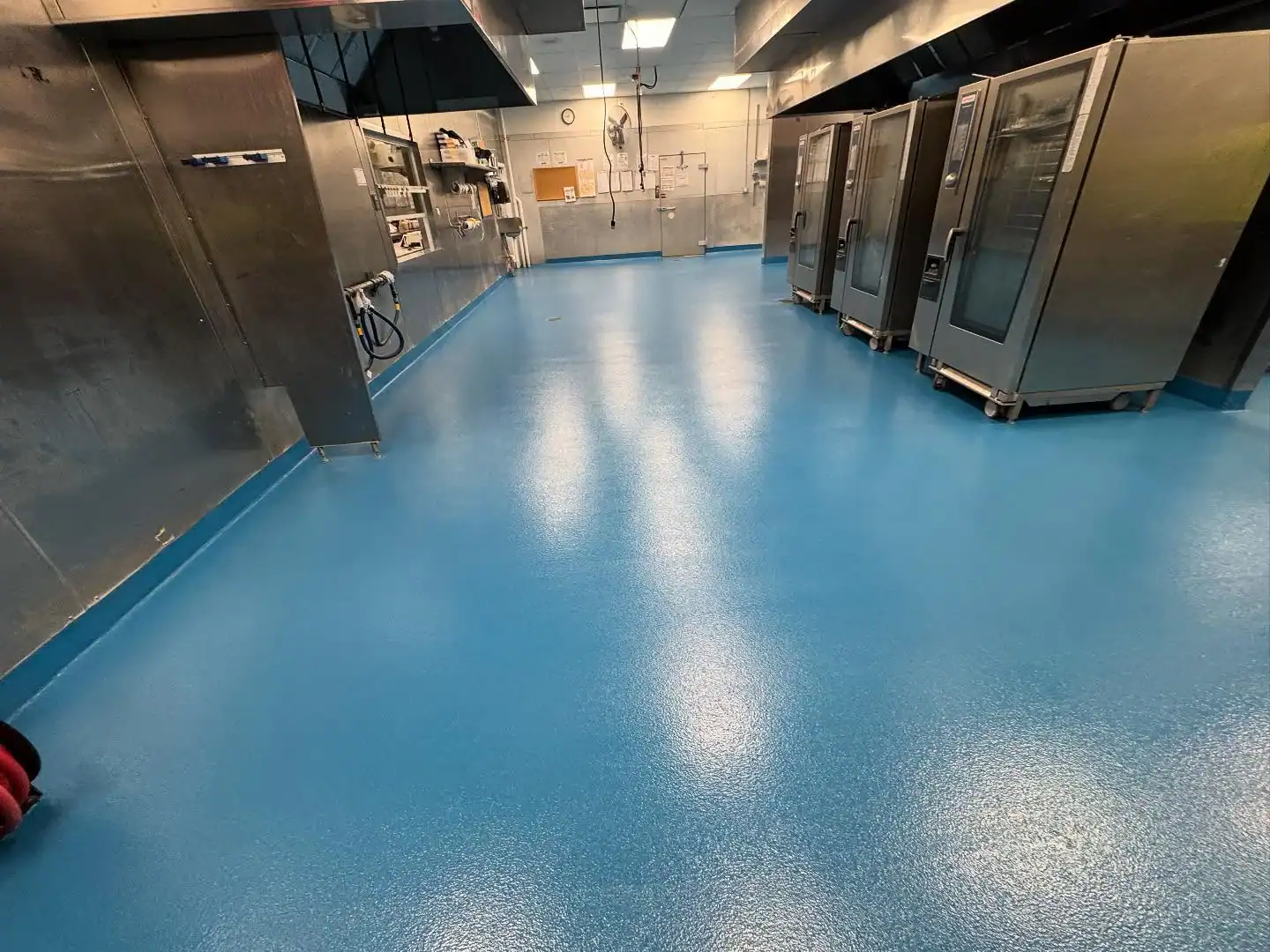
Get this right the first time and you’re looking at a seamless, non-porous surface that your cleaning crew can actually sanitize, that your Nassau County health inspector won’t flag, and that holds up under the thermal shock of a working kitchen for years not months. That’s the outcome. That’s what this is about.
We’ve been installing commercial and industrial floors across Long Island for 35 years, with extensive experience in Valley Stream’s specific building stock and conditions. That tenure means something concrete here it means understanding how Valley Stream’s older commercial properties along Sunrise Highway and Rockaway Avenue are constructed, knowing how Long Island’s coastal humidity affects cure chemistry, and recognizing the moisture conditions that come with this area’s high water table before a single coat ever goes down.
We hold Sherwin-Williams High Performance Flooring ATP certification and Res Tech certification dual manufacturer credentials that are rare in this market. These aren’t participation trophies. They represent factory-level training in concrete assessment, surface preparation, and system application. In a market where general contractors frequently claim commercial kitchen capability without any specialized training, that distinction matters.
We’re also BBB Accredited with no complaints on record which, for a 35-year-old company working in a service category where failures are common, tells you something real about how we operate.
It starts with concrete moisture testing every time, no exceptions. This is the step most contractors skip, and it’s the reason most commercial kitchen floors fail prematurely. In Valley Stream specifically, where older slabs in commercial buildings along Sunrise Highway and Rockaway Avenue are frequently moisture-compromised, this isn’t optional. If moisture vapor transmission is too high and a coating goes down anyway, you’re looking at delamination within months. Testing first tells you what you’re actually working with.
Once the slab is assessed, we grind the surface to the correct profile for maximum adhesion. Cracks get filled. Uneven areas get leveled. The prep work is the least glamorous part of the process, and it’s the part that determines everything about how long the floor lasts. Rushing it or skipping it is how you end up replacing a floor that should have lasted a decade.
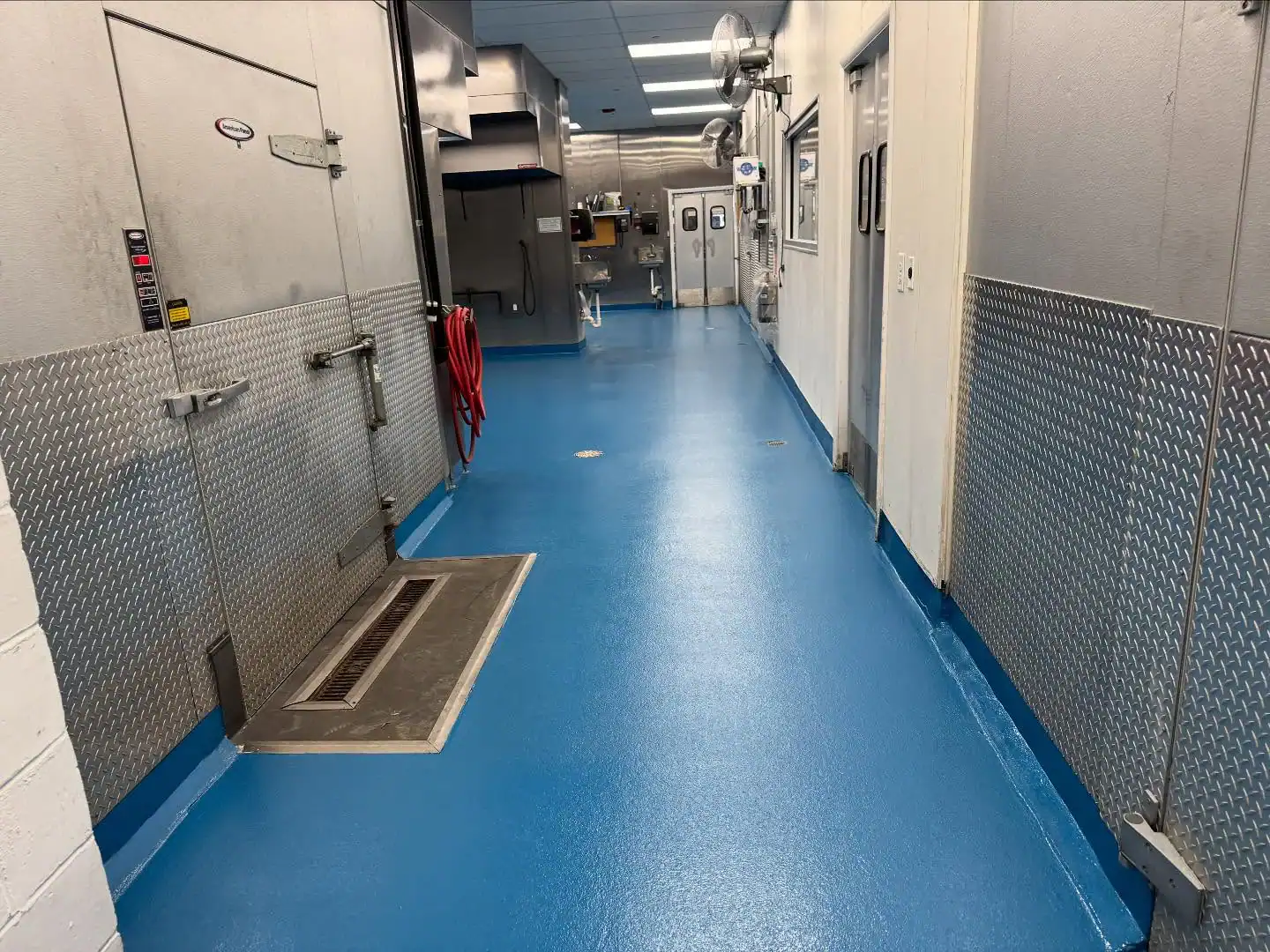
From there, we match the right system to the right zone. Urethane cement mortar where your fryers and steam equipment create thermal shock. Moisture-tolerant formulations in cooler areas. Chemical-resistant topcoats in prep and dishwashing zones. Each layer cures fully before the next one goes down no rushed timelines, no shortcuts. The result is a seamless, food-grade surface that meets Nassau County DOH requirements and holds up under the actual conditions of a working kitchen.
Ready to get started?
Commercial kitchen flooring in Valley Stream isn’t one product applied one way. The floor near your fryers behaves differently than the floor in your walk-in cooler, and both behave differently than the surface in your prep line. We select the system based on what that zone actually demands thermal shock resistance, moisture tolerance, chemical resistance not based on what’s easiest to install.
Every installation we complete includes proper coved base at floor-wall junctions, which is a specific requirement under the Nassau County Department of Health’s food service establishment standards. Grout lines, seams, and gaps are eliminated entirely. The finished surface is smooth, non-porous, and cleanable with the commercial-grade sanitizers your operation relies on which is exactly what New York State Sanitary Code Sub-part 14-1 requires for food preparation areas.
For Valley Stream restaurant operators running high-volume kitchens whether you’re on Rockaway Avenue, near Green Acres Mall, or anywhere along the Sunrise Highway corridor we offer flexible scheduling. Overnight and weekend installation is available, and fast-cure topcoat systems allow return to light service in hours. You shouldn’t have to lose three days of revenue to get a floor that’s built to last. We get in, do it right, and get your kitchen back to you.
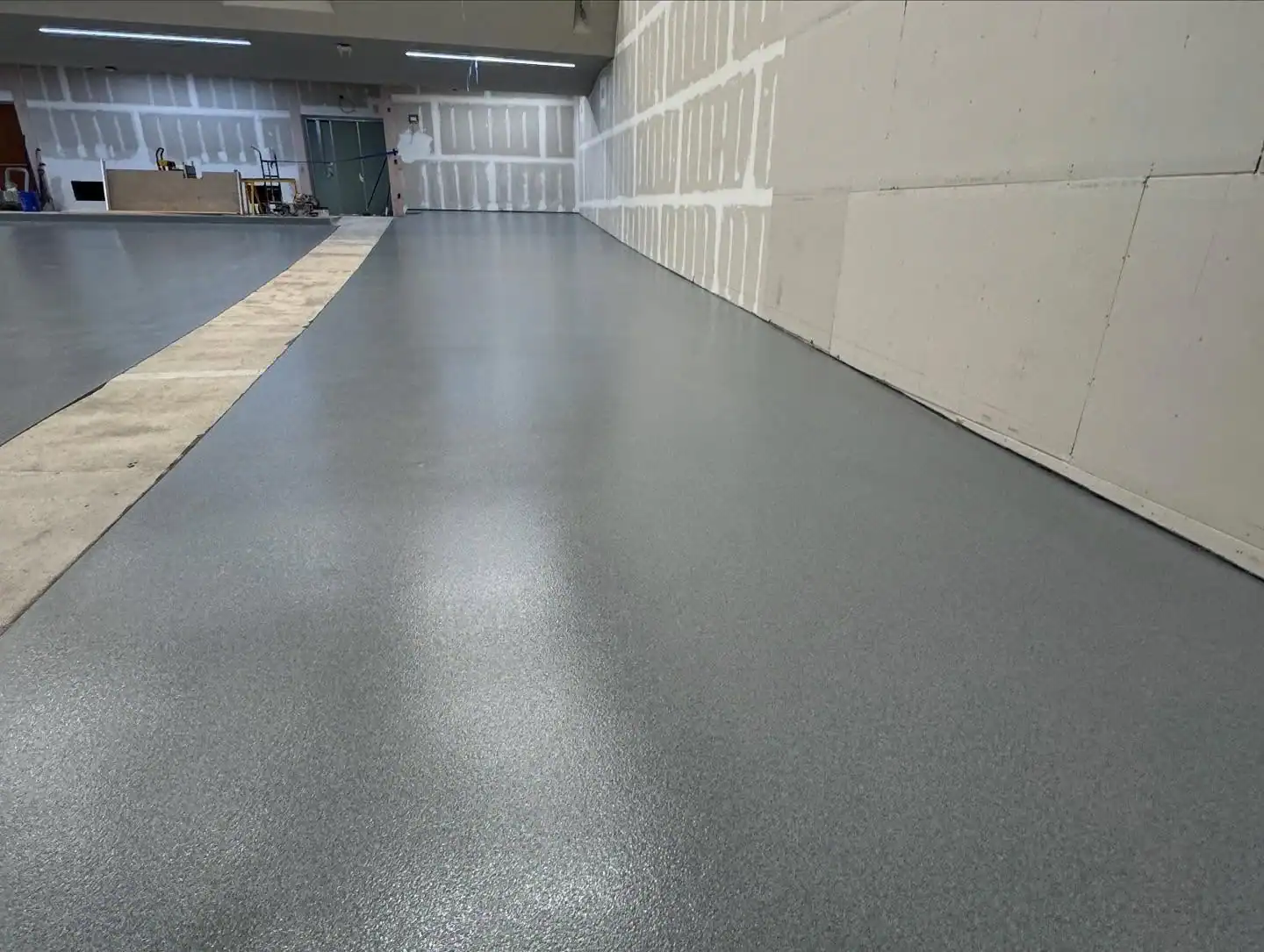
Nassau County’s Department of Health enforces food service establishment standards under New York State Sanitary Code Sub-part 14-1, which aligns with the FDA Food Code. For commercial kitchens in Valley Stream and throughout Nassau County, that means floors must be smooth, non-porous, non-absorbent, and easily cleanable. Cracks, chips, gaps, and grout lines are all citable violations and establishments that fail inspection may be required to close until those violations are corrected.
Practically speaking, this rules out quarry tile with open grout lines, cracked concrete, and any surface that can’t be fully sanitized with commercial cleaning products. A seamless epoxy or urethane cement system that’s properly installed with coved base at floor-wall junctions and no seams or gaps is the standard that meets these requirements. If you’re planning a renovation or opening a new food service location in Valley Stream, Nassau County also requires plan review through the Department of Health before construction begins, so it’s worth understanding what the finished floor needs to look like before you start.
The most common reason epoxy fails in commercial kitchens is moisture vapor transmission from the concrete slab below. When moisture vapor pushes up through the slab and has nowhere to go, it breaks the bond between the coating and the concrete and the floor delaminates. This is especially relevant in Valley Stream, where the high water table means many older commercial slabs are already moisture-compromised before a single coat goes down.
The fix is straightforward but non-negotiable: test the concrete for moisture before you coat it. If moisture levels are too high, the slab needs to be addressed before any coating is applied. The second most common cause of failure is inadequate surface preparation if the concrete isn’t ground to the correct profile, the coating doesn’t bond properly regardless of how good the product is. Both of these are steps that we build into every installation as standard practice, not optional add-ons.
Standard epoxy cannot and that’s an important distinction. The area around fryers, steam equipment, and commercial dishwashers experiences what’s called thermal shock: rapid, repeated temperature swings that standard epoxy systems aren’t designed to absorb. Over time, those temperature cycles cause standard epoxy to crack and delaminate, even when it was properly installed.
The right product for high-heat zones in a commercial kitchen is urethane cement mortar, which is specifically engineered to handle thermal shock and the chemical exposure that comes with commercial-grade sanitizers. We use urethane cement in the zones that demand it and match the appropriate system to every other area of the kitchen based on what that zone actually experiences. This zone-by-zone approach is what separates a floor that holds up under real kitchen conditions from one that looks fine for a year and then starts failing exactly where the heat is highest.
A properly installed commercial kitchen floor with correct moisture testing, appropriate surface preparation, and the right system matched to each zone should last 10 to 20 years under normal commercial kitchen conditions. That’s not a sales number. That’s what the product is designed to do when it’s applied correctly.
The gap between that and the failures that are common in this industry comes down to the installation process. Skipped moisture testing, rushed surface prep, incorrect product selection, and hurried cure times all shorten the lifespan dramatically. In Valley Stream’s older commercial building stock, where slabs have been through decades of moisture cycling and use, the preparation work is especially critical. A floor installed over a compromised slab without proper testing and prep won’t last regardless of the brand on the bucket. Get the process right and the product performs the way it’s supposed to.
The honest answer depends on the size of your kitchen, the condition of the existing slab, and the system being installed. A straightforward installation in a mid-size commercial kitchen can often be completed over a weekend, with fast-cure topcoat systems allowing return to light service within hours and full commercial use within 24 to 36 hours. More complex jobs particularly in older Valley Stream buildings where the slab needs significant crack repair or moisture remediation before coating may require additional time.
The key is scheduling. We offer overnight and weekend installation specifically to minimize the revenue impact for operators running high-volume kitchens. If you’re on the Rockaway Avenue corridor or near Green Acres Mall where foot traffic is consistent and every closed day has a real dollar cost, that scheduling flexibility matters. The best time to have this conversation is before you commit to a start date, so the timeline can be built around your operation not the other way around.
It depends on the scope of the work. Valley Stream has its own Building Department that oversees permits under New York State Building and Fire codes and the Code of the Village of Valley Stream. A straightforward floor coating replacement where you’re applying a new system over an existing slab without structural changes typically doesn’t require a building permit. However, if the project involves significant concrete repair, subfloor work, or is part of a broader kitchen renovation, a permit may be required.
What is required regardless of permit status is compliance with Nassau County Department of Health standards. If your kitchen is undergoing renovation or you’re opening a new food service location in Valley Stream, the Nassau County DOH requires plan review before construction begins. The finished floor needs to meet their specifications from day one which means it’s worth confirming your floor system meets those requirements before installation, not after your first health inspection. We’re familiar with Nassau County’s food service establishment requirements and install systems that are built to meet them.
Other Services we provide in Valley Stream