
Huntington sits on clay-heavy North Shore soil the kind that swells when it’s wet and shrinks when it dries. Over time, that constant movement works on your concrete slab. Floors settle unevenly. Tile cracks. Doors start sticking. And the bigger-format tile or wide-plank flooring you’re planning to install? It needs a surface that’s genuinely flat, not close enough.
That’s what self leveling concrete floor leveling services actually solve. Once we get it done right, you get a surface that’s smooth, stable, and ready for whatever goes on top of it tile, hardwood, luxury vinyl, epoxy. The finished floor performs the way it’s supposed to, and you’re not calling us back six months later because something’s shifting again.
For commercial spaces along the Route 110 corridor in Melville, or for a home in Cold Spring Harbor or Northport that’s been through decades of freeze-thaw cycles, the difference between a properly leveled slab and a patched one shows up fast. A professional self leveling installation means we address the substrate, not just cover it up.
We’re based in Bohemia, NY Suffolk County, about 25 miles from Huntington along the LIE. That’s not a detail for the sake of it. It means the crew working your job knows Huntington and the North Shore. We’ve worked in buildings like yours, on slabs that have been through the same clay soil movement and coastal moisture that Huntington deals with every season.
We’ve been in business for over 30 years. Our president and CEO brings more than 40 years of personal installation experience. Most of our crew has been with us for over a decade which means the person who shows up isn’t learning on your floor.
From the Melville Employment Center to Huntington Hospital-area facilities to residential renovations throughout the town, we’ve worked across the full range of what this market demands. We’re OSHA 40 certified, factory-trained in advanced resinous systems, and hold an A+ BBB rating these aren’t credentials listed for show. They’re the reason the work holds up.
The pour is the last step, not the first. Before we install any high strength self leveling concrete in Huntington, the substrate gets assessed and in a town with Huntington’s moisture profile, that assessment matters more than most people realize.
The first thing we do is moisture testing. Using ASTM F2170 relative humidity testing, we check the concrete before anything else moves forward. Huntington’s five harbors, its clay soils, and its aging building stock create moisture conditions that vary significantly from one property to the next. Skipping this step is how pours delaminate. It’s built into our process here, not treated as optional.
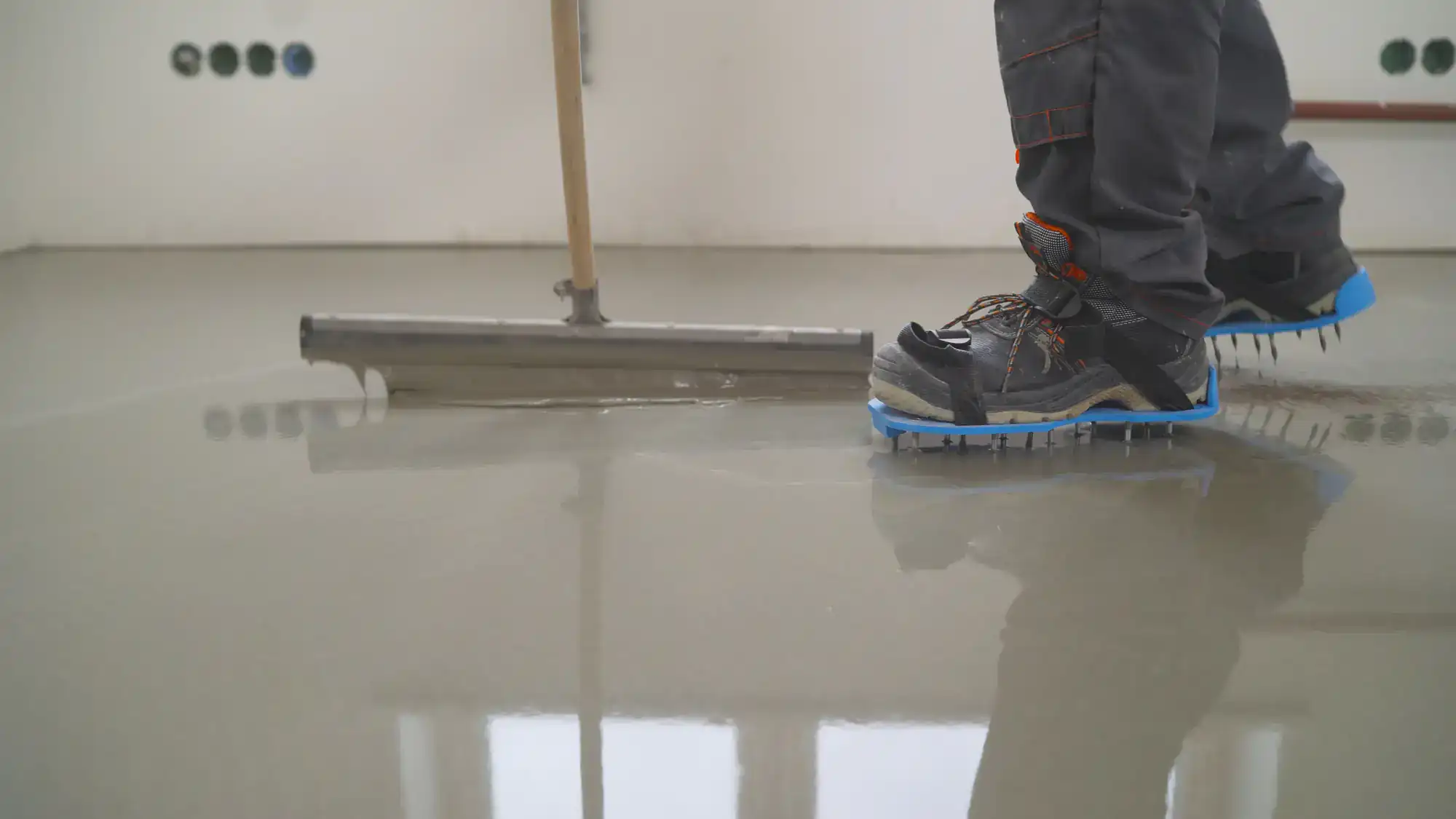
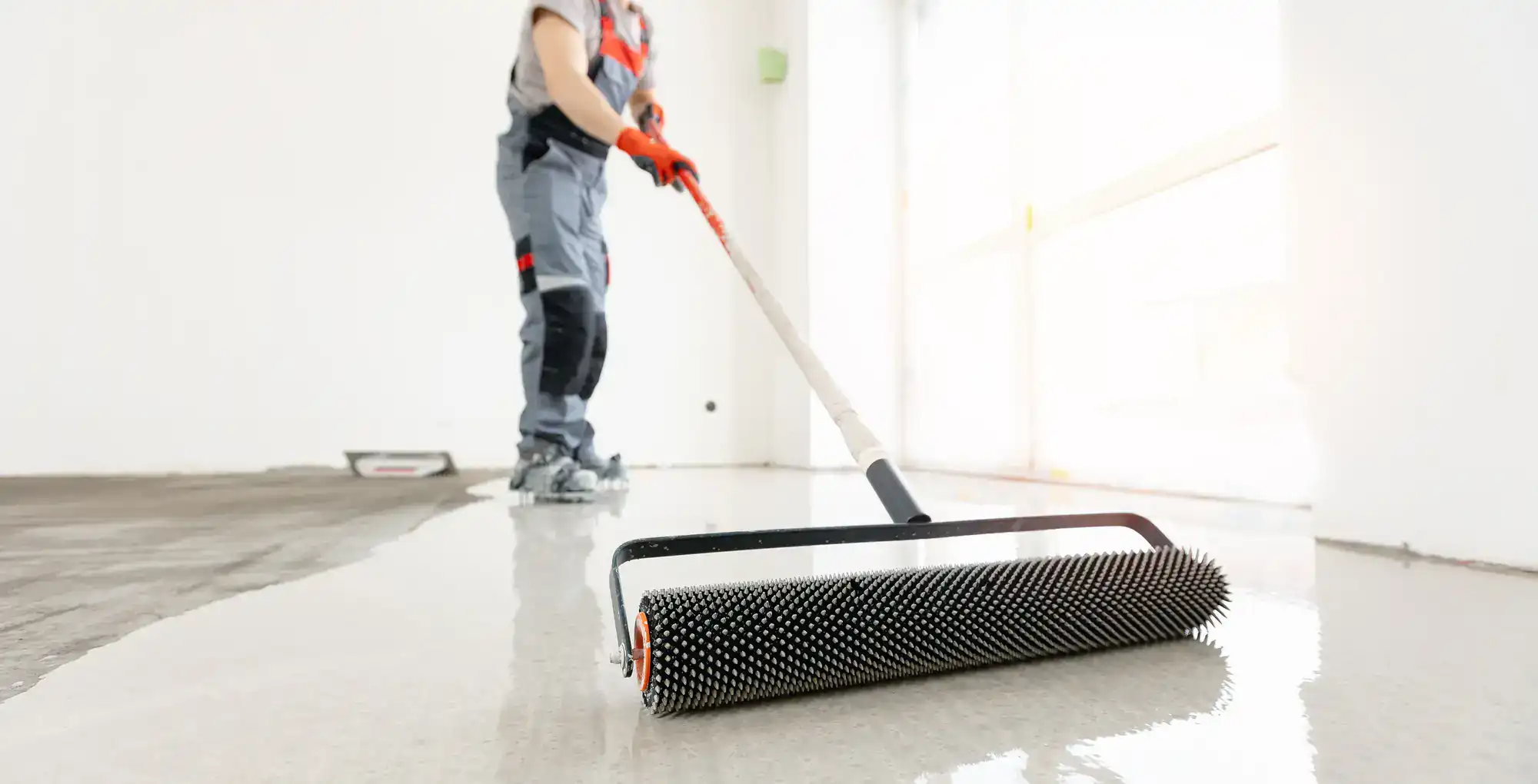
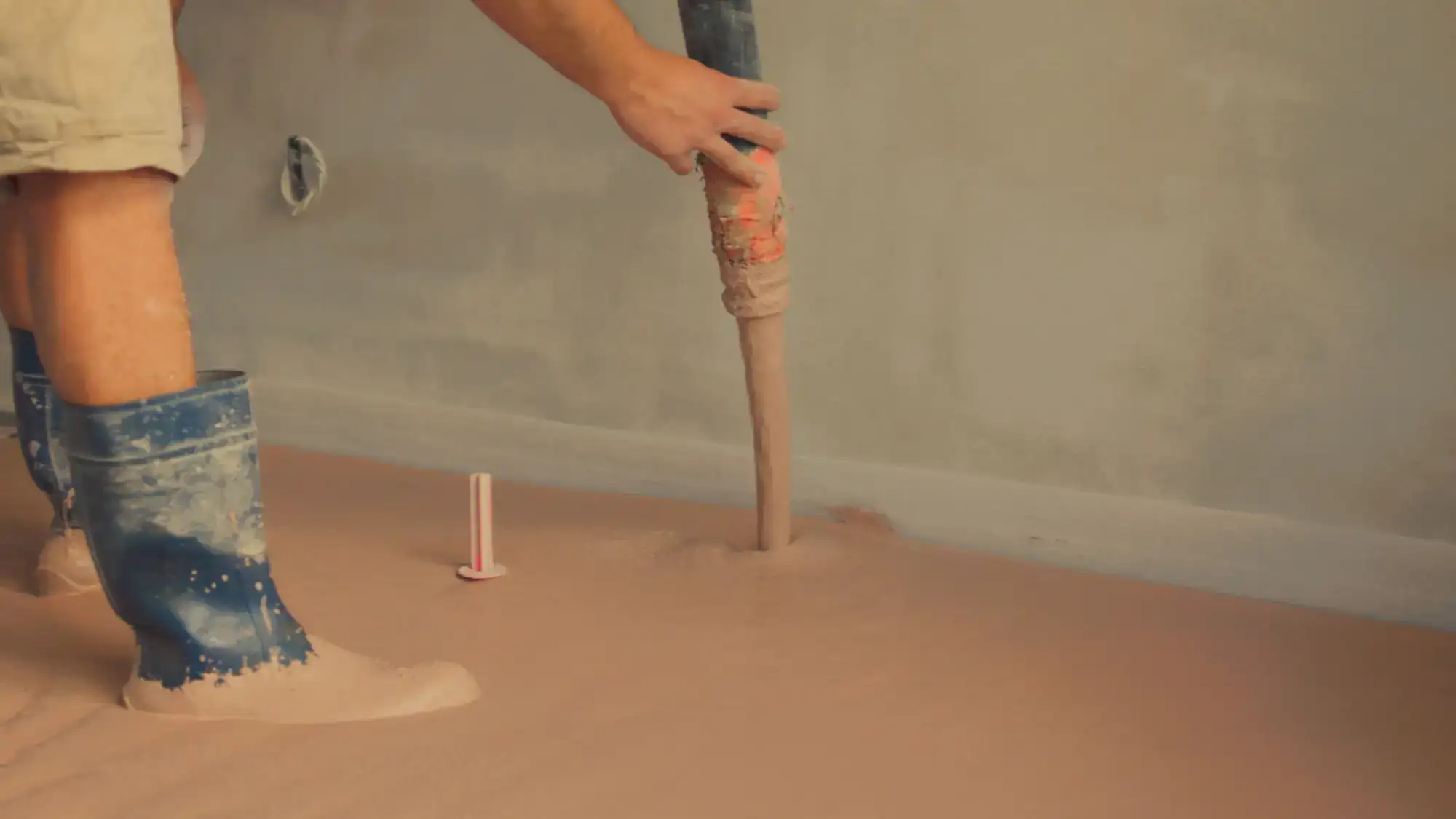
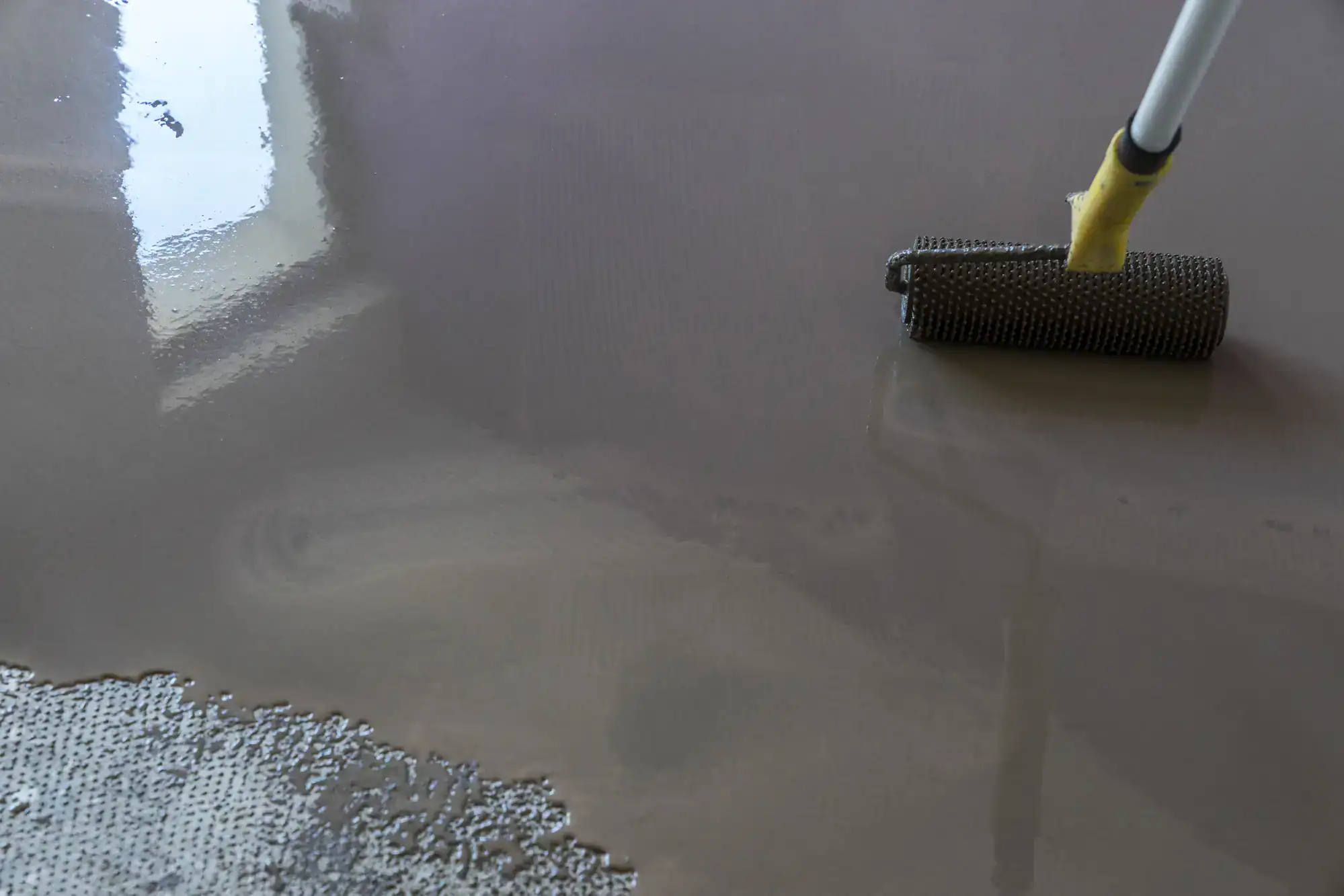
Once moisture levels are confirmed and the substrate is properly prepared cleaned, primed, and free of anything that would compromise adhesion we pour the self leveling material. Depending on what the slab needs, that can be anywhere from a quarter-inch skim coat to over two inches of correction, and up to five inches with aggregate added. The product flows to level on its own, and within four to six hours, the surface is ready for foot traffic. Full commercial use typically follows within 24 to 48 hours a timeline that matters if you’re managing a business in the Melville corridor or a healthcare facility that can’t stay closed for days.
Ready to get started?
Most subfloor leveling contractors handle a narrow range of correction depth and hand the rest off to someone else. We cover the full range from a quarter-inch skim to five inches with aggregate in a single contractor relationship. For Huntington properties where slab conditions vary across the same floor, that flexibility matters. You’re not coordinating between two crews or managing a gap in accountability.
The cementitious self leveling underlayment we use is a fast curing concrete leveler built for commercial floor leveling solutions that hold under real operational load. It’s not a patch product. It’s a structural underlayment that creates a flat, high-strength base for whatever comes next whether that’s large-format tile in a Northport kitchen, epoxy in a Melville warehouse, or luxury vinyl in a corporate office along Route 110.
For commercial spaces, particularly in healthcare environments like those affiliated with Huntington Hospital or in the research facilities at Cold Spring Harbor Laboratory, the floor performance standard is non-negotiable. The self leveling underlayment work we do here meets that standard. And because we handle both the leveling and the final floor system, there’s no miscommunication between trades one contractor owns the outcome from substrate to surface.
Clay soil expands when it absorbs water and contracts as it dries out and it goes through that cycle repeatedly, especially in a North Shore town like Huntington where seasonal groundwater fluctuation and coastal humidity are constant factors. Over years and decades, that movement puts uneven pressure on your concrete slab. Some areas settle faster than others. You end up with low spots, cracked tile, and a floor that’s no longer flat even if it looked fine when it was first poured.
This is different from what homeowners in Sandy South Shore towns like Massapequa or Bay Shore deal with. Sandy soil drains quickly and moves differently. Clay holds moisture and creates more pronounced and persistent settlement patterns. If your Huntington home or commercial building was constructed in the 1950s or 1960s which describes a significant portion of the town’s building stock your slab has been dealing with this for 60 or 70 years. Self leveling concrete floor leveling services address the result of that movement by creating a new, flat surface that’s properly bonded to what’s underneath, not just layered on top.
If there’s too much moisture vapor moving through your concrete slab, the self leveling material won’t bond the way it needs to. It can delaminate, bubble, or fail entirely and that failure usually shows up after the finished floor is already installed on top of it, which makes the repair far more expensive than doing the testing upfront.
The standard we use is ASTM F2170, which measures relative humidity inside the concrete slab itself. For most self leveling products, that number needs to be below 80% before installation moves forward. In Huntington, this step is especially important. The town borders five harbors, sits on clay-heavy soil that retains water, and has a significant stock of older buildings where concrete has been absorbing moisture for decades. Properties near Huntington Bay, Centerport Harbor, or Northport Harbor often show elevated moisture readings that wouldn’t be obvious from a visual inspection. Testing is what catches that before it becomes a problem not after.
It depends on how much correction your slab actually needs, which can vary across the same floor. A skim coat of a quarter inch handles minor surface irregularities and creates a flat base for thin materials like luxury vinyl plank. Deeper corrections one inch, two inches, or more are needed when the slab has significant low spots, settled areas, or damage from years of freeze-thaw cycling.
In Huntington, where many slabs are 50 to 70 years old and have been through hundreds of winter freeze-thaw cycles, it’s common to find correction depths that vary from one end of a room to the other. That’s why the depth range matters. We install self leveling systems from a quarter inch up to over two inches neat, and up to five inches with the addition of aggregates covering the full range of what a Huntington slab might need without requiring a second contractor to step in for the deeper corrections.
Yes, and this is one of the practical advantages of a fast curing concrete leveler over older repair methods. Once the self leveling material is down and the surface has cured, it’s ready for foot traffic in four to six hours. Full commercial use including heavy equipment, rolling loads, and high foot traffic typically follows within 24 to 48 hours.
For businesses in Huntington’s commercial corridor, that timeline is workable. A corporate office in the Melville Employment Center, a retail space along Route 25A, or a medical facility affiliated with Huntington Hospital can typically schedule the work around a weekend or an overnight window without a prolonged shutdown. The key is coordination: knowing exactly how much surface area needs to be covered, what depth of correction is required, and whether any moisture conditions need to be addressed before the pour. All of that gets assessed before the job is scheduled, so there are no surprises on installation day that extend your downtime.
For both of those materials, a flat substrate isn’t optional it’s a requirement. Large-format tile (anything over 15 inches on a side) is particularly unforgiving. If the slab underneath has even minor high and low spots, the tile will rock, crack at the grout joints, or hollow out over time. Wide-plank hardwood has similar sensitivity because longer boards span more of the floor and telegraph any unevenness directly into the finished surface.
Self leveling underlayment is specifically designed to create the flat, consistent base those materials need. In Huntington homes where a kitchen or basement renovation involves large-format porcelain or engineered hardwood, this is often the step that determines whether the finished floor looks and performs the way it should five years from now. The cementitious self leveling underlayment we use is compatible with the adhesives and installation methods used for both tile and hardwood, so there’s no compatibility issue between the prep layer and the finish material.
Concrete grinding removes material it’s used to knock down high spots, flatten ridges, or remove coatings from an existing slab. Self leveling concrete adds material it fills in low spots, levels out settled areas, and creates a new flat surface across the entire floor. In practice, most jobs require both at some point. High spots get ground down, and low spots get filled with self leveling material. The two methods work together rather than competing.
In Huntington properties where the slab has both high and low areas from decades of clay soil movement and freeze-thaw cycling, a combination approach is often the most efficient path to a flat floor. Grinding alone won’t fix a settled low spot, and self leveling alone won’t fix a high ridge. Understanding which condition you’re dealing with and where is part of the assessment that happens before any work starts. That’s not a complicated process, but it does require someone who knows what they’re looking at, which is why experience with Long Island’s specific soil and building conditions matters here.