
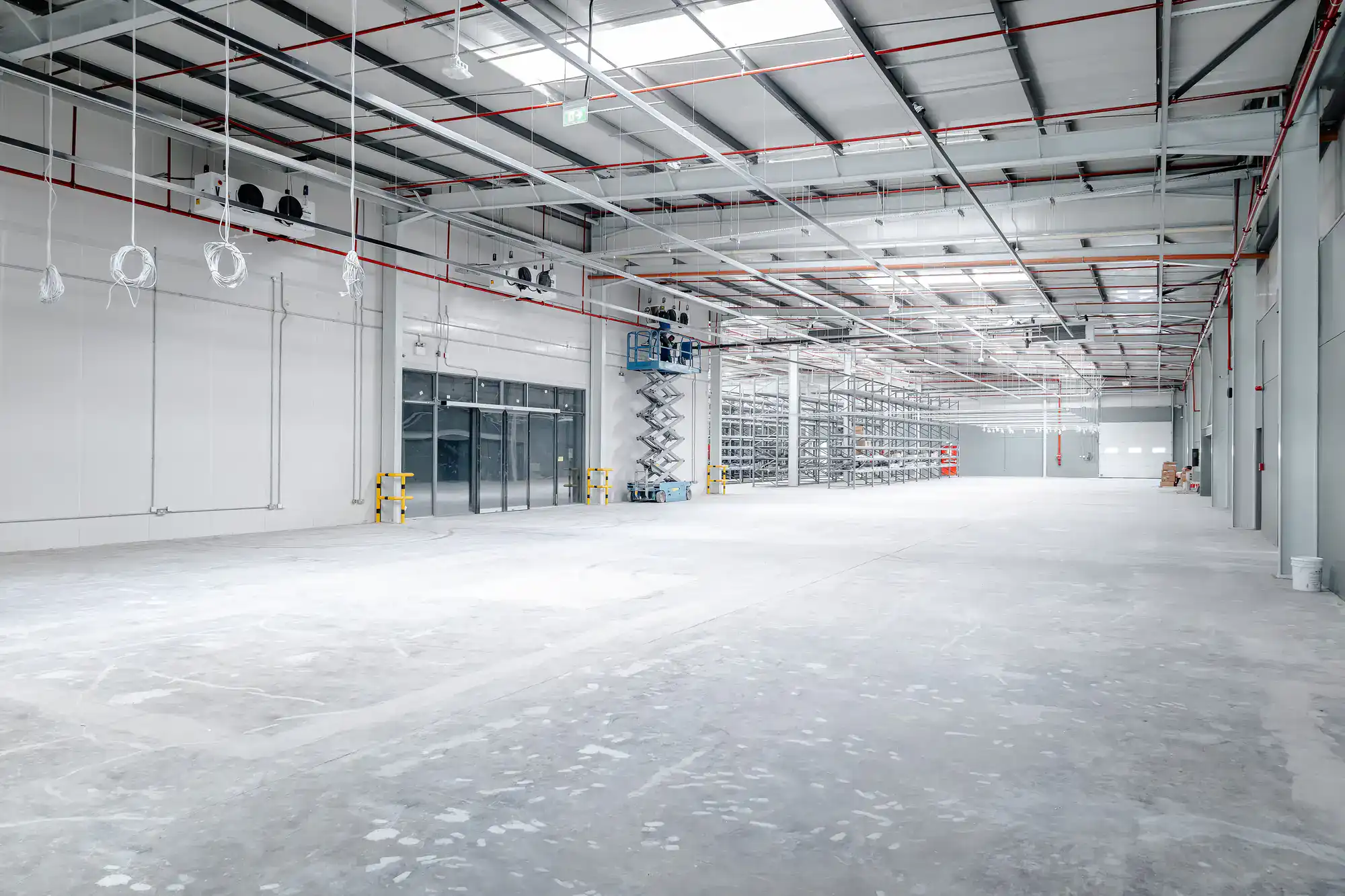
Huntington’s position on the North Shore of Long Island isn’t just a selling point for real estate it’s a real factor in how long a hangar floor lasts. The harbors, the inlets, the salt-laden air off the Sound all of it works against bare concrete and under-spec coatings. Moisture vapor pushes up through large slabs year-round here, not just in spring. If a contractor skips moisture testing, you’ll see bubbling and delamination within a few years, sometimes less.
A properly installed aviation-grade system changes that picture entirely. You get a floor that reflects overhead lighting clearly enough to spot a dropped fastener or a hydraulic fluid spill before it becomes a problem. You get a surface that handles Skydrol, jet fuel, and degreasers without breaking down. And because the topcoat is non-slip certified, a light-colored, high-gloss floor doesn’t become a hazard when something hits it.
For corporate hangar operators in the Melville corridor or private aircraft owners based out of Lloyd Harbor and Centerport, the difference between a floor that lasts five years and one that lasts twenty comes down to what was done before the first coat ever went down and what system was actually specified for an aviation environment in the first place.
We’re based in Bohemia, in central Suffolk County close enough to Huntington to show up, stay accountable, and come back when you need us. We’ve been installing floors on Long Island for over 30 years, which means we’ve seen exactly what the North Shore climate does to coatings that weren’t prepared for it.
Danny Harmer, our founder, has over 40 years of hands-on installation experience not sales experience, installation experience. He’s worked on floors in the White House, in Moscow, in the Bahamas, and across commercial and industrial facilities throughout the U.S. When he looks at a hangar slab in Huntington, he’s drawing on a track record that most contractors in this market simply don’t have.
Our installers are OSHA 40 certified, which matters in active aviation environments where safety protocols aren’t optional. We hold dual certifications from Sherwin-Williams High Performance Flooring and Res Tech factory-level credentials that required real testing to earn. That combination of experience, certification, and local presence is what makes the difference on a job like this.
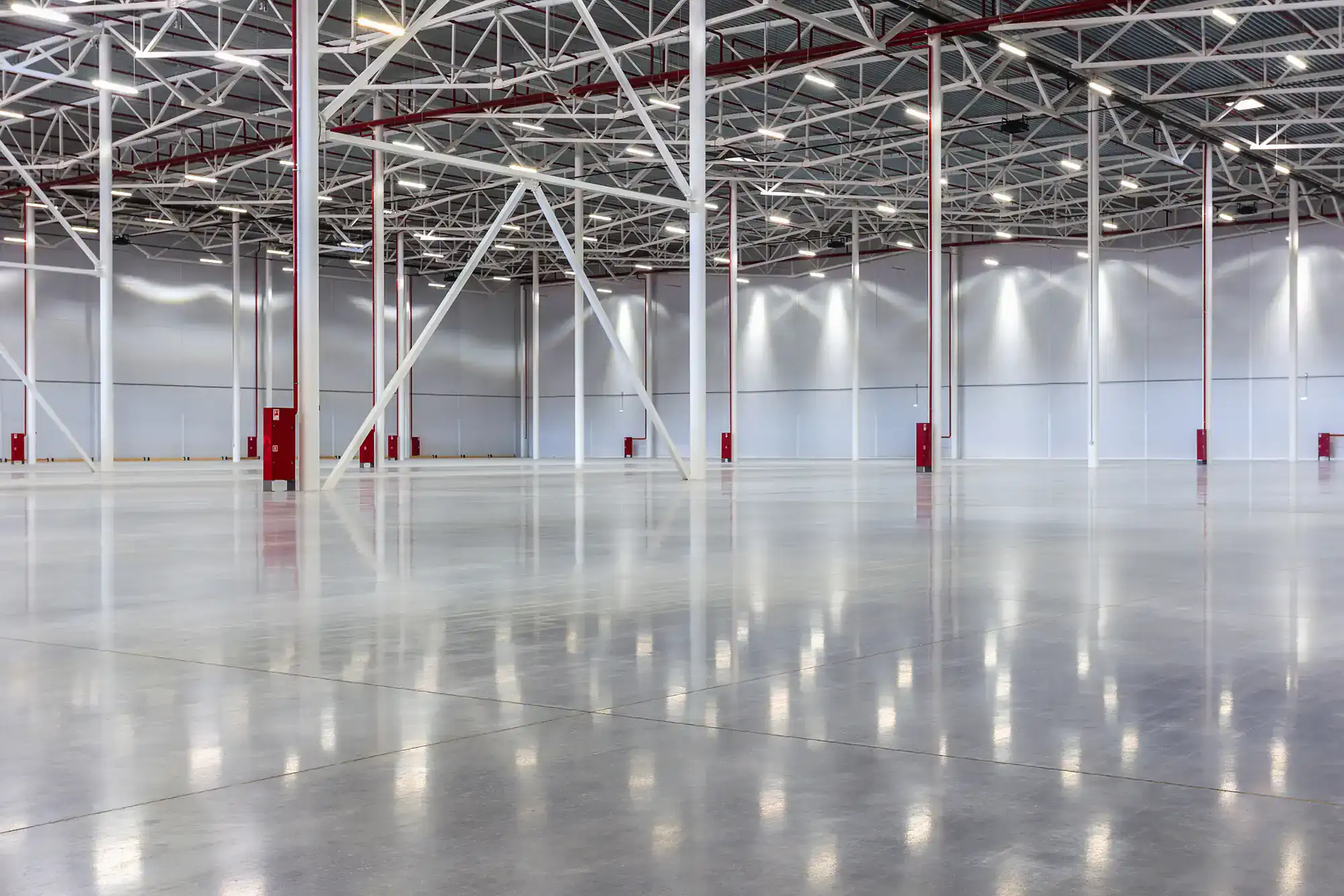
The first thing we do on any hangar floor in Huntington is test the slab for moisture. This isn’t a formality it’s the step that determines whether your coating bonds properly or fails in two years. In a coastal environment like the North Shore, moisture vapor transmission through large concrete slabs is elevated compared to inland locations. We measure it, we account for it, and if mitigation is needed, we do it before anything else happens.
From there, we diamond grind the surface to create the mechanical profile the coating needs to bond correctly. Any cracks, spalls, or surface damage get addressed at this stage. Skipping surface prep is the most common reason hangar floors fail prematurely it’s also the step most budget contractors cut short. We don’t.
Once the slab is properly prepared, we apply a multi-layer system: primer, base coat, and topcoat, with each layer given its full cure time before the next goes down. For most hangar applications, we recommend a polyaspartic topcoat it cures fast enough to return your aircraft to the hangar within approximately 24 hours, which matters if you’re operating out of Republic Airport and can’t leave your plane on the apron indefinitely. The finished system is NFPA 409-compliant, chemical-resistant, and built to hold up under the rolling loads of tow vehicles and ground support equipment.
Ready to get started?
There’s a real difference between a floor coating sold for aircraft hangars and one that’s actually engineered for them. NFPA 409 the code standard that governs aircraft hangars in New York requires noncombustible floor surfaces in aircraft storage and servicing areas. That eliminates most residential and light commercial epoxy products from legal use in these environments, regardless of what a contractor calls them on a quote sheet.
The systems we install are specifically formulated to resist Skydrol hydraulic fluid, jet fuel, aviation lubricants, and the industrial cleaning solvents used in active maintenance bays. For high-traffic commercial and FBO applications, we build to a minimum of 45 mils a thickness that provides genuine impact protection and strengthens the concrete surface underneath. For private hangars in communities like Cold Spring Harbor or Northport, where the hangar is part of a larger estate, we offer high-gloss finishes that perform at the same technical level while looking the part.
Every installation includes our NFSI-certified non-slip topcoat, which is a third-party verified safety standard not just a texture. Whether you’re running a corporate flight department out of the Melville corridor or maintaining a single aircraft at a private facility in Huntington, the floor you end up with meets the same aviation-grade specification. The only thing that changes is the size of the slab.
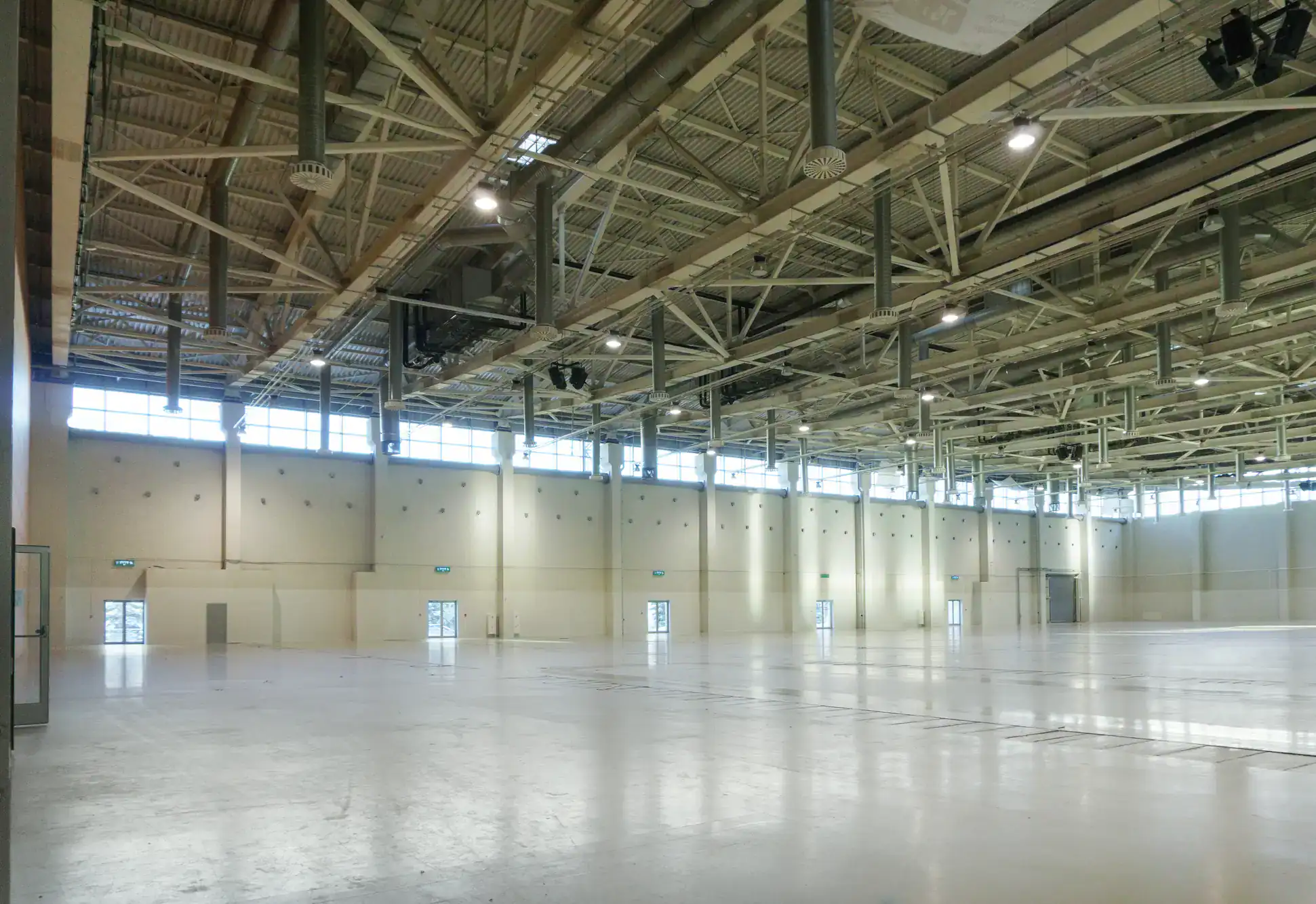
If your hangar is used for aircraft storage or servicing including private hangars, FBO facilities, and corporate flight department spaces near Republic Airport NFPA 409 applies. That standard requires floor surfaces in those areas to be noncombustible, which rules out a significant portion of the epoxy products that general flooring contractors use and market as hangar-appropriate.
In New York, this isn’t just a best-practice recommendation. It’s a code requirement that affects your insurance coverage, your facility inspections, and your liability exposure if something goes wrong. The systems we install are specifically selected to meet that noncombustibility requirement. If you’re unsure whether your current floor is compliant, that’s worth finding out before your next inspection not after.
Skydrol is the phosphate ester hydraulic fluid used in most commercial and business aircraft for brake and flight control systems. It’s highly effective in aircraft, and it’s highly destructive to flooring materials that weren’t formulated to handle it. Standard epoxy coatings including most products used in residential garages and light commercial spaces will break down when exposed to Skydrol repeatedly. You’ll see discoloration, softening, and eventually delamination.
Aviation-grade systems use chemistry that’s specifically resistant to Skydrol, jet fuel, and the degreasers used in active maintenance environments. If your hangar near Republic Airport sees regular maintenance activity, this isn’t a minor specification detail it’s the reason your floor either lasts 15 to 20 years or needs to be stripped and recoated in four. Naming Skydrol resistance as a requirement when you’re getting quotes is one of the fastest ways to find out whether a contractor actually knows aviation floors.
Huntington’s location on the North Shore with Huntington Harbor, Northport Harbor, and the Long Island Sound all in close proximity means the air carries elevated moisture year-round. That moisture affects large concrete slabs in a specific way: it creates upward vapor pressure that can push through the slab from below and compromise the bond between the concrete and the coating above it.
This is why moisture testing before installation isn’t optional in Huntington. Contractors who skip it, or who treat it as a quick checkbox rather than a real measurement, are setting up their installs for premature failure. Bubbling, peeling, and delamination within a few years of installation are almost always traceable to inadequate moisture assessment and prep. In Huntington’s coastal environment, the prep work is where the longevity of your floor is actually determined the coating itself comes second.
With proper surface preparation and a correctly specified system, a polyaspartic hangar floor in Huntington can realistically last 15 to 20 years under normal aviation use. Standard epoxy systems in the same environment typically perform for 5 to 7 years before showing significant wear and in Long Island’s humid coastal conditions, that window can be shorter if moisture wasn’t properly addressed during installation.
The variables that affect longevity most are the prep process, the system thickness, and the quality of the chemistry used. A high-build system installed at 45 mils or more on a properly profiled and moisture-tested slab will significantly outlast a thin-film product applied over a floor that wasn’t adequately prepared. For private hangar owners in communities like Lloyd Harbor or Cold Spring Harbor, where the investment in the facility reflects the value of what’s stored inside it, the cost difference between a budget system and a properly specified one is relatively small compared to the cost of doing it twice.
For most hangar floor installations using a polyaspartic topcoat, you can expect to return aircraft to the space within approximately 24 hours of the final coat being applied. That’s one of the primary reasons polyaspartic systems have become the preferred choice in aviation environments the fast cure window minimizes the time your aircraft needs to be relocated to an outdoor apron or a temporary space.
Traditional epoxy systems cure more slowly and can require multi-day downtime, which is a real operational cost for anyone running an active hangar near Republic Airport. The exact timeline on your project will depend on the size of the slab, the extent of any prep work required, and the number of coats in the system. We’ll give you a realistic schedule before we start not a best-case estimate that gets revised once we’re on-site.
For most hangar applications in Huntington, polyaspartic is the stronger choice and the reasons are specific to how these floors actually get used. Polyaspartic systems cure significantly faster than traditional epoxy, which reduces downtime. They also hold up better under UV exposure, which matters in hangars with large door openings that let in direct sunlight. In Long Island’s temperature swings between summer humidity and winter cold, polyaspartic maintains its performance characteristics more consistently than standard epoxy formulations.
That said, the right system depends on your specific environment. A private single-aircraft hangar with minimal chemical exposure has different requirements than a working maintenance bay that sees Skydrol and fuel daily. In some cases, a hybrid approach epoxy base coats for build and chemical resistance, polyaspartic topcoat for speed and durability is the most practical answer. We assess each slab individually and recommend based on what’s actually in front of us, not a one-size-fits-all spec sheet.