
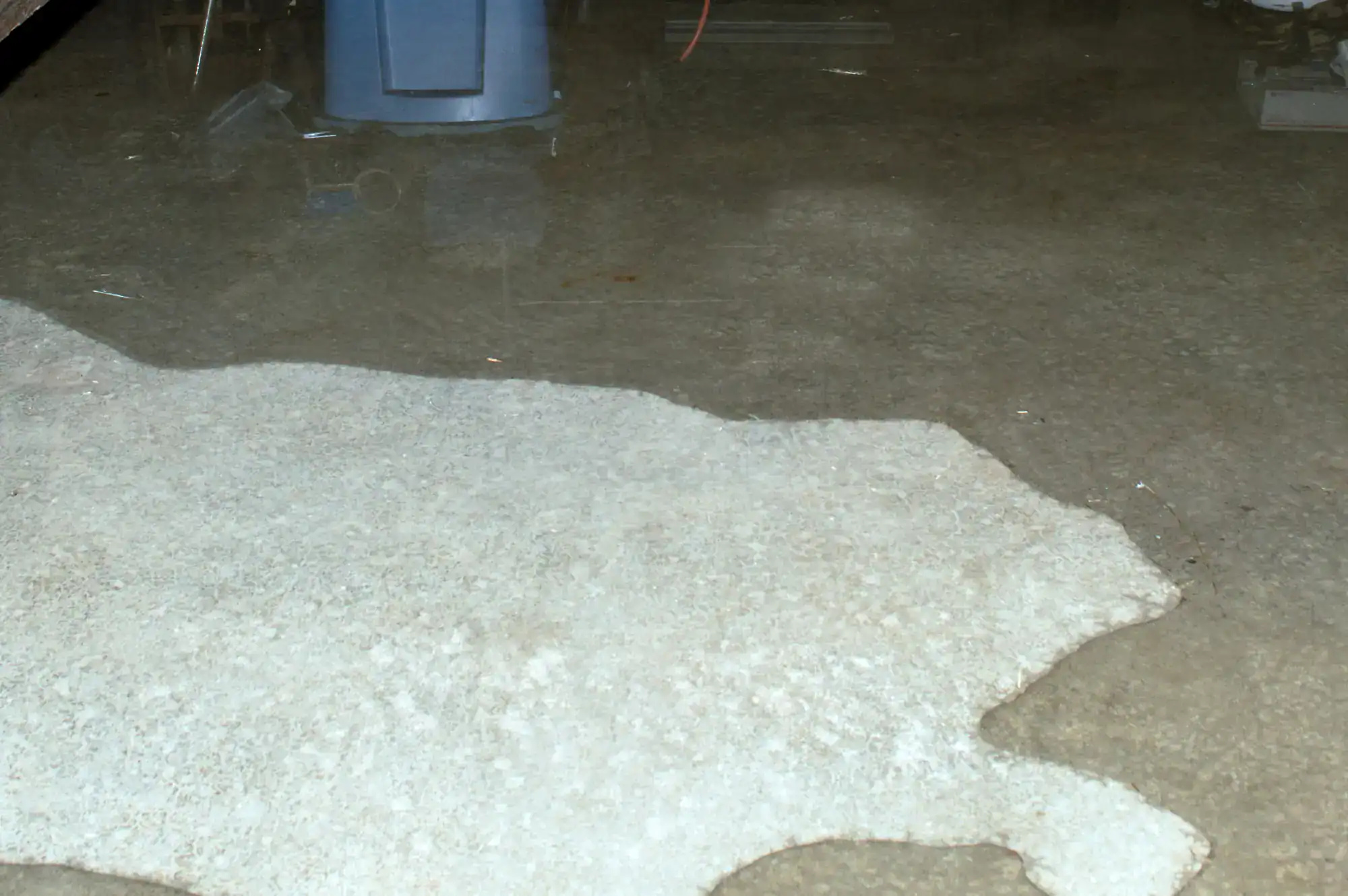
Every time your apparatus returns from a winter call in Huntington, it drags road salt, de-icing chemicals, and road grime off Route 110 and Route 25A directly into your bay. An uncoated or poorly sealed floor absorbs all of it chloride compounds work into the concrete matrix, and the slab starts breaking down from the inside out. A properly installed resinous system stops that process entirely. The surface stays non-porous, easy to clean, and chemically resistant to everything your apparatus brings back with it.
For departments along Huntington Harbor, Northport Harbor, or Cold Spring Harbor, salt air is a year-round condition not just a winter problem. Standard epoxy coatings weren’t designed for that kind of sustained chloride exposure. They degrade faster, lose adhesion, and leave your concrete unprotected right when you need it most. A polyaspartic topcoat handles salt air the same way it handles marine industrial environments because that’s exactly what it was engineered for.
The result is a floor that doesn’t need to be replaced every five years, doesn’t peel when your apparatus pulls out on a cold morning, and doesn’t turn into a liability every time someone walks through the bay. That’s what a correctly specified, correctly installed firehouse floor actually delivers.
We’re based in Bohemia, right here in Suffolk County not a national brand routing calls through a local number. We’ve been doing commercial and industrial resinous flooring for over 30 years, and our CEO Danny Harmer brings more than 40 years of hands-on installation experience to every project. Our field supervisors Javier, Eduardo, and Fredith bring over 40 combined years in the trade, and most of our crew has been with us for more than a decade.
The credentials matter in this niche. We hold the Sherwin-Williams High Performance Flooring certification and Res Tech certification two of the most rigorous manufacturer-approved applicator credentials available. Every installer on our crew is OSHA 40 certified. Our project list runs from Long Island commercial facilities to the White House kitchen in 1996. If that level of scrutiny didn’t shake our work, a Huntington apparatus bay won’t either.
We’ve worked on fire station floors throughout Suffolk County and understand the specific demands Huntington’s departments face from the salt-laden air near the harbor to the heavy traffic on Route 110 that brings road salt and de-icing compounds into your bays daily.
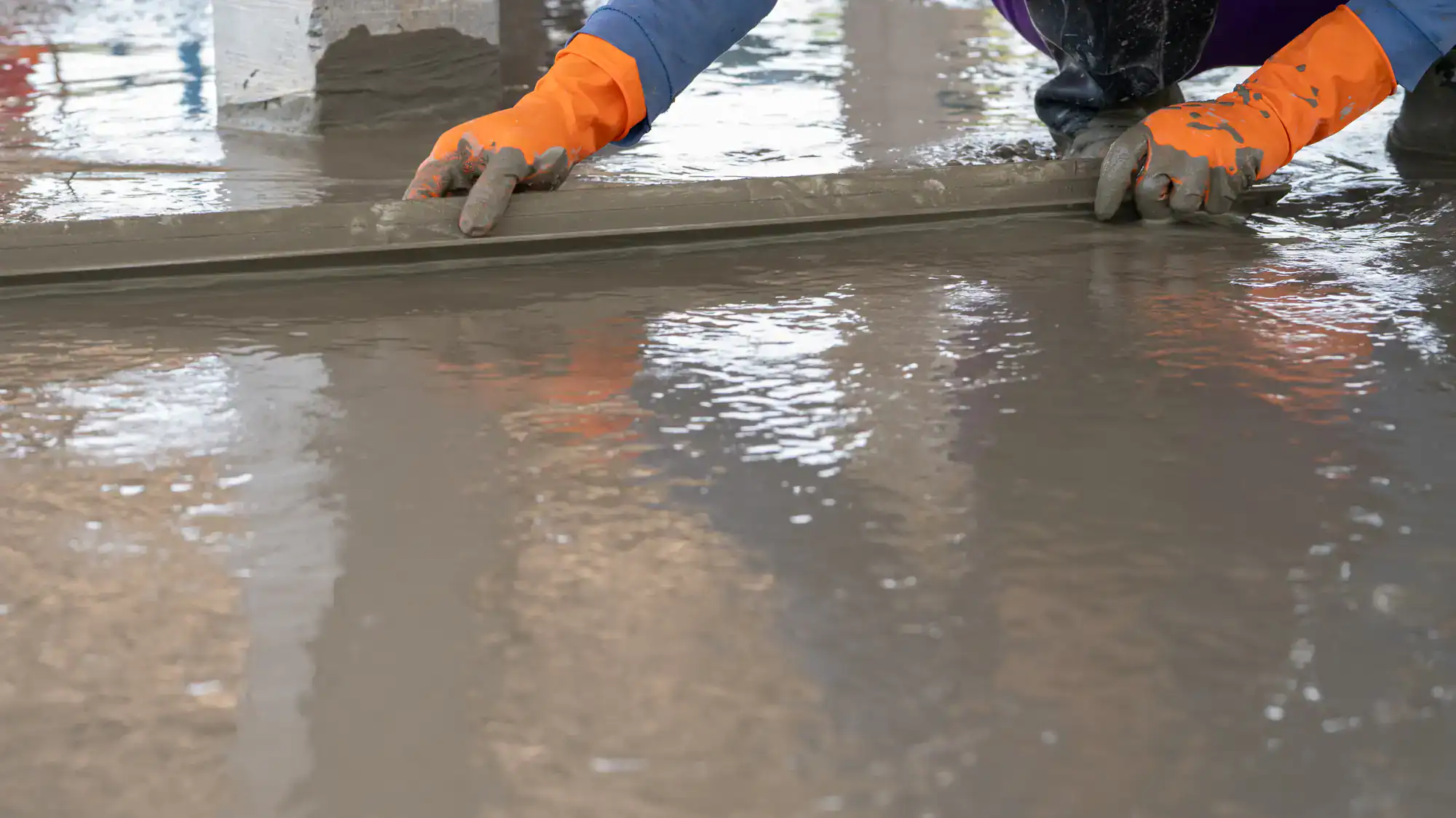
The installation starts with a real assessment of your concrete not a quick walk-through and a quote. Huntington’s older fire stations, some operating in buildings that have been in service for decades, often have concrete that’s been through multiple failed coating attempts, years of salt exposure, and moisture conditions that have built up over time. All of that has to be understood before any product touches the floor.
Surface preparation comes first, and we do it with diamond grinding not acid etching. Diamond grinding removes old coatings, opens the concrete’s capillary structure, and creates the mechanical profile that a new system can actually bond to. After grinding, we confirm moisture levels are acceptable through testing. Any cracks, spalls, or surface damage get repaired at this stage. Skipping any of these steps is exactly how a floor ends up delaminating in 18 months and it’s the most common reason departments call us after another contractor’s work has already failed.
From there, a penetrating primer goes down, followed by the high-build base coat with aggregate broadcast for slip resistance, and finally the polyaspartic topcoat. The full system cures in approximately 24 hours. That means your apparatus is back in the bay the next day not in three to seven days. For Huntington’s volunteer departments covering 93 square miles of territory, that’s not a minor detail. That’s the whole operational argument.
Ready to get started?
The apparatus bay gets the most attention, but it’s rarely the only floor that needs work. Huntington’s fire stations range from single-bay volunteer houses to multi-company facilities with decontamination zones, living quarters, commercial kitchens, and locker rooms and each of those spaces has a different set of demands. The apparatus bay needs chemical resistance, slip resistance, and the ability to handle 40,000-pound loads cycling in and out daily. The decon zone needs a seamless, non-porous surface that supports NFPA contamination control protocols. The kitchen needs a food-safe, easy-to-clean finish that holds up to commercial use.
We specify the right system for each zone not the same product across the whole building. The polyaspartic system we use in apparatus bays goes down at 15 mils thick, delivers twice the abrasion resistance of standard epoxy, and is UV-stable, so it won’t yellow from sunlight coming through open bay doors. It’s also 4 times more flexible than standard epoxy, which is what prevents hot-tire pickup the failure mode where heated apparatus tires bond to a thin coating and peel it off on departure.
For Huntington fire districts presenting capital improvement projects to a board or budget committee, the total-cost-of-ownership case is straightforward: a properly installed polyaspartic system lasts 20-plus years. Standard commercial epoxy runs 5 to 10 years. Consumer-grade products are typically gone in 3 to 5. One installation done right costs less over two decades than two or three rounds of cheaper work.
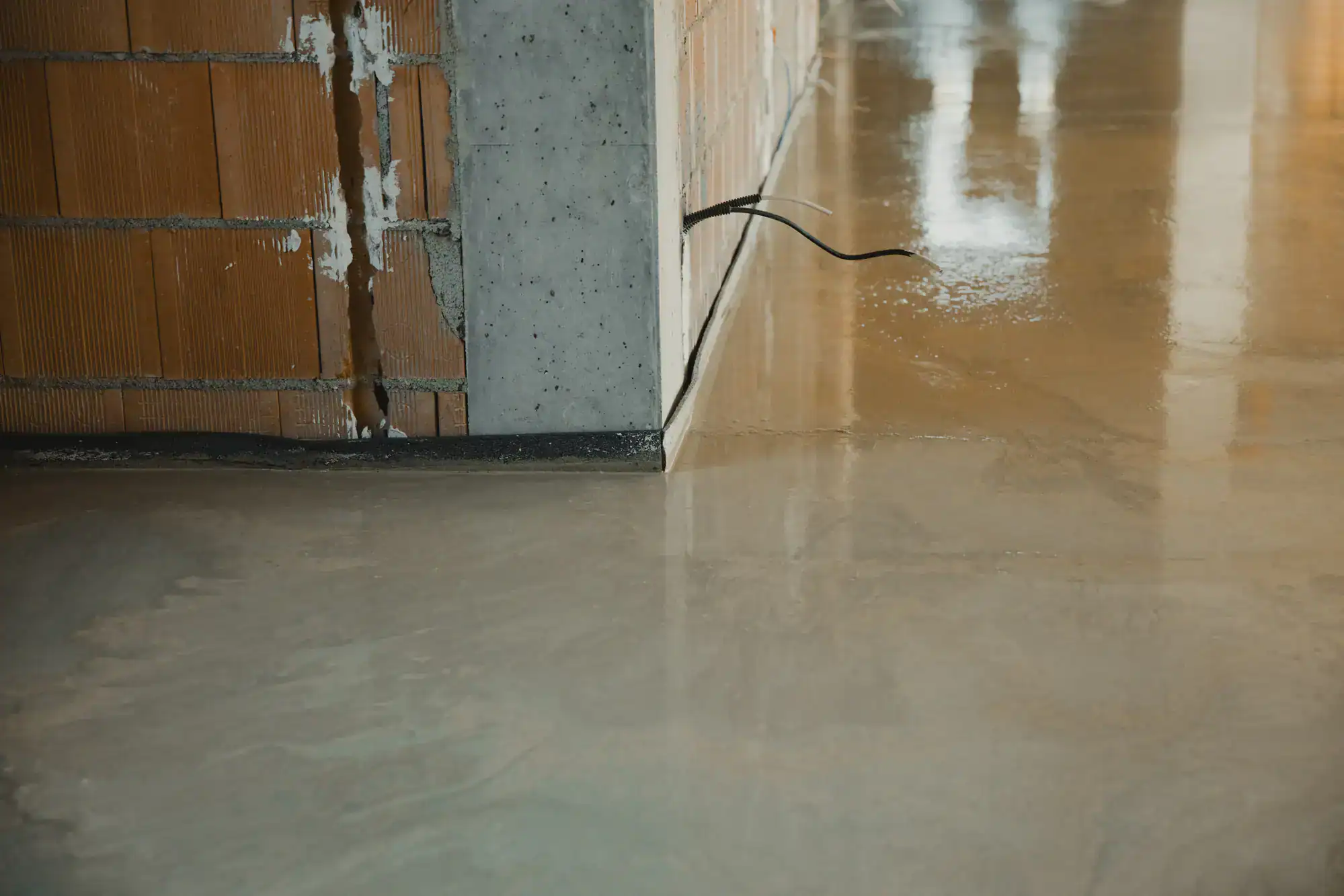
A properly installed polyaspartic system in a Huntington apparatus bay should last 20 years or more under normal operating conditions. The key phrase there is “properly installed” which means diamond-ground concrete, correct moisture testing, and a full multi-layer system, not a thin coating rolled over unprepared concrete.
Huntington’s North Shore climate is more demanding than most. You’re dealing with salt air from the harbor communities, road salt off Route 110 and Route 25A every winter, and freeze-thaw cycling that crosses the 32-degree threshold repeatedly from December through February. A polyaspartic topcoat is chemically resistant to chloride compounds and thermally stable enough to handle that cycling without cracking or delaminating. Standard epoxy in the same conditions typically runs 5 to 10 years before it needs to be replaced and that’s if the prep work was done correctly to begin with.
Yes and for Huntington’s volunteer departments, this is usually the first question that comes up. The polyaspartic systems we use in active fire stations cure in approximately 24 hours, which means apparatus is back in the bay the next day. Traditional epoxy systems require 3 to 7 days of cure time before heavy equipment can return, which is operationally unrealistic for most volunteer departments.
The 24-hour return isn’t a marketing claim it’s a function of the chemistry. Polyaspartic coatings cure through a different mechanism than standard epoxy, and they reach full hardness significantly faster. For a department like the Greenlawn Fire Department covering roughly 7 square miles from two stations, or the Huntington Manor FD serving Huntington Station, keeping apparatus in service isn’t optional. The floor work gets done, and operations continue with minimal disruption.
The most common cause of failure is inadequate surface preparation specifically, skipping diamond grinding in favor of acid etching or applying a new coating directly over an old one. Without proper mechanical profiling of the concrete surface, the coating doesn’t bond at a structural level. It adheres temporarily and then separates, usually within the first year or two, often starting at the edges where apparatus tires make contact.
The second most common failure mode is hot-tire pickup. When apparatus returns from a call with heated tires, thin epoxy coatings can bond to the tire surface and peel off when the vehicle pulls out. This is worse in active departments that run frequent calls and Huntington’s departments, covering a large geographic area that includes the Route 110 corridor, residential neighborhoods, and waterfront communities, run frequently. A polyaspartic topcoat is significantly more flexible and thermally resistant than standard epoxy, which is specifically what prevents this type of failure.
Professional installation for a commercial firehouse floor system typically runs between $5 and $15 per square foot, depending on the condition of the existing concrete, the size of the bay, the number of zones being coated, and the system specified. A single-bay apparatus floor in average condition will land toward the lower end of that range. A multi-bay facility with a decon zone, older concrete requiring significant prep work, and multiple system specifications will run higher.
For Huntington fire districts presenting this as a capital improvement to a board or budget committee, the more useful number is the 20-year cost comparison. A $12-per-square-foot polyaspartic installation that lasts 20 years costs less over time than a $6-per-square-foot standard epoxy job that needs to be replaced every 5 to 7 years especially when you factor in the cost of grinding out a failed coating, repairing concrete damage that accumulated underneath it, and the operational disruption of repeated installations. Suffolk County fire districts with strong commercial tax bases from the Route 110 corridor tend to understand this math clearly once it’s laid out.
NFPA 1500 and 1585 establish contamination control standards for fire stations that directly affect flooring specifications. The core requirement is a seamless, non-porous surface in apparatus bays and decontamination zones one that eliminates the cracks, grout lines, and porous areas where carcinogens and toxic compounds can accumulate after a structure fire response. A properly installed resinous floor system meets this standard; tile, painted concrete, and most consumer-grade coatings do not.
For Huntington’s volunteer departments, where firefighters are community members rather than full-time professionals with dedicated occupational health departments, this matters practically. A correctly specified floor is one of the most straightforward steps a department can take to support contamination control protocols and reduce occupational cancer exposure risk. It’s also increasingly relevant from an insurance and liability standpoint as fire districts become more aware of NFPA 1500 compliance requirements.
The Huntington Fire Department has been in continuous operation since 1843 and some apparatus bays in the town’s older stations are working with concrete that has decades of history behind it. That history typically includes prior coating attempts that have partially or fully failed, years of salt and chemical absorption, moisture that has cycled in and out of the slab, and surface damage from heavy apparatus traffic. Applying a new coating over that substrate without addressing what’s underneath it is the fastest way to guarantee another failed installation.
Diamond grinding removes old coatings down to bare concrete, opens the surface profile for a true mechanical bond, and exposes any damage that needs to be repaired before the new system goes down. Moisture testing after grinding confirms whether the slab is transmitting vapor at a rate that will interfere with adhesion a common issue in older concrete near Huntington’s harbor communities, where ground moisture levels tend to be higher. These steps add time to the prep phase, but they’re what separate a floor that lasts 20 years from one that starts lifting at the edges before the next budget cycle.