
You’re dealing with healthcare-associated infections that cost your facility money, put patients at risk, and create liability nightmares. The CDC estimates 722,000 HAIs happen every year in U.S. hospitals, resulting in 75,000 deaths and up to $33 billion in costs. Your floors are either part of the problem or part of the solution.
Seamless medical-grade epoxy in Huntington, NY eliminates the cracks and crevices where bacteria hide. There’s nowhere for pathogens to grow when your floor is one continuous, non-porous surface. You’re not just mopping up—you’re actually removing contaminants instead of pushing them into grout lines or tile gaps.
The antimicrobial technology built into these systems actively restricts microbial growth between cleanings. That means fewer infection risks during the hours between your environmental services rounds. Your staff spends less time scrubbing, and your patients face fewer exposure points. It’s infection control that works even when you’re not actively cleaning.
We’ve been installing healthcare flooring systems for over 30 years at Advanced Epoxy Flooring, including work in the White House kitchen in 1996. We understand what regulators look for because we’ve been through hundreds of inspections across medical facilities, pharmaceutical operations, and hospital environments.
Huntington Hospital serves your community with 371 beds, a Level III Trauma Center, and specialized cancer care. Facilities like this can’t afford flooring failures or compliance violations. You need systems that meet USDA, FDA, and OSHA standards from day one—and continue meeting them for decades.
Our installers are OSHA 40 certified and average over 10 years with the company. That consistency means you’re getting experienced crews who know how to work around your operations, minimize downtime, and deliver floors that hold up under the harshest hospital conditions.
We start with moisture testing and concrete evaluation. If your substrate isn’t properly prepared, no coating system will last—so we identify and fix foundation issues before installation begins. This includes repairing cracks, leveling uneven areas, and ensuring proper adhesion.
The installation itself happens in phases to keep your facility operational. We can work around your schedule, sectioning off areas so you don’t lose entire wings or departments. In many cases, we install directly over your existing floor, which cuts down installation time and eliminates demolition waste.
Once the base system is down, we apply the antimicrobial epoxy layer and finish with a slip-resistant topcoat. The entire system is seamless—no joints, no seams, no places for contaminants to hide. Most installations cure quickly enough that you can return to normal operations within 24-48 hours, depending on the system and traffic requirements.
You get a floor that’s ready for heavy foot traffic, rolling equipment, chemical disinfectants, and the daily punishment of a working healthcare facility. And because the system is monolithic, you’re not dealing with tile replacements, grout repairs, or wax stripping ever again.
Ready to get started?
Your healthcare flooring in Huntington, NY includes EPA-registered antimicrobial additives that actively fight bacteria, mold, mildew, fungi, yeast, and algae. This isn’t a coating that wears off—the antimicrobial protection is built into the floor itself and lasts for the life of the system.
Chemical resistance matters when you’re using bleach, disinfectants, and medical-grade cleaning agents multiple times per day. These floors withstand everything from blood and bodily fluids to harsh acids and laboratory solvents without staining, etching, or breaking down. You can clean as aggressively as infection control demands without damaging your floor.
The slip-resistant finish comes from natural marble chip texture, not added grit that wears away. Your staff and patients stay safe even in wet conditions, and you’re not constantly reapplying anti-slip treatments. The system is also low-VOC and contributes to LEED certification if that matters for your facility planning.
Huntington’s healthcare facilities face the same challenges as hospitals nationwide—rising infection rates, tighter budgets, and regulatory pressure. The healthcare flooring market is growing at 5.2% annually specifically because facilities are prioritizing infection control and long-term cost savings. You’re not alone in making this upgrade, and the ROI is measurable in reduced maintenance costs and fewer HAI incidents.
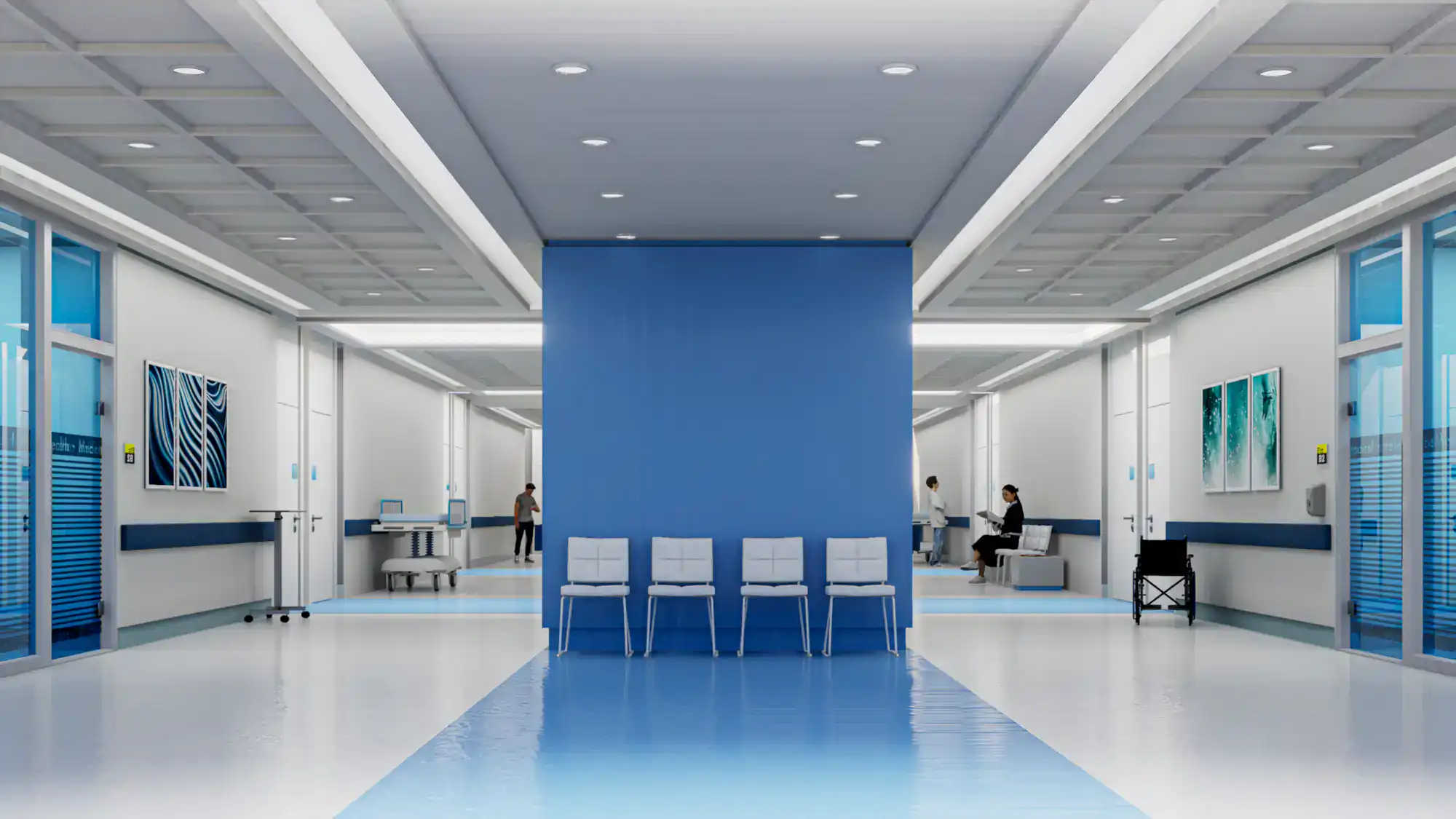
The antimicrobial technology is embedded into the epoxy itself, not applied as a surface treatment. EPA-registered additives in the flooring system actively disrupt microbial cell function, preventing bacteria, mold, and fungi from colonizing on the surface. This works continuously, not just when you’re actively cleaning.
The seamless installation is equally important. Traditional tile floors have grout lines and seams where moisture, organic matter, and pathogens accumulate even after mopping. Those hidden areas become breeding grounds for bacteria that spread through contact and aerosolization. A monolithic epoxy floor eliminates those hiding spots entirely.
When your environmental services team cleans, they’re removing contaminants instead of just moving them around. The non-porous surface doesn’t absorb liquids or trap particles, so disinfectants make full contact with any pathogens present. You get actual sanitation, not just the appearance of it. For facilities dealing with immunocompromised patients or surgical environments, this difference is critical.
Yes. These systems are specifically engineered for healthcare environments where you’re using industrial-strength disinfectants multiple times daily. The chemical resistance profile includes bleach, quaternary ammonium compounds, phenolics, hydrogen peroxide, and other hospital-grade cleaners that would damage standard flooring.
You won’t see the surface degradation that happens with VCT or other traditional materials. No yellowing from repeated bleach exposure. No etching from acidic cleaners. No breakdown of the finish that forces you into expensive refinishing cycles. The floor maintains its integrity and appearance even under aggressive cleaning regimens.
This durability extends to physical wear as well. Rolling beds, crash carts, equipment, and constant foot traffic don’t chip or crack properly installed epoxy. You’re looking at 10-20 years of service life depending on traffic levels, which means you’re not budgeting for replacement every few years like you would with tile or sheet vinyl.
Sterile room floor coatings meet specific performance standards that regular commercial epoxy doesn’t address. These include USDA and FDA compliance for cleanability, antimicrobial properties verified through EPA registration, and low-VOC formulations that won’t compromise indoor air quality in controlled environments.
The installation process is also more rigorous. Sterile environments can’t tolerate dust, off-gassing, or contamination during application. We use moisture testing, proper surface preparation, and controlled curing to ensure the floor performs as specified. The seamless finish is critical—even microscopic gaps or imperfections can harbor contaminants in a sterile setting.
For operating rooms, pharmaceutical compounding areas, or laboratory spaces in Huntington facilities, you need flooring that won’t introduce variables into your controlled environment. These systems are designed to be chemically inert, easy to validate for cleanliness, and stable under the temperature and humidity conditions typical of sterile spaces.
We phase the installation to keep your facility operational. Instead of closing entire floors or departments, we section off areas and work in sequences that allow you to maintain patient care and essential operations. Most healthcare facilities can’t afford to shut down, so we build the schedule around your needs.
In many cases, we install over your existing floor if the substrate is sound. This eliminates demolition time, reduces waste, and gets you back to normal operations faster. The epoxy systems we use have relatively quick cure times—often 24-48 hours before you can resume full traffic, depending on the specific product and environmental conditions.
The key is planning. We coordinate with your facilities team to identify low-traffic periods, critical areas that need priority, and any operational constraints we need to work around. For a facility like Huntington Hospital with 371 beds and emergency services, timing matters. We’ve done this enough times to know how to minimize disruption while still delivering a floor that meets every regulatory requirement.
If you’re operating in occupied spaces or areas with vulnerable patients, yes. Traditional epoxy systems can off-gas volatile organic compounds during application and curing, which creates air quality issues and potential health risks. Low-VOC formulations minimize these emissions without sacrificing performance.
This matters for regulatory compliance as well. Many healthcare facilities are pursuing LEED certification or need to meet specific indoor air quality standards. Low-VOC coatings contribute to those goals and demonstrate environmental responsibility to patients, staff, and regulators.
Beyond compliance, there’s a practical consideration. High-VOC products often require extensive ventilation, longer cure times, and restrictions on occupied spaces during installation. Low-VOC systems let you maintain more normal operations during the project and reduce the risk of odor complaints or respiratory irritation among staff and patients in adjacent areas.
The upfront cost of seamless medical-grade epoxy in Huntington, NY is higher than VCT or standard tile—typically 2-3 times the initial installation price. But you’re not comparing equivalent products. You’re comparing a 3-5 year flooring cycle to a 10-20 year system that requires almost no maintenance.
Traditional hospital floors need stripping, waxing, and refinishing multiple times per year. You’re paying for labor, materials, and the operational disruption every time. Tile floors require grout cleaning, replacement of cracked tiles, and eventual full replacement when the substrate fails. Those costs add up quickly and often exceed the total cost of an epoxy system over the same timeframe.
Then there’s the infection control factor. If antimicrobial flooring prevents even one healthcare-associated infection, you’ve potentially saved tens of thousands of dollars in treatment costs, liability exposure, and regulatory penalties. The CDC estimates HAIs cost the U.S. healthcare system $28-33 billion annually. Your flooring is either contributing to that problem or helping solve it. The math isn’t complicated when you look at total cost of ownership instead of just the installation invoice.