

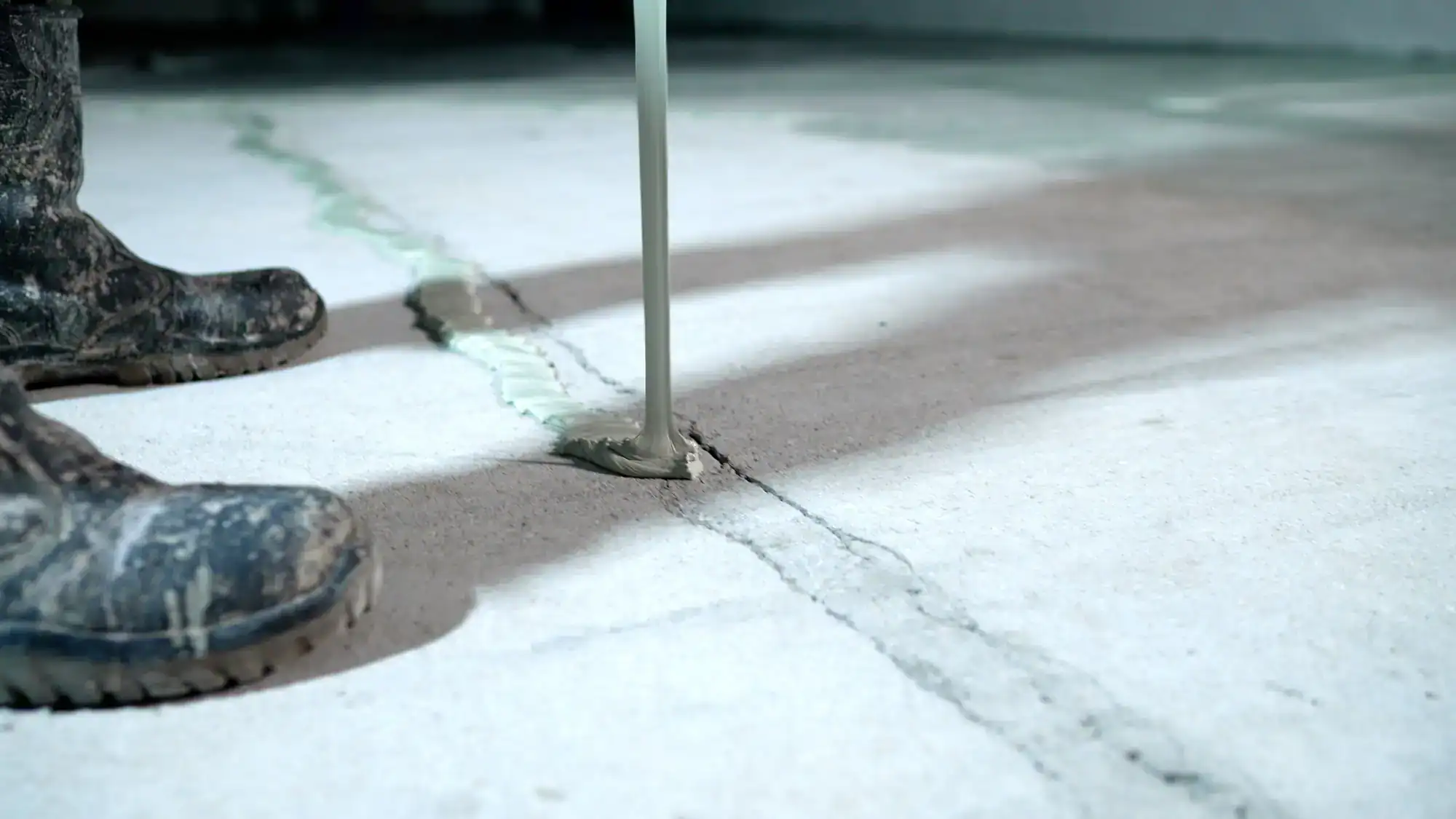
Riverhead isn’t a quiet suburb. Between the warehouse expansion happening at EPCAL in Calverton, the food service operators packed along Route 58, and the healthcare growth around Peconic Bay Medical Center, the floors here take a beating. What you need isn’t a coating it’s a system that was specified for your actual environment and installed by someone who knows the difference.
Moisture is the issue most contractors don’t talk about until after the floor fails. Riverhead sits at the head of the Peconic River, surrounded by wetlands and bay-adjacent land. Ground moisture conditions here are more aggressive than in drier inland towns further west on the island. When a slab isn’t properly tested and primed for moisture vapor transmission before the epoxy goes down, you get bubbling, delamination, and a floor that looks worse than what you started with inside of a year. That doesn’t happen when the process is done right from the start.
When the job is done correctly real surface preparation, the right system specified for your facility type, and proper cure time you end up with a seamless, chemical-resistant floor that can realistically last 15 to 20 years. That’s the math on a properly installed industrial-grade system versus a cheap coating that needs to be ground off and redone in three years.
We’ve been operating on Long Island for over 35 years, serving commercial and industrial facilities across Riverhead, Nassau County, and Suffolk County. Our company is led by Danny Harmer, who has been installing epoxy floors personally for over 40 years including the White House kitchen in 1996. That’s a reference point for the kind of environments our team has actually worked in.
We hold Sherwin-Williams High Performance Flooring certification and Res Tech certification both factory-backed credentials that require demonstrated competency, not just a check. Our installers are OSHA 40 certified, and most of our crew has been with us for over a decade. When you’re investing in a floor at an EPCAL warehouse, a Route 58 restaurant, or a clinical space near Peconic Bay Medical Center, that kind of continuity matters.
We’re BBB Accredited with an A+ rating and zero complaints on record across our full operating history. That’s the track record you’re working with.
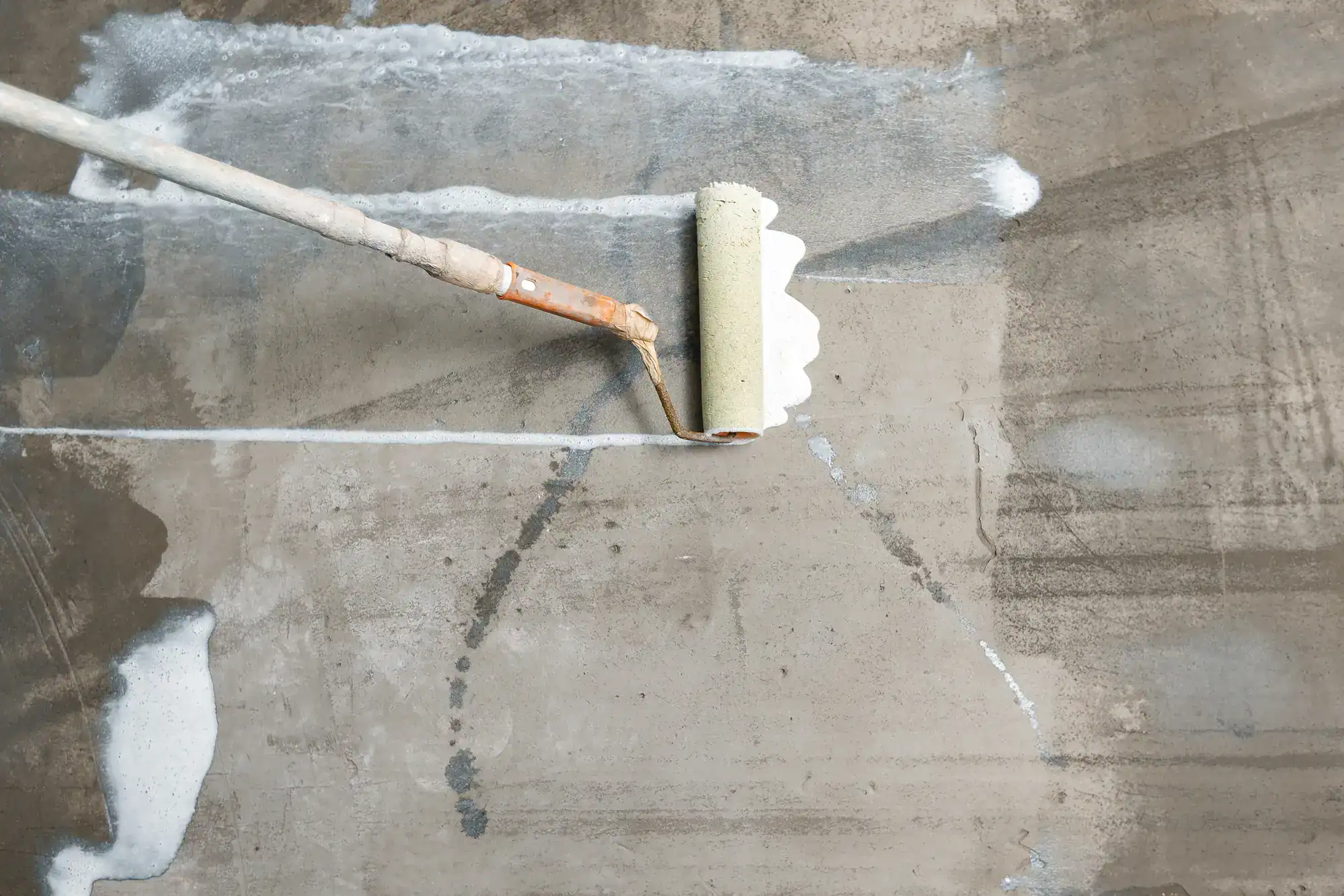
Every project starts with a site assessment, not a sales pitch. Before any product is specified, the slab gets evaluated surface condition, existing coatings, crack locations, and moisture vapor emission levels. In Riverhead, that last step is non-negotiable. The proximity to the Peconic River and the coastal humidity on the East End means moisture readings here regularly come in higher than what you’d see in a town like Hauppauge or Commack. The primer system gets selected based on those actual numbers, not a generic spec sheet.
Once the assessment is complete, surface preparation begins. This means diamond grinding the concrete to open the pores and create the mechanical profile the epoxy needs to bond properly. Any cracks or spalls get repaired before a single drop of coating goes down. This step accounts for roughly 70 to 80 percent of whether a floor succeeds or fails long-term and it’s exactly what low-cost operators skip.
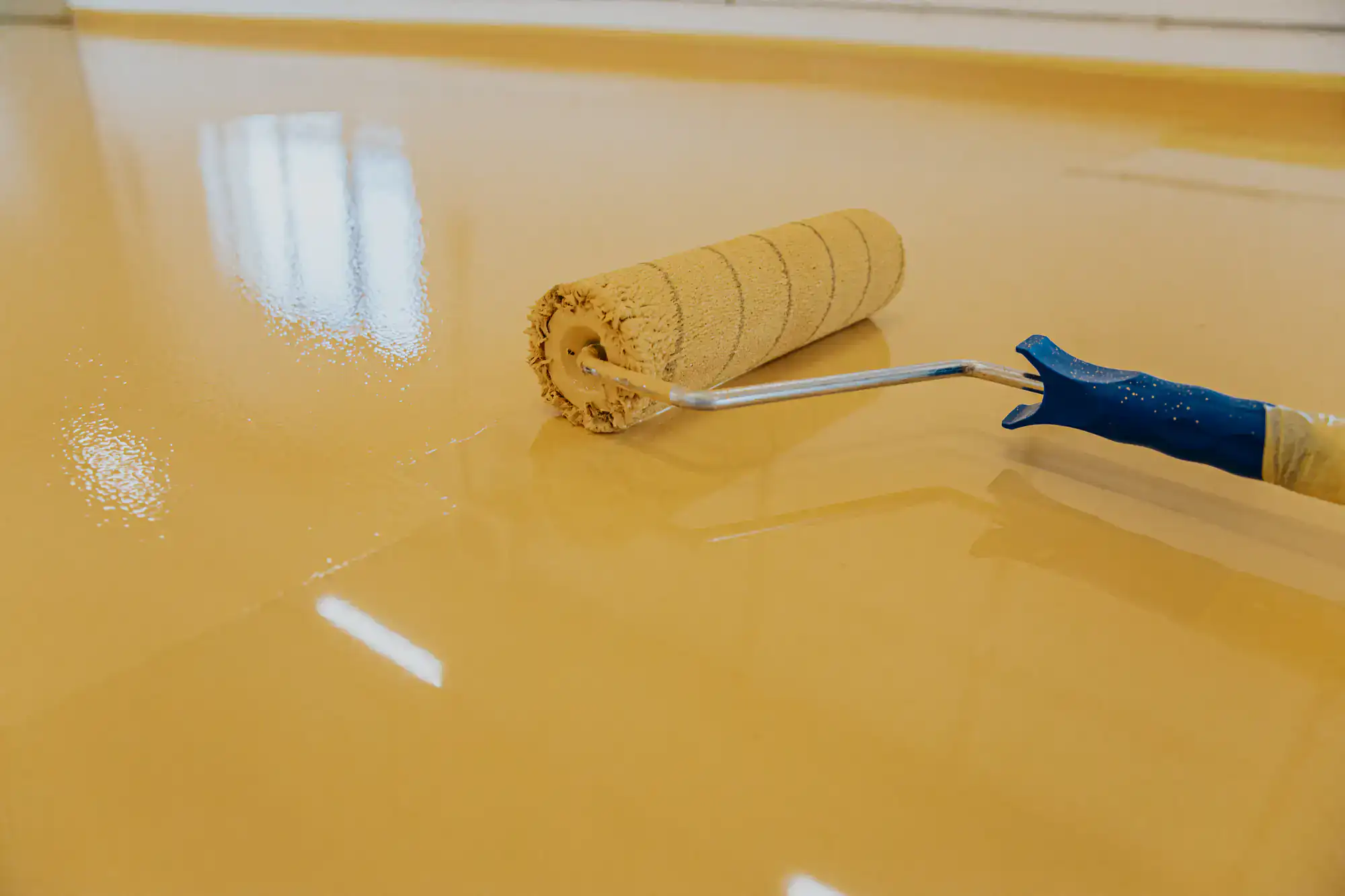
From there, the system is applied in layers: primer, body coat, and topcoat each selected for your specific facility type and use case. If you’re running a commercial kitchen on Route 58 that needs to open the next morning, the schedule gets built around your operation. If you’re working through the Town of Riverhead’s building department on a commercial renovation permit, the timeline gets coordinated accordingly. You’ll know what to expect at every stage before our crew arrives.
Ready to get started?
The systems we install aren’t one-size-fits-all. A warehouse at EPCAL dealing with forklift traffic and battery charging stations needs a heavy-duty industrial epoxy floor with a 1/4-inch mortar trowel build and a chemical-resistant polyaspartic topcoat. A commercial kitchen on Route 58 needs a USDA-compliant seamless system that passes a Suffolk County Department of Health inspection and handles daily wash-down cycles without degrading. A clinical space at or near Peconic Bay Medical Center needs an antimicrobial seamless resinous floor coating that meets FGI guidelines and New York State DOH standards. These are different systems, and they get specified differently.
Riverhead’s agricultural and winery operations in Aquebogue and Jamesport add another layer. The acids, sanitizers, and cleaning agents used in food and beverage production destroy standard flooring fast. The chemical resistant epoxy finishes we install in those environments are food-safe, impervious to the specific chemicals in use, and built to hold up through repeated high-pressure wash-downs.
For high-traffic commercial environments the retail corridors near Tanger Outlets, the downtown restaurants filling in along Main Street, automotive service bays along the Route 58 commercial strip the system is specified for foot traffic, cart loads, and the kind of daily punishment that standard coatings simply weren’t designed to absorb. Every scope gets a written spec before work begins, so you know exactly what’s going on your floor and why.
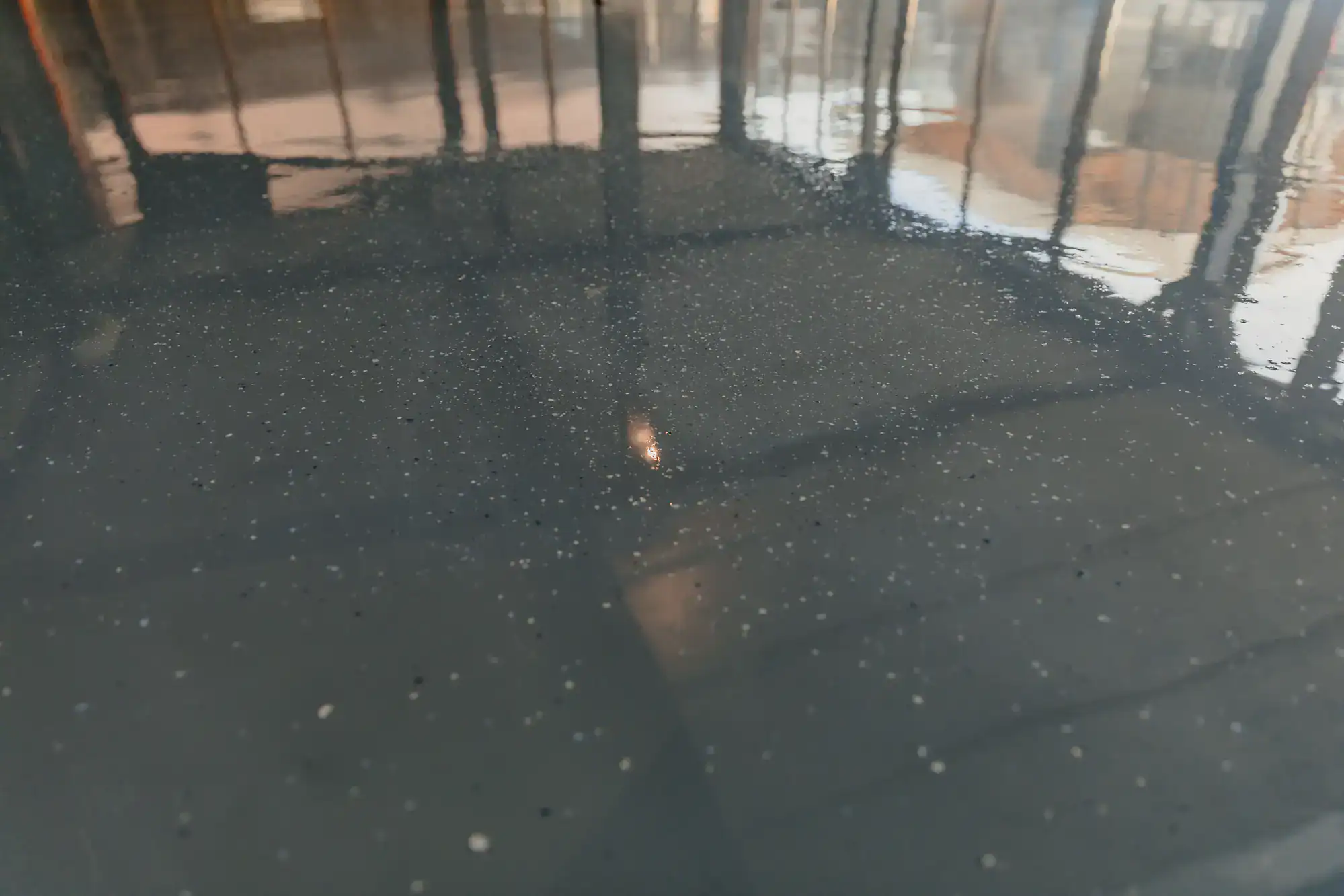
Moisture vapor transmission is the leading cause of epoxy floor failure, and it’s a more pressing issue in Riverhead than in most Long Island towns. Riverhead sits at the head of the Peconic River, and the surrounding wetlands, estuaries, and bay-adjacent land create ground conditions where slab moisture levels run consistently higher than you’d find in drier inland areas further west. When moisture vapor pushes up through a concrete slab after epoxy has been applied over it, it has nowhere to go so it lifts the coating from below, causing bubbling and delamination that can begin within months of installation.
The fix isn’t complicated, but it requires a step that many contractors skip because it adds time and cost to the job. Before any product goes down, the slab needs to be tested for moisture vapor emission rate. If the reading comes back above the acceptable threshold for the system being installed, a moisture-mitigating primer is used to seal the slab before the epoxy is applied. That one step is the difference between a floor that lasts two years and one that lasts twenty. In Riverhead’s environment specifically, skipping it is a gamble you’ll almost certainly lose.
Commercial kitchens in Riverhead whether you’re operating along the Route 58 corridor, in the downtown revitalization district, or in a winery or farm kitchen in Aquebogue or Jamesport need a seamless, USDA-compliant system that can handle daily chemical exposure, high-pressure wash-downs, and the foot traffic of a working kitchen without cracking, staining, or becoming a slip hazard. The Suffolk County Department of Health enforces flooring standards for food service establishments, and a cracked or porous floor is a direct health code violation. A properly installed seamless resinous floor coating eliminates that risk entirely.
The system we typically use in commercial kitchen environments is a cementitious urethane or a high-build epoxy with a urethane topcoat both of which offer thermal shock resistance for environments where hot water hits a cold floor repeatedly throughout the day. The other major advantage for restaurant operators is downtime. The installation is scheduled around your service hours. You close at the end of the night, our crew grinds, primes, coats, and cures, and you open the next morning on a compliant, food-safe floor. Your operation doesn’t lose a shift.
A properly installed commercial epoxy flooring system meaning real surface preparation, the right product specified for the actual use case, and correct application at the right mil thickness realistically lasts 10 to 20 years in a high-traffic commercial environment. The wide range comes down to the specific conditions: a retail floor at Tanger Outlets with constant cart and foot traffic is a different load profile than a warehouse floor at EPCAL with forklift axle weights exceeding 10,000 pounds on a concentrated contact patch.
What shortens that lifespan dramatically is cutting corners on either end of the job inadequate surface preparation before the coating goes down, or using a consumer-grade or water-based product that cures to 3 to 8 mils of dry film thickness instead of the 14 to 30 mils you get from a true industrial-grade 100% solids system. Those cheaper systems fail visibly and fast, usually within 18 months to 3 years. The lifecycle cost math is straightforward: a professional system installed correctly costs more upfront and costs significantly less over the next two decades.
It depends on the scope of the project. For a straightforward recoating of an existing concrete slab in a commercial or industrial space no structural work, no drainage modifications a permit is typically not required. But if the project involves structural concrete repair, installation of a moisture mitigation system as part of a larger renovation, or work in a regulated environment like a healthcare facility or licensed food service operation, you may need to coordinate with the Town of Riverhead Building Department before work begins.
For healthcare facilities associated with Peconic Bay Medical Center or affiliated clinical spaces, there’s an additional layer: New York State Department of Health regulations and FGI guidelines govern flooring in clinical environments, and the installation needs to be documented accordingly. For food service operators in Riverhead, the Suffolk County Department of Health Services has its own inspection standards that the finished floor needs to meet. The practical answer is that permit requirements should be confirmed with the Town of Riverhead Building Department for your specific project scope before scheduling and a contractor who’s done commercial work in Suffolk County regularly will already know how to navigate that process.
The difference is significant, and it matters a lot if you’re managing a warehouse at EPCAL, running a service bay on Route 58, or operating any kind of commercial or industrial facility in Riverhead. A standard garage floor coating the kind you see marketed at home improvement stores is typically a water-based or low-solids product that cures to somewhere between 3 and 8 mils of dry film thickness. It looks fine in a residential garage with light vehicle traffic. It’s not built for anything beyond that.
A heavy-duty industrial epoxy floor system uses 100% solids formulations that cure to 14 to 30 mils or more, depending on the build. For high-load environments, a mortar-broadcast system adds a 1/4-inch trowel-applied base that can handle the concentrated axle loads of forklifts and heavy equipment without cracking or delaminating. The topcoat on an industrial system typically a polyaspartic or urethane is chemically resistant, UV stable, and designed to maintain slip resistance under the specific conditions of your facility. These aren’t the same product category. Applying a residential-grade coating to a commercial or industrial floor is one of the most common and expensive mistakes facility managers make, because the removal and reinstallation cost more than doing it right the first time.
The honest answer is that most contractors showing up in local search results for epoxy flooring in Riverhead are focused on residential garage floors. That’s a legitimate business, but it’s a different skill set, a different product category, and a different level of accountability than commercial or industrial work. When you’re evaluating contractors for a commercial facility whether that’s a warehouse in Calverton, a clinical space near Peconic Bay Medical Center, or a food service operation on Route 58 there are a few things worth asking directly.
Ask for manufacturer certifications, not just brand name-drops. Certifications like Sherwin-Williams High Performance Flooring or Res Tech require demonstrated competency in specific systems they’re not marketing affiliations. Ask whether installers are OSHA certified and at what level. Ask for references from commercial or industrial projects specifically, not residential jobs. And ask how they handle moisture assessment, because any contractor who doesn’t mention moisture testing before specifying a system for a Riverhead facility either doesn’t know about it or is hoping you don’t ask. A contractor who’s been doing commercial and industrial work on Long Island for over 35 years has answers to all of those questions before you finish asking them.