
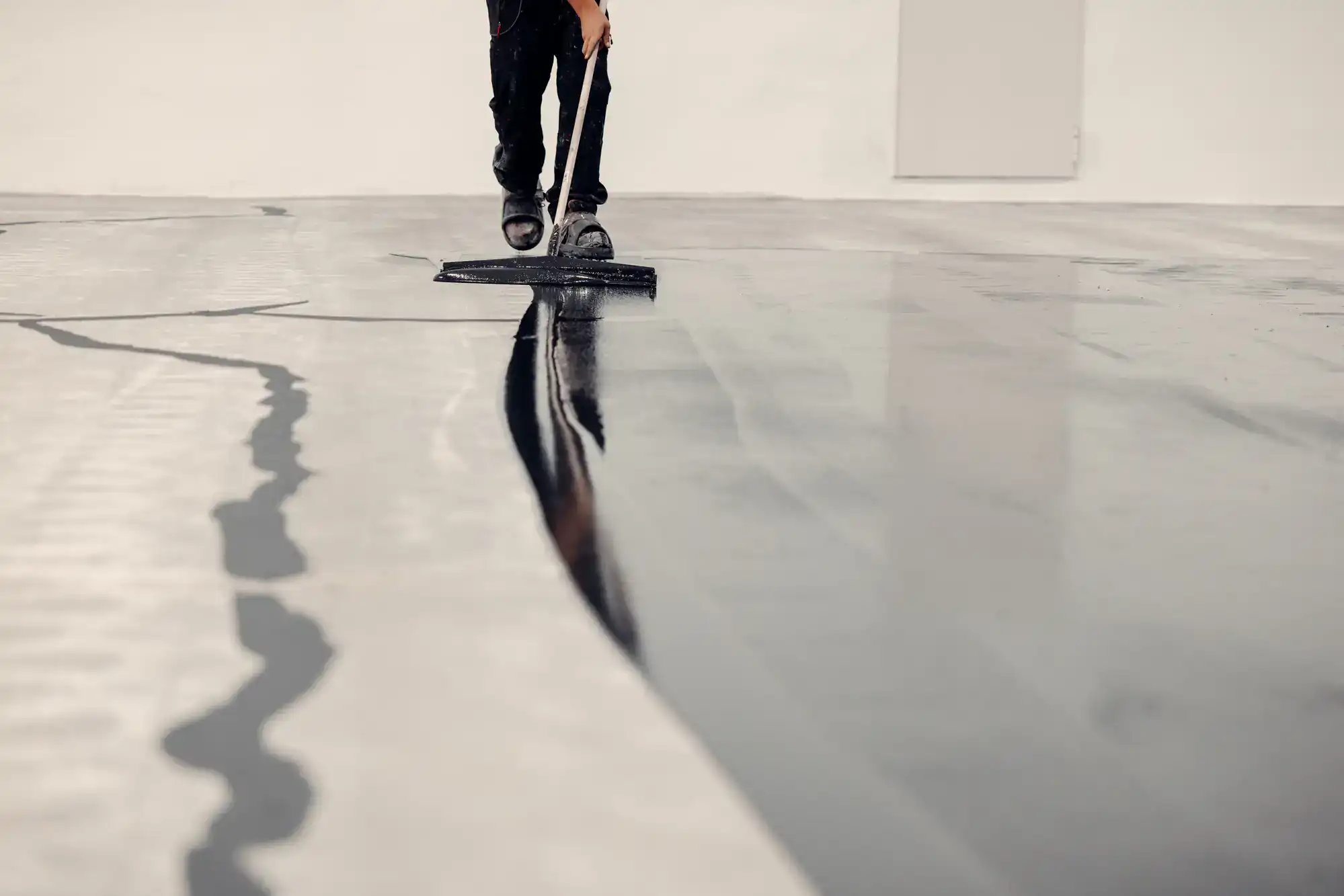
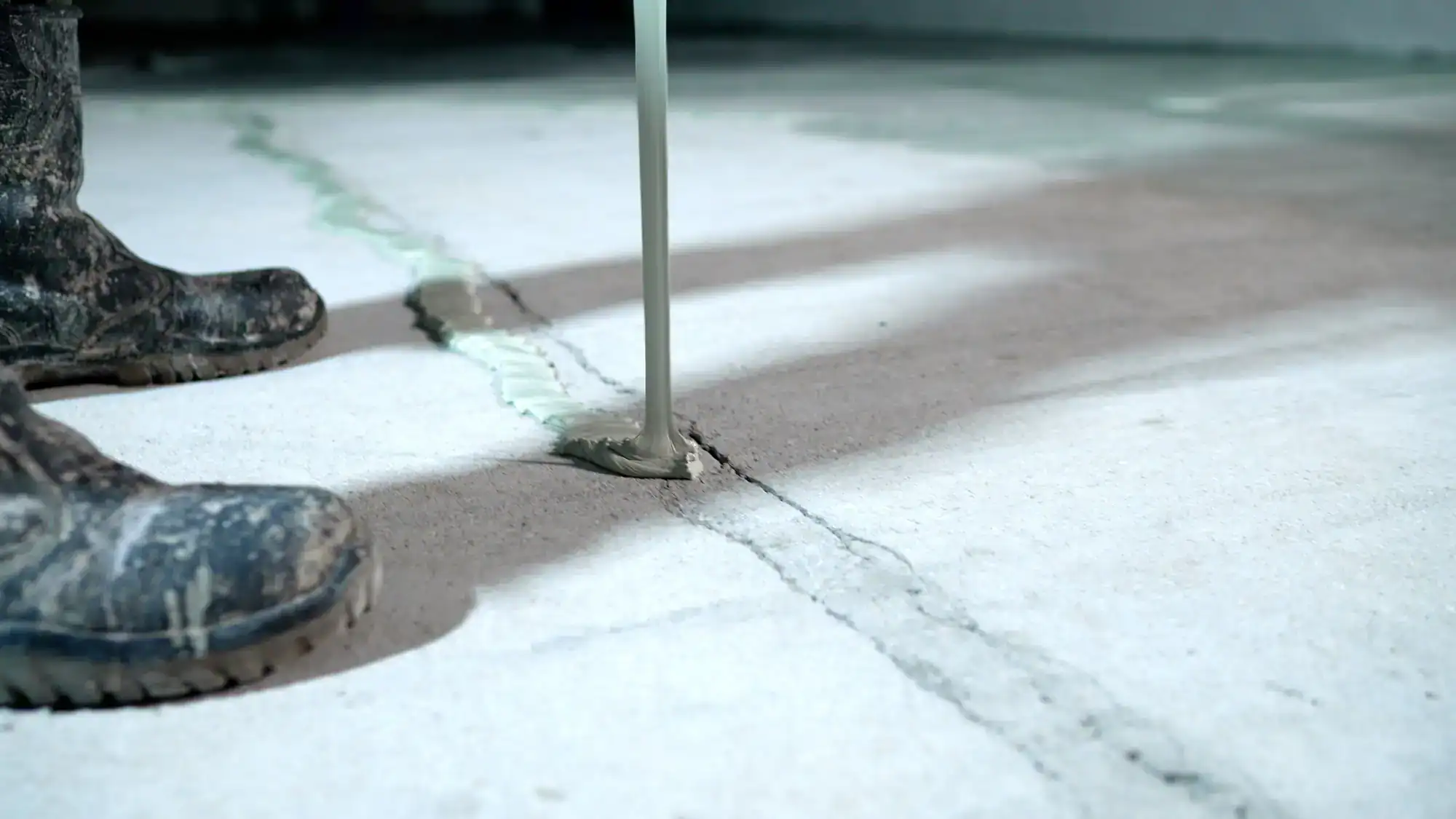
Most epoxy floors that fail on Long Island’s North Shore don’t fail because of the product. They fail because the contractor didn’t test for moisture before installing. Huntington sits on clay-heavy soil that holds groundwater like a sponge, and that moisture migrates upward through concrete slabs constantly. When it has nowhere to go, it pushes the epoxy up with it and you’re left with bubbling, peeling, and delamination within months of installation.
A properly installed floor changes the entire picture. Your facility stays cleaner, safer, and easier to maintain. Spills don’t penetrate. Heavy equipment doesn’t crack the surface. Health inspectors don’t flag your kitchen. And you’re not calling us back in two years because the floor is already failing.
For the restaurants and bars running seven nights a week in Huntington Village, that means a commercial kitchen floor that can handle thermal shock, grease, and industrial cleaning chemicals without breaking down. For the warehouses and distribution facilities along the Route 110 corridor in Melville, it means a floor engineered for forklift traffic and chemical exposure not a consumer-grade coating dressed up with commercial pricing.
We’re based in Bohemia, NY about 25 miles east of Huntington along the LIE and have been serving Nassau and Suffolk Counties since before the Melville corridor became one of Long Island’s busiest commercial hubs. This isn’t a franchise operation or a general contractor who added epoxy to a service menu. Epoxy and resinous flooring systems are the only thing we do.
Danny Harmer, our president and CEO, has over 40 years of hands-on installation experience. In 1996, our team installed the epoxy floor in the White House kitchen a project that wasn’t awarded through advertising, but through a documented track record of getting it right in demanding environments. That same standard applies to every job in Huntington, whether it’s a commercial kitchen in Huntington Village, a warehouse off Route 110, or a healthcare facility along the North Shore.
The crew that shows up to your facility has been with us for over a decade on average. That’s not a staffing footnote it’s the reason the work holds.
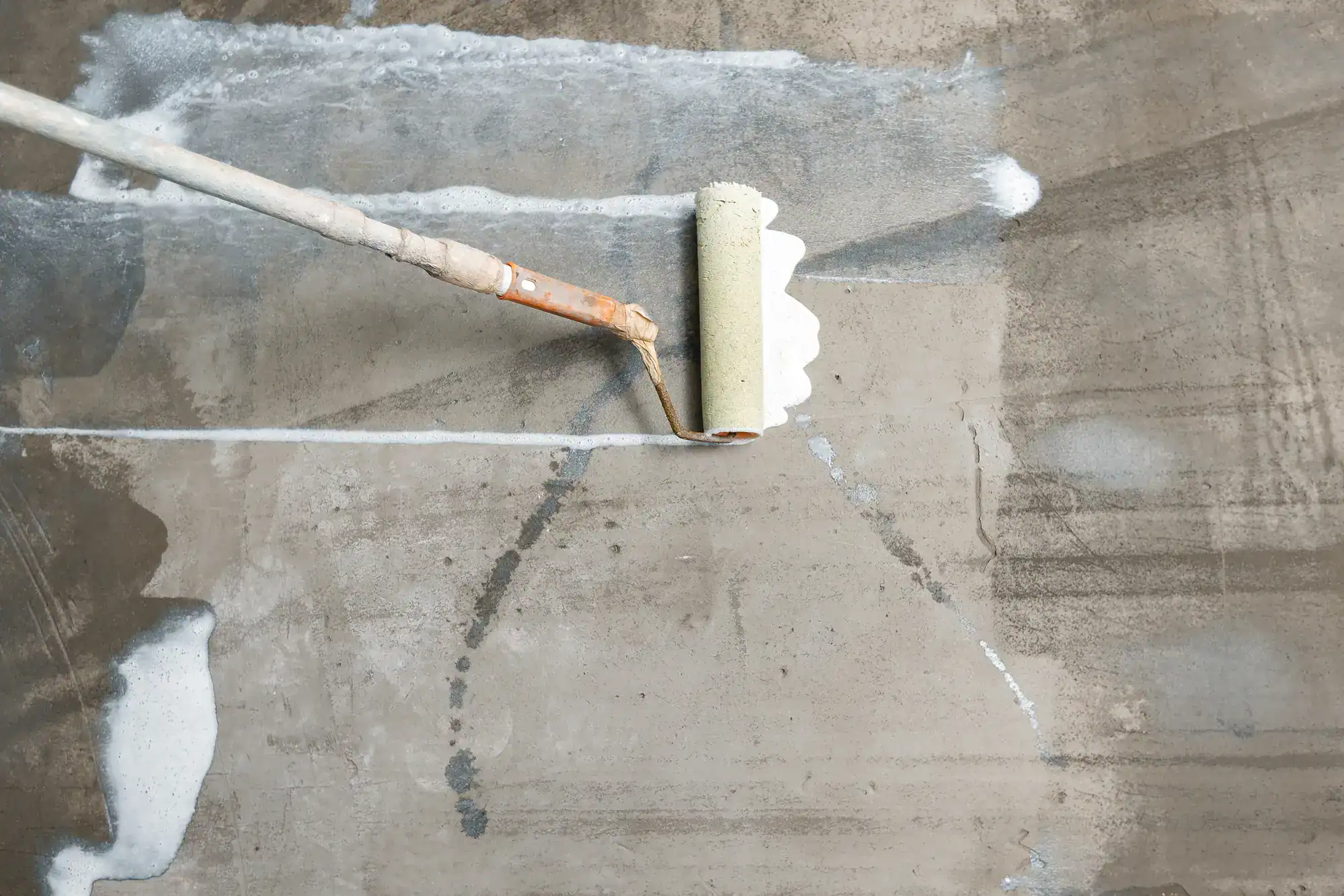
The first thing we do isn’t mix product it’s assess the slab. Every concrete floor in Huntington gets tested for moisture vapor transmission before we specify a system. Given the clay-rich soil throughout this part of Suffolk County, skipping that step isn’t just lazy it’s a guarantee the floor will fail. Once we understand what we’re working with, we can select the right system for your actual conditions, not just what’s easiest to install.
Surface preparation comes next, and it’s the step that separates professional results from floors that peel in eighteen months. We use diamond grinding on every commercial and industrial project not acid etching, not shortcuts. Diamond grinding creates the mechanical profile the epoxy needs to bond at the level that holds under real load conditions. Any cracks or surface damage get addressed before a single coat goes down.
From there, installation is staged and disciplined. Each layer cures on its own schedule before the next goes down. For restaurant and commercial kitchen clients in Huntington Village, most projects are completed overnight kitchen closed at night, floor ready for service the next morning. For larger industrial facilities in the Melville corridor, we phase the work around your operating schedule so you’re not shutting down the whole building to get a floor done.
Ready to get started?
Not every floor in Huntington needs the same solution. A commercial kitchen in Huntington Village needs a USDA-compliant, seamless, anti-slip system with hygienic cove base that meets Suffolk County Department of Health requirements. A warehouse in Melville needs a heavy duty industrial epoxy floor with compressive strength and chemical resistance mapped to the specific loads and substances present in that facility. A healthcare office along Route 110 needs antimicrobial additives, ADA compliance, and seamless installation that eliminates the seams where bacteria accumulate. Those are three completely different specifications, and we don’t treat them the same.
We install 100% solids and high-solids industrial epoxy systems not the water-based, box-store-grade products that look similar going down but perform completely differently under real conditions. We’re Sherwin-Williams High Performance Flooring certified. Res Tech certified. OSHA 40 certified installers on every job site. These aren’t marketing claims they’re the credentials that get us through the door on institutional and commercial contracts where vendor documentation is required before work begins.
For auto service shops, mechanical rooms, and light manufacturing facilities throughout Huntington, we install chemical resistant epoxy finishes that are specified against your actual chemical exposure profile motor oil, hydraulic fluid, battery acid, industrial solvents not a generic “chemical resistant” label applied to every floor we sell.
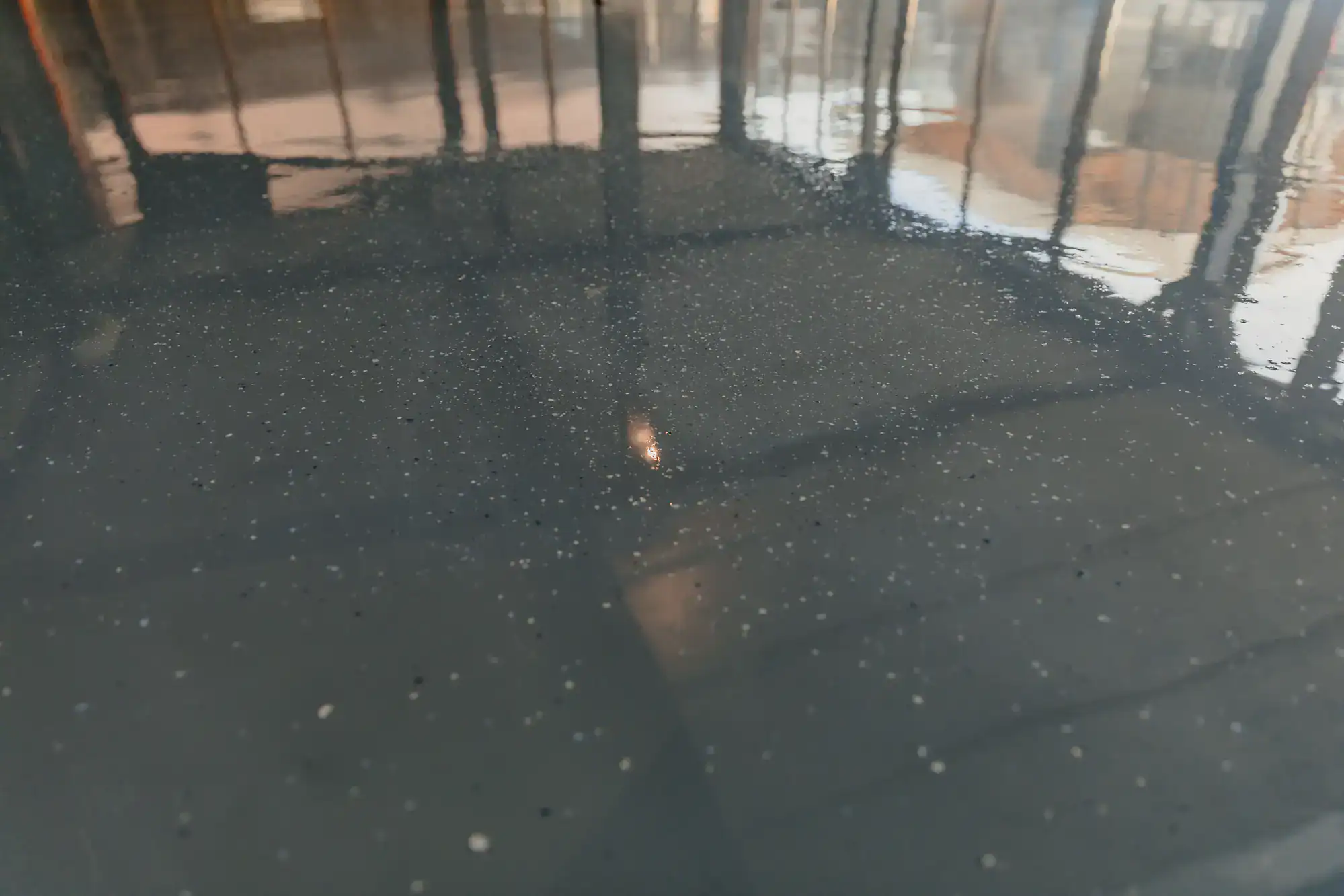
The short answer is moisture, and it’s a problem that’s more common on Huntington’s North Shore than most contractors will tell you. The clay-heavy soil throughout this part of Suffolk County holds groundwater at elevated levels, and that moisture migrates upward through concrete slabs as vapor. When a contractor installs epoxy over a slab without first testing for moisture vapor transmission which most do, because it adds time and complexity that trapped moisture has nowhere to go but up. It pushes against the coating from underneath, and the floor bubbles, blisters, and eventually peels.
The fix isn’t a better product. It’s a better process. Moisture testing before any system is specified is the step that determines whether the floor lasts two years or twenty. If a contractor you’re speaking with doesn’t mention moisture assessment as part of their process, that’s a significant red flag especially for any facility in Huntington, Melville, Cold Spring Harbor, or anywhere else along the North Shore where clay soil and coastal humidity are part of the equation.
A properly installed commercial epoxy flooring system in Huntington, NY should last anywhere from 10 to 20 years under normal commercial use, and longer in environments where it’s maintained correctly. The variables that affect lifespan are surface preparation quality, the specific system installed, and how well the floor is matched to the actual demands of the space load weight, chemical exposure, traffic volume, and moisture conditions.
What shortens that lifespan significantly is cutting corners on prep or using an undersized system. A water-based epoxy applied at 3 to 5 mils of dry film thickness in a warehouse that runs forklifts isn’t going to last a decade it’s going to fail under load. A 100% solids industrial system installed at 14 to 30 mils, over a properly diamond-ground and moisture-tested slab, is a completely different product with a completely different performance profile. The price difference between those two options is real, but so is the difference in how long you go before you’re dealing with this again.
Yes, and for most restaurant and food service clients in Huntington Village, that’s exactly how we do it. The majority of our commercial kitchen floor installations are completed overnight the kitchen closes at the end of service, we come in, prep the slab, and install the system. By the time your staff arrives the next morning, the floor is cured and ready for food service operations.
The system we install in commercial kitchens is USDA-compliant, seamlessly applied with hygienic cove base, and engineered specifically for the conditions a working kitchen creates: thermal shock from industrial dishwashers, grease and oil penetration, chemical exposure from cleaning agents, and the constant wet traffic that would destroy a standard floor coating in months. Suffolk County Department of Health has specific requirements for commercial food service flooring, and everything we install meets those standards. If your current kitchen floor is cracked, pitted, or absorbing what it should be repelling, it’s not just an aesthetic problem it’s a compliance problem.
The difference is substantial, and it shows up fast once the floor is under real use. Hardware store and big-box epoxy kits are water-based systems, typically 40 to 55 percent solids, applied at 3 to 8 mils of dry film thickness. They look fine going down, but they’re not engineered for commercial or industrial load conditions, chemical exposure, or the moisture vapor pressures present in a North Shore Long Island slab.
Industrial epoxy systems the kind we install for commercial and industrial clients throughout Huntington are 100% solids or high-solids formulations applied at 14 to 30 mils, with compressive strength ratings, chemical resistance specifications, and adhesion profiles that are categorically different from what you buy off a shelf. The products we use are Sherwin-Williams High Performance Flooring systems and Res Tech systems manufacturer-certified, not generic. For facilities along the Route 110 corridor in Melville or anywhere else in the town where the floor is actually working for a living, the difference between those two product categories is the difference between a floor that lasts two years and one that lasts twenty.
Huntington’s position on the Long Island Sound means coastal humidity is a year-round condition, not just a summer issue. Relative humidity above 85 percent during application can cause epoxy to cure improperly trapping moisture in the film, creating a hazy or blush finish, or compromising adhesion at the substrate level. This is why installation scheduling matters as much as product selection, particularly during Huntington’s humid summer months when temperatures and humidity levels can both work against a proper cure.
On the performance side, a floor that wasn’t specified correctly for a high-humidity environment will show it over time usually through delamination at the edges, moisture-related discoloration, or coating failure in areas where vapor pressure is highest. The answer isn’t to avoid epoxy in coastal environments it’s to use moisture-tolerant systems, test the slab before installation, and schedule work during conditions that support a proper cure. We’ve been doing this on Long Island for over 35 years, which means we’ve learned how to work with the climate here, not against it.
For commercial and industrial epoxy flooring in Huntington, NY, most projects fall somewhere between $7 and $12 per square foot for a professionally installed, industrial-grade system. The range depends on the size of the space, the condition of the existing slab, the specific system required, and how much surface preparation work the concrete needs before installation can begin. Larger facilities with straightforward slabs come in toward the lower end. Spaces with significant moisture issues, crack repair needs, or specialized compliance requirements like USDA-compliant commercial kitchen systems or healthcare flooring with antimicrobial additives run higher.
What’s worth understanding is the cost comparison over time. A cheaper installation at $3 to $4 per square foot using a water-based system might look like savings upfront, but if it fails in two years, you’re paying for prep and installation again plus the downtime cost of closing your facility a second time. For a restaurant in Huntington Village or a warehouse in Melville where every day of operation matters, that math shifts the value calculation significantly. The right question isn’t what the floor costs today it’s what it costs over the life of your facility.