Not sure whether polyaspartic or epoxy is right for your commercial space? Here's what actually matters before you commit to either system.

If you manage a commercial facility in Nassau County, you already know that flooring isn’t just a maintenance item — it’s an operational decision. The wrong coating choice means extended downtime, premature failure, or a floor that starts peeling before you’ve gotten your money’s worth. And with contractors quoting everything from basic epoxy to premium polyaspartic systems, it’s hard to know what you’re actually comparing.
This page is here to clear that up. We’ll walk through how these two systems differ, what they each do well, and what actually matters when you’re making this call for a Long Island commercial space.
At a surface level, polyaspartic and epoxy look similar — both are resinous coatings applied to concrete, both create a hard, seamless finish, and both are marketed as durable. But the chemistry is different, the performance is different, and the installation requirements are different enough that choosing the wrong one for your facility is a real and common mistake.
Epoxy is a two-part system — resin and hardener — that bonds tightly to concrete and builds a strong, thick base. It’s been the standard in commercial flooring for decades, and for good reason. Polyaspartic is a subset of polyurea chemistry, developed specifically to address some of epoxy’s limitations: slower cure times, UV sensitivity, and narrower application windows. It’s not a newer version of epoxy — it’s a different material with a different job.
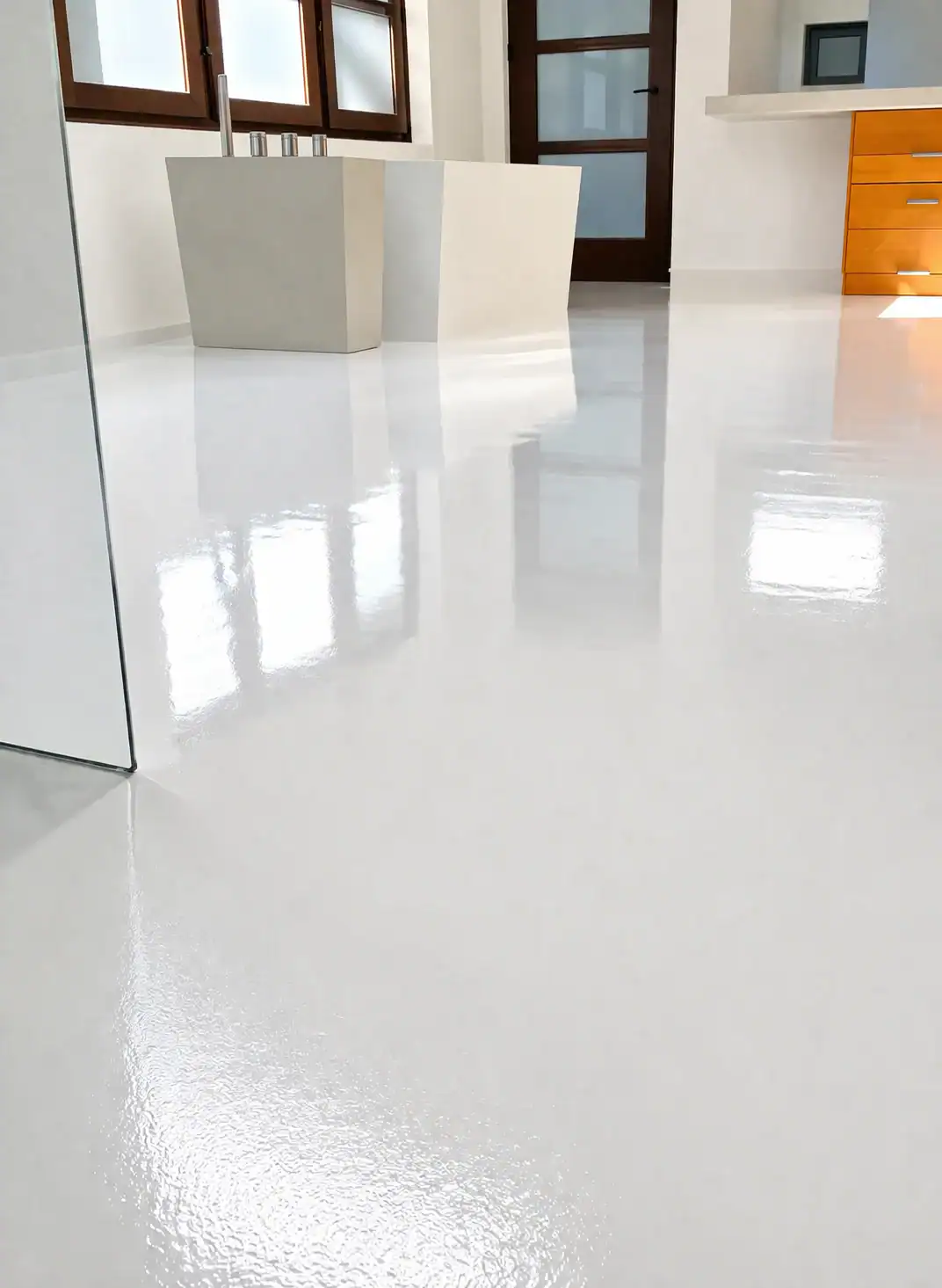
The most practical way to think about it: epoxy is often the right foundation, and polyaspartic is often the right finish. Many of the strongest commercial floor systems we install use both.

This is the question most facility managers care about most, and it’s where the difference between these two systems is most dramatic.
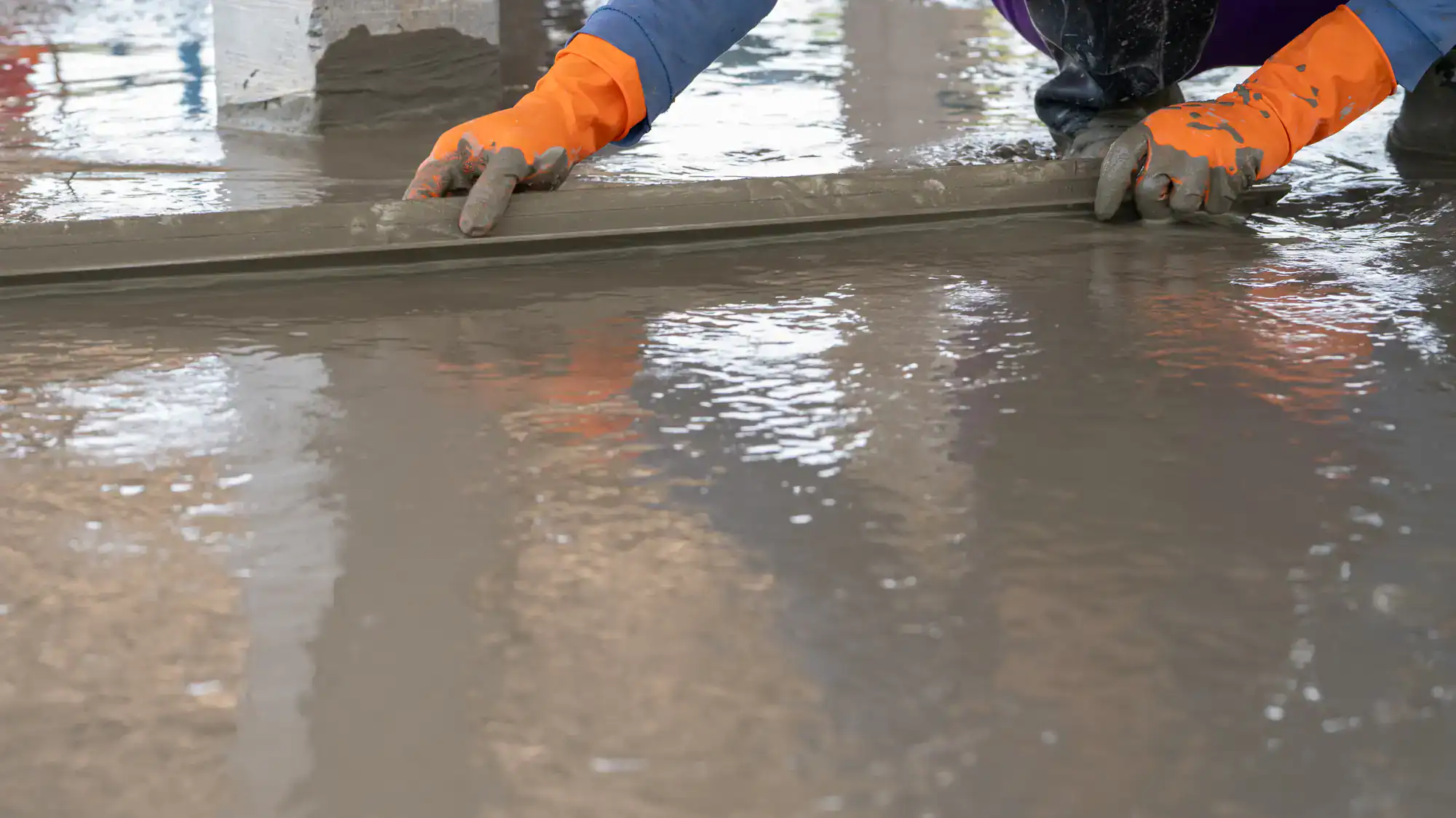
Standard epoxy needs 24 to 72 hours before you can put foot traffic on it, and full chemical cure — the point where the floor reaches its rated hardness and chemical resistance — can take up to seven days. For a warehouse in Hicksville or a medical office in East Meadow, that’s not a minor inconvenience. That’s a week of disrupted operations, relocated staff, and potentially lost revenue.
Polyaspartic topcoats cure significantly faster. Foot traffic is typically safe within two to four hours of application. Vehicles and equipment can usually return within 24 hours. For a busy automotive shop on the Route 110 corridor or a commercial kitchen in Freeport that runs six days a week, that difference is the entire argument for polyaspartic.
It’s worth understanding why the cure times differ so dramatically. Polyaspartic coatings undergo a different chemical reaction than epoxy — one that’s less temperature-dependent and completes faster under a wider range of conditions. This also makes polyaspartic more practical for year-round installation in Nassau County, where temperatures in March and October can swing enough to slow or compromise a standard epoxy cure. Epoxy applied below 50°F is generally not recommended without specialty products. Polyaspartic handles cooler temperatures with far less risk.
There’s a tradeoff, though. Polyaspartic’s short pot life — sometimes as little as 20 to 30 minutes before it begins to cure — means our installers have to work quickly and precisely. It’s unforgiving. Contractors without specific training in polyaspartic application can produce a failed floor faster than they would with epoxy. This is not a system you want installed by someone who learned it from a YouTube video or is applying it for the first time on your facility.
Lifespan data is where the total cost of ownership argument for polyaspartic becomes hard to ignore.
Under real commercial conditions — forklifts, heavy foot traffic, chemical spills, constant cleaning — a standard epoxy floor typically lasts five to seven years before it needs significant repair or replacement. Professionally installed polyaspartic systems routinely last 15 to 25 years with proper maintenance. That’s not a small difference. Over a 20-year period, a facility that installs standard epoxy may replace their floor three or four times. A facility that installs a quality polyaspartic system may never touch it again in that same window.
Chemical resistance is another area where polyaspartic pulls ahead for certain industries. Polyaspartic coatings can withstand prolonged exposure to acids and caustic solutions that would degrade a standard epoxy surface. For automotive shops dealing with oil, brake fluid, and degreasers, or food processing facilities in Nassau County that use heavy sanitizing chemicals, this matters in a way that lifespan numbers alone don’t capture.
UV stability is a factor that often gets overlooked until it’s too late. Standard epoxy yellows, chalks, and fades when exposed to sunlight — a real problem for commercial spaces with skylights, south-facing windows, or glass storefronts. Polyaspartic is UV-stable and will hold its color and finish regardless of sun exposure. For a showroom in Garden City or a retail space in Manhasset, that distinction can mean the difference between a floor that looks professional for 15 years and one that looks tired after two.
One more performance factor worth understanding: flexibility. Epoxy is rigid. Polyaspartic has more give, which means it handles the minor concrete movement and thermal expansion that happens in Long Island’s climate without cracking the way a brittle epoxy surface can. Nassau County’s 30 to 40 freeze-thaw cycles per winter put real stress on floor coatings. A system with some flexibility weathers that stress better than one without.
Want live answers?
Connect with an Advanced Epoxy Flooring expert for fast, friendly support.
Nassau County isn’t a generic commercial market. It sits between Long Island Sound to the north and the Atlantic Ocean to the south, which creates persistent coastal humidity, salt-laden air, and elevated moisture in concrete substrates across the county — from the South Shore communities like Long Beach and Freeport to the industrial corridors in Bethpage and Hicksville.
That environment changes the flooring conversation in ways that most national comparison guides don’t address. Moisture vapor in concrete is one of the leading causes of floor coating failure, and it’s a problem that’s more common and more aggressive in Nassau County than in inland markets. A coating that looks perfect on paper can delaminate within 18 months if the concrete substrate wasn’t properly assessed and prepared before installation.

Before we install any floor system — epoxy, polyaspartic, or otherwise — we test for moisture vapor emission from the concrete. This step is standard in our process and non-negotiable for Long Island installations. It’s also a step that a surprising number of contractors skip, either because they don’t know to do it or because it adds time they’d rather not spend.
Here’s why it matters. Concrete is porous. In coastal environments like Nassau County, where the water table is high and ambient humidity is elevated year-round, concrete slabs often carry more moisture than they appear to. When you apply a coating over concrete that hasn’t been properly assessed, that moisture vapor pushes upward as it tries to escape. It has nowhere to go except through the coating — causing bubbling, blistering, and eventually delamination. The floor peels from below, and there’s nothing wrong with the coating itself. The failure was built in before the first drop was applied.
Polyaspartic has better moisture tolerance than standard epoxy during application, which is one reason it performs better in coastal markets. But that tolerance isn’t unlimited, and it doesn’t replace the need for proper substrate assessment. The right approach is always to test first, address any moisture issues in the preparation phase, and then select the appropriate system for the conditions you’ve confirmed.
The South Shore communities — Long Beach, Atlantic Beach, Island Park, Freeport — are where we see the most aggressive moisture-related failures from previous installations. Facilities close to the water, on low-lying ground, or in buildings constructed before modern vapor barrier standards are the highest risk. If your facility is in one of these areas and you’ve had a floor coating fail before, moisture is almost certainly why.
This is also why surface preparation is as important as the coating itself. We use diamond grinding — not acid etching, which is a shortcut that leaves an insufficient profile — to open the concrete surface and create the mechanical bond the coating needs to hold for decades. No amount of premium coating chemistry overcomes a poorly prepared substrate.
The honest answer is that most high-traffic commercial facilities in Nassau County benefit from a polyaspartic topcoat — but the base system underneath it varies depending on what the space actually does.
Healthcare facilities are among the strongest candidates. Nassau County’s healthcare sector is the largest employment sector in the county, with facilities concentrated in areas like East Meadow, Garden City, and Mineola. These environments need seamless, antimicrobial, non-absorbent surfaces that can be sanitized repeatedly without degrading. A hybrid system — epoxy base with a polyaspartic topcoat — delivers that combination. The epoxy provides the structural foundation and chemical bonding to the concrete. The polyaspartic provides the hard, hygienic, UV-stable finish layer that healthcare environments require.
Automotive shops along the Route 110 corridor in Bethpage and Hicksville are another clear fit. Oil, hydraulic fluid, transmission fluid, and degreasers are a daily reality in these spaces. Polyaspartic’s chemical resistance handles that exposure far better than standard epoxy, and the faster cure time means a shop can be back in operation the next morning instead of shutting down for a week.
Commercial kitchens and food service facilities have their own requirements. In many cases, the right answer isn’t polyaspartic or epoxy at all — it’s cementitious urethane as the base, with a polyaspartic or urethane topcoat. Cementitious urethane handles thermal shock (the rapid temperature swings from hot equipment, steam cleaning, and cold walk-ins), heavy drainage, and the constant moisture that commercial kitchen floors endure. It’s a specialized system that most contractors on Long Island aren’t equipped to install. We are, and we’ve been doing it for 35 years.
Warehouses and distribution facilities in the Farmingdale and Bethpage industrial zones need heavy-tonnage rated systems that can handle forklift traffic, pallet jacks, and constant movement without cracking or wearing through. For these environments, the combination of an industrial-grade epoxy base and polyaspartic topcoat provides the load capacity and surface durability the space demands — with a return-to-service timeline that doesn’t require shutting the facility down for days.
The polyaspartic vs. epoxy decision isn’t really about which product is better in the abstract. It’s about which system fits your facility, your environment, your industry, and your operational constraints — and whether the contractor you hire actually knows how to install it correctly.
For most commercial facilities in Nassau County, the answer is a hybrid system: industrial-grade epoxy as the base, polyaspartic as the topcoat. You get the structural strength and adhesion of epoxy combined with the fast cure, UV stability, and long-term durability of polyaspartic. It’s the approach that holds up in this climate, in these industries, over the long run.
What separates a floor that lasts 20 years from one that fails in 18 months isn’t the brand on the bucket. It’s the preparation, the process, and the expertise of the people installing it. We’ve been doing this work on Long Island for 35 years, with 14 trained installers on staff and factory certification in the advanced systems — polyaspartic, cementitious urethane — that most contractors in this market simply aren’t equipped to handle. If you’re ready to talk through what your facility actually needs, reach out to us and we’ll give you a straight answer.
—
**Frequently Asked Questions**
**How long does a polyaspartic floor coating last compared to standard epoxy?** Professionally installed polyaspartic systems typically last 15 to 25 years under commercial conditions. Standard epoxy under the same conditions generally lasts five to seven years before it needs significant repair or replacement. The upfront cost difference between the two systems is real, but over a 15 to 20 year window, polyaspartic almost always delivers a lower total cost of ownership.
**Can polyaspartic or epoxy be installed in winter on Long Island?** Standard epoxy has a narrow application temperature window and shouldn’t be applied below 50°F without specialty products — which is a genuine limitation for Nassau County installations in late fall and winter. Polyaspartic handles a wider temperature range and is a more practical option for year-round commercial work in this climate. That said, temperature is just one factor. Ambient humidity, substrate conditions, and proper surface preparation all play a role in how any coating performs after installation.
**Why do epoxy floors fail so often in Nassau County?** The most common cause is moisture. Nassau County’s coastal position — between Long Island Sound and the Atlantic Ocean — means concrete substrates across the county carry elevated moisture, especially in South Shore communities like Long Beach, Freeport, and Island Park. When a contractor skips moisture vapor testing and applies a coating over high-moisture concrete, the floor delaminates from below. The coating itself isn’t defective — the preparation was. The second most common cause is skipping diamond grinding in favor of acid etching, which produces an insufficient surface profile and leads to adhesion failure.
**Is polyaspartic flooring only for garages?** No — and this is one of the most persistent misconceptions in the market. Polyaspartic was developed for commercial and industrial applications. It’s used in hospitals, food processing facilities, universities, and military installations. The residential garage market adopted it later. For Nassau County commercial facilities, polyaspartic is often the more appropriate choice precisely because commercial environments demand faster return-to-service, better chemical resistance, and longer lifespan than garage-grade products can deliver.
**What’s the difference between polyaspartic and polyurea?** Polyaspartic is a type of polyurea — a subset of that chemistry family engineered specifically for floor coating applications. Pure polyurea cures in seconds, which makes it nearly impossible to apply correctly as a floor coating. Polyaspartic slows that cure rate to a workable window while retaining most of polyurea’s performance advantages: UV stability, flexibility, chemical resistance, and fast cure relative to epoxy. It’s the version of polyurea chemistry that’s actually practical for commercial floor installation.
Summary:

Article details:
Share: