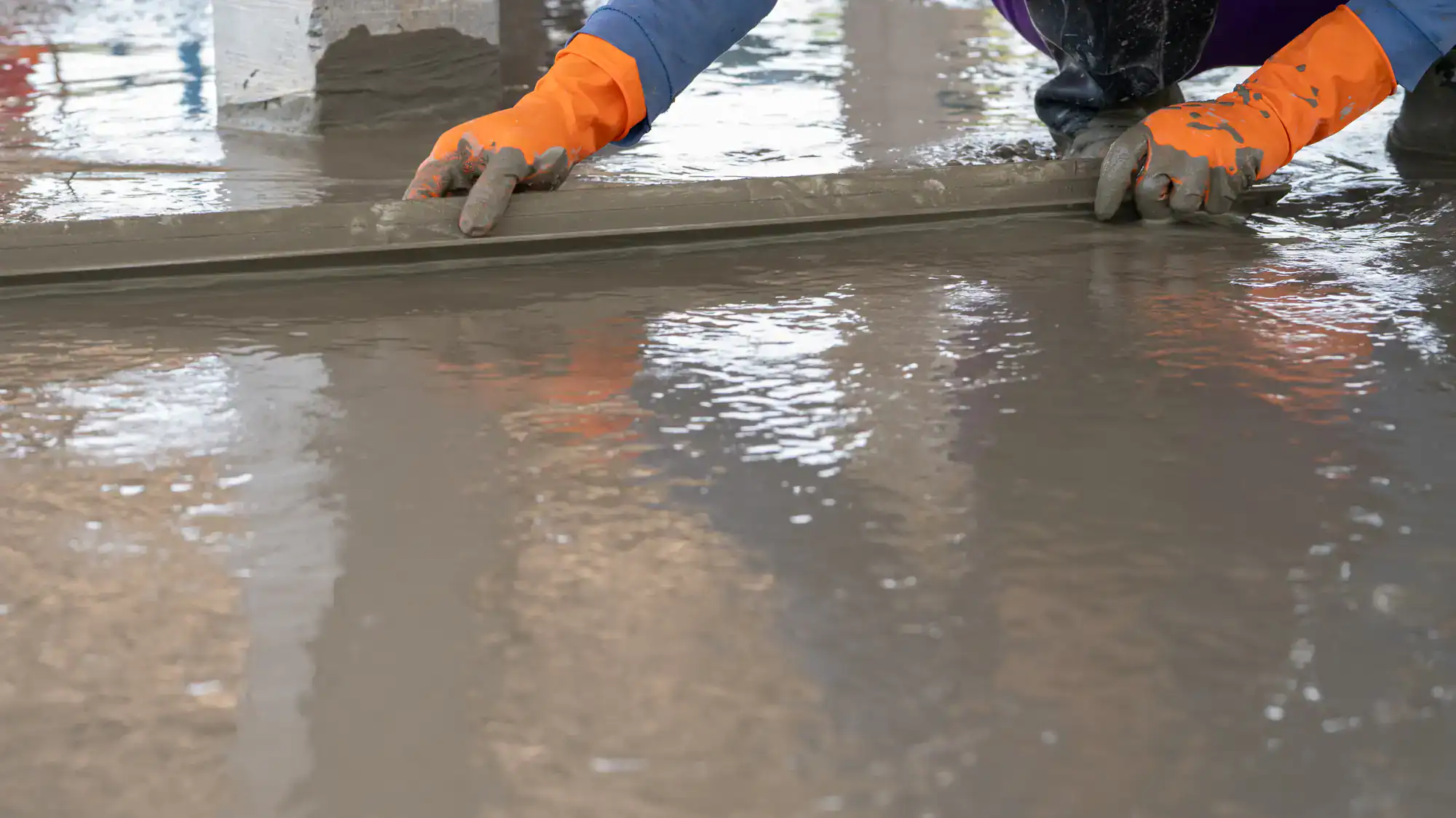
The wrong kitchen floor can cost you more than a replacement. Here's what commercial operators in Bohemia, NY actually need to know before making a decision.
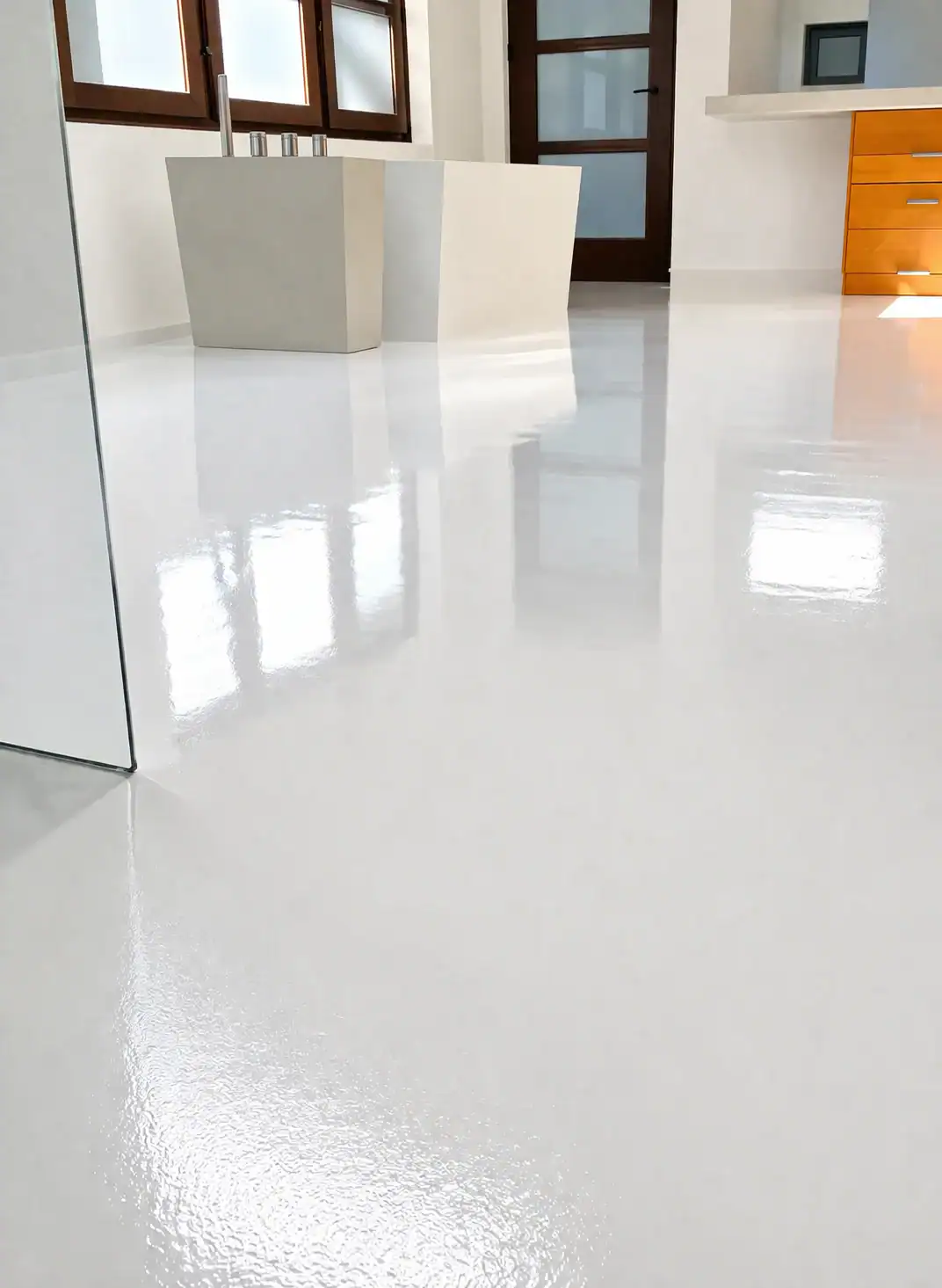
If you run a commercial kitchen in Bohemia, NY — whether it’s a restaurant on Route 347, a firehouse in the Town of Islip, or an institutional food service facility anywhere in central Suffolk County — your floor is doing a job that most people never think about until something goes wrong. It handles hot oil spills, constant washdowns, heavy foot traffic, and the kind of chemical exposure that would destroy a residential surface in months. When it starts cracking, peeling, or failing a health inspection, the clock starts ticking fast. This page is here to help you understand what your floor actually needs, what the compliance requirements look like in New York, and what the installation process should involve when it’s done right.
A commercial kitchen floor lives a hard life. Between the temperature swings from a hot line to a walk-in cooler, the daily sanitization with caustic cleaning chemicals, and the constant foot traffic from staff carrying heavy loads, the demands are nothing like a typical floor environment. Standard materials simply weren’t built for this.
The most common failure we see is a floor that looked fine at installation but started cracking, delaminating, or staining within a year or two. That’s usually not bad luck — it’s the wrong system installed in the wrong environment, often without the proper preparation work underneath it.
Thermal shock is one of the least-discussed reasons commercial kitchen floors fail — and one of the most common. It happens when a surface is hit with a dramatic temperature change: hot grease hitting a cold floor, steam cleaning after a cold night, or the repeated cycle of heat from cooking equipment followed by cold water during cleanup. Standard epoxy coatings aren’t built for that kind of stress. They expand and contract at a different rate than the concrete beneath them, and over time, that movement causes cracking and separation.
The system that actually handles this environment is cementitious urethane — sometimes called urethane cement. It’s a completely different category of product from the epoxy you’d see in a garage or a retail showroom. It bonds more aggressively to the concrete substrate, it flexes rather than cracks under temperature changes, and it holds up to the chemical exposure that commercial kitchens generate every single day. Polyaspartic coatings are another option we specify in the right contexts — they’re roughly four times more flexible than standard epoxy, which matters a great deal when your floor is cycling through heat and cold on a daily basis.
This is the distinction that gets lost when a general contractor bids a kitchen floor job using the same product they’d use in a warehouse or a garage. The product category looks similar on paper, but the performance gap in a thermal shock environment is significant. A floor installed with the wrong system isn’t just a cosmetic problem waiting to happen — it’s a compliance problem, a liability problem, and an operational disruption waiting to occur. Getting the system specification right from the start is the single most important decision in the entire process.
The coating system gets most of the attention in any flooring conversation, but the work that happens before a single drop of epoxy is applied is what actually determines whether the floor holds up. Concrete preparation — specifically diamond grinding or shot blasting the surface — is what creates the mechanical profile the coating needs to bond to. Without it, you’re essentially applying a coating to a surface that can’t hold it. It may look fine for six months, and then it starts to peel.
Moisture testing is the other step that separates a professional installation from a shortcut. Moisture vapor transmission — the movement of water vapor up through a concrete slab — is the leading cause of epoxy delamination, and it’s a particularly relevant concern on Long Island. The coastal climate in Suffolk County creates elevated moisture conditions in concrete slabs, especially in the fall and winter months. A contractor who skips moisture testing in this environment isn’t just cutting a corner — they’re setting up a floor for failure. We test every slab before we coat it, without exception.
Concrete repair is part of the process too. Cracks, spalls, and voids in the substrate need to be addressed before the coating goes down — not covered over and forgotten. A seamless epoxy surface over a damaged slab is still a damaged slab. When we walk a job, we’re looking at the full picture: the condition of the concrete, the moisture levels, the traffic patterns, the chemical exposure, and the specific compliance requirements for that environment. That assessment is what drives the system specification, not a standard product that gets applied to every job regardless of what’s underneath.
Want live answers?
Connect with an Advanced Epoxy Flooring expert for fast, friendly support.
Compliance isn’t a secondary concern for commercial kitchen floors — it’s the baseline. The FDA Food Code requires that floors in food preparation areas be smooth, durable, and easily cleanable. That language matters more than it might seem. Grouted tile, for example, is porous. No matter how aggressively you clean it, the grout itself harbors bacteria and absorbs grease over time. That’s exactly the kind of surface the code is designed to prevent.
OSHA sets a minimum coefficient of friction of 0.5 for floors before they’re classified as hazardous. The FDA Food Code pushes that higher for commercial kitchens, recommending a minimum of 0.6. Anti-slip aggregate systems — broadcast quartz or aluminum oxide — are how a seamless epoxy floor meets and exceeds that threshold.
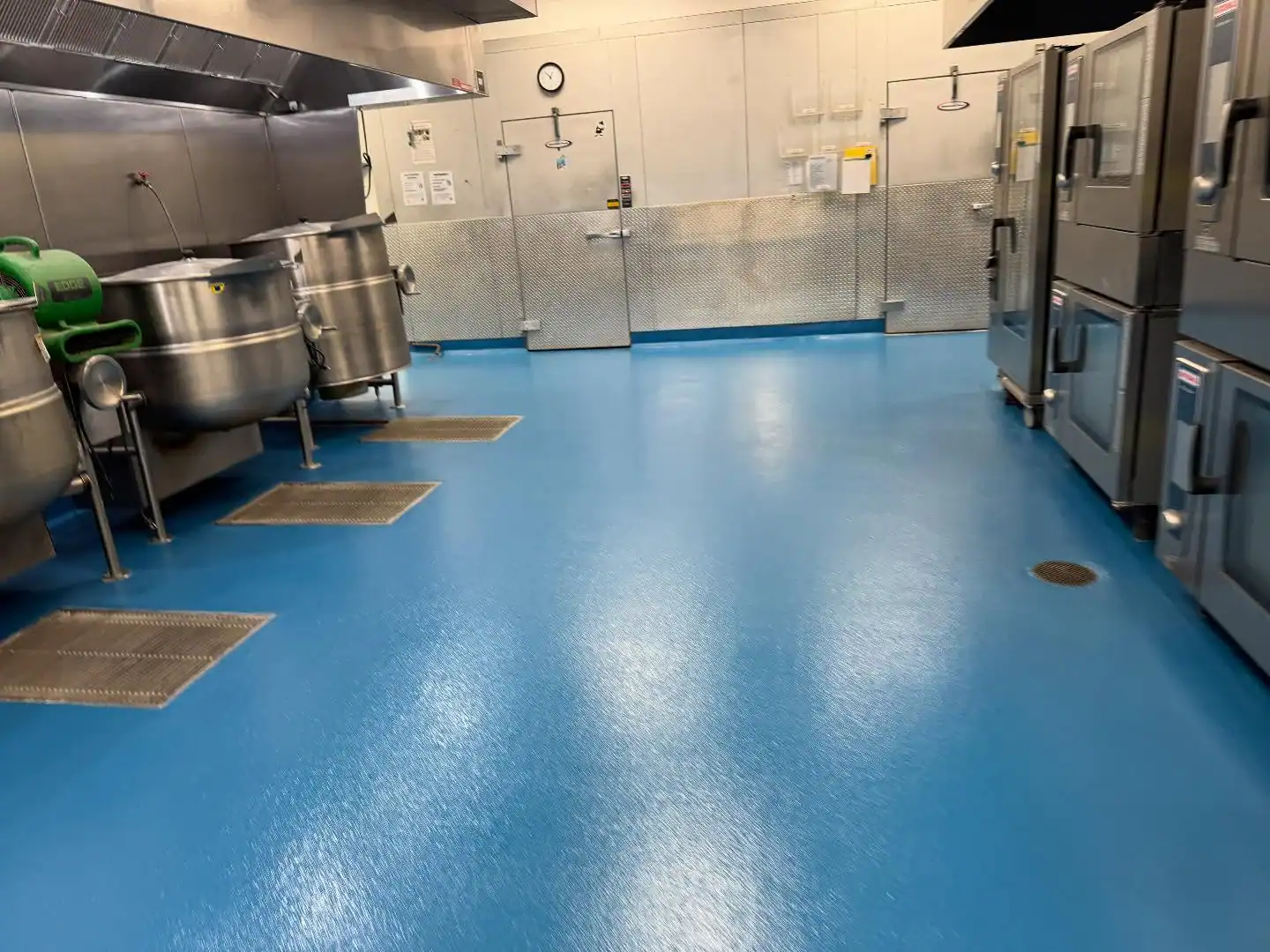
Commercial kitchens in Bohemia fall under the jurisdiction of the Suffolk County Department of Health Services, which enforces the New York State Sanitary Code. When an inspector walks through a food service facility, the floor is one of the most visible indicators of whether the operation is being maintained to code. Cracked surfaces, stained grout, rough textures that trap food particles, and any visible separation between the floor and the wall are all red flags — and any of them can result in a notice of violation or a failed inspection.
The standard that the SCDHS is looking for is a non-absorbent, smooth, easily cleanable surface with no open seams or cracks. A seamless epoxy or cementitious urethane floor with an integral cove base — where the floor curves up to meet the wall rather than meeting it at a right angle — is the system that satisfies that standard cleanly. The cove base matters because the corner where a floor meets a wall is exactly where grease, bacteria, and moisture accumulate when the surface isn’t continuous.
For operators in Bohemia who have received a notice of violation or are preparing for a scheduled inspection, the timeline matters as much as the system. Modern fast-cure epoxy and polyaspartic systems can be returned to service in 24 to 72 hours depending on conditions, which means a kitchen floor replacement doesn’t have to mean a week-long closure. That’s a meaningful difference for any food service business operating on tight margins. If you’re in a situation where compliance is urgent, the first call should be to a contractor who understands the specific requirements of the Suffolk County inspection process — not just flooring in general.
One question we hear often is whether epoxy is slippery when wet. It’s a fair concern, and it usually comes from someone who has seen a decorative residential epoxy — the kind installed in a garage or a showroom — and assumed all epoxy behaves the same way. Commercial kitchen systems are a different product entirely. An anti-slip aggregate broadcast during installation brings the surface well above the minimum coefficient of friction required by the FDA Food Code. The floor is slip-resistant as a built-in feature of the system, not an afterthought.
Another question that comes up regularly is whether epoxy can be installed over existing tile. The honest answer is that it depends on the condition of the tile and what’s underneath it, but in most commercial kitchen environments, the right answer is to remove the existing tile and start from the concrete substrate. Applying a coating over compromised tile is one of the most common reasons epoxy floors fail prematurely. You end up with a new surface that’s only as stable as the old one beneath it.
We also hear from operators who have had epoxy installed before and watched it fail within a year or two. That experience is more common than it should be, and it almost always traces back to one of three things: the wrong product for the environment, skipped preparation work, or no moisture testing. When someone tells us their last epoxy floor peeled up, the first thing we want to know is what system was specified and whether the slab was tested before installation. Those two questions usually explain the failure.
For anyone in Bohemia wondering whether their current floor meets Suffolk County health code standards, the answer usually becomes clear pretty quickly. If there are visible cracks, stained or deteriorating grout, rough patches that can’t be cleaned down to bare surface, or any separation between the floor and the wall — the floor is already behind where it needs to be. The question at that point isn’t whether to replace it, but how to do it right so the next floor holds up for the long term.
The difference between a kitchen floor that lasts a decade and one that fails prematurely comes down to three things: the right system for the environment, thorough preparation of the substrate, and a contractor who understands the compliance requirements specific to your facility and your county.
For commercial kitchens in Bohemia and across Suffolk County, those requirements aren’t abstract — they’re enforced by the Suffolk County Department of Health Services, and a failed inspection has real consequences for your operation. Getting the floor right the first time is almost always less expensive than dealing with a failure, a violation, or a repeat installation.
We’ve been based in Bohemia since 1996, and every installation we do starts with moisture testing, proper concrete preparation, and a system specification matched to the actual demands of the environment. If you’re trying to figure out what your kitchen floor needs, we’re happy to walk through it with you.
Summary:


Article details:
Share: