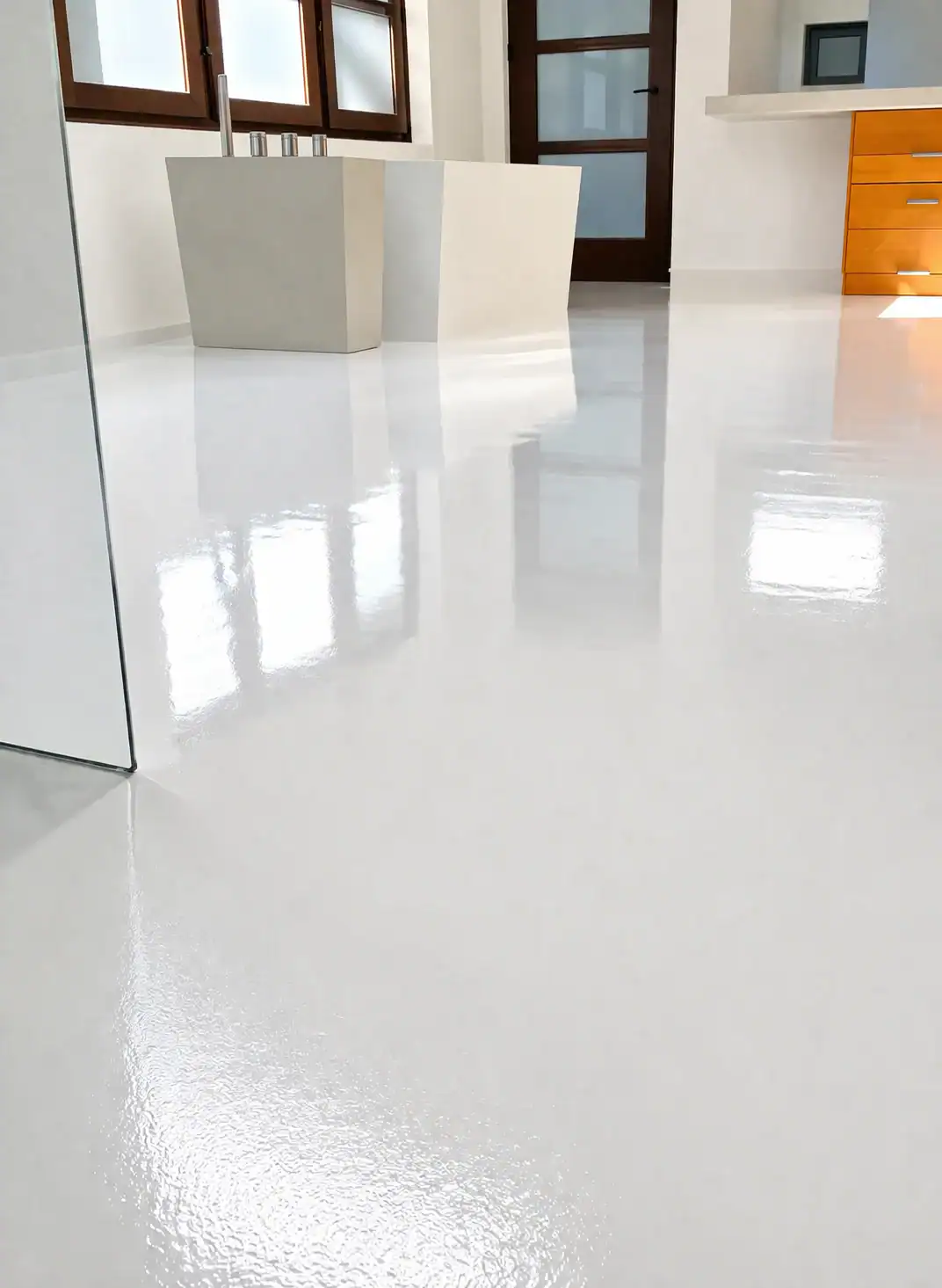
Two strong flooring options, one big decision. Here's what Nassau County facility managers actually need to know before choosing.
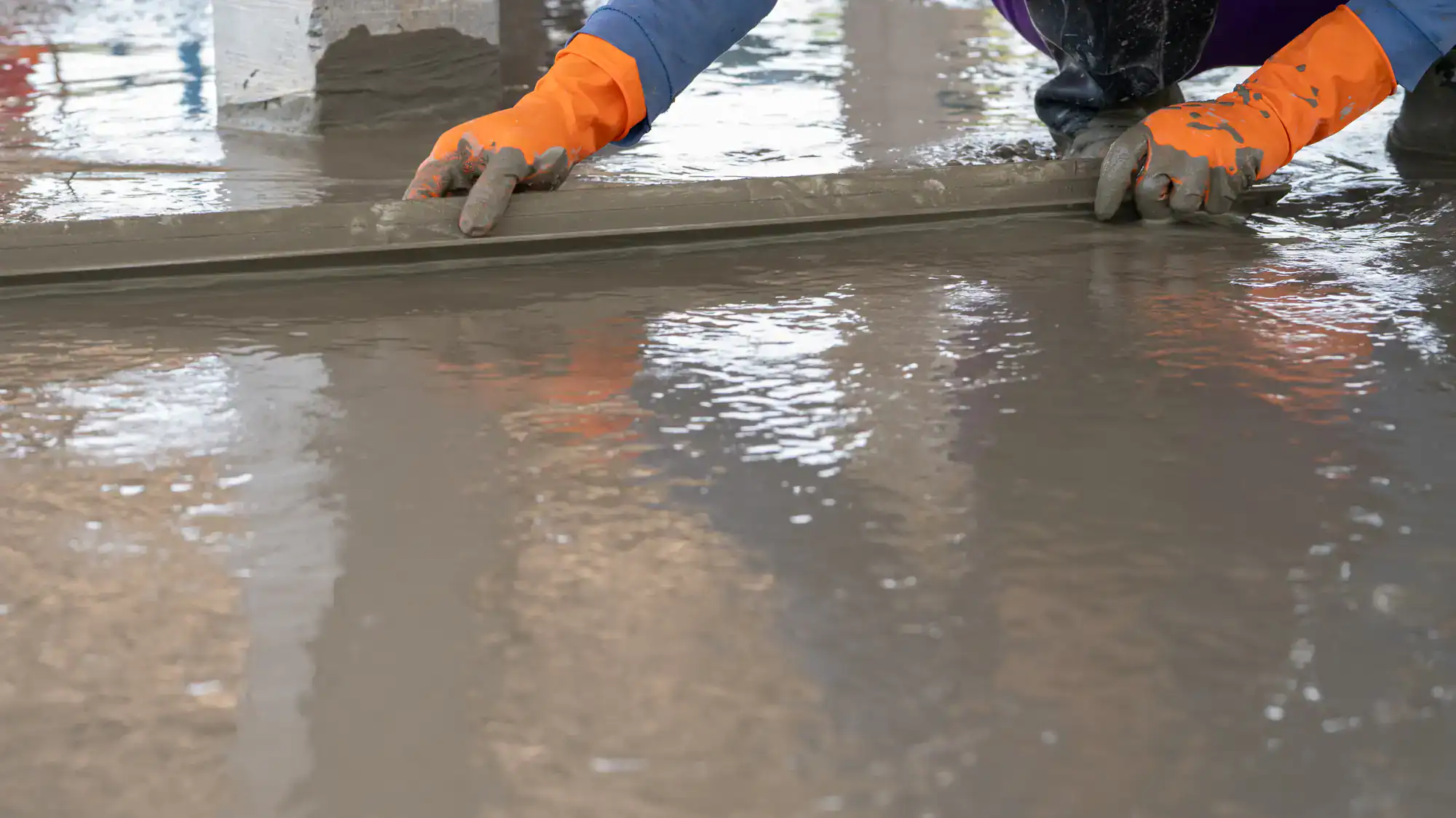
If you’re managing a commercial facility in Nassau County and trying to decide between epoxy and polished concrete, you’ve probably already run into the problem: most of the information out there is generic. It could apply to a warehouse in Phoenix or a restaurant in Ohio just as easily as it applies to your building on Long Island.
That’s not useful. Nassau County has specific conditions — coastal humidity, ground moisture from two shorelines, freeze-thaw cycles, and industries with real regulatory requirements — that change this decision in meaningful ways. We’ve been installing commercial floors across Nassau and Suffolk Counties for over 35 years, and we install both systems. Here’s what we’d actually tell you.
The upfront numbers look similar on the surface. Polished concrete typically runs $3–$15 per square foot installed, depending on the level of aggregate exposure and how much prep the slab needs. Commercial-grade epoxy systems fall in a similar range — basic systems start around $3–$7 per square foot, while multi-layer commercial systems with a polyaspartic topcoat land between $6–$12 per square foot.
Where the comparison gets interesting is over time. A well-installed polished concrete floor can last 20 years or more with periodic maintenance. Standard epoxy without a protective topcoat may need full replacement every 5–10 years. Run those numbers over a 20-year period on a 10,000 square foot facility and polished concrete often wins on total cost — even if it costs more upfront. The catch is that not all epoxy is the same, and that distinction matters more than most buyers realize.
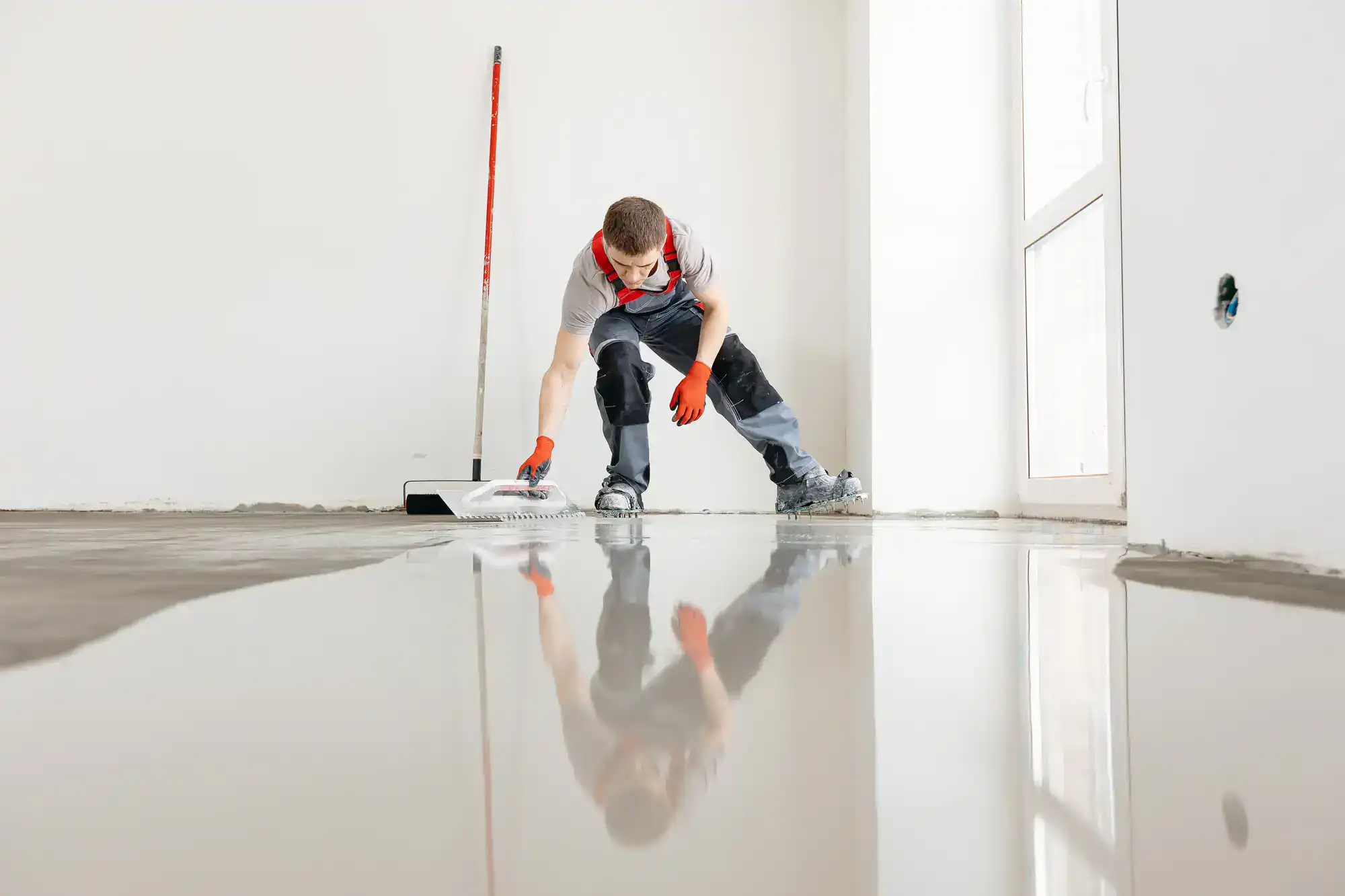
There’s a version of epoxy that peels within a year. And there’s a version that outlasts the lease. The difference isn’t luck — it’s the product specification, the number of layers, and whether the contractor actually prepared the surface correctly before applying anything.
The epoxy floors that fail — the ones that bubble, delaminate, or chip after a single winter — are almost always garage-grade products installed without proper surface prep. No diamond grinding, no moisture testing, just a coating rolled onto bare concrete and hoped for the best. In Nassau County’s environment, that approach fails faster than almost anywhere else, because the ground moisture levels here are genuinely elevated. You’re sitting between the Atlantic Ocean and Long Island Sound. That moisture migrates upward through your slab year-round, and if no one tested for it before installation, you’ll see the consequences within months.
Commercial-grade epoxy systems are a fundamentally different product. They’re multi-layer systems — primer, base coat, broadcast layer if needed, and a topcoat — each applied in sequence and allowed to cure properly before the next goes down. When we add a polyaspartic topcoat, you’re looking at a system that resists UV yellowing, cures faster, handles temperature swings better, and can realistically last 15–20 years with the right maintenance. That changes the lifecycle cost math entirely.
The practical takeaway: when you’re comparing quotes, make sure you’re comparing the same thing. A $4 per square foot number and a $9 per square foot number are not two prices for the same floor. They’re two different products with dramatically different service lives. Ask what system is being installed, how many layers, what the topcoat is, and whether moisture testing is included. If a contractor can’t answer those questions clearly, that’s your answer.
The shift away from bare concrete and vinyl composition tile has been consistent across Nassau County’s commercial sector over the past decade. What’s replaced them depends heavily on the industry.
Healthcare facilities — Nassau County’s largest employment sector, with over 125,000 workers in health care and social assistance — have moved heavily toward antimicrobial epoxy systems. The seamless surface eliminates grout lines and crevices where bacteria accumulate, and the right formulation can meet NSF and FDA requirements for sanitation. Hospitals and outpatient facilities along the Route 110 corridor and throughout Mineola and Garden City have been among the most consistent adopters.
Commercial kitchens and food service operations across Nassau County have a more specific requirement: thermal shock resistance. When 375-degree cooking oil hits a floor being washed down with hot water, standard epoxy cracks. The system designed for that environment is cementitious urethane — a specialty coating that most Long Island contractors aren’t factory-trained to install. It’s the right answer for restaurant kitchens, commissaries, and food processing environments, and it’s a system we install regularly across Nassau County.
Auto dealerships and service centers — particularly along Old Country Road and Sunrise Highway, where the concentration of automotive businesses is high — have split between polished concrete for showroom floors and chemical-resistant epoxy for service bays. Polished concrete works well in a showroom where aesthetics matter and foot traffic is moderate. It doesn’t belong in a service bay where oil, brake fluid, and transmission fluid are hitting the floor daily. That environment needs an epoxy system built for chemical resistance, and the two shouldn’t be confused.
Warehouses and distribution facilities connected to the Long Island Expressway corridor have largely standardized on heavy-duty epoxy systems rated for forklift traffic. The load requirements and chemical exposure in those environments rule out polished concrete as a standalone solution for most applications.
Want live answers?
Connect with an Advanced Epoxy Flooring expert for fast, friendly support.
Performance comparisons between epoxy and polished concrete look different in Nassau County than they do in most markets, because the environmental conditions here are genuinely more demanding. Coastal humidity, salt air, freeze-thaw cycling, and road salt tracked in from heavily treated winter roads all accelerate the wear on improperly specified or poorly installed floors.
Polished concrete handles light chemical exposure reasonably well when properly sealed, reflects light effectively — which matters in large warehouse or retail spaces where lighting costs add up — and doesn’t require the same level of chemical resistance as epoxy in most applications. But it is porous if the sealing is inadequate, and in Nassau County’s humid environment, an unsealed or under-sealed polished concrete floor is a moisture and mold risk. Maintenance means periodic re-densifying and resealing, typically every 7–10 years in commercial settings.
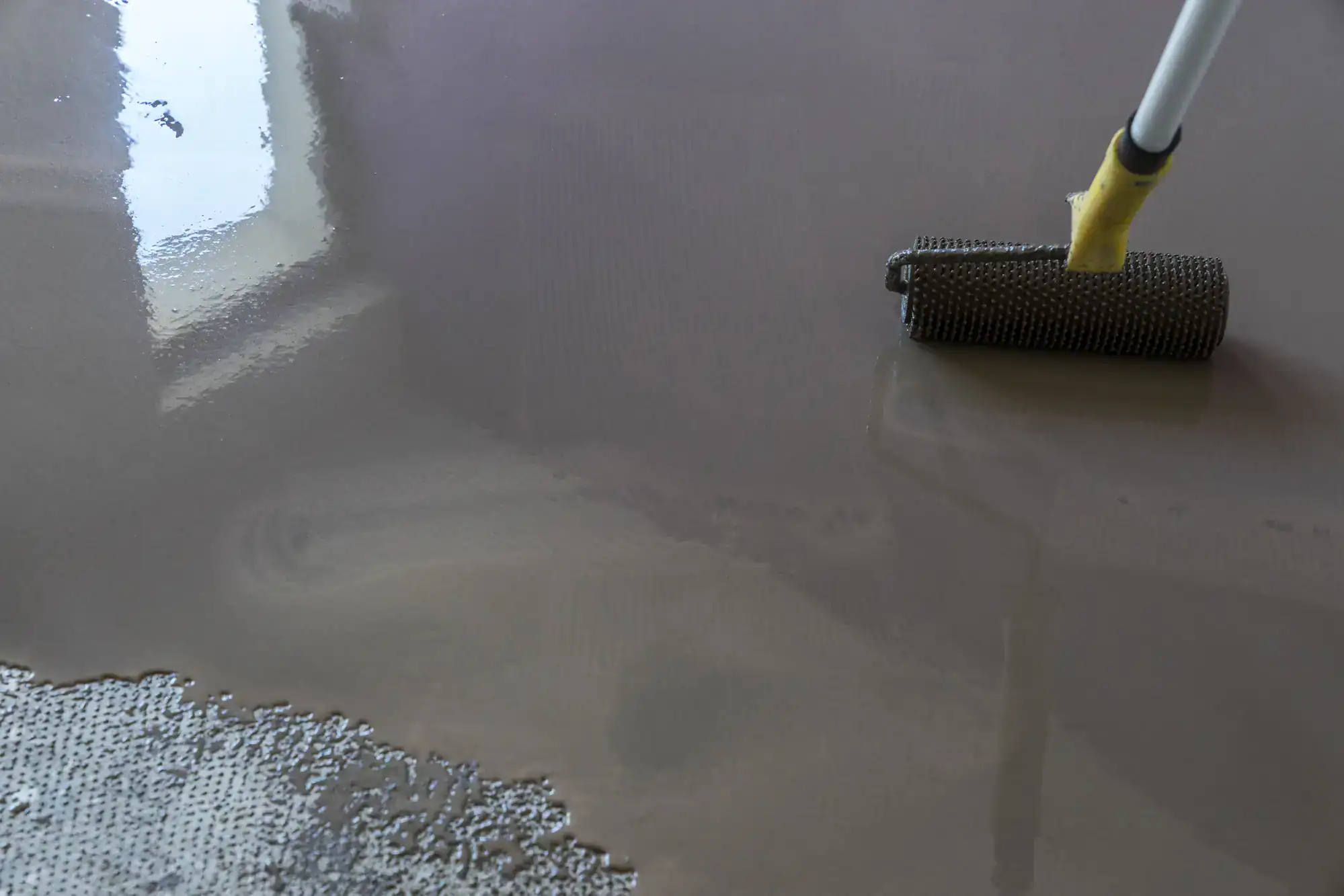
This is the part most contractors won’t tell you — or don’t know to tell you — because they’re not working specifically in a coastal market.
Nassau County sits between two bodies of water. The Atlantic Ocean borders the county to the south; the Long Island Sound runs along the north shore. That geography means ground moisture levels here are chronically higher than inland markets, and that moisture doesn’t stop moving just because you poured a concrete slab on top of it. It migrates upward through the slab continuously, and if an epoxy coating is applied over a slab with elevated moisture vapor emission, the coating will eventually lose adhesion. That’s not a product failure — it’s an installation failure, and it’s entirely preventable.
Every installation we do starts with moisture testing. It’s not optional, and it’s not an upsell — it’s the step that determines whether the system we recommend will actually bond correctly to your slab. In cases where moisture levels are elevated, we use vapor barrier systems designed to manage that migration before any coating goes down. It adds a step, but it’s the difference between a floor that lasts 15 years and one that starts bubbling in the first summer.
The freeze-thaw cycle compounds this in winter months. Nassau County facilities with exterior access — loading docks, garage entries, ground-level doors — see significant temperature differentials between the interior and exterior slab. Road salt tracked in from the county’s heavily treated winter roads is also a documented cause of coating degradation when the wrong system is specified. Polyaspartic topcoats handle this better than standard epoxy because they remain stable across a wider temperature range and are more resistant to salt and chemical exposure. For facilities with direct outdoor access in Nassau County, we almost always recommend a polyaspartic finish layer for exactly this reason.
None of this is complicated once you understand it. But it does require a contractor who’s actually worked in this environment long enough to have seen what happens when these factors are ignored — and to have built a process around preventing it.
The flooring system matters. The contractor matters more.
Surface preparation accounts for somewhere between 70 and 80 percent of whether an epoxy installation succeeds or fails. That’s not an opinion — it’s the consistent finding across the industry, and it explains why two contractors can install what sounds like the same system and get completely different results five years later. The one who diamond-ground the surface, tested for moisture, repaired the cracks, and applied each layer in sequence built a floor. The one who rolled a coating onto raw concrete built a problem with a delayed reveal.
When you’re evaluating contractors for a Nassau County facility, the questions that actually matter are: Do they diamond grind, or do they acid etch? Do they test for moisture before installation? Are they factory-trained in the systems they’re recommending — not just familiar with them, but certified by the manufacturer? Do they carry OSHA certifications, and at what level? Do they use in-house crews or subcontract the actual installation?
That last question is worth pressing on. A contractor with 14 on-staff installers maintains consistent quality across every project because the same trained team handles every job. A contractor who subcontracts the installation to whoever is available that week has no real control over what happens on your floor.
It’s also worth asking whether the contractor installs both epoxy and polished concrete, or only one. A contractor who only installs one system has a financial reason to recommend it regardless of whether it’s the right fit for your facility. One who installs both — and specialty systems like cementitious urethane and polyaspartic coatings on top of that — can give you an honest recommendation based on what your building actually needs.
For Nassau County facility managers dealing with health department inspections, OSHA compliance requirements, or industry-specific sanitation standards, certifications matter beyond the installation itself. Ask about OSHA compliance knowledge, NSF-compliant system options, and whether the contractor has experience in your specific industry. A flooring contractor who has never worked in a commercial kitchen should not be the one specifying your kitchen floor system.
There’s no single right answer between epoxy and polished concrete — the right answer depends on your industry, your facility’s environment, your budget over time, and what your floor actually has to withstand. What we can tell you is that the decision looks different in Nassau County than it does anywhere else, and the contractor you choose to install it matters as much as the system itself.
If you’re in a healthcare facility, a commercial kitchen, an auto service center, or a distribution warehouse along the I-495 corridor, the system requirements are specific — and getting them wrong is expensive. If you’re outfitting a showroom or a retail space in Garden City or Hicksville, the calculus shifts toward aesthetics and foot traffic durability.
We’ve been doing this on Long Island since 1990. We install both systems, we test for moisture on every job, and we’re not going to recommend something that won’t hold up in your building. If you’re ready to talk through what your facility actually needs, reach out to us — the conversation doesn’t cost anything, and it might save you a lot.
Summary:


Article details:
Share: