Keeping healthcare floors clean isn't just about appearances. Here's what facility managers actually need to know to stay compliant and protect patients.
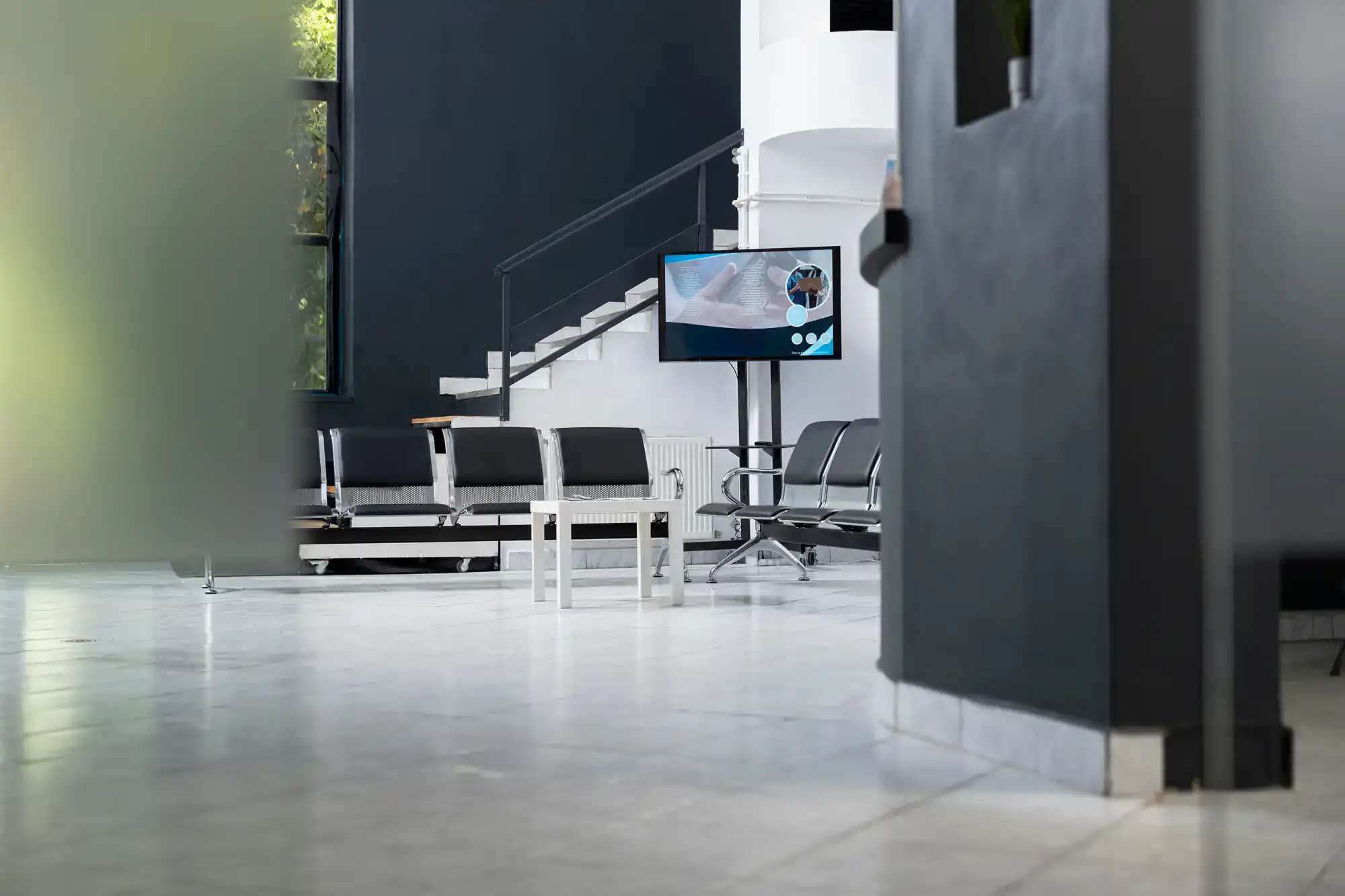
If you manage a healthcare facility, your floors are never just floors. They’re a compliance issue, an infection control variable, and — if something goes wrong — a liability. The CDC reports that on any given day, roughly 1 in 31 hospital patients has a healthcare-associated infection. Floors aren’t the only factor, but they’re a documented one. The good news is that with the right surface and the right maintenance approach, your floors can actually work in your favor instead of against you. Here’s what that looks like in practice.
Most commercial floors need to look clean. Healthcare floors need to be clean — and provably so. That distinction changes everything about how you maintain them.
The products you use, the frequency of cleaning, and even the tools your staff reaches for all have downstream effects on whether your floor holds up over time and whether it actually eliminates pathogens or just moves them around. A mop that isn’t changed frequently enough, for example, can spread C. diff and MRSA across a surface rather than remove them. These aren’t hypotheticals — they’re documented in peer-reviewed research on hospital floor contamination.
The other piece that gets overlooked is the floor itself. Maintenance protocols only work as well as the surface allows. Grout lines, seams, and porous materials give pathogens somewhere to live that a mop can’t reach. That’s a structural problem, not a cleaning problem — and no amount of scrubbing fixes it.
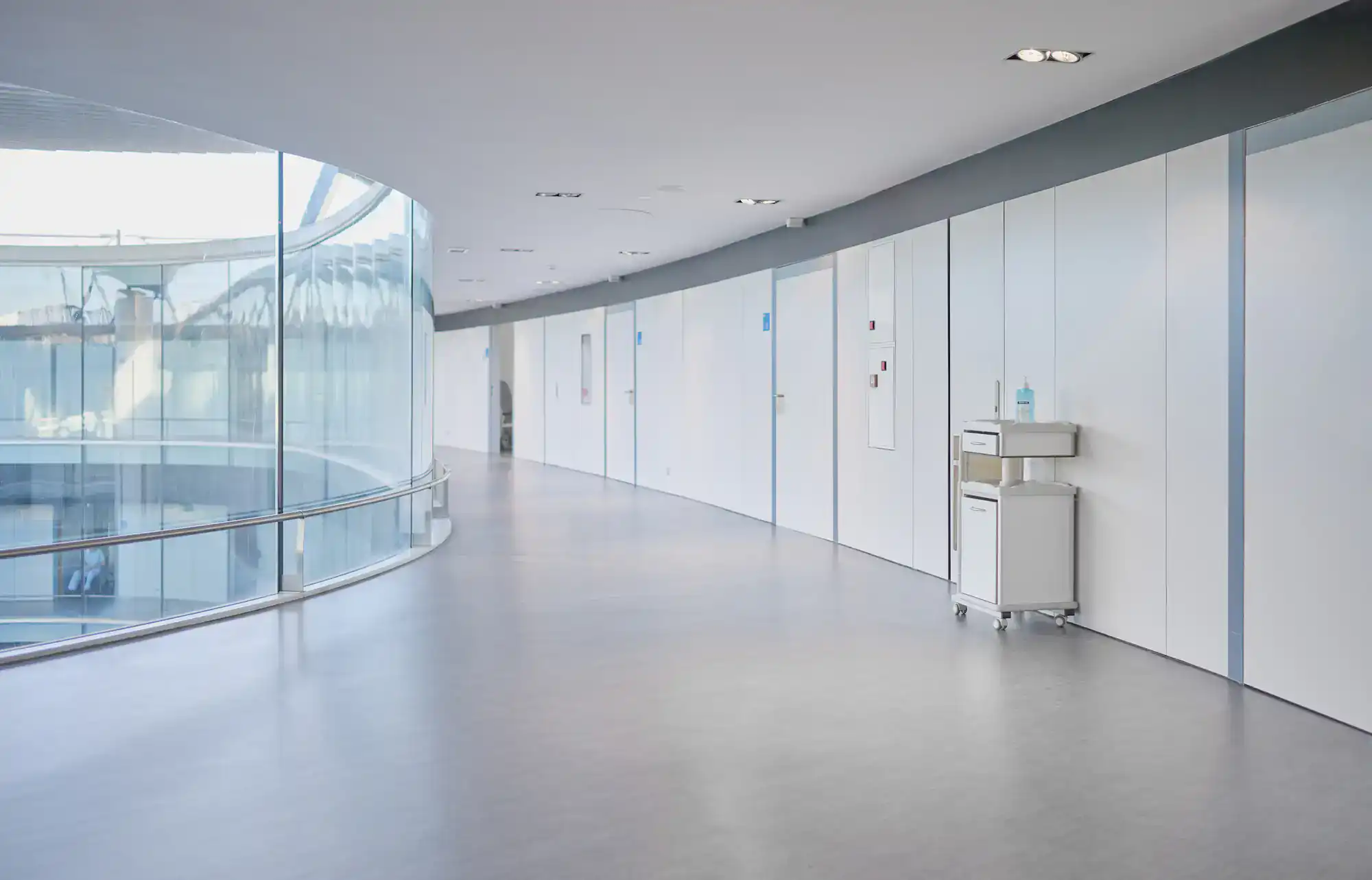
This is the part most facility managers don’t hear until something goes wrong. The floor you’re trying to maintain either makes sanitation possible or quietly undermines it — and the difference comes down to whether the surface has seams.
Tile with grout lines, older vinyl with lifted edges, or any surface with visible joints creates microbial harborage points. Bacteria settle into those gaps. Disinfectants pool in them without full contact. Cleaning tools skip over them. Over time, even a diligent cleaning team is fighting a losing battle against the floor’s own geometry.
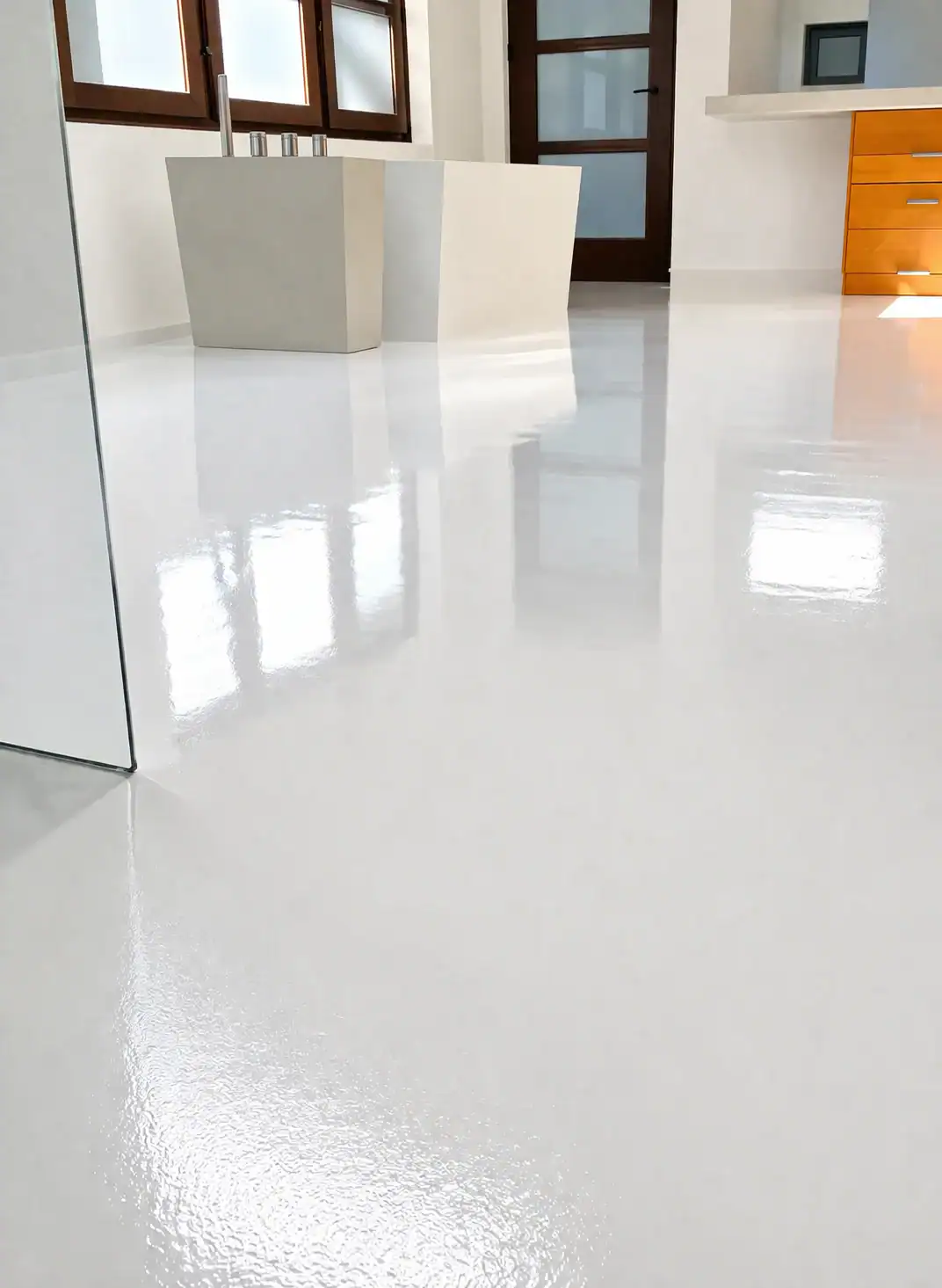
Seamless flooring systems — specifically fluid-applied resinous coatings like epoxy — eliminate that problem entirely. There are no joints, no grout lines, no transitions where contamination can accumulate. The entire surface is one continuous, non-porous plane that can be fully sanitized with hospital-grade disinfectants. Healthcare Facilities Today describes fluid-applied resinous flooring as offering “the ideal seamless surface for efficient and effective cleaning” — and that’s not marketing language, it’s a practical reality that cleaning staff notice immediately.
This matters even more in facilities that use aggressive disinfection protocols. Bleach, quaternary ammonium compounds, and hydrogen peroxide-based products are hard on floors that weren’t designed for them. A properly specified epoxy system with a chemical-resistant topcoat holds up to repeated exposure without degrading. The wrong floor, on the other hand, starts breaking down — and a degraded surface is harder to sanitize, not easier.
The floor-to-wall transition is another detail worth paying attention to. In sterile areas, the gap where the floor meets the wall is a contamination point that’s easy to miss and hard to clean. Integral cove base — a seamless curved transition installed as part of the flooring system — closes that gap completely. It’s a requirement in high-risk clinical areas under international health facility guidelines, and it’s one of the first things a knowledgeable inspector notices when it’s absent.
If your current floor has seams, grout, or deteriorating transitions, the maintenance tips below will help — but they’re working around a structural limitation. The real fix is the surface itself.
There’s a version of this problem that plays out in facilities all the time: the cleaning team is doing everything right by infection control standards, but the floor starts looking dull, worn, or pitted within a year or two. The disinfectants are working — just not only on the bacteria.
Highly alkaline cleaners, abrasive scrubbing compounds, and certain solvent-based products can degrade epoxy topcoats over time. The floor doesn’t fail dramatically — it just loses its protective properties gradually, which makes it harder to sanitize and easier for contaminants to take hold. By the time it’s visible, the surface has already been compromised for a while.
The fix isn’t complicated, but it requires intentionality. Your cleaning protocol should match your floor system. If you have a professionally installed epoxy floor with a chemical-resistant topcoat, ask your flooring contractor which disinfectants are compatible with that specific system. The answer will depend on the topcoat formulation — not all epoxy systems are specified the same way, and a contractor who understands healthcare environments will have matched the system to the disinfectants your facility actually uses.
For facilities still working with older vinyl or tile surfaces, the chemical compatibility issue runs the other direction: many hospital-grade disinfectants are too aggressive for those materials and cause accelerated deterioration. This is one of the practical arguments for upgrading — not just that epoxy is easier to sanitize, but that it’s actually designed to withstand the products you’re required to use.
One more thing worth noting: pH-neutral cleaners are the safest default for daily cleaning on most resinous floor systems. Reserve the heavier disinfectants for the frequency your infection control protocol requires, and make sure your team knows the difference between daily maintenance cleaning and terminal disinfection. Using the most aggressive product every time doesn’t make the floor cleaner — it just wears it out faster.
Want live answers?
Connect with an Advanced Epoxy Flooring expert for fast, friendly support.
These aren’t complicated. But they’re the things that separate facilities whose floors pass inspection from facilities that get cited — and they’re the things that extend the life of a good floor system significantly.
The first tip is to standardize your cleaning protocol and put it in writing. Verbal instructions drift. Staff turns over. A documented protocol — with product names, dilution ratios, dwell times, and tool replacement schedules — is the only way to ensure consistency. It also gives you something to show an inspector.
The second tip is to inspect the floor regularly, not just when something looks wrong. Small issues — a micro-crack, a lifted edge, a dull patch — are easy and inexpensive to address early. Ignored, they become contamination points and eventually require full section replacement.
The third tip is to schedule professional maintenance before your accreditation review, not after. A floor assessment from a qualified contractor can identify surface degradation, confirm that your system is still performing as specified, and address anything that might draw a citation. It’s a small investment compared to the cost of a failed inspection.

This is one of the most common questions facility managers ask, and the honest answer is: it depends on the floor system, the traffic volume, and the cleaning products in use. But there are reasonable benchmarks worth knowing.
For a properly installed, professionally specified epoxy system in a moderate-traffic medical office or outpatient clinic, a professional inspection every one to two years is a reasonable baseline. High-traffic areas — corridors, procedure rooms, areas near entry points — may warrant annual attention. Operating rooms and sterile processing areas, where disinfection frequency is highest, should be assessed more regularly.
What you’re looking for during an inspection is surface integrity. Is the topcoat still intact and non-porous? Are there any areas of delamination, bubbling, or micro-cracking? Is the cove base still fully adhered with no gaps at the wall transition? These are the indicators that a floor is still performing as a sanitation asset rather than becoming a liability.
Recoating timelines vary widely. A single topcoat application can extend the life of a floor system by several years and restore its chemical resistance and cleanability without the disruption of a full replacement. In many cases, a facility that invested in a quality floor system 10 years ago can have it performing like new with a targeted recoat — at a fraction of the cost of replacement.
The other factor worth mentioning for facilities in Bohemia and throughout central Suffolk County is Long Island’s humidity. Moisture vapor transmission through older concrete slabs is a real variable in this region, and it can affect how a floor system performs over time even if the initial installation was done correctly. A contractor who understands this — and tests for it — will catch moisture-related issues before they become visible failures. It’s one of the reasons we always include moisture assessment as part of any floor evaluation, not just new installations.
Yes — and for most healthcare environments, it has to be. Patients can’t wait, and clinical operations don’t pause for flooring projects. This is something general contractors often underestimate, and it’s one of the first things we address when working with a medical facility.
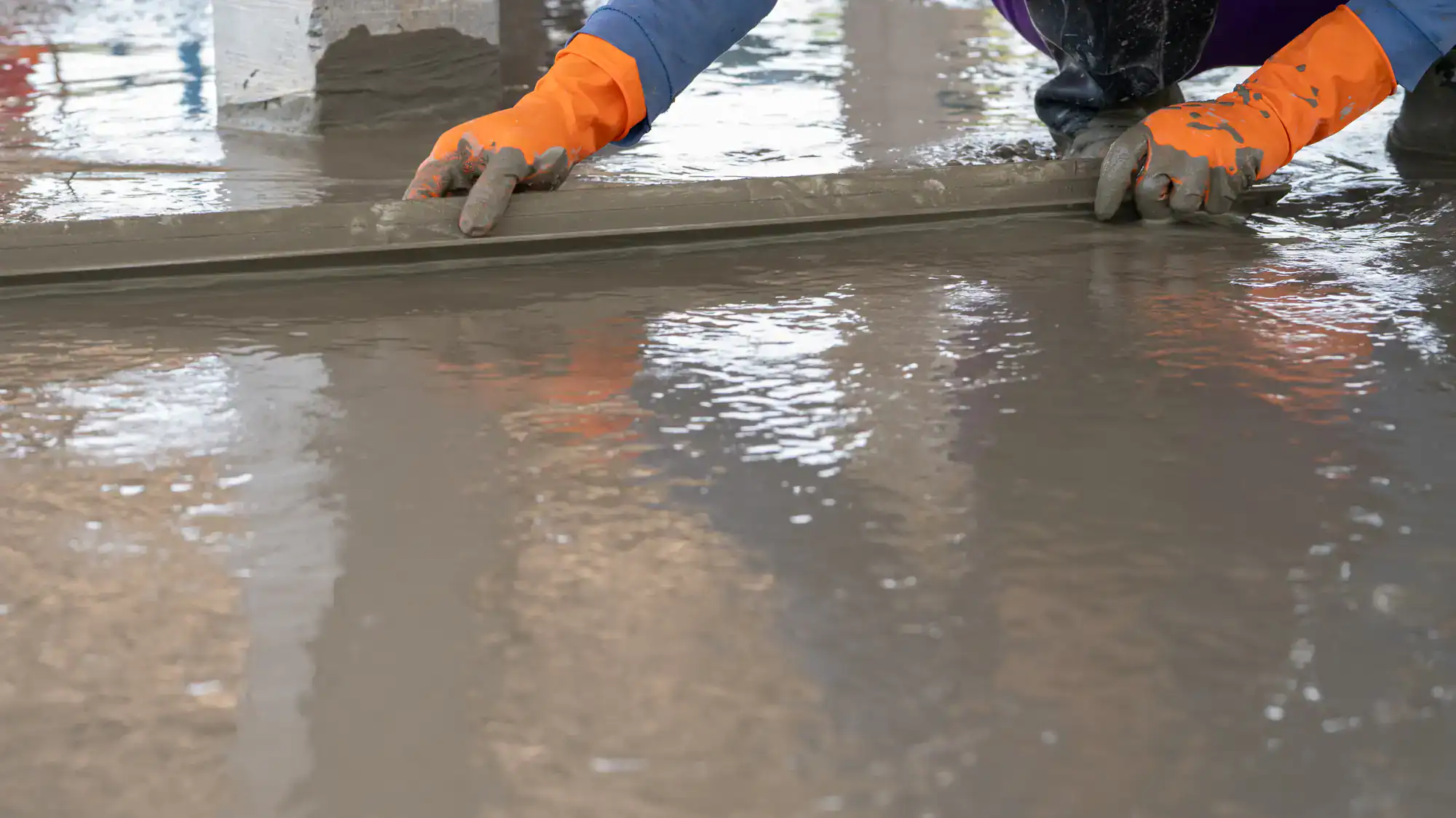
The approach is phased installation. Rather than treating the entire facility as a single project, we evaluate the space, identify which areas are highest priority and which can be sequenced, and build a plan that keeps the facility operational throughout. A wing gets done while the rest of the building continues normal operations. Then the next section. It requires more planning upfront, but it’s the only realistic approach for an active healthcare environment.
Fast-curing systems make this more practical than it used to be. Modern polyaspartic topcoats, for example, can reach foot traffic readiness in a matter of hours rather than days. Combined with off-hours scheduling — evenings, weekends, early mornings — the disruption to staff and patients is minimal. Most of the facilities we’ve worked with in the Bohemia area and throughout Suffolk County have been surprised by how little they noticed the installation once a phased plan was in place.
There’s also an infection control dimension to the installation process itself. Healthcare construction and renovation projects — including flooring — are required to follow ICRA (Infection Control Risk Assessment) protocols. This means the contractor needs to understand not just how to install a floor, but how to do it without creating contamination risk during the work. Our team is OSHA 40 certified, which means every installer on the job understands hazardous environment protocols and healthcare safety requirements. That’s not a credential we mention casually — in a healthcare setting, it’s the difference between a contractor who’s qualified for the environment and one who isn’t.
For facilities in Bohemia, NY and the surrounding area — whether you’re running a medical office on Veterans Memorial Highway, a specialty clinic near Ronkonkoma, or a surgical center serving the broader Islip community — the logistics of a phased installation are something we’ve handled many times over. The goal is always the same: your floor gets done right, and your patients never know it happened.
Maintaining healthcare floors to meet sanitation standards isn’t a once-a-year task — it’s an ongoing process that starts with the right surface and stays consistent from there. The three things that move the needle most are a seamless, non-porous floor system that doesn’t fight your cleaning team, a documented protocol that matches your products to your surface, and regular professional assessments before problems become citations.
If your current floor has seams, grout lines, or a surface that’s been degraded by years of disinfectant use, maintenance tips will only take you so far. At some point, the floor itself is the problem.
We’ve been installing healthcare flooring systems on Long Island for over 30 years, working in hospitals, surgical centers, clinical labs, and medical offices across Suffolk County. If you’re based in Bohemia, NY or anywhere in the surrounding area and want a straightforward conversation about what your floors actually need, reach out to us — we’re right here in the community, and we’re happy to start with an honest assessment.
Summary:

Article details:
Share: