Not all epoxy flooring quotes are created equal. Here's what Nassau County facility managers need to know before signing anything.
You get a quote that seems fair. Maybe even competitive. You move forward, work begins — and then the calls start. The concrete needs more prep than expected. There’s a moisture issue. The crack repair wasn’t included. By the time the job is done, you’re thousands over what you planned for.
This is one of the most common frustrations we hear from facility managers and business owners across Nassau County, NY. The problem usually isn’t the floor itself — it’s what wasn’t explained upfront. This page is here to change that. We’ll walk you through what a complete epoxy flooring quote should include, where the hidden costs tend to hide, and what questions to ask before you commit.
A quote isn’t just a number — it’s a document that tells you exactly what you’re getting, what could change the price, and what happens if conditions on the floor aren’t what the contractor expected. If a quote you’ve received doesn’t answer those three things, it’s incomplete.
The line items that matter most are surface preparation, moisture testing, concrete repair, the specific coating system being installed, and the warranty. When any of those are vague — or missing entirely — that’s where the surprise charges tend to come from. A contractor who can’t explain what’s in their quote probably can’t explain what they’re doing to your floor either.
Here’s a number worth knowing: roughly 80% of epoxy flooring failures trace back to poor surface preparation — not bad materials, not bad luck. The coating didn’t fail. The surface it was applied to wasn’t ready.
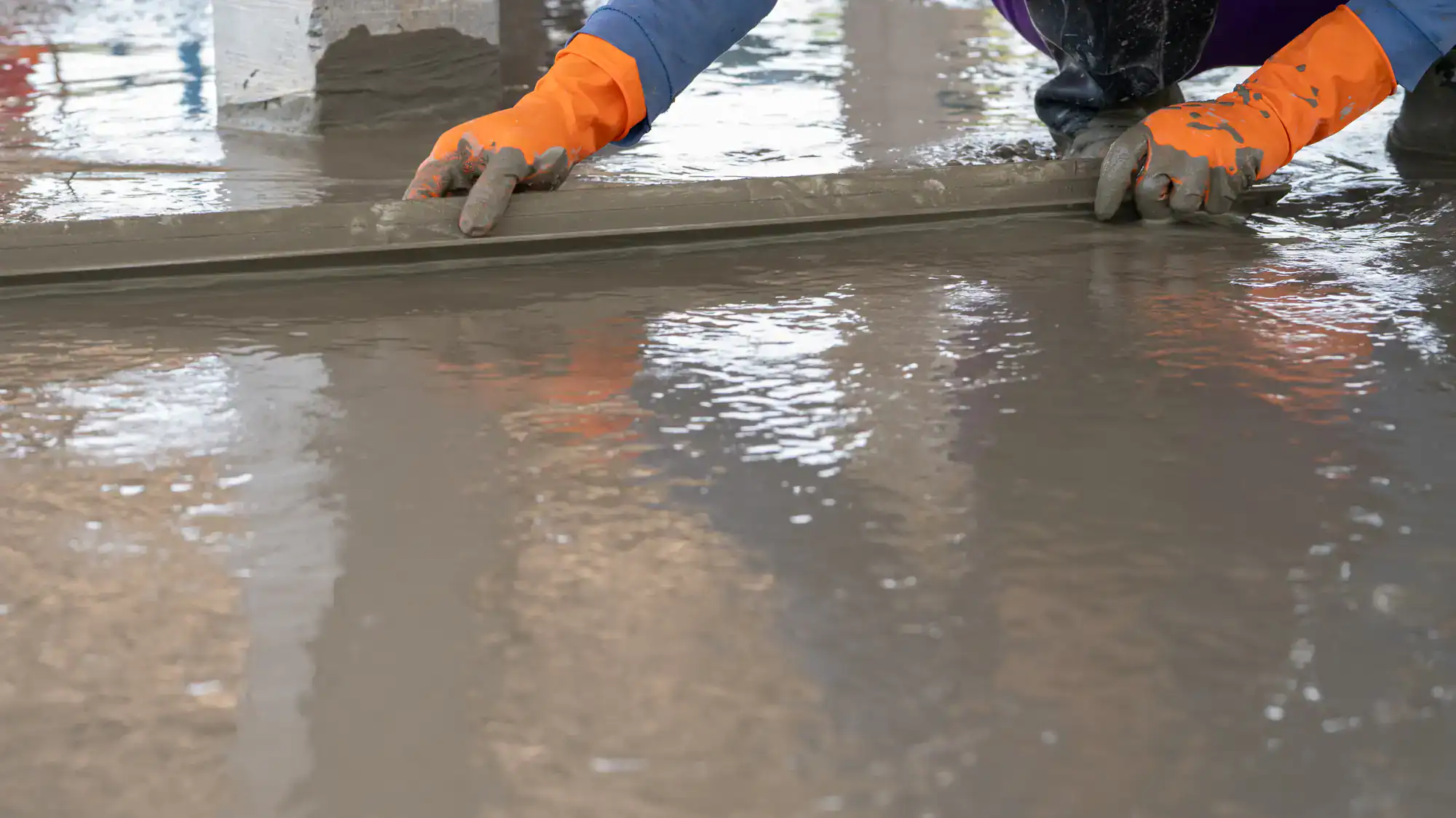
Professional surface prep for a commercial floor means mechanical diamond grinding — a process that opens up the concrete’s pores, removes existing coatings or contaminants, and creates the specific surface texture that allows epoxy to bond properly. It is not sweeping the floor. It is not a quick acid wash. And it takes real equipment and real experience to do it right.
When a quote says “prep included” without specifying what that means, you have no way of knowing whether they’re planning to grind or just clean. That distinction can mean the difference between a floor that lasts 15 years and one that starts peeling inside of two. On a commercial project, grinding alone can represent a meaningful portion of the total labor cost — which is exactly why some contractors keep it vague or underscope it to win the bid.
Ask directly: what is your surface preparation process, and is diamond grinding included? If they can’t give you a straight answer, that tells you something. If they say they use acid etching on a commercial floor, that’s a red flag worth taking seriously.
We use professional diamond grinding on every commercial installation we do. It’s not an upgrade — it’s the baseline. Skipping it to lower a quote isn’t saving you money. It’s borrowing against the life of your floor.
Commercial kitchens are one of the most demanding environments an epoxy floor will ever face — and Nassau County has no shortage of them. From the restaurant corridors in Freeport and Great Neck to the catering facilities in Hicksville and Valley Stream, food service operators deal with constant moisture, heavy foot traffic, hot steam cleaning, and the very real pressure of Nassau County health code compliance, which mandates smooth, non-absorbent, easily cleanable floors in any food preparation area.
Standard epoxy isn’t the right system for a commercial kitchen. The thermal shock from steam cleaning alone — rapid temperature swings that standard coatings aren’t built to handle — can cause cracking and delamination over time. The system that actually holds up in these environments is cementitious urethane, a more complex material that requires specific factory training to install correctly. We use cementitious urethane in commercial kitchen applications, and it’s part of why our kitchen floors outlast the alternatives.
The cost for a commercial kitchen floor system in Nassau County typically runs higher than a standard warehouse or garage coating — and that’s appropriate, because the performance requirements are genuinely different. A complete installation includes not just the floor coating itself, but also a four-inch coved base running up the wall with heat-welded seams, which eliminates the gap between floor and wall where bacteria and moisture accumulate. That cove base is a health code requirement in most food service environments, and it’s often missing from lower-priced quotes entirely.
If you’re comparing quotes for a kitchen floor and one is significantly cheaper than the others, the first question to ask is whether cementitious urethane is the specified system — and whether the cove base is included. If the answer to either is no, you’re not comparing the same job.
Want live answers?
Connect with an Advanced Epoxy Flooring expert for fast, friendly support.
One of the most overlooked parts of evaluating an epoxy flooring quote is thinking past the installation. The upfront cost matters, but so does what the floor costs you over the next decade — in maintenance, repairs, and eventual replacement.
A properly installed commercial epoxy system is genuinely low-maintenance. Regular cleaning with a neutral pH cleaner, periodic inspection for chips or surface wear, and a topcoat refresh every several years depending on traffic volume — that’s largely it. No waxing, no resealing, no grout lines to scrub. Compared to tile, VCT, or sealed concrete, the ongoing maintenance burden is significantly lower.
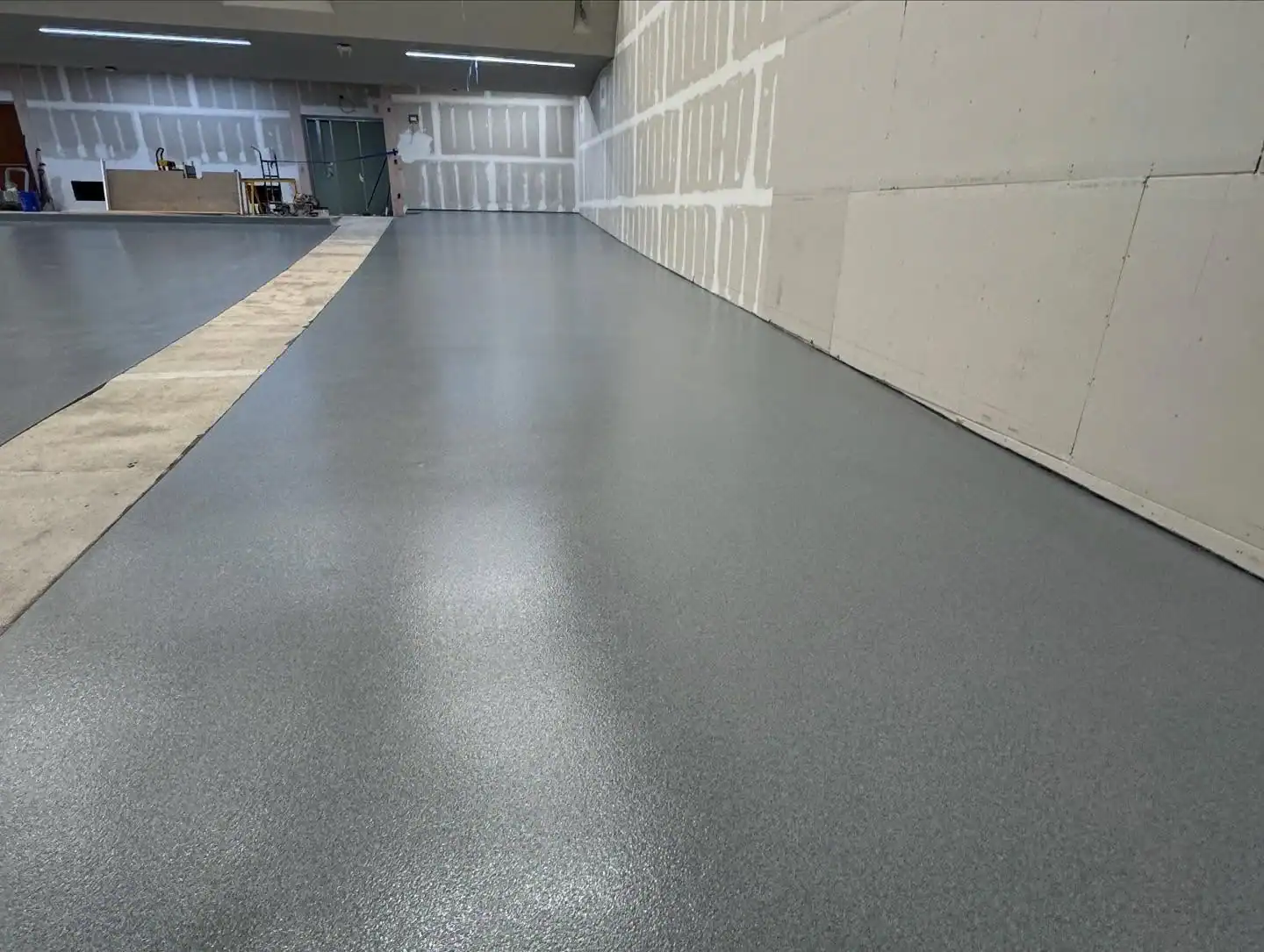
Lifespan is where the real cost comparison lives. A professional epoxy system installed correctly lasts 15 to 25 years. A consumer-grade coating — the kind that comes in a kit from a hardware store, or gets installed by a contractor using garage-grade materials — typically lasts two to five years before it starts peeling, bubbling, or wearing through.
Do the math on a 10-year window and the cheaper option is almost always more expensive. You’re not just paying for the floor twice — you’re paying for the disruption, the downtime, and in some cases the cost of removing a failed coating before you can apply a new one.
Nassau County’s coastal geography adds a layer of complexity that makes this calculation even more important. The proximity to the Atlantic Ocean and Long Island Sound means elevated ambient humidity year-round, and concrete slabs throughout the county — from the medical facilities in East Meadow to the automotive shops in Hempstead to the warehouses along the commercial corridors in Hicksville — are regularly exposed to higher-than-average moisture vapor emission rates. Moisture vapor rising through a slab will delaminate an epoxy coating from below if it isn’t properly tested and mitigated before installation.
This is not an edge case in Nassau County. It’s a predictable condition, and any contractor who doesn’t bring it up before they start is either unaware of it or choosing not to mention it because addressing it costs money. We include moisture testing as a standard step in every commercial installation — not as an add-on, not as a change order trigger. Because finding a moisture problem after the coating goes down is a much more expensive conversation than finding it before.
**Why do epoxy flooring quotes vary so much from contractor to contractor?**
Usually because they’re not quoting the same scope. One contractor includes diamond grinding and moisture testing; another quotes a basic clean and coat. One specifies a commercial-grade 100% solids epoxy system; another is pricing a thinner, consumer-grade product. The number on the page looks comparable, but the actual work — and the result — is completely different. When you’re comparing quotes, the first step is making sure each one specifies the same prep process, the same product category, and the same warranty terms. If they don’t, you’re not comparing prices. You’re comparing unknowns.
**What happens if moisture is found after the job starts?**
In an honest process, moisture is found before the job starts — because we test for it during the site inspection. If a contractor skips that step to keep their quote lean and discovers a moisture problem mid-installation, it typically becomes a change order: additional cost, additional time, and a conversation you weren’t prepared for. In Nassau County specifically, where coastal proximity keeps ground moisture elevated across much of the county, this scenario is common enough that you should ask any contractor upfront: do you test for moisture vapor emission before you coat, and is that included in your quote? We make it standard practice.
**Does epoxy flooring hold up in Long Island winters?**
Yes — when the right system is installed correctly. Long Island’s freeze-thaw cycle, road salt tracking from vehicles, and temperature swings between December and March are real factors that affect both the installation process and the long-term performance of the floor. Epoxy systems need to be applied within specific temperature ranges — most require ambient temperatures above 50°F — which is why winter installations in unheated commercial spaces require planning. The coating systems we use are selected with Long Island’s climate in mind, including the salt exposure that automotive shops and warehouse loading docks in Nassau County deal with every winter.
**How long will the installation take, and when can we use the floor again?**
Most commercial installations are completed in one to three days. Return-to-traffic time depends on the coating system — most are ready for foot traffic within 24 hours and full vehicle or forklift traffic within 48 to 72 hours. We’ll give you a specific timeline before work begins, because we know that downtime isn’t abstract for a commercial operation. It has a real cost, and planning around it matters.
The right epoxy flooring quote isn’t the lowest one — it’s the most complete one. It tells you exactly what’s being done to your floor, what products are going on it, what the prep process involves, and what’s covered if something doesn’t hold up. A contractor who can walk you through all of that before work begins is a contractor who understands what they’re doing.
We’ve been installing commercial epoxy floors on Long Island for over 35 years. We’ve seen every way a floor can fail — and almost all of them come back to decisions made before the coating ever touched the concrete. Surface prep that was rushed. Moisture that wasn’t tested. Products that weren’t rated for the environment. Those aren’t random failures. They’re predictable ones.
If you’re evaluating quotes for a commercial floor in Nassau County, NY and you want a straight answer on what’s actually included — and what isn’t — we’re a good place to start that conversation.
Summary:


Article details:
Share: