Planning a commercial renovation on Long Island? Here's what you actually need to know about permits, contractor licensing, and code compliance in Suffolk County.
If you’re planning a commercial renovation anywhere on Long Island, the permit question comes up fast. Do you need one? Who issues it? How long will it take? And does your contractor actually have the right license to be on your job site?
These aren’t small questions. Getting them wrong can mean stop-work orders, failed inspections, or worse — liability you didn’t see coming. We’ve been installing commercial floors across Nassau and Suffolk Counties since 1990, and we’ve seen what happens when the compliance side gets skipped. This guide covers what you need to know before any work begins.
The starting point for any commercial project in Suffolk County is the New York State Uniform Fire Prevention and Building Code — the Uniform Code, as it’s commonly called. Enacted under Article 18 of the Executive Law, this is the framework that governs construction, alteration, and renovation of commercial buildings across the entire state.
What makes Suffolk County more complicated is what sits below that state framework. The county’s 10 towns — Babylon, Brookhaven, Huntington, Islip, Smithtown, and the rest — each operate their own building departments with their own permit applications, fee structures, and review timelines. A project in the Town of Babylon moves through a different process than one in the Town of Huntington, even though both are technically governed by the same state code.

This is the question we hear most often, and the honest answer is: it depends on the full scope of your project, not just the flooring.
For a straightforward commercial flooring replacement — removing old material and installing a new system on an existing slab — a standalone permit is often not required. But that changes quickly when the flooring work is part of a broader renovation. If your project involves structural changes, modifications to fire safety systems, alterations to means of egress, or a shift in how the space is classified and used, permits are required. And in Suffolk County, those permits need to be in hand before work begins, not after.
Commercial renovation permits on Long Island also carry a few requirements that catch people off guard. Before a final certificate of occupancy is issued, you’ll need sign-off from the County Fire Marshal’s Office. Certain projects — particularly those involving wastewater or site modifications — may also need clearance from the Office of Wastewater Management, a step that many general permit guides don’t mention.
Timeline is another thing worth planning around. Small commercial projects in Suffolk County typically see permit approval in four to six weeks. Larger or more complex work can stretch to several months, depending on the building department’s workload and whether your project requires environmental review. If your business is in one of the East End towns — Southampton, East Hampton, Sag Harbor — expect additional layers of review that can push that timeline out further.
The practical takeaway: don’t assume you don’t need a permit just because you’re “only doing the floors.” If there’s any doubt, check with the building department for your specific town before work starts. A quick call upfront is far less painful than a stop-work order mid-project.
New York State doesn’t issue a single statewide general contractor license. Licensing here is handled at the county level, which means the requirements differ depending on where the work is being done.
In Suffolk County, home improvement contractors are licensed through the Suffolk County Department of Consumer Affairs under Chapter 563 of the county code. Getting that license isn’t just a paperwork exercise — applicants have to pass a written exam covering the Home Improvement Law and Article 36-A of the New York General Business Law. The exam is 30 questions, and you need to answer at least 21 correctly. Proof of general liability insurance and workers’ compensation coverage are also required before a license is issued.
Nassau County works differently. The Nassau County Office of Consumer Affairs handles licensing there, and as of now, Nassau County does not require a written exam. But proof of insurance is still required, and the license must be held by the contracting entity — not just an individual on staff.
Here’s the nuance that matters most for commercial work: the home improvement contractor license in both counties technically covers residential projects. For commercial renovations, the governing authority is the building department of the specific town or municipality where the work is being performed, operating under the Uniform Code. That means a contractor doing commercial work needs to satisfy both county licensing requirements and whatever the local municipality requires — and those aren’t always the same thing. A contractor licensed in Suffolk County isn’t automatically cleared to work commercially in every village or town without additional verification.
If you’re a commercial property owner or manager in Nassau County — whether you’re in Garden City, Rockville Centre, Long Beach, or anywhere along the Hempstead Turnpike corridor — you have every right to ask your contractor for their license number and verify it directly with the issuing county’s Consumer Affairs office. That’s not an awkward ask. It’s standard due diligence, and any reputable contractor will hand that information over without hesitation.
We hold active licenses in both Nassau and Suffolk Counties, and we carry general liability insurance and workers’ compensation coverage on every job. If you need to verify any of that before signing, we’ll make it easy.
Want live answers?
Connect with an Advanced Epoxy Flooring expert for fast, friendly support.
Even when a permit isn’t required for the flooring itself, commercial floors in New York still have to meet specific standards — and those standards have real teeth when it comes to accessibility and safety.
The ADA requires that all floor surfaces along accessible routes be stable, firm, and slip-resistant. For commercial settings, that translates to a minimum dynamic coefficient of friction (DCOF) of 0.42 per ANSI A326.3. Commercial kitchens and food processing environments require even higher slip resistance — DCOF above 0.60 — because of constant exposure to water, grease, and cleaning chemicals. These aren’t suggestions. They’re the standard that applies to any commercial space open to the public or employees.
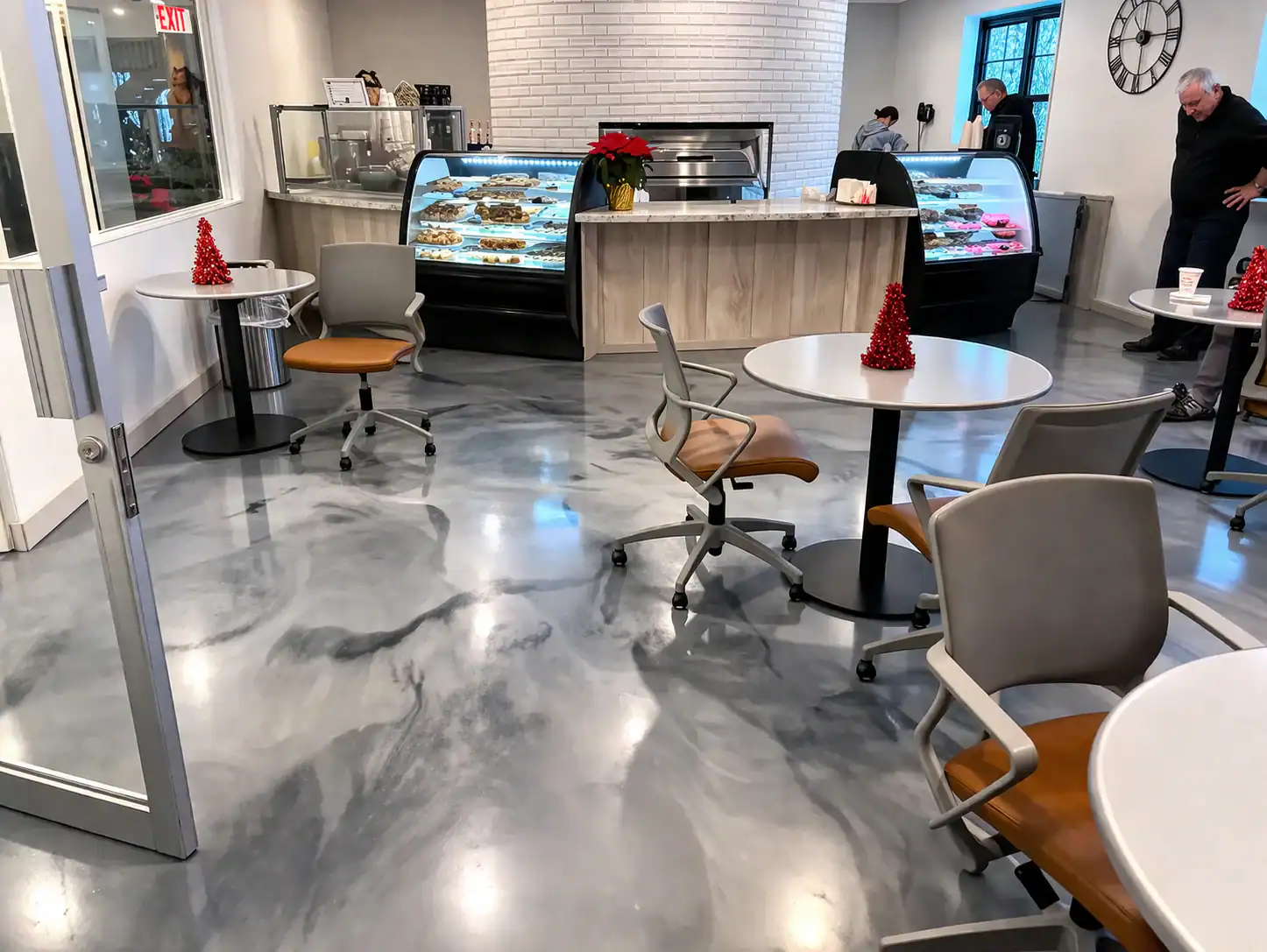
Yes — when it’s installed correctly and specified for the environment. That’s the part that gets glossed over.
Epoxy and resinous floor coatings are among the most widely used solutions for meeting ADA slip resistance requirements in commercial settings precisely because they can be engineered to hit specific DCOF targets. Anti-slip aggregates are incorporated directly into the coating system, and the formulation is adjusted based on the environment — a warehouse floor and a commercial kitchen floor are not going to be specified the same way, nor should they be.
What makes this relevant to Nassau County specifically is the coastal environment. Buildings near Long Beach, Atlantic Beach, Lido Beach, and Point Lookout experience elevated humidity and salt air year-round. Concrete slabs in these areas — and honestly across most of Nassau County given its proximity to both the Atlantic and the Long Island Sound — tend to have higher moisture vapor emission rates than slabs further inland. Moisture vapor that isn’t addressed before installation is the single most common cause of epoxy floor delamination. The floor looks fine for a year, maybe two, and then it starts to bubble and peel from underneath.
We’ve been testing for moisture vapor emission before every installation since before most of our competitors were in business. It’s not an add-on or an upsell — it’s just part of how we work, because we’ve seen what happens when it gets skipped. For Nassau County properties, especially anything near the south shore or the Sound, it’s not optional.
The other compliance piece worth knowing: if your renovation involves any changes in floor level, the ADA has specific requirements there too. Level changes up to a quarter inch can be vertical. Anything between a quarter inch and a half inch requires a beveled edge. These details matter when you’re installing a self-leveling underlayment or transitioning between flooring systems, and they’re the kind of thing that gets flagged during inspection if they’re not handled correctly.
This is usually the question behind all the other questions. Business owners want to know when they can get their space back.
The honest answer has two parts: the permit timeline and the installation timeline. If your project requires a permit, plan for four to six weeks for approval on a straightforward commercial renovation in most Suffolk County towns. Nassau County’s timeline is similar for smaller projects, though the complexity of navigating 64 incorporated villages means the right answer varies depending on exactly where your building sits. A commercial space in the Incorporated Village of Garden City operates under both Town of Hempstead and village-level jurisdiction. That layering is something you want to know about before you set a construction start date.
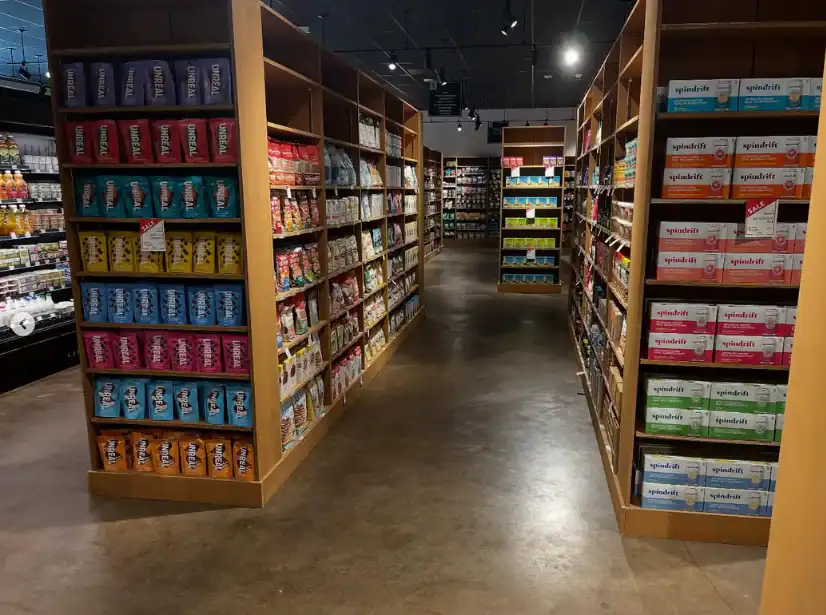
On the installation side, a properly executed commercial epoxy floor system — surface preparation, primer coat, base coat, topcoat — is typically completed in days, not weeks. Our crew of 14 in-house installers has been working together for an average of over 10 years, which means the work moves efficiently and predictably. We’re not coordinating rotating subcontractors who’ve never met each other. When we give you a timeline, we’re confident in it.
Return-to-service time depends on the system. Standard commercial epoxy floors are ready for foot traffic within 24 to 72 hours. Polyaspartic topcoat systems — which we use in environments where downtime is especially costly — can return to service in as little as 24 to 48 hours. For a restaurant in Rockville Centre trying to minimize closure between the summer season and the holiday rush, or a medical office in Mineola that can’t afford extended disruption, that kind of precision matters.
The floors we install are also built to stay. A commercial-grade epoxy system, properly prepared and applied, lasts 10 to 20 years or more with reasonable maintenance. That’s not a stretch — we’ve been in business since 1990, and some of our earliest commercial installations on Long Island are still in service. Consumer-grade coatings from a home improvement store typically fail in commercial settings within one to three years. The difference isn’t the brand name. It’s the product specification, the surface preparation, and the experience behind the application.
Navigating Suffolk County commercial building codes isn’t complicated once you know the framework — but it does require knowing the right questions to ask before work starts. Does this project trigger a permit? Which municipality’s building department is the right call? Is your contractor licensed in the county where the work is happening, and do they carry the insurance to back it up?
These are the questions that protect you as a building owner, and they’re the questions a good contractor should be able to answer without hesitation.
We’ve been working across Nassau and Suffolk Counties since 1990. We know the permit landscape, we hold active licenses in both counties, and every installer on our crew is OSHA 40 certified. If you’re planning a commercial renovation and want to talk through what your project actually requires — code compliance, product selection, timeline — reach out to Advanced Epoxy Flooring. We’ll give you straight answers.
Summary:


Article details:
Share: