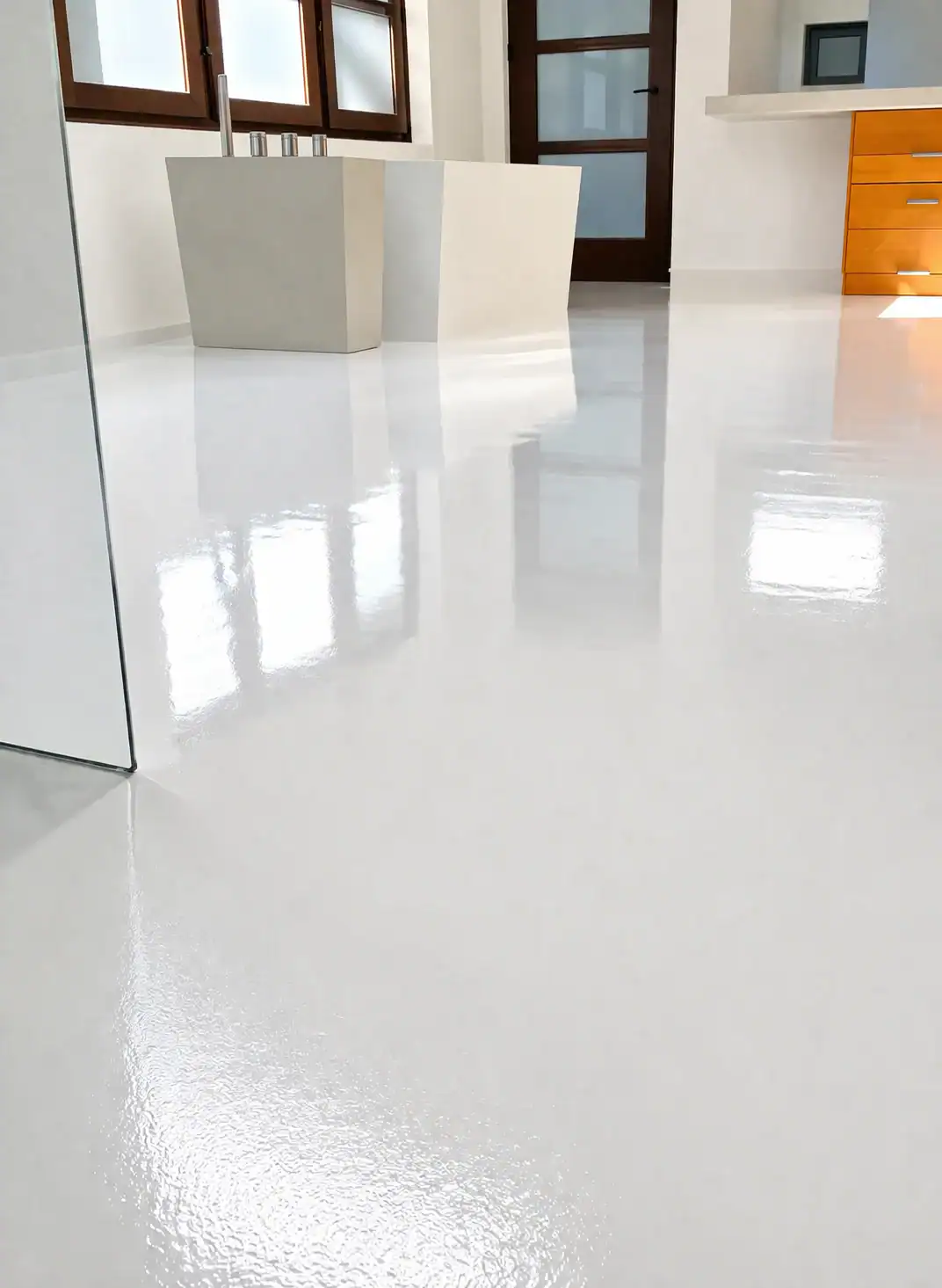
Terrazzo looks great on paper — but is it the right call for your Nassau County commercial space? Here's what the numbers and 35 years of Long Island installs actually tell us.
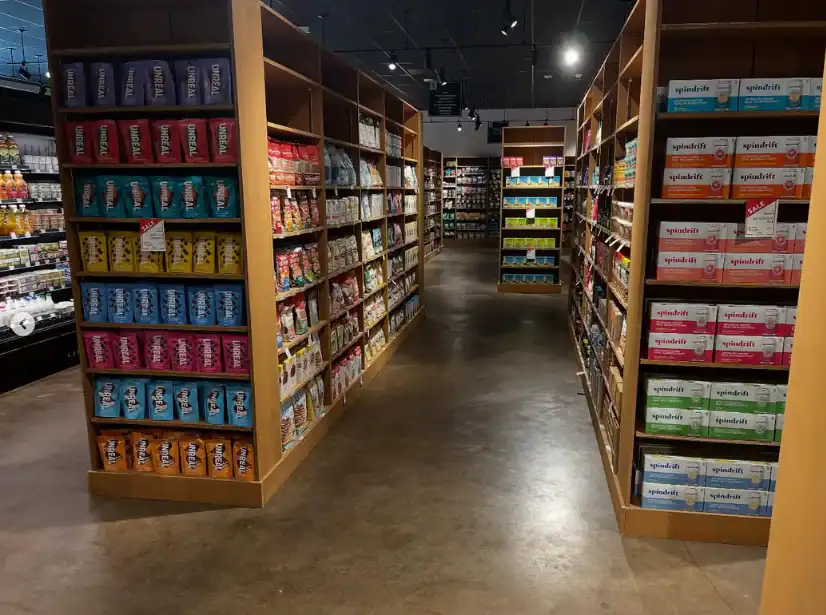
You’ve probably seen terrazzo in a hospital lobby or an airport terminal and thought — that’s what I want. It looks permanent. Professional. Like it was built to last a century. And in the right context, it was.
But if you’re a business owner or facility manager in Nassau County weighing your options, the full picture matters more than the showroom impression. Installation cost, downtime, substrate conditions, moisture risk — these are the details that determine whether a flooring decision holds up or costs you twice.
This breakdown covers what poured terrazzo actually involves, how it compares to epoxy in real commercial environments across Long Island, and where each system makes sense for your space.
Poured-in-place terrazzo is a composite flooring system — typically marble chips, granite, or glass aggregate set into either a cement or epoxy binder, then ground and polished to a smooth, seamless finish. It’s genuinely beautiful and, when installed correctly, extremely durable. The 100-year lifespan you’ll see quoted in manufacturer literature isn’t marketing fiction — it’s real, under the right conditions.
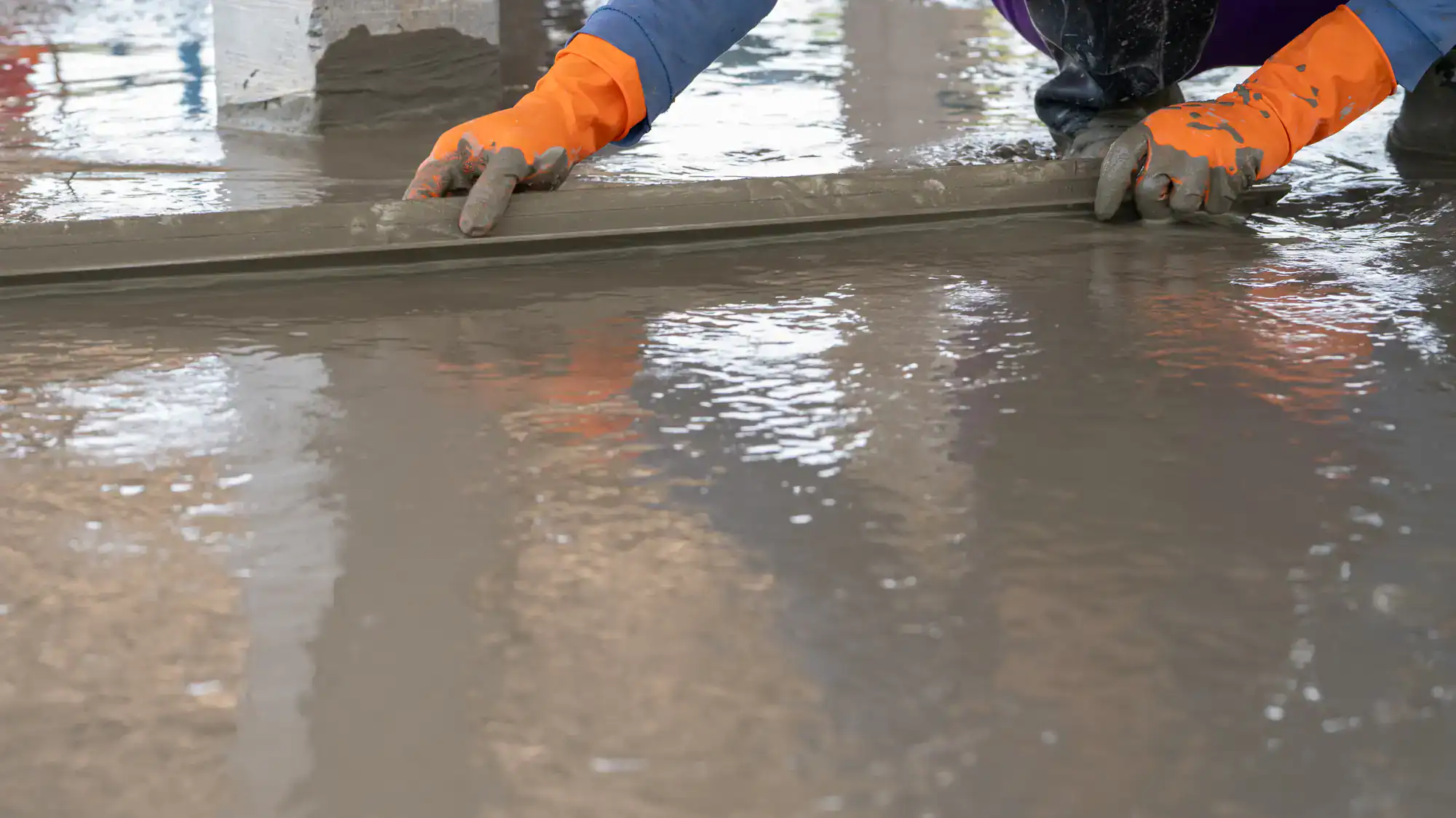
The installation process, though, is involved. A cement-based terrazzo system requires a 2–3 inch pour, curing time, grinding, and polishing — a process that demands skilled terrazzo mechanics, not general flooring contractors. Epoxy terrazzo is thinner (about 1/4 to 3/8 inch) and more flexible, but it still demands proper substrate prep and experienced hands to execute correctly.
Either way, you’re looking at a significant investment of time, money, and floor access before you’re back to normal operations.
This is usually the first question, and the range is wide enough to cause real sticker shock. Standard commercial poured-in-place terrazzo runs $30–$65 per square foot installed for epoxy-based systems, and can push $80–$100 or more for complex designs, custom aggregates, or sand-cushion applications. On a 2,000 square foot commercial space in Nassau County, you’re looking at $60,000 to $200,000 before any substrate repair or prep work is factored in.
Labor alone accounts for $5–$20 per square foot of that total, and terrazzo mechanics — the tradespeople who actually know how to install this system — are not easy to find or cheap to hire. The craft is specialized, the timeline is long, and the margin for error is narrow.
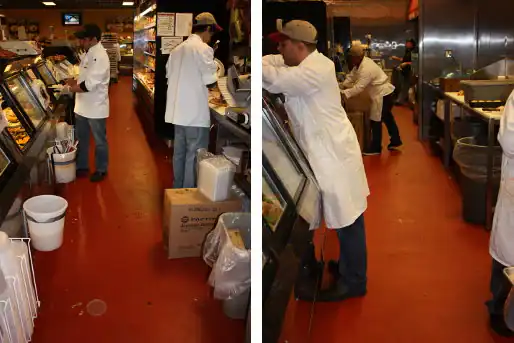
For Nassau County commercial buyers, that cost needs to be weighed against what you’re actually getting. Terrazzo is a strong performer in high-foot-traffic public spaces — think school corridors, healthcare lobbies, municipal buildings — where aesthetics and a multi-decade lifespan justify the investment. In a commercial kitchen in Hicksville, a warehouse in Mineola, or an automotive service bay in Garden City, the calculus looks different.
The environments that drive most of the commercial flooring demand across Nassau County — food service, healthcare support spaces, light industrial, automotive — don’t necessarily need a $60/sq ft floor. They need a floor that handles chemical exposure, moisture, and heavy use without failing. That’s a performance question, not an aesthetic one. And when you frame it as a performance question, epoxy systems compete very differently than the price comparison alone suggests.
One more thing worth knowing: terrazzo’s longevity claims assume ideal substrate conditions and skilled installation. On Long Island, where aging commercial slabs and coastal moisture are common, those conditions aren’t always present. The floor is only as good as what it’s sitting on.
If you’ve ever seen an epoxy floor peel, bubble, or yellow within a year or two, you already have an opinion about epoxy. That opinion is understandable — but it’s usually based on watching the wrong product get installed the wrong way.
Research consistently shows that inadequate surface preparation causes most epoxy floor failures. Not the product itself. Not the system design. The prep work. Specifically, skipping or rushing the concrete profiling step that allows the coating to mechanically bond to the substrate.
Most contractors who cut corners use acid etching instead of diamond grinding. Acid etching is faster and cheaper. It also leaves a surface profile that isn’t deep enough for a true commercial-grade bond — which is why those floors start lifting at the edges within 18 months.
The second most common failure mode in Nassau County specifically is moisture vapor transmission. Long Island’s coastal environment means concrete slabs — especially in older commercial buildings — often have elevated moisture content year-round. When moisture vapor pushes up through the slab and gets trapped beneath a coating that wasn’t applied over a proper vapor barrier, the floor delaminates. It’s not a product failure. It’s an installation failure that moisture testing would have caught before the first coat went down.
We do moisture testing on every job. It’s not an upsell — it’s the baseline. The same goes for diamond grinding. These aren’t premium add-ons; they’re the reason our floors don’t come back as warranty calls.
The other failure modes you’ll see — hot tire pickup on garage floors, yellowing from UV exposure, cracking from substrate movement — are also preventable. Hot tire pickup is a product selection problem: consumer-grade epoxy isn’t engineered for the thermal stress of a hot tire on a cool floor. Yellowing happens with standard epoxy in UV-exposed environments; polyaspartic top coats eliminate it. Cracking from substrate movement is addressed through proper joint treatment and, where appropriate, flexible top coat systems.
None of these are mysteries. They’re predictable outcomes of predictable shortcuts — and they’re exactly what 35 years of commercial installations on Long Island teaches us to avoid.
Want live answers?
Connect with an Advanced Epoxy Flooring expert for fast, friendly support.
Polished concrete has become a popular choice for retail spaces, restaurants, and modern office environments — and it’s easy to see why. The look is clean, the maintenance is relatively simple, and the cost is often lower than a full epoxy system for the right substrate.
But polished concrete and epoxy aren’t competing for the same applications. Polished concrete is a surface treatment — you’re refining what’s already there. Epoxy is a protective coating system we apply over the substrate. That distinction matters the moment chemical resistance, moisture control, or heavy mechanical use enters the picture.
For Nassau County commercial spaces where the floor takes real abuse — food service, healthcare, automotive, light industrial — epoxy’s protective properties are what polished concrete can’t replicate.
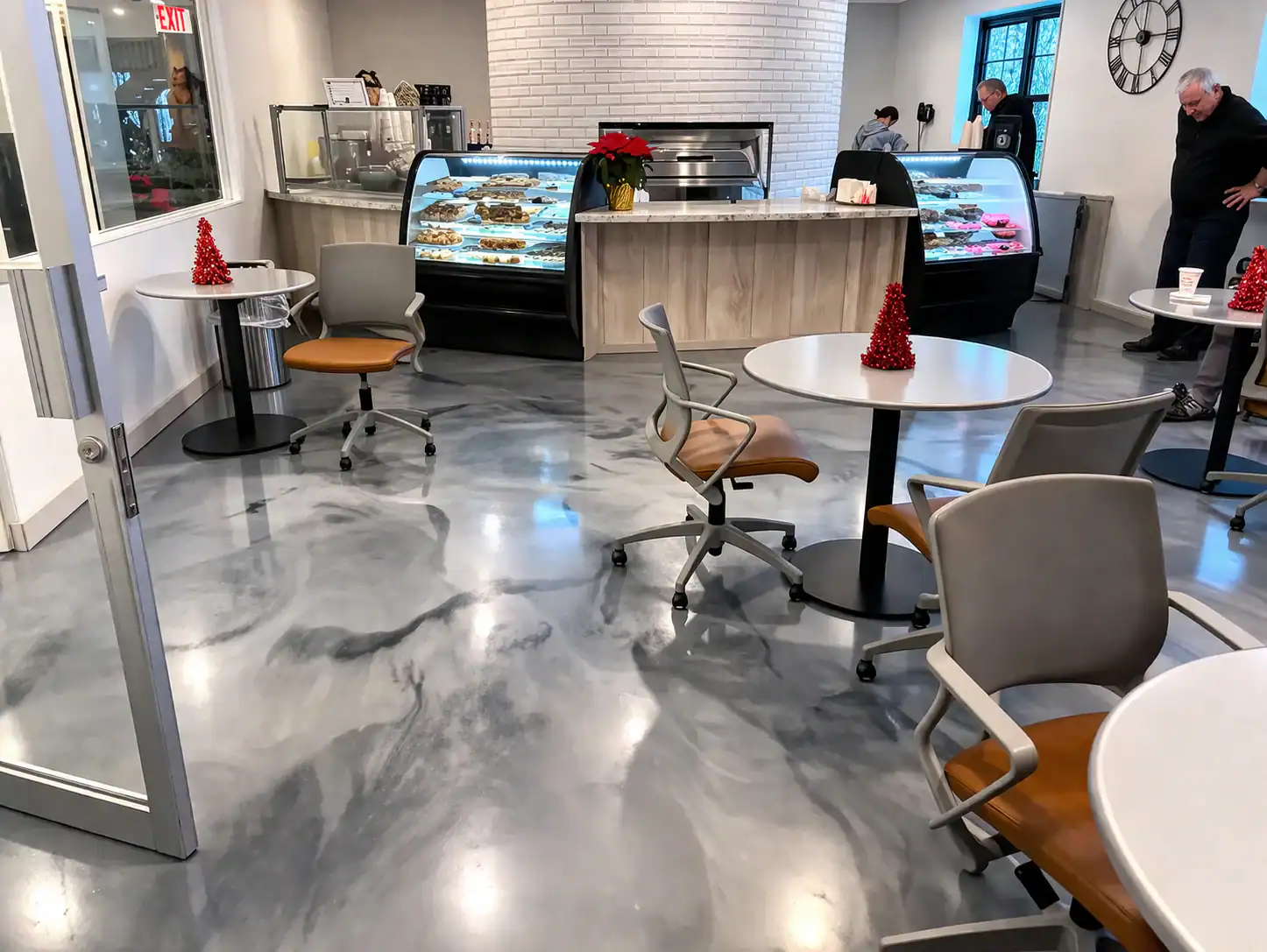
Polished concrete’s appeal is partly aesthetic and partly practical. It uses the existing slab — no added material thickness, no coating layer to maintain — and when done well, it looks sharp. Maintenance is straightforward: dust mop regularly, damp mop with a neutral cleaner, reseal periodically.
The resealing part is where the long-term cost picture gets more honest. Polished concrete in a high-traffic commercial environment needs periodic densifier and guard applications to maintain its surface hardness and stain resistance. In a retail corridor or lightly used office, that’s manageable. In a commercial kitchen, a warehouse with forklift traffic, or a medical facility where chemical cleaning agents are used daily, polished concrete’s surface simply isn’t engineered for that level of exposure.
Epoxy creates a non-porous, chemically resistant barrier between the concrete and everything that lands on it. Spills don’t penetrate. Cleaning is faster. The surface doesn’t degrade from repeated chemical exposure the way a polished concrete sealer does.
From a cost standpoint, the gap between polished concrete and a commercial-grade epoxy system isn’t always as large as people assume — especially when you factor in the cost of resealing polished concrete every few years versus the 10–20 year lifespan of a properly installed epoxy system. For Nassau County commercial operators calculating total cost of ownership rather than just upfront installation price, that math often favors epoxy.
There’s also the substrate question. Polished concrete only works when the existing slab is in good enough condition to take a finish. Older commercial buildings in Nassau County — built during the mid-century development boom across Hempstead, Levittown, and East Meadow — often have slabs with cracks, surface contamination, or previous coating failures that make polishing impractical without significant remediation first. Epoxy systems, with proper prep and repair work, can be applied over substrates that polished concrete simply can’t recover.
Stained concrete is one of the most misunderstood options in the commercial flooring conversation. It looks like a protective system — the colors are rich, the finish can be polished to a sheen — but staining is a decorative treatment, not a protective one. The stain penetrates the concrete surface and changes its color. It doesn’t add a protective layer over it.
That means everything that makes a commercial floor challenging — chemical spills, moisture, abrasion, heavy traffic — still acts directly on the concrete surface. A sealer applied over stained concrete adds some protection, but it’s not the same barrier that a properly installed epoxy system creates. Sealers wear. They require periodic reapplication. In environments with heavy foot traffic or chemical exposure, that maintenance cycle becomes a recurring cost and operational disruption.
For spaces where the primary goal is aesthetics and the use conditions are relatively light — a boutique retail shop, a residential basement, a low-traffic office — stained concrete can be a perfectly reasonable choice. It’s cost-effective, visually flexible, and easier to install than most alternatives.
But for the commercial environments that make up the bulk of Nassau County’s flooring demand — the restaurant kitchens in Rockville Centre, the medical support spaces in East Meadow near Nassau University Medical Center, the service bays along the automotive corridors on Sunrise Highway — stained concrete isn’t engineered for the job. You need a floor that actively resists what gets thrown at it, not one that just looks good until the first serious spill.
This is the distinction that gets lost in a lot of flooring comparisons: the question isn’t just “what looks right?” It’s “what can this floor actually handle?” Epoxy answers that question differently than stained concrete does, and for most commercial applications in Nassau County, the answer matters more than the aesthetics.
Modern epoxy systems we install aren’t limited to industrial gray, either. Metallic finishes, broadcast chip systems, and custom color combinations give commercial spaces a finished look that competes with any decorative concrete treatment — with the added benefit of a surface that’s actually built for the environment it’s in.
Poured terrazzo is a genuinely impressive flooring system — and in the right application, it’s worth every dollar. But for most commercial spaces in Nassau County, the combination of high installation cost, long downtime, substrate sensitivity, and the need for specialized terrazzo mechanics makes it a harder case to justify than it looks on paper.
Epoxy systems — installed correctly, with proper prep and the right product for the environment — deliver comparable durability, faster installation, and a total cost of ownership that makes more sense for the majority of commercial applications on Long Island. The key phrase there is “installed correctly.” The difference between a floor that lasts 20 years and one that fails in 18 months comes down to the process, the product, and the experience behind both.
If you’re working through this decision for a space in Nassau County and want a straight answer about what makes sense for your specific situation, we’ve been doing this work on Long Island for 35 years. Reach out and we’ll give you an honest assessment — no pressure, no upsell, just a real conversation about what your floor actually needs.
Summary:

Article details:
Share: