
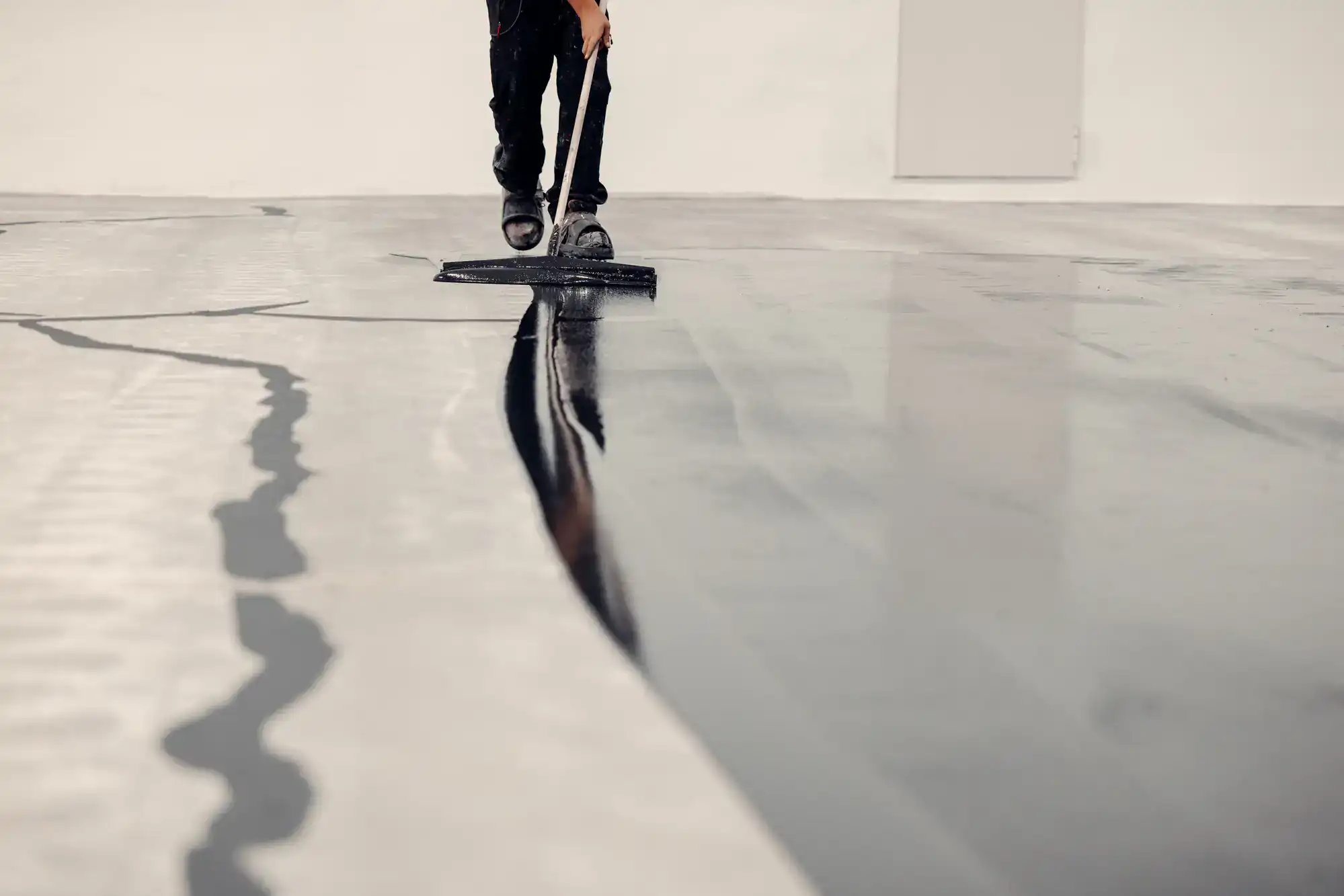
Long Beach sits between the Atlantic Ocean and Reynolds Channel. That geography means your concrete slab is dealing with moisture pressure from below, salt air from both sides, and humidity levels that regularly push past the threshold where cheaper coatings start to fail. A floor installed without accounting for that isn’t going to last and if you’ve already been through one that didn’t, you already know.
When the right system goes in, the difference is immediate and lasting. We create seamless, non-porous surfaces that don’t trap bacteria or absorb spills. Our floors handle forklift traffic, commercial kitchen heat cycles, and daily foot traffic without cracking, peeling, or bubbling. For Long Beach’s restaurant and hospitality businesses along Park Avenue and the boardwalk corridor, that means a floor that survives a full summer season without a callback.
The other thing that changes is how you think about maintenance. A properly installed epoxy system doesn’t require constant upkeep it wipes clean, holds its surface, and keeps looking like it should for years. For healthcare facilities near Long Beach Medical Center or food service operations subject to Nassau County Health Department inspection, that’s not just a convenience. It’s a compliance requirement that our professional system handles automatically.
We’ve been installing commercial and industrial epoxy systems across Nassau and Suffolk Counties for over 30 years, with deep roots in the Long Beach market. Danny Harmer, our president, has over 40 years of hands-on installation experience and his resume includes the White House kitchen in 1996, a floor that’s still standing. That’s not a detail we drop to impress you. It’s a reference point for the standard we hold every job to, whether it’s a warehouse in the Innovation District or a commercial kitchen two blocks from the boardwalk.
The crew that shows up to your Long Beach property isn’t a rotating team of subcontractors. Most of our installers have been with us for over a decade. They’re OSHA 40 certified, factory-trained through Sherwin-Williams High Performance Flooring and Res Tech, and they’ve worked through every season and condition Long Island throws at a job site. Our BBB A+ rating and zero complaints on record over three decades reflect what happens when a company actually stands behind its work.
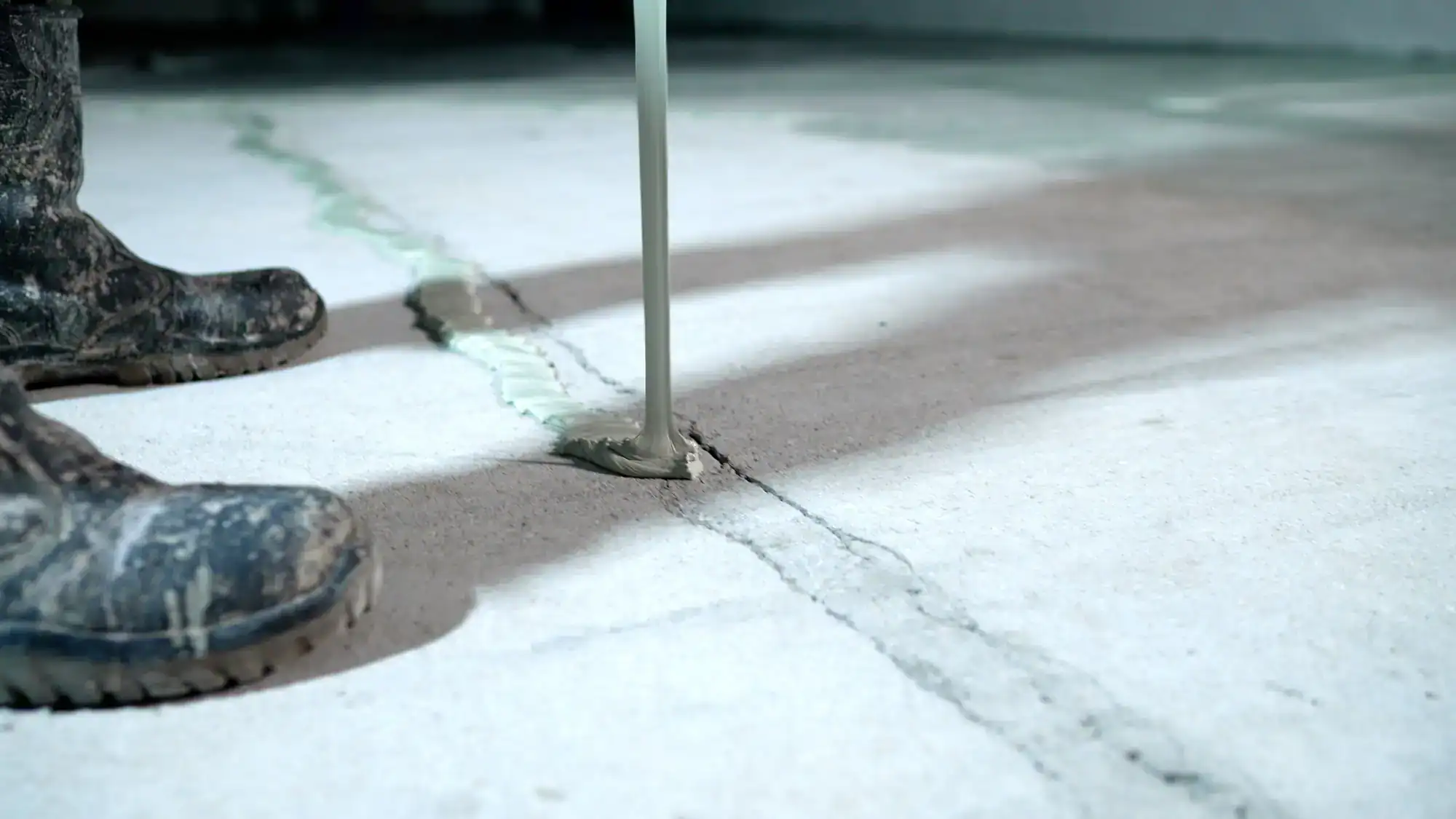
Before anything gets applied, we test the slab. In Long Beach, that step isn’t optional the city’s own planning documents acknowledge the island’s very high groundwater table and the hydrostatic pressure it creates under concrete. Moisture vapor is the number one reason epoxy floors fail, and skipping that assessment here isn’t a shortcut. It’s a setup for failure. We test, we document, and we build the system spec around what the slab actually needs.
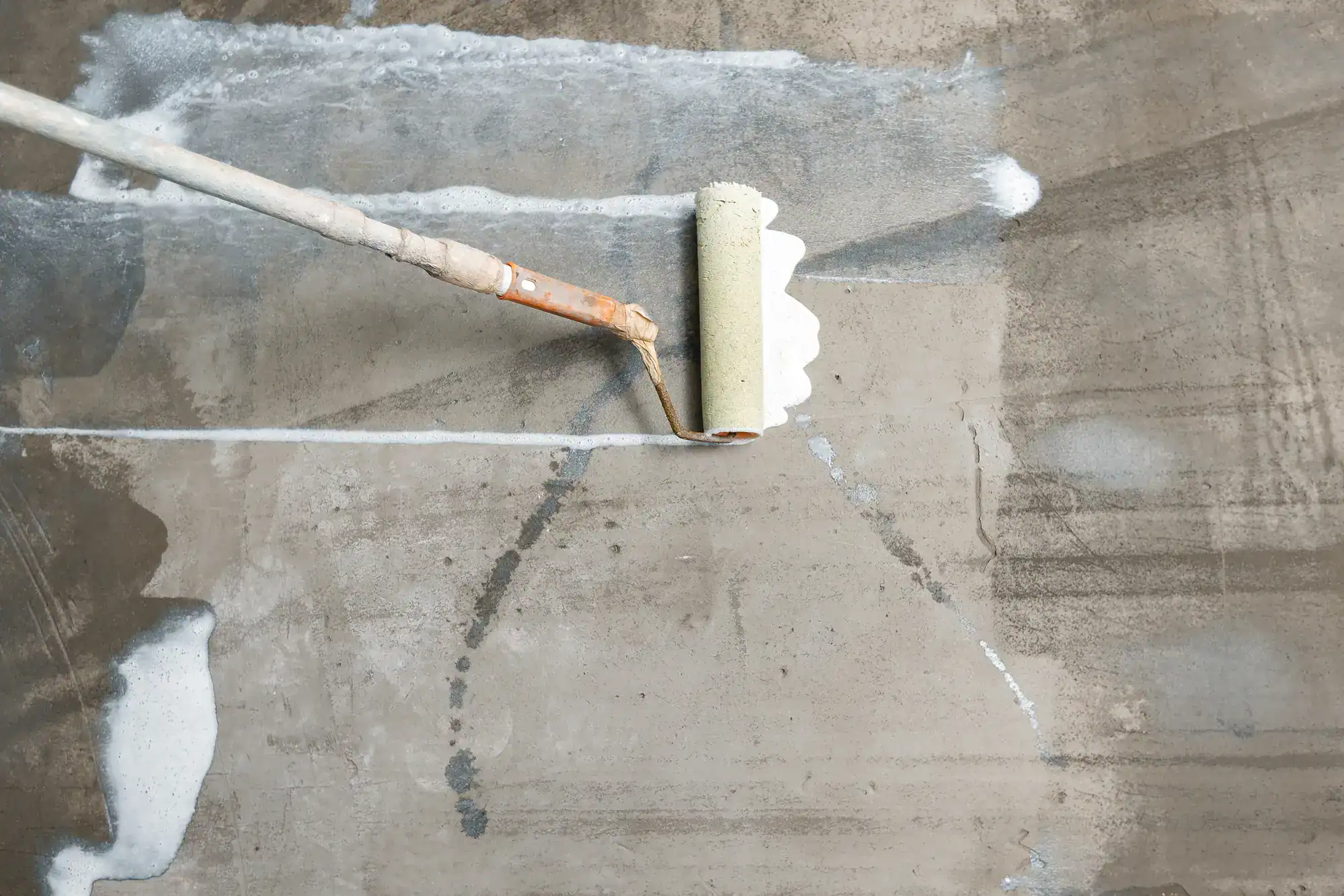
Surface preparation comes next, and it’s where most cheap jobs fall apart. We diamond grind every slab to create the mechanical profile the coating needs to bond properly. Acid etching the faster, cheaper alternative leaves inconsistency and residue that undermines adhesion. After prep, we apply a multi-layer system using 100% solids or high-solids industrial-grade products, with proper cure time between coats. The system is built for your specific environment and use case, not pulled off a shelf.
For Long Beach food service and hospitality clients, we can complete most commercial kitchen floors overnight so you open on schedule. For healthcare and medical office environments near East Bay Drive, we use antimicrobial-additive systems that meet ADA, CDC, and FGI compliance standards. If your project requires a permit through the Long Beach Building Department, we’ll walk you through what’s needed before the crew arrives. The goal is a floor that goes in right the first time and stays that way.
Ready to get started?
Not every floor gets the same system and in Long Beach, that matters more than most places. A restaurant on Park Avenue dealing with sand infiltration, thermal cycling, and high foot traffic needs something different than a light industrial tenant in the Innovation District or a medical office running antimicrobial compliance requirements. We build the system around the environment, not the other way around.
For commercial kitchens and food service operations, we install USDA-compliant, seamless, non-porous systems that meet Nassau County Health Department inspection standards. These are chemical-resistant epoxy finishes designed to handle cleaning agents, standing water, and the kind of wear that a busy kitchen puts on a floor every single night. For warehouse and distribution environments, we install high-traffic commercial epoxy systems rated for forklift loads exceeding 10,000 lbs. For healthcare, the system includes antimicrobial additives and meets the seamless flooring standards required by FGI guidelines.
Every installation uses industrial-grade, 100% solids products not the consumer-grade, water-based coatings that look similar in a brochure but fail under real conditions. In a coastal environment like Long Beach, where salt air and humidity accelerate the breakdown of inferior systems, the product quality isn’t a marketing distinction. It’s the reason one floor lasts 20 years and another doesn’t make it through its second summer. The lifecycle math is straightforward: a professional system at $7–12 per square foot that lasts two decades costs a fraction of what a cheap system costs when you factor in removal, reinstallation, and lost operating time.
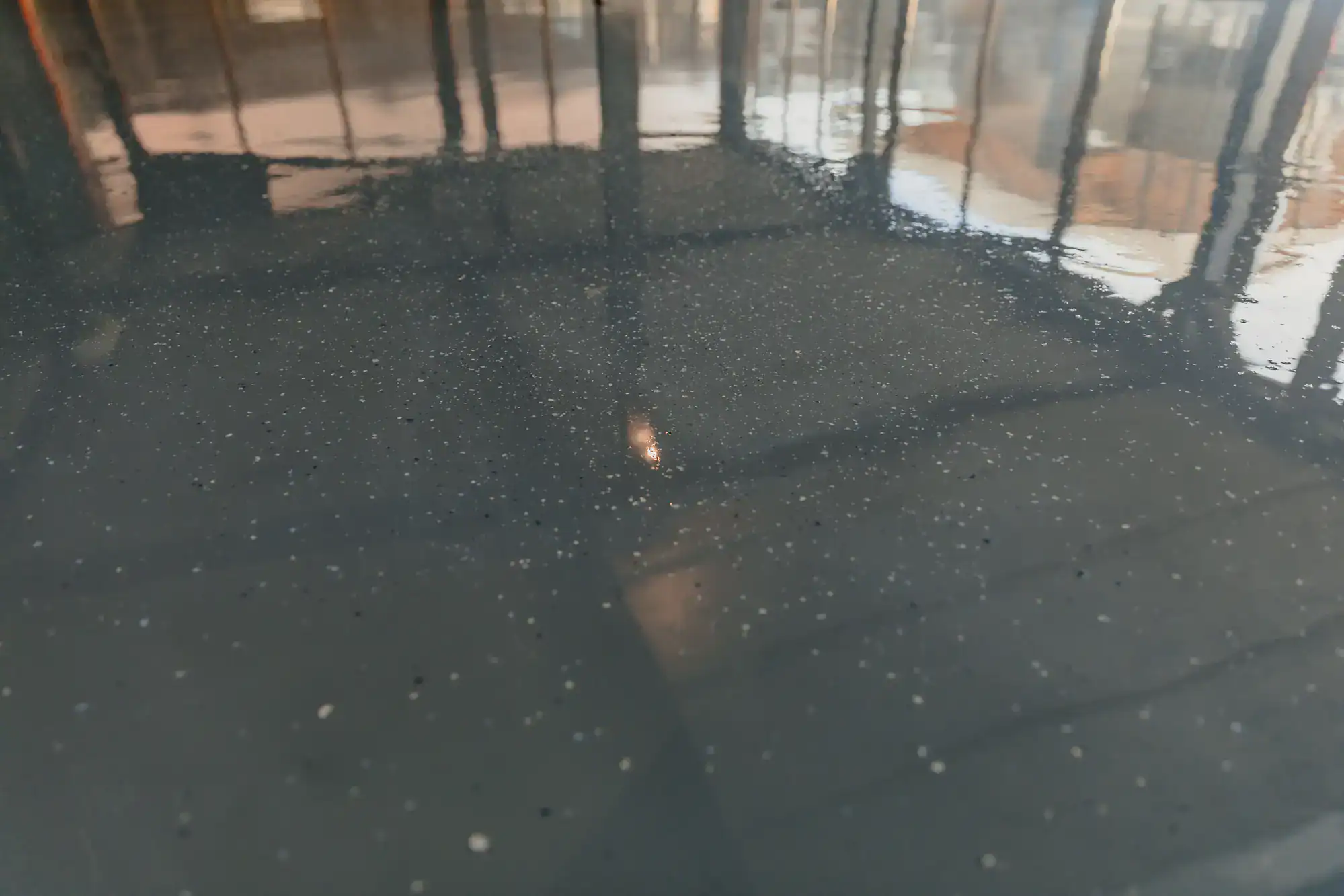
The short answer is moisture. Long Beach sits on a barrier island with a documented very high groundwater table a fact the city’s own Comprehensive Plan addresses directly. That means the concrete slabs under your commercial or industrial space are under constant hydrostatic pressure from below, while salt air and elevated ambient humidity work on the surface from above. Most epoxy failures aren’t caused by bad product. They’re caused by moisture vapor pushing up through a slab that wasn’t properly assessed before installation.
When a contractor skips moisture testing or uses a system that doesn’t include a vapor mitigation layer where the slab readings call for one the coating loses adhesion from underneath. It bubbles, delaminates, and peels. That’s not a warranty issue. That’s a prep issue. Every job we do in Long Beach starts with slab moisture testing because the barrier island environment doesn’t give you the margin for error that an inland Nassau County location might. The testing takes time and adds a step, but it’s the reason our installations hold up where others haven’t.
For commercial and industrial epoxy flooring in Long Beach, you’re typically looking at $7–12 per square foot for a professionally installed, industrial-grade system. The range depends on the size of the space, the condition of the existing slab, the specific system required for your use case, and whether moisture mitigation measures need to be built into the spec. A commercial kitchen system with chemical-resistant finishes and overnight installation will be priced differently than a straightforward warehouse floor.
What’s worth understanding is the lifecycle cost, not just the upfront number. A lower-cost coating at $3–4 per square foot that fails within 18 months which is a real outcome in Long Beach’s coastal environment when the wrong system goes in ends up costing significantly more once you factor in removal, surface re-prep, reinstallation, and whatever revenue you lost while the space was down. A professional system installed correctly costs less per year of service than a cheap one that doesn’t hold. For Long Beach property owners who understand what real estate here is worth, that calculation usually isn’t a hard one.
Yes but only if the system is specified for it. Long Beach has a humid subtropical climate, making it one of the northernmost locations in that climate classification in North America. Summer humidity regularly exceeds 85%, which is the threshold above which standard epoxy application can cause blistering and moisture entrapment. Salt air from the Atlantic and Reynolds Channel adds a corrosive load that accelerates the breakdown of surface coatings that weren’t formulated for coastal exposure.
The systems we install are 100% solids or high-solids industrial-grade products that are designed to perform in exactly these conditions. The installation window matters too we schedule around Long Beach’s seasonal humidity patterns, avoiding application during peak summer humidity events and accounting for the temperature and humidity requirements that govern proper curing. A contractor who doesn’t adjust their process for a beachfront barrier island environment is treating Long Beach like it’s Hauppauge. It isn’t, and the floor will show that difference within a season or two.
Commercial kitchens need a seamless, non-porous system that can handle standing water, commercial cleaning chemicals, thermal cycling from cooking equipment, and the constant foot traffic of a working kitchen. For Long Beach food service operations whether you’re on Park Avenue, near the boardwalk, or anywhere in the city’s restaurant corridor we install USDA-compliant systems with chemical-resistant epoxy finishes that meet Nassau County Health Department inspection standards.
The other factor specific to Long Beach’s hospitality market is timing. Your peak season runs June through September, and closing for a floor installation during that window isn’t a realistic option for most operators. We install most commercial kitchen floors overnight the crew goes in after your last service, completes the installation, and the space is back in operation before you open the next morning. For restaurants preparing for the pre-season rush in April and May, or doing post-season renovations in October and November, we can work around your schedule so the floor doesn’t cost you a day of revenue.
It depends on the scope of the work. Long Beach is one of only two cities on Long Island the other being Glen Cove with its own municipal building department and code enforcement structure, separate from the Town of Hempstead that surrounds it. That means permit requirements here are governed by the Long Beach Building Department directly, not a town-level agency.
For most standard commercial epoxy flooring installations, a permit isn’t required. However, if the work involves significant surface preparation in a commercial or industrial space, chemical application in a regulated environment, or modifications to a structure that was rebuilt under post-Sandy FEMA flood elevation requirements, it’s worth confirming with the city before work begins. We’re familiar with Long Beach’s building department process and will let you know upfront if your specific project triggers a permit requirement. There are no surprises on that end we sort it out before the crew arrives, not after.
A properly installed industrial epoxy floor in a commercial or industrial setting typically lasts 15–20 years with normal maintenance. In Long Beach, that lifespan is achievable but it depends almost entirely on whether the installation was done correctly from the start. The barrier island environment is unforgiving to shortcuts. A floor installed without proper moisture testing, diamond-ground surface prep, and an appropriately specified system will show failure signs within one to three years in Long Beach’s conditions. A floor installed the right way holds up through decades of coastal humidity, salt air, and heavy use.
Maintenance is minimal once the system is in. Seamless resinous floor coatings don’t have grout lines, seams, or porous surfaces where bacteria, moisture, or contaminants can work their way in. Routine cleaning is straightforward. For Long Beach facilities that went through Sandy-era reconstruction and had slabs poured under emergency conditions, we pay particular attention to the slab assessment phase some of those post-Sandy installations have moisture mitigation needs that weren’t fully addressed at the time, and catching that before the coating goes down is what separates a 20-year floor from one that fails in the first season.