
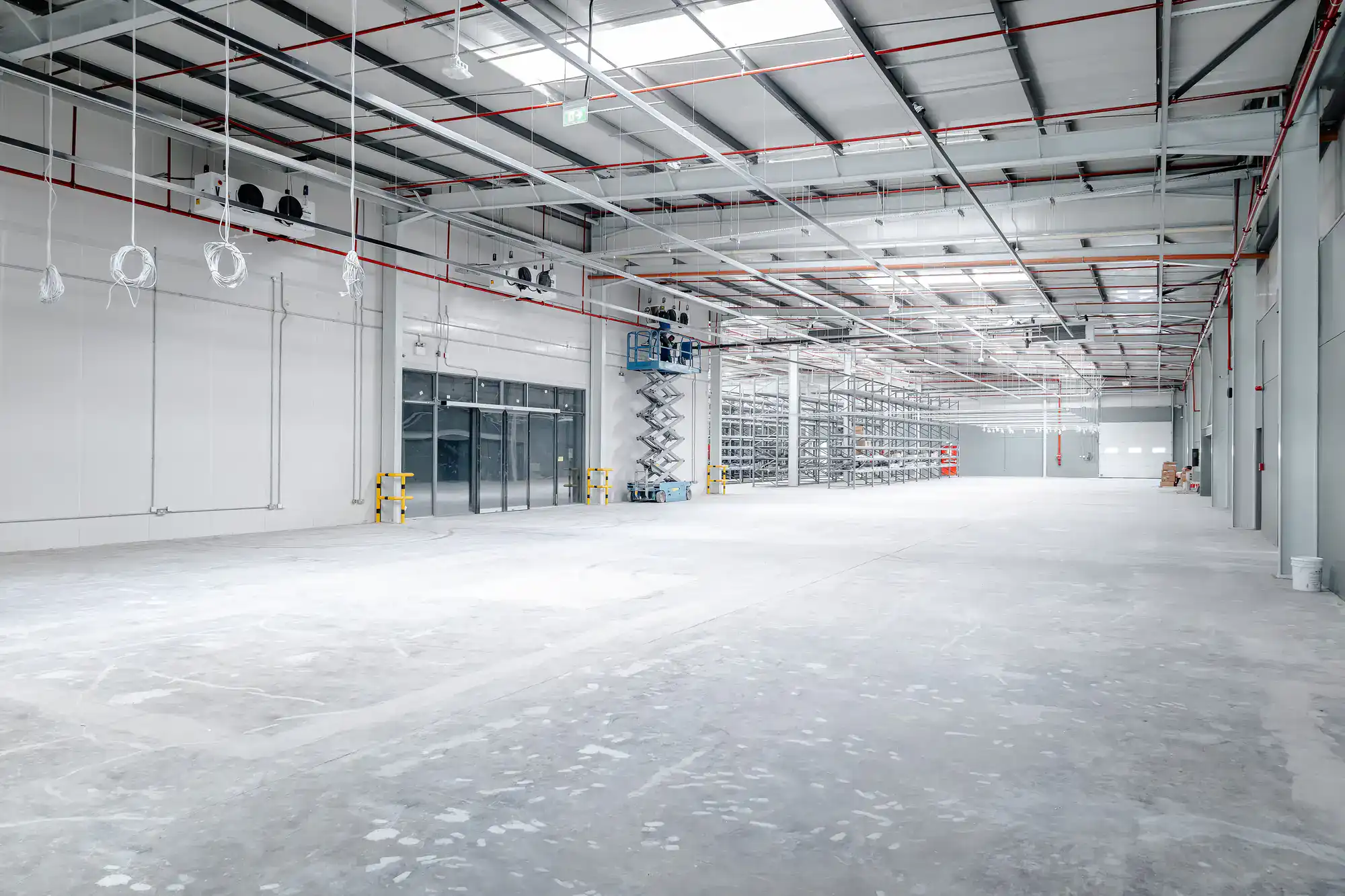
Long Beach rebuilt fast after Sandy. And a lot of what went in fast is now coming back up peeling, cracking, failing. That’s not a contractor problem. That’s a materials and process problem. When the prep is skipped and the system isn’t matched to the environment, the floor doesn’t last. On a barrier island surrounded by Reynolds Channel and the Atlantic, that timeline gets shorter.
Aviation floors take the hardest hit. Skydrol hydraulic fluid, jet fuel, heavy rolling loads, and constant cleaning cycles any one of those will expose a weak coating within a year. The right system handles all of them without breaking down, without becoming a slip hazard, and without turning your hangar into a maintenance project every few seasons.
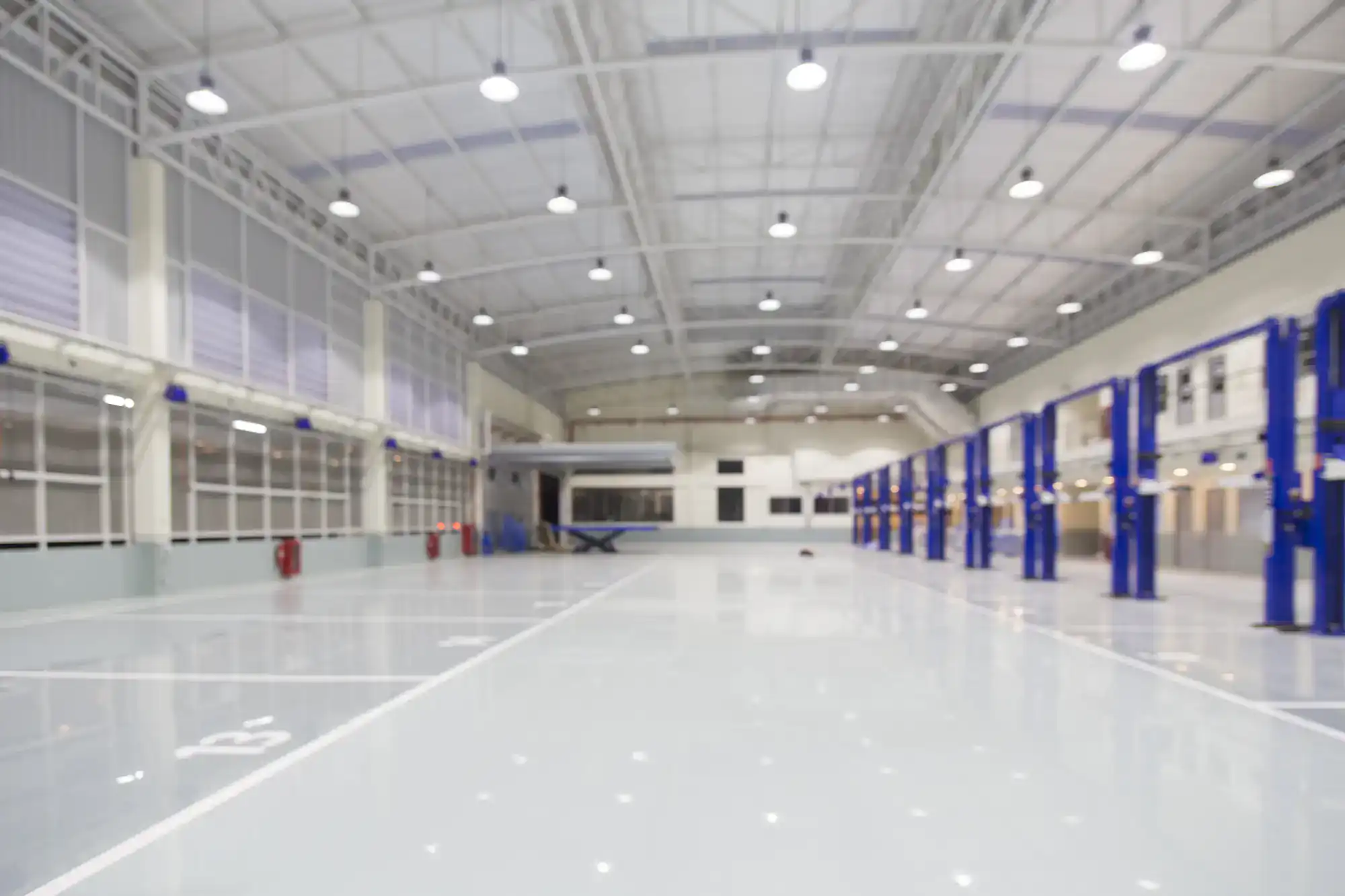
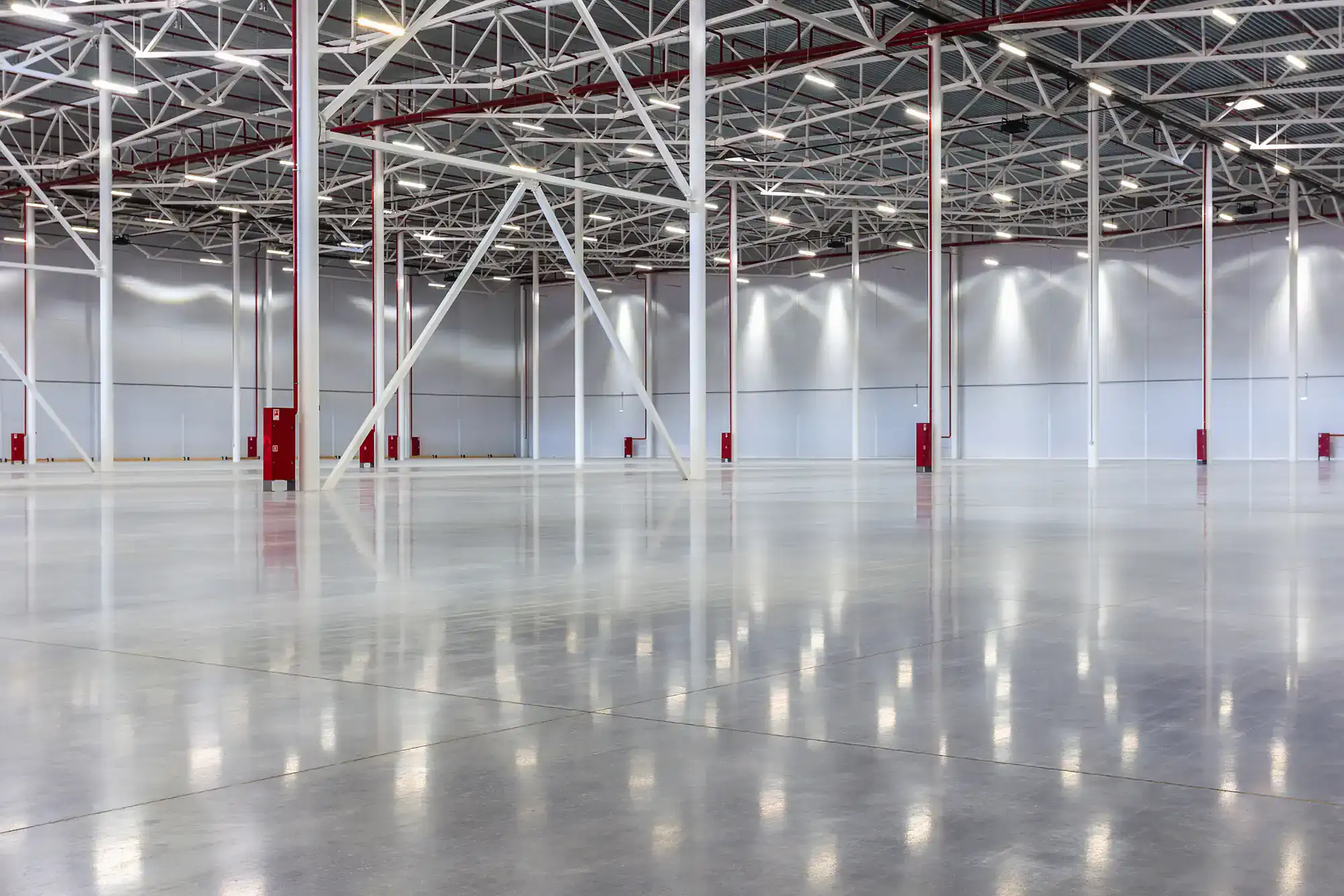
What you actually get from a properly installed aviation-grade floor is a surface that reflects overhead lighting clearly enough to spot a dropped tool or a fluid spill before it becomes a problem. You get a floor that doesn’t absorb chemical spills into the concrete. You get something that, if installed correctly the first time, you’re not thinking about again for 15 to 20 years which, in a coastal environment like Long Beach, is what durable actually means.
We’ve been in this business for over 30 years, and our founder Danny Harmer still brings more than 40 years of hands-on installation experience to every project. This isn’t a franchise operation where someone sells the job and sends whoever’s available. The same long-tenured crew handles the work, with field supervisors who collectively bring over 40 years of additional experience between them. Most of our team has been with us for more than a decade.
We’ve worked across Long Island’s full range of commercial and industrial environments, and we understand what coastal conditions on the South Shore actually do to a floor over time. Serving Nassau County and the barrier island communities along the Meadowbrook Parkway corridor, we hold dual elite certifications in Sherwin-Williams High Performance Flooring and Res Tech two of the most rigorous credentials in industrial coatings. Every installer on our team is OSHA 40 certified, and we’re BBB Accredited.
Every installation we do starts with the concrete, not the coating. The slab gets diamond ground to open the surface and create a real mechanical bond. Any cracks, spalls, or damaged areas are repaired before anything else happens. Then moisture vapor testing and in Long Beach, this step is non-negotiable. With the water table as shallow as it is on the barrier island, skipping moisture assessment is how you end up with a floor that delaminates in two years. The results of that test determine the primer system we use and how the rest of the build is sequenced.
From there, the system goes down in layers primer, build coat, topcoat with each coat given the proper cure time to bond correctly. The topcoat is NFSI-certified for slip resistance, which matters in any environment where fuel, fluid, or coastal humidity keeps the floor surface wet. The entire system we install is formulated to meet NFPA 409’s non-combustibility requirements for aircraft storage and servicing areas, so your facility stays compliant with both industry standards and Long Beach’s independent city building department.
Depending on the system selected, most facilities are back in service within 24 hours. For hangar operators who can’t afford a week of downtime and near Republic Airport in Farmingdale, that’s most of them polyaspartic systems make that turnaround realistic without cutting corners on the installation itself.
Ready to get started?
The coatings we install in aircraft hangars and maintenance bays aren’t the same products sold in big-box stores with a commercial label slapped on them. They’re formulated specifically for Skydrol resistance, jet fuel exposure, heavy rolling loads, and the kind of industrial cleaning cycles that happen in active aviation facilities. We install multi-layer systems minimum 45 mils of total thickness that are built to handle all of that simultaneously, not just one condition at a time.
For Long Beach area facilities, the system selection also accounts for what the coastal environment adds to the equation: salt air corrosion, ambient humidity that doesn’t drop off seasonally the way it does inland, and the freeze-thaw cycling that hits barrier island concrete harder than most people expect. These aren’t abstract concerns they’re the reason floors in this specific environment fail faster when the wrong system goes in.
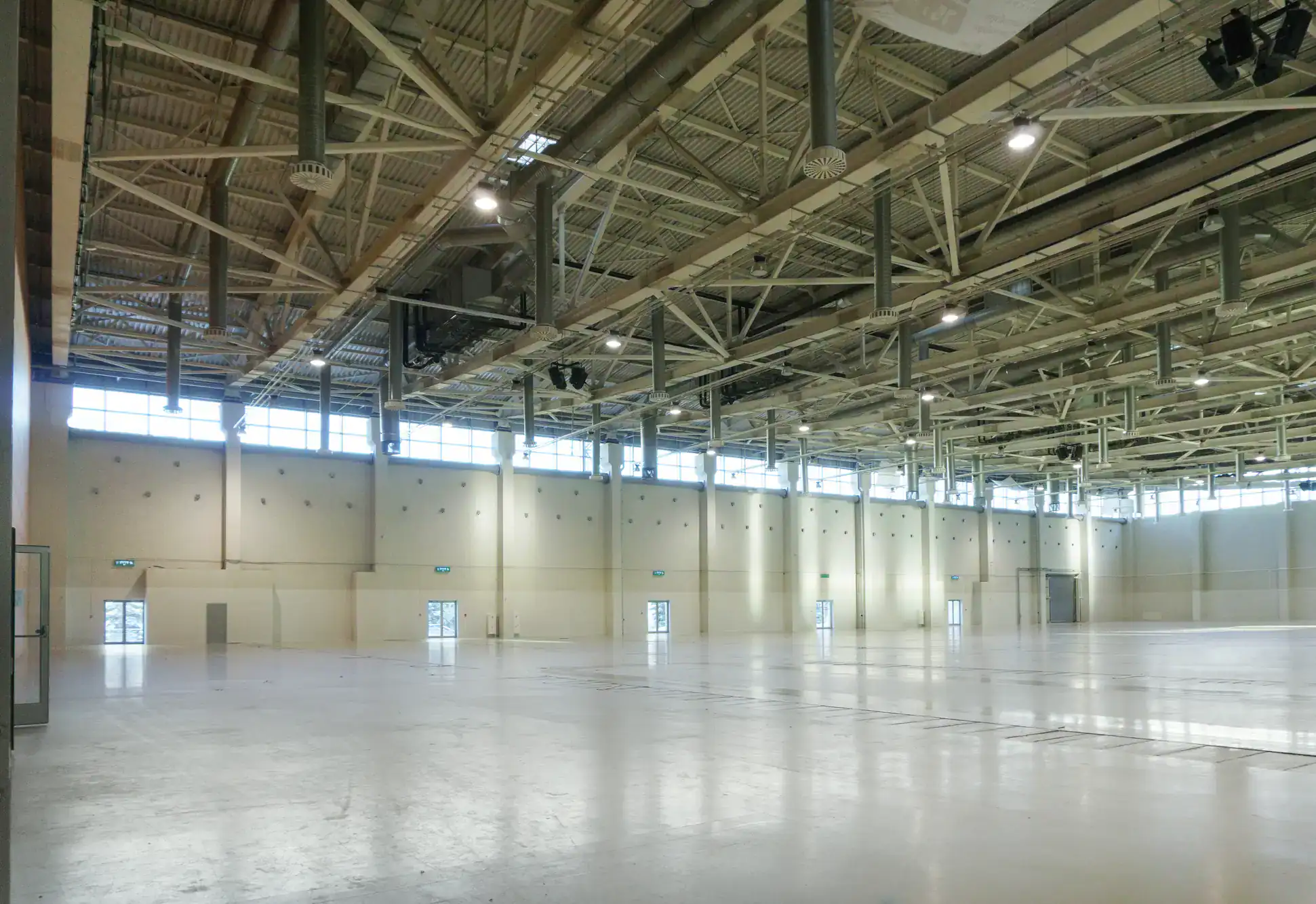
The result is a floor with a high-gloss, light-reflective finish that makes fluid spills and foreign object debris visible immediately, combined with an NFSI-certified non-slip surface that performs whether the floor is dry or wet. For Nassau County aviation operators whether you’re managing a private hangar, a corporate flight facility, or a maintenance bay near the Long Beach Boulevard corridor this is what a floor built for actual use looks like, not one built to look good on an estimate.
It does, and it’s one of the most important variables on a barrier island like Long Beach. Elevated ambient humidity affects how coatings cure if conditions aren’t right during application, you can end up with adhesion problems that don’t show up immediately but cause delamination within a year or two. Beyond the air, Long Beach’s shallow water table means moisture vapor is constantly migrating up through the concrete slab from below. That’s a separate issue from surface humidity, and it requires its own testing and mitigation before any coating goes down.
Every installation we perform begins with moisture vapor testing to measure what’s actually happening beneath the slab. The results determine which primer system we use and how the rest of the installation is sequenced. Skipping this step in Long Beach isn’t a calculated risk it’s a near-certain path to a failed floor. The coastal conditions here are real, and the process has to account for them from the start.
NFPA 409 is the National Fire Protection Association’s standard on aircraft hangars. It requires that floor surfaces in aircraft storage and servicing areas be noncombustible meaning standard epoxy products that don’t meet this specification aren’t code-compliant in a hangar setting, regardless of how well they’re installed. Most general flooring contractors have never heard of NFPA 409, which is exactly the problem when they’re bidding on aviation facility work.
If you’re operating any kind of hangar in Long Beach private, corporate, or commercial NFPA 409 compliance affects your insurance coverage and your ability to pass fire marshal inspections. Long Beach is an independent city with its own building department, which means compliance requirements apply at both the local and industry level. We install systems that meet this standard, and we can walk you through what that means for your specific facility before the project starts.
The honest answer depends on the system installed and the environment it’s operating in. A properly installed polyaspartic system in an active hangar can last 15 to 20 years with minimal maintenance. Standard epoxy in a high-traffic aviation environment typically needs reapplication every five to seven years and in a coastal environment like Long Beach, where salt air and humidity are constant factors, that timeline can be shorter if the system wasn’t matched to local conditions from the start.
The other variable is surface prep. A well-formulated coating on a poorly prepared slab will fail early regardless of the chemistry. Diamond grinding, crack repair, and moisture testing before the coating goes down are what determine the floor’s actual service life not just the product label. For Long Beach facility operators who’ve already been through one round of post-Sandy rebuilding, the math on investing in a system that lasts 20 years versus one that needs replacement in five is straightforward.
Not all of them can and that’s the distinction that matters most when you’re specifying a floor for an active aviation facility. Skydrol is one of the most aggressive chemicals in any hangar environment. It’s corrosive to skin, to concrete, and to coatings that weren’t formulated to handle it. A standard garage-grade epoxy will break down under repeated Skydrol exposure within months. The same goes for jet fuel and the industrial cleaning agents used in maintenance bays.
The aviation-grade epoxy systems we install are formulated specifically for this chemical environment not adapted from residential products and rebranded. Our systems are tested for resistance to Skydrol, jet fuel, hydraulic fluid, and industrial solvents. For aircraft owners and facility managers in the Nassau County area who keep their aircraft at Republic Airport in Farmingdale or manage maintenance operations near Long Beach, chemical resistance isn’t a nice-to-have it’s the baseline requirement.
With a polyaspartic system, most facilities are back in service within 24 hours of the final coat going down. That’s the primary operational advantage of polyaspartic over traditional epoxy, which requires a multi-day cure window before heavy equipment and aircraft can return to the floor. For hangar operators who can’t afford extended downtime and most can’t that turnaround difference is significant.
The total installation timeline depends on the size of the space, the condition of the existing slab, and how much prep work is needed before the coating goes down. Concrete repairs, moisture mitigation, and surface grinding all add time to the front end of the project, but they’re what determine whether the floor lasts 20 years or starts failing in three. We’ll give you a realistic project timeline before work begins, not an optimistic estimate that shifts once the crew is on site.
Both are legitimate options for aircraft hangar floor coatings in Long Beach, but they perform differently in ways that matter depending on your facility’s priorities. Epoxy builds thickness well it’s excellent for high-build applications where you need significant film thickness over a damaged or porous slab. It’s also slightly more cost-effective upfront. The trade-off is cure time: traditional epoxy needs 48 to 72 hours before it can handle heavy loads, and it can be sensitive to temperature and humidity during application which, in Long Beach’s coastal climate, is a real scheduling consideration.
Polyaspartic cures faster, handles a wider temperature range during application, and is generally more UV-stable, meaning it won’t yellow or chalk over time the way some epoxy systems do under the kind of light exposure a hangar interior gets. For Long Beach aviation facilities where downtime is costly and the environment adds constant humidity and salt air to the equation, polyaspartic is often the better long-term investment. The right answer for your specific facility depends on slab condition, traffic load, and how the space is used and that’s a conversation worth having before you commit to a system.