
Your floors either help you pass inspections or they don’t. They either resist bacteria growth or they harbor it. There’s no middle ground in healthcare.
Seamless medical-grade epoxy in Long Beach, NY eliminates the grout lines and cracks where pathogens hide. You get a non-porous surface that cleans completely with standard detergents. No buildup. No residue. No contamination risks that keep you up at night before an FDA walk-through.
The flooring includes EPA-registered antimicrobial additives integrated during manufacturing. That protection doesn’t wear off after a few months of mopping. It’s built into the system for the life of the floor, continuously inhibiting microbial growth in high-traffic corridors, surgical suites, and sterile prep areas.
Chemical resistance matters when you’re using hospital-grade disinfectants multiple times per shift. These systems handle bleach, quaternary ammonium compounds, and sterilizing agents without breaking down or creating unsafe conditions. Your maintenance team can actually do their job without worrying about damaging the floor.
We’ve been installing healthcare flooring systems across Long Island for over 30 years. Every installer on our team is OSHA 40 certified. Most have been with us for over a decade because we don’t treat floors like a commodity.
Long Beach’s healthcare infrastructure has evolved significantly since Hurricane Sandy reshaped the medical landscape here. Mount Sinai’s state-of-the-art facility and South Nassau’s emergency department represent the kind of modern healthcare environments that demand proper flooring from day one. We’ve worked with major hospital systems throughout the region, including installations at facilities where regulatory compliance isn’t optional.
Our average employee tenure is 10+ years. That consistency means you’re not getting a rotating crew learning on your job. You’re getting installers who understand ICRA protocols, dust containment in occupied spaces, and how to coordinate around sanitation cycles without shutting down your operations.
We start with moisture testing and concrete evaluation. Healthcare facilities in coastal Long Beach deal with humidity and water vapor transmission that can compromise flooring systems if not addressed properly. We identify issues before installation, not after your floor starts failing.
Surface preparation includes diamond grinding or shot blasting to create the mechanical bond these systems need. We remove existing coatings, repair cracks and spalls, and ensure the substrate is sound. This isn’t the exciting part, but it’s why our floors last 15+ years instead of needing replacement in five.
The epoxy application happens in layers. Base coat, build coat, and topcoat with antimicrobial additives integrated throughout. For sterile room floor coatings in Long Beach, we can add slip-resistant texture that doesn’t create abrasive surfaces that are hard to clean. You get traction without compromising hygiene.
Low-VOC healthcare coatings in Long Beach mean we can work in occupied spaces. We coordinate installation around your schedule, section by section if needed. Most areas are ready for light traffic within 24 hours and full service within 72 hours. You don’t need to close wings or relocate patients.
Ready to get started?
USDA/FDA compliant flooring in Long Beach, NY means systems engineered to meet federal sanitation standards. These aren’t marketing claims. The materials are smooth, durable, easily cleanable, and create protective barriers that prevent contamination. They contribute to LEED certification if your facility is pursuing green building credentials.
The antimicrobial protection is EPA-registered and tested. It works continuously, not just when you apply disinfectant. High-traffic areas like corridors and waiting rooms stay protected between cleaning cycles. Surgical suites and sterile processing areas get the seamless, cove-base integration that eliminates every potential harbor point for bacteria.
Chemical resistance is verified against the specific agents used in healthcare. We’re talking phenolics, glutaraldehydes, hydrogen peroxide, and the harsh cleaners your EVS team uses daily. The floor won’t degrade, discolor, or create safety hazards from chemical exposure.
Slip resistance meets National Flooring Safety Institute standards for wet conditions. Healthcare environments deal with spills constantly. You need flooring that protects staff and patients without creating surfaces that are impossible to sanitize. Our texture profiles balance both requirements.
Long Beach’s proximity to the ocean means salt air and moisture are constant factors. These systems are engineered for coastal environments where humidity and temperature fluctuations can cause lesser coatings to fail. You’re not replacing floors every few years because they couldn’t handle the local climate.
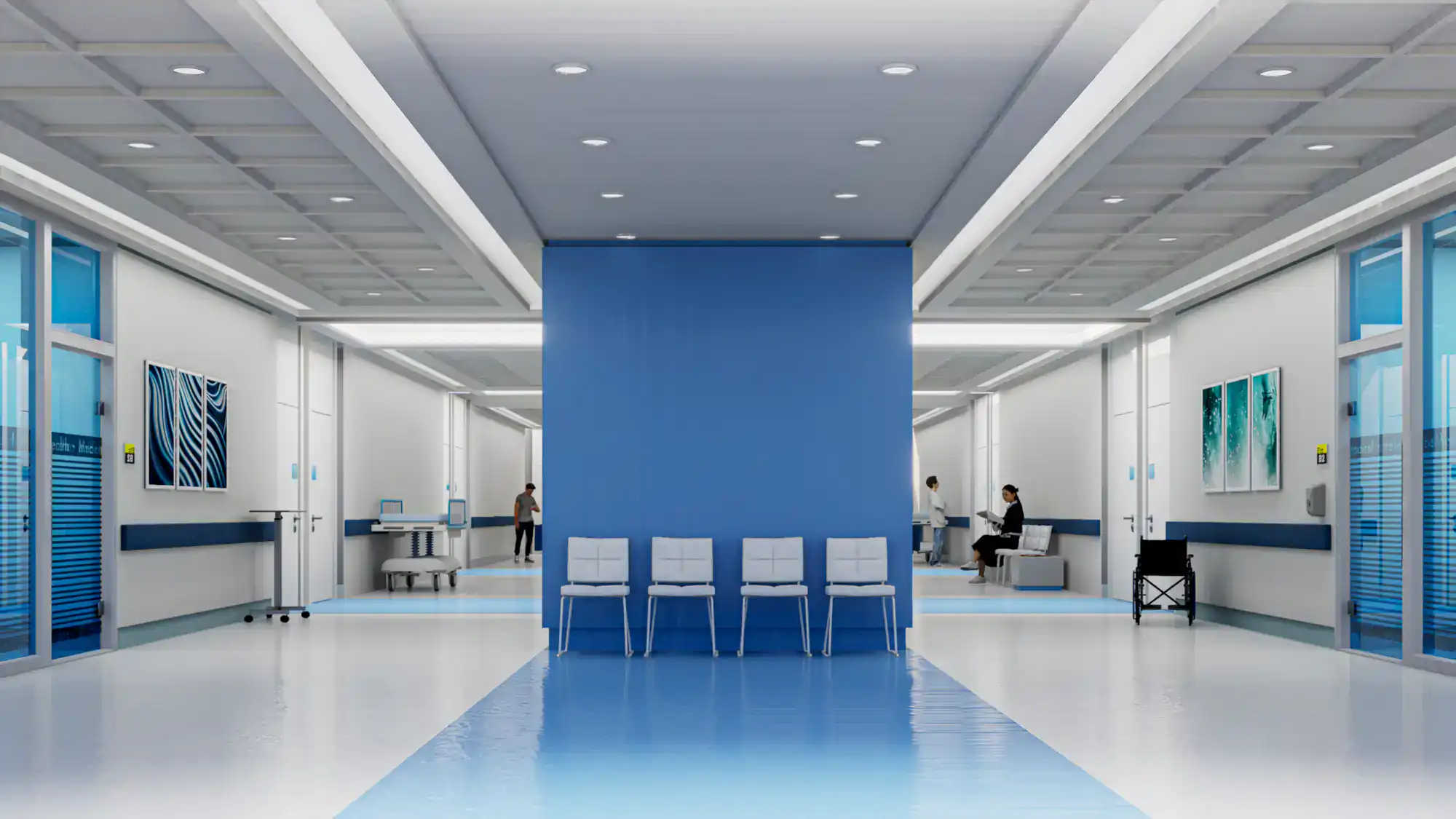
The antimicrobial additives are integrated during the manufacturing process, not applied as a topical treatment. They’re part of the epoxy matrix itself.
This matters because topical antimicrobial treatments wear off as the floor gets cleaned and trafficked. You might get six months of protection before it’s gone. Integrated additives last for the entire life of the floor because they’re not sitting on the surface waiting to be scrubbed away.
The EPA-registered additives work by disrupting microbial cell walls and inhibiting reproduction. They’re effective against bacteria, mold, and mildew. They don’t eliminate the need for regular cleaning and disinfection, but they provide continuous protection between cleaning cycles. In high-traffic areas where foot traffic is constant, that ongoing protection reduces the microbial load your cleaning protocols have to address.
Yes, but it requires proper planning and low-VOC formulations designed for occupied healthcare spaces. Standard epoxy systems have strong odors and off-gassing that make them unsuitable for facilities with patients.
We use low-VOC healthcare coatings specifically formulated for hospitals. These systems meet indoor air quality standards and don’t create the respiratory irritation or headaches associated with traditional epoxies. We can work in sections, coordinating with your facility schedule to minimize disruption.
The installation follows ICRA protocols for dust containment and debris control. We set up barriers, use HEPA filtration, and coordinate with your infection control team. Most areas are ready for light traffic within 24 hours. Full chemical cure takes 72 hours, but you don’t need to shut down entire wings or relocate patients. We’ve done installations in active emergency departments and surgical floors by working around sanitation cycles and patient care schedules.
Healthcare flooring has to meet federal sanitation standards that don’t apply to warehouses or retail spaces. USDA and FDA regulations require floors that are smooth, non-absorbent, and easily cleanable with a protective barrier that prevents contamination.
The chemical resistance requirements are more demanding. Healthcare facilities use disinfectants and sterilizing agents that would destroy standard epoxy. Hospital-grade systems are tested against specific chemicals like bleach, quaternary ammonium compounds, phenolics, and glutaraldehydes. They maintain their integrity and don’t create hazardous conditions from chemical exposure.
Seamless installation is critical in healthcare. Grout lines, seams, and cracks create harbor points for bacteria and pathogens. Medical-grade systems are applied as continuous surfaces with cove base integration that eliminates every gap. The antimicrobial additives are EPA-registered and tested, not just marketing language. These systems are engineered for environments where infection control isn’t optional and regulatory inspections have real consequences.
Properly installed healthcare epoxy flooring typically lasts 15-20 years in high-traffic medical environments. That lifespan assumes regular cleaning with appropriate chemicals and normal wear from equipment, foot traffic, and rolling carts.
The durability comes from the thickness and quality of the system. We install 160-mil thick surfaces that can handle impacts from dropped equipment, constant foot traffic, and the abrasion from beds and wheelchairs being moved constantly. Thinner systems or DIY coatings might last 3-5 years before they start peeling or wearing through.
The seamless nature of these floors means there are no grout lines to crack or tiles to come loose. There’s nothing to wax or strip. Maintenance is straightforward—detergent and water. The antimicrobial protection and chemical resistance don’t degrade over time because they’re engineered into the system. You’re not reapplying treatments or dealing with progressive deterioration. The floor performs the same in year 15 as it did in year one, assuming proper care.
Preparation starts with moisture testing because concrete in Long Beach deals with humidity from the coastal environment. Water vapor transmission will cause flooring systems to fail if not addressed before installation. We test for moisture levels and use vapor barriers when needed.
Surface preparation typically involves diamond grinding or shot blasting to remove existing coatings and create the proper profile for mechanical bonding. We repair cracks, spalls, and damaged areas. The concrete needs to be structurally sound and properly profiled or the epoxy won’t bond correctly. Poor prep work is the number one reason flooring systems fail prematurely.
We clean the surface completely to remove oils, contaminants, and debris. In healthcare facilities, this often means working around existing operations and coordinating with your maintenance team. The substrate has to be dry before we apply the first coat. In occupied facilities, we use dust containment systems and HEPA filtration to prevent contamination of sterile areas. The prep work takes longer than the actual epoxy application, but it’s what determines whether your floor lasts two years or twenty.
Regular janitorial staff can maintain healthcare epoxy flooring with standard equipment and protocols. These floors are designed to be easily cleanable, which is a federal requirement for medical facilities.
Daily maintenance involves damp mopping with neutral pH detergent and water. The seamless, non-porous surface means dirt and contaminants sit on top rather than soaking in. There’s no waxing, stripping, or special treatments required. Your EVS team can use the same disinfectants they’re already using—the floor is chemically resistant to hospital-grade cleaners.
For deeper cleaning, an auto-scrubber works well. The slip-resistant texture we install doesn’t create deep grooves that trap dirt. It’s enough to provide traction when wet but not so aggressive that it’s hard to sanitize. The antimicrobial additives work continuously, but they don’t replace proper cleaning protocols. They supplement your infection control program by inhibiting microbial growth between cleaning cycles. Your staff doesn’t need special training or equipment. They just need to follow standard healthcare cleaning procedures, and the floor will perform as designed.