
When your floor fails, everything stops. Forklifts can’t run safely over crumbling joints and potholes. Pallets get damaged. Operations slow down while you patch and repair.
Industrial warehouse floor epoxy in Long Beach, NY changes that equation. A properly installed system gives you 10 to 20 years of service depending on your traffic levels. That’s a decade or more without major repairs, without constant patching, without wondering when the next chunk of concrete will break away under a loaded forklift.
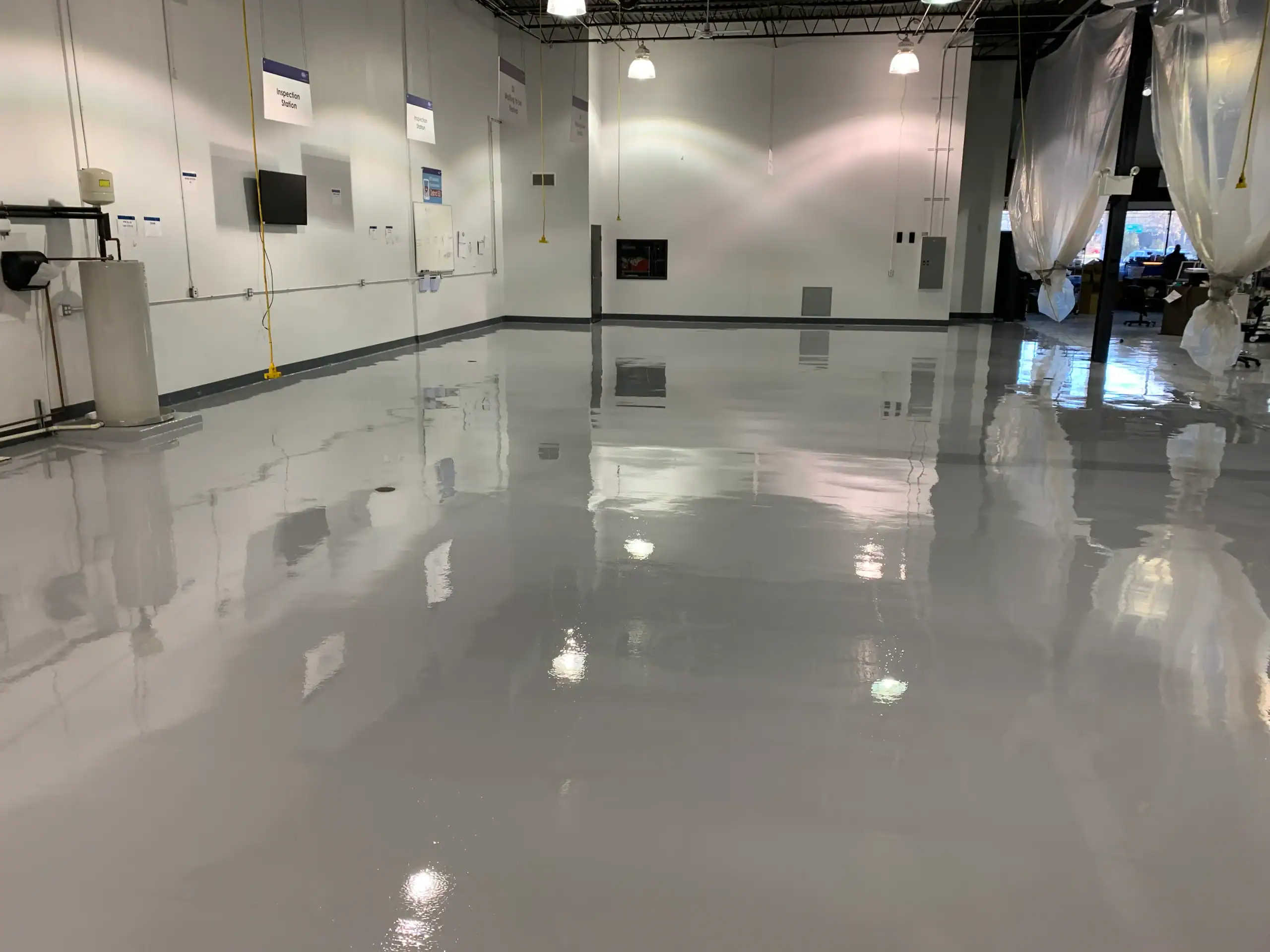
The floor becomes seamless, monolithic, and resistant to the exact conditions that destroy standard concrete. Chemical spills wipe up with soap and water. Impact from dropped pallets doesn’t create craters. Forklift wheels don’t chew up the surface at control joints.
You get back to running your operation instead of managing your floor.
We’ve been installing high-traffic concrete sealer in Long Beach, NY and across Long Island for years. Our field supervisors bring over 40 years of combined experience to every job.
Every installer is OSHA 40 certified and current on training standards. Most of our crew has been with us for over a decade because we do this work right, and we do it the same way every time.
Long Beach’s proximity to the port means warehouses here handle serious volume. We’ve worked in facilities supporting logistics, freight forwarding, and storage operations throughout the area. We understand what your floors go through daily, and we install systems that match those demands.
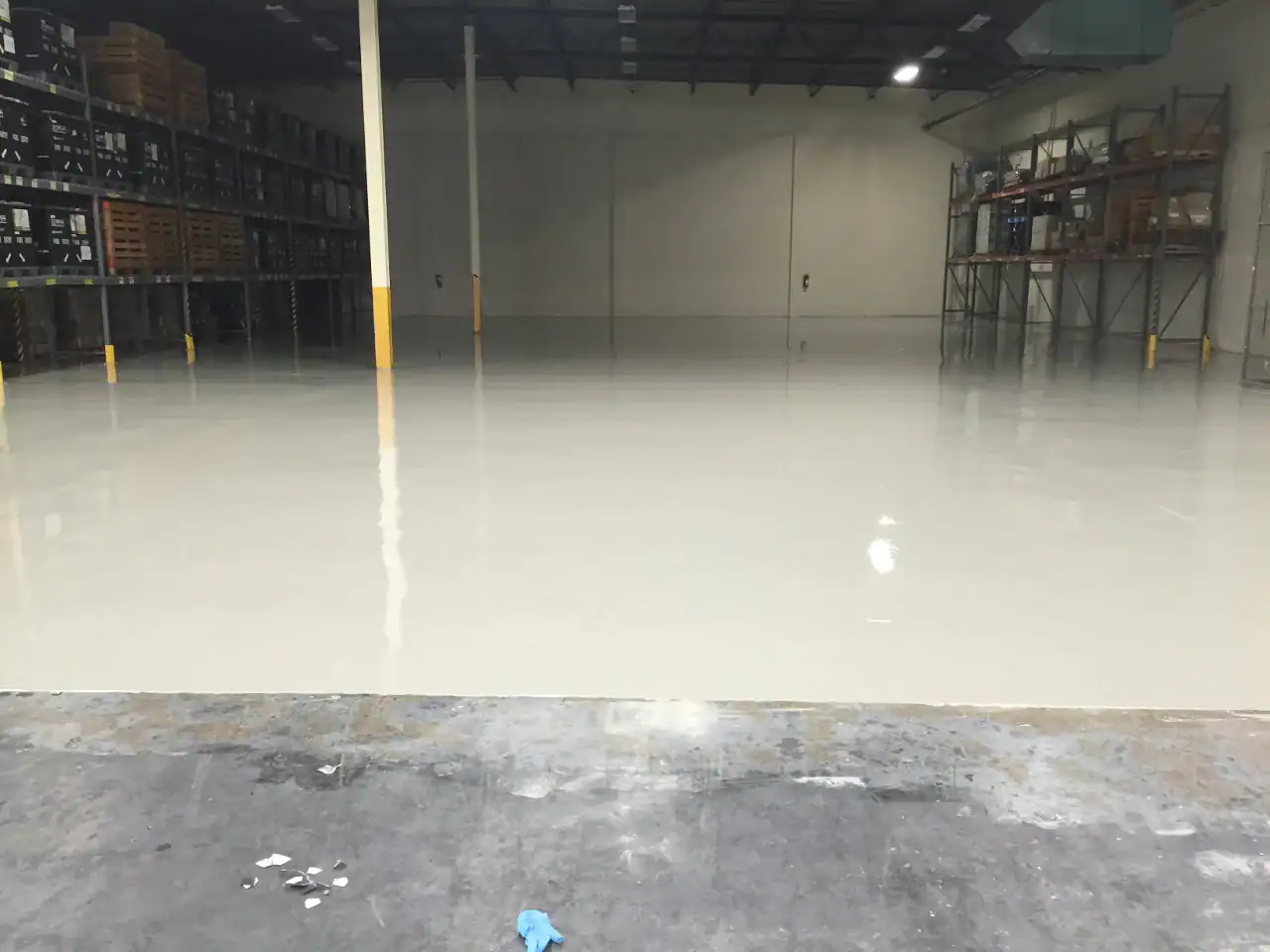
We start with moisture testing and a full assessment of your existing concrete. If there’s damage, we repair it before any coating goes down. Cracks get filled, spalled areas get rebuilt, and uneven sections get leveled.
Next comes surface preparation, typically through diamond grinding for warehouses in Long Beach. This process uses metal-bond diamond tooling to remove the top layer of concrete, exposing a clean, consistent surface. That’s what allows the epoxy to bond permanently instead of peeling off in six months.
Once the surface is prepped, we apply the epoxy system. For warehouse floors in Long Beach, that usually means a high-build epoxy designed specifically for forklift traffic and heavy point loads. The coating cures quickly so you’re not shut down for days.
After curing, you get a seamless, chemical-resistant surface that’s ready for full operation. The floor is easier to clean, safer to work on, and built to last years without major maintenance.
Ready to get started?
You’re not just getting a coating. You’re getting a complete floor system that includes moisture testing, concrete repair, diamond grinding preparation, and a customized epoxy application based on your specific traffic patterns.
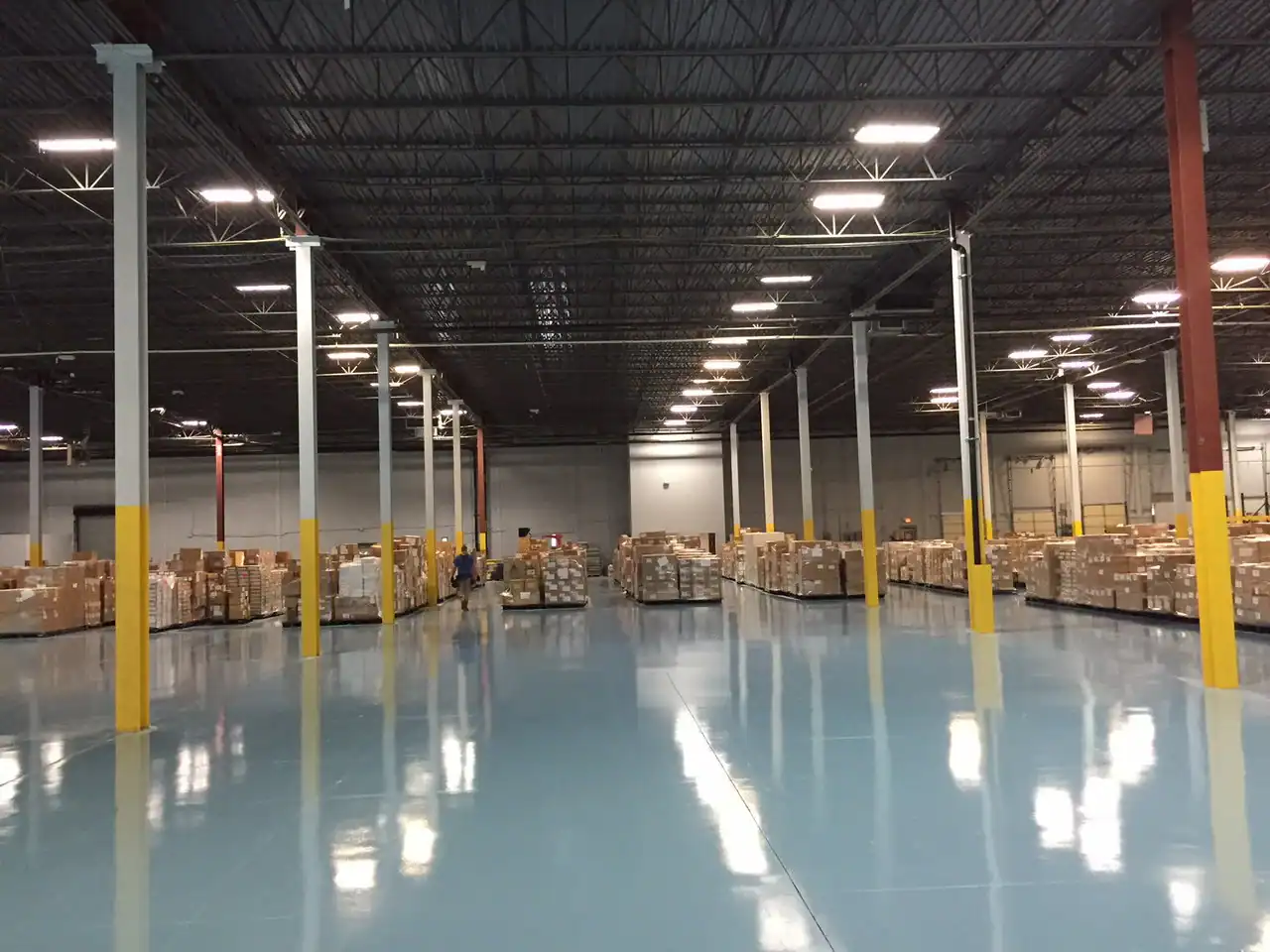
In Long Beach, where the port drives significant warehouse and logistics activity, your floors need to handle more than average wear. The systems we install are USDA approved and engineered for continuous forklift traffic. They resist oils, solvents, and the kinds of chemical spills common in industrial settings.
The flake texture we can add provides traction even when wet, which matters when you’re moving fast and safety is non-negotiable. Color options help with lighting and zone demarcation so your team can work more efficiently.
Most importantly, the total cost of ownership drops significantly. You’re not calling for repairs every year. You’re not dealing with surprise failures that halt operations. The floor just works, shift after shift, year after year.
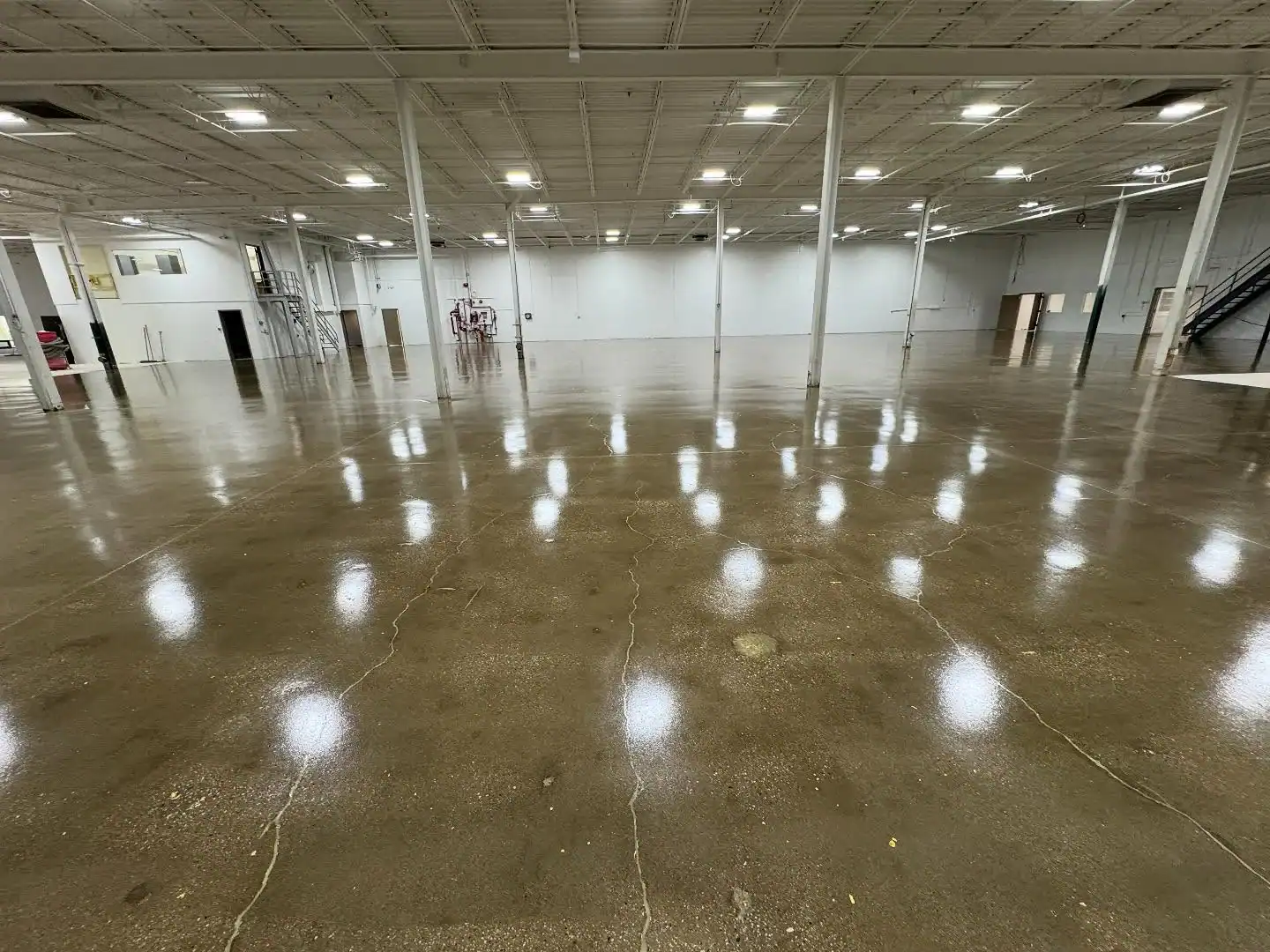
In a warehouse with heavy forklift traffic and constant pallet movement, a properly installed epoxy system typically lasts 10 to 20 years. The range depends on your specific traffic volume and load weights.
A facility running two shifts with moderate forklift activity will see longer life than a 24/7 operation with fully loaded forklifts constantly moving. But even in the most demanding environments, you’re looking at a decade or more before needing a full replacement.
That lifespan assumes proper installation, which is why surface prep matters so much. If the concrete isn’t properly prepared through diamond grinding, the epoxy won’t bond correctly and you’ll see failures much sooner. When it’s done right, the coating becomes part of the concrete rather than just sitting on top of it.
Yes, but only if you’re using the right system. Standard garage epoxy won’t cut it. You need industrial-grade epoxy specifically engineered for point loads and impact resistance.
Most loaded forklifts weigh around 12,000 pounds, and all that weight concentrates on small wheel contact patches. When the forklift picks up or sets down a pallet, the stress on the floor spikes even higher. Industrial warehouse floor epoxy in Long Beach is formulated to handle these exact conditions.
The system we install enhances the concrete’s compressive strength and impact resistance. It creates a monolithic surface that distributes loads more effectively than bare concrete. The weakest points in standard concrete floors are the control joints, where forklift wheels cause spalling and crumbling. Our epoxy seals and protects those joints so they don’t fail under traffic.
For most warehouse floors, you’re looking at 3 to 5 days from start to finish, depending on the size of the space and the condition of your existing concrete. If we need to do extensive repairs, it takes longer. If the concrete is in good shape, it’s faster.
The actual coating application and cure time is where we save you days compared to other systems. Industrial-grade epoxy dries in hours and reaches full strength quickly. You’re not waiting a week for the floor to be ready for traffic.
We can also work in phases if you can’t shut down your entire operation. We’ll coat one section, let it cure, get it back in service, then move to the next section. It takes longer overall but keeps your warehouse functional. The key is planning it out beforehand so everyone knows the schedule and you can route traffic accordingly.
Epoxy is tough, but nothing is indestructible. If a forklift drops a particularly heavy load from height, or if something sharp impacts the surface hard enough, you can get localized damage.
The good news is that repairs are straightforward. We can grind out the damaged area, prep it, and patch it with matching epoxy. The repair bonds to the existing coating and you’re back in business. It’s a few hours of work, not a multi-day shutdown.
More importantly, the damage stays localized. With bare concrete, a single impact creates a crack or spall that spreads over time as traffic continues. Water and contaminants get in, freeze-thaw cycles make it worse, and soon you have a major problem. With epoxy, the coating contains the damage and prevents it from spreading. That’s why the long-term maintenance costs are so much lower than traditional concrete.
Standard smooth epoxy can be slippery, which is why we don’t install smooth epoxy in warehouse environments. For industrial applications, we add texture through broadcast flakes or aggregate.
The flake texture provides excellent traction even when the surface is wet. If you’re dealing with oils or other slippery substances regularly, we can increase the texture level to match your needs. It’s a balance between traction and cleanability, but we dial it in based on what you’re actually dealing with day to day.
This matters more than most people realize. Slip and fall incidents cost time and money, and they’re preventable with the right floor system. The textured surface also helps with noise reduction when forklifts are moving across it, which is a bonus in enclosed warehouse spaces where sound echoes.
Upfront, epoxy costs more than a concrete patch. Over time, it costs significantly less. Every time you repair concrete, you’re paying for materials, labor, and downtime. Those repairs add up fast, and they’re never permanent because you’re not addressing the underlying problem.
Bare concrete in a warehouse environment will continue to fail. The forklift traffic doesn’t stop. The heavy loads don’t get lighter. You’re on a treadmill of constant maintenance and repair.
A high-traffic concrete sealer in Long Beach, NY changes that cycle. You pay once for a complete system, then you’re done for 10 to 20 years. No annual repairs. No emergency patches when a section fails during your busy season. No downtime that ripples through your operation and costs you in ways that don’t show up on a flooring invoice. When you factor in the total cost of ownership, epoxy wins easily.