

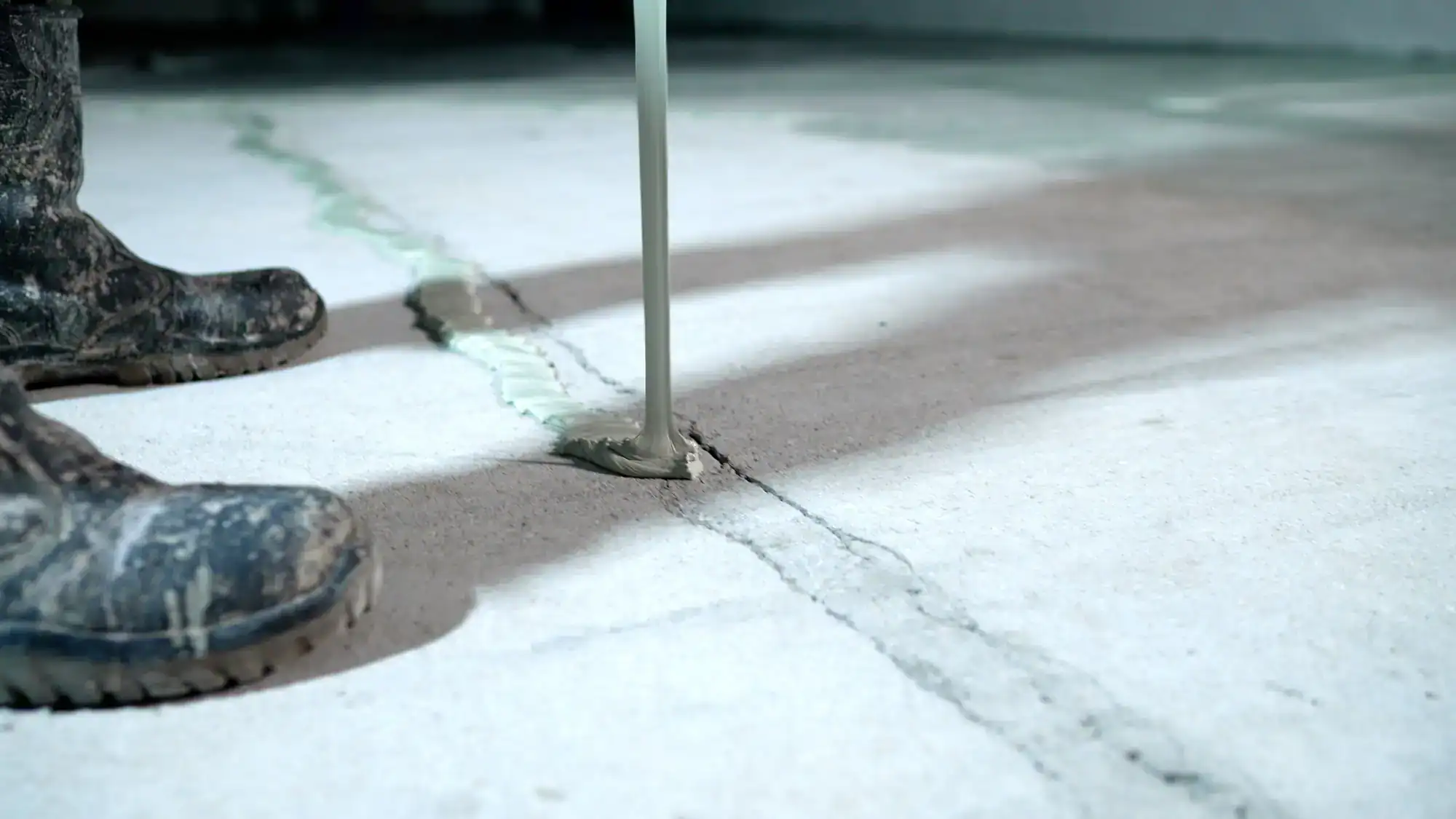
Most epoxy floor failures on Long Island’s South Shore come down to one thing: moisture. Islip sits directly on the Great South Bay, and a significant portion of its residential and commercial slabs carry FEMA Zone AE flood designations. That means years of moisture cycling from storm surge, tidal flooding, and an elevated water table have worked their way into the concrete long before anyone picks up a grinder. When a contractor skips the moisture test and goes straight to coating, you get bubbling, delamination, and a floor that looks worse than what you started with inside of two years.
When the slab is properly prepared and the right system is specified, the result is completely different. You get a floor that handles forklift traffic, resists chemical spills, passes health inspections, and doesn’t require a redo every few years. For the industrial facilities along Veterans Memorial Highway and inside FTZ #52 the only foreign trade zone on Long Island outside of New York City that kind of durability isn’t a luxury. It’s an operational requirement.
Islip’s building stock adds another layer. With a median construction year of 1966 and nearly one in six structures built before the 1940s, older slabs here need more than a standard prep job. They need a contractor who knows what they’re looking at and knows what to do about it before the first coat ever goes down.
We’re based in Bohemia a hamlet within the Town of Islip itself and have been operating continuously since the early 1990s. That’s not a regional franchise with a territory that happens to include Islip. That’s a contractor who has worked through Hurricane Sandy’s aftermath, watched the Veterans Highway Corridor grow into the largest industrial zone on Long Island, and installed floors in the kinds of facilities that line that corridor every day.
Danny Harmer, our president, has over 40 years of hands-on installation experience. He installed the White House kitchen floor in 1996 a verifiable credential that speaks directly to the level of accountability this work demands. Our crew reflects the same standard: most have been with us for over a decade, and they hold factory-trained certifications from Sherwin-Williams High Performance Flooring and Res Tech, plus OSHA 40 certification. We carry a BBB A+ rating with zero complaints on record.
When you call Advanced Epoxy Flooring, you’re not getting a crew that’s figuring out Islip’s conditions on their first visit. We already know them.
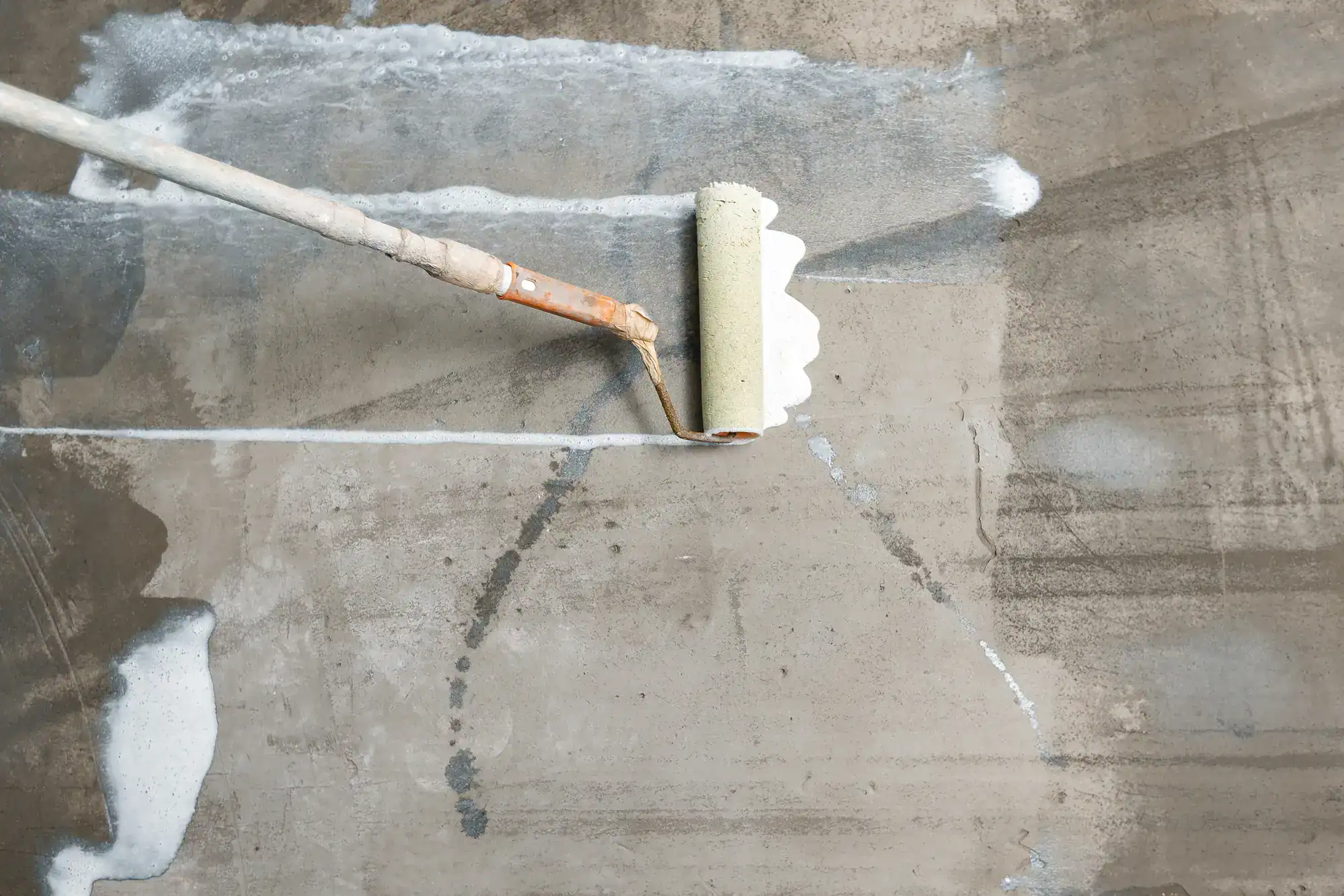
It starts with the slab not the coating. Before any system gets specified, we test the concrete for moisture vapor transmission. In Islip, this step is non-negotiable. Bay-front proximity and the town’s flood history mean elevated moisture content is common in both residential and commercial slabs, and applying epoxy over an untested surface is one of the fastest ways to end up with a floor that fails. If mitigation is needed, it gets specified upfront. No surprises mid-job.
Once the slab clears, surface preparation begins. We use diamond grinding to open the concrete profile to the range required for high-build epoxy and mortar systems typically CSP-3 through CSP-5. This is the step that most contractors rush or skip entirely, and it’s the reason their floors don’t last. For older commercial structures along the Veterans Highway Corridor, this phase may also involve addressing legacy coatings or adhesive residue from previous flooring.
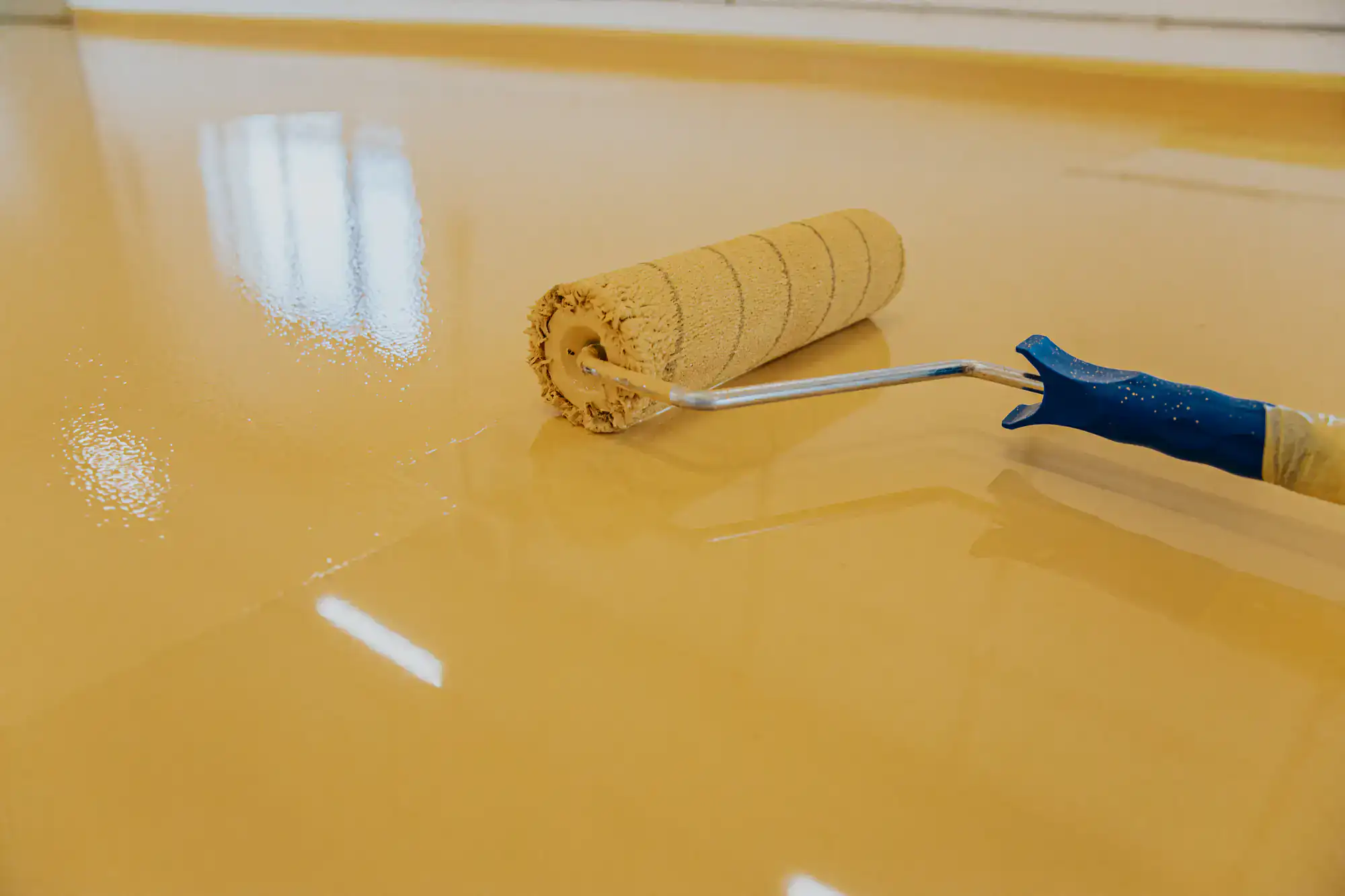
From there, the system goes down in layers: primer coat, base coat, broadcast or topcoat each given proper cure time before the next is applied. The Town of Islip Building Division confirms that floor coating installations don’t require a permit for most applications, so scheduling is straightforward. For commercial kitchens, food distribution facilities, and other operations that can’t shut down during the day, most of our installations are completed overnight or over a weekend. You open on schedule.
Ready to get started?
Not every floor in Islip faces the same demands, and the system we install should reflect that. Warehouse and distribution facilities along Veterans Memorial Highway including operations within FTZ #52 need 100% solids industrial epoxy specified at 14 to 30 mils of dry film thickness, engineered for forklift axle loads and continuous heavy-traffic use. That’s a fundamentally different product than what general flooring contractors apply at professional prices. The difference shows up within the first year.
For the aerospace and aviation businesses operating near Long Island MacArthur Airport including hangar operators and manufacturers like CPI Aero the flooring requirements shift again. Aircraft hangar floors need thermal cycling resistance, chemical resistance to jet fuel and hydraulic fluid, and load ratings that go well beyond standard warehouse specs. We have documented experience with hangar floor systems. That experience matters here in a way it simply doesn’t for most other contractors serving Suffolk County.
Food service and food distribution operations including facilities in Islip’s commercial kitchen and food processing sector require seamless, USDA-compliant systems with thermal shock resistance and cove base installation. Healthcare and pharmaceutical facilities in the area need antimicrobial, cleanroom-compatible seamless resinous floor coatings that meet ADA, OSHA, and GMP standards. We offer chemical resistant epoxy finishes for manufacturing environments with specific solvent or fluid exposure. Whatever the facility type, we specify the system for the actual conditions not defaulted to a one-size-fits-all product.
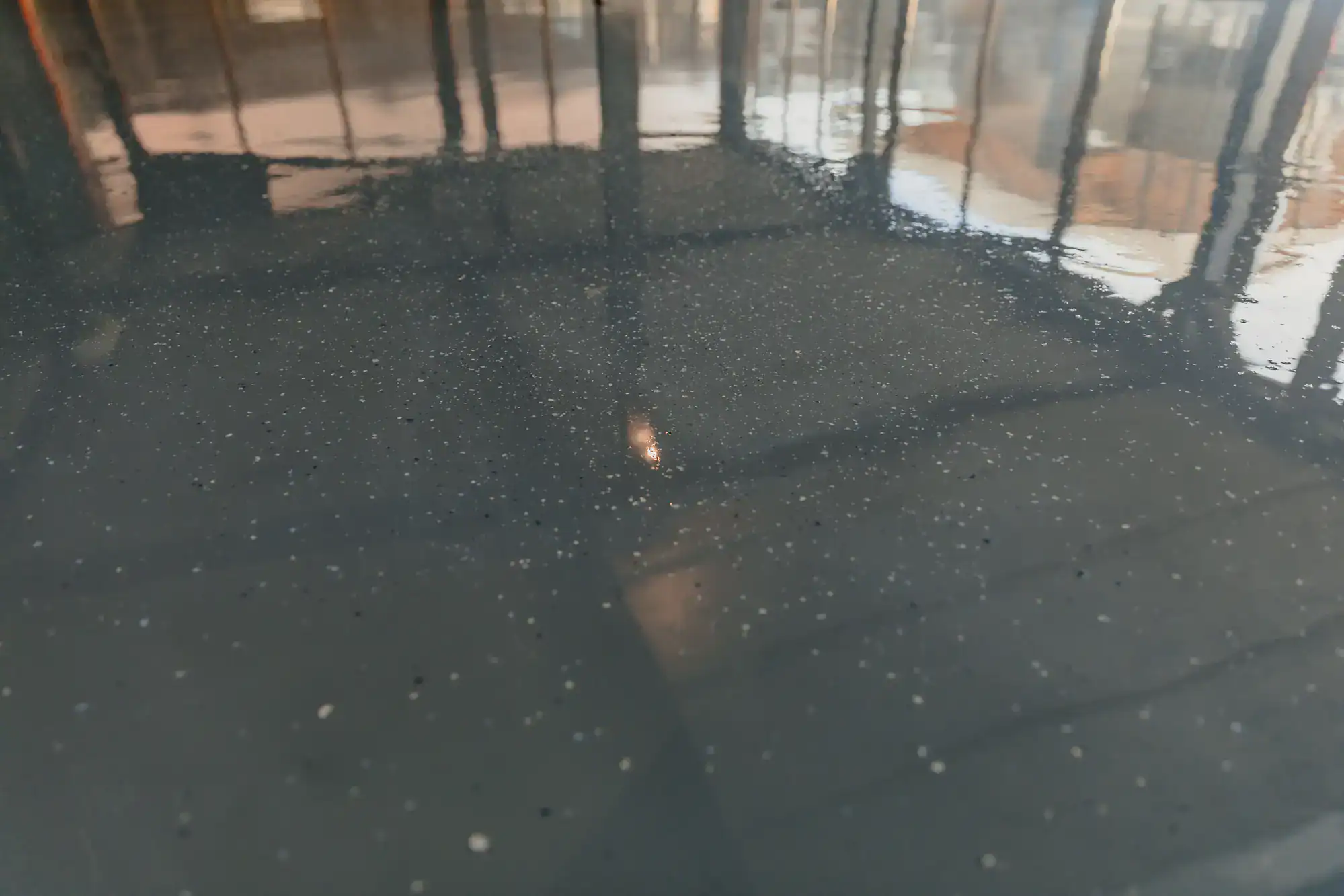
The most common cause is moisture and Islip has more of it than most places on Long Island. The town sits on the Great South Bay’s north shore, large portions of the south shore residential and commercial core carry FEMA Zone AE flood designations, and the Connetquot River watershed creates inland flooding risk on top of the coastal exposure. That combination means concrete slabs here have often gone through years of moisture cycling before anyone considers putting a coating on them.
When a contractor skips moisture vapor transmission testing and goes straight to application, the coating eventually loses its bond to the slab. The result is bubbling, blistering, or full delamination sometimes within 18 months. The fix isn’t a different brand of epoxy. It’s testing the slab first, specifying moisture mitigation if the numbers require it, and using a system with the right formulation and film thickness for the actual conditions. That’s the process we follow on every job in Islip, without exception.
The gap is significant, and it shows up fast in a real working environment. Consumer-grade epoxy coatings the kind sold in kits at home improvement stores are typically water-based, 40 to 55 percent solids, and dry to a film thickness of 3 to 8 mils. They’re designed for light residential use, and even in that context they have limits. Put them in a warehouse, a food processing facility, or an aircraft hangar, and they won’t last a season under real load.
Industrial epoxy systems are 100% solids or high-solids formulations, applied at 14 to 30 mils of dry film thickness, and engineered for the actual demands of commercial and industrial environments forklift traffic, chemical exposure, thermal cycling, and continuous heavy use. For the facilities operating along Veterans Memorial Highway and inside FTZ #52, this distinction isn’t academic. It’s the difference between a floor that performs for 15 to 20 years and one that needs to be torn out and redone within three. The upfront cost difference is real. The lifecycle cost difference is much larger.
For most applications, no. The Town of Islip Building Division classifies floor coatings as finish work the same category as paint, tile, and carpet and finish work does not require a building permit under their standard guidelines. That applies to the majority of residential and light commercial installations.
There are situations where the broader project context changes things. If you’re working on a property in a FEMA flood zone which covers a significant portion of Islip’s south shore residential and commercial areas any renovation work needs to account for FEMA’s Substantial Damage rules, including New York State’s two-foot freeboard addition. For older commercial buildings, particularly those built before the 1960s, a renovation permit for commercial interior work may trigger an asbestos survey requirement under NYS Uniform Code compliance. And for commercial shell build-outs, Suffolk County Health Department approval may be part of the process. The flooring installation itself is typically permit-free, but the surrounding project scope can carry its own requirements. If you’re unsure about your specific situation, it’s worth a quick call to the Town of Islip Building Division at One Manitton Court before you schedule.
A properly installed industrial epoxy system correct surface preparation, moisture testing, 100% solids formulation, full cure time between coats should last 15 to 20 years in a commercial or industrial environment. That’s not a marketing number. It’s the realistic lifespan of a system that was specified and installed correctly from the start.
The caveat is that “correctly installed” does a lot of work in that sentence. In Islip’s coastal environment, the moisture variable alone can cut that lifespan in half if it isn’t addressed upfront. The same is true for surface preparation: diamond grinding to the right concrete surface profile takes time and equipment, and contractors who skip it or rush it are essentially shortening the floor’s life before the first coat is even applied. For high-traffic commercial environments distribution warehouses, food processing facilities, aerospace manufacturing floors near MacArthur Airport the investment in a properly specified system pays for itself many times over compared to the cost of removal, reinstallation, and operational downtime from a premature failure.
Yes and for most food service operations in Islip, overnight installation is the standard approach, not the exception. Commercial kitchens, food distribution facilities, and food processing operations can’t afford to lose multiple days of production, and a contractor who can’t work within that constraint isn’t a realistic option for this market.
The overnight timeline works because modern polyaspartic topcoat systems cure significantly faster than traditional epoxy alone. A properly sequenced installation surface prep completed in advance, base coat applied in the evening, topcoat applied overnight can have the floor ready for foot traffic by morning and full operational use within 24 hours. The key is having a crew that knows the system, knows the timing, and doesn’t cut corners on cure time between coats just to hit the schedule. For Islip’s food distribution sector which includes large-scale operations like the Sysco facility in the town this kind of scheduling discipline is what separates a contractor who can actually serve this market from one who can’t.
Aircraft hangar floors are one of the more demanding applications in the epoxy flooring category, and the system has to be specified for the actual environment not adapted from a warehouse or commercial kitchen spec. The primary challenges are thermal cycling from hangar doors opening and closing in all seasons, chemical resistance to jet fuel, hydraulic fluid, and aviation cleaning solvents, and load ratings that account for aircraft ground equipment and the aircraft themselves.
For hangar floors near Long Island MacArthur Airport, the typical system involves a urethane mortar base for thermal and chemical resistance, followed by a 100% solids epoxy broadcast coat, finished with a polyaspartic topcoat for abrasion resistance and long-term durability. Surface profile and slip resistance are also specified to meet the operational requirements of a working flight line. This is not a system that a general flooring contractor can improvise. It requires factory-trained certification in advanced resinous systems which we hold through our Res Tech and Sherwin-Williams High Performance Flooring credentials and hands-on experience with the specific demands of aviation environments. If you’re operating a hangar or aviation maintenance facility in the MacArthur Airport area, that experience is exactly what the job requires.