
Islip sits on the South Shore, sandwiched between the Great South Bay and the Atlantic. That coastal air doesn’t stay outside it works its way into concrete slabs year-round, pushing moisture vapor upward and quietly breaking the bond between your floor and any coating that wasn’t applied correctly. A floor that looks fine in October can be bubbling and peeling by spring. That’s not a product failure it’s a prep failure, and it happens constantly on Long Island hangars that were coated by contractors who skipped the moisture assessment.
When you get aviation facility epoxy flooring done right here in Islip, the difference is immediate and lasting. Spills from jet fuel, hydraulic fluid, and Skydrol don’t soak in they sit on the surface where you can see them and wipe them clean. The high-gloss finish reflects overhead lighting, which means dropped tools and fluid spills are visible before they become a FOD incident. That’s not an aesthetic bonus at an active maintenance facility, it’s a safety standard.
The freeze-thaw cycles Islip gets every winter add another layer of stress to any coating that wasn’t properly bonded. Micro-cracks in the slab widen, water gets in, and by the time the damage is visible, you’re looking at a full removal and redo. Getting the floor right the first time with proper surface profiling, crack repair, and a system engineered for aviation chemical exposure is the only way to avoid that cycle.
We’re headquartered in Bohemia inside the Town of Islip, the same municipality that owns and operates MacArthur Airport. This isn’t a company dispatching crews from Nassau County or somewhere off-island. When you call, you’re talking to a local contractor who has been working Islip’s coastal conditions for over 30 years.
Danny Harmer, our president, has over 40 years of personal, hands-on installation experience. He didn’t build this business and step away from the work he built it because he knows the work. Every installer on our crew is OSHA 40 certified, most have been with us for over a decade, and the systems we install carry Sherwin-Williams High Performance Flooring certification one of the most respected credentials in industrial flooring.
If a warranty question comes up six months after installation, you’re not chasing down a call center. You’re calling a contractor who’s already in the Islip area, already familiar with your slab, and already accountable for the outcome.
The first thing that happens isn’t coating it’s assessment. On Long Island’s South Shore, moisture vapor transmission through large concrete slabs is one of the most common reasons coatings fail early. Before anything else, the slab gets tested. If moisture levels are elevated which they frequently are in Islip’s coastal climate the system is adjusted accordingly, with a moisture-mitigating primer that addresses the problem at the source rather than coating over it and hoping for the best.
Once the slab passes assessment, surface preparation begins. That means diamond grinding to create the adhesion profile the coating needs, followed by thorough crack and spall repair. This step is not optional and it’s not abbreviated. The long-term performance of the entire system depends on what happens at the concrete surface before the first coat goes down. Any contractor who rushes this step is setting you up for a floor that fails in two years instead of lasting twenty.
After prep, the coating system is applied in stages base coat, broadcast layer if applicable, and a topcoat that meets NFSI non-slip requirements. For hangars that need to return to service quickly, polyaspartic systems cure fast enough to have aircraft back in within 24 hours. For facilities at or near MacArthur Airport where daily operations can’t stop for a week, that turnaround matters. The whole process is explained upfront no surprises, no change orders after the fact.
Ready to get started?
Standard epoxy products the kind used for retail floors, garage slabs, or light commercial spaces are not formulated for what happens inside an active aviation facility. Skydrol hydraulic fluid, jet fuel, lubricating oils, and industrial degreasers will destroy a non-aviation-grade coating within a season. The systems we install are specifically engineered for this chemical exposure profile, with Skydrol resistance verified under ASTM testing standards. That distinction matters at MacArthur Airport, where the Islip IDA has documented an active aerospace and aviation manufacturing cluster Collins Aerospace, CPI Aero, and Data Device Corp all operate facilities in this town.
For commercial hangar operators, FBO facilities, and maintenance shops at ISP, NFPA 409 compliance is also a hard requirement not a recommendation. That standard mandates noncombustible floor surfaces in aircraft storage and servicing areas. Many general flooring contractors are unaware of this requirement entirely. Every system we install is selected with that compliance in mind, and the conversation about it happens before installation begins, not after an inspector flags a problem.
Whether you’re coating a private hangar for a based aircraft, resurfacing a maintenance bay floor that’s seen years of fluid exposure, or preparing a new facility for operations, the system is matched to your specific use case. Light-colored, high-gloss finishes are available for maximum FOD visibility. Fast-cure polyaspartic options are available when downtime is the primary concern. The right system depends on your floor, your operation, and your timeline and that conversation starts with a real assessment, not a catalog selection.
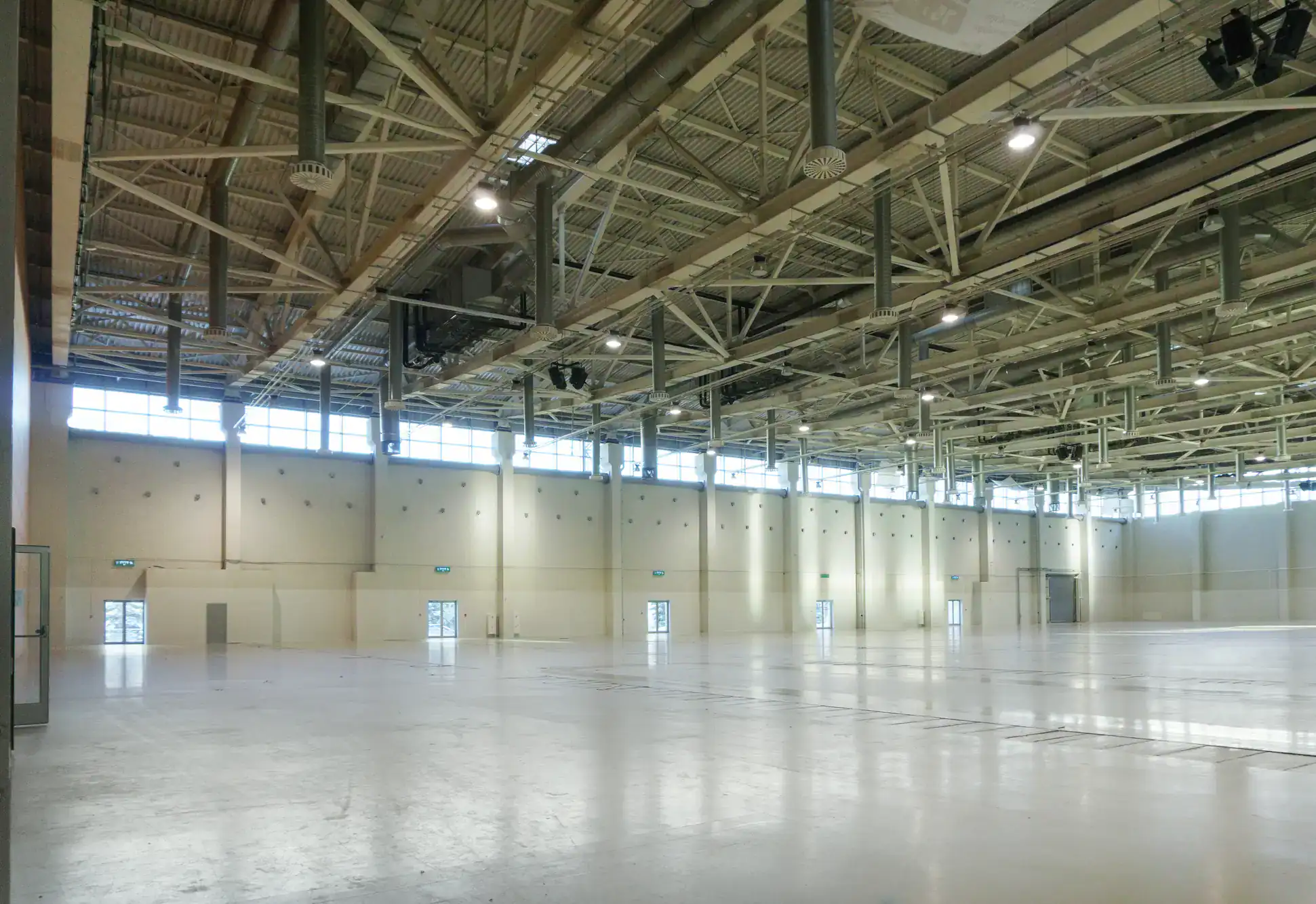
Yes and this is one of the most important questions you can ask before hiring a flooring contractor for any commercial or FBO hangar at ISP. NFPA 409 is the governing standard for aircraft hangars, and it requires that floor surfaces in aircraft storage and servicing areas be noncombustible. MacArthur Airport is a Town of Islip-owned, FAA-regulated facility, and any flooring work in a commercial hangar environment there is subject to this standard.
The practical issue is that most general flooring contractors have never heard of NFPA 409. They’ll propose a system that works fine for a warehouse or a car dealership showroom but that doesn’t meet the noncombustibility requirement for a regulated aviation environment. If that gets flagged during an inspection, you’re looking at removal, replacement, and potential operational disruption. Asking a contractor directly whether their proposed system meets NFPA 409 is a fast way to find out whether they actually understand the Islip aviation environment they’re working in.
Standard epoxy will not and this is where a lot of hangar floors fail. Skydrol is a phosphate-ester-based hydraulic fluid specifically designed to be fire-resistant, and it is also extremely aggressive toward most conventional coating systems. Jet fuel and lubricating oils compound the problem. A coating that wasn’t formulated for aviation chemical exposure will soften, discolor, and delaminate under regular fluid contact, sometimes within a single season of active maintenance use.
Aviation-grade epoxy and polyaspartic systems use chemistries that have been tested under ASTM standards for resistance to these specific fluids. The difference isn’t just in the product it’s in how the system is specified. At an active maintenance facility near MacArthur Airport, where these fluids are present daily, the coating system needs to be selected based on your actual chemical exposure, not just what looks good in a product brochure. That’s a conversation worth having before any work begins.
It affects it significantly, and it’s one of the most location-specific factors in the entire installation process. Islip sits between the Great South Bay and the Atlantic Ocean. That proximity means elevated ambient humidity year-round, salt air that accelerates surface degradation on porous or improperly sealed concrete, and hard freeze-thaw cycles every winter that stress any coating that wasn’t properly bonded to the slab.
The biggest practical risk is moisture vapor transmission. Large hangar slabs especially older ones, and MacArthur Airport’s first hangar dates back to 1944 can have significant moisture pressure moving upward through the concrete from the ground below. If a coating is applied over a slab with unchecked moisture vapor, it will eventually blister and delaminate, regardless of the product quality. The fix isn’t a better coating it’s a moisture assessment before installation and a primer system designed to address the vapor pressure at the source. In Islip’s coastal environment, skipping that step is how floors fail.
It depends on the system, the size of the hangar, and the condition of the existing slab. For a standard hangar floor using a polyaspartic topcoat system, most installations can return to service within 24 hours of the final coat. That’s a meaningful advantage for hangar operators at MacArthur Airport where daily flight operations or maintenance schedules can’t accommodate a multi-day shutdown.
Traditional multi-coat epoxy systems may require a longer cure window typically 48 to 72 hours before light foot traffic, and up to a week before aircraft or heavy equipment should be moved back in. The slab prep phase, which includes diamond grinding and crack repair, adds time on the front end but doesn’t affect the post-installation cure window. For facilities with tight scheduling constraints, polyaspartic systems are generally the right choice. That recommendation gets made based on your specific slab condition and operational timeline, not as a default upsell.
Epoxy systems are thicker, harder, and extremely durable under heavy static loads which makes them a strong choice for hangars where aircraft are stored long-term and chemical resistance is the top priority. They take longer to cure and are more sensitive to temperature and humidity during application, which matters in Islip’s coastal climate where summer humidity can be high and winters can be cold enough to affect cure conditions.
Polyaspartic systems cure significantly faster often within hours rather than days and maintain strong flexibility and UV stability, which helps in environments with large door openings and significant light exposure. They’re also more forgiving in variable temperature conditions, which is relevant for installations during Islip’s shoulder seasons when temperatures fluctuate. Many aviation facilities benefit from a hybrid approach: an epoxy base coat for build and chemical resistance, with a polyaspartic topcoat for fast return-to-service and long-term surface durability. The right combination depends on your hangar’s specific use, traffic, and chemical exposure profile.
For a standard hangar floor coating in Islip, most projects fall somewhere between $3 and $7 per square foot depending on the system selected, the condition of the existing slab, and the level of surface preparation required. A single-bay private hangar in the 1,200 to 2,000 square foot range might run $4,000 to $12,000 installed. Larger FBO or maintenance bay floors with more complex prep requirements will be priced accordingly.
The condition of the slab has a significant impact on final cost. Older hangars and there are facilities at and around MacArthur Airport with slabs that have been in service for decades often require more extensive crack repair, spall patching, and surface profiling before any coating can be applied. Skipping that prep to lower the upfront price is a short-term decision that typically leads to a full removal and redo within a few years, which costs considerably more than doing it right the first time. A site visit and slab assessment is the only way to give you an accurate number square footage alone doesn’t tell the full story.