
The Islip Fire Department doesn’t get to pause. Between Sunrise Highway responses, marina calls, and emergency coverage stretching out to the Great South Bay and the Atlantic, there’s no realistic window to pull apparatus for three to seven days while a floor cures. That’s exactly why the system we install uses a rapid-cure polyaspartic topcoat apparatus is back in the bay within 24 hours, not a week later.
Beyond the cure time, the environment in Islip creates real wear patterns that a standard coating won’t survive long-term. Salt air off the bay works into unsealed concrete constantly. Every winter call on the Southern State Parkway brings road brine back on the tires. A floor that isn’t built for that specific chemical load and properly bonded to the concrete beneath it will start showing failure within a few years.
What you end up with after our installation is a seamless, non-porous surface that handles the weight of a 75-foot tower ladder, resists diesel, hydraulic fluid, and road salt, and wipes clean after water rescue calls bring bay sediment and marine contaminants back into the station. It’s not just a better-looking floor. It’s one that actually holds up to what Islip’s departments deal with every day.
We’re based in Bohemia a hamlet within the Town of Islip which makes us a genuinely local contractor for every fire district in this town. Not a company calling from Nassau County or the city. We operate here, we know the South Shore’s coastal conditions from daily experience, and we’re accountable to the same community we’re working in.
Danny Harmer, our CEO, has over 40 years of hands-on installation experience. Our field supervisors Javier, Eduardo, and Fredith bring another 40-plus combined years to every job. Most of our crew has been with us for over a decade. That kind of stability means the people installing your floor have done this hundreds of times, in commercial and institutional facilities, not just residential garages.
We hold the Sherwin-Williams High Performance Flooring certification, Res Tech certification, and every installer on our team is OSHA 40 certified. Our project history includes the White House kitchen in 1996, international work in Moscow and the Bahamas, and firehouse floors across Long Island, the five boroughs, and upstate New York.
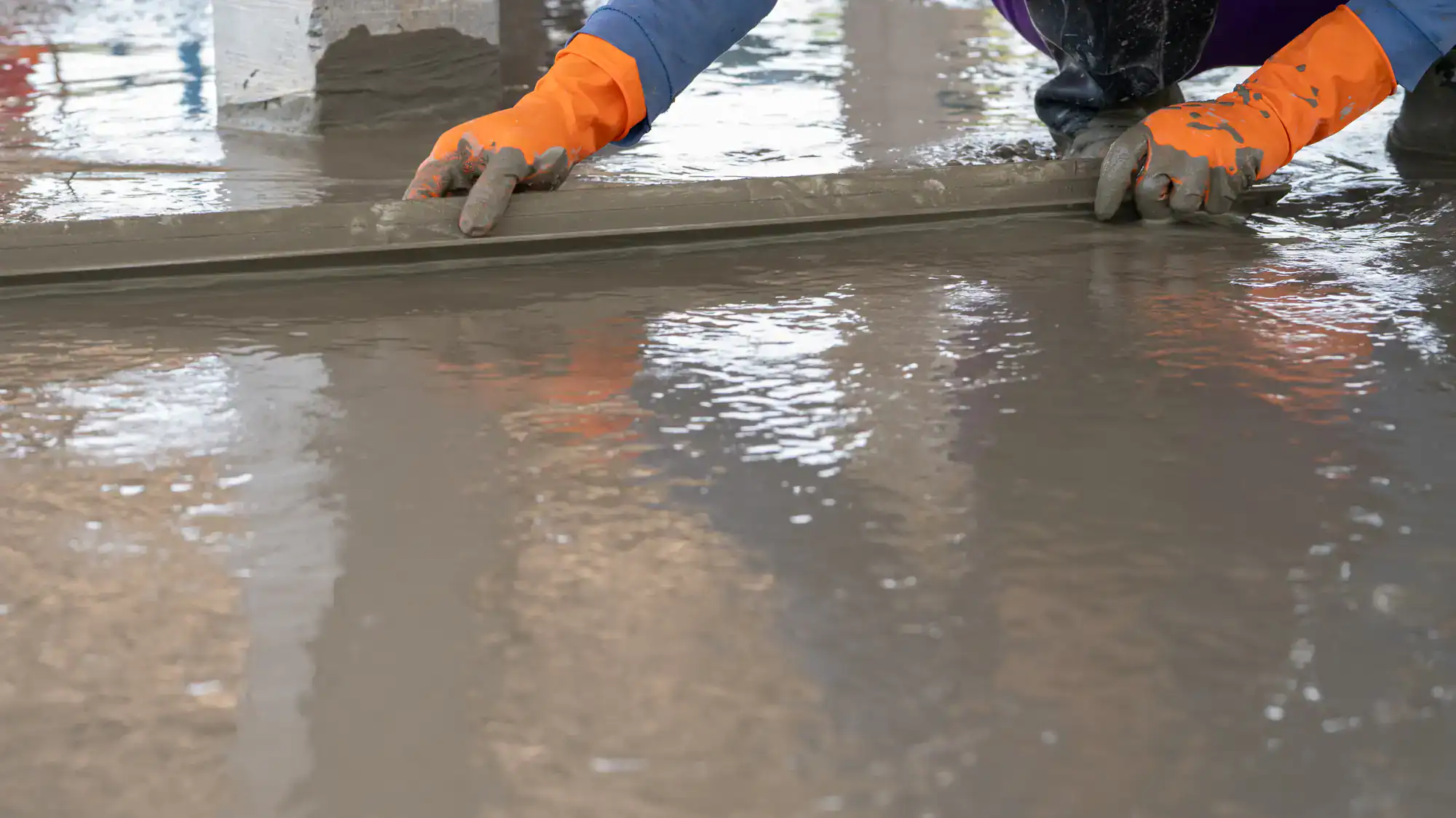
The first thing we do is assess the concrete not assume it’s ready. In a coastal environment like Islip, where salt air and bay humidity are constant, moisture content in the slab is one of the most common reasons floors fail. We test before anything goes down. If moisture levels aren’t within range, we address it before moving forward. Skipping that step is how you end up with a floor that bubbles and peels within three years.
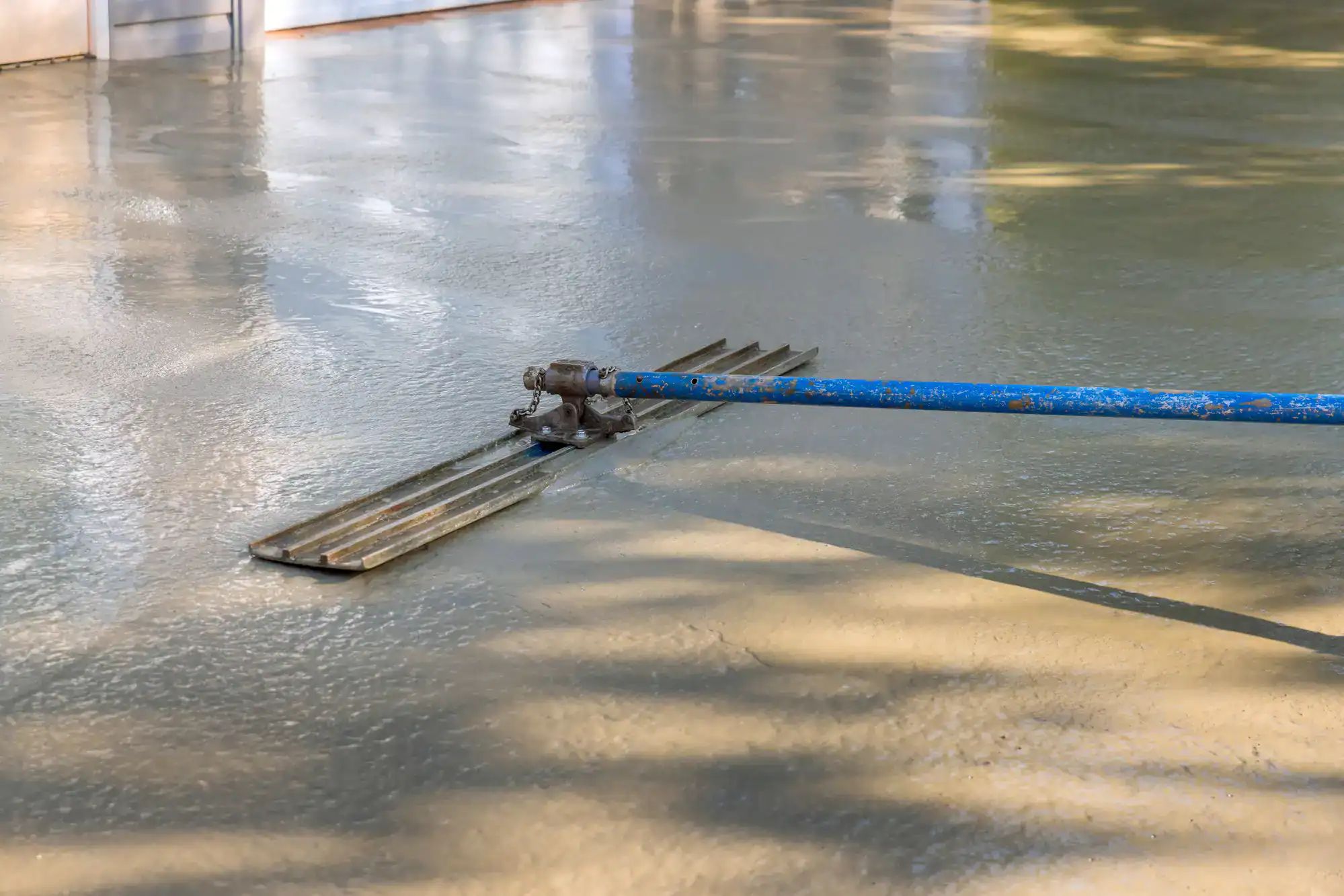
From there, we diamond grind the surface. This opens the concrete’s capillaries and creates a true mechanical bond between the slab and the coating system something acid etching simply can’t replicate. Any existing cracks or damage get repaired at this stage, so the finished surface is seamless from edge to edge. Then we apply a penetrating primer, a high-build epoxy base coat with aggregate broadcast for compressive strength, and finish with a polyaspartic topcoat at 15 mils roughly three to four times the thickness of a standard coating.
The whole system is engineered for the load profile of heavy fire apparatus. A Class A pumper, a tower ladder, a rescue truck the floor is built to handle all of it. Cure time for the topcoat is 24 hours, which means your apparatus is back in service the next day. For a department running 1,200 calls a year across 7.5 square miles, that’s the only timeline that makes operational sense.
Ready to get started?
The apparatus bay is the priority, but it’s not the only surface in the station that needs to perform. Islip’s fire stations including the main house on Monell Avenue and Station No. 2 “North House” operate multiple functional zones that each have different demands. We install commercial-grade resinous systems across all of them: apparatus bays, decontamination areas, kitchens, locker rooms, and living quarters. One contractor, one system standard, one point of accountability across the entire facility.
In the apparatus bay itself, the system is specified for chemical resistance against diesel, hydraulic fluid, road brine, and the marine contaminants that come back on apparatus after water rescue operations on the Great South Bay. The seamless surface eliminates the cracks and pores where carcinogens from fire scenes accumulate directly supporting the contamination control protocols required under NFPA 1500 and NFPA 1585. For a department with an active Dive Team and water rescue capability, that decontamination advantage is operational, not cosmetic.
For fire district commissioners in the Town of Islip making a capital investment on behalf of local taxpayers, the total cost picture matters. A properly installed polyaspartic system has a 20-year lifespan under normal commercial conditions. That’s a single installation decision versus multiple repair and replacement cycles with a lower-grade product and a floor that holds up through Suffolk County winters without needing attention every few years.
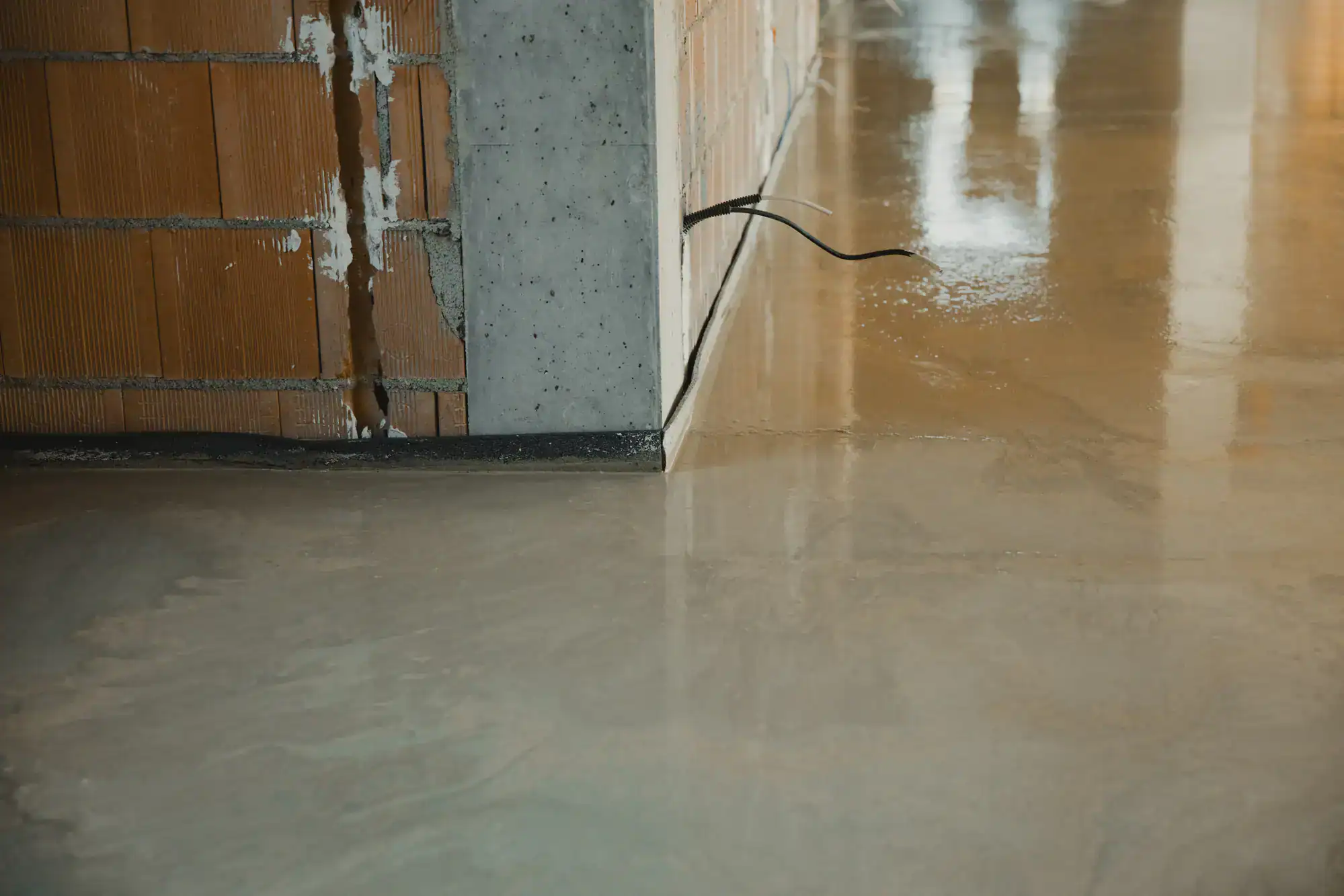
With a rapid-cure polyaspartic system, apparatus is typically back in the bay within 24 hours of the topcoat going down. That’s the honest answer not a week, not three days, one overnight out of service under normal conditions.
This matters specifically for departments in Islip because the coverage area doesn’t allow for extended apparatus downtime. Two major highways, active marina operations, Great South Bay emergency coverage, and over 1,200 annual responses mean your trucks need to be available. We schedule installation to minimize disruption, work in phases where the station layout allows it, and don’t leave you with a half-finished floor and no timeline. The 24-hour return is what makes this type of system the right choice for an active fire station not just a nice feature.
The load requirements alone separate them. A Class A pumper runs anywhere from 35,000 to 50,000 pounds. A 75-foot tower ladder like the one operating out of Station No. 2 in Islip can push 70,000 to 80,000 pounds. Standard commercial epoxy systems aren’t specified for that kind of sustained point load, and thin-mil coatings will crack and delaminate under that stress over time.
Beyond load, the chemical environment in an apparatus bay is more aggressive than most commercial floors face. Diesel exhaust residue, hydraulic fluid, road brine from Sunrise Highway and the Southern State Parkway, and marine contaminants from bay and ocean responses all accumulate on the surface. A firehouse floor needs a system that handles all of that without degrading which is why the aggregate broadcast in the base coat and the 15-mil polyaspartic topcoat are specified the way they are, not just applied at whatever thickness is cheapest.
It does, and it’s one of the most common reasons floors fail in South Shore fire stations specifically. Salt-laden marine air creates a constant source of moisture pressure on concrete slabs. If a coating is applied without proper moisture testing or without diamond grinding to create a genuine mechanical bond that moisture eventually works between the coating and the slab and causes delamination. You’ll see it as bubbling or peeling, usually within two to four years.
The fix isn’t a better product applied the same way. It’s a better process. Moisture testing before any coat goes down, diamond grinding instead of acid etching, and a penetrating primer that seals the slab before the base coat is applied that sequence is what makes a floor last in Islip’s coastal environment. Contractors who skip those steps save time on the front end and create a callback problem on the back end. We don’t skip them.
For a multi-layer polyaspartic system in a commercial apparatus bay, you’re typically looking at a range of $5 to $15 per square foot depending on the size of the space, the condition of the existing concrete, how much crack repair and surface prep is needed, and whether you’re coating additional zones like decontamination areas or living quarters.
For Islip fire districts, the more useful framing is total cost of ownership rather than upfront price. A properly installed polyaspartic system has a realistic 20-year lifespan under the conditions your station operates in. A lower-cost standard epoxy system installed by a contractor who cuts corners on prep especially in a coastal environment with salt air and bay humidity may need full removal and reinstallation within five years. When you’re making a capital expenditure on behalf of Suffolk County taxpayers and justifying it to a board of fire commissioners, the 20-year system is the fiscally responsible choice even if the initial number is higher.
NFPA 1500, which covers occupational safety and health programs for fire departments, and NFPA 1585, which addresses exposure and contamination control, both have implications for apparatus bay floor surfaces. A cracked, porous concrete floor is a contamination harborage point carcinogens from fire scenes, combustion byproducts, and exhaust particulates settle into every crack and cannot be fully removed. That’s not just a maintenance issue; it’s a documented occupational health liability for the firefighters working in that space.
A seamless, non-porous resinous floor surface directly supports contamination control protocols by eliminating those harborage points and making the floor power-washable and fully decontaminable. For New York State fire departments, including volunteer departments in the Town of Islip, this compliance angle is increasingly driving floor upgrade decisions not just aesthetics or maintenance convenience. Capital improvement projects in fire districts also typically go through the board of fire commissioners, and framing the floor as a compliance investment rather than a maintenance expense tends to move those approvals faster.
Yes, and using one contractor for the entire facility is genuinely the better approach. Different zones in a fire station have different performance requirements the apparatus bay needs maximum compressive strength and chemical resistance, the decontamination area needs a seamless surface that can be fully sanitized, and the kitchen needs thermal-shock resistance and a surface that meets commercial food service standards. When those zones are installed by different contractors using different products, you end up with different failure timelines, compatibility questions, and no single point of accountability when something goes wrong.
We install commercial-grade resinous systems across all functional zones in fire stations not just the bay. For Islip’s stations, which operate multiple companies and support functions under one roof, that means a consistent system standard from the apparatus floor through the decon zone and into the living quarters. It also simplifies the project management side for fire district leadership, which matters when you’re coordinating around an active department’s response schedule.