
You’re dealing with regulatory pressure, infection control mandates, and flooring that can’t keep up with your cleaning protocols. Tile grout harbors bacteria. Vinyl seams trap moisture. Standard concrete cracks under equipment weight and absorbs every spill.
Seamless medical-grade epoxy in Islip, NY eliminates those problems completely. No grout lines means no hiding spots for pathogens. The non-porous surface resists mold, bacteria, and chemical stains while standing up to the harshest hospital-grade disinfectants you use daily.
Your maintenance team spends less time scrubbing and more time on what matters. Your infection control officer stops worrying about HAIs traced back to flooring. Your facility stays compliant with Article 28, CDC, and CMS standards without the constant repair bills that come with traditional flooring.
The floor handles wheelchairs, gurneys, IV poles, and imaging equipment without showing wear. It doesn’t chip when instruments drop. It doesn’t degrade when you bleach it twice a day. You get a surface that works as hard as your staff does.
We’ve been installing healthcare flooring in Islip, NY and across Long Island for over 30 years. We’ve worked in operating rooms, sterile processing departments, imaging centers, and emergency departments where downtime isn’t an option and infection control is non-negotiable.
Our team is OSHA 40-certified. Most of our installers have been with us for over a decade. We’ve completed projects from the White House kitchen to hospitals in Moscow, and we understand what’s at stake when you’re responsible for patient safety at Good Samaritan University Hospital or any of the 15 healthcare facilities serving the Islip area.
We don’t just pour epoxy. We test moisture levels, repair substrate damage, and apply EPA-registered antimicrobial additives throughout the entire system. You’re not getting a crew that learned this last year—you’re getting specialists who’ve seen every flooring failure mode and know how to prevent it.
We start with moisture testing because concrete that looks dry can still have vapor transmission issues that cause epoxy to fail. If your substrate needs repair—cracks, spalling, uneven areas—we handle that first so you’re building on a solid foundation.
Surface preparation is where most installers cut corners. We diamond-grind or shot-blast to open the concrete pores and create proper mechanical bonding. Any contaminants, old coatings, or weak surface layers get removed completely.
Then we apply the epoxy system in layers. The primer penetrates deep. The body coats build thickness and incorporate the EPA-registered antimicrobial additives. The topcoat provides chemical resistance and can include slip-resistant aggregates if you need them in high-traffic corridors.
Most healthcare flooring projects in Islip, NY take 2-5 days depending on square footage and system complexity. We offer fast-cure options and work overnight or on weekends to minimize disruption. You can walk on it within 24 hours and return to full operation within 72.
Ready to get started?
You get sterile room floor coatings in Islip, NY that meet USDA and FDA requirements for seamless, non-porous, easily sanitized surfaces. The antimicrobial technology isn’t just mixed into the topcoat—it’s throughout the entire system, providing continuous protection for the life of the floor.
Chemical resistance is built in. Your floor withstands glutaraldehyde, bleach, quaternary ammonium compounds, hydrogen peroxide, and every other disinfectant your protocols require. It doesn’t yellow, crack, or degrade from repeated exposure.
Low-VOC healthcare coatings in Islip, NY mean better indoor air quality for patients with respiratory conditions and chemical sensitivities. You’re not introducing harmful emissions into spaces where people are already compromised. The formulation meets strict environmental and health standards without sacrificing performance.
The surface reflects light, which reduces your facility’s lighting costs and creates a brighter, more welcoming environment. Slip resistance can be customized by area—higher in wet zones, smoother in equipment corridors. You get exactly what each space needs without compromise.
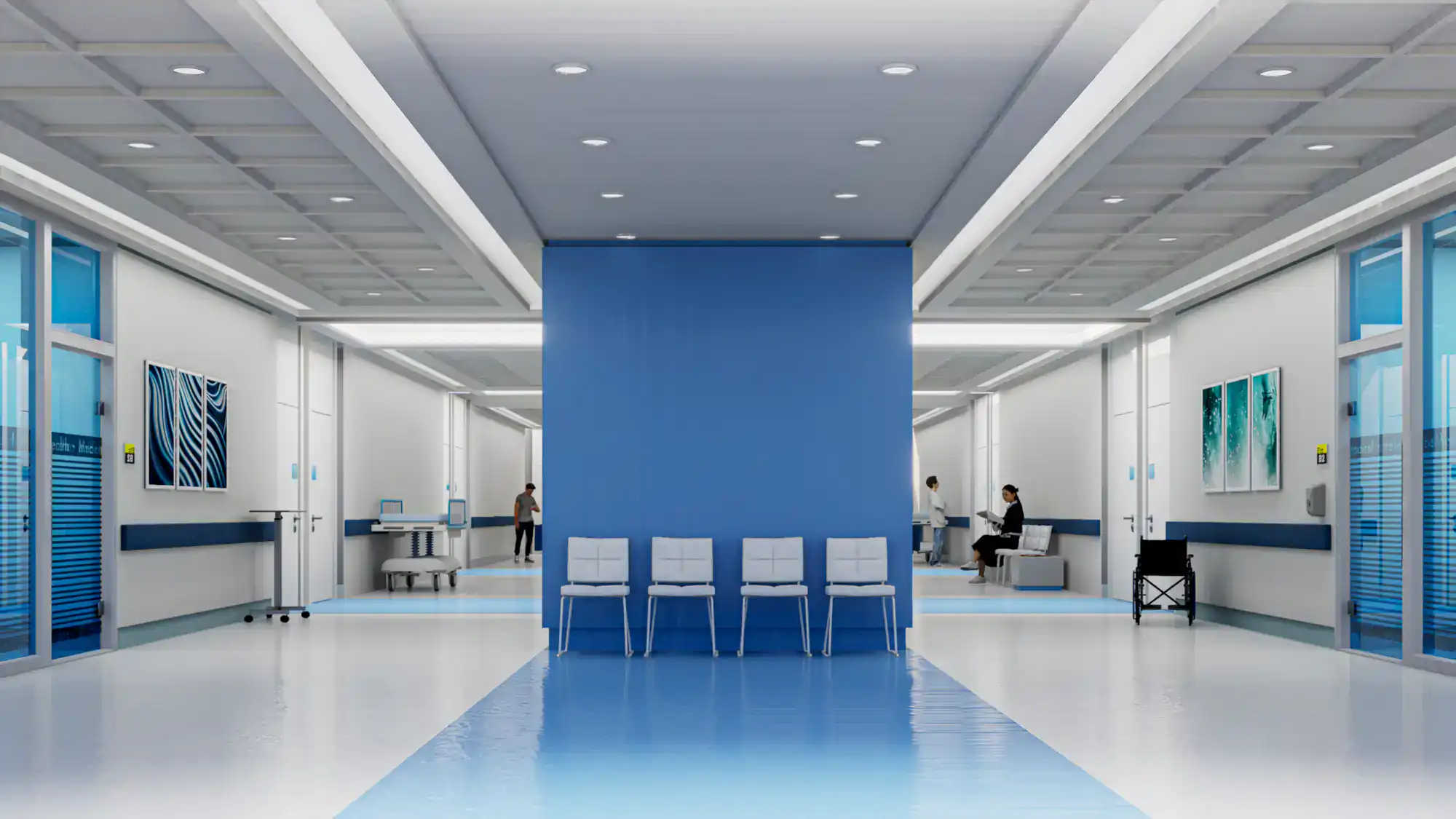
The EPA-registered antimicrobial additive works on contact. When bacteria, mold, fungi, or other microorganisms land on the surface, the active agent disrupts their cell walls and prevents reproduction. This happens continuously, not just when you clean.
The bigger advantage is the seamless surface itself. Healthcare-associated infections often trace back to areas that can’t be properly cleaned—grout lines, seams, cracks, and porous materials. Tile floors in hospitals create thousands of linear feet of grout that harbors pathogens even after cleaning. Vinyl flooring has seams that trap moisture and allow bacterial growth underneath.
Seamless medical-grade epoxy eliminates those hiding spots entirely. There’s nowhere for contaminants to accumulate between cleanings. When your staff disinfects, they’re cleaning the actual surface, not trying to penetrate porous materials or scrub grout lines. That’s how you reduce HAIs that cost the U.S. healthcare system $28.4 billion annually and affect 1 in 31 hospital patients on any given day.
Medical-grade epoxy systems are specifically engineered for the punishment healthcare facilities deliver. We’re talking about gurneys, wheelchairs, IV poles, portable X-ray machines, and imaging equipment rolling over the same paths hundreds of times daily. Standard flooring cracks, chips, and shows wear patterns within months.
The epoxy we install in Islip, NY healthcare facilities has a compressive strength exceeding 8,000 PSI and tensile strength over 3,000 PSI. That means it flexes slightly under impact instead of cracking. When an instrument drops or equipment bumps the floor, the surface absorbs and distributes the force.
You’ll see this difference most clearly in high-traffic corridors and around nursing stations. Tile corners crumble. Vinyl tears. Epoxy keeps performing. We’ve installed floors in emergency departments that see 24/7 traffic for years without significant wear. The key is proper substrate preparation and using commercial-grade materials, not residential products that some contractors try to pass off as medical-grade.
Most projects take 2-5 days from start to finish, but we work around your schedule, not the other way around. If you need a wing completed over a weekend, we bring in additional crews. If overnight installation makes more sense, that’s what we do.
The actual process breaks down like this: surface prep takes one day, primer and base coats take 1-2 days depending on the system, and the topcoat needs 24 hours before foot traffic. Full chemical resistance and equipment loads are safe after 72 hours. Fast-cure options can cut that timeline by 30-40% when you need a space back in service immediately.
We’ve completed operating room floors, sterile processing areas, and imaging suites without forcing you to relocate patients or cancel procedures. The key is planning and communication. We coordinate with your facilities manager to identify low-census periods, work in phases if needed, and use low-VOC materials that don’t create odor issues in occupied areas. You’re not shutting down your facility—you’re upgrading it in sections while maintaining operations.
USDA and FDA regulations require surfaces that are seamless, non-porous, impervious to moisture, and capable of thorough cleaning and disinfection without harboring contaminants. Epoxy systems meet those standards by creating a monolithic surface with no joints, seams, or porous areas where bacteria can colonize.
The specific requirements focus on durability under repeated cleaning, resistance to chemical sanitizers, and the ability to maintain a sanitary condition over time. Standard flooring fails because grout absorbs liquids, seams separate and trap debris, and porous materials can’t be fully disinfected. You end up with surfaces that look clean but harbor pathogens at the microscopic level.
Medical-grade epoxy in Islip, NY addresses this with a fully sealed surface that extends up the wall base, creating a cove that eliminates the floor-wall junction where contaminants typically accumulate. The antimicrobial properties provide an additional layer of protection, but the real compliance factor is the seamless, non-porous nature of the material itself. When inspectors evaluate your facility, they’re looking for surfaces that can be effectively cleaned and maintained—epoxy delivers that without the ongoing maintenance failures you see with traditional flooring.
Volatile organic compounds off-gas from many building materials and create indoor air pollution that’s often 2-5 times worse than outdoor air, according to EPA data. In healthcare settings, that’s a serious problem because you’re treating patients with respiratory conditions, chemical sensitivities, and compromised immune systems.
Low-VOC epoxy systems minimize those emissions during installation and throughout the floor’s life. You’re not introducing formaldehyde, benzene, or other harmful chemicals into spaces where people are already sick. The difference is measurable—standard epoxy can emit VOCs for weeks after installation, while low-VOC formulations reach safe levels within 24-48 hours.
This matters most in pediatric units, oncology departments, and areas treating patients with asthma or COPD. The flooring isn’t contributing to their symptoms or slowing recovery. It also protects your staff who spend 8-12 hour shifts in these environments. When you’re already dealing with exposure to medications, disinfectants, and other chemicals, the last thing you need is flooring that adds to the toxic load. Low-VOC healthcare coatings in Islip, NY give you the performance you need without compromising the air your patients and staff breathe.
Initial installation costs for medical-grade epoxy run higher than vinyl or tile—typically 30-50% more upfront. But that comparison ignores the total cost of ownership over the floor’s lifespan, which is where epoxy becomes significantly cheaper.
Tile requires grout replacement every 2-3 years, individual tile replacement when corners chip, and eventual full replacement when the substrate fails. You’re paying for materials, labor, and facility downtime repeatedly. Vinyl flooring needs replacement every 5-7 years in high-traffic healthcare environments, and seam repairs are constant. The maintenance hours alone—scrubbing grout, stripping and waxing vinyl—add up to thousands of dollars annually.
Epoxy lasts 15-20 years in healthcare facilities with minimal maintenance. You’re cleaning with standard disinfectants and water. No waxing, no grout work, no seam repairs. When you factor in reduced maintenance costs, eliminated replacement cycles, and avoided downtime, the epoxy system pays for itself within 3-5 years. After that, you’re saving money every year while maintaining better infection control and a more professional appearance than deteriorating tile or vinyl could ever provide.