

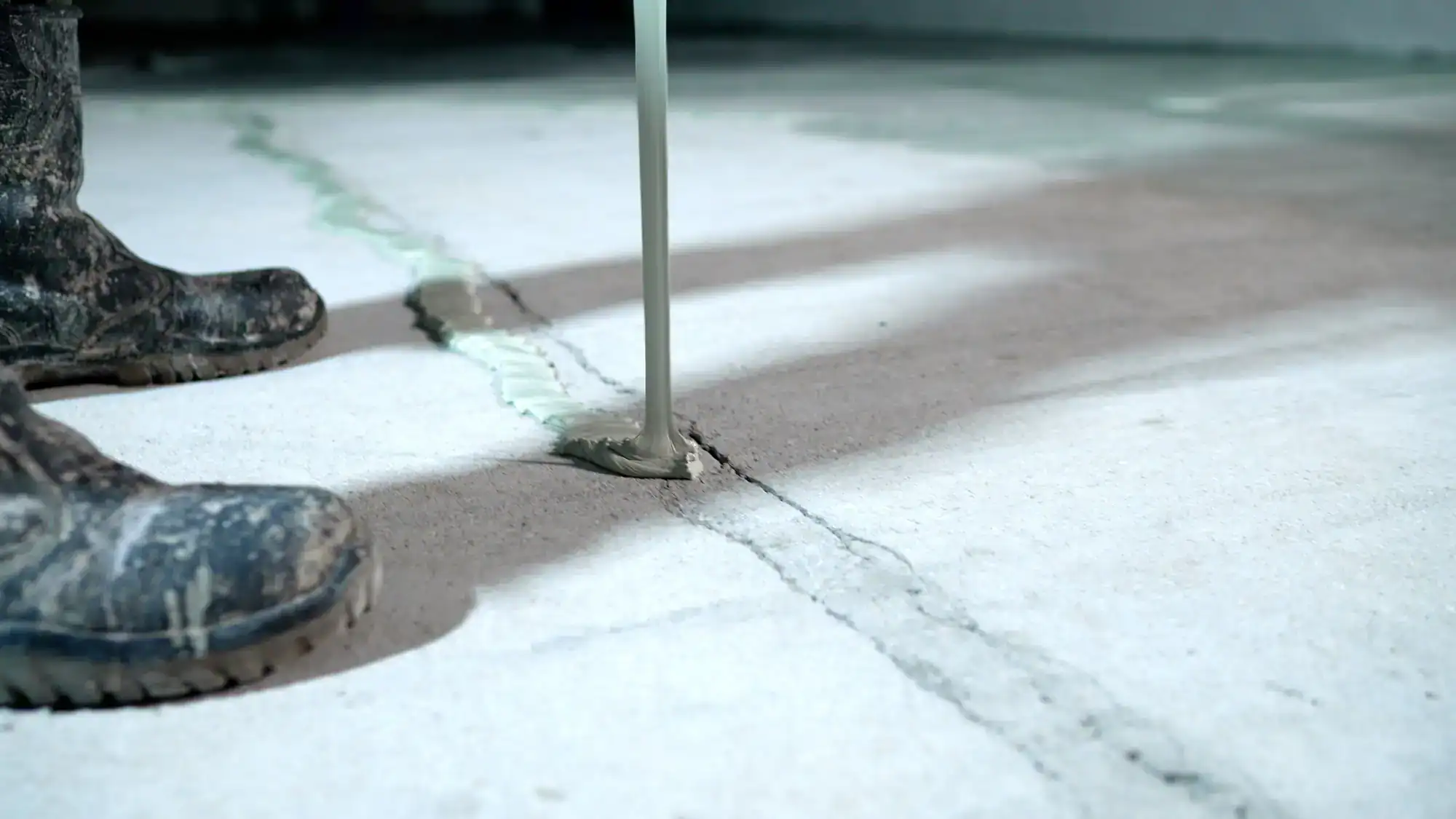
Most epoxy floors that fail weren’t installed wrong on purpose. They were installed without accounting for what was underneath. Holbrook sits above Long Island’s central aquifer system and the USGS has confirmed that rising groundwater levels in Suffolk County are pushing moisture vapor up through concrete slabs at increasing rates. That moisture, left unaddressed, is what causes epoxy to bubble, blister, and peel within months. It’s not the coating that fails. It’s the prep work that was skipped.
When the surface preparation is done right and moisture is tested before a single coat goes down, you get a floor that handles what your facility actually throws at it. For warehouse operators near the Patchogue-Holbrook Road and LIE interchange, that means a system rated for forklift axle loads over 10,000 lbs not a decorative coating dressed up as something tougher. For businesses on the Main Street and Union Avenue corridor in Holbrook, where the active sewer infrastructure project is bringing new commercial investment into the district, it means a seamless, code-compliant floor that holds up through increased foot traffic and passes health inspections without issue.
The difference between a floor that lasts 20 years and one that needs replacing in two is almost entirely in the specification and the preparation. That’s where this process starts and where most contractors cut corners.
We’re based in Bohemia, NY directly adjacent to Holbrook within the same MacArthur Airport commercial and industrial corridor. This isn’t a contractor coming in from Nassau County or the city. Our team works in the same environment Holbrook businesses operate in every day, understands the moisture conditions in mid-Suffolk slabs, and knows what the buildings along the LIE corridor actually look like from the inside.
Danny Harmer, our founder, has over 40 years of hands-on epoxy installation experience. In 1996, he installed the epoxy flooring system in the White House kitchen one of the most demanding food service environments in the country. That’s a verifiable installation record no competitor in this market can claim. We hold Sherwin-Williams High Performance Flooring certification, Res Tech certification, and all our installers are OSHA 40 certified. Most of our crew has been with us for over a decade. When you hire Advanced Epoxy Flooring, you’re getting the same team on every job not a rotating group of subcontractors assembled for the week.
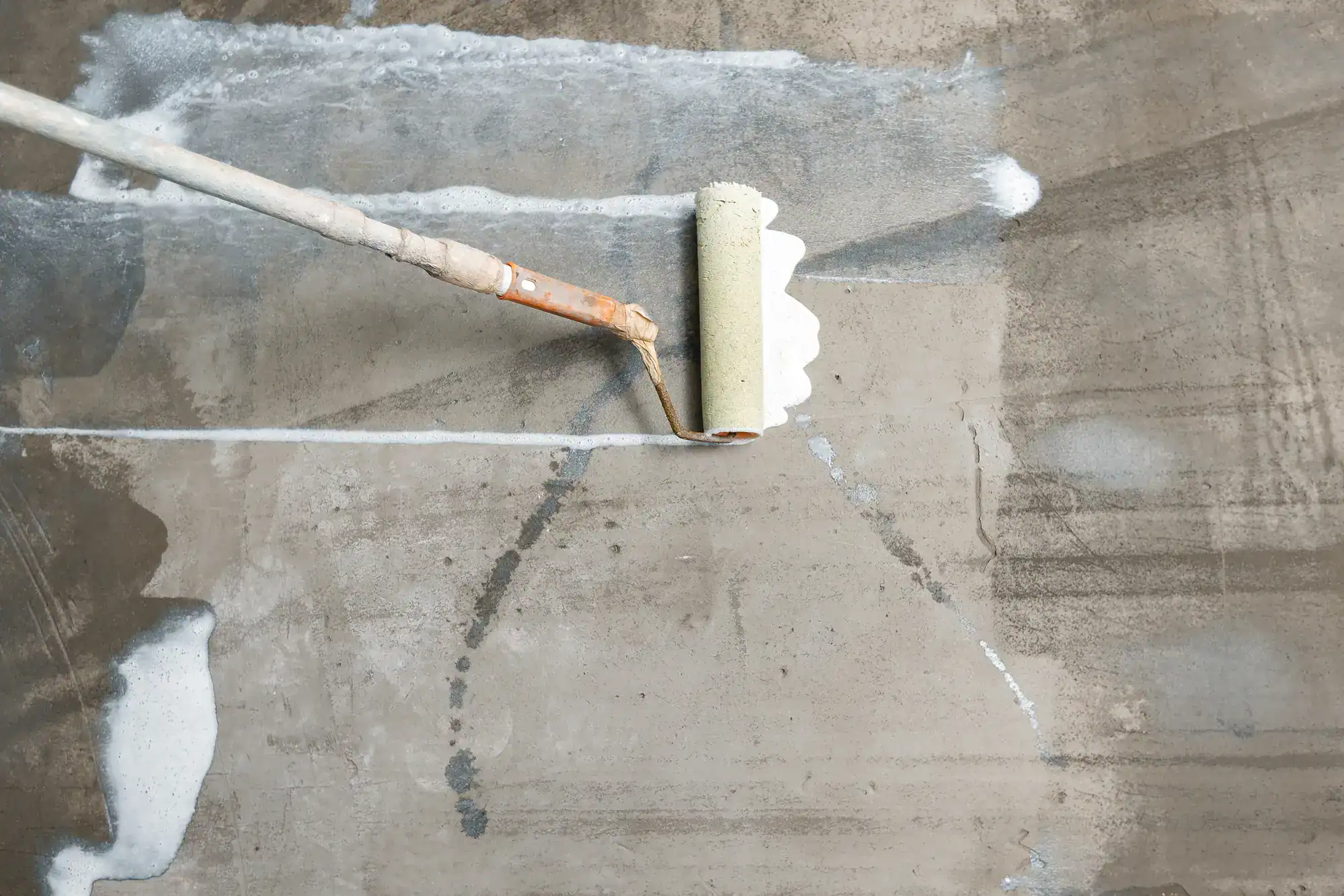
It starts before any equipment is unloaded. Every installation begins with a site assessment that includes a moisture test on the concrete slab. In Holbrook, this step isn’t optional it’s the reason floors installed by our crew last while others don’t. Given the area’s groundwater conditions, skipping moisture testing is how you end up with a floor that looks fine for six months and then starts lifting at the seams.
Once the slab is assessed, surface preparation begins with diamond grinding not acid etching, not a pressure washer. Diamond grinding creates the concrete surface profile that high-build epoxy and mortar systems need to bond properly. Cracks and divots are filled with epoxy patching compound. The surface is cleaned and profiled before any coating is applied. This is the work you won’t see in the finished floor, but it’s the work that determines whether the floor holds for two years or twenty.
From there, we specify the system for your actual environment the load profile, the chemical exposure, the traffic pattern, and the occupancy type. A commercial kitchen on Main Street gets a different system than a distribution warehouse off the LIE, and both are different from a healthcare or automotive facility. Installation is scheduled around your operation. Commercial kitchens are done overnight. Warehouse installations are phased to keep your facility running. Most systems are ready for return to service within 24 to 72 hours. The goal is always to minimize your downtime without cutting anything on the installation side.
Ready to get started?
The system that goes into your Holbrook facility depends on what that facility actually does. Warehouse and distribution spaces near the MacArthur Airport corridor get 100% solids epoxy or urethane mortar systems built to handle forklift traffic, pallet jacks, and the kind of daily abuse that standard coatings aren’t rated for. These are high-build systems 14 to 30 mils of dry film thickness not the thin-film products that look similar in a brochure but fail under load.
Commercial kitchen floors are installed to USDA-compliant standards with thermal-shock-resistant systems that can handle the temperature swings between commercial cooking equipment and cleaning cycles. For businesses along Holbrook’s Main Street and Union Avenue corridor especially those upgrading as part of the ongoing commercial district revitalization seamless, impervious flooring is often a Suffolk County Department of Health Services requirement, not just a preference. Healthcare and medical spaces get antimicrobial systems that meet ADA, OSHA, and CDC guidelines. Automotive and service bay floors get chemical-resistant epoxy finishes rated for oil, hydraulic fluid, and cleaning solvents. Firehouses and apparatus bays get quarter-inch mortar trowel builds with polyaspartic topcoats.
Every installation includes diamond-ground surface preparation, mandatory moisture assessment, crack and joint repair, and a system specification matched to the actual demands of the space. Nothing is assumed. Nothing is skipped.
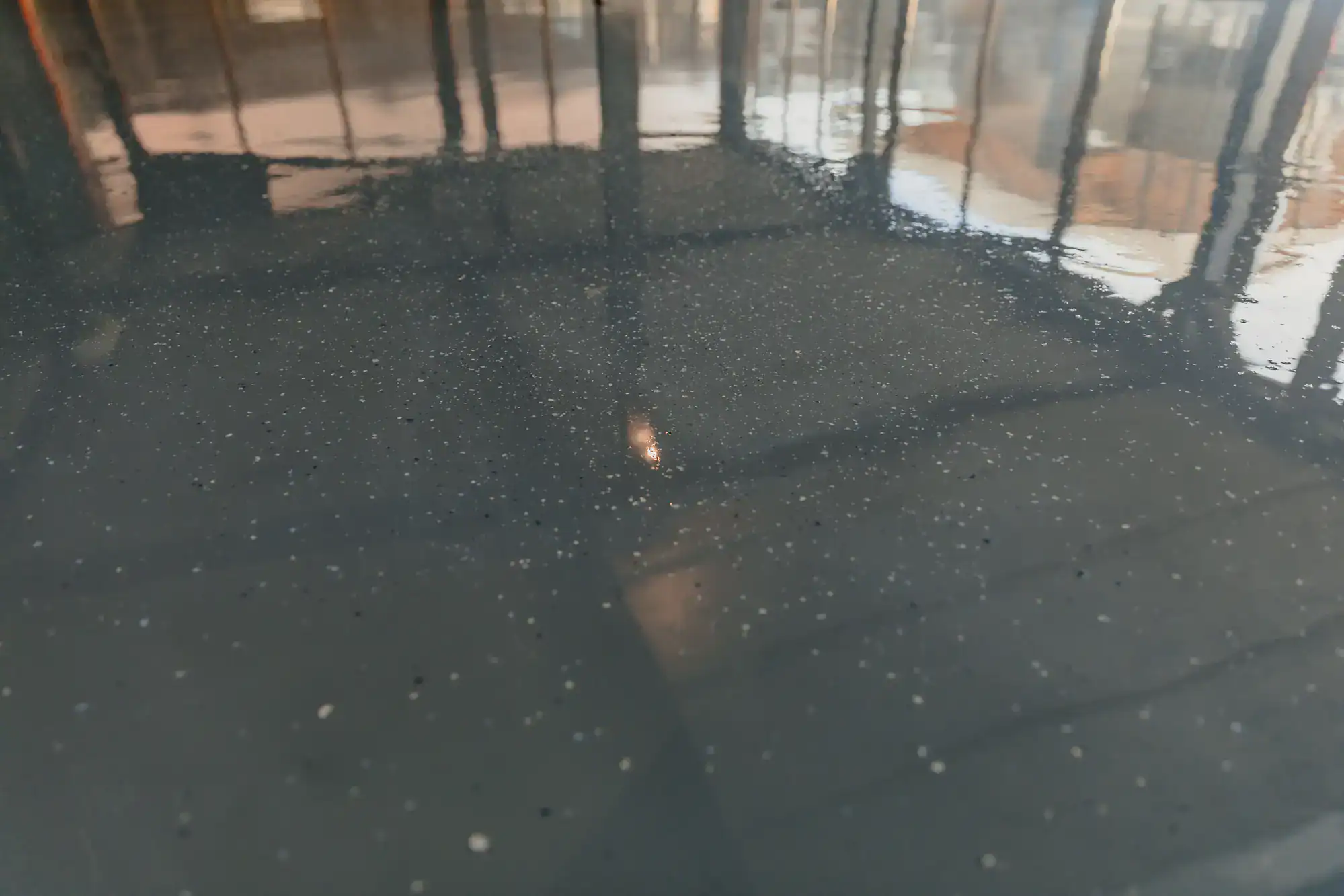
The most common cause is moisture vapor transmission from the concrete slab and it’s a bigger issue in Holbrook than most contractors will tell you upfront. The community sits above Long Island’s central aquifer, and USGS research has confirmed that rising groundwater levels in Suffolk County are pushing increasing amounts of moisture vapor through concrete slabs, particularly in older industrial and flex-industrial buildings. If that moisture isn’t tested for and mitigated before the coating goes down, it has nowhere to go but up and it takes the floor with it.
The second most common cause is inadequate surface preparation. Acid etching, which is cheaper and faster than diamond grinding, creates an inconsistent surface profile that high-build epoxy systems can’t bond to reliably. When you combine a moisture-laden slab with a poorly prepared surface, failure isn’t a question of if it’s a question of when. A properly installed system starts with a moisture test and diamond-ground surface preparation, full stop.
A properly specified and installed industrial epoxy system 100% solids epoxy or urethane mortar with a polyaspartic topcoat should last 15 to 20 years in a commercial or industrial environment with normal maintenance. Some systems in lower-traffic areas last longer. The floors that fail in two or three years are almost always consumer-grade or low-solids products installed without adequate surface preparation, not professional-grade systems installed correctly.
The lifecycle cost math is straightforward. A professional installation in a Holbrook warehouse or commercial space runs roughly $7 to $12 per square foot depending on the system and square footage. Amortized over 20 years, that’s less than $0.60 per square foot per year. A cheap installation that fails and requires removal, disposal, and reinstallation will cost more than doing it right the first time plus the downtime you absorb while the floor is being redone. The upfront price difference between a qualified contractor and an underqualified one is rarely as large as the difference in what you pay over time.
Yes and for most commercial kitchen installations in Holbrook, the work is completed overnight so the facility can open on schedule the next day. This is not a promise made loosely. It requires planning the installation sequence carefully, having the right crew size on site, and using fast-cure systems like polyaspartic topcoats that reach full return-to-service hardness within hours rather than days.
For businesses on Holbrook’s Main Street and Union Avenue corridor, this matters practically. Suffolk County Department of Health Services requires seamless, impervious flooring in food preparation areas meaning a kitchen floor upgrade isn’t always optional when you’re expanding or facing a health inspection. The ability to complete that installation without shutting down your operation for multiple days is a real operational advantage, not a marketing claim. The schedule is built around your hours, not the other way around.
It depends on the scope of the work and which part of Holbrook your property is in. Holbrook is split between two townships the northern portion falls under the Town of Brookhaven, and the southern portion falls under the Town of Islip, with the LIRR tracks serving as the dividing line. Both municipalities have their own building department requirements, and commercial renovation work including flooring in certain occupancy types may require a permit depending on the extent of the project and the building’s use classification.
For most standalone epoxy flooring installations in existing commercial or industrial spaces, a permit is not required. However, if the flooring work is part of a larger renovation or tenant buildout, or if it involves structural repairs to the slab, the permit question should be confirmed with the relevant town building department before work begins. This is worth clarifying early, especially for businesses in the Main Street and Union Avenue corridor where the active sewer infrastructure project may be triggering broader renovation activity.
For a warehouse or distribution facility with forklift traffic, pallet jacks, and heavy rolling loads, the right system is a 100% solids epoxy broadcast or urethane mortar build not a thin-film coating. These are high-build systems applied at 14 to 30 mils of dry film thickness, and they’re specified to handle forklift axle loads exceeding 10,000 lbs without cracking, delaminating, or dusting under load. A polyaspartic topcoat is typically added for chemical resistance, UV stability, and faster return-to-service time.
The warehouse and flex-industrial buildings in Holbrook’s MacArthur Airport corridor vary significantly in age and slab condition. Older buildings in particular tend to have slabs with existing cracks, joint deterioration, and given the area’s groundwater conditions elevated moisture vapor emission rates. The system selection has to account for all of that, not just the square footage. A site assessment that includes moisture testing and a slab condition review is the starting point for any warehouse installation in this area.
Long Island’s seasonal swings create real installation windows that matter for commercial and industrial spaces that aren’t fully climate-controlled. Epoxy systems should not be applied below 50°F or above 90°F, and relative humidity above 85% during application increases the risk of surface contamination and adhesion problems. In Holbrook, that means summer installations in unheated or partially conditioned warehouse spaces common in the MacArthur Airport corridor require active dehumidification and temperature monitoring. Winter installations in those same spaces require temporary heating to maintain the minimum application threshold.
Spring and fall are the most straightforward installation seasons for facilities without full climate control. That said, we can work year-round with the right equipment and planning it just requires more preparation than warm-weather installs. If your facility has a specific timeline driven by operational needs, lease buildout, or a health inspection deadline, the scheduling conversation should happen early so the installation can be planned around both your calendar and the environmental conditions that affect how the system cures.