
Most of Holbrook’s housing stock was built between the 1940s and 1960s. That means a lot of concrete slabs have been sitting on Long Island’s sandy glacial soil for five or six decades settling, shifting, and absorbing moisture the whole time. By the time you’re ready to put down new flooring, the slab underneath often looks nothing like it did when it was poured.
When concrete floor leveling services are done right, the difference is immediate. Tile stops cracking. Luxury vinyl stops buckling. Hardwood has something solid and flat to bond to. You’re not just fixing a cosmetic problem you’re preventing the next floor failure before it starts.
Holbrook’s coastal humidity is a real factor here. Long Island sits between the Great South Bay and Long Island Sound, and that moisture doesn’t stay outside. It works its way into unprotected slabs over time, and if it’s not addressed before a self leveling pour, the compound will delaminate sometimes within months. Getting this step right the first time means your floor isn’t a problem you’re revisiting in two years.
We’re based in Bohemia, NY a few miles west of Holbrook along the same Sunrise Highway corridor that runs through the heart of this community. This isn’t a contractor learning Long Island conditions on your job. Our president has over 40 years of hands-on installation experience, and most of our crew has been with us for more than a decade.
That kind of continuity matters when you’re dealing with slabs that have a history. We hold an A+ rating with the Better Business Bureau and carry OSHA 40 certification credentials that matter just as much to a homeowner near Sachem Central School District as they do to a commercial property manager fitting out a new space in The Shops at SunVet.
Our work covers everything from moisture testing and concrete prep through the final leveling pour and finished floor system. One contractor, one accountable outcome.
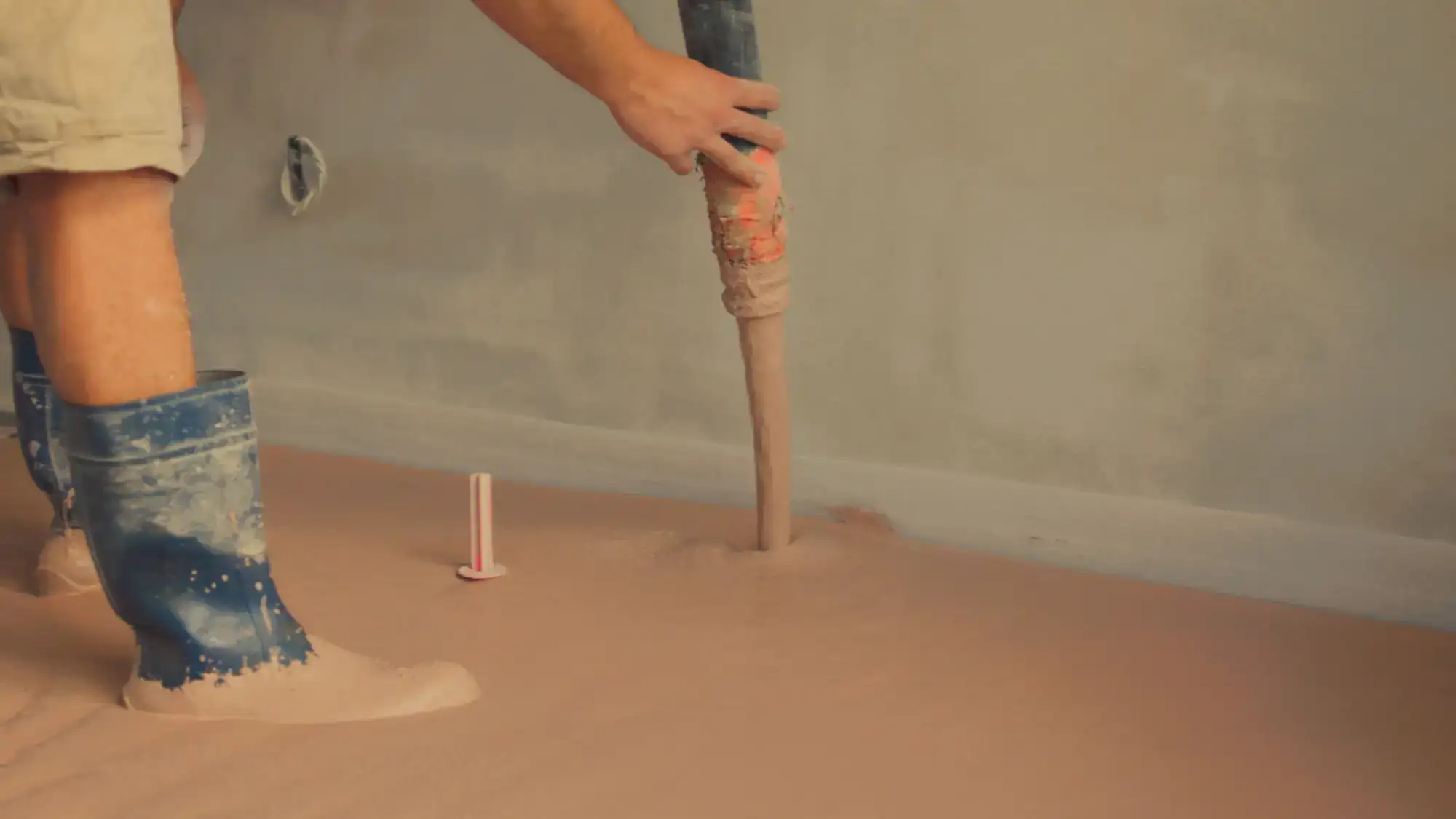
Before anything gets poured, we test the slab. On a 50- or 60-year-old Holbrook concrete floor, moisture vapor emission testing isn’t optional it’s the step that determines whether a self leveling underlayment will bond and stay bonded, or peel away from the surface within a year. The ASTM F2170 standard sets the threshold at 80% relative humidity. If the slab is over that number, we don’t move forward until it’s addressed.
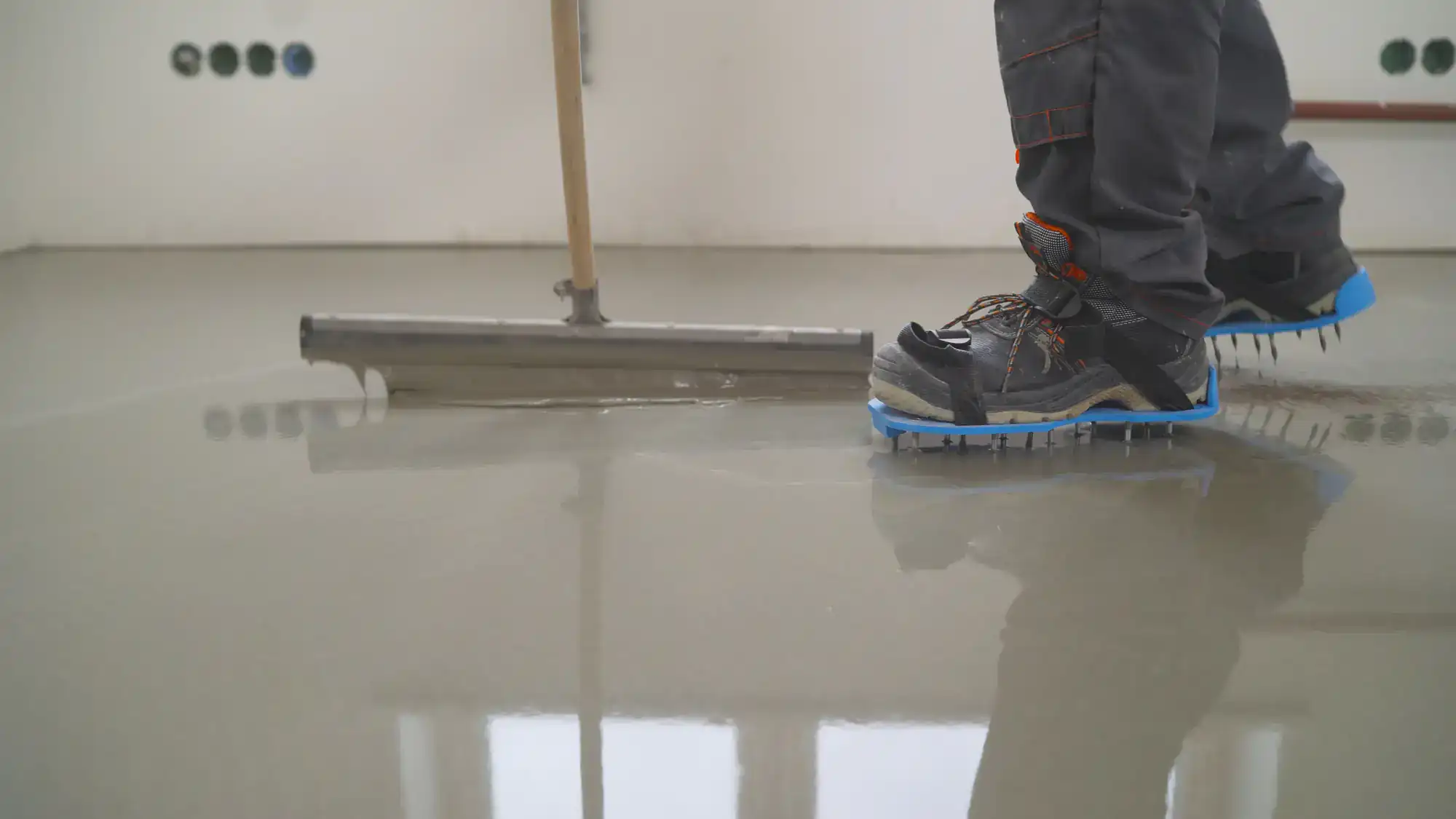
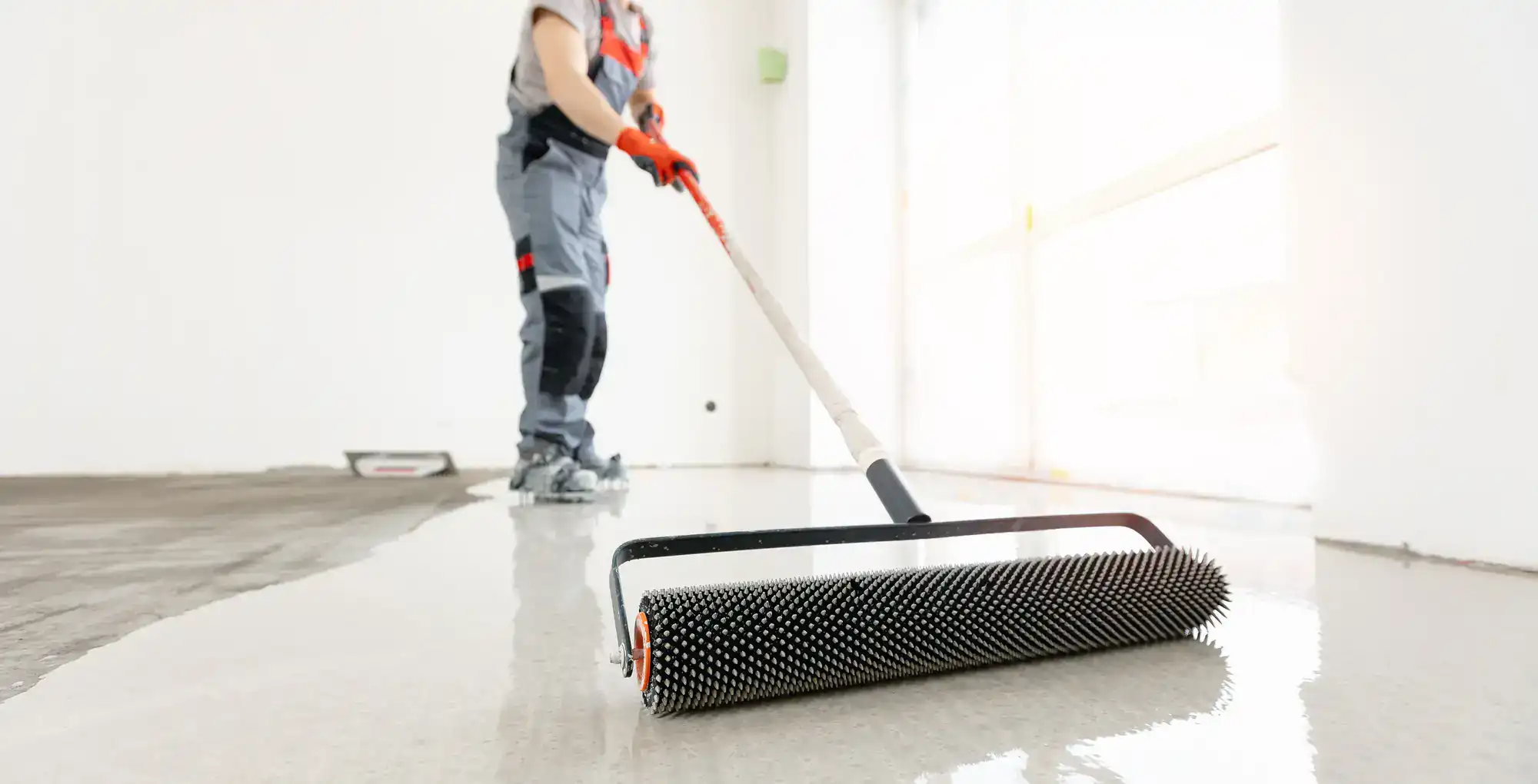
Once the slab passes, surface preparation comes next. That means grinding down high spots, repairing cracks and voids, and applying the right primer for the substrate condition. We then mix and pour the cementitious self leveling underlayment a high-flow, polymer-modified compound that finds its own level and bonds tightly to the prepared concrete. Depending on the project, installation depth ranges from a thin skim coat at a quarter inch up to two inches or more for significantly settled areas.
Cure time is fast. Foot traffic is typically possible within four to six hours. Commercial spaces near the MacArthur Airport corridor or in Holbrook’s redeveloping retail strip along Sunrise Highway can often resume operations within 24 to 48 hours. The finished surface is flat, strong, and ready for whatever floor system goes on top tile, vinyl, hardwood, or a full resinous coating.
Ready to get started?
The self leveling underlayment we use on a Holbrook ranch home and the system we install in a commercial kitchen or warehouse near MacArthur Airport are not the same product and they shouldn’t be. Residential applications typically call for a standard cementitious underlayment that creates a flat, smooth surface for tile, LVT, or hardwood. Commercial floor leveling solutions, especially in high-traffic environments, require high strength self leveling concrete with the compressive strength to handle forklift loads, rolling equipment, and constant foot traffic without cracking.
For Holbrook’s commercial market, that distinction is especially relevant right now. The Shops at SunVet redevelopment along Sunrise Highway is bringing new retail tenants into nearly 168,000 square feet of renovated space and every one of those fit-outs starts with a concrete substrate that needs to be assessed, prepared, and leveled before any finished flooring goes in. Former mall concrete typically carries decades of adhesive residue, surface damage, and uneven areas from removed walls and fixtures. That’s not a job for a bag of hardware store compound.
Whether the project is a 1960s split-level in a Holbrook neighborhood or a commercial space being built out under a tight lease timeline, we calibrate the process to what the slab actually needs. Thickness, product selection, primer type, and cure requirements are all determined by what’s on the floor not by a one-size-fits-all approach.
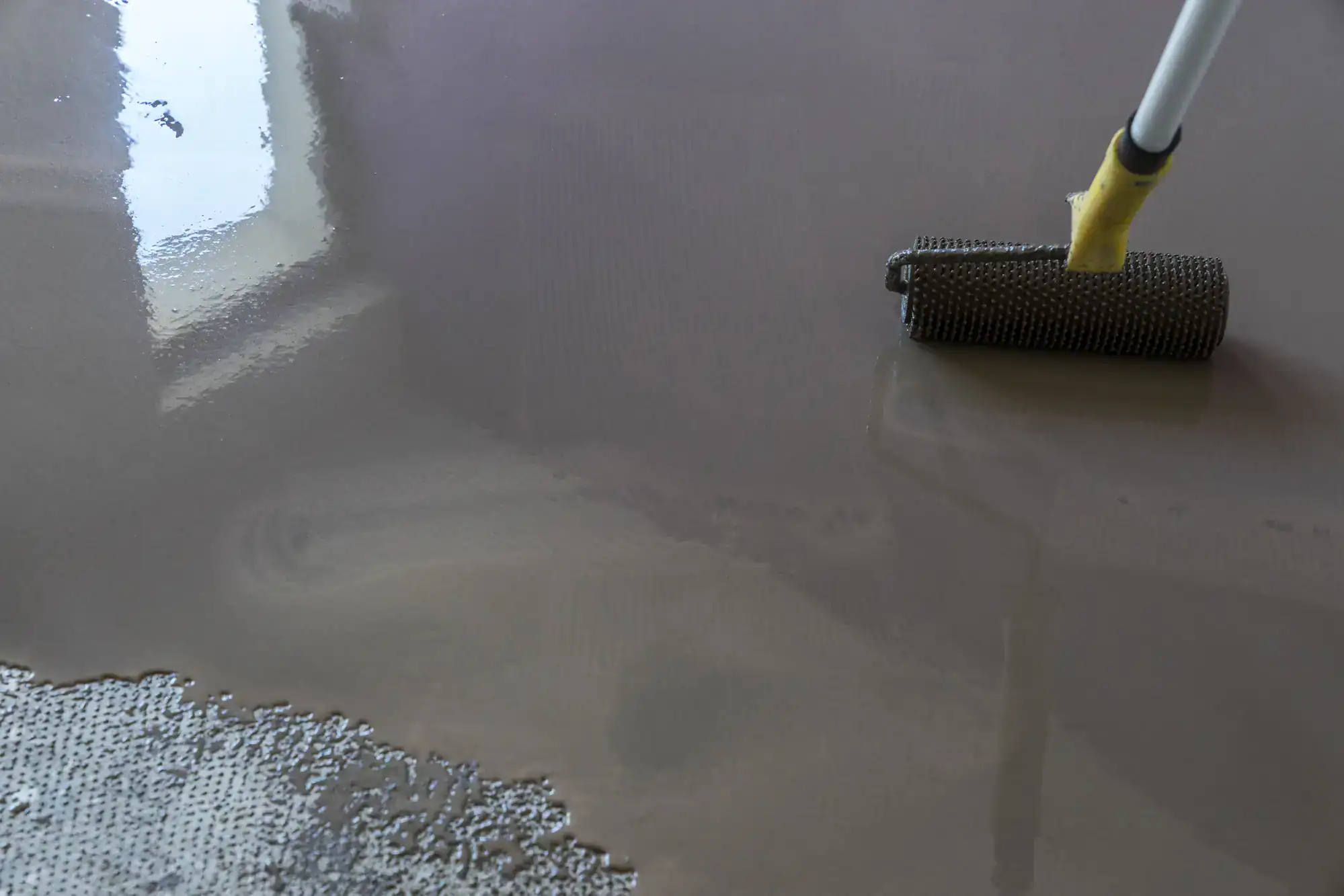
It does but only when the slab is properly prepared first. On the aging concrete common throughout Holbrook’s mid-century housing stock, proper prep means grinding the surface to remove any existing adhesive, paint, or contamination, filling cracks and voids, and applying the correct primer for the substrate condition. Skip any of those steps and you’re not getting a real bond you’re getting a pour that looks fine for six months and then starts lifting.
The other factor that determines bonding success is moisture. Long Island’s humidity means a lot of older Holbrook slabs have elevated moisture vapor emission levels. If that’s not tested and addressed before the pour, the underlayment will delaminate regardless of how well everything else was done. Moisture testing is the step that separates a self leveling job that lasts from one that fails and we include it on every project as a standard part of the process.
It depends on how uneven the slab is and what floor covering is going on top. For a relatively flat Holbrook slab that just needs a skim coat before luxury vinyl tile, a quarter inch is often sufficient. If you’re dealing with a significantly settled area common in homes built in the 1950s and 1960s on Long Island’s sandy soil the pour might need to go an inch or two deep. In more extreme cases with large voids or major elevation changes, we can add aggregate to the mix and the system can go up to five inches.
The floor covering matters too. Large-format porcelain tile is completely unforgiving of substrate variation even a slight dip or hump will show up as a cracked tile within a year. Luxury vinyl planks are similarly sensitive. Getting the thickness right isn’t just about filling the low spots; it’s about creating a surface that meets the flatness tolerance the finished floor actually requires.
Most self leveling underlayment systems allow light foot traffic within four to six hours of the pour. That’s under normal conditions meaning the space is temperature-controlled and ambient humidity is within the acceptable range. In a Holbrook home during the summer months, high indoor humidity can slightly extend open time and affect how quickly the surface sets, which is something our experienced installers account for during mixing and sequencing.
For commercial projects a new tenant space in The Shops at SunVet, a fitness facility, or an airport-adjacent warehouse the timeline matters even more. Most commercial-grade self leveling systems reach the strength needed for heavy equipment and rolling loads within 24 to 48 hours. Full cure to maximum compressive strength takes 28 days, but you’re not waiting 28 days to use the space. The fast return-to-service is one of the main reasons self leveling underlayment is the standard choice for commercial renovation projects on tight schedules.
For most residential projects a homeowner leveling a basement slab or preparing a subfloor before new flooring a standalone permit for the self leveling work itself is generally not required. It falls under interior flooring preparation, which typically doesn’t trigger a permit requirement on its own. That said, if the leveling work is part of a larger renovation that involves structural changes, electrical, or plumbing, the broader project may require permits from either the Town of Brookhaven or the Town of Islip, depending on which part of Holbrook the property is located in.
Holbrook’s dual-town governance is worth understanding before you start any project. Properties in the northern and eastern portions of the hamlet fall under Brookhaven Town jurisdiction, while properties in the southern and western portions fall under the Town of Islip. Each has its own building department and permitting process. For commercial fit-outs especially in the Sunrise Highway corridor permits are typically required as part of the broader tenant improvement scope, and the applicable municipality needs to be identified correctly from the start.
Concrete repair and self leveling underlayment solve different problems. Concrete repair patching cracks, filling spalled areas, addressing structural damage is about restoring the integrity of the slab itself. Self leveling underlayment is about creating a flat, smooth surface across the entire slab so a finished floor covering can be installed correctly. You often need both, in that order: repair the slab first, then level it.
The confusion comes up a lot with Holbrook homeowners who have been told their floor “just needs some patching.” Patching fixes individual cracks or holes, but it doesn’t address overall flatness. If the slab has settled unevenly over decades which is common in homes built on Long Island’s sandy glacial soil patching alone won’t give you the flat substrate that tile, vinyl, or hardwood requires. Self leveling underlayment is what brings the entire surface to a consistent plane, not just the spots that are visibly damaged.
Holbrook sits in a part of Long Island where moisture is a constant factor positioned between the Great South Bay to the south and Long Island Sound to the north, with ambient humidity levels that stay elevated through much of the year. On top of that, the majority of Holbrook’s residential concrete slabs were poured in the 1950s through 1970s, long before modern vapor barriers were standard practice. That combination coastal humidity plus aging slabs without proper moisture protection means elevated moisture vapor emission is genuinely common here, not a rare edge case.
When self leveling underlayment is poured over a slab with moisture vapor emission above the ASTM F2170 threshold of 80% relative humidity, the compound doesn’t bond properly. It may look fine initially, but within months it starts to lift, bubble, or crack and whatever floor covering is on top of it fails along with it. Testing before the pour identifies the problem while it can still be addressed. We make it a standard step on every Holbrook project because the conditions here make it necessary.