
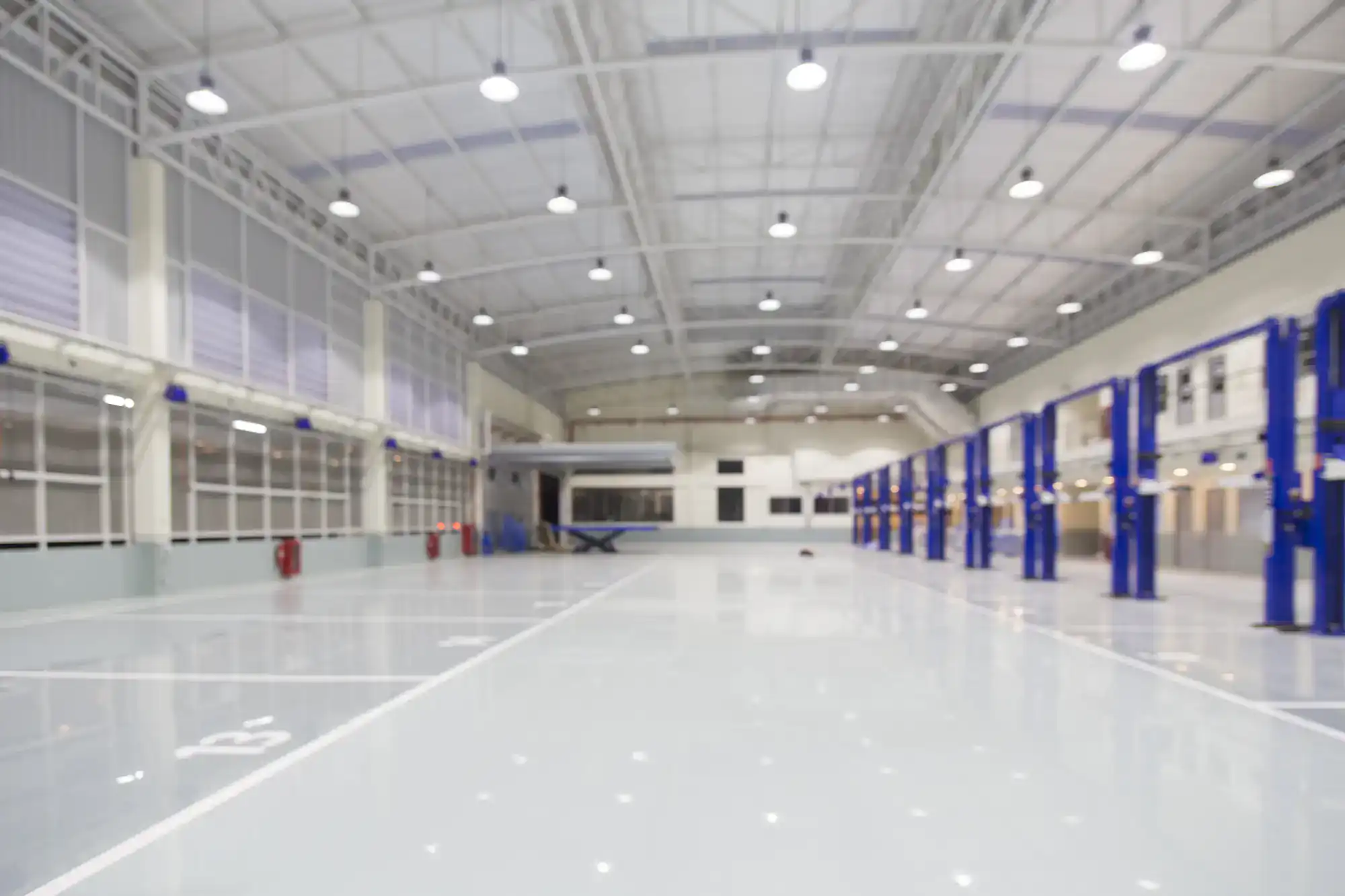
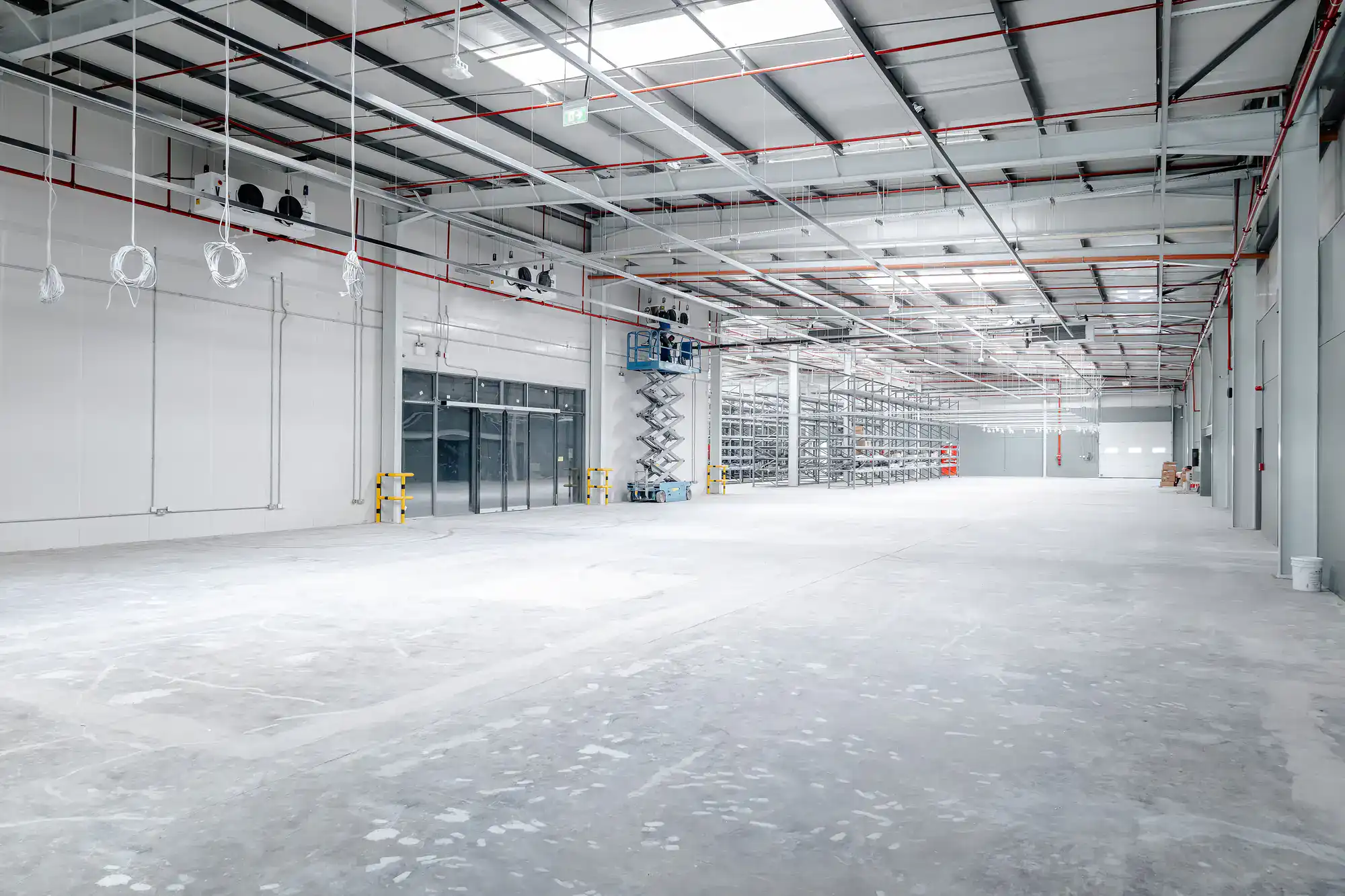
If your hangar sits along Veterans Memorial Highway or near the eastern boundary of Long Island MacArthur Airport, your floor is dealing with more than just foot traffic. It’s handling aircraft weight, fuel spills, hydraulic fluid, and the kind of daily wear that exposes every weakness in a coating that wasn’t installed correctly. What you want is a floor you stop thinking about one that stays clean, stays bonded, and doesn’t become a problem three years from now.
Holbrook’s climate makes this harder than it sounds. Humidity here peaks around 78% in late spring and stays above 70% year-round. That moisture doesn’t just sit in the air it transmits through concrete slabs, especially the large footprints common in commercial hangars. A floor that wasn’t installed with proper moisture assessment and the right primer chemistry for these conditions will bubble, lift, and delaminate. It’s not a matter of if. It’s a matter of when.
The freeze-thaw cycle adds another layer. January lows average around 30°F, while August pushes to nearly 80°F. That’s close to a 50-degree thermal range that causes concrete to expand and contract through every season. A properly installed aviation-grade floor coating moves with that slab instead of fighting it. That’s what makes the difference between a floor that lasts two years and one that lasts twenty.
We’re based in Bohemia, NY a short drive from Holbrook via the Long Island Expressway or Veterans Memorial Highway. This isn’t a national brand routing calls through a local number. We’re a Suffolk County contractor that has been doing this work for over 30 years, with most of our crew having been on the job for more than a decade.
Danny Harmer, our president, has over 40 years of hands-on installation experience. He’s personally installed floors in environments where failure genuinely isn’t an option the kind of experience that shapes how every job gets approached, from moisture testing on day one to the final topcoat cure. Our named field supervisors Javier, Eduardo, and Fredith bring over 40 combined years of experience between them. When our crew shows up at your Holbrook hangar, you’re getting people who have done this before, not a rotating team assembled for the week.
We hold dual elite certifications Sherwin-Williams High Performance Flooring and Res Tech and all our installers are OSHA 40 certified. These aren’t background details. In an active aviation environment, they’re exactly what you should be asking for before anyone touches your floor.
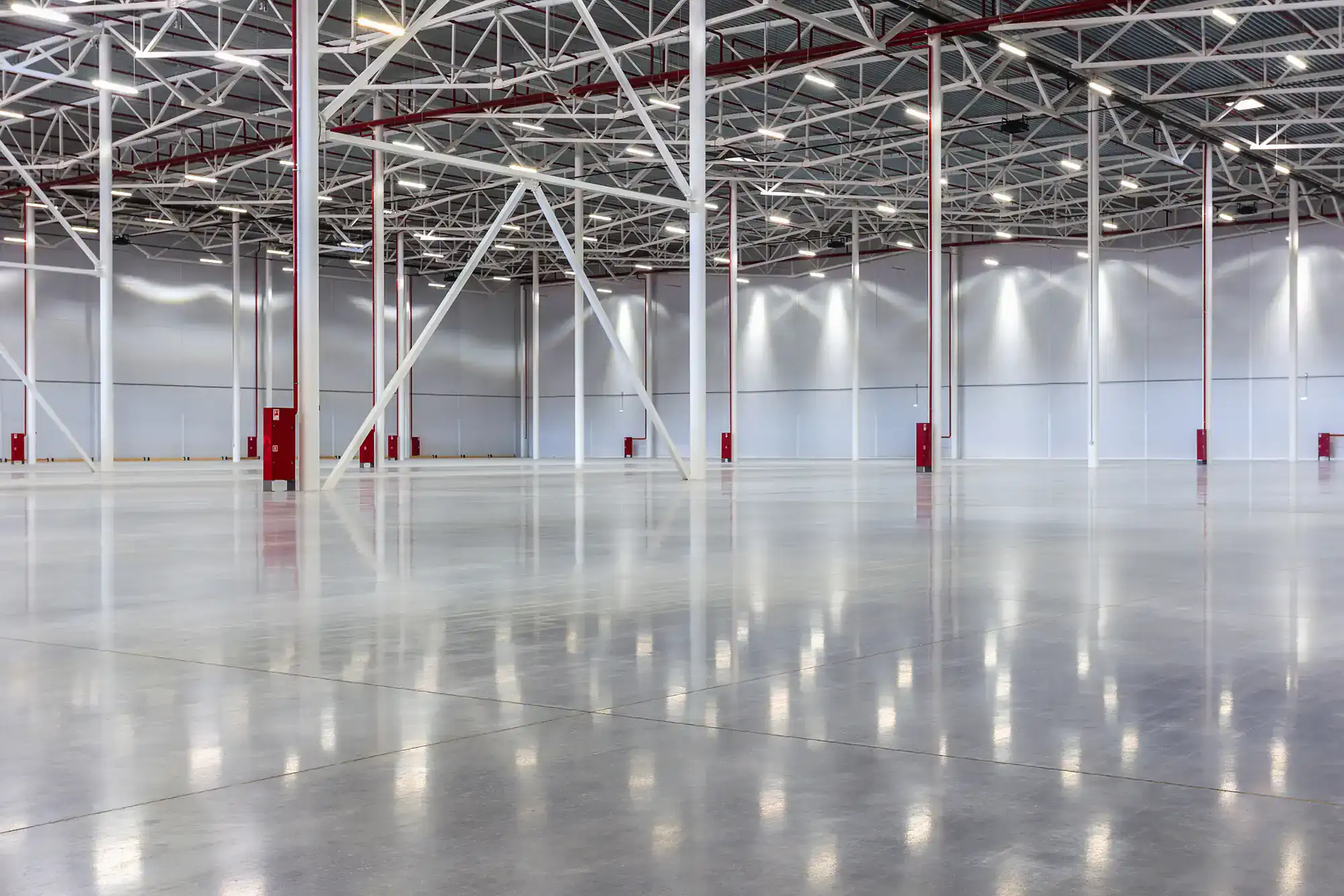
The first thing that happens on any Holbrook hangar floor project is a moisture assessment. Given the humidity levels in this area and the size of most commercial hangar slabs, skipping this step is how floors fail early. Moisture vapor transmission through concrete is one of the leading causes of coating delamination in Suffolk County’s coastal climate, and it’s something that has to be measured and addressed before a single coat goes down.
After the assessment, we diamond grind the concrete to create the adhesion profile the coating needs to bond correctly. This isn’t optional prep work it’s what separates a floor that lasts from one that peels. From there, the installation follows a multi-layer process: primer, base coat, and topcoat, with each layer given the cure time it needs to reach full strength before the next one is applied. Rushing this sequence is how problems start.
For active Holbrook hangars especially those operating near MacArthur Airport where downtime directly affects operations polyaspartic systems are often the right call. They return to full service in 24 hours, which means your aircraft doesn’t sit outside for a week while a floor cures. If your hangar falls on the Town of Islip side of Portion Road, permit requirements will go through Islip’s building department. If you’re on the Brookhaven side, it’s a different jurisdiction. We know both, and we’ll help you navigate whichever applies.
Ready to get started?
NFPA 409 the standard that governs aircraft hangars requires that the grade floor surface in aircraft storage and servicing areas be noncombustible. Most general flooring contractors have never heard of it. Every hangar floor system we install is built to meet this standard, which matters whether your facility is a personal T-hangar near MacArthur Airport or a larger commercial operation along Veterans Memorial Highway.
The systems we use are engineered for what aviation floors actually face: Skydrol hydraulic fluid, jet fuel, lubricants, and the abrasion of regular aircraft and ground support equipment movement. The non-slip topcoat meets the National Flooring Safety Institute’s tested requirements not just described as textured, but certified to a measurable standard. In a working hangar where fluids hit the floor daily, that distinction is real.
Color options and safety line markings can be incorporated into the system for facilities that need OSHA-compliant visual organization. High-gloss light finishes also improve visibility under hangar lighting, making fluid spills and dropped tools easier to spot which matters in any active maintenance environment. Whether you’re running a single-bay personal hangar or managing a multi-bay commercial facility in Holbrook, the system is specified to match the actual demands of the space, not defaulted to a one-size-fits-all product.
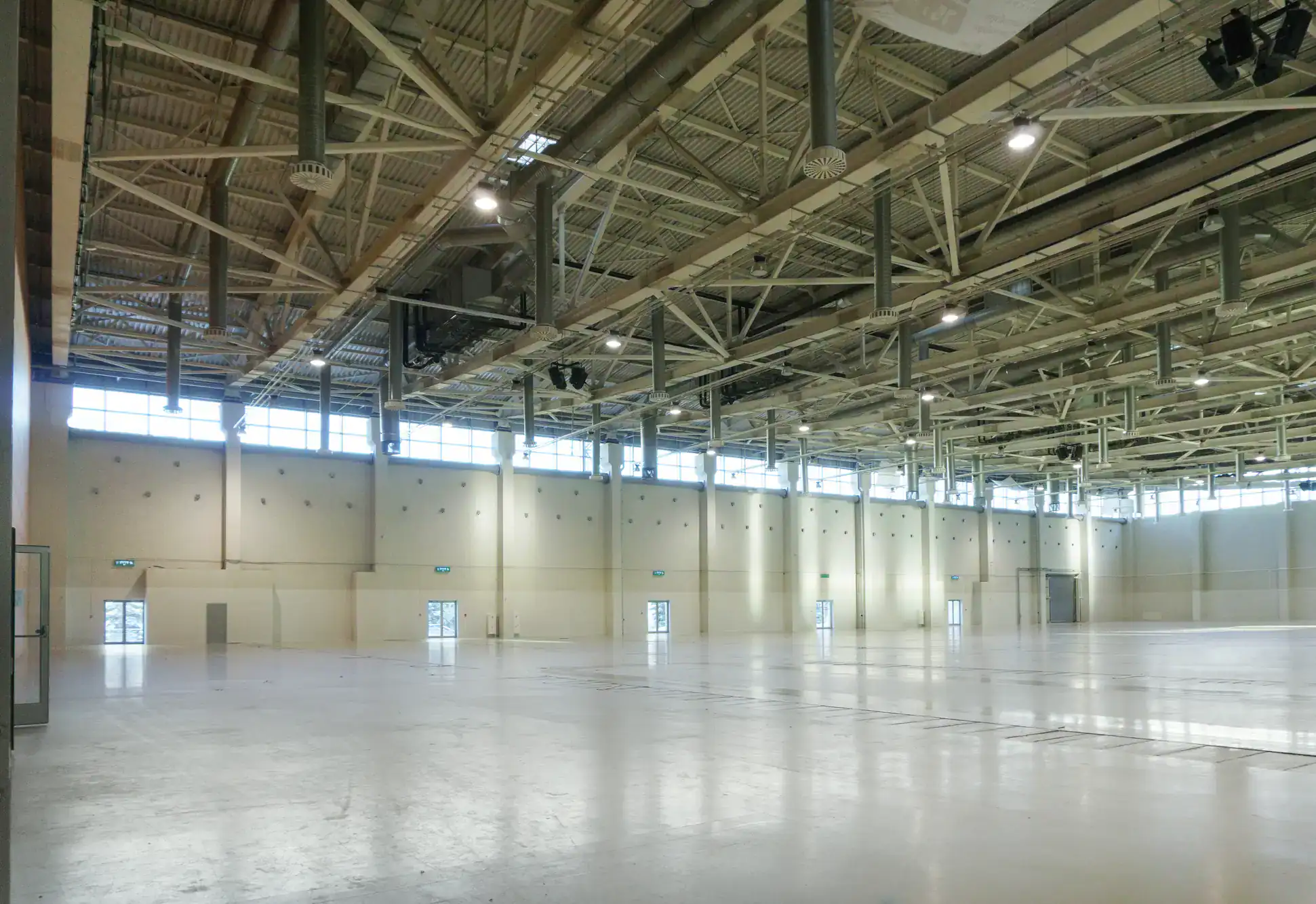
If your hangar is used for aircraft storage or servicing which covers most hangars at or near Long Island MacArthur Airport NFPA 409 applies. This standard requires that the grade floor surface in those areas be noncombustible, and it’s enforced through New York’s Uniform Fire Prevention and Building Code. For commercial hangar facilities in Holbrook, the County Fire Marshal’s Office is typically involved in final approval, which means your floor coating needs to meet the standard before sign-off.
The practical issue is that most general flooring contractors don’t know this standard exists. They’ll install a product that looks fine but doesn’t meet the noncombustible requirement, and you won’t find out until an inspection flags it. Every system we install in aviation environments is specified to meet NFPA 409. It’s not an add-on it’s the baseline for any hangar floor project we take on.
Installed correctly, an aviation-grade polyaspartic or high-build epoxy system should last 15 to 20 years in a Holbrook hangar. The word “correctly” is doing a lot of work in that sentence. Holbrook’s humidity which stays above 70% year-round and peaks near 78% in late spring creates real moisture vapor pressure in concrete slabs. If that moisture isn’t assessed and addressed before installation, the coating can start delaminating within two to three years regardless of product quality.
The freeze-thaw cycle here also matters. Concrete expands in summer heat and contracts in winter cold, and any coating that wasn’t bonded through proper diamond grinding and primer chemistry will eventually crack or lift at the edges. The floors that fail early almost always trace back to skipped prep, not bad product. When prep is done right and the system is matched to the substrate conditions, 15 to 20 years is a realistic and achievable lifespan.
Both are strong options for hangar floors, but they perform differently in ways that matter depending on how your facility operates. Traditional high-build epoxy systems are extremely durable and chemically resistant, but they require multi-day cure windows before you can return the space to service. For a hangar where aircraft need to come and go, that downtime adds up quickly.
Polyaspartic systems cure significantly faster most are back to full service within 24 hours which is why they’re often the better fit for active Holbrook hangars near MacArthur Airport. They’re also less sensitive to temperature fluctuations during installation, which helps during Holbrook’s warmer summer months when hangar slab temperatures can climb. The trade-off is that polyaspartic typically costs more per square foot than standard epoxy. For most aviation facility operators, the reduced downtime and faster return to operations more than justify that difference. The right choice depends on your specific hangar size, use pattern, and budget and it’s worth talking through before committing to a system.
It depends on where your hangar sits within Holbrook. The community straddles two town jurisdictions the majority falls within the Town of Islip, while the section between Portion Road and the Long Island Rail Road tracks falls under the Town of Brookhaven. Floor coating work classified as a material alteration to a commercial facility may require a building permit under either town’s code, and the applicable department depends entirely on which side of Portion Road your property sits.
For commercial aviation facilities, there’s also the Fire Marshal layer. NFPA 409 compliance is reviewed as part of the approval process for aircraft hangars, and the County Fire Marshal’s Office is typically involved in sign-off for larger commercial facilities. The Holbrook Building Department can be reached at 631-492-0927 for permit guidance specific to your address. We’re familiar with both the Islip and Brookhaven building department processes and can help you understand what’s required before the project starts.
The short list for any working hangar near Long Island MacArthur Airport includes Skydrol hydraulic fluid, jet fuel (both 100LL and Jet-A), engine oil, lubricants, and the cleaning solvents used in routine maintenance. Of these, Skydrol is the most aggressive. It’s a phosphate ester-based fluid that destroys standard epoxy coatings the kind you’d find in a typical garage floor product relatively quickly. If your floor isn’t specifically formulated to resist it, Skydrol exposure will cause softening, discoloration, and eventual coating breakdown.
The systems we install in aviation environments are selected specifically for resistance to this chemical profile. The Sherwin-Williams High Performance Flooring certification we hold exists precisely because aviation and industrial environments demand products that are engineered for chemical exposure, not just general durability. If you’re operating a maintenance bay, fueling area, or any space where these fluids are a routine presence, the product specification matters as much as the installation process.
For aviation-grade systems in the Holbrook area, you’re generally looking at $4 to $10 per square foot for high-build epoxy and $5 to $12 per square foot for polyaspartic. On a 5,000-square-foot hangar, that puts the range roughly between $20,000 and $60,000 depending on the system, the condition of the existing concrete, and what prep work is required. Larger commercial facilities along Veterans Memorial Highway or near MacArthur Airport will obviously scale from there.
The number that matters more than the upfront cost is the total cost over time. A floor installed at the lower end of the range using inadequate prep and the wrong product for Holbrook’s humidity conditions may need full removal and reinstallation within three to five years. That means paying for prep and installation twice plus the operational downtime that comes with it. Holbrook hangar owners who have been through a failed floor once tend to ask very different questions the second time around. The better conversation is what system lasts, what prep is included, and what the warranty covers not just what the square foot price is.